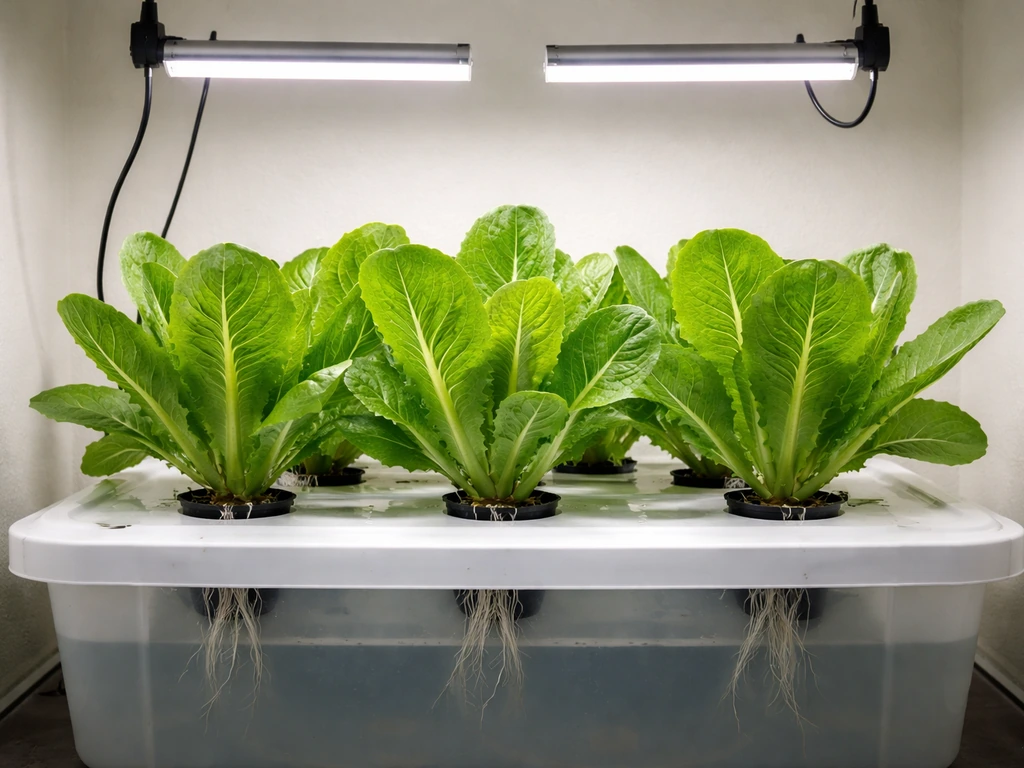
Yes, you can absolutely grow romaine lettuce hydroponically, and it's one of the best vegetables to start with in a hydroponic setup. Romaine thrives without soil when you give it the right light, a stable nutrient solution at pH 5.8–6.2, temperatures around 65–72°F, and enough space for its roots to breathe. You can go from seed to a harvestable head in roughly 45–70 days indoors, faster than most soil grows, and you don't need a fancy commercial rig to make it work at home.
Can You Grow Romaine Lettuce Hydroponically? How-To
Marcus Holloway
11 Jun 2026
How hydroponic romaine is different from growing in soil
The biggest shift when you move romaine from soil to water is that you take on full responsibility for nutrients and oxygen delivery. In soil, microbes break down organic matter and release nutrients gradually, and the soil itself holds air pockets around roots. In a hydroponic system, your nutrient solution is the only food source, so if your pH drifts or your solution runs low, the plant feels it within hours rather than days. That sounds intimidating, but it's actually more predictable once you get your numbers dialed in.
The other big difference is speed and cleanliness. Hydroponic romaine typically grows faster than soil-grown romaine because the roots don't have to search for nutrients and water. You also get fewer soil-borne pests and diseases, though indoor humid environments introduce their own challenges like fungus gnats and downy mildew, which I'll cover in the troubleshooting section. Flavor is comparable to good soil-grown romaine when you manage conditions well, though if you push nutrients too hard or let plants get heat-stressed, bitterness creeps in fast.
Choose a hydroponic setup that works for lettuce
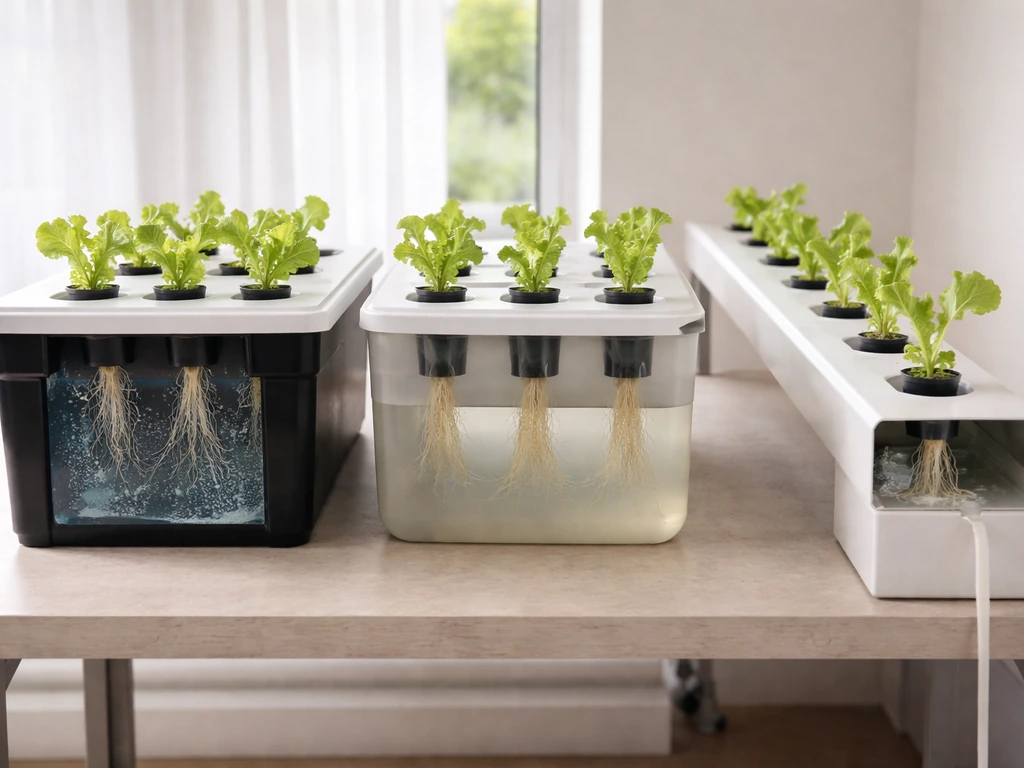
Not every hydroponic system suits romaine equally well at home. The three most practical options are Deep Water Culture (DWC), Kratky, and NFT (Nutrient Film Technique). Each has a different complexity level and maintenance requirement.
| System | How It Works | Best For | Main Limitation |
|---|---|---|---|
| DWC | Roots hang in oxygenated nutrient solution; an airstone keeps dissolved oxygen high | Beginners who want reliable, fast growth | Water temperature must stay below 68°F/20°C; disease spreads fast in shared reservoirs |
| Kratky | Passive system with no pump; roots hang in static solution with an air gap above | Absolute beginners, apartment growers with no electricity budget for pumps | Needs more manual monitoring as solution level drops; less forgiving on hot days |
| NFT | Shallow stream of nutrient solution flows continuously past bare roots in a channel | Slightly more experienced growers who want a scalable setup | Requires a pump, timer, and precise channel slope; roots dry out fast if pump fails |
For most home growers starting out, DWC is the best choice for romaine. Many growers find the best romaine lettuce to grow is the one that matches their setup and conditions, like temperature range and available light. It's forgiving, cheap to set up with a basic bucket and airstone kit, and the continuous oxygenation keeps roots healthy. Kratky is a great second option if you want zero equipment and don't mind checking solution levels every few days. I'd hold off on NFT until you've done at least one successful DWC or Kratky grow, since pump failures can kill a crop of romaine in under a day when roots are exposed.
What romaine needs: light, temperature, and spacing
Light
Aim for a PPFD (photosynthetic photon flux density) of 150–250 µmol/m²/s over a 14–16 hour photoperiod. That hits the sweet spot DLI (daily light integral) of about 14–18 mol/m²/day. If you don't have a light meter, most LED grow lights designed for leafy greens will get you there at the recommended hanging distance listed by the manufacturer. What you want to avoid is going above roughly 300 µmol/m²/s. At that level, leaves start to dry, curl, and develop severe tip burn, and plants bolt faster. More light isn't better for romaine; consistent, moderate light is. A simple timer set to 16 hours on, 8 hours off handles the photoperiod automatically and is one of the smartest small investments you can make.
Temperature
Target a daytime air temperature of around 72°F (22°C) and let it drop to about 64°F (18°C) at night. Romaine starts to bolt when temperatures consistently exceed 75–80°F, especially combined with long photoperiods. Keep your nutrient solution temperature below 68°F (20°C) as well. Warmer water holds less dissolved oxygen, which stresses roots and opens the door to root rot. If your grow space gets warm in summer, a small aquarium chiller or even frozen water bottles in the reservoir can help.
Spacing and airflow
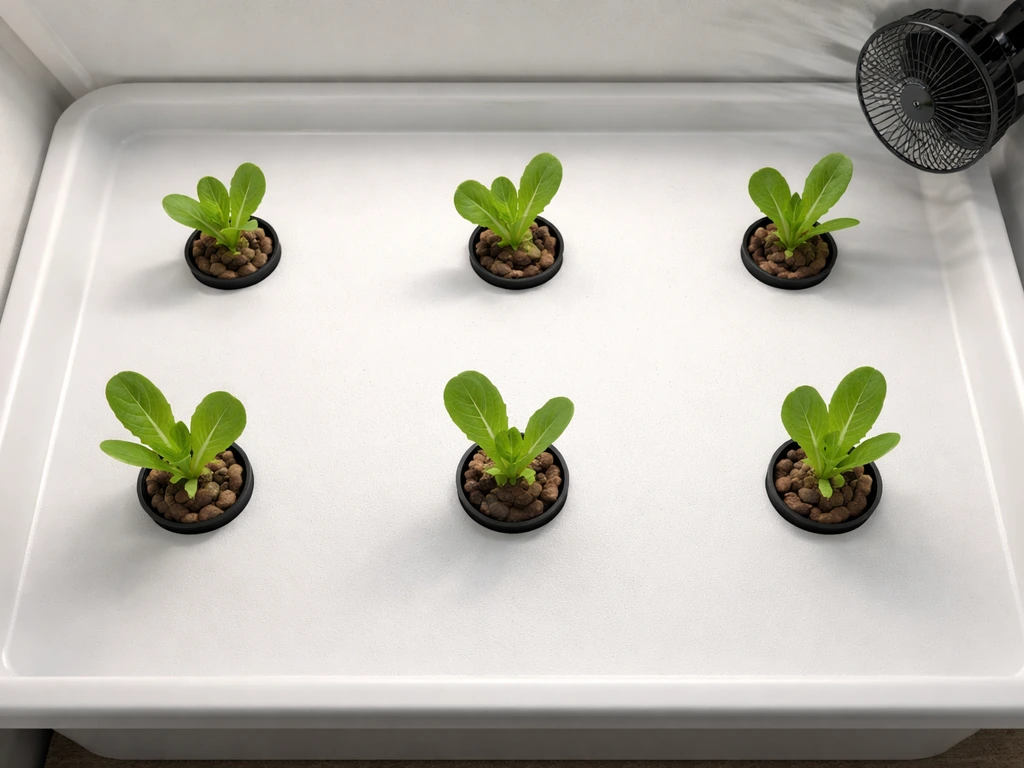
Romaine needs more space than loose-leaf lettuce. Give each plant at least 8–10 inches of spacing between net pots. Crowded plants compete for light and airflow, which raises humidity around the leaves and creates the damp, stagnant conditions that downy mildew loves. A small oscillating fan running on low near your plants does a lot to prevent this. Good airflow also helps calcium reach the inner leaves of the forming head, which directly reduces tip burn risk.
Nutrients and water management
pH and EC targets
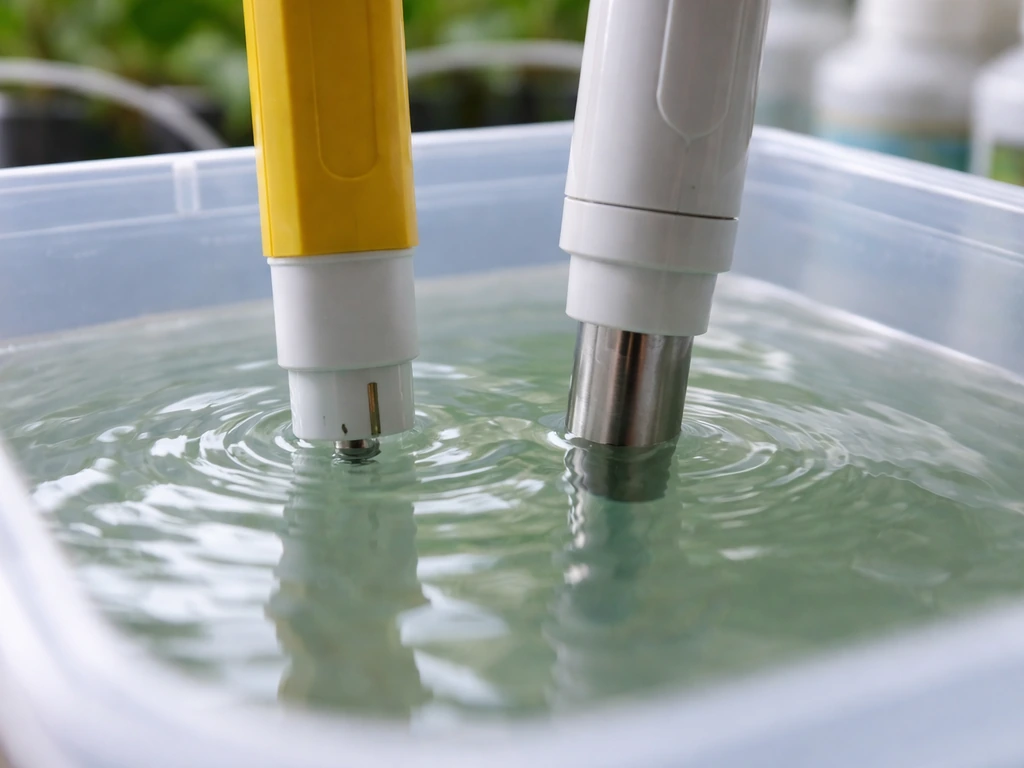
Keep your nutrient solution pH in the 5.8–6.2 range. Below 5.8, calcium and magnesium become harder for roots to absorb. Above 6.5, iron and manganese lock out. Both shifts show up as yellowing, tip burn, or slow growth. Check pH every 1–2 days, especially in a smaller reservoir where it drifts faster. For EC (electrical conductivity), start seedlings at around 0.8–1.0 mS/cm and bump it up to 1.2–1.6 mS/cm once plants are established and showing 4 or more true leaves. Going higher than 1.6 mS/cm stresses romaine and can cause edge burn on the outer leaves.
Fertilizer and nutrients
A two-part or three-part hydroponic nutrient formula designed for leafy greens will cover your bases. Target around 130–150 ppm of nitrogen as part of a balanced formula. Calcium is particularly important for romaine: tip burn in hydroponic lettuce is almost always a calcium delivery problem, not necessarily a lack of calcium in the solution. The issue is transport, meaning the plant isn't moving calcium fast enough to new leaf tissue. This is why airflow, moderate EC, and not overfeeding are as important as adding calcium itself.
Oxygenation and water changes
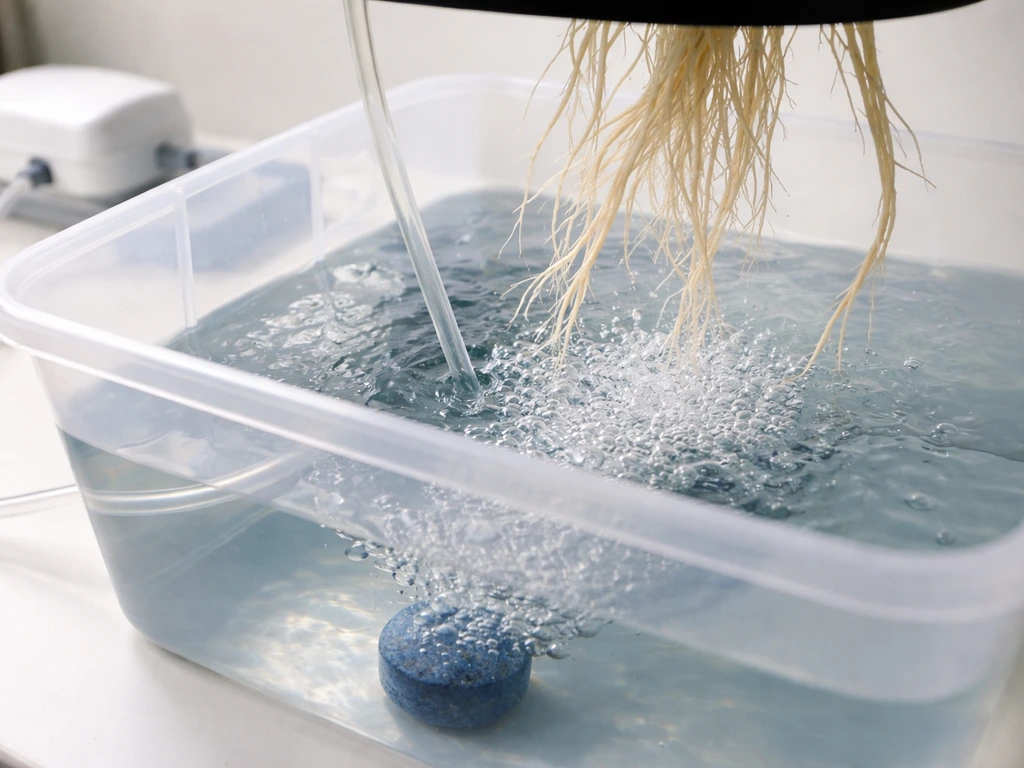
In a DWC system, run your airstone continuously, not on a timer. Roots without adequate oxygen slow their nutrient uptake and become vulnerable to pythium (root rot) very quickly. In a Kratky setup, the air gap between the solution surface and the net pot serves the same purpose, so never top off the reservoir to the point where it's touching the net pot base and drowning the stem. Do a full nutrient solution change every 1–2 weeks to prevent salt buildup, pathogen accumulation, and pH instability. When you top off between changes, use plain pH-adjusted water to avoid EC creep.
Step-by-step growing process from seed to harvest
- Start seeds in rockwool cubes or rapid rooter plugs. Soak rockwool cubes in pH 5.5 water for 30 minutes first. Place one seed per cube about 1/4 inch deep. Keep cubes moist but not waterlogged and cover with a humidity dome under low light (or no grow light) for the first 2–4 days until germination.
- Move germinated seedlings under your grow light once they sprout. Keep the PPFD low at this stage, around 100–150 µmol/m²/s, and maintain humidity around 60–70%. Use a very dilute nutrient solution (EC around 0.5–0.8 mS/cm) to mist or water cubes once daily. Roots will begin extending from the cube bottom within 7–14 days.
- Transplant when seedlings have 2–3 true leaves and you can see roots actively extending from the bottom of the rockwool cube. This is the biological signal that they're ready. Don't transplant before roots are visible at the base: submerging the cube too early risks stem rot at the waterline. Place the cube into your net pot and fill around it with clay pebbles to hold it stable.
- Set your reservoir to EC 0.8–1.0 mS/cm and pH 5.8–6.2 for the first week after transplant. Position the net pot so roots can reach the solution but the rockwool cube sits above the waterline with just the roots submerged. In DWC, the airstone should already be running.
- After the first week, raise EC to 1.2–1.6 mS/cm as plants enter their fast growth phase. Check pH daily for the first few weeks and adjust with pH up or down solution as needed. Watch for the first signs of new growth at the center of the plant. Romaine forms a loose rosette first, then tightens into a more upright head shape.
- Continue monitoring and topping off the reservoir with plain pH-adjusted water between weekly or biweekly full solution changes. Aim for consistent temperatures and light. Romaine is in its most active growth phase from weeks 3 to 6 after transplant.
- Harvest a whole head by cutting the entire plant at the base just above the net pot when it reaches full size and the inner leaves are tightly packed. This typically happens 45–70 days from seed depending on variety and conditions. Alternatively, use the cut-and-come-again method for leaf romaine by harvesting outer leaves starting around week 4, leaving the center growth point intact.
Timing, harvest, and keeping succession going
Romaine in hydroponics runs roughly 10–14 days from seed to transplant-ready seedling, then another 35–55 days from transplant to harvest, putting you at 45–70 days total from seed. Compact or mini romaine varieties like 'Little Gem' or 'Jericho' tend to finish faster and are excellent for small home setups. If you are wondering, can you grow romaine lettuce at home, the good news is there are straightforward hydroponic options that work well for beginners. Standard full-size romaine heads take longer but give you more leaf mass per plant.
The cleanest way to keep fresh romaine coming is a staggered succession, starting a new batch of seeds every 2–3 weeks. That way you're always harvesting while the next batch is maturing. In practice, I start 4–6 seeds in a new tray every time I transplant the previous batch into the reservoir. It takes a couple of cycles to get the rhythm, but once you do, you'll rarely be without lettuce. If you're growing leaf romaine with cut-and-come-again, a single plant can produce for 3–4 weeks after first harvest before quality drops or bolting becomes a risk. Truleaf’s hydroponic lettuce guide also describes typical harvest timing for romaine, including how long cut-and-come-again production can continue before quality drops or bolting risk increases a single plant can produce for 3–4 weeks after first harvest.
Troubleshooting common problems and quick fixes
Slow or stunted growth
If your romaine is barely moving after 2 weeks post-transplant, check EC, pH, and water temperature first. Roots sitting in solution above 68°F with low oxygen is the most common culprit. Make sure your airstone is running constantly and verify the reservoir temperature. A pH that's drifted above 6.5 will lock out iron and zinc and produce pale, stunted plants even with plenty of nutrients in the water.
Leggy, stretchy seedlings
Leggy seedlings mean not enough light early on. Move your light closer or increase intensity to around 150 µmol/m²/s during the seedling phase. This usually corrects itself once you transplant and get plants under proper grow light intensity, but extremely leggy stems can be fragile and prone to toppling in the net pot.
Tip burn on inner leaves
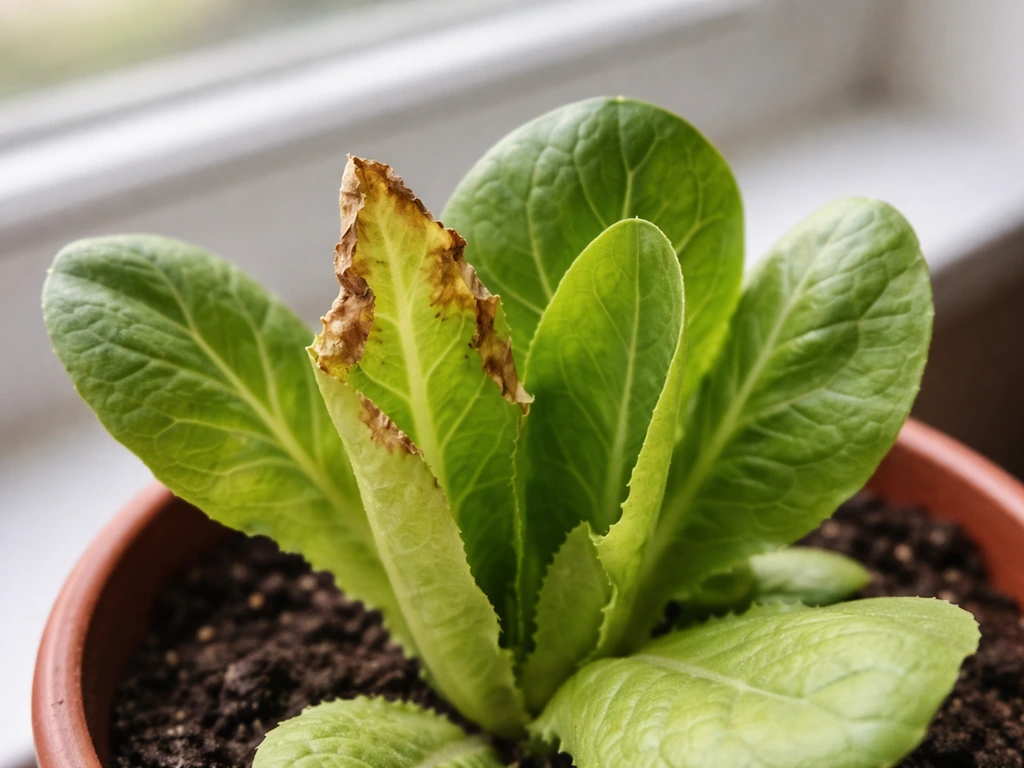
Tip burn shows up as brown, papery edges on the youngest inner leaves. As mentioned, this is a calcium delivery problem rather than a nutrient deficiency in the solution. The fixes are: lower your EC slightly (reduce the osmotic load on the plant), increase airflow directly around and through the plant canopy with a small fan, and make sure light levels aren't above 300 µmol/m²/s. You can also try slightly lowering solution temperature, which improves root oxygen uptake and in turn calcium transport.
Bitter flavor or premature bolting
Bitterness and bolting are almost always heat or light related. If your grow space is regularly hitting 78°F or above, or if your light is running more than 16 hours a day, romaine will start the bolting process. Drop temperatures back to the 68–72°F range, reduce the photoperiod to 14 hours, and harvest as soon as the head looks close to ready. If you are planning your next batch, the when to grow romaine lettuce timeline matters most, especially for avoiding premature bolting. Don't leave mature plants sitting in the system hoping they'll keep improving; they won't.
Root problems
Healthy roots are white or cream-colored with a slightly fuzzy appearance from root hairs. Brown, slimy, or musty-smelling roots are a sign of pythium root rot, usually triggered by warm water, low oxygen, or light leaking into the reservoir and feeding algae. Fix it by dropping water temperature below 68°F, ensuring your airstone runs constantly, blocking all light from the reservoir with opaque material, and doing a full reservoir flush. Beneficial bacteria products (like Hydroguard) can help prevent recurrence, though catching it early is the real key.
Pests and disease in indoor systems
Fungus gnats are the most common pest in indoor hydroponic setups. The adults are mostly a nuisance, but they breed in damp growing media and their presence signals something is staying too wet. Keep the area around your system clean, remove algae from any exposed surfaces promptly, and avoid overwatering seedling cubes before transplanting. Sticky yellow traps near the plants catch adults and help you monitor population size.
Downy mildew (caused by Bremia lactucae) shows up as yellow patches on upper leaf surfaces with a fuzzy white mold underneath. Powdery mildew looks different: it's a gray-white powdery coating on both sides of the leaf. Both are favored by stagnant, humid air around the canopy. The main fix is improving airflow with a fan and reducing ambient humidity. Remove and dispose of infected leaves immediately to prevent spread. In a shared indoor grow space, either can move through a tray of romaine fast if you don't catch it early.
Nutrient deficiency signs at a glance
| Symptom | Likely Cause | Quick Fix |
|---|---|---|
| Pale yellow older leaves | Nitrogen deficiency or pH too high | Check pH (lower to 5.8–6.2), increase EC slightly |
| Interveinal yellowing on young leaves | Iron deficiency (usually pH-induced) | Lower pH to 5.8–6.0 and confirm iron is in your nutrient formula |
| Brown leaf edges on outer leaves | High EC / salt stress | Reduce EC to 1.0–1.2 mS/cm and do a partial reservoir flush |
| Brown papery inner leaf tips | Calcium delivery failure (tip burn) | Increase airflow, lower EC slightly, check water temperature |
| Purplish leaf undersides | Phosphorus deficiency or cold stress | Ensure temperature is above 60°F and phosphorus is present in nutrients |
FAQ
Can you grow romaine hydroponically year-round if I do not control my room temperature?
Yes, but you need a different setup mindset. Use a small-leaf variety (often “leaf romaine”) and plan on harvesting often. For cut-and-come-again, keep EC and pH stable and remove outer leaves early so new growth stays airy. Also, expect shorter intervals between solution checks because rapid regrowth can make pH drift and nutrient uptake look “off” sooner than with single-head harvests.
What’s the biggest cause of tip burn in hydroponic romaine if the calcium level looks fine?
You can, but you may need a water-temperature strategy. If your reservoir repeatedly warms above about 68°F, root oxygen drops and problems like tip burn and root rot become more likely. Easiest approach is to shade the reservoir, insulate it, and keep it away from direct sunlight or warm walls. If that still fails, add active cooling (small chiller) rather than just increasing fans, because fans do not lower solution temperature.
My romaine seedlings look healthy, then slow down after transplant. What should I check first?
Even with adequate calcium in the bottle, tip burn often means the plant is not transporting calcium into the newest leaf tissue. Common reasons are high EC (osmotic stress), low airflow across the canopy, and warm solution temperatures reducing uptake. Practical fix: slightly lower EC, add or reposition an oscillating fan so leaves move gently, and confirm your reservoir stays under 68°F.
Can I top off my hydroponic reservoir with plain water between full changes?
Check the combination of oxygen, temperature, and pH drift, in that order. In DWC, confirm the airstone runs continuously and that you do not have poor mixing or dead zones. Then measure solution temperature with a probe, not just an air thermometer. Finally, re-test pH, especially if the reservoir is small and you top off often, because pH can swing quickly and cause nutrient lockout.
How do I prevent the reservoir from growing algae, and does light really matter?
You can top off with plain, pH-adjusted water, but do it carefully because it can increase “concentration creep” or shift the nutrient balance over time. A good rule is to top off only to restore volume, then rely on scheduled full changes every 1 to 2 weeks to reset salts and prevent pH instability. If you see EC climbing steadily, stop topping off and do a full change sooner.
What hydroponic system is safest for beginners, if I only want to use one setup?
Light in the reservoir fuels algae and also tends to reduce system stability by contributing to higher pathogen pressure. Use opaque covers or wrap the reservoir in light-blocking material, and avoid placing any clear tubing or exposed buckets where light hits them. If you already have algae, remove it promptly and do a full reservoir flush, because scraping alone often leaves residues that keep the problem returning.
If my romaine is bolting, what environmental change should I try first?
Deep Water Culture is usually the most forgiving, but only if you maintain oxygen delivery. Keep the airstone running 24/7, and add an air pump or battery backup if you have unreliable power. For someone who cannot monitor frequently, a constant-air DWC with a larger reservoir also buffers changes, since smaller volumes drift faster.
Can you reuse nutrient solution or “save money” by not changing it often?
Start with photoperiod and temperature together. If lights run longer than about 16 hours, shorten to around 14 hours and aim for daytime temps near 72°F, with nights closer to 64°F. If you cannot cool the room, prioritize keeping the solution cooler and harvest sooner when heads are close to ready, because once bolting begins, quality declines quickly.
What spacing is actually required for romaine heads in a hydroponic setup?
It’s not recommended for romaine because pH and dissolved salts drift even if plants look okay at first. Reusing or stretching changes past about 2 weeks increases the chance of nutrient imbalance and pathogen buildup (especially in warm conditions). If you must delay a change, monitor EC and pH more frequently and plan a full flush as soon as they trend beyond your target ranges.
How can I tell root rot apart from normal root color and early stress?
Aim for 8 to 10 inches between net pots, but also pay attention to canopy airflow once leaves expand. If plants touch or crowd, humidity rises around the inner leaves, increasing downy mildew risk and making calcium delivery less efficient. If you are limited on space, choose compact varieties first rather than squeezing standard romaine heads.
Do I need grow lights for indoor hydroponic romaine if I have a bright window?
Healthy roots are white or cream and often look slightly fuzzy due to root hairs. Root rot usually shows up as brown, slimy, or musty-smelling roots, and plants often stall while leaves start looking “off” despite normal pH and EC. If you suspect rot, check reservoir temperature and oxygen immediately, block light from the reservoir, then do a full reservoir flush rather than only adjusting nutrients.
How often should I check pH and EC in a home hydroponic romaine system?
A window often cannot provide consistent intensity and photoperiod. Even if the plants survive, you may get leggy growth or uneven bolting triggers because intensity changes day to day. If you use supplemental lighting, target moderate, steady leafy-green PPFD (roughly 150 to 250 µmol/m²/s) and keep a timer so the daily light schedule does not fluctuate.
Can I use regular lettuce seeds, or do I need specific hydroponic varieties?
Check pH every 1 to 2 days, and EC at least weekly, or more often if your reservoir is small or you top off frequently. Small changes can cause visible symptoms quickly in hydroponics, since the solution is the plant’s only food source. When you spot drift toward lockout ranges, correct promptly and keep the solution temperature stable while you do it.
What’s the best way to start succession planting so I do not waste space or harvest too early?
Regular lettuce seeds can work, but hydroponic performance depends on variety size and maturity. Compact or mini romaine types tend to finish faster and suit small systems better. If you plant standard full-size romaine in a cramped setup, you are more likely to face crowded-canopy humidity and longer periods where diseases can spread.
Are nutrient additives like beneficial bacteria necessary for preventing problems?
Use small staggered batches and transplant in cycles rather than starting everything at once. For example, start new seedlings every 2 to 3 weeks, then transplant them as the previous batch begins to establish. This reduces the chance you harvest all at the same time and also helps you learn your system’s time-to-harvest under your exact light and temperature conditions.
How do I reduce the chance of downy mildew in indoor hydroponics?
They are optional, but they can help as a risk-reducer, not a substitute for correct temperature and oxygen. Beneficial bacteria products may improve resilience against issues like pythium recurrence, but if your reservoir is warm or oxygen is weak, they usually cannot fully offset the conditions. Focus first on maintaining solution temperature below 68°F, continuous aeration in DWC, and opaque reservoirs.
What should I do if EC is too low or too high during the grow?
Improve airflow around the canopy and remove infected leaves immediately. Avoid letting plants crowd, since stagnant humid air forms between leaves and under the canopy. Also, keep the growing area clean and promptly remove algae, because messy surfaces create a more favorable environment for recurring humidity-driven issues.
Can I grow romaine hydroponically in a very small system, like a single bucket?
If EC is too low, growth can stall because the nutrient load is insufficient, and you may see pale leaves. If EC is too high, stress often shows as edge burn and dry, scorched leaf margins. Adjust gradually and re-check after a short period, since abrupt changes can stress roots further. In general, keep within about 1.2 to 1.6 mS/cm once plants are established.
How soon can I harvest romaine hydroponically, and when is it too late?
Yes, but smaller reservoirs need tighter control because pH and water temperature drift faster. If you run a single bucket, consider a larger air pump line, ensure strong aeration, and track temperature with a thermometer probe. Also, be conservative with stocking density, because limited airflow increases humidity and disease risk quickly.
What causes bitterness in hydroponic romaine, besides heat?
You can usually harvest sooner than soil, often in the 45 to 70 day range from seed depending on conditions and variety. Do not leave heads sitting after they look ready, quality can drop and bolting risk rises. If your goal is maximum crispness, harvest when the head is close to formed rather than waiting for it to “perfectly harden.”
Can I grow romaine hydroponically without airstones?
Heat and long light cycles are the biggest drivers, but EC overshoot can also push bitterness. If you notice bitterness alongside dry leaf edges or tip-burn-like symptoms, reduce EC slightly and keep solution temperature in range. Then keep photoperiod consistent with a timer so the plant is not getting extra stress from shifting daily light duration.
How do I know if my light is too strong for romaine?
In DWC, you generally need continuous aeration, because roots rely on oxygen in the solution. Without an airstone, nutrient uptake slows and root rot risk rises quickly. If you want “no airstone” options, consider Kratky, where the air gap provides oxygen, but avoid topping off so the net pot base stays above the solution.
What’s a good emergency plan if power goes out and the system warms up?
Signs include leaf edge drying, faster bolting, and more tip-burn symptoms, even when pH and EC seem in range. If you see these, lower light intensity or increase hanging distance and confirm your photoperiod is not above about 16 hours. A timer helps, because accidental longer runtimes are a common cause of “mystery bitterness” and bolt onset.
Is it okay to use tap water for hydroponic romaine?
If power loss stops aeration, the risk rises fastest in warm conditions. Cool the reservoir if possible (frozen bottles placed safely around the reservoir, not inside the plant area), and restore aeration immediately. Inspect roots after power returns, if roots smell musty or turn slimy, assume early pythium risk and do a full flush sooner rather than waiting for symptoms to spread.
What nutrient mixing mistake most often causes problems?
Often it works, but tap water can vary widely in dissolved minerals and alkalinity, which can affect how quickly pH drifts. If you use tap water, always pH-adjust before adding nutrients and consider measuring EC to understand baseline strength. If your pH keeps creeping out of range, you may need to switch water sources or adjust your buffering approach.
Can I grow romaine hydroponically with other herbs in the same system?
Mixing in the wrong order or not measuring properly, particularly making EC adjustments without rechecking after pH correction. Also avoid overfeeding to “make up for slow growth,” since high EC and nutrient stress can worsen tip burn and bitterness. Follow a measured approach, adjust pH last, then confirm EC after adjustments so you know what the plants are actually receiving.
What variety should I choose if I’m growing only a few plants for personal use?
It can work, but be cautious because different plants can tolerate different EC ranges and moisture preferences. If you mix species, you may end up optimizing for one crop while stressing another. If you share a reservoir, choose crops with similar light and nutrient targets and monitor pH and EC more frequently than you would for a single-species system.
Do I need to remove lower leaves during hydroponic growth?
Mini or compact romaine varieties are usually easier for small setups because they finish faster and take less space per plant. They also reduce the time your system needs to stay stable, which matters if you are learning how your particular light and room conditions affect bolting and tip burn.
Why are my romaine leaves pale even though pH and EC look correct?
Only remove leaves when necessary for hygiene or airflow, avoid stripping too early. If leaves block airflow to inner foliage, it can increase humidity and disease risk. When you do remove leaves, use clean tools, dispose of them away from the system, and watch the plant for renewed stress, especially if your temperature or EC is fluctuating.
What should I do with leftover seedlings if my first batch finishes faster than expected?
Pale leaves can come from light being too weak or too short, even when nutrients are technically in range. Confirm your light intensity and photoperiod with the same consistency each day. Also double-check that solution temperature stays within target, warm water reduces oxygen and uptake efficiency, which can make nutrient use look “ineffective.”
Can hydroponic romaine be grown organically?
Either harvest earlier on the first batch and start eating through the timing gap, or adjust your next transplant schedule. The simplest correction is to delay transplanting until the system has capacity, since overcrowding raises humidity and disease risk. If seedlings are getting leggy, increase light intensity or move lights closer before transplanting rather than waiting for them to “fix themselves” in the reservoir.
How can I reduce the chance of my harvest getting soggy after cutting?
Sometimes, but “organic” depends on nutrient products and additives, not just how the seeds are labeled. If you aim for organic inputs, verify that the nutrient line is compatible with hydroponic use and that it maintains stable pH and EC. Even organic formulas can create nutrient imbalances if they cause faster pH drift, so still follow the same measurement and change intervals for solution management.
What’s the most common reason hydroponic romaine fails within the first week?
Harvest at peak firmness, then cool quickly and keep lettuce dry during storage. In the system, consistent light and avoiding heat spikes helps the plant build tougher, crisper tissue. After harvest, rinse gently if needed, pat dry thoroughly, and store cold with airflow to prevent condensation buildup that can soften leaves.
Can I switch systems mid-grow if I started in Kratky and want to move to DWC?
Usually it is oxygen or temperature issues rather than nutrient strength. In DWC, low aeration or airstone failure is the top cause, and warm reservoir water makes it worse. Verify the airstone is producing fine bubbles constantly, confirm reservoir temperature with a probe, then keep pH in range from day one.
Why do my romaine plants look okay but taste off (too bitter or bland)?
You can, but do it gently and only when roots are established enough to handle the change in oxygen and water dynamics. Avoid long exposure of roots to air during transfer, and re-check pH and EC after the move because mixing fresh solution can shift values. Plan the transfer around a time when your room and reservoir temperatures are stable to reduce transplant shock.
What’s the safest way to clean the reservoir between grows?
Taste is usually a combined result of stress, light intensity, and how quickly you harvest. Bitterness often increases with heat and longer photoperiods, blandness can happen when light is too low or EC is consistently under target. Keep photoperiod consistent with a timer, correct temperature issues early, then adjust EC in small steps based on growth rate rather than taste alone.
If I see fungus gnats, is it enough to add sticky traps?
Do a full drain, then remove algae and residue, clean with a food-safe sanitizing method appropriate for hydroponic systems, and rinse thoroughly. Make sure the reservoir is dry or fully refreshed before refilling with nutrient solution. Also, clean nets and tubing, because biofilm can remain in small passages and seed the next crop with pathogens.
Can I use a standard aquarium pump for hydroponics air supply?
Sticky traps help monitor adults, but the real fix is reducing moisture where they breed. Ensure seedlings are not staying overly wet in media, remove algae, and keep the area around the system clean. If gnats persist, inspect for condensation on surfaces and improve airflow so humidity does not sit on plant leaves or near damp trays.
How do I decide the right EC step when plants reach 4 true leaves?
Often yes, but choose a pump and tubing sized for the number of buckets and the air stones you plan to run. What matters is achieving strong, constant aeration, you should see consistent fine bubbles and avoid poor oxygenation in corners. Also consider adding a simple backup plan if power reliability is an issue.
Can hydroponic romaine be grown without checking EC at all?
Use a small, planned jump rather than large swings. A common approach is starting seedlings around 0.8 to 1.0 mS/cm, then moving to about 1.2 to 1.6 mS/cm once you see 4 or more true leaves. After adjusting, watch for early edge burn or slow growth, if it happens, return EC toward the midpoint and confirm reservoir temperature is not drifting high.
What should I do if my pH keeps rising or falling day to day?
You can grow occasionally without EC, but it becomes risky because EC is your only easy measure of nutrient strength in many setups. If you do not track EC, you will likely rely on pH and visual cues, which can lag behind the problem. At minimum, check EC weekly and use faster pH checks in small reservoirs to prevent hidden nutrient stress.
Is it normal for outer leaves to yellow while the inner head forms?
First, verify your measurement tool calibration and mixing steps. Then look at causes: warm water can change uptake patterns, topping off too often without full solution resets can shift concentration, and algae growth can influence chemistry. If pH is unstable, do a full reservoir change sooner, keep temperature stable, and restore a consistent light schedule with a timer.
How close can I mount grow lights to hydroponic romaine?
A small amount can happen naturally as the plant prioritizes head growth, but widespread yellowing usually indicates an issue like nutrient imbalance, pH drift, or insufficient airflow causing poor uptake. Check pH first, then EC and reservoir temperature, and confirm light intensity is within the leafy-green range so the plant can power new tissue formation.
What harvesting method works best for maximizing regrowth?
Mounting distance depends on your fixture, so use the manufacturer’s recommended hanging range as your starting point and verify performance via PPFD or clear growth response. If leaves bleach or edges dry, you are likely too close or too intense. Maintain a consistent distance and use a timer so daily light exposure matches your target photoperiod.
Can I use fertilizers meant for soil in a hydroponic system?
For head romaine, harvest cleanly at the base when the head is ready, do not leave a long stub that can rot in humid systems. For cut-and-come-again, take outer leaves with a sharp, sanitized tool and leave the center growing point intact. After multiple harvests, re-check EC and pH because rapid regrowth can intensify drift.
How can I tell if the problem is nutrient lockout versus a disease?
Sometimes, but you should avoid it unless the product is specifically formulated for hydroponics or at least stable in water without clogging or excessive pH drift. Soil fertilizers can include forms that do not behave well in solution and may create precipitates. If you are using a non-hydroponic product, test in a small batch first and track EC, pH stability, and any precipitate formation.
What’s a realistic target for yield per plant in hydroponic romaine?
Nutrient lockout often appears as patterned issues, yellowing or tip burn progressing from certain leaf regions while roots look otherwise normal. Disease tends to spread, show visible mold or fuzzy growth, and often comes with distinct root symptoms in the case of rot (brown slimy roots, musty smell). If you suspect disease, inspect roots and leaves closely and remove infected material quickly rather than only adjusting nutrients.
Should I grow romaine in net pots with clay pebbles, foam, or something else?
Yield varies by variety and head size, but the practical driver is how long you let plants mature and whether spacing and light are on target. Compact varieties typically give smaller heads but can be harvested sooner and more consistently. Standard heads give more leaf mass per plant, but they require maintaining stable conditions longer, so consistency in pH, EC, and temperature matters more for yield predictability.
How do I handle pythium risk proactively before I see symptoms?
Choose a medium that stays oxygen-friendly and drains properly. In most DWC and Kratky setups, inert media like clay pebbles or rockwool with correct wetting works well. The key is avoiding prolonged saturation around the stem area, which raises humidity and pest risk. If you see gnats or soggy conditions around seedlings, reduce how long the media stays wet before transplant.
What are the most common mistakes that cause bitterness in hydroponic romaine?
The best prevention is keeping solution cool, maintaining continuous aeration in DWC, blocking reservoir light to limit algae, and sticking to regular reservoir changes. Even with good conditions, do not stretch out intervals when the room is warm. If your system is prone to warm water, prioritize temperature control first, because it drives both oxygen availability and pathogen growth.
Can I use a timer for the light and should it also run on weekends if I travel?
Common mistakes include running the photoperiod too long, letting temperatures exceed the target range, and pushing EC too high. Also, delaying harvest until the head is fully hardened can reduce crispness and increase perception of bitterness. Use a timer for consistent daily light and harvest close to readiness rather than waiting indefinitely.
How quickly should I expect visible progress after transplant?
Yes, a timer is the easiest way to prevent accidental photoperiod overrun, which can trigger bolting and bitterness. If you travel, do not rely on manual changes, set the timer for the full period or use a remote-controlled plug so the schedule continues even when you are away. Keep the timer set to your target photoperiod, around 14 to 16 hours for romaine.
Can I grow romaine hydroponically outdoors in warmer climates?
You should generally see measurable improvement within about a week after transplant if roots are oxygenated and temperature stays in range. If nothing changes after 2 weeks, start with EC, pH, and especially solution temperature and aeration, because those are the most frequent root causes. Also check root health by inspecting for musty odor and slimy brown roots.
Should I sterilize all parts before the first grow?
Yes, but outdoors increases temperature swings and light intensity, which can quickly push romaine into bolting or bitterness. If you try it, use shade cloth to stabilize light, keep reservoir insulated to prevent warm water, and protect the system from rain splash and debris that can raise pathogen risk. Indoors is more predictable, but outdoors is possible with tight climate management.
What’s the fastest way to fix pale, slow growth that appears suddenly mid-grow?
It helps, especially if you reuse buckets, tubing, or air stones. Old biofilm can seed algae and pathogens. Clean the reservoir and plumbing thoroughly, ensure no leftover residues remain, and start with fresh nutrient solution each run. After that, maintain a routine cleaning and solution replacement schedule.
Can I harvest just a few leaves from a head romaine and keep it going longer?
Treat it as a stability problem first: re-check pH immediately, then confirm water temperature and oxygenation. Sudden pale, slow growth can come from a pH jump, warm reservoir, or an aeration issue, even if you have been dialed in previously. Correct the underlying environmental cause, then wait a few days, since visible recovery takes time for new leaf tissue to form.
Is hydroponic romaine more prone to disease than soil romaine?
You can remove a few outer leaves, but head romaine usually responds best when you harvest the whole head near readiness. Frequent leaf removal can disrupt canopy structure and airflow, which can increase humidity and disease risk. If you want ongoing harvests, consider growing leaf romaine or planning for cut-and-come-again from the start.
What should I do if my roots have algae on them, but they still look mostly healthy?
Hydroponics often reduces soil-borne issues, but it shifts the risk toward water and humidity related problems. Root rot can spread quickly in warm, low-oxygen conditions, and downy mildew becomes a bigger concern in stagnant humid air. The best prevention is consistent temperature and oxygen plus strong canopy airflow.
How do I choose between DWC, Kratky, and NFT if I want the easiest maintenance?
Algae on roots is a sign that light is reaching the reservoir or top surfaces. Even if roots look mostly healthy, it can contribute to instability over time. Block all light from the reservoir, clean any algae residue, and do a partial or full solution refresh depending on how extensive it is. Then improve airflow and keep temperatures stable so the system recovers quickly.
What’s the best way to adjust system targets if my grow space is dim?
For easiest maintenance, Kratky is often lowest effort if you can check levels a few times per week and keep roots oxygenated via a proper air gap. For balanced reliability, DWC is usually the best for beginners, but it requires continuous aeration. NFT can be efficient, but it is more sensitive to pump reliability and can lead to fast crop loss if flow stops, so it is usually a second-step choice.
Can I grow romaine hydroponically using only a basement window and indoor ambient light?
If light is limiting, you may see leggy growth and slow head formation, nutrient adjustments alone will not fix it. Reduce crowding, increase distance from reflective obstructions that create hotspots, and focus on getting into the leafy-green PPFD range. If you cannot reach target intensity, choose faster varieties like mini romaine and plan for slightly longer timelines.
What should I do if my hydroponic romaine develops curling leaves?
Usually it is not enough for consistent romaine production. Window light may not deliver adequate intensity, and seasonal changes can cause inconsistent growth and bolting behavior. If you want reliable harvests, use grow lights with a timer to keep photoperiod and intensity stable, then manage nutrients and temperature as described for hydroponics.
How do I prevent the stem from rotting at the net pot in DWC or Kratky?
Leaf curling can come from stress, often heat, inconsistent watering or solution temperature, or light issues. First check reservoir temperature and photoperiod, then confirm pH is in range and EC is not excessively high. If curling happens alongside tip burn, prioritize airflow and slightly lower EC while keeping temperatures within targets.
Can I grow romaine hydroponically without measuring tools, just by eye?
Avoid letting the stem base stay wet or submerged for long periods, especially in Kratky where topping off is a common mistake. In DWC, ensure the net pot and collar design allows oxygen around the stem and roots, and do not pack media too tightly against the stem. If you see darkening or softness near the stem, check oxygen and temperature first, then reduce how much material touches the stem area.
What quick symptom-to-cause checks can I do during troubleshooting?
You can start, but you are more likely to run into pH drift, nutrient imbalance, and temperature stress without measurements. At minimum, get a reliable pH test setup and ideally a thermometer probe. Visual symptoms often show up after the problem is established, so frequent testing lets you correct early rather than chasing symptoms.
Should I run fans 24/7, and where should they point?
Use quick triage: pale or stunted growth often points to pH drift or insufficient light. Tip burn and brown papery edges on young leaves often point to calcium delivery stress, check airflow and EC, then confirm solution temperature is not warm. Musty roots, slime, and sudden stalling usually point to pythium, fix oxygen and temperature immediately and flush the reservoir.
Can I use hard water without issues in hydroponic romaine?
In most indoor setups, fans running continuously on low help keep the canopy dry enough to resist downy mildew. Point the airflow to move gently through the plants, avoid blasting directly so leaves dry excessively. If you notice persistent fuzzy mold under leaves, reposition the fan so air reaches the inner canopy where humidity collects.
What’s a good first-crop plan if I want to be successful without wasting a lot of lettuce?
Hard water can be workable, but it often increases pH drift and can complicate calcium and magnesium availability. If your water tends to raise pH quickly, monitor pH more frequently and be prepared for more frequent reservoir changes. EC and pH targets matter more than the label “hard” or “soft,” because the actual effect is how your water behaves after mixing.
Do I need to worry about pollination or flowering in indoor hydroponic romaine?
Start with a small DWC or Kratky system, use compact varieties, and run short success tests before scaling up. Keep everything stable early on, especially solution temperature, pH within 5.8 to 6.2, and moderate light around leafy-green PPFD targets. Do a staggered batch plan so if one run has issues, you still have another batch reaching harvest stage soon.
How do I store harvested romaine to keep it crisp?
Indoor romaine usually flowers or bolts when temperature and light timing push it out of the vegetative zone. Since hydroponic setups are often indoors with controlled light and temperature, you can avoid most flowering by staying within the recommended photoperiod and temperature ranges. If plants start bolting, harvest promptly rather than trying to “wait it out,” because quality continues to decline.
Can hydroponic romaine taste better than soil romaine, or is it only about survival?
Store it cold and dry, using breathable storage and avoiding excess condensation. For best crispness, cool soon after harvest and keep leaves from being pressed under weight. If you rinse, pat dry thoroughly and let it air-dry briefly before refrigerating, condensation can worsen softness over the next day or two.
What should I do if I suspect nutrient precipitate in the reservoir?
It can taste equal or better when you keep conditions within range and avoid nutrient stress. Consistent moderate light, stable temperatures, and not overdriving EC help prevent bitterness. If you taste bitterness or see rapid bolting, treat it as an environmental feedback signal and correct temperature and photoperiod before changing nutrient brands.
Is it normal for the first batch to take longer than the timeline?
Precipitation can mean parts of your nutrients are reacting, often due to pH being off or mixing practices. If you see cloudiness or sediment, stop and inspect pH, then flush and refill with correctly mixed nutrients. Mix thoroughly and confirm you are using a two-part or three-part formula suitable for hydroponics, then re-check EC and pH before returning to the target range.
Can I grow romaine lettuce hydroponically if I have cats or pets around the system?
Yes, especially the first run. Beginners often fine-tune light height, photoperiod, and nutrient mixing, and small differences can shift the days to harvest. Use the timeline as a target, not a promise, then record your actual dates once you find your stable conditions so future success becomes more predictable.
Do I need to use a specific type of net pot for romaine hydroponics?
You can, but focus on safety and keeping the reservoir sealed. Use a locked or enclosed area, especially because nutrient solutions can be harmful if ingested by pets. Also, keep electrical components and cords out of reach, secure air lines, and use opaque reservoir covers so both light reduction and pet safety are handled together.
What should I do if my plants are too tall and starting to shade themselves?
A net pot sized for your plants and system is important for spacing and airflow around roots. Choose a pot that positions the stem correctly relative to the solution (especially for DWC and Kratky) so the stem is not submerged. If the pot sits too deep, you can create stem rot risk and raise disease pressure.
Can romaine hydroponics work with rainwater or collected water?
Reduce light intensity slightly or increase light height if you are over target, and check that the photoperiod is not accidentally too long. Self-shading reduces inner-leaf airflow and can increase humidity. If plants are already established, lower EC a touch and improve airflow, then harvest promptly if heads are close to ready to avoid quality loss.
What is the single most useful habit for staying on top of hydroponic romaine?
It can, but you must test and stabilize it because rainwater mineral content and contaminants vary. If you use collected water, it still needs pH adjustment and you should monitor EC so nutrients are not being diluted or overloaded. Also be mindful of microbial contamination, do a thorough cleaning and start with a fresh solution rather than reusing stored water for long periods.
Should I run nutrient solution circulation or mixing in DWC?
Use a simple, repeatable daily routine: check pH every 1 to 2 days, confirm solution temperature and aeration, and visually inspect leaf edges and root color. Most major problems develop from small drifts and aeration issues that you can catch early if you inspect consistently. Keep notes on light schedule, EC adjustments, and any temperature spikes so you can quickly correlate cause and symptom.
How long should I wait before I make a second nutrient change after correcting pH or EC?
DWC with an air stone often provides enough mixing, but dead zones can still happen in larger reservoirs. If your EC or pH readings differ across the bucket or you see inconsistent growth between plants, add gentle circulation so nutrients distribute evenly. Keep circulation moderate and do not aerate so aggressively that it splashes and exposes stem bases.
Can I grow romaine hydroponically in a setup without electricity, aside from light?
After adjustments, give the plants a short recovery window, typically a couple of days, before making additional large changes. Frequent back-and-forth adjustments can stress roots and make it harder to diagnose the true cause. Instead, re-check pH and EC after the first correction and only fine-tune if values continue to move away from target.
What’s the best way to handle reservoir temperature fluctuations during hot afternoons?
True no-electrical hydroponics is usually incompatible with DWC because you need continuous aeration for oxygen. Kratky can work with minimal power, but you still need a method for pH adjustment and ensuring the system stays within temperature range. If you cannot power anything besides lights, Kratky is the more realistic choice, but you must avoid topping off and manage water stability carefully.
Is it normal for romaine to have a stronger flavor later in the cycle?
Insulate the reservoir and reduce heat gain from the environment, keep it away from direct sun and warm walls. If afternoons swing high, consider adding a low-cost cooling approach such as frozen bottles swapped regularly, while still ensuring aeration remains strong. Measure water temperature and adjust your strategy based on how high it actually gets, not just room air temperature.
Can I grow romaine hydroponically if my water has high chlorine or chloramine?
Sometimes, but bitterness should not be ignored. If flavor turns harsh, it usually aligns with heat stress, too much light, or EC being pushed too high. Harvest when heads are close to ready, and keep your targets steady to avoid end-of-cycle stress that changes taste.
What should I do if my system smells bad even when roots look okay?
Chlorine can dissipate over time, but chloramine does not reliably disappear without treatment. If you suspect chloramine, use a water treatment method appropriate for removing it before pH adjustment and nutrient mixing. Then confirm your pH stability and watch for slow root development, since water chemistry can affect nutrient availability and microbial balance.
Can I grow romaine hydroponically with a passive wick system?
A bad odor can mean low oxygen pockets, stagnant solution areas, or early biofilm buildup even before visible root damage. Verify continuous aeration, check reservoir temperature, and block reservoir light to limit algae. If the smell persists, do a full flush and clean the reservoir, because lingering pathogens can appear as symptoms later.
How do I know if my light schedule is causing bolting risk?
Not commonly for romaine heads compared with DWC or Kratky. Wick systems often struggle with providing consistent oxygen and nutrient delivery to romaine’s root mass without careful design. If you want low maintenance, start with Kratky or DWC and master the basics, then experiment with wick approaches once you understand how temperature, oxygen, and pH stability affect outcomes.
What’s the best way to protect romaine from airflow-related leaf drying without losing disease control?
If your room regularly trends warm, longer photoperiods increase risk. The most practical check is to ensure you are near your target photoperiod (about 14 to 16 hours) and verify your timer is working correctly. Also monitor day-to-day temperature, bolting often shows up after repeated warm cycles, not just one hot afternoon.
Can I grow romaine hydroponically using only one nutrient solution for multiple batches?
Aim for gentle, indirect airflow. You want leaves to dry enough to prevent stagnant humidity, but not so much that edges crisp quickly or leaves look desiccated. Use a fan on low, reposition until the canopy feels lightly moving, and adjust if you see dry edges alongside tip burn symptoms.
How do I adjust if my romaine is taking longer than expected to head up?
You can reuse a mixed solution temporarily, but it is better to treat each batch as fresh because pH and EC stability can degrade quickly in home systems. When you start new seedlings or transplant, mix a solution to your current target EC and pH and then manage stability with regular checks. If you carry over solution between batches, be prepared for more frequent corrective adjustments.
What should I do if the inner leaves never develop but outer leaves look okay?
Most delays come from low light, cool temperatures, or nutrient uptake constraints. Confirm light intensity is within leafy-green targets and that solution temperature stays below 68°F. Then verify pH is 5.8 to 6.2 and EC is in the established range for your plant size. If all are correct, choose a variety with a shorter maturity or accept a longer timeline based on your specific indoor conditions.
Is it safe to drink nutrient solution spills if they occur?
This can be caused by poor airflow to the center, nutrient delivery issues, or temperature and light mismatch. Increase airflow through the canopy, check EC and pH stability, and confirm your light intensity is adequate for head formation. If temperature is consistently high, the plant may prioritize stress responses over inner leaf growth, harvest sooner if head development stalls.
How can I reduce the risk of nutrient imbalance when I change my nutrient brand?
No. Treat any hydroponic nutrient solution as non-food and keep it away from pets and children. Clean spills promptly with plenty of water and dispose of waste safely according to local guidance. Use sealed reservoirs and secured plumbing to reduce the chance of spills during adjustments.
What’s the best troubleshooting order when multiple symptoms appear at once?
Do not assume different nutrient brands behave identically at the same EC. When switching, start with the recommended dilution for leafy greens and measure both EC and pH after mixing. Run a small test reservoir first if possible, and adjust toward your target EC range for your growth stage. Observe leaf color and growth rate before scaling up.
Can I grow romaine lettuce hydroponically without tasting test surprises at harvest time?
Use a priority order: aeration and temperature first, then pH, then EC, then light schedule, finally spacing and airflow. Multiple symptoms often share a single root cause, especially in hydroponics where oxygen and temperature rapidly affect nutrient uptake. Correct the earliest causes first, then reassess over a few days before making additional changes.
What should I do if my nutrient solution pH drops suddenly overnight?
Yes, by controlling the big drivers early: keep temperature stable, keep photoperiod consistent, and avoid EC overshoot. Harvest timing also matters, harvest when heads are close to ready and do not let plants sit too long. If you track pH, EC, and temperature daily, you can correlate any taste changes with specific environmental events and fix them for the next batch.
Can you grow romaine lettuce hydroponically with a small educational budget?
A sudden pH drop can indicate rapid nutrient uptake changes, an error in mixing, or increased biological activity from algae or residues. Re-check your pH meter calibration, then test again with fresh mixing to confirm accuracy. If it is real, do a partial or full solution change sooner and improve reservoir cleanliness and light blocking to reduce algae-driven instability.
How can I reduce the chance of stunting from transplant shock?
Yes, prioritize the fundamentals over fancy add-ons. A basic DWC bucket with airstone kit, a timer for lights, and a reliable pH testing method will cover most success needs. If you budget for only one “upgrade,” choose a good thermometer probe and a stable light schedule, because temperature and photoperiod strongly influence bolting and bitterness.
What are the warning signs that I should harvest immediately rather than waiting?
Keep transplant conditions close to what seedlings already experienced, especially solution temperature and aeration. Avoid leaving roots exposed to air, and make sure the net pot seats correctly so the stem base is not trapped in excess wet media. After transplant, check pH and temperature within 24 hours and keep light consistent so plants recover without extra stress.
Do I need to prune roots during hydroponic growth?
Harvest immediately if you see early bolting behavior, rapidly worsening bitterness, or widespread tip burn progressing on many plants. Also harvest if you detect root rot signs such as musty odor and browning slimy roots, because delays can reduce quality quickly. In most cases, earlier harvest preserves crispness even if head size is slightly smaller.
What’s the best way to know if my EC reading is trustworthy?
No, avoid root pruning in home hydroponics, it is easy to cause stress and expose roots to oxygen changes or pathogens. Focus on maintaining oxygen, temperature, pH, and spacing instead. If roots become overcrowded, adjust plant spacing next time or reduce stocking density so each plant has enough room to breathe and expand.
Can I use RO water for hydroponic romaine?
Calibrate your EC meter and use consistent temperature compensation if your meter supports it. Also stir the solution gently before measuring so you are not reading a localized concentration. If readings do not match what you observe visually over time, re-check calibration and confirm you are using clean containers to avoid contamination from residue or past nutrient salts.
How do I stop biofilm buildup on tubing and fittings?
RO water can work well because it starts with very low dissolved solids, but you must add nutrients and reestablish your full ionic balance. Since RO reduces buffering capacity, pH can drift more, so monitor pH more frequently at first. Use pH-adjusted water and keep the solution stable with regular checks and scheduled full reservoir changes.
Why do my romaine leaves develop brown spots that do not look like tip burn?
Keep reservoir and tubing light-protected, clean out residue during full changes, and avoid stagnant conditions. If you notice slime or slick buildup, flush and sanitize during your next full change rather than trying to ignore it. Biofilm can shelter pathogens and reduce oxygen exchange, so maintaining cleanliness is a direct disease prevention step.
Should I add extra magnesium or calcium supplements to “boost” romaine?
Brown spots on leaves can come from mildew-like issues, water splash, or localized damage from stress. Check if spots are paired with fuzzy mold or leaf surface changes, if so remove affected leaves quickly and improve airflow. If spots align with areas getting direct high-intensity light, reduce intensity or move lights slightly farther to prevent scorching.
How do I keep seedlings from staying too wet before transplant?
Usually no, if you are already using a leafy-greens hydroponic nutrient blend. Extra supplements often push EC higher or unbalance ratios, which can worsen edge burn and bitterness. If you see tip burn, address delivery problems first by lowering EC slightly, improving airflow, and keeping solution temperature controlled, then consider targeted adjustments only if the baseline nutrient program is clearly insufficient.
What’s the best way to choose a starter size for a first DWC grow?
Use a consistent misting or watering schedule for your cubes, then transplant when roots are ready rather than waiting for prolonged saturation. Overly wet conditions around seedlings encourage fungus gnats and can increase disease risk after transplant. When you do transplant, ensure the stem base is positioned so it is not trapped in constantly wet media.
Can I grow romaine hydroponically in vertical stacks?
Start with a small but not tiny reservoir so parameters do not swing wildly. Many growers do well with a few plants in one system, using correct spacing and airstones that can keep oxygen high. If you start too small, daily pH and temperature swings become harder to correct, which can frustrate your first successful grow.
How can I tell if my romaine is under or overfed?
You can, but vertical stacking increases airflow complexity and makes heat and humidity harder to manage. Ensure each tier has adequate airflow and separate control of lights so intensity does not exceed leafy-green targets. Also, be careful about spacing because tight stacking can raise downy mildew risk in the inner canopy.