Romaine lettuce needs about 12 inches between plants and 15 to 18 inches between rows for full heads in a traditional row garden. If you're growing in a raised bed or square-foot style layout, 12 inches in every direction works well. Baby leaf harvests can get by with much tighter spacing, around 2 to 4 inches between plants. Containers, indoor setups, and hydroponic systems each have their own rules, and getting this right makes the difference between compact, healthy heads and a stretched, crowded mess.
How Much Space Romaine Lettuce Needs to Grow
Marcus Holloway
11 May 2026
Spacing basics: rows, beds, and containers
The spacing number you use depends entirely on how you're growing. Row gardens, raised beds, and containers are three different problems, and using the same number for all of them leads to mistakes. Here's how to think about each one before you put a single seed in the ground.
Traditional row gardens
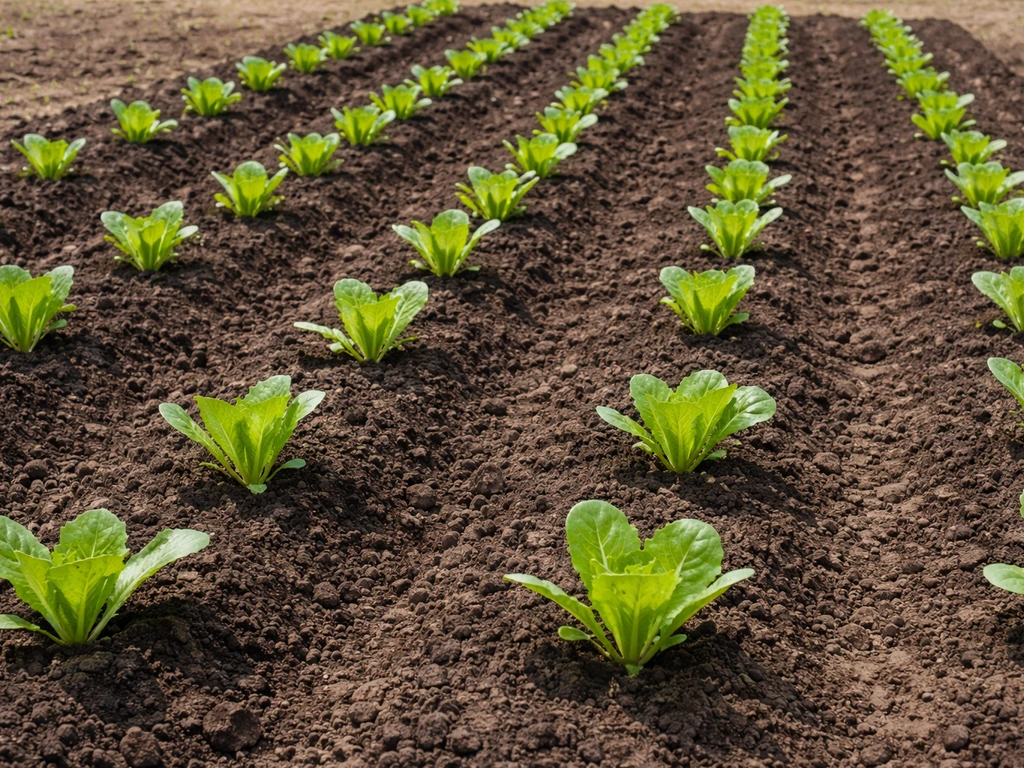
For a standard in-ground row setup, the most widely supported spacing for full-size romaine heads is blank" rel="noopener noreferrer">12 inches between plants within the row and 15 to 18 inches between rows. If you want the full, start-to-finish basics, check out our guide on how does romaine lettuce grow. University of Delaware Extension recommends rows 2 feet apart with plants 12 to 15 inches apart in the row, which gives you a bit more airflow and is a good choice if your summers get humid. The wider row spacing matters because romaine gets tall at maturity, around 10 to 12 inches high, and air needs to move through or you'll see disease problems.
Raised beds and square-foot style
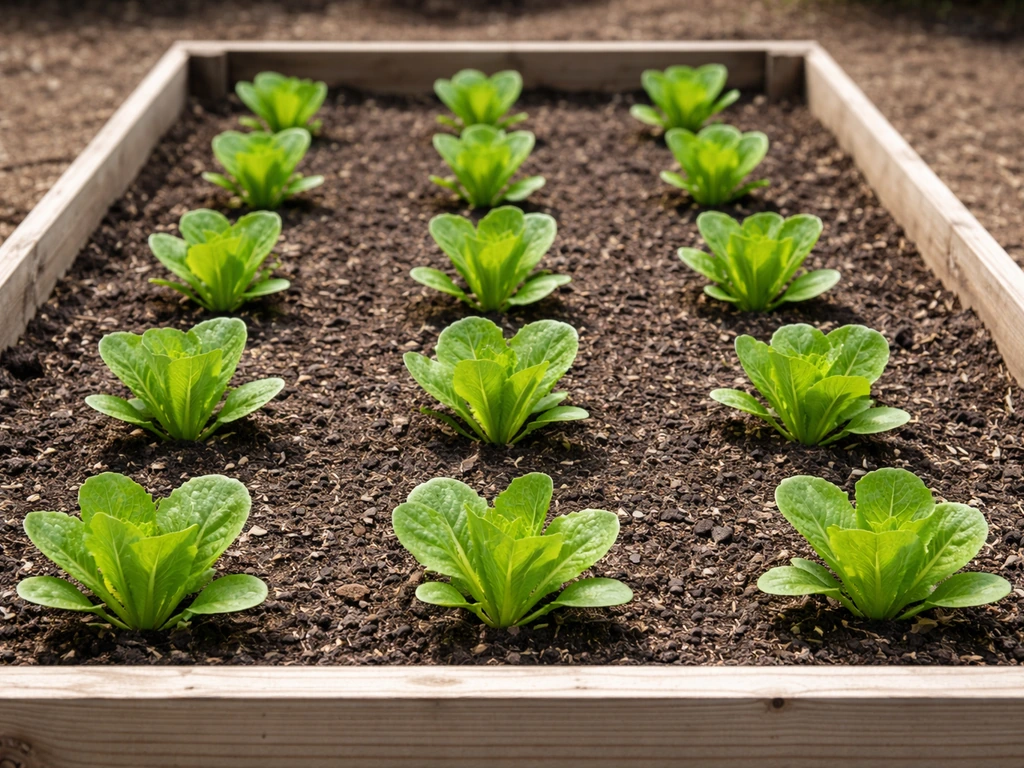
In a raised bed, you can go tighter because you're not walking between rows and you're usually managing soil and fertility more carefully. One plant per 12-inch square is the practical standard. A 3-foot by 4-foot raised bed gives you about 12 full-size romaine plants. If that sounds like a lot of romaine at once, it's a great argument for succession planting, which I'll get into later.
Containers and pots
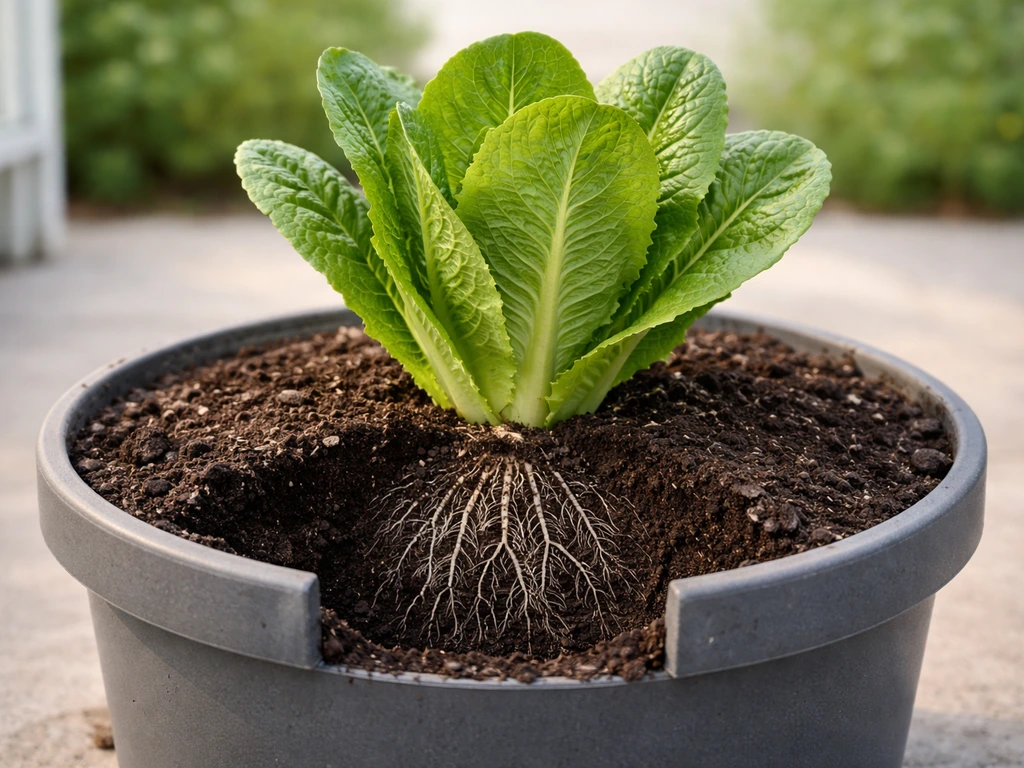
For containers, the minimum useful pot size for one romaine plant is about 6 to 8 inches in diameter, but a 12-inch pot is more forgiving because romaine roots go down 8 to 10 inches at full size. A standard 12-inch pot can comfortably hold one full-size romaine head. A larger rectangular planter, say 24 inches long by 8 inches wide, can hold two plants spaced 12 inches apart. Don't cram three in there to save space. You'll get weaker plants and smaller heads every time.
How spacing changes by growth stage and variety
Romaine spacing isn't one-size-fits-all even within the category. Whether you want full heads or baby leaves, and which variety you're growing, both matter.
| Growth Goal | Plant Spacing | Row Spacing | Notes |
|---|---|---|---|
| Baby leaf harvest | 2–4 inches | 3–6 inches | Harvest when 4–6 inches tall; thin to 2 inches after germination |
| Full head, standard romaine | 12 inches | 15–18 inches | Most varieties; supports 10–12 inch tall heads |
| Full head, compact varieties | 9–10 inches | 12–15 inches | Mini or dwarf romaine types |
| Full head, large varieties (e.g. Cimarron) | 12–15 inches | 18–24 inches | Large outer leaves need more room for airflow |
If you're growing for baby greens rather than full heads, you can seed densely and thin to about 2 inches between plants. Maryland Extension uses this 2-inch density as the indoor baby greens benchmark. Just keep in mind that once you shift to full-head production, you need to thin aggressively to that 10 to 12 inch range or the plants will compete for light and nutrients and you won't get proper head formation. A romaine head is ready when the leaves elongate and overlap into a tight column about 4 inches wide at the base and 6 to 8 inches tall. If your heads look loose and floppy, overcrowding or insufficient light is usually the culprit.
Outdoor vs. indoor spacing: pots, raised beds, and grow lights
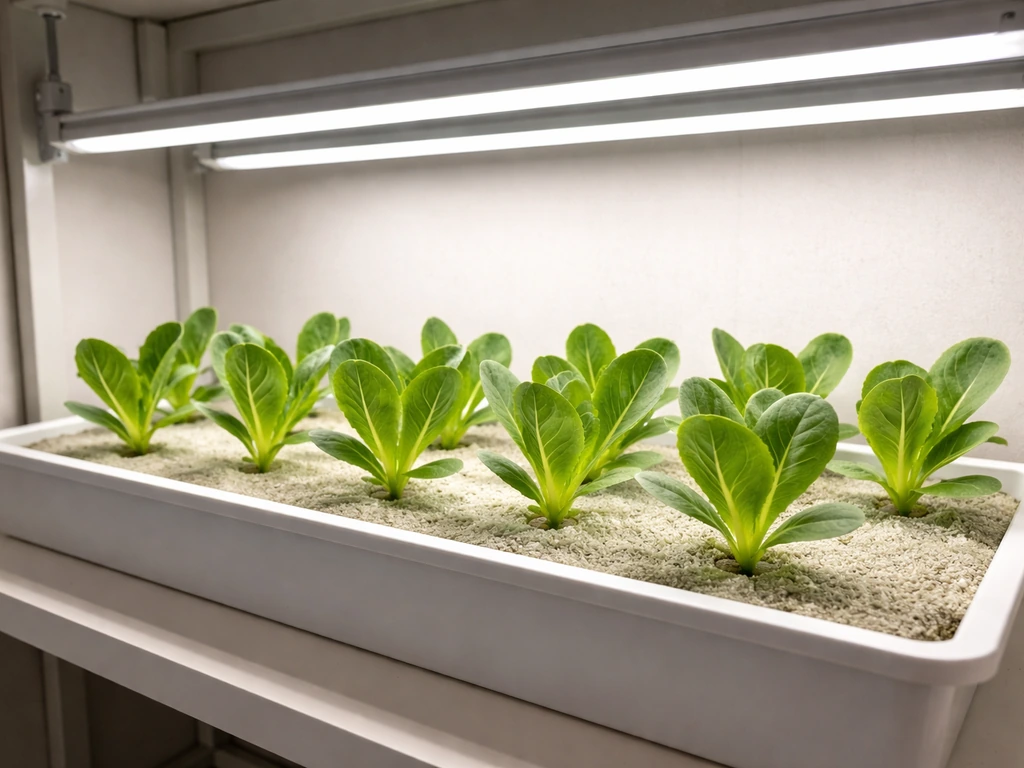
Growing romaine indoors under grow lights changes the spacing equation in one important way: light intensity drops off sharply the farther a leaf gets from the source. Outdoor plants have ambient light hitting from multiple angles, but an indoor plant under a fixed panel only gets good light directly below it. That means crowded indoor plants shade each other badly and you'll see bolting or stretching much faster than you would outdoors.
For indoor containers under grow lights, stick to 12 inches between plants, the same as outdoors, but pay extra attention to pot placement under the light. Position each plant so it sits within the optimal footprint of your light panel. A single 2-foot T5 or LED bar typically covers about 1 to 2 square feet of growing area well enough for romaine. That's room for one, maybe two plants in a single container if you space them 12 inches apart and position them directly beneath the fixture.
Windowsill growing is honest about its limitations: a south-facing window in winter will give you 4 to 6 hours of usable light on a good day. That's typically enough for baby leaf romaine at tight 2 to 4 inch spacing, but probably not enough for full, dense heads. If you want full heads indoors, a dedicated grow light is worth the investment. For more on timing your indoor plantings right, the article on when to grow romaine lettuce covers seasonal planning in detail.
Hydroponic spacing: channels, buckets, and tube systems
Hydroponic romaine grows faster and stays more compact than soil-grown plants, which means you can sometimes go a bit tighter than you would in a bed, but not dramatically so. The roots don't compete for soil nutrients, but the canopy still competes for light and airflow, so spacing still matters.
NFT channels and horizontal tube systems
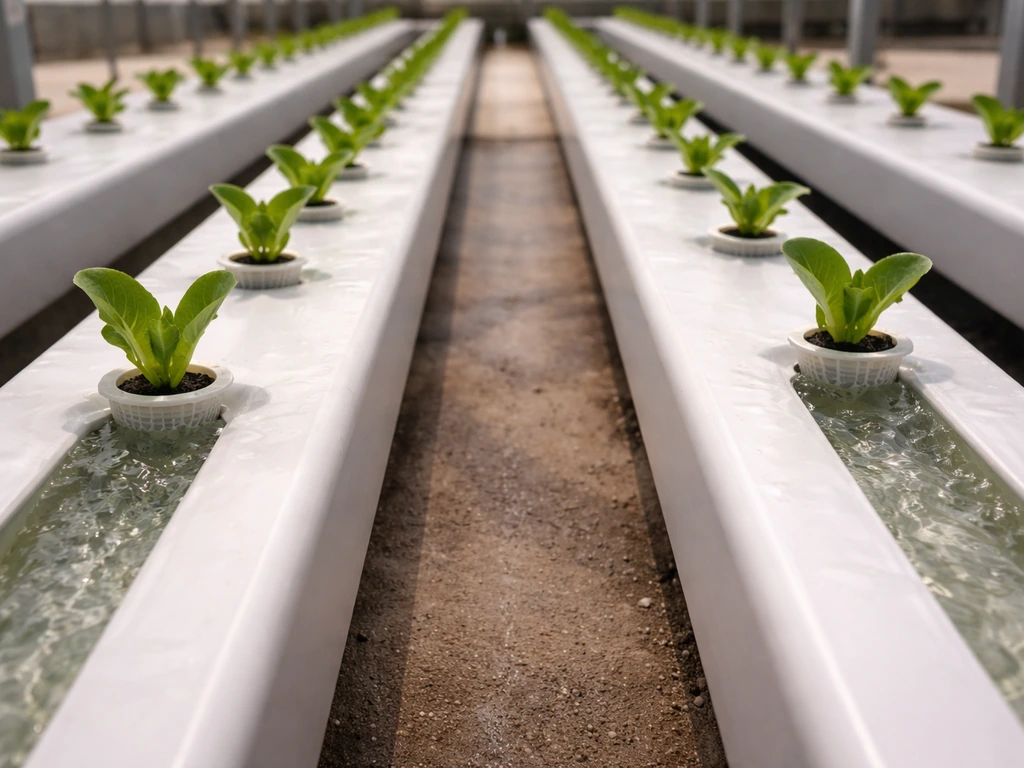
In nutrient film technique (NFT) channels or PVC tube systems, the standard spacing for full-size romaine is blank" rel="noopener noreferrer">8 to 10 inches between net pots within the channel, and 12 inches between channels if you're running multiple side by side. At 8 to 9 inch spacing you'll still get good head development because the roots aren't competing. Going below 8 inches on full-size romaine in a channel system usually produces smaller, lighter heads. For baby leaf production in channels, you can go as tight as 4 to 6 inches between net pots.
Deep water culture (DWC) and bucket systems
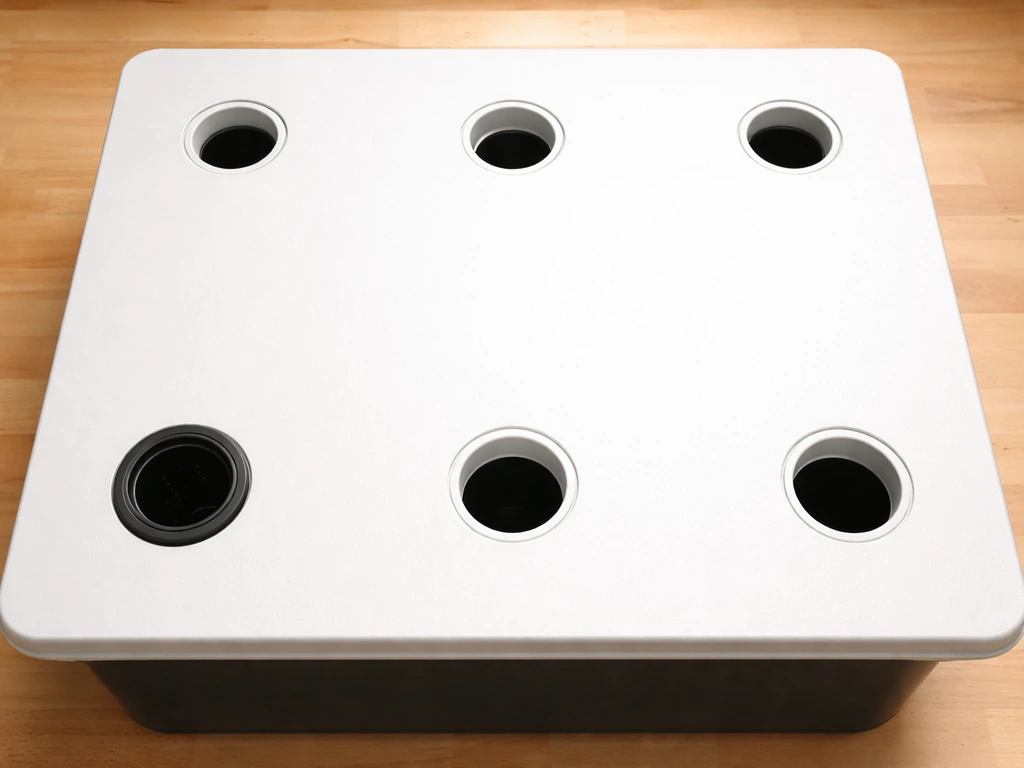
In a DWC reservoir or individual bucket setup, each romaine plant typically gets its own net pot hole. Space those holes 8 to 10 inches apart in a multi-hole reservoir lid. For individual 5-gallon buckets, one plant per bucket is the standard, and you position the buckets 10 to 12 inches apart to give the canopy room to expand without plants shading each other.
Vertical tower systems
Tower garden or vertical aeroponic systems typically have pre-set port spacing, usually 6 to 8 inches between ports. That's fine for romaine if you're harvesting frequently or targeting smaller heads. Full-size romaine in a vertical tower tends to be slightly more compact than soil-grown plants, so the 6 to 8 inch port spacing works reasonably well in practice. Rotate the tower occasionally so all sides get even light exposure, especially indoors.
Hydroponics opens up a lot of creative possibilities for romaine; the full breakdown of what's possible is covered in the article on growing romaine lettuce hydroponically. If you want the full step-by-step on setting up a system and dialing in water, nutrients, and light, see our guide on how to grow romaine lettuce hydroponically.
Planning space for multiple heads: rows, staggering, and succession
If you want a steady supply of romaine rather than one massive harvest all at once, spacing and succession planting work together. Romaine takes roughly 70 to 75 days to full maturity from seed. If you plant everything on the same day at 12-inch spacing, you'll have heads ready at the same time. That's a lot of salad in a short window.
Instead, stagger your plantings every 2 to 3 weeks. In a 4-foot by 8-foot raised bed, you can divide the bed into two or three planting zones and start each zone on a different date. With 12-inch spacing, a 4x8 bed holds about 24 romaine plants total. Split into three succession zones of 8 plants each, planted 3 weeks apart, and you're pulling heads roughly every 3 weeks rather than 24 heads in one week.
Staggered row planting also helps with airflow. Offset each row by 6 inches relative to the row behind it (a brickwork pattern) rather than planting in straight columns. This keeps the leaves from overlapping directly across rows and reduces humidity buildup between plants. It's a small change that makes a noticeable difference in disease resistance.
For planning how many plants you actually need, figure out how often you want to harvest and work backward. If your household goes through one romaine head per week, you need roughly 8 to 10 plants in rotation at different stages at any given time, accounting for germination failures and the occasional bolted plant.
What to do when plants get crowded or stretched
Spacing mistakes are common and fixable. Here's how to read what your plants are telling you and what to actually do about it.
Signs of crowding
- Leaves reaching sideways and overlapping neighboring plants before heads form
- Outer leaves yellowing while inner leaves look fine (lower leaves being shaded out)
- Powdery mildew or gray mold appearing at the base of the plant where airflow is blocked
- Heads that are loose, floppy, or slow to form a tight column
- Stunted growth compared to plants at the edge of the bed (which have more space)
If you see these signs, the fix is thinning. Pull out every other plant if you've seeded densely, or remove the weakest-looking plant between two crowded ones. Yes, it hurts to pull a living plant, but the plants you leave behind will grow faster and produce better heads within a week or two of giving them room. The pulled seedlings are edible, so toss them in a salad.
Signs of light stretching (etiolation)
- Stems are unusually tall and thin rather than compact
- Leaves are pale green or yellowish rather than deep green
- Plant leans toward a light source
- Head formation is slow or absent despite enough time having passed
Stretching is a light problem, not a spacing problem, but crowding makes it worse because plants block each other's light. If you're growing indoors, move the grow light closer or increase daily light hours to 14 to 16 hours. If you're outdoors, check whether a structure or taller plant is shading your romaine during peak light hours. If plants have already stretched significantly, there's no reversing it for those plants, but you can harvest them as baby leaf greens and start fresh with better spacing and light.
Slow growth with adequate spacing
If your spacing looks right but growth is still sluggish, the culprit is usually temperature or nutrients. Romaine grows best between 45 and 75 degrees Fahrenheit. Above 80 degrees it starts to bolt rather than form heads. If you're in that range and growth is slow indoors, check that your nutrient solution or soil fertility is on point. Romaine is a moderate feeder and responds well to nitrogen, especially in the early vegetative stage.
Your next-step checklist for picking a layout and starting today
Use this checklist to go from "I want to grow romaine" to a concrete plan you can act on right now. If you want the best results, choose a romaine variety known for staying crisp and producing tight heads under your local conditions. If you want step-by-step help, see the full guide on can you grow romaine lettuce for the best setup and timing.
- Decide your harvest goal: full heads (12-inch spacing) or baby leaves (2 to 4 inches). This one decision sets everything else.
- Measure your growing space: note length, width, and whether it gets at least 6 hours of direct light (outdoors) or whether you're running a grow light.
- Calculate plant count: divide your usable length by 12 inches (for full heads) to get plants per row. Divide your width by 15 to 18 inches to get number of rows. Multiply for total plants.
- For containers: pick a pot at least 8 to 12 inches in diameter and at least 8 inches deep. Plan one full-size romaine plant per 12-inch pot.
- For hydroponics: set net pot spacing at 8 to 10 inches in channels or DWC lids. Confirm your light covers the full canopy footprint.
- Plan your succession: divide your total plant count into groups of 6 to 8 plants. Start each group 2 to 3 weeks apart so heads mature in waves.
- Mark your calendar: add a thinning reminder for 2 to 3 weeks after seeding (thin to your final spacing when seedlings have 2 to 3 true leaves).
- Set a crowding checkpoint: at week 4, walk your rows or check your containers and make sure no leaves are overlapping neighboring plants. Thin if needed.
- Have a backup plan: if space is very limited, shift to baby leaf production with 2 to 4 inch spacing. You'll get harvests faster and from a smaller footprint.
Romaine is genuinely forgiving if you get the spacing roughly right. You don't need perfection, you just need enough room for each plant to form a head without fighting its neighbors for light and air. Start with 12 inches, thin ruthlessly when seedlings are young, and adjust from there. That's it.
FAQ
I only have room for one narrow bed, how much space should I use for romaine plants if there are no true rows?
If you are growing for full heads outdoors, start with about 12 inches between plants in the row and roughly 15 to 18 inches between rows. If you are in a humid area or notice disease risk, use the wider row spacing option (closer to 18 inches) to improve airflow.
How do I know if my romaine spacing is too tight before I waste a whole crop?
Romaine needs room to form a tight column. If you see multiple plants “leaning” into each other or the center looks open and floppy, thin early rather than waiting, ideally when seedlings are small enough that removing one does not disrupt the root ball of the ones you keep.
Can I plant romaine closer at first and thin later, or do I need to space exactly from day one?
Yes. You can sow a little denser, but you must thin once plants show enough size to compete. For full-head romaine in most soil setups, aim to end at the 10 to 12 inch spacing range after thinning, because leaving them tight increases light competition and reduces head tightness.
When guides say “12 inches between plants,” do they mean edge-to-edge leaves or center-to-center stems?
Measure spacing center-to-center for consistency. For example, in a raised bed using the 12-inch square rule, place plants so each plant is about 12 inches from the next plant’s stem, not 12 inches between the outer leaves.
What’s the best option if I want romaine but can’t thin because of time or space limits?
Switch to baby leaf harvest sooner if you are stuck with limited space or you cannot thin effectively. If you want dense full heads, use the spacing that supports airflow (12 inches between plants in beds and containers, with row gaps wider outdoors). Tight baby-leaf plantings can be harvested by leaf before they outgrow the space.
Does spacing alone fix slow, weak romaine indoors, or is light the bigger problem?
If you are using a window, the low and angled light is the limiting factor. Even with correct spacing, you may need to rotate the containers frequently and keep to baby leaf production if you only get a few hours of usable light, since full heads typically require stronger, more consistent illumination.
How does spacing change for hydroponic romaine compared to soil if I’m aiming for full-size heads?
Yes, in some hydroponic setups you can go a bit tighter, but not dramatically. In NFT or tube systems, the full-size target is usually 8 to 10 inches between net pots, while going below about 8 inches often leads to smaller, lighter heads.
How should I combine spacing with succession planting so I do not end up with too many heads at once?
When deciding how many plants to grow, plan backward from harvest frequency, then account for losses. Romaine commonly takes around 70 to 75 days to full maturity from seed, so stagger plantings every 2 to 3 weeks if you want ongoing harvest rather than one big flush.