Yes, you can grow iceberg lettuce in a pot, but go in with realistic expectations. Iceberg is the most heat-sensitive, slowest-heading lettuce you can grow, and it does take more effort in a container than a loose-leaf variety would. That said, it absolutely works if you pick the right pot size, keep temperatures cool, and water consistently. Expect 70 to 90 days from transplant to a harvestable head under decent conditions.
How to Grow Iceberg Lettuce in a Pot: Step-by-Step
Marcus Holloway
2 Jun 2026
Is iceberg lettuce actually pot-friendly?
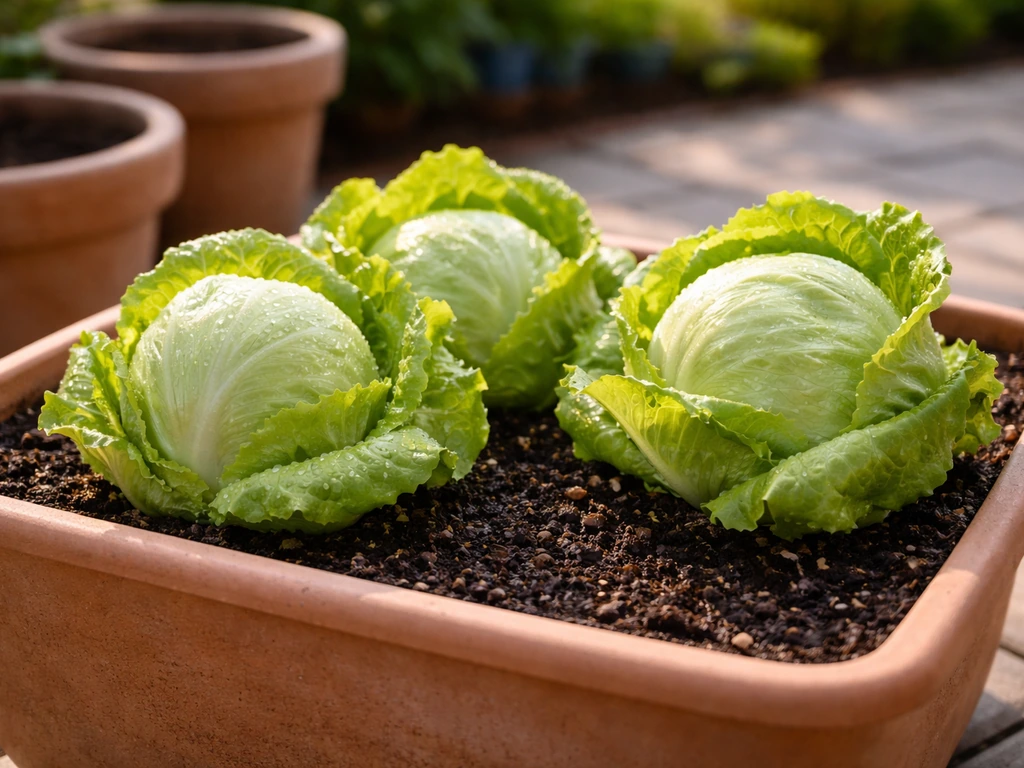
Iceberg is described by university horticulture programs as one of the most difficult lettuce types to grow, and that reputation is earned. It is extremely heat-sensitive, takes the longest to mature of any lettuce category (anywhere from 70 to 120 days depending on conditions and variety), and it needs to form a dense, compact head rather than just producing leaves. Loose-leaf types forgive a lot more mistakes. Iceberg doesn't.
So why bother with a pot? Because containers actually give you some advantages here. You can move a pot into shade when temperatures spike, control the soil mix precisely, and start your crop earlier in spring or later in summer by keeping it indoors or on a sheltered patio. For apartment dwellers or anyone without a garden bed, a pot is often the only option. The key is accepting that you're managing a more demanding crop and setting it up correctly from day one.
What you will realistically get from a pot: one to three heads per container (depending on pot size), a harvest window of a few weeks before the plant bolts, and crisp, fresh iceberg that tastes noticeably better than grocery store heads. That's worth the effort.
Choosing the right pot, location, and growing setup
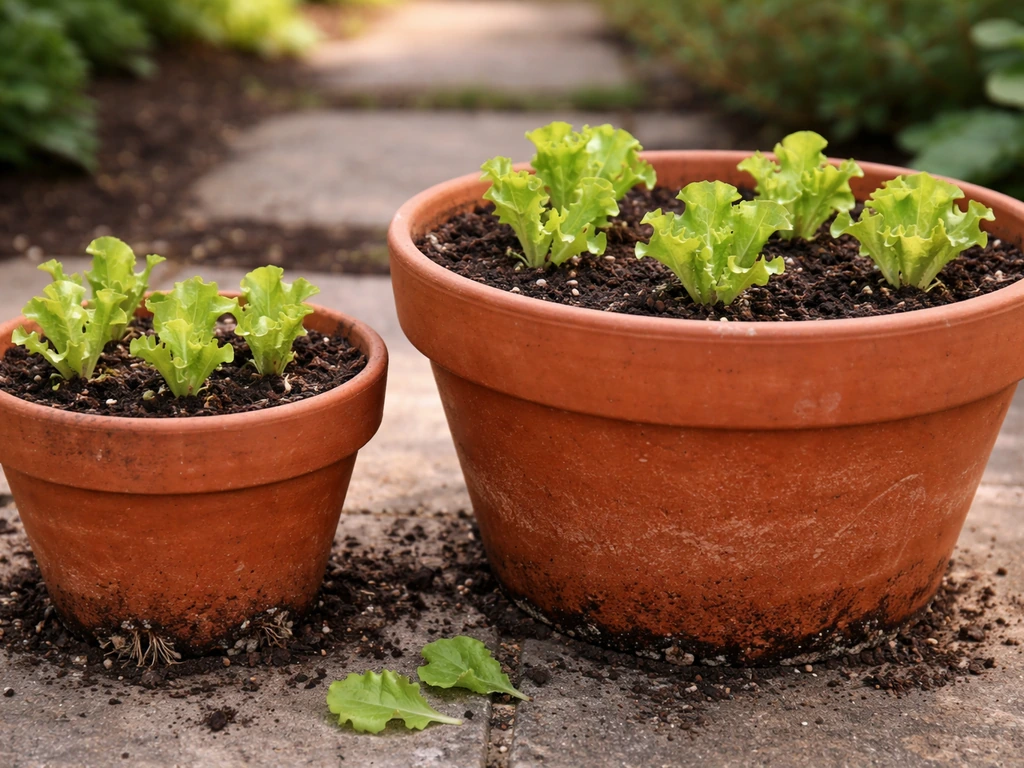
Container size is the most common mistake people make with iceberg. Because iceberg needs to form a full head, each plant needs significantly more root room than a small herb pot provides. Go with a minimum 12-inch diameter pot per plant, or a larger rectangular planter (at least 12 inches deep and 18 to 24 inches wide) if you want to grow two or three heads side by side. Shallow pots dry out too fast and restrict root development, which directly interferes with head formation.
Material matters more than most people realize. Terracotta looks great but dries out extremely quickly, which is a problem for a crop that needs consistent moisture. Plastic or glazed ceramic pots hold moisture longer and are a better choice for iceberg in warm weather. Dark-colored pots absorb heat and can cook roots on a hot afternoon patio, so opt for light-colored containers if you're growing outdoors in summer.
For location, iceberg wants full sun during cool weather (aim for 6 to 8 hours), but if you're growing in late spring or early fall when temperatures might push above 75°F during the day, afternoon shade becomes your friend. This guide focuses on how to grow iceberg lettuce in containers, which helps you manage the cool temperatures it needs in the Philippines how to grow iceberg lettuce in the philippines. Morning sun and afternoon shade is the sweet spot for warm-climate container growing. Indoors, place pots near a bright south-facing window, or supplement with a grow light targeting 250 to 350 µmol/m²/s PPFD for best growth.
If you're comparing this to growing iceberg in the ground, the main tradeoff is that a pot heats up and dries out faster than a garden bed, but you gain the flexibility to move things around. If you're drawn to trying a soil-free method, iceberg also grows well in hydroponic containers, which some gardeners find easier to manage for temperature and moisture consistency. If you want a hydroponic setup, focus on stable water temperature and proper nutrient dosing so the heads form reliably hydroponic containers.
Soil mix and container drainage essentials
Don't use garden soil in a pot. It compacts, drains poorly, and suffocates roots. You want a lightweight potting mix that holds enough moisture to stay consistently damp but drains freely so roots never sit in standing water. A standard bagged vegetable or all-purpose potting mix is a fine starting point, but I like to improve it for lettuce by mixing in about 20 to 30 percent perlite or coarse sand to boost drainage without sacrificing moisture retention.
Drainage holes are non-negotiable. Every pot you use must have them. If your decorative outer pot doesn't have holes, use it as a sleeve around a plain plastic liner that does. After watering, excess water should flow freely out the bottom within a minute or two. If it pools on top or drains very slowly, your mix is too dense or the holes are blocked.
One thing to watch: lightweight potting mixes can pull away from the sides of the pot when they dry out, creating channels where water runs straight down the edges and out the bottom without actually wetting the root zone. If you see water draining suspiciously fast, push the soil back against the pot wall and water slowly, or set the pot in a shallow tray of water for 15 minutes to rehydrate from the bottom up.
A target soil pH between 6.0 and 7.0 suits iceberg well. Most quality potting mixes fall in this range already, so unless you're amending heavily with peat (which is acidic), you usually don't need to adjust.
Planting: seeds vs transplants, spacing, and depth
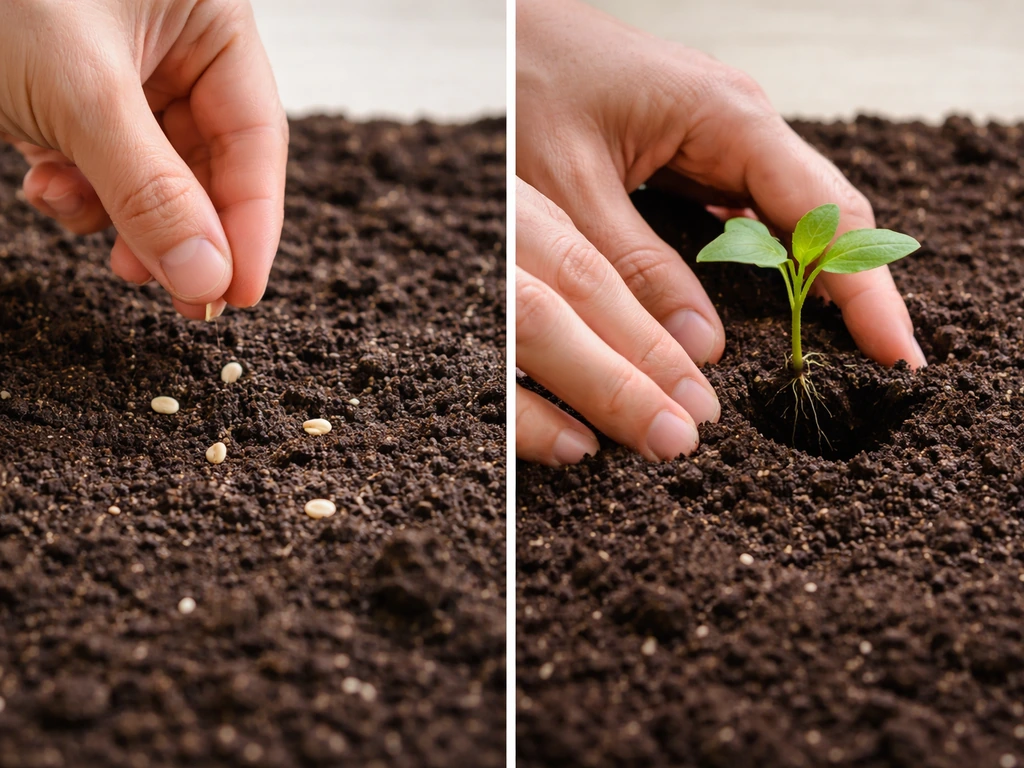
You have two options: sow seeds directly in the pot or start with transplants. Both work, but they suit different situations.
Starting from seed
Seeds germinate best at 70 to 75°F, though they can sprout in soil as cold as 35°F. Sow seeds about a quarter inch deep and keep the soil surface consistently moist until germination, which typically takes 7 to 10 days. Sow a few seeds per final plant location and thin to the strongest seedling once they're about 2 inches tall. The thinning step matters: iceberg that's too crowded won't form proper heads.
Using transplants
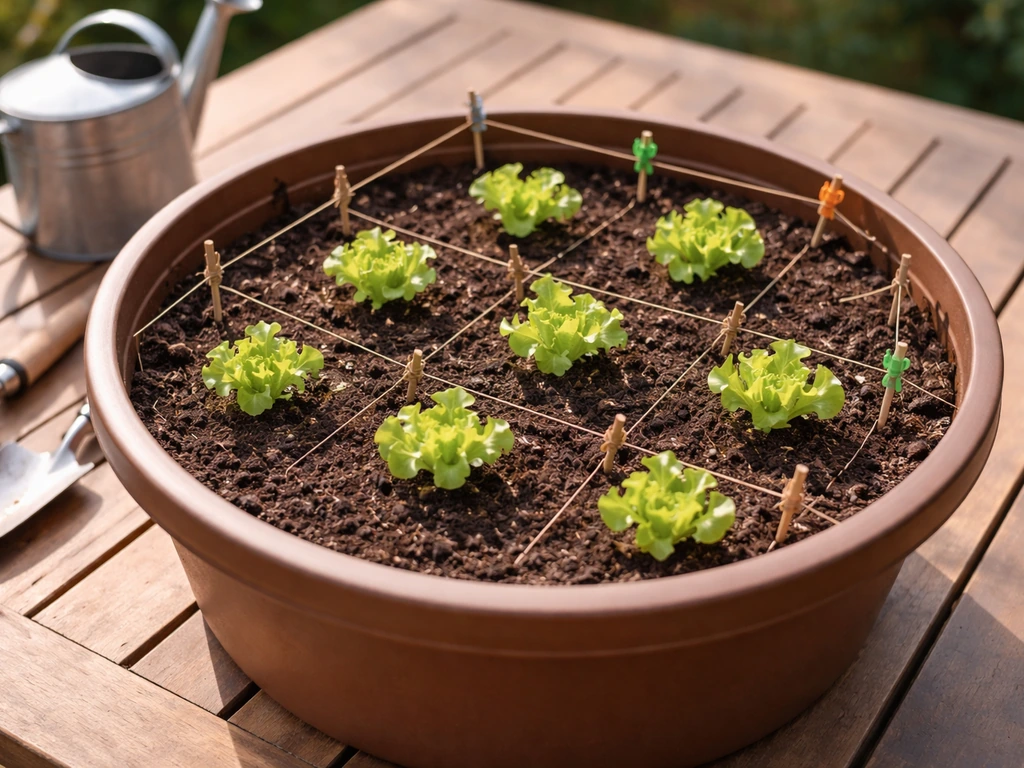
Transplants give you a 3 to 4 week head start and are my preferred approach for pots because you can time exactly when plants go in after hardening them off. Set transplants in at the same depth they were growing in their nursery cell, firm the soil around them gently, and water in well immediately. If you bought leggy seedlings, you can bury the stem slightly deeper, similar to tomatoes.
Final spacing
Final spacing for iceberg should be 8 to 12 inches between plants, with rows at least 12 to 18 inches apart if you're using a wide planter. In a round 12-inch pot, that means one plant per pot. In an 18 to 24-inch rectangular container, you can fit two plants side by side. Resist the urge to cram more in: crowded iceberg produces loose, non-heading rosettes instead of tight heads, and all your effort goes to waste.
Light and temperature: keeping it cool for heads
Temperature management is honestly the biggest challenge of growing iceberg in a pot. The ideal growing temperature for lettuce is 60 to 65°F for vegetative growth. Once daytime temperatures consistently push above 75 to 80°F, heading is compromised, plants bolt (send up a flower stalk), and leaves turn bitter. Iceberg is not forgiving here.
For outdoor pot growing, this means iceberg is a cool-season crop. In most climates, that points to early spring (as soon as nights stay above freezing) or late summer through fall (planting 10 to 12 weeks before your first frost). If you’re growing in India, plan your sowing in the cooler months or in early fall so iceberg can form heads before summer heat arrives cool-season crop. The movability of a container is your biggest asset: when a warm spell hits, you can shift the pot to a shadier, cooler spot or bring it inside temporarily.
Indoors, the target is 5 to 6 hours of bright light at minimum, with 8 to 10 hours being better for strong growth. A south-facing window in winter often works. In summer, indoor ambient temperatures in an air-conditioned space (65 to 70°F) can actually be more stable than an outdoor patio. Under grow lights, aim for 250 to 350 µmol/m²/s PPFD with a 14 to 16 hour photoperiod for mature heads.
One thing to remember: low light leads to leggy, loose plants that won't head up. Heat leads to bolting and bitterness. Of the two problems, heat is harder to reverse once it starts, so prioritize cool temperatures over maximizing sun hours if you have to choose.
Watering and feeding for crisp growth
How to water
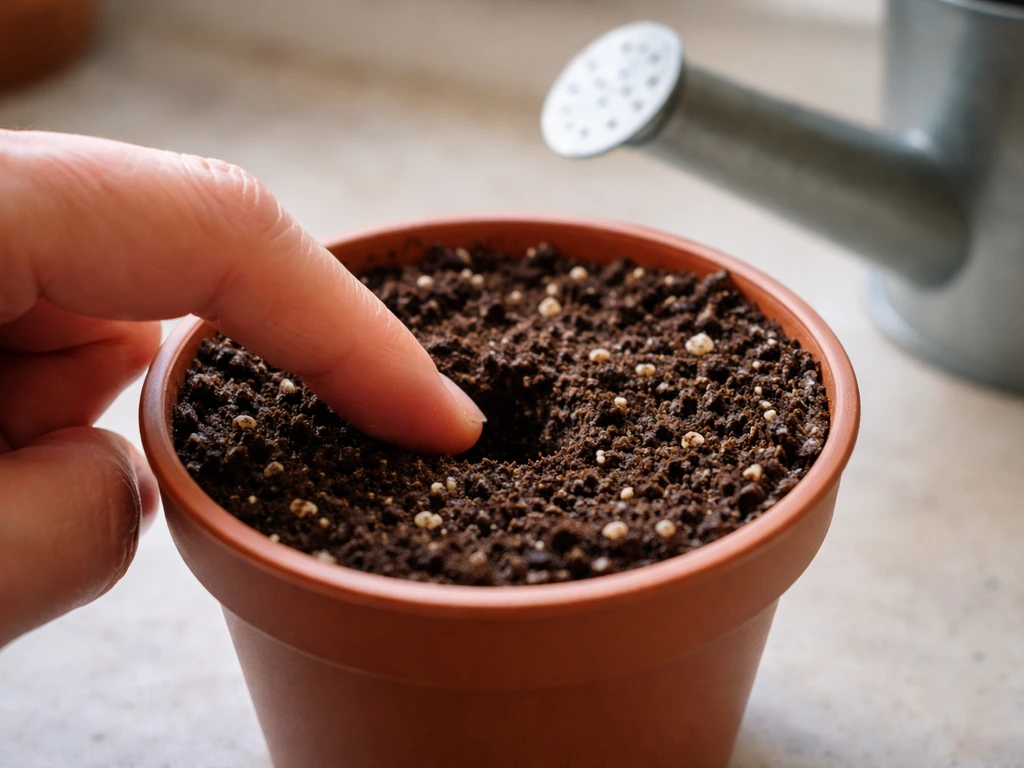
Iceberg in a pot needs consistent, even moisture. The working rule is to check the top inch of soil: if it's dry, water. Iowa State University Extension recommends watering container vegetables when the blank" rel="noopener noreferrer">upper 1 inch of potting mix is dry, as a rule of thumb to help prevent both drought stress and overwatering. If it's still damp, hold off. Never let the pot dry out completely, because drought stress causes two specific problems with iceberg: leaves become bitter and the plant bolts prematurely. In hot, dry weather, you may need to water once a day or even twice. Morning watering is best as it gives foliage time to dry and reduces disease risk.
In the few days before harvest, bump up your watering frequency slightly. Consistent moisture right before picking noticeably improves crispness in the head. Water deeply each time so moisture reaches the full root zone, and let the excess drain freely from the holes.
Feeding schedule
Potting mixes don't hold nutrients indefinitely, and iceberg's long growing period means you'll need to fertilize. Start fertilizing 3 to 4 weeks after planting. For liquid fertilizers, apply a balanced water-soluble product (something like 20-20-20 or a general vegetable formula) once a week at a diluted rate, following the label. Alternatively, mix a slow-release granular fertilizer into your potting mix at planting time at the recommended rate, which handles most of the growing season in one step.
Don't over-apply nitrogen. Excess nitrogen encourages lush leaf growth but also increases the risk of tipburn, a common issue in iceberg where inner leaf edges brown and die back. Tipburn is primarily caused by water stress and poor calcium transport to rapidly growing inner leaves, not a true calcium deficiency in the soil, so no amount of calcium spray will fix it once it starts. The real fix is consistent watering and avoiding conditions that stress the plant rapidly, like sudden heat after cold or letting the pot dry out hard.
Signs you're under-feeding: the older, lower leaves turn pale yellow or light green (nitrogen deficiency), and growth slows significantly. If you see this, increase feed frequency or switch to a slightly higher-nitrogen formula temporarily.
Care, troubleshooting, and harvesting timeline
Routine care
Thinning is the one maintenance task most beginners skip and then regret. Do it early, when seedlings are 1 to 2 inches tall. Leave the strongest plant at each final spacing point and remove the rest. Pulling rather than cutting avoids disturbing neighboring roots. Once plants are thinned and established, routine care is mostly watering and watching for problems.
For successive harvests, sow or transplant a new batch every 3 to 4 weeks. Iceberg has a relatively short harvest window before the head starts to deteriorate or the plant bolts, so staggering plantings is the only way to keep a steady supply going.
Common problems and fixes
| Problem | Likely Cause | What to Do |
|---|---|---|
| Leggy, floppy plants | Insufficient light | Move to brighter spot or add grow light; aim for 8+ hours of direct or bright indirect light |
| Bolting (plant sends up tall flower stalk) | Heat or day length stress | Harvest immediately; plant earlier in spring or later in fall to avoid high temperatures |
| Bitter leaves | Heat stress or drying out | Increase watering frequency; move pot to a cooler, shadier spot |
| No head forming | Crowding, heat, or poor nutrition | Check spacing (8–12 inches per plant), temperature (keep below 75°F), and feeding schedule |
| Brown leaf edges inside head (tipburn) | Water stress or excess nitrogen | Water more consistently; ease off high-nitrogen fertilizer; improve air circulation |
| Aphids on leaves | Common soft-bodied pest | Spray directly with insecticidal soap, ensuring thorough coverage on undersides of leaves |
| Powdery white coating on leaves (powdery mildew) | Fungal disease, often in humid conditions | Improve air circulation; remove affected leaves; consider a sulfur-based fungicide if severe |
| Yellowing lower leaves, stunted growth | Nitrogen deficiency | Begin or increase liquid fertilizer; switch to a balanced or higher-N formula |
| Waterlogged soil, wilting despite moisture | Overwatering or poor drainage | Check drainage holes are clear; let soil dry to 1 inch before watering again; repot if needed |
Harvest timeline and how to pick
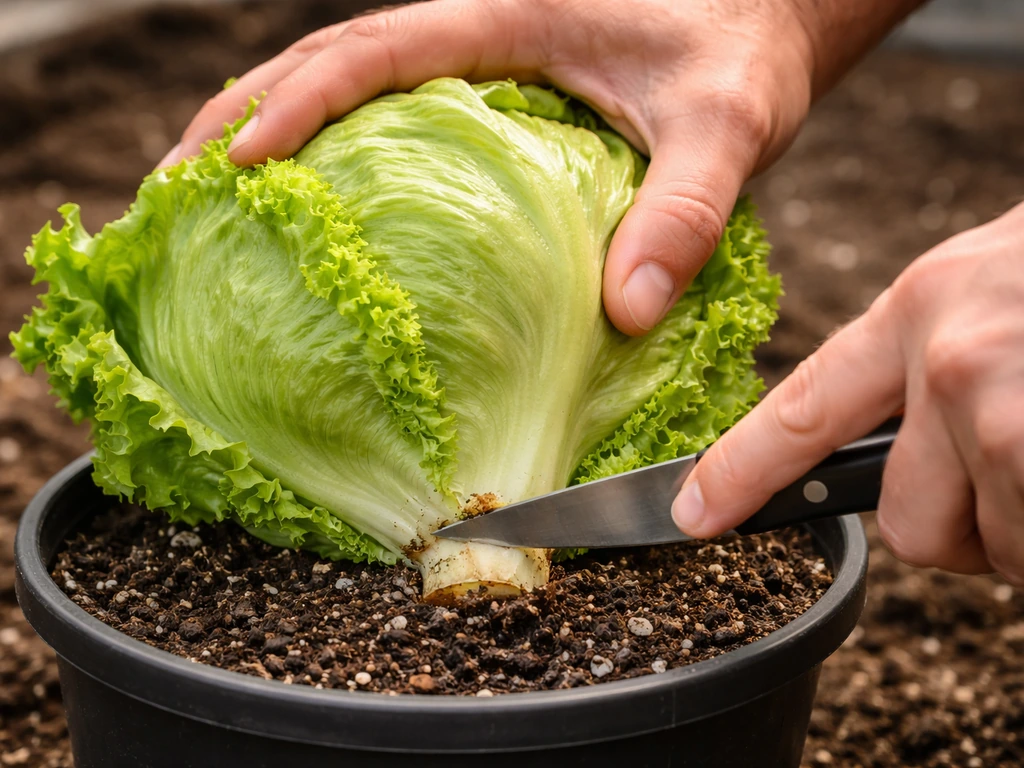
From transplant, expect 70 to 90 days to a harvestable head under good conditions. From seed, add another 3 to 4 weeks on top of that. The head is ready when it feels firm and dense when you squeeze it gently, similar to a store-bought iceberg. Don't wait for it to look enormous: pot-grown heads are usually smaller than commercial ones, and waiting too long in warm weather just invites bolting.
To harvest, use a clean sharp knife and cut the head off at the base, leaving the root in the pot. You won't get a regrow like you would with loose-leaf varieties, so once the head is cut, compost the root and replant. If the outer leaves are loose and edible but the head hasn't fully firmed up yet, you can remove a few outer leaves without cutting the whole plant to extend your harvest window.
Iceberg grown in containers is a genuinely rewarding project when the conditions are right. It takes patience and a little more attention than easier lettuce types, but there's something satisfying about pulling a real, crisp iceberg head out of a pot on your balcony. Start in cool weather, use a proper-sized container, keep the moisture consistent, and you'll have a much better time than most people expect.
To grow igloo lettuce successfully, start it in cool conditions, keep watering consistent, and protect it from heat spikes so heads can form. With those same cool-season basics, you can also learn how to grow green ice lettuce in a pot for crisp, flavorful heads. If you're growing iceberg lettuce in the Philippines, aim for cooler months, use afternoon shade when afternoons run hot, and keep the soil moisture steady for dense heads.
Follow the full “how to grow iceberg lettuce” guide for timing, temperature control, and harvest tips that help you get dense heads in a pot.
FAQ
What should I do if my iceberg lettuce starts bolting in a pot?
If you see the plant switching from forming a tight center to stretching and producing a flower stalk, your pot is almost certainly getting too warm for too long. Move the container to afternoon shade immediately, water earlier in the day to avoid nighttime dampness, and harvest any firm outer head that has already tightened, even if the inner leaves are not fully dense.
Can I use shade cloth to help me grow iceberg lettuce in a pot during warm weather?
Yes, but use it strategically. If nights are cool and daytime temperatures are only occasionally warm, a shade cloth can prevent heat spikes during the hottest hours. Aim for dappled light rather than heavy blocking, and remove or vent the cloth during cooler mornings to avoid low airflow and fungal issues.
How can I tell if I am overwatering or underwatering iceberg lettuce in a container?
Overwatering can look like underwatering because roots in a dense mix cannot access oxygen. The fix is to confirm drainage first: after watering, excess water should leave the pot within a minute or two. If it drains slowly, repot into a lighter mix with more perlite, and stop watering until the top inch dries.
Will adding calcium spray fix tipburn on iceberg lettuce grown in a pot?
Most problems linked to tipburn are caused by irregular moisture and rapid inner-leaf growth, not a simple soil calcium shortage. The practical approach is to keep moisture even (do not let it swing from dry to soggy), avoid high nitrogen, and resist heavy spraying with supplements. If you use a foliar calcium product, treat it as supportive, not curative.
How do I choose the right planting date if my spring or fall weather is unpredictable?
The simplest way is to anchor your timing to temperatures, not calendar dates. Start seeds or transplants when you can keep days near 60 to 65°F and heading conditions below about 75°F. If your area warms early, prioritize transplants so you can get heads started before the heat window arrives.
Are some iceberg varieties easier to grow in pots, and how should I choose one?
For a pot-grown crop, timing and spacing matter more than variety choice, but you can still pick faster-heading cultivars. Look for labels that indicate shorter days to maturity and buy transplants that look stocky, not leggy. Faster cultivars reduce the time you must hold stable cool temperatures.
What are practical ways to prevent my pot from drying out too fast for iceberg lettuce?
If your pot dries out too quickly, stop treating it like a herb pot. Upgrade container material and size, use plastic or glazed ceramic if outdoors, and consider adding 1 to 2 inches of mulch on top of the soil surface after plants are established. Self-watering planters can also help, but you must still ensure proper aeration and that water does not stagnate at the root zone.
Can I grow iceberg lettuce in a hydroponic container, and what changes are needed for success?
Yes, but only with correct watering. Hydroponic systems work by controlling water temperature and nutrient strength, and iceberg heads still require cool conditions to avoid bolting. If your system water warms above the mid-60s°F range, shading the reservoir or using insulation can help keep plants on schedule.
Is it safe to reuse potting mix for another round of iceberg lettuce?
Generally, don’t reuse the same potting mix for another iceberg crop. Lettuce is sensitive to nutrient imbalances and root stress, and mixes degrade structurally over a long season. If you reuse containers, replace most of the mix with fresh potting soil and perlite, and avoid replanting directly in the same soil that previously had disease.
Can I harvest partially and then keep growing the rest of the head later in a pot?
The head often firms in waves, so you can extend harvest by removing a few outer leaves only when they are edible but the center is not fully tight yet. If the outer leaves turn loose and you notice rapid temperature increase, harvest sooner rather than waiting, since warm days shorten the remaining “head-tight” window.