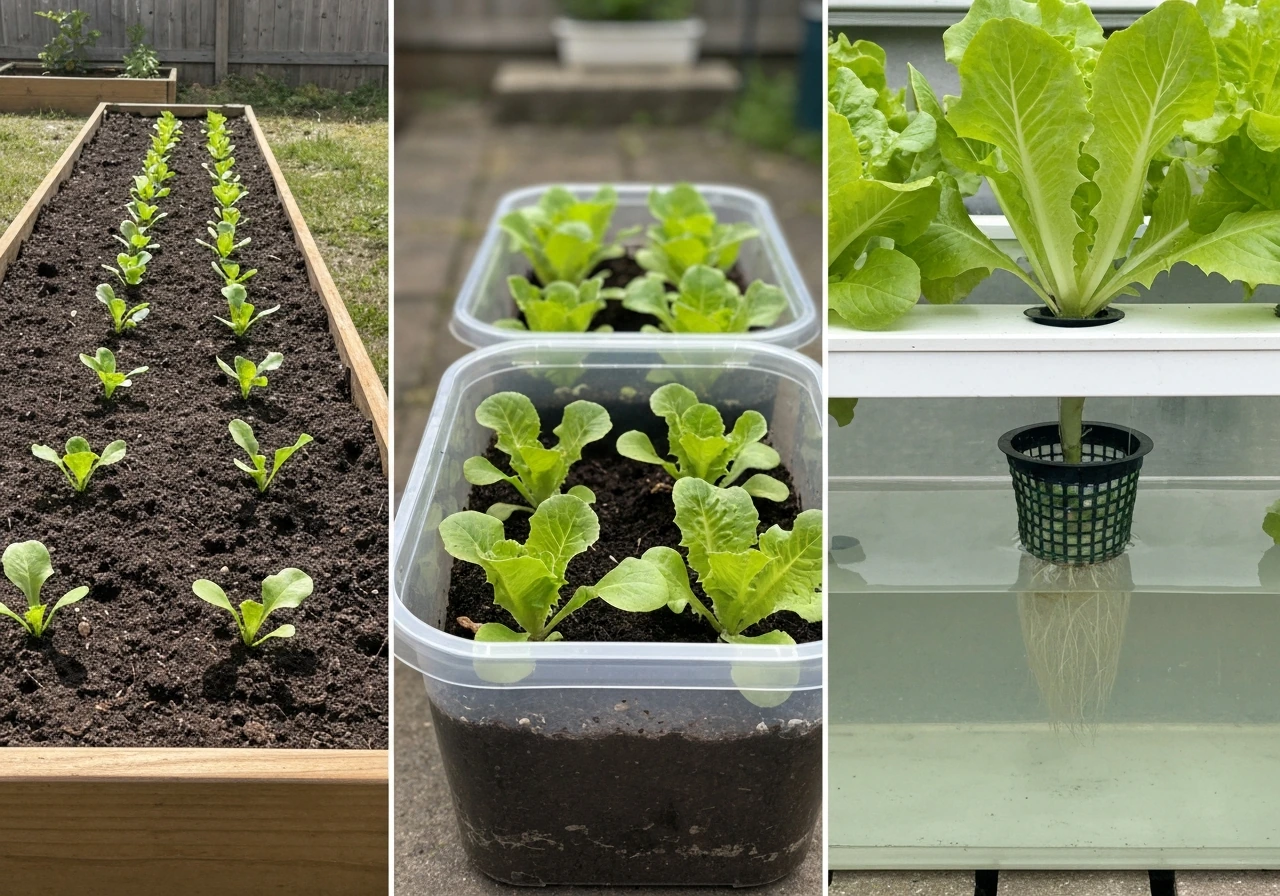
You can grow lettuce successfully at home in about 4 to 8 weeks from seed to harvest, whether you're working with an outdoor raised bed, a container on a balcony, or a basic hydroponic setup under grow lights. In Ireland, this same cool-season approach means choosing varieties that suit your spring and summer temperatures and using protection if heat spikes how to grow lettuce in Ireland. The key is picking the right variety for your setup, keeping temperatures between 45°F and 75°F, staying consistent with watering, and harvesting before the plant bolts. The steps below give you everything you need to get started today, no matter what drew you to a YouTube tutorial first.
How to Grow Lettuce: YouTube-Style Steps for Beginners
Marcus Holloway
16 Jun 2026
Choosing lettuce varieties for your setup
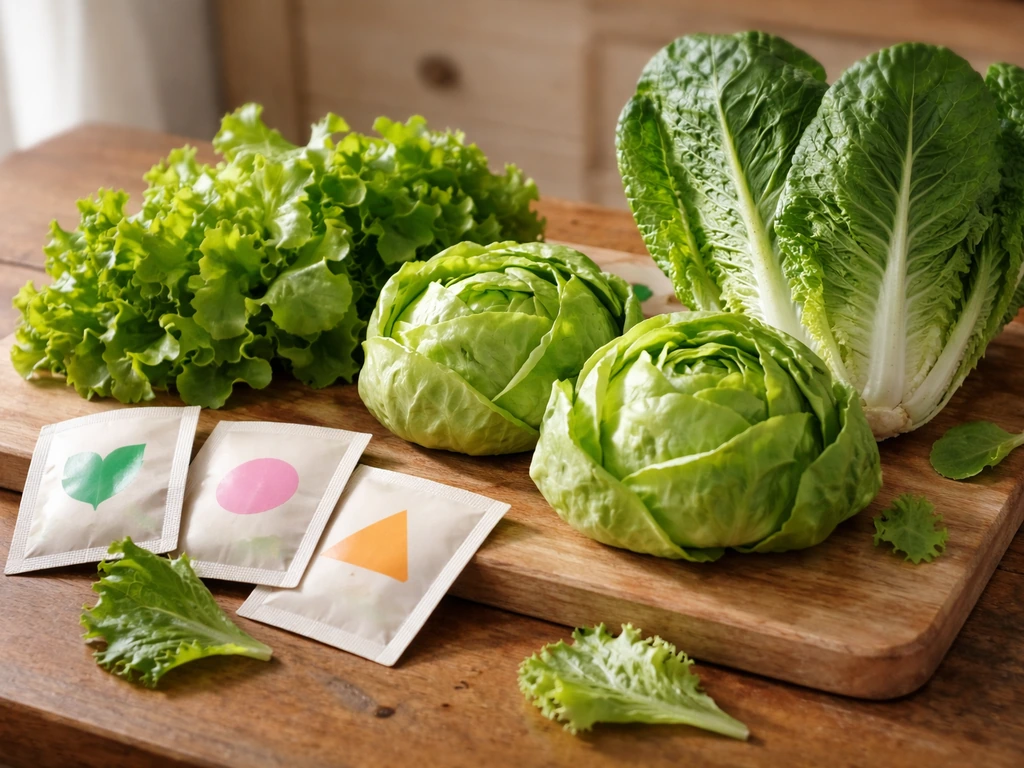
If you're a beginner, start with loose-leaf varieties. They're faster to harvest (often ready in 30 to 45 days), more forgiving of imperfect conditions, and you can pick leaves as you go rather than waiting for a full head to form. If you need a quick, printable guide, you can find instructions on how to grow lettuce PDF formats that walk you through the same steps. Varieties like 'Black Seeded Simpson', 'Oak Leaf', and 'Salad Bowl' are excellent starting points and widely available as seeds or transplants.
Butterhead types like 'Buttercrunch' or 'Boston' sit in the middle ground: they form a soft, loose head and take about 55 to 65 days. They're a great second step once you've gotten a loose-leaf harvest under your belt. Romaine types like 'Paris Island Cos' need about 70 to 75 days and slightly more space but are excellent for container growing because they grow upright. Crisphead (iceberg-style) lettuce is the hardest for beginners: it needs a sustained cool period to form a tight head and is the most likely to bolt or fail in irregular conditions. Skip it until you're comfortable.
| Type | Days to Harvest | Best For | Beginner Difficulty |
|---|---|---|---|
| Loose-leaf | 30–45 days | Containers, raised beds, hydroponics | Easy |
| Butterhead | 55–65 days | Raised beds, larger containers | Moderate |
| Romaine | 70–75 days | Raised beds, deep containers | Moderate |
| Crisphead (Iceberg) | 80–100 days | Outdoor beds with long cool seasons | Hard |
For indoor containers or hydroponic systems, loose-leaf and butterhead varieties are your best friends. Compact varieties like 'Tom Thumb' butterhead or 'Little Gem' romaine are bred for small spaces and grow well under lights. If you're growing in a warm climate or during summer, look for heat-tolerant varieties labeled 'slow-bolting' or 'summer crisp', such as 'Nevada' or 'Muir'. This one label change on the seed packet can make a massive difference in how long your plants last.
Best conditions: light, temperature, and soil/container type
Temperature
Lettuce is a cool-season crop. It germinates best between 40°F and 65°F (4°C to 18°C) and grows happily in air temperatures from 45°F to 75°F (7°C to 24°C). Once daytime temperatures consistently push above 80°F (27°C), germination rates drop, plants grow stressed and bitter, and bolting (premature flowering) kicks in fast. This is the single most common reason YouTube lettuce videos don't work for people: they're filmed in spring conditions, but you're watching in July.
Light
Outdoors, lettuce prefers 6 hours of sun per day in cool seasons, but in warmer months partial shade (3 to 4 hours of direct sun with afternoon shade) actually extends the harvest window and slows bolting. If you’re in South Africa, use these light guidelines to match your local season and aim for partial shade when it starts heating up. Indoors, lettuce needs 12 to 16 hours of light per day under grow lights. Full-spectrum LED panels at about 2,000 to 3,000 lux work well for leaf types; place lights 6 to 12 inches above the tops of the plants and raise them as the plants grow.
Soil and containers
Lettuce roots are shallow, usually 6 to 8 inches deep at most, so it doesn't need a massive pot. A container that's at least 6 inches deep works for loose-leaf types; go 8 to 10 inches for butterhead or romaine. If you're in New Zealand, apply these same container depth guidelines so your lettuce roots have room to grow without getting waterlogged how to grow lettuce nz. For outdoor beds, aim for a soil pH between 6.0 and 6.8. Most bagged potting mixes are close to this range already. For containers, use a high-quality potting mix (not garden soil, which compacts and drains poorly in pots). Add perlite at roughly 20 to 25% of the mix volume if drainage is poor. Good drainage is non-negotiable: waterlogged roots mean rotted plants.
Step-by-step planting methods (seed, transplants, direct sow)
Direct sowing outdoors
- Rake the bed smooth and remove any large clumps or rocks.
- Moisten the soil surface before planting.
- Scatter seeds thinly across the surface or in shallow rows, then cover with just 1/8 to 1/4 inch of fine soil or vermiculite. Lettuce seeds need light to germinate, so don't bury them deep.
- Water gently with a fine rose watering head to avoid washing seeds away.
- Keep the soil consistently moist until germination, which usually takes 5 to 10 days at ideal temperatures.
- Once seedlings are about 2 inches tall, thin them to appropriate spacing (more on this below).
Starting seeds indoors for transplanting
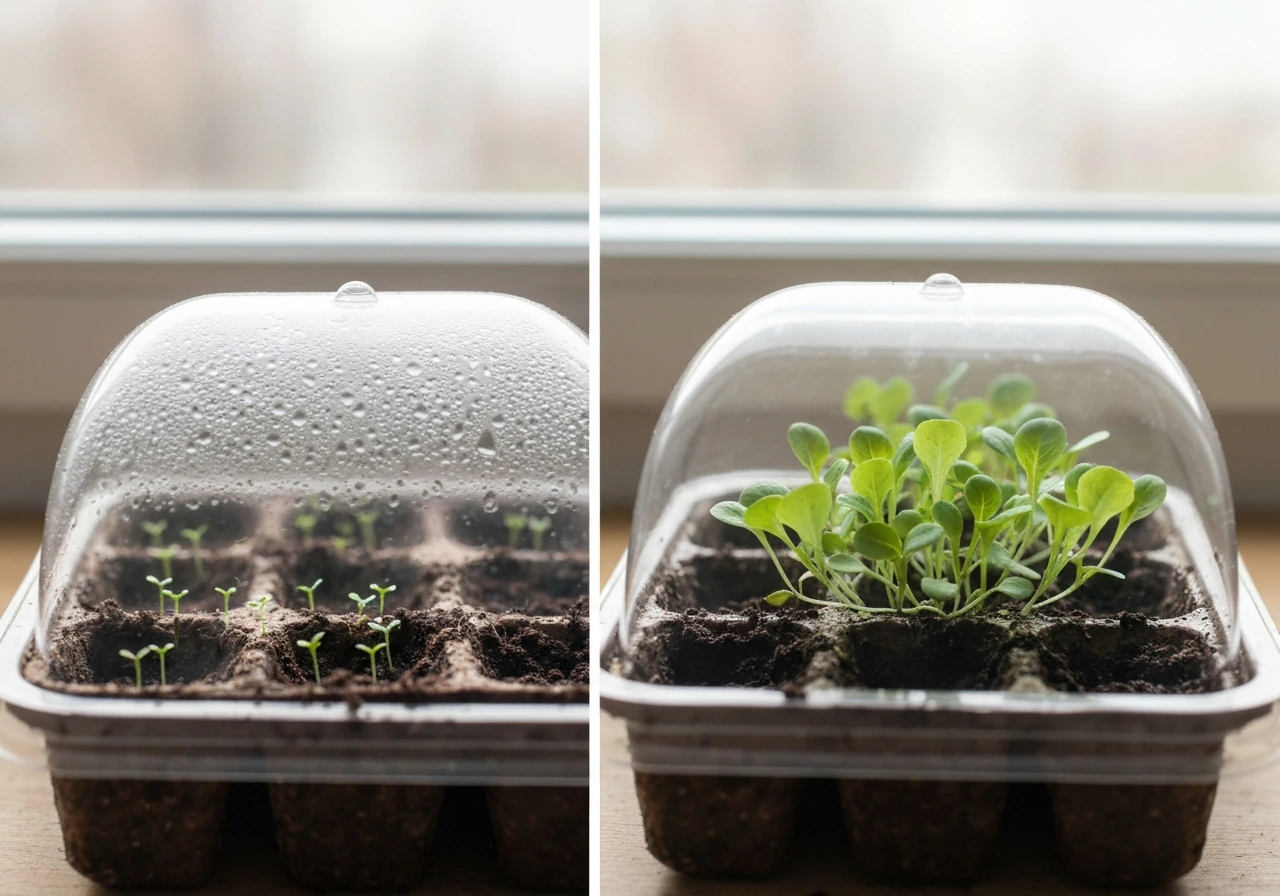
Fill seed trays or small pots with moist seed-starting mix. Press 2 to 3 seeds per cell about 1/8 inch deep. Cover with plastic wrap or a humidity dome until germination. Once seedlings emerge, remove the cover and put them under lights or in a bright window. After 3 to 4 weeks, when they have 2 to 3 true leaves, harden them off over 5 to 7 days by setting them outside in a sheltered spot for a few hours each day before transplanting.
Using transplants from a nursery
Bought transplants give you a 3 to 4 week head start. Gently loosen the root ball, plant at the same depth the seedling was in the original pot, firm the soil around the base, and water in well. Avoid planting on a hot, sunny afternoon: do it in the evening or on a cloudy day to reduce transplant shock.
Watering, feeding, and spacing for reliable heads/leaves
Watering
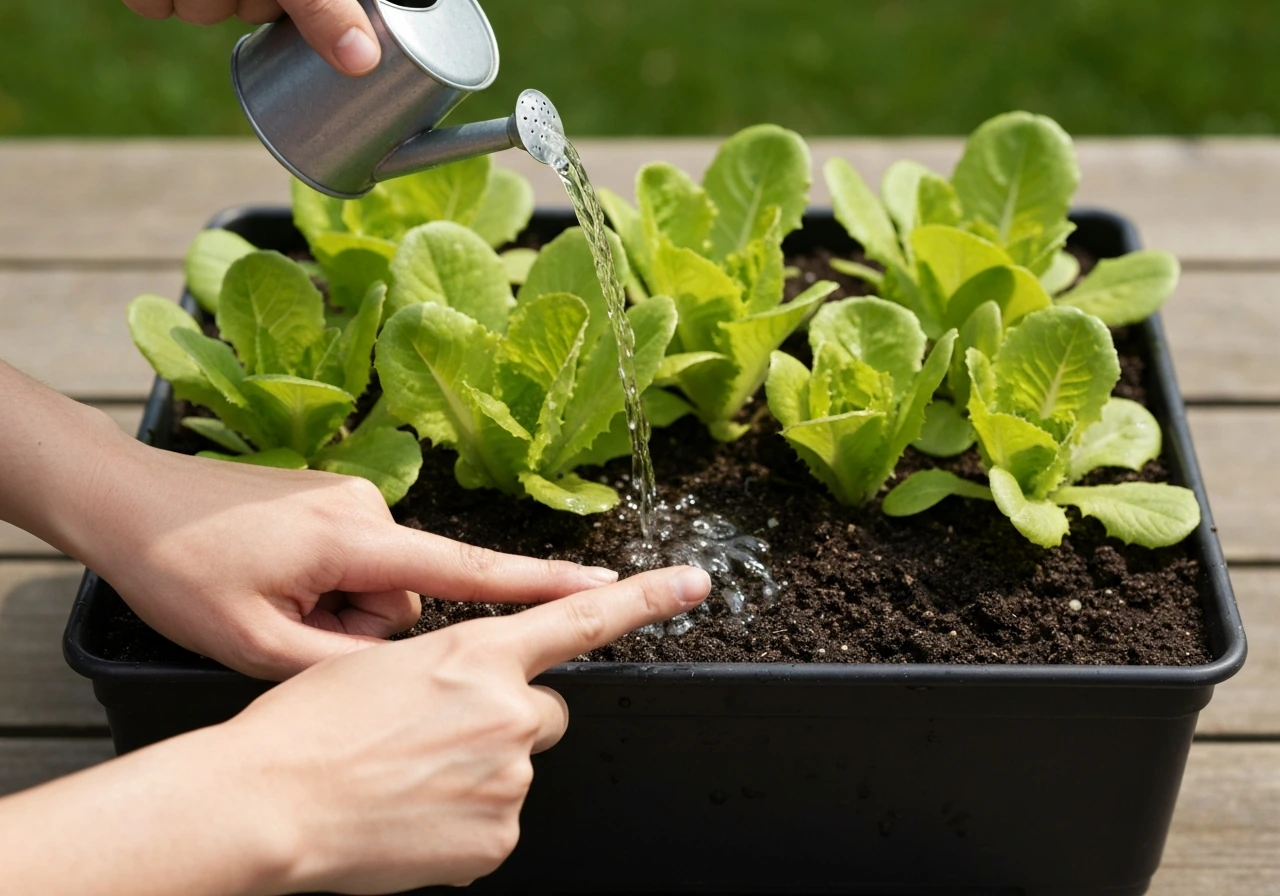
Lettuce wants consistently moist soil, not soaking wet and not bone dry. The RHS notes that lettuce generally prefers consistently moist soil, and that allowing water stress can trigger bolting and reduce quality blank" rel="noopener noreferrer">Lettuce wants consistently moist soil, not soaking wet and not bone dry.. In containers, check the top inch of soil: if it's dry, water. In outdoor beds, aim to water every 2 to 3 days in mild weather and every day in hot weather. If you're learning how to grow lettuce in India, adjust this watering schedule to your local heat and rainfall patterns to prevent bolting and bitterness water every 2 to 3 days in mild weather and every day in hot weather. Water stress is one of the fastest triggers for bolting and bitter taste, so don't let the plant dry out. Water at the base of the plants rather than overhead when possible to reduce disease pressure.
Feeding
Lettuce is a leafy crop, so it responds well to nitrogen. For containers, a diluted balanced liquid fertilizer (10-10-10 or similar) applied every 2 weeks works well. For outdoor beds with good compost already worked in, one side dressing of a nitrogen-rich fertilizer (like a fish emulsion or blood meal) about 3 weeks after germination is usually enough. Don't over-fertilize: too much nitrogen late in growth can actually accelerate bolting.
Spacing
| Lettuce Type | Final Spacing |
|---|---|
| Loose-leaf (baby leaf harvest) | 2–4 inches apart |
| Loose-leaf (full plant harvest) | 6–8 inches apart |
| Butterhead | 8–10 inches apart |
| Romaine | 8–10 inches apart |
| Crisphead | 12–14 inches apart |
Crowded plants compete for water and nutrients and tend to bolt earlier. Thinning feels wasteful, but it genuinely produces better results. Eat the thinnings as microgreens rather than composting them.
Indoor and hydroponic options (containers, grow lights, basic systems)
Lettuce is one of the best crops for indoor growing because its shallow roots, compact size, and preference for cooler temperatures all make it well-suited to controlled environments. If you want specifics on how to grow lettuce palworld, focus on matching these cool-temperature and container or hydroponic conditions indoor growing. You have three main options: container growing on a windowsill or under lights, a basic wick system (passive hydroponics), or a nutrient film technique (NFT) or deep water culture (DWC) setup.
Container growing indoors
Use a pot at least 6 inches deep with drainage holes. A south-facing window can work in winter or early spring, but most windowsills don't provide enough light in summer for strong growth. A full-spectrum LED grow light (look for 200 to 300 watts per square meter for lettuce) running 14 to 16 hours a day is more reliable year-round. Keep room temperature between 60°F and 70°F (15°C to 21°C) for best results.
Basic hydroponic growing
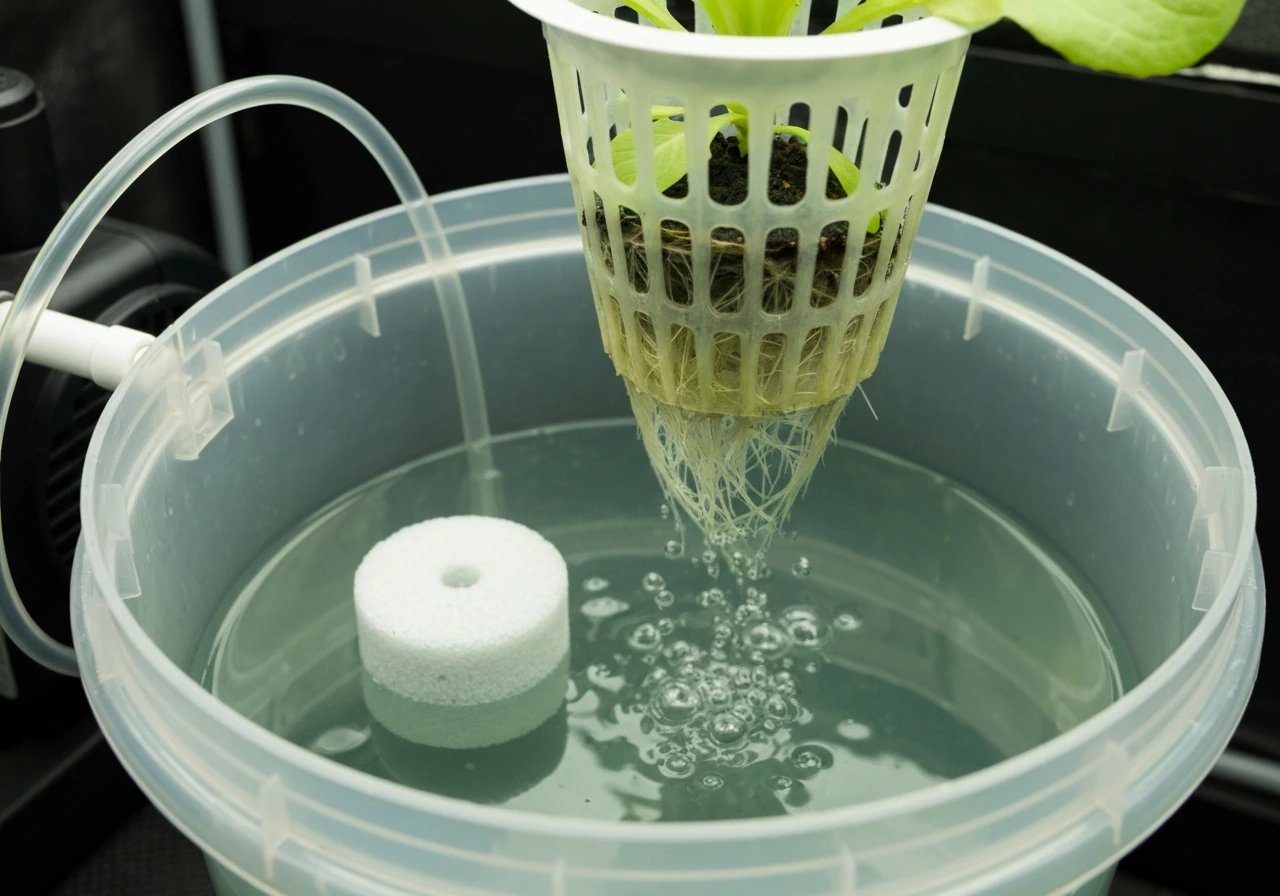
Deep water culture (DWC) is the easiest hydroponic method for beginners. You need a container (a 5-gallon bucket or storage tote works), an air pump with an air stone, net pots, growing medium (hydroton clay pebbles or rockwool), and a hydroponic nutrient solution. Start seedlings in rockwool cubes, then transfer to net pots once roots are 1 to 2 inches long. Keep the nutrient solution pH between 5.5 and 6.5 for lettuce in hydro (slightly lower than soil). A basic EC (electrical conductivity) of 0.8 to 1.2 mS/cm is appropriate for seedlings and young plants. Lettuce thrives in DWC because it loves the constant oxygen and moisture at the roots, and you can get harvest-ready leaf lettuce in as little as 25 to 30 days.
Nutrient film technique (NFT) channels are popular in commercial setups but also doable at home with inexpensive PVC guttering. They require a bit more setup but scale well if you want to grow more plants. If you've seen YouTube videos of those slick wall-mounted lettuce systems, they're usually a variation of NFT. The principle is the same: a thin film of nutrient solution flows continuously over the roots, which hang into the channel.
Harvest timing, bolting prevention, and succession planting
When and how to harvest
For loose-leaf lettuce, you can start harvesting outer leaves once the plant is about 4 to 6 inches tall, usually 4 to 5 weeks from seeding. Always cut leaves from the outside of the plant, leaving the center growing point intact. This 'cut and come again' method lets the plant keep producing for 4 to 8 more weeks. For butterhead and romaine, wait until the head feels firm and full before cutting the whole plant at the base. For crisphead types, wait until the head is dense and tight.
Harvest in the morning when leaves are crisp and hydrated. Avoid harvesting in the heat of the day: leaves wilt quickly after cutting when it's warm.
Preventing bolting
Bolting (when the plant sends up a flower stalk) is triggered by heat, long day lengths, and water stress. You'll notice the center of the plant starts to elongate and rise, and the leaves become smaller and more pointed. Once bolting starts, the leaves turn bitter fast. To delay it: choose slow-bolt varieties, provide afternoon shade in warm weather, keep the soil consistently moist, and harvest frequently. If you see the center rising, harvest everything immediately and use it before the bitterness sets in fully.
Succession planting for continuous harvest
The best way to always have fresh lettuce is to sow a new small batch every 2 to 3 weeks rather than one big planting. A single sowing usually gives you 1 to 2 weeks of peak harvest before quality declines. Stagger three or four small containers or rows and you'll have a continuous supply. In warmer months, pause succession planting once temperatures regularly exceed 80°F (27°C) and resume in late summer for a fall harvest. This rhythm is the single biggest difference between gardeners who have lettuce all season and those who get one batch and then wonder what went wrong.
Troubleshooting common problems (germination, pests, bitter taste)
Seeds not germinating
If nothing has sprouted after 10 days, the most likely causes are soil too warm (above 75°F at the soil surface), seeds buried too deep, or soil that dried out during the germination window. Check that seeds are barely covered (1/8 inch at most), keep the surface consistently moist, and shade the area if surface temperatures are high. Old seed stock also loses viability: lettuce seeds are best used within 1 to 2 years of the packet date.
Slow or weak growth
Pale, slow-growing plants usually mean insufficient light or nitrogen deficiency. Indoors, increase light hours or lower the grow light closer to the plants. Outdoors, check that plants aren't shaded by nearby structures or taller crops. Feed with a diluted nitrogen fertilizer and see if growth picks up within 5 to 7 days.
Pests
- Aphids: Look for clusters of tiny insects on the undersides of leaves. Blast off with a strong jet of water or spray with insecticidal soap. Check plants every few days since populations explode quickly.
- Slugs and snails: They leave ragged holes in leaves, mainly at night. Use copper tape around container rims, set up beer traps, or apply iron phosphate pellets around the base of plants.
- Caterpillars/loopers: Hand-pick them or apply Bacillus thuringiensis (Bt), which is safe for edibles and kills caterpillars without harming beneficial insects.
- Lettuce root aphids: Harder to spot (underground). Plants wilt suddenly despite adequate watering. Remove and destroy affected plants; don't replant lettuce in the same soil that season.
Diseases
Downy mildew shows up as yellow patches on the upper leaf surface with grey-white fuzzy growth underneath. It's favored by cool, humid conditions with poor air circulation. Improve spacing, avoid overhead watering, and remove affected leaves promptly. Growing resistant varieties is the most reliable prevention. Powdery mildew, in contrast, is favored by warm, dry conditions and tends to hit older plants: it appears as white powdery spots on leaves. Improve air circulation and consider removing heavily affected plants.
Bitter taste
Bitterness almost always traces back to heat stress, water stress, or age. If your lettuce is bitter: check whether the plant is stressed by heat or inconsistent watering, look for signs of bolting (elongating center stalk), and harvest earlier next time. If you catch bitterness early and the plant hasn't fully bolted, soaking harvested leaves in cold water for 20 to 30 minutes can reduce the intensity. But the real fix is growing in cooler conditions, watering consistently, and harvesting young.
Turning YouTube into action: what to look for and how to avoid bad advice
YouTube is genuinely useful for visual steps like how to set up a DWC system, how to thin seedlings, or how to identify pest damage. But a lot of lettuce videos skip the details that actually determine whether the method works for you. Here's how to watch critically and adapt what you see.
What to look for in a good video
- Temperature range: Does the creator mention the air or water temperature they're growing in? If not, their results may not be replicable in your climate or season.
- Light duration and intensity: How many hours of light per day? What kind of light (sun, LED, fluorescent)? A vague 'bright window' is not enough information for indoor growing.
- Variety name: Generic 'lettuce seeds' advice varies wildly by variety. A creator who names the specific variety they're using gives you much more actionable information.
- Watering schedule: How often, how much, and how do they check soil moisture? Watch for anyone who just says 'water regularly' with no specifics.
- Indoor vs. outdoor vs. hydroponic: Make sure the method matches your actual setup. A hydro video won't directly translate to a raised bed, and vice versa.
- Season and location: A spring garden in the UK or Ireland looks very different from a summer garden in a hot climate. If the video doesn't mention when or where it was filmed, treat the results with skepticism.
Red flags to watch out for
- No mention of temperature: Lettuce is temperature-sensitive above all else. If a video doesn't talk about heat and bolting risk, it's missing critical context.
- Growing in direct summer sun with no shade management and claiming easy success: Possible in certain climates, but not universally repeatable.
- Skipping thinning: Many videos show crowded seedlings and never thin them. This leads to smaller, weaker plants and earlier bolting.
- No mention of succession planting: A single harvest makes for a satisfying video but isn't practical advice for continuous use.
- Nutrient solution recipes with no pH mention for hydroponic setups: pH management is non-negotiable in hydroponics, and any video that skips it is leaving out a critical step.
How to adapt a YouTube method to your situation
Use videos for the visual 'how to do the physical steps' part: filling containers, setting up a DWC bucket, transplanting, identifying pests. Then cross-check the specific numbers (temperatures, light hours, spacing, pH) against a reliable source or the guidance in this article. If a video was filmed in a cool temperate climate and you're growing in a warmer region, switch to heat-tolerant varieties and plan for afternoon shade. If a video uses a large outdoor garden but you're in an apartment, the core technique still applies, just scaled to containers with the appropriate variety choice. Growing lettuce in a very different climate from the video creator (whether that's a hot region, or somewhere with very short summer days) means adjusting the timing, variety, and setup rather than following the steps blindly. If you're specifically trying to figure out how to grow lettuce in Australia, focus on choosing slow-bolting varieties and matching your setup to seasonal temperatures and sun adjusting the timing, variety, and setup.
The best approach is to treat a YouTube video as a visual demonstration of the physical technique, then use the specific parameters in this guide to fill in the numbers. Pick your variety today, check your temperatures, set up your container or bed, and sow your first seeds. If you are in the Philippines, focus on heat-tolerant varieties and timing your sowing for cooler conditions to reduce bolting how to grow lettuce in the Philippines. You'll have something to harvest within a month.
FAQ
How do I know if I’m fertilizing too much (or too little) for lettuce in containers?
For lettuce, the most important metric is not “fertilizer frequency,” it is how quickly the plant bolts. If you want a simple rule, start light: feed once every 2 weeks indoors, or one side-dressing outdoors around 3 weeks after germination, then stop once harvesting begins (especially in warm weather). Too much nitrogen late in growth can make bolting happen faster, even if leaves look greener.
What’s the best way to avoid watering mistakes in hot weather container lettuce?
Lettuce hates inconsistent moisture, so do not rely on a schedule alone. Use the top-inch check: if the surface is dry, water thoroughly until excess drains, then wait again. In hot spells, you may need daily watering in containers, and raising the pot off a solid tray can prevent roots from sitting in runoff that turns oxygen-poor.
My indoor lettuce is stretching and looks pale, what should I change first?
If your lettuce is leggy indoors, it usually means light is too weak or too far away. Raise your light hours toward 16, then lower the fixture until leaves are growing compactly (no stretching), usually within 6 to 12 inches for leaf types. Also confirm you rotate the trays every few days so both sides get equal intensity.
Can I grow lettuce continuously without it turning bitter or bolting?
Yes, but do it in a targeted way. If the goal is a steady supply, sow smaller batches on different days instead of “one big start,” because lettuce peaks and then quality drops. A practical pattern is 3 to 4 batches spaced 7 to 10 days apart, then when temperatures rise above 80°F, pause and resume with heat-tolerant types when conditions cool.
Why does my lettuce bolt even though the room temperature seems okay?
Keep lettuce away from strong heat sources and hot air blowers. Even if your room is cool, placing containers near a radiator, a sunny south-facing window that overheats, or a drafty HVAC vent can trigger stress and bitterness. If the container surface temperature jumps above 75°F, you can add simple insulation like a shade cloth in summer or move the pot farther from the window.
How should I harvest loose-leaf lettuce so it keeps producing (and doesn’t stop growing)?
For cut-and-come-again harvests on loose-leaf, you should always leave the center growing point intact and remove only the outer leaves. If you accidentally cut into the growing point or harvest too aggressively, regrowth will stall and the plant may shift into bolting sooner.
What’s the most common beginner mistake in DWC lettuce hydroponics?
In hydroponics, aim for stable root oxygen and chemistry, not just “having nutrient in the water.” For DWC, make sure the air stone runs continuously, keep water temperature in a cool range (warm water reduces oxygen), and do not let pH drift. A simple habit is to check pH and EC at least twice per week, then top off with plain water to replace evaporation before adding nutrients.
How do I transition lettuce seedlings from indoors to outdoors without killing them?
Yes, but only for the right stage. Seedlings are sensitive to swings, so don’t move them outside full-time instantly. Harden them off for 5 to 7 days as described, and choose a sheltered, bright-but-shaded location first. On the transplant day, evening watering helps reduce shock, and using light row cover can protect against sudden cold snaps.
My lettuce seeds won’t germinate, what troubleshooting steps should I do in order?
If nothing sprouts after 10 days, check soil temperature at the surface (not just room temperature). Lettuce seeds also fail when covered too deeply or when the surface dries out during the germination window. Old seed stock is another common cause, so test viability by germinating a small sample in a damp paper towel and compare results.
Is thinning lettuce necessary, and what should I do with the removed seedlings?
Thin seedlings only enough to improve spacing, and treat the thinnings as usable food. Crowding forces competition and increases bolting risk, so remove extra seedlings promptly. A good target is a consistent plant spacing that matches the variety and your container size, then keep the remaining plants evenly watered.
How can I reduce bitter lettuce quickly, and how do I prevent it next time?
Bitterness is usually a combination of heat stress, irregular watering, or letting plants get too old or too close to bolting. If you catch it early, harvest sooner and harvest more frequently, then move to partial shade in warm periods. For quick relief, soaking harvested leaves in cold water for 20 to 30 minutes can soften intensity, but it will not fix bitterness caused by ongoing heat stress.
What should I do immediately if downy mildew appears on my lettuce?
If you see downy mildew, act fast because it spreads under humid, stagnant air. Remove infected leaves, improve spacing, and switch to watering at the base. For lettuce, avoid overhead misting, increase airflow (even a small fan), and consider resistant varieties next cycle since that is the most dependable long-term prevention.