Lettuce grows best when soil temperatures sit between 40°F and 80°F, with the sweet spot for germination around 70–75°F. That one fact drives almost every planting decision you'll make. Get the timing right and lettuce practically grows itself. Get it wrong, and you'll be staring at a bed of seeds that won't sprout or a row of plants that bolt before you get a single salad.
When to Grow Lettuce: Planting Schedule for Your Setup
Marcus Holloway
17 Apr 2026
Lettuce growth basics: what 'when' really depends on
Before you look at a calendar, you need to understand what lettuce actually responds to: temperature and day length. Lettuce is a cool-season crop that bolts (sends up a seed stalk and turns bitter) when temperatures climb and days get longer. The University of Arkansas Extension puts the trigger point at sustained temperatures above 85°F for several days. Once that happens, your harvest window closes fast.
The good news is that lettuce seed is surprisingly cold-tolerant. It can germinate at soil temperatures as low as 35°F, though it does so slowly. Germination shuts down in the opposite direction too: soil temperatures above 80°F can push lettuce seed into a dormant state where it simply won't sprout until things cool down. That's why timing isn't just about avoiding frost, it's equally about avoiding heat.
On top of temperature, day length matters. Longer days in late spring and summer trigger the bolting response alongside warm nights. North Carolina State Extension notes that many modern cultivars can handle short daytime spikes to 80–85°F if nights stay cool, but warm nights accelerate bolting and reduce head quality fast. So the actual question to ask isn't just "what month is it" but "what are my overnight lows doing for the next 6–8 weeks?"
Variety choice plays a role here too. Romaine generally tolerates more heat than crisphead types, while butterhead and loose-leaf varieties offer longer production windows before bolting. If you're planting when conditions are borderline, variety selection can buy you an extra few weeks of harvest. Understanding the best temp to grow lettuce for your specific type will help you fine-tune that decision.
Planting windows by season (outdoor timing and frost guidance)
For outdoor gardeners, there are two main windows: spring and fall. Both work because both offer the cool temperatures lettuce needs. Spring planting runs from roughly 4–6 weeks before your last frost date until about 4 weeks after it. Fall planting runs from roughly 8–10 weeks before your first fall frost, giving the crop time to mature before hard freezes arrive.
If you're in the US and today is April 17, 2026, spring planting is actively underway or just wrapping up for most of the country. Gardeners in the South (zones 8–10) are already pushing into the tail end of their spring window and should be thinking about fall instead. Gardeners in zones 5–7 (think the mid-Atlantic, Midwest, and Pacific Northwest) are right in the sweet spot. Northern growers in zones 3–4 may still have a week or two before conditions are ideal outdoors.
Transplants go out about 3 weeks before your last frost date, according to MSU Extension guidance on transplant timing relative to frost. Direct-seeded rows can go in even a bit earlier since seeds tolerate more cold than young transplants. MSU Extension’s general propagation guidance also directs you to direct sow lettuce about 2, 4 weeks before the last frost blank" rel="noopener noreferrer">direct sowing lettuce about 2–4 weeks before the last frost. The practical rule: if your soil is workable and nighttime temps are staying above 28°F consistently, you're good to direct seed. If you're in a region with late frosts, row cover gives you a buffer to push planting 2–3 weeks earlier.
| Season | When to Plant (relative to frost) | Key Risk | Best Types |
|---|---|---|---|
| Spring | 4–6 weeks before last frost (direct seed) or 3 weeks before last frost (transplant) | Bolting as temps rise in late spring/summer | Leaf, butterhead, romaine |
| Fall | 8–10 weeks before first fall frost | Hard freeze before harvest | Crisphead, romaine, butterhead |
| Winter (mild climates / row cover) | 10–12 weeks before first hard freeze | Extended cold spell below 28°F | Cold-hardy leaf types, winter romaine |
| Summer (not recommended outdoors) | Avoid unless using shade cloth in cool microclimates | Bolting and dormant seed | Heat-tolerant leaf varieties only |
If you're gardening somewhere with mild winters like the Southeast, your timing looks different from a Minnesota grower. For specific regional guidance, check out when to grow lettuce in Georgia or grow lettuce in NC, where fall and even winter production are realistic options.
How and when to start seeds vs. transplant lettuce
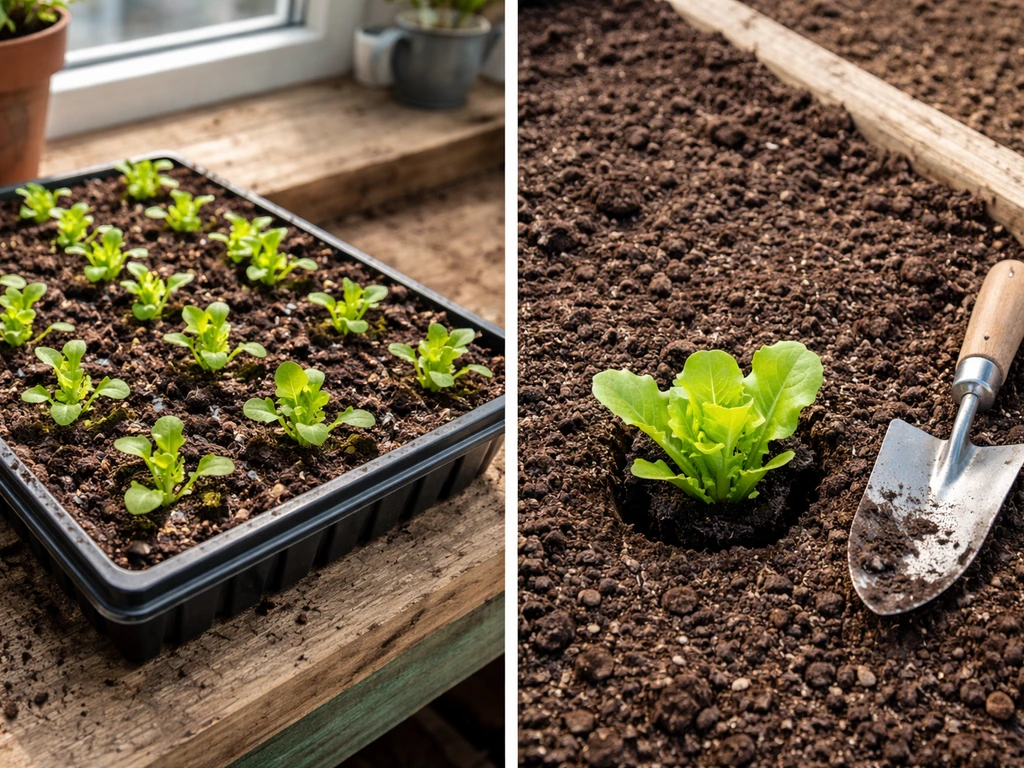
Both approaches work, but the right choice depends on your timeline and how much control you want over conditions. Starting from seed indoors gives you a head start of 3–4 weeks and lets you germinate in optimal temperatures before outdoor conditions are ready. Buying or growing transplants and setting them out is faster and often more reliable for beginners because you skip the trickiest part of the process.
Starting from seed indoors
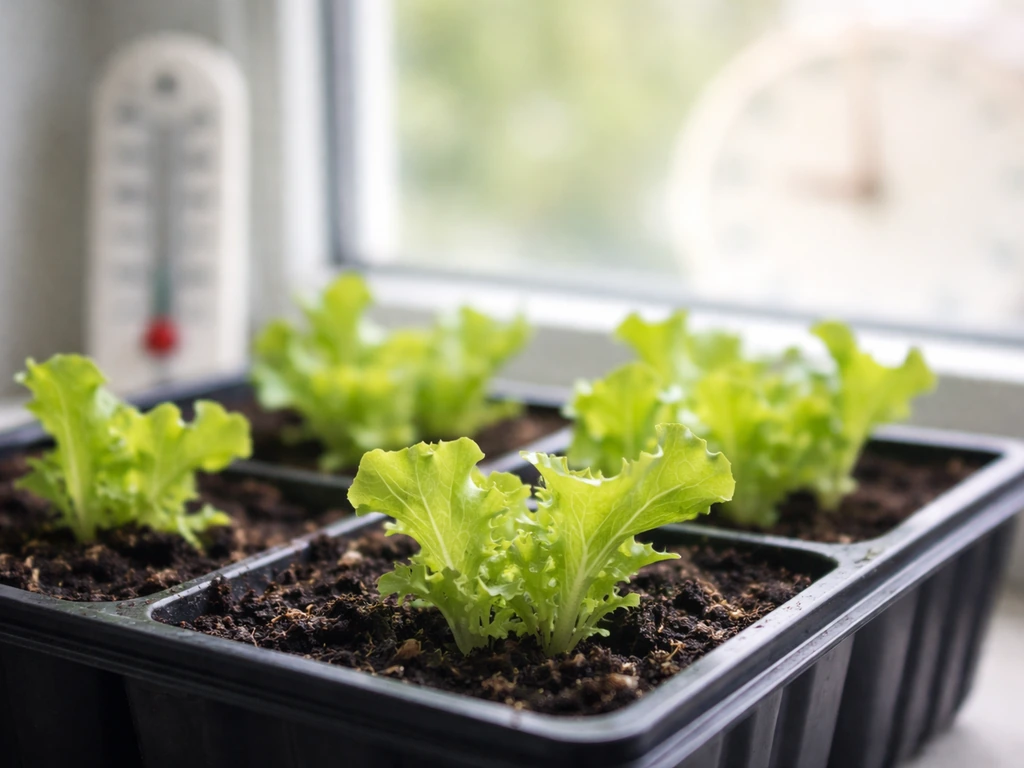
Sow seeds indoors 4–6 weeks before you plan to transplant outside. Keep your starting mix moist and aim for an air temperature around 65–70°F. One important thing many beginners miss: lettuce needs light to germinate. Wisconsin Extension specifically notes that seeds should only be lightly covered (1/8 inch or less of soil) and that light is required for germination. Covering them too deeply is one of the most common reasons indoor starts fail. Place trays near a bright window or under grow lights as soon as seeds are sown.
Germination typically happens in 7–14 days under good conditions. Once seedlings are up and have their first true leaves, thin or transplant them to individual cells. Harden off transplants over 7–10 days by setting them outside in a sheltered spot for increasing amounts of time before moving them to their final bed.
Direct seeding outdoors
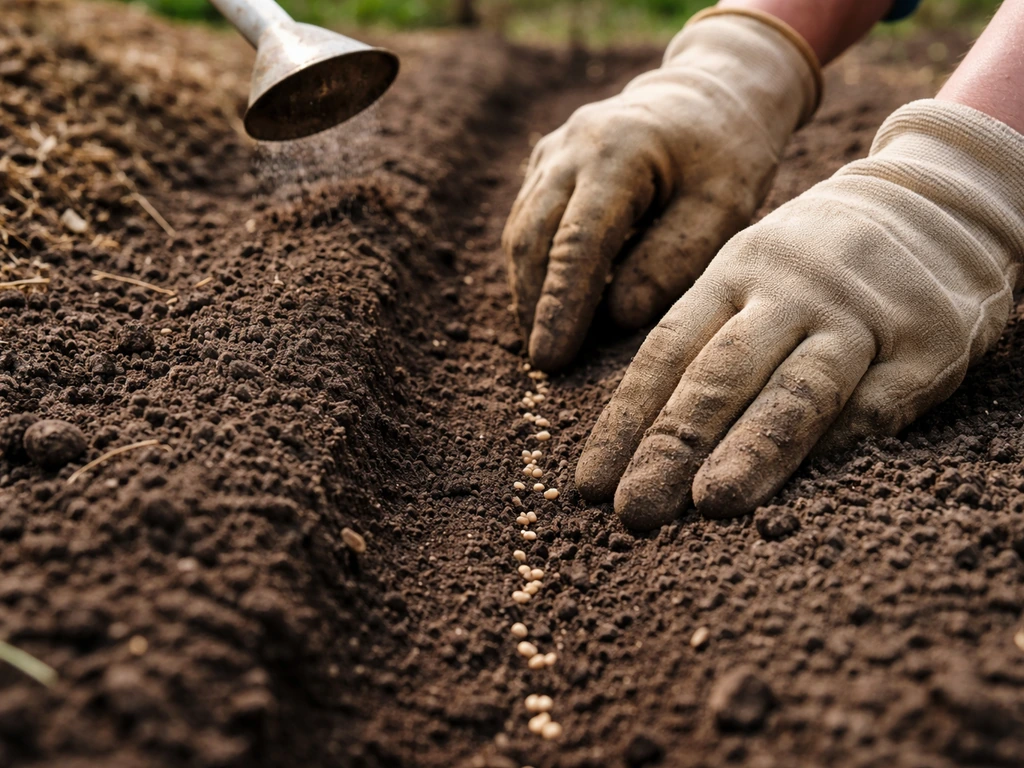
Direct seeding is simple: scatter or row-sow seeds about 1 inch apart in prepared soil, press them in lightly, and water gently. Thin to final spacing once seedlings are 2 inches tall. For head types, thinning to around 8 inches apart gives each plant room to form properly. The same light-coverage rule applies outdoors: don't bury seeds under heavy soil. A light rake-over is enough.
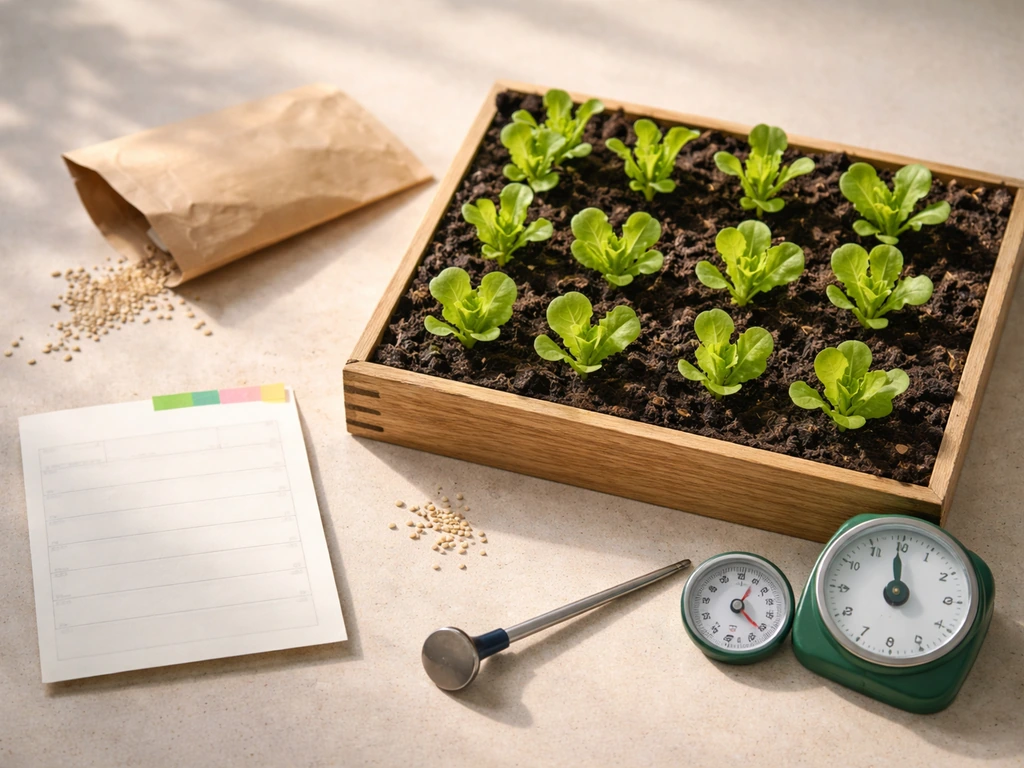
Direct seeding works well in spring and fall when soil temperatures are consistently above 40°F. If you're ever unsure whether it's the right moment to direct seed versus wait, a soil thermometer is worth the $10 investment. Shoot for 50–70°F soil temp for reliable, fast germination.
Indoor container timing: light, temperature, and scheduling
Growing lettuce in indoor containers means you're in charge of the entire environment, which is both an advantage and a responsibility. The good news: you can grow lettuce year-round indoors regardless of season. The catch: light and temperature are the two variables that almost always limit success.
Temperature targets for indoor containers follow the same science as outdoor growing. Lettuce prefers daytime temps around 65–70°F and nighttime temps of 45–55°F, according to University of Wisconsin-Madison Extension guidance. Most homes run warmer than this at night, which is why indoor lettuce sometimes bolts faster than expected. If you can drop your growing area to the mid-50s overnight (a cool basement, garage, or enclosed porch), you'll get better quality and a longer harvest window.
Light is where most indoor container grows fall short. A south-facing windowsill in winter delivers maybe 100–200 µmol·m⁻²·s⁻¹ of PPFD on a good day, which is on the low end. For container growing under grow lights, aim for a PPFD of 250–350 µmol·m⁻²·s⁻¹ based on University of Missouri Extension guidance for controlled-environment lettuce production. Run lights for 14–16 hours per day. A simple outlet timer makes this hands-off.
From a scheduling standpoint, indoor container lettuce takes roughly the same time as outdoor: leaf types can be ready for baby green harvest in 30–40 days, with full maturity at 45–75 days depending on variety and light levels. Sow a new container every 2–3 weeks to keep a rolling harvest going. Where you grow lettuce indoors matters more than people realize: a spot near a heat register or above appliances will push temperatures above what lettuce likes and accelerate bolting.
Hydroponic and indoor system timing: plant now for continuous harvest
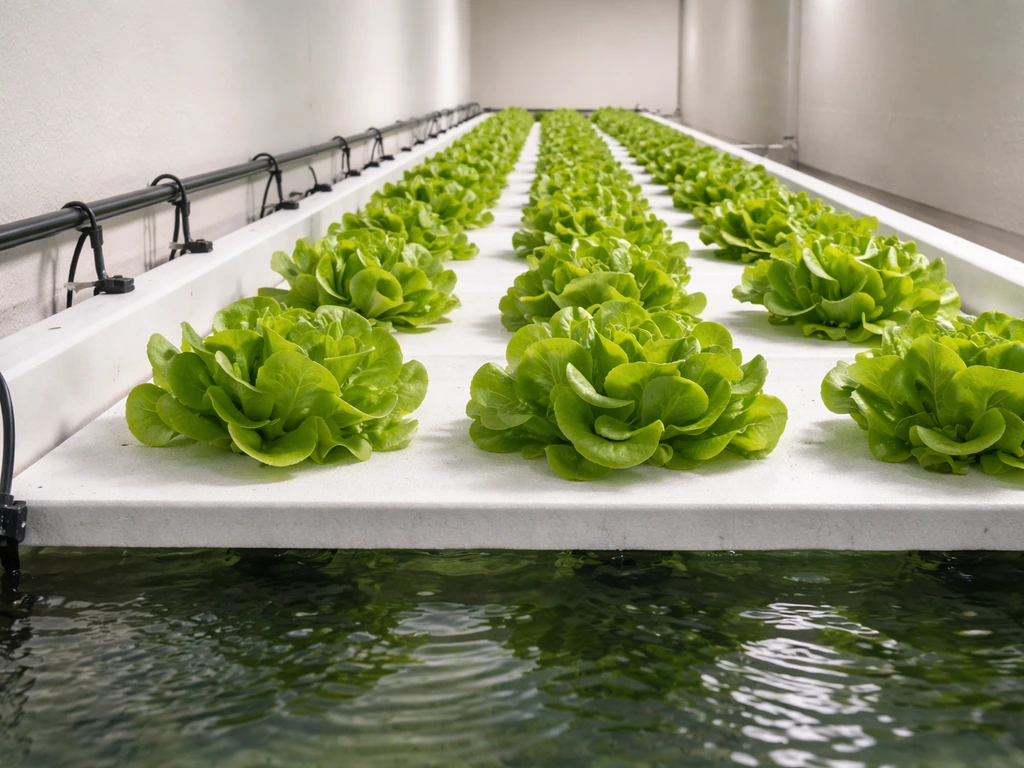
Hydroponic lettuce is one of the most reliable ways to grow year-round because you control every variable. Timing a hydroponic system is less about the calendar and more about managing your reservoir temperature, air temperature, and light schedule to keep plants in the right growth window.
Purdue Extension's hydroponic lettuce guidance recommends an optimal greenhouse or growing space temperature of around 70°F. Push above that consistently and you accelerate bolting; drop much below 60°F and growth slows noticeably. For root-zone temperature in recirculating systems, research published in MDPI found that keeping root-zone temps around 24.5°C (roughly 76°F) optimized growth and quality, particularly in warmer growing environments.
For light, a research study in Scientia Horticulturae found maximum leaf area and yield at 250 µmol·m⁻²·s⁻¹ PPFD under a 16-hour photoperiod. That's your target for LED grow lights in a hydroponic setup. Longer photoperiods can speed growth but also risk triggering early bolting, especially in summer when ambient day length is already long.
Germinate hydroponic lettuce seeds in rockwool cubes, foam plugs, or net cups with a grow medium. Keep germination media moist and warm (65–72°F). Seeds typically sprout in 5–10 days in hydroponic conditions. Once seedlings have a small root system, move them to your main reservoir or NFT channel. Leaf varieties reach harvest in 30–45 days from transplant in a well-managed system; crisphead types take longer, typically 60–90 days. The key scheduling principle for continuous harvest is to stagger your plantings: start a new batch of seeds every 2 weeks so you're always harvesting something.
If you want a deeper dive into timing specifically for a year-round grow, the best time to grow lettuce guide covers how to map out month-by-month schedules for hydroponic and indoor setups.
Quick troubleshooting: why lettuce won't germinate or bolts early
These are the two most common problems I hear about, and both have straightforward fixes once you know what's actually causing them.
Seeds not germinating
- Soil too hot: If soil temps are above 80°F, lettuce seed goes dormant. Wait for a cool spell or move to a shaded area. Germination maximum is around 85–95°F depending on variety, but quality drops sharply above 80°F.
- Seeds buried too deep: Lettuce needs light to germinate. If you've covered seeds with more than 1/8 inch of soil, they may not get the light signal they need. Re-sow lightly.
- Soil drying out between waterings: Lettuce seeds need consistent moisture during germination. A dry crust on the surface can stop germination mid-process. Water gently twice a day if needed, or use a humidity dome over trays.
- Soil too cold: Below 40°F, germination is very slow. Below 35°F, it usually stops. Use a seedling heat mat to bring soil temps up to 65–70°F for indoor starts.
- Old seeds: Lettuce seed viability drops after 1–2 years. If your seeds are old, do a quick germination test on a damp paper towel before committing a full tray.
Lettuce bolting early
- Temperatures too warm: Sustained temps above 85°F, especially warm nights, are the main driver. Provide shade cloth (30–50%) during the hottest part of the day.
- Days too long: Long photoperiods trigger bolting alongside heat. If you're running grow lights 18+ hours indoors, dial back to 14–16 hours.
- Stressed plants: Drought stress, nutrient deficiency, or root-bound containers can all trigger premature bolting. Keep soil consistently moist and repot if roots are circling the bottom of your container.
- Wrong variety for the season: If you planted a crisphead variety in late spring, it may bolt before it heads up. Switch to heat-tolerant leaf or butterhead types for marginal conditions.
- Wondering if you've simply missed the window? Check out the honest assessment in is it too late to grow lettuce before giving up on your current season.
Succession planting plan: your repeat harvest schedule
A single planting of lettuce gives you one harvest window, usually lasting 2–3 weeks before quality declines or bolting starts. Succession planting is the only way to have fresh lettuce consistently throughout the season. The concept is simple: sow a new batch every 2–3 weeks so harvests stagger and you always have something ready.
Days-to-maturity vary by type. Leaf lettuce typically matures in 45–75 days; romaine runs about 50–70 days; crisphead (iceberg-style) types take the longest at 60–120 days depending on conditions. For succession planning, use the faster types in your main rotation and save crisphead for longer cool windows. ATTRA's scheduling guidance for continuous harvest confirms that lettuce is ideal for staggered planting given its quick turnaround and cool-season preference.
Here's how to map out a practical spring succession schedule starting from today (April 17, 2026) for zones 5–7, assuming a last frost around May 1–10:
- Sowing 1 (already done or do today): Direct seed or transplant outdoors now. Harvest window: late May to early June.
- Sowing 2 (April 28 – May 5): Sow indoors or direct seed with row cover. Harvest window: mid-June.
- Sowing 3 (May 15–20): Last spring sowing for most zones 5–7 gardeners. Choose heat-tolerant leaf varieties. Harvest window: late June to early July before heat peaks.
- Gap (June–July): Switch to indoor containers or hydroponic systems to bridge summer heat if you want uninterrupted supply.
- Sowing 4 (July 20–August 1): Start fall crop indoors. Transplant outside mid-August once evening temps drop below 75°F.
- Sowing 5 (August 15–25): Direct seed fall row. Harvest window: October before first frost.
For indoor container and hydroponic growers, the same 2–3 week interval applies regardless of season. Since you control conditions, there's no summer gap. Just keep cycling new seed trays every 14–21 days and you'll have a continuous supply. A simple notebook or phone calendar reminder is all the system management you need.
The biggest mistake I see with succession planting is sowing too many plants in each batch and then burning out on thinning and managing them. Start with a small row or a single tray per sowing. Once you've nailed the timing, scale up. Consistent small batches beat one overwhelming harvest every time.
FAQ
What if I have a warm spell and then a cold snap, when should I still plant lettuce?
It depends on the temperature pattern, not just the calendar. If your soil is still near 40–50°F and overnight lows are steady above about 28°F, direct seeding is usually fine. If warm days are already pushing highs above the mid-70s and nights are staying warm, start indoors or switch to a fall window so you avoid a delayed germination followed by bolting.
My lettuce seeds are taking longer than expected, should I re-sow or wait?
If you already planted and seeds are slow, wait before re-sowing. Lettuce can germinate near 35°F but takes longer, so check soil temp and look for sprouting after about 14 days. If soil has been above 80°F for several days, assume the seed may be dormant, then pause and replant when temperatures cool back into the 40–80°F range.
How do I decide whether to direct seed or wait for transplants if the weather is borderline?
Use “soil workable and not freezing” plus “not heat-stressed” as your triggers. Aim for direct seeding when soil is consistently above 40°F, ideally 50–70°F for faster results. If nighttime temperatures are bouncing above 60°F, protect young plants with shade cloth or row cover during the warm nights to slow bolting.
Can I grow lettuce during summer indoors if I use grow lights?
You can, but only if you manage both light and temperature. Lettuce grown under lights can bolt faster if your nighttime room temperature stays high. If you cannot drop overnight temps into the mid-50s, expect a shorter harvest and plan more frequent succession batches (every 2 weeks for leaf types).
What should I do if I accidentally covered lettuce seeds too deeply?
For seed starting, 1/8 inch of coverage or less is the safe zone. If you suspect you covered too deeply, thin the risk by gently removing excess soil from the top surface if seedlings have not emerged yet. Once seedlings emerge, avoid burying them again, because deeper burial reduces light exposure that lettuce needs.
How thin should I lettuce, and what happens if I thin late?
Yes, but it is the fastest way to lose plants if you do it too late. After seedlings have true leaves, thin immediately to the target spacing for your variety, then keep only a second pass if crowding persists. Overcrowded seedlings compete for light, stretching slightly, and that stress can shorten the quality window.
My lettuce is bolting, is there any salvage strategy?
If bolting starts, you usually cannot “fix” the plants, because the seed stalk response is already triggered by temperature plus day length. Your practical move is to remove bolting plants to prevent bitterness from spreading through harvest decisions, then start the next batch to fill the gap. For future plantings, prioritize varieties with better bolting resistance and time for cooler overnight lows.
How should succession timing change for leaf lettuce versus crisphead?
If you want a continuous supply, use the 2–3 week rule for most setups, but adjust batch size and spacing. For leaf lettuce, shorter intervals (closer to 14–21 days) work well. For crisphead, extend to the longer end of the interval and harvest more baby-leaf first, since full heads can take much longer and are more sensitive to heat.
How do I avoid a harvest gap if I miss a planting date?
Try not to pause for more than about one “maturity cycle” if you want steady harvests. If you stop sowing for a month, you will typically see a gap equal to that time plus days-to-maturity. The easiest prevention is to keep seed trays staggered on fixed reminders, and keep at least one older batch plus one younger backup tray.
What’s the fastest way to extend harvest time in indoor containers when my nights run warm?
For container and hydro setups, the number-one scheduling decision is where your temperature lands overnight. If you are consistently above the preferred night range, your lettuce will complete life stages faster and quality drops sooner. Shift to faster-maturing varieties, increase sowing frequency, and consider a cooler overnight location (garage, enclosed porch, or basement) to extend each batch’s window.