The best time to grow lettuce is during cool weather, specifically when daytime temperatures are hovering around 60–65°F. In practical terms, that means early spring (4 to 6 weeks before your last frost) and fall (6 to 8 weeks before your first frost) are your two golden windows outdoors. If you're growing indoors, in containers, or in a hydroponic setup, you can grow lettuce year-round by controlling temperature and light. The trick is always the same: keep it cool, time it right, and harvest before heat forces the plant to bolt.
Best Time to Grow Lettuce: Sow, Transplant, Harvest Timelines
Marcus Holloway
22 Apr 2026
How climate and weather affect lettuce timing
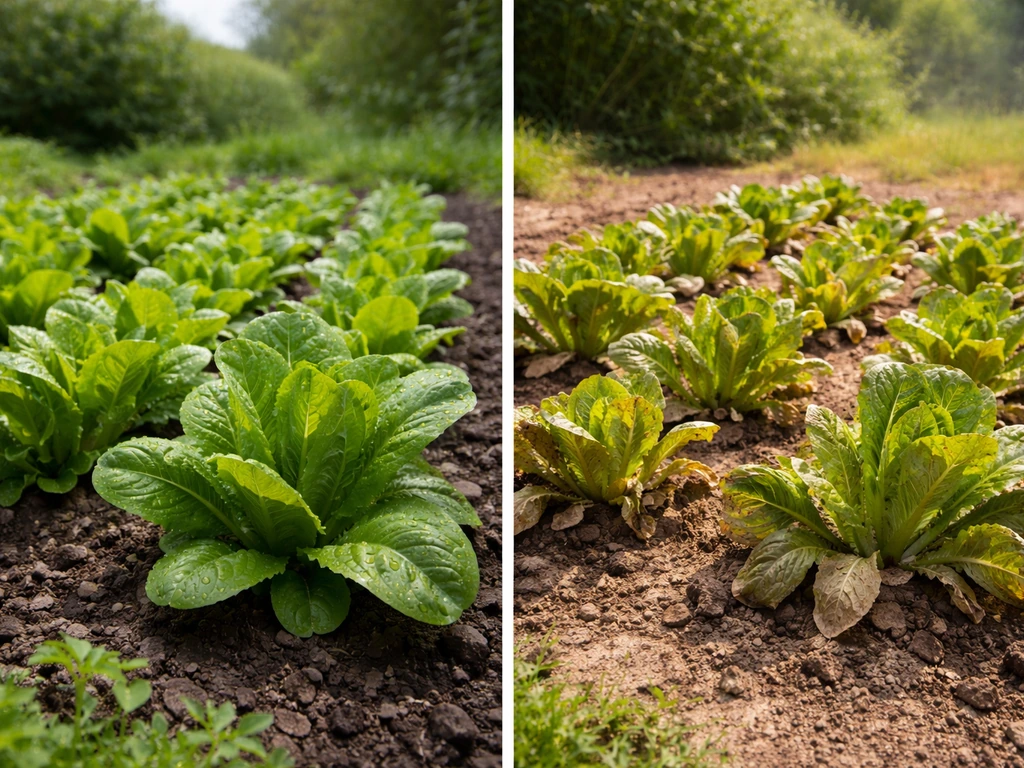
Lettuce is a cool-season crop, and that isn't just a gardening cliché. Temperature directly controls whether your plants grow lush leaves or skip straight to flowering. Vegetative growth peaks at around 60–65°F. Push above 75–80°F for several days in a row, and most varieties start to bolt, sending up a flower stalk and turning the leaves bitter almost overnight. Once a plant bolts, the harvest window is essentially over.
Frost is the other side of the equation. Hardened lettuce can handle a light freeze, which is actually useful because it means you can plant earlier than most vegetables in spring. But repeated or prolonged subfreezing temperatures will cause real injury or wipe out the crop entirely. The sweet spot is that narrow range between a hard freeze and summer heat, which is why timing matters so much more with lettuce than with something forgiving like kale or tomatoes. If you want a quick answer to when to grow lettuce, focus on cool-season windows and aim to harvest before heat triggers bolting.
Day length also plays a role that many beginners overlook. Long days (14+ hours of light) trigger bolting in many standard varieties just as reliably as heat does. This is why a cool but bright June can still ruin a spring planting that was doing fine in May. If your spring weather stays cool but the days are getting long fast, you need either a bolt-tolerant variety or a plan to harvest quickly before daylength catches up with you.
Best seasons and months to grow lettuce outdoors
For most of North America, spring and fall are the two best outdoor seasons. Here's how each one plays out in practice.
Spring planting
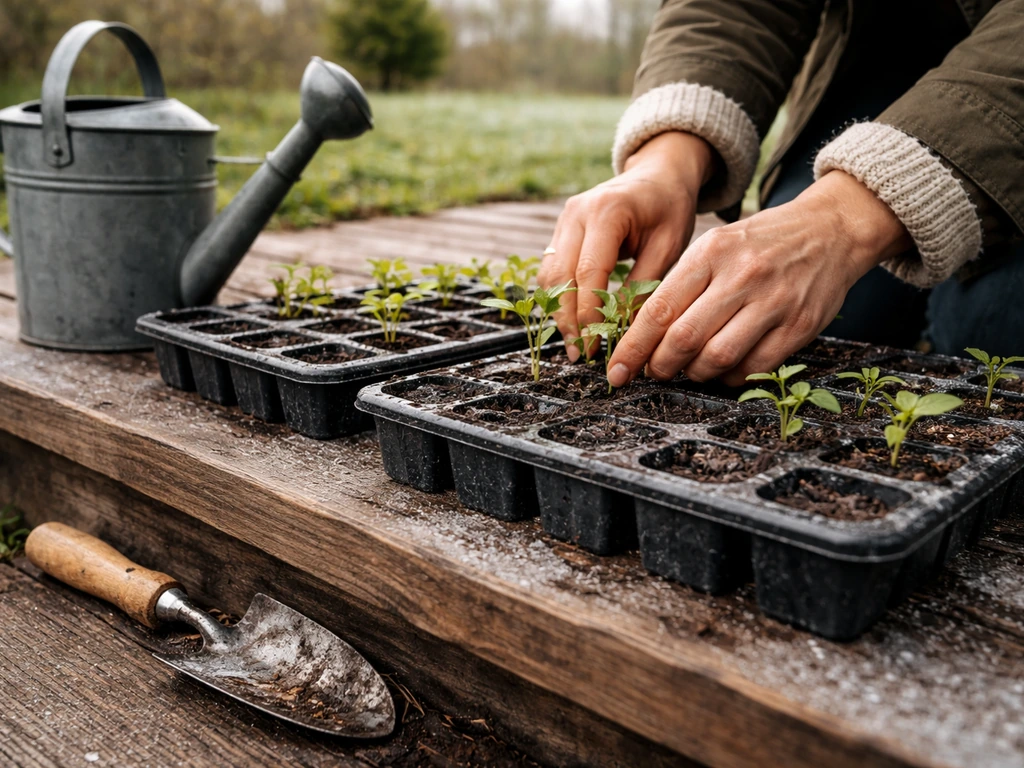
Spring is the most popular window, and for good reason. You're riding a wave of warming temperatures, and you have a clear deadline (summer heat) that forces you to get moving. For most climates, that means direct sowing outdoors 2 to 4 weeks before your last frost date, or transplanting seedlings 3 to 4 weeks before last frost. In a typical year, this puts spring planting somewhere between late February and mid-April depending on where you live. Gardeners in warmer states like Georgia or North Carolina often start as early as late January or February, while gardeners in the upper Midwest or New England are closer to late March or April.
The risk in spring is miscalculating how fast temperatures rise. If your spring goes from cool to hot in a short window, you may only get 3 to 4 weeks of productive growth before bolting starts. Plant as early as conditions allow and choose fast-maturing varieties to maximize your harvest window.
Fall planting
Fall planting is often underrated, and I'd argue it's actually better in many climates because temperatures are dropping rather than rising. Lettuce planted in late summer to early fall grows into steadily cooler conditions, which keeps it from bolting and often produces the sweetest, most tender leaves of the year. Aim to have transplants in the ground about 6 to 8 weeks before your first expected fall frost. For most of the U.S., that means planting between mid-August and late September.
The main challenge with fall planting is starting seeds during the hottest part of summer, when germination can be poor. Starting seeds indoors in a cool room or air-conditioned space, then transplanting when outdoor temps drop, solves this easily.
What to do in hot or cold climates
If you're in a climate with long hot summers, like the Deep South or the Southwest, your spring window is compressed and your fall window is your best bet. Gardeners in places like North Carolina are specifically advised to adjust planting dates based on local temperature conditions and cultivar heat tolerance. For a more location-specific walkthrough, use this guide on when to grow lettuce in nc to match dates to local temperature swings and heat tolerance.
Conversely, if you're in a cool northern climate with a short growing season, the entire summer can actually work for lettuce because temperatures rarely spike into bolting range. Gardeners in Alaska, for instance, can often grow lettuce straight through summer with minimal bolting risk.
Best time to start seeds vs transplant (timelines)
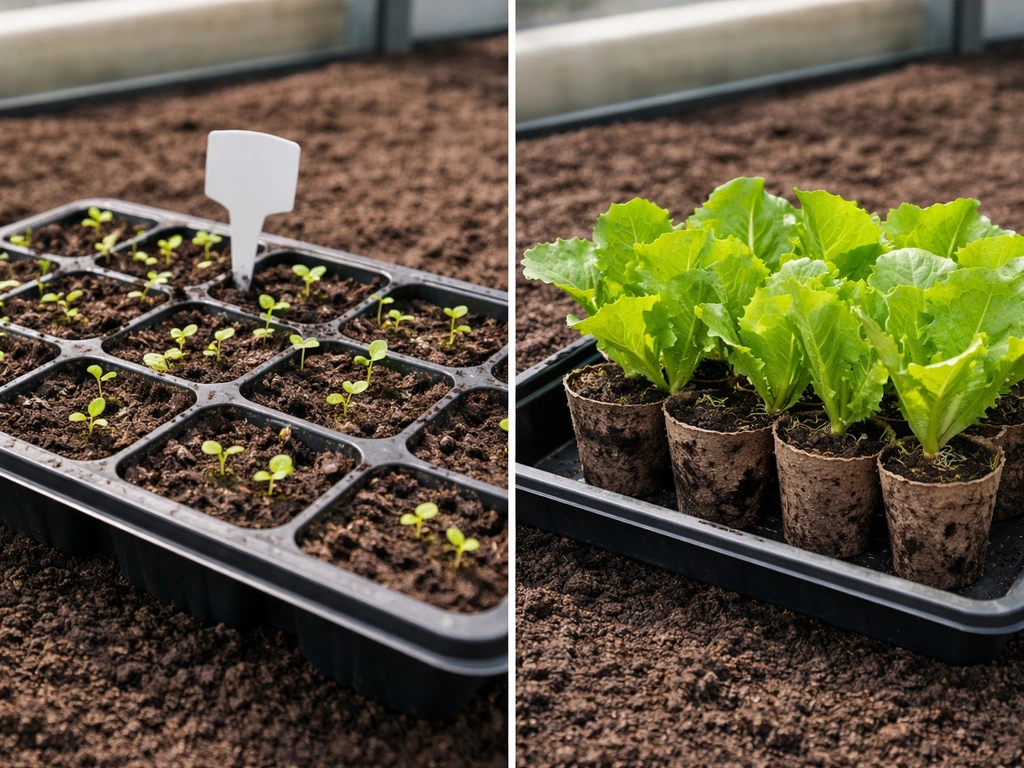
Here's the sequence that works reliably whether you're targeting spring or fall:
- Find your last spring frost date (for spring planting) or first fall frost date (for fall planting). Your local cooperative extension office or a frost-date tool for your zip code will give you this.
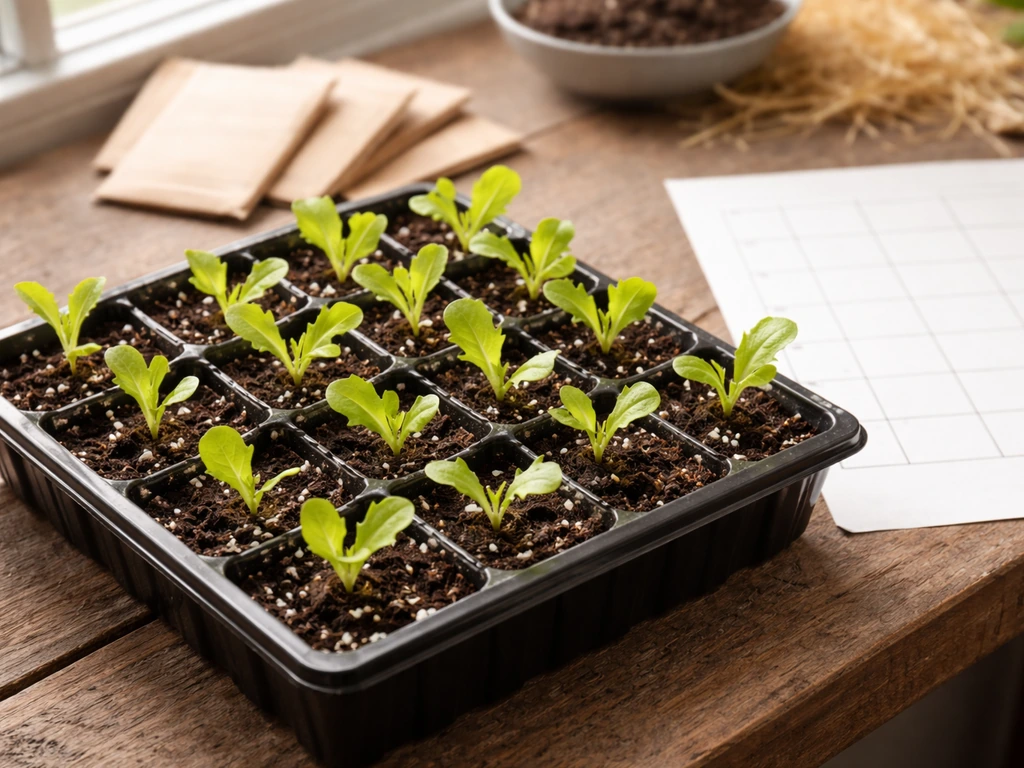
- For transplants: start seeds indoors 4 to 5 weeks before you plan to set them outside. Transplants are ready to move outdoors 3 to 4 weeks before the last spring frost, or 6 to 8 weeks before the first fall frost.
- For direct sowing: sow seeds directly in the garden 2 to 4 weeks before the last spring frost. The soil should be workable and at least 40°F for germination.
- For continuous harvest: sow a new small batch of seeds every 2 weeks throughout your cool-season window. This staggers your harvests and keeps fresh greens coming rather than everything maturing at once.
Harvest timing depends on the type of lettuce you're growing. The RHS notes that loose-leaf varieties can be ready to pick in as little as 4, 6 weeks, while hearting lettuces take longer, about 10, 14 weeks depending on variety and time of year Loose-leaf varieties can be ready to pick in as little as 4–6 weeks. Loose-leaf varieties are ready in as little as 30 to 45 days from transplant, which makes them the fastest route to fresh greens. Romaine typically takes 50 to 70 days from seeding, and crisphead (iceberg-type) varieties can take anywhere from 42 to 80 days depending on conditions. If you're racing against summer heat, loose-leaf is your best friend.
| Lettuce Type | Days to Maturity (from seed) | Best Use Case |
|---|---|---|
| Loose-leaf | 30–45 days | Fastest harvest, best for beginners and succession planting |
| Butterhead/Bibb | 45–60 days | Good flavor, moderate speed, works well in spring and fall |
| Romaine | 50–70 days | Needs a full cool season, great for fall planting |
| Crisphead (Iceberg) | 42–80 days | Longest time, most heat-sensitive, best in stable cool climates |
Choosing lettuce varieties by temperature and day length
Not all lettuce varieties respond to heat and long days the same way. Choosing the right variety for your timing window can extend your harvest by weeks, which is a bigger deal than most people realize when they're starting out.
Heat-tolerant and slow-bolting varieties are specifically bred to resist premature flowering when temperatures climb or days lengthen. Extension programs including NC State recommend selecting cultivars with bolting tolerance and tipburn resistance for warm-climate plantings. UC IPM notes that tipburn risk is influenced by growth conditions, including how transpiration patterns develop within the lettuce, which helps explain why tipburn tends to appear in certain inner leaves tipburn resistance. Varieties like 'Nevada,' 'Jericho,' 'Black Seeded Simpson,' and 'Batavian' types are commonly recommended for spring and warm-climate growing because they hold longer before going to seed.
For fall planting into cooler and shorter days, almost any variety works well because the environmental triggers for bolting are moving in your favor. This is a good time to try romaine or butterhead types that need more time to mature. If you're planting in late summer when it's still warm, start with a heat-tolerant variety and transition to standard varieties as your fall sowing dates arrive.
Bottom line on variety selection: if you're planting in spring and your summers arrive fast, prioritize bolt tolerance and fast maturity. If you're planting in fall or in a reliably cool climate, you have more flexibility to grow whatever variety you prefer.
Indoor and container growing timing (windows, grow lights)
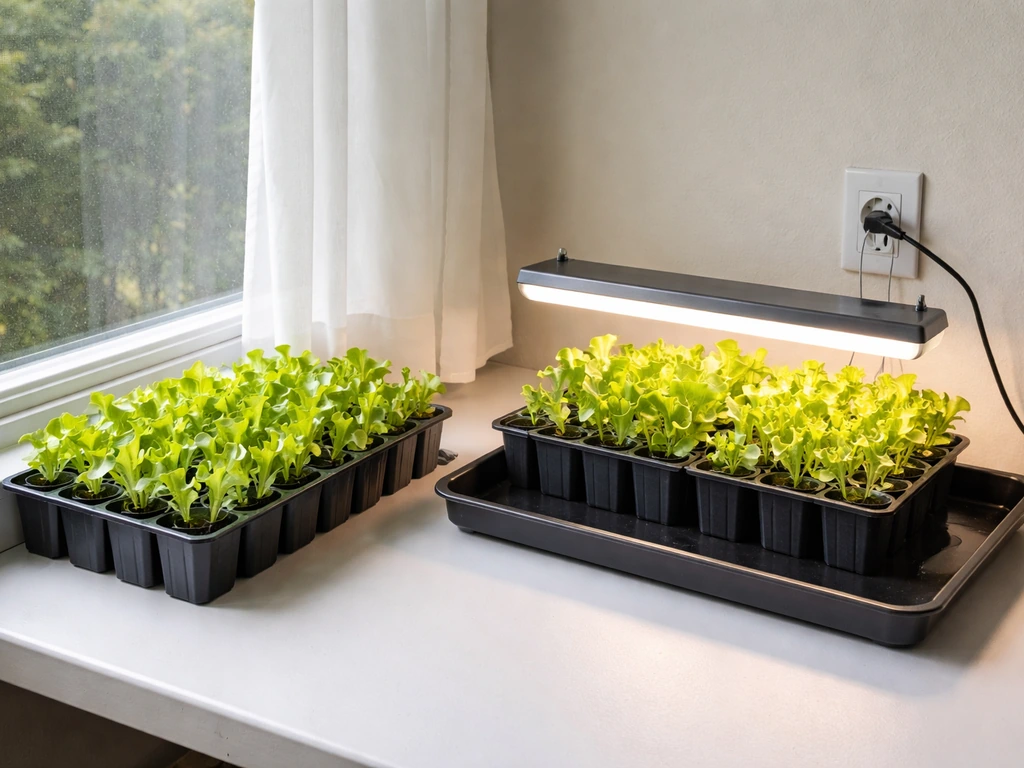
Growing lettuce indoors or in containers changes the timing equation significantly because you control the environment rather than working around it. This is genuinely one of the best setups for lettuce if you want fresh greens year-round.
Window growing
A south-facing window in a cool room is workable for lettuce in fall and winter, when light coming through the glass is less intense and indoor temperatures stay moderate. The challenge is that most homes heat up to 68–72°F or warmer, which is above the ideal 60–65°F range. If your kitchen or living room stays on the warm side, expect slightly faster bolting and shorter harvest windows. A north-facing or east-facing window in winter, or a cooler room like a sunroom or enclosed porch, often works better than a warm south-facing windowsill. Light is the limiting factor: if your window location gets fewer than 10 to 12 hours of decent light daily, growth will be slow and leggy.
Grow lights
Grow lights are the real game-changer for indoor lettuce timing because they remove the light limitation entirely. With a full-spectrum LED grow light set to 14 to 16 hours per day and a room temperature around 60–68°F, you can grow lettuce in any month of the year. Seeds germinate in 7 to 10 days, and loose-leaf varieties can be ready to harvest in 30 to 40 days from transplant under good light.
The practical approach is to treat your grow light setup like a continuous production system: start a small tray of seeds every 2 to 3 weeks, and you'll have a steady rotation of plants at different stages. Keep temperatures consistent and watch for signs of heat stress if your lights run warm.
Container growing outdoors follows the same seasonal logic as in-ground planting, with one useful advantage: you can move containers to extend the season. In spring, move containers inside or under cover when a late frost threatens. In fall, bring them in to protect from early frosts and squeeze out a few more weeks of harvest. This kind of flexibility is one of the main reasons containers work so well for lettuce.
Hydroponic lettuce timing and cycling schedules
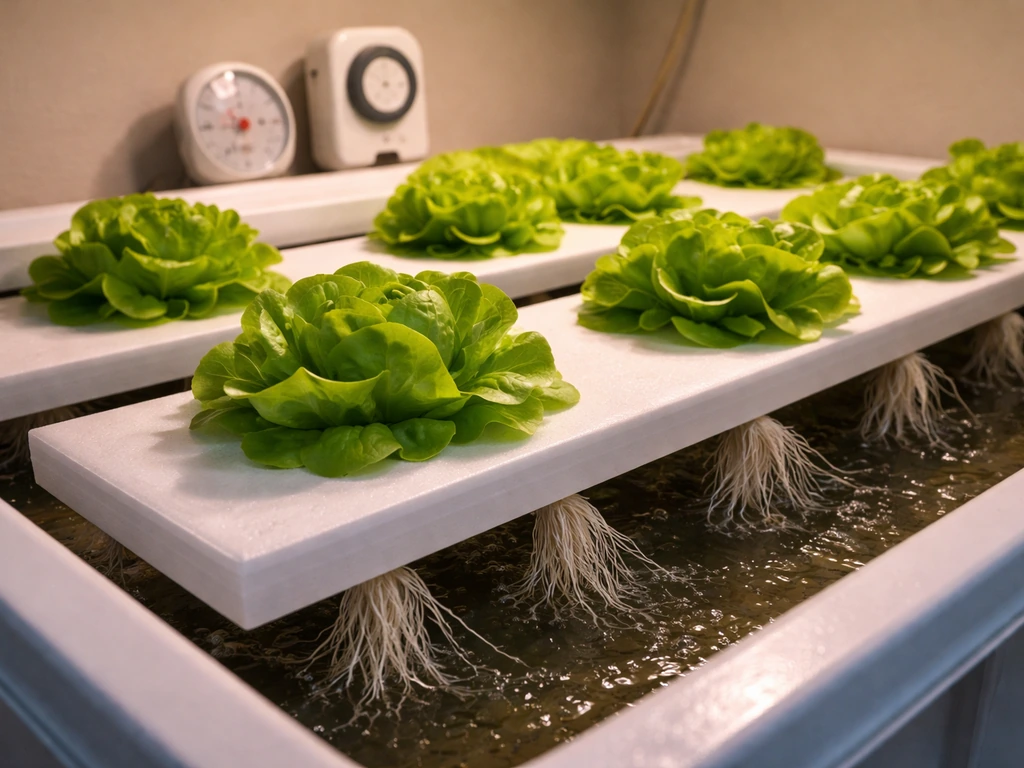
Hydroponics is where lettuce timing becomes the most systematic and predictable. Without soil and without seasonal weather, the main variables you're managing are temperature, light, and cycling schedule.
The optimal temperature for hydroponic lettuce is around 65–70°F for the nutrient solution and growing environment. Warmer than that and you'll see bolting and reduced quality, which mirrors what happens outdoors in summer. Keep temperatures in that range and you can run continuous production without any seasonal restrictions at all.
In terms of timing, a typical hydroponic lettuce cycle runs about 45 to 60 days from seed to harvest. The general breakdown is roughly 10 to 14 days in a germination/seedling stage, then transplanting into the main system, followed by 24 to 35 days of additional growth before harvest. Some fast-growing loose-leaf varieties under strong lighting can push the lower end of that range, hitting harvest in 30 to 45 days from transplant.
The most efficient approach for hydroponic growers is a staggered cycling schedule. If your system holds 20 plants, for example, you might transplant 5 new seedlings every week so that every week you're also harvesting 5 mature plants. This requires a little planning upfront but results in a constant supply rather than a feast-or-famine situation where everything matures at once. Purdue extension materials on hydroponic production describe exactly this kind of multi-stage cycling as the standard model for consistent lettuce output.
One note specific to hydroponic timing: because you're not tied to outdoor seasons, variety selection becomes more about growth rate and system fit than heat tolerance. Butterhead and loose-leaf types tend to do best in most home hydroponic setups because they don't need the extended cool period that crisphead varieties prefer.
Your next steps: pick a date and make a simple plan
Here's how to turn all of this into an actual plan you can use today. It's simpler than it sounds once you have your frost date in hand.
- Find your last spring frost date or first fall frost date. Search your zip code on a frost-date tool or check with your local cooperative extension office. This single number anchors everything else.
- Decide your growing method: outdoor bed, container, indoor window, grow lights, or hydroponics. Each one has a slightly different timing approach as described above.
- Pick your variety based on your timing window. If you're in spring and summers arrive fast, choose a heat-tolerant, fast-maturing loose-leaf variety. If you're planting in fall or under lights year-round, you have much more flexibility.
- Count back from your frost date. For outdoor spring planting: start seeds indoors 7 to 9 weeks before last frost (4 to 5 weeks to grow transplants, then transplant 3 to 4 weeks before last frost). For direct sowing, aim for 2 to 4 weeks before last frost.
- Set up a succession schedule. Mark your calendar to sow a new small batch every 2 weeks throughout your cool season (or every 2 to 3 weeks if you're on a grow-light or hydroponic system). This is what keeps fresh greens coming rather than one big harvest and then nothing.
- Track temperature, not just dates. If an unseasonably warm spell arrives, be ready to harvest early rather than waiting for a calendar date. If a late cold snap threatens, cover outdoor plants or bring containers inside.
The timing questions around where you live, what your local climate looks like, and whether it's still early enough in the season to get started are all worth thinking through carefully. If you want a more location-specific answer, you can use the guidance in our guide on where to grow lettuce to pick the best conditions for your space. Gardeners in specific regions like North Carolina or further north have their own timing nuances, and the question of whether your current date is still within a viable planting window is one that comes up a lot this time of year. The core principles stay the same everywhere though: cool temperatures, the right variety, and a succession plan are what separate a one-time lettuce harvest from a reliable, ongoing supply of fresh greens at home.
FAQ
What is the best time to grow lettuce if I do not know my exact last frost date?
Use your nearest local frost estimate or an average “frost-free” date, then aim to start spring lettuce 2 to 4 weeks before that. If you get an unexpected warm spell, immediately switch to bolt-tolerant, fast-maturing varieties and harvest the outer leaves rather than waiting for full size.
How do I choose lettuce varieties when my spring temperatures jump quickly?
Prioritize varieties described as slow-bolting and heat-tolerant, and favor loose-leaf types if you need a fast turnaround. Also, avoid crisphead as your primary spring crop, since longer maturity times often collide with heat.
Can I grow lettuce in summer if I can shade it?
Shade can reduce direct sunlight, but lettuce still bolts when air and soil temperatures stay high for multiple days. For true summer success, combine shade with strong cooling tactics like reflective mulch, wind management, and frequent harvesting of outer leaves, or grow indoors with controlled temperature and light.
Why does my lettuce bolt even when temperatures seem “cool”?
Bolting can be triggered by day length, not only heat. If you are planting in late spring when days stretch past about 14 hours, switch to bolt-tolerant varieties or plan a quick harvest cycle before long-day conditions fully take hold.
What should I do if my lettuce seedlings are ready to transplant but nights are still too cold?
Transplant anyway only if you can protect them from repeated hard freezes. In spring, use row cover or a cold frame to buffer night lows, and harden off gradually so the plants are less likely to stall or tipburn after transplant.
How can I harvest lettuce longer without losing the whole plant to bolting?
For many loose-leaf types, harvesting outer leaves regularly can extend productivity. Once you see a central flower stalk forming or leaves rapidly turning bitter, stop expecting regrowth and replant a new succession to keep the supply steady.
Is it better to direct sow or transplant for the best time to grow lettuce?
Transplanting usually gives you more control and faster establishment when your cool window is short. Direct sowing works well when you have consistent cool weather, but in warm-up-prone spring weather, transplant loose-leaf cultivars to maximize the harvest window.
Do containers change the best time to grow lettuce compared with in-ground beds?
The seasonal windows are similar, but containers let you physically manage extremes. Move them under cover during cold snaps in spring, and bring them indoors or into a protected spot in early fall frosts to extend harvest by days to weeks.
What is the most common timing mistake people make with fall lettuce?
Starting too late in the fall, so plants mature after conditions shift colder and darker, or delaying transplants while still waiting for “perfect” weather. Aim to get transplants established roughly 6 to 8 weeks before your first expected fall frost so they can size up while conditions remain favorable.
How do I time indoor lettuce production if my home is warmer than 65°F?
If your indoor temperatures run closer to 68 to 72°F, expect faster bolting and shorter harvest cycles. Compensate by using grow lights on a controlled schedule, harvesting earlier (outer leaves first), and running a staggered batch schedule every 2 to 3 weeks.
What light schedule is safest for year-round indoor lettuce timing?
A common reliable approach is 14 to 16 hours of light per day with consistent temperature. If your leaves grow tall and loose, increase daily light duration or intensity rather than extending the crop outdoors in hopes it will “fix itself.”
For hydroponics, how should I stagger plantings to avoid feast-or-famine?
Use a cycling plan where a portion of seedlings are transplanted each week and you harvest another portion at the same time. This works best when you standardize variety and growth stage, so each week’s batch reaches harvest maturity within a predictable window.
Can I use crisphead lettuce in hydroponics if I want iceberg-style heads?
You can, but it usually requires tighter control and may not be the easiest match for typical home systems. Many home setups perform better with butterhead or loose-leaf, since crisphead can be slower and more sensitive to conditions that drift upward.