Lettuce grows best between 60–70°F (15.5–21°C), with a sweet spot of blank" rel="noopener noreferrer">60–65°F for the most lush, tender leaves. Keep nights above 50°F and days below 75°F, and you'll get fast, healthy growth. Push past 80°F for more than a few days, and you're looking at bolting, bitterness, and the end of your harvest window.
Best Temp to Grow Lettuce: Day, Night, Indoor, Hydroponic
Marcus Holloway
6 May 2026
The ideal temperature range for lettuce
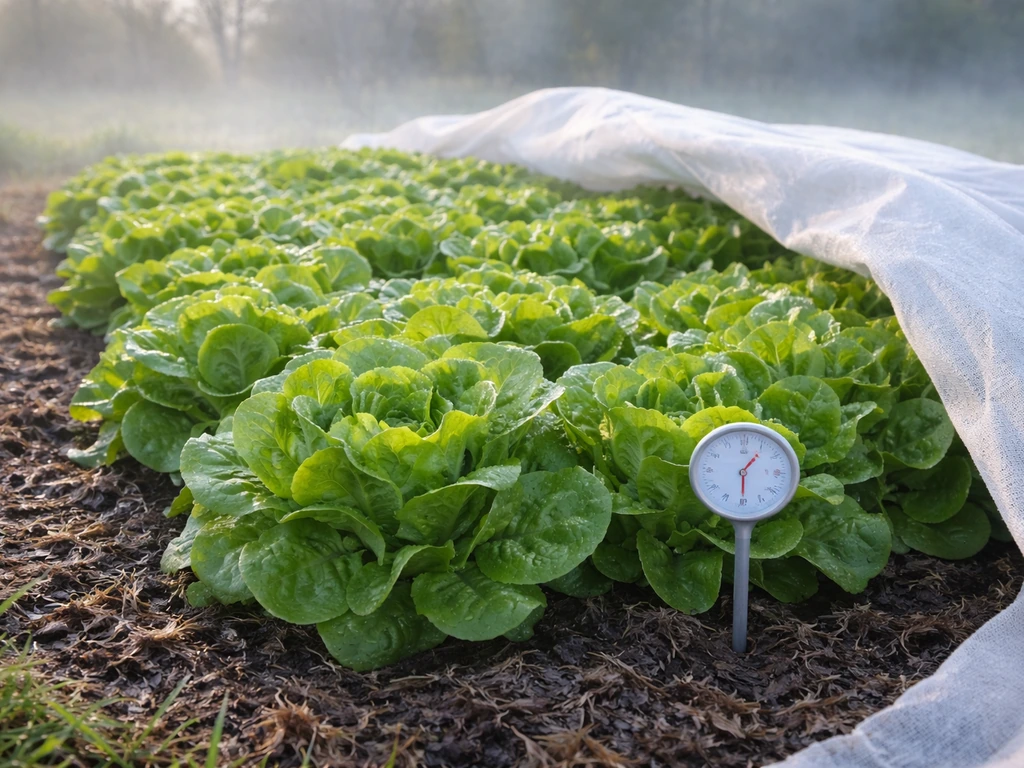
Illinois Extension puts the ideal average daily temperature at 60–70°F, and UMass and Cornell both narrow that down to 60–65°F as the true optimum. That modest range is why lettuce is a cool-season crop, not a summer one. At these temperatures, lettuce puts its energy into producing big, leafy growth rather than rushing to flower. Below 50°F, growth slows noticeably. Above 75–80°F, the plant starts to feel stressed, and above 80°F it starts shifting into reproductive mode, which means bolting.
The 60–65°F target is easy to hit in spring and fall in most climates, which is exactly why those are the classic lettuce seasons. If you're growing indoors or in a controlled environment, that's your thermostat target. If you're growing outside, your job is to time planting so that range lines up with your local weather.
Day vs. night temps, and how much cold or heat lettuce can actually handle
Lettuce doesn't need the same temperature around the clock, and understanding that gives you more flexibility. UMass Extension recommends day temperatures of 60–65°F with a minimum night temperature of 50°F. Research from controlled greenhouse environments uses a 22°C day / 18°C night target (about 72°F / 64°F), which is slightly warmer than the classic outdoor optimum but works well when you have consistent airflow and light.
On the cold side, most lettuce varieties can handle a light frost down to about 28–32°F for short periods, especially if the plants are well-established. Young seedlings are more vulnerable. A sustained hard freeze will kill them. On the hot side, anything over 80°F during the day triggers stress, and if nights don't cool below 70°F, the plant gets no recovery time and will bolt fast.
| Temperature Zone | What Happens to Lettuce |
|---|---|
| Below 28°F | Hard freeze damage, seedlings likely killed |
| 28–45°F | Growth nearly stops, frost risk for young plants |
| 45–55°F | Slow but steady growth, tolerable short-term |
| 55–65°F | Ideal sweet spot, best leaf production |
| 65–75°F | Still good, watch for early bolt signs in summer varieties |
| 75–80°F | Stress zone, bitter flavor starts developing |
| Above 80°F | Bolting likely, harvest quality drops fast |
Best climates and when to plant outdoors
Outdoors, you're chasing two windows: early spring and fall. When people ask when to grow lettuce, the key is timing for cool-season weather so it can form leaves instead of bolting. In most of the continental US, that means planting out seedlings (or direct sowing) about 4–6 weeks before your last spring frost date, when daytime temps are reliably in the 50s and 60s. You can also start a fall crop by counting backward from your first fall frost date, giving lettuce 45–60 days to mature before hard freezes arrive.
Climate matters a lot here. Gardeners in the South (Georgia, the Carolinas, Texas) often skip the spring window entirely because heat arrives early, and focus on a long fall-through-winter season instead. In Georgia specifically, you typically get the best results by planting lettuce in late winter through fall, timed to avoid hot stretches. In the Pacific Northwest and coastal California, the mild year-round temperatures mean lettuce can grow almost continuously. In the Upper Midwest and Northeast, the spring window is real but short, so starting transplants indoors 3–4 weeks early gives you a head start before the heat shuts things down. If you're figuring out your specific regional timing, the question of when to grow lettuce in your area is worth digging into separately. In North Carolina, aim to plant lettuce so it matures during cooler weather and avoid the hot stretch that triggers bolting when to grow lettuce in nc. If you’re still wondering where to grow lettuce for the best results, start by matching your region’s climate to the cool-season temperature targets.
One tip I keep coming back to: don't plant by calendar date alone. If you’re wondering whether it’s too late to grow lettuce where you live, the key is to work backward from your local warm-up or first frost date and match it to lettuce’s cool-season window don't plant by calendar date alone. Watch the actual forecast. A cold snap can extend your spring window by two weeks. An early heat wave can cut it just as fast. The temperature range matters more than the date on the seed packet.
Indoor temperature targets for containers and grow-light setups
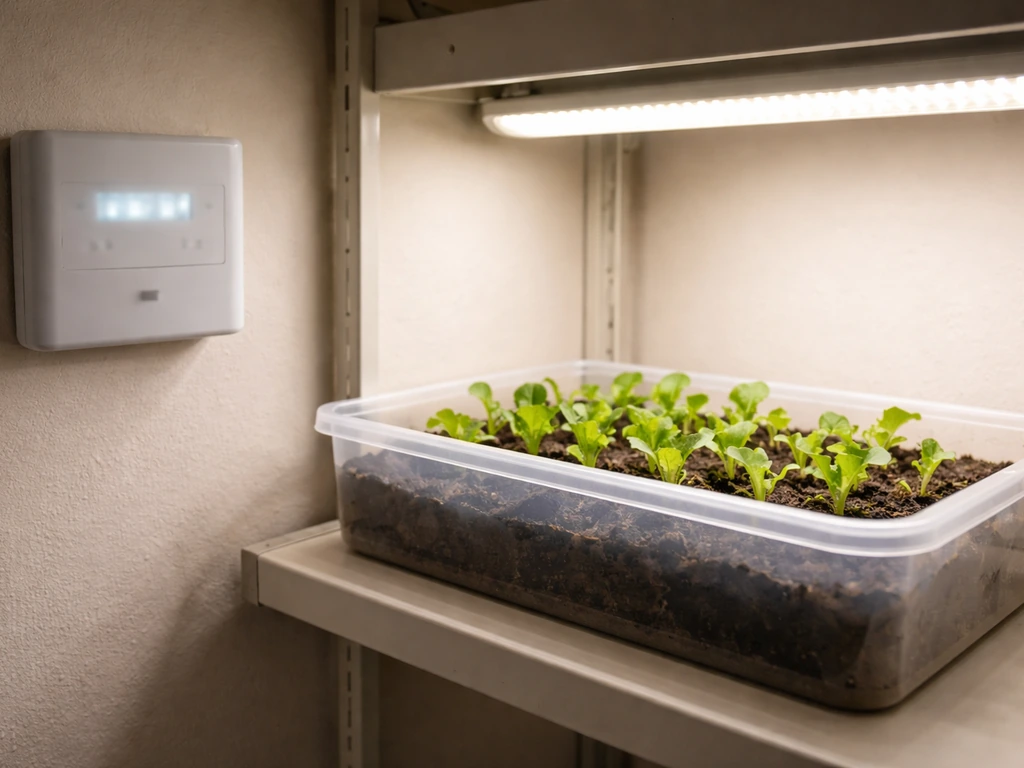
Growing lettuce indoors in containers or under grow lights removes the seasonal constraint but introduces a new challenge: heat from the lights themselves. Your room temperature might be 68°F, but a cheap LED panel placed too close can push the leaf canopy temperature several degrees higher. I aim to keep the air temperature in the growing space between 60–68°F during the light period (your 'day') and let it drop to around 55–60°F during the dark period ('night'). That temperature drop overnight actually promotes better, more compact leaf growth.
If you're in an apartment with a thermostat set to 72°F or higher, lettuce can still grow, but you'll want to pick heat-tolerant varieties like Jericho or Muir, keep your grow light at least 12–18 inches above the canopy to minimize heat buildup, and be prepared for a slightly shorter harvest window before the plant starts to stretch toward bolting.
- Target air temperature during 'day' (lights on): 60–68°F
- Target air temperature during 'night' (lights off): 55–62°F
- Keep grow lights far enough away that leaves don't feel warm to the touch
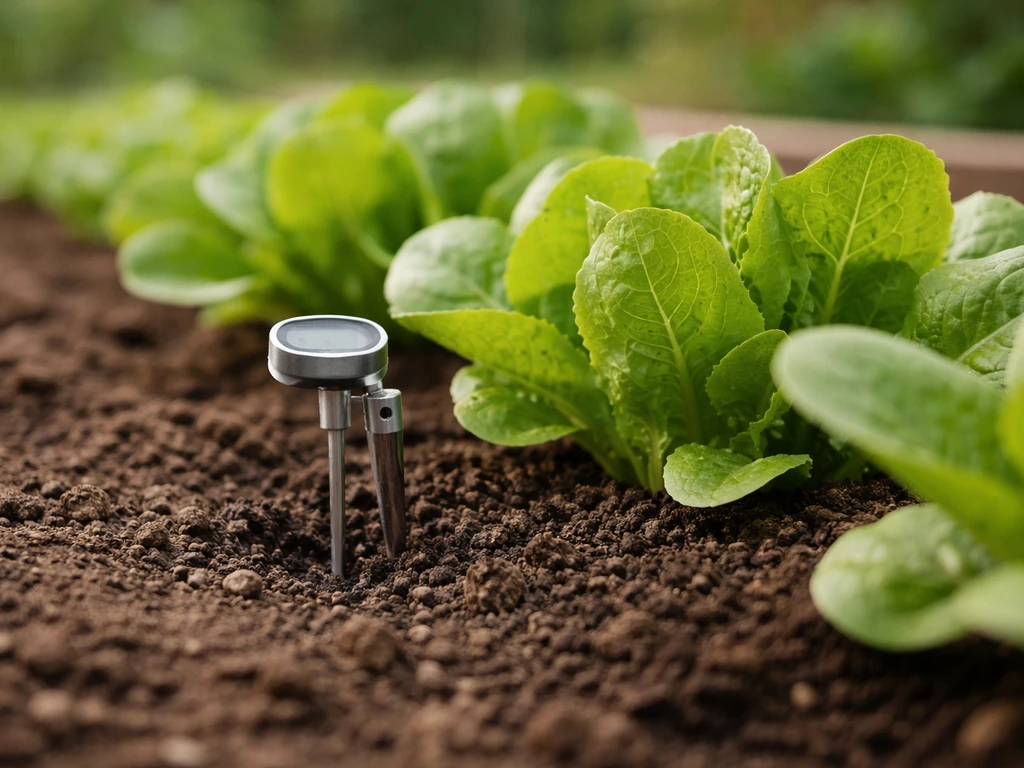
- Use a thermometer at canopy height, not just room temperature
- Good airflow from a small fan helps prevent heat pockets near the light
Temperature targets for hydroponics and controlled-environment growing
In hydroponic systems, you're managing two temperatures: air temperature and water (nutrient solution) temperature. The air targets are similar to indoor container growing, 60–70°F, but water temperature is something a lot of beginners miss entirely. Nutrient solution should stay between 65–72°F. Warmer water holds less dissolved oxygen, which stresses roots and invites root rot. Cooler water slows nutrient uptake.
Research on optimized greenhouse environments recommends a 22°C/18°C (72°F/64°F) day/night air temperature target for lettuce in controlled setups, which is slightly warmer than the classic field optimum. That works because controlled environments have dialed-in CO2, airflow, and humidity that compensate for the slightly higher temperature. If your home hydroponic system doesn't have that level of control, stick closer to 60–68°F and you'll have more margin for error.
- Air temperature (day): 65–72°F for controlled setups, 60–68°F for simpler home systems
- Air temperature (night): 60–65°F
- Nutrient solution temperature: 65–72°F
- Use an aquarium thermometer to monitor reservoir temp, not just room temp
- A small aquarium chiller or frozen water bottles can cool the reservoir in warm weather
- Ensure good air circulation to prevent warm spots near the light or reservoir
How to actually hit your target temperature in real conditions
Knowing the ideal range is one thing. Getting there in your specific setup is another. Here's what I've found actually works, organized by the direction you need to go.
When it's too hot
- Shade cloth: a 30–50% shade cloth can drop soil and air temperature by 5–10°F on a hot day. This is the single most effective tool for extending your outdoor season into early summer.
- Mulch: a 2–3 inch layer of straw or wood chip mulch keeps soil temps 10–15°F cooler than bare soil, which protects roots even when air temps climb.
- Row cover on frames as a shade tent: drape lightweight row cover (not the insulating kind) over low hoops to create a shaded microclimate without blocking air circulation.
- Water timing: watering in the early morning cools the soil before peak afternoon heat.
- For indoor/hydroponic setups: a small clip fan circulating air prevents heat buildup under lights; consider shifting your light cycle to run lights overnight when room temperature is naturally lower.
- Cool the reservoir: in hydroponic systems, freeze water in plastic bottles and float them in the reservoir to drop solution temperature during heat waves.
When it's too cold
- Row cover (frost blanket): a single layer of floating row cover adds 4–6°F of frost protection, enough to protect lettuce through a light frost.
- Cold frame or low tunnel: a simple PVC hoop tunnel covered in clear plastic can maintain temperatures 10–20°F above the outdoor air temp on sunny days.
- Wall O' Water or water-filled cloches: these can protect individual plants down to about 16°F.
- Indoor grow light timing: keep lights on for 14–16 hours per day to generate warmth and compensate for cool ambient temperatures.
- For hydroponics: an aquarium heater set to 68°F will maintain optimal root zone temperature even if the room is cool.
Troubleshooting: what's happening when temperatures go wrong
Temperature problems show up in the plant before they show up on your thermometer, at least when you know what to look for. Here are the most common failure modes and what's actually causing them.
Bolting (plant sends up a flower stalk)
This is the most common warm-weather failure. Bolting is triggered by a combination of heat and lengthening day length, but temperature is the dominant factor. Once daytime temps consistently hit 75–80°F, most varieties will start forming a seed stalk within 1–2 weeks. Once it starts, you can't reverse it, but you can delay it by providing afternoon shade, switching to bolt-resistant varieties like Muir, Nevada, or Jericho, and harvesting outer leaves aggressively so the plant doesn't accumulate as much energy.
Bitter or tough leaves
Bitterness develops in heat because the plant produces more bitter compounds (lactucin and related chemicals) as a stress response. If your lettuce tastes bitter and the temperatures have been above 70–75°F, heat is almost certainly the cause. Shade, cooler watering times, and faster harvesting of younger leaves all help. Leaves harvested in the morning are typically less bitter than those harvested in the afternoon on a warm day.
Slow or stalled growth
If your lettuce just isn't growing, and it's not a watering or nutrient issue, cold temperatures are usually the culprit. Below 50°F, growth nearly stops. A cold snap that drops soil temperature can stall plants for a week or more even after air temperatures recover, because the soil stays cold longer. USU Extension also notes that when soil temperatures stay above 80°F, some seeds such as lettuce can go dormant and fail to germinate until cooler conditions return soil temperature can stall plants for a week or more. Check soil temperature (not just air temperature) with a soil thermometer. If it's below 50°F, add row cover during the day to trap solar heat in the soil, not just at night.
Tip burn on inner leaves
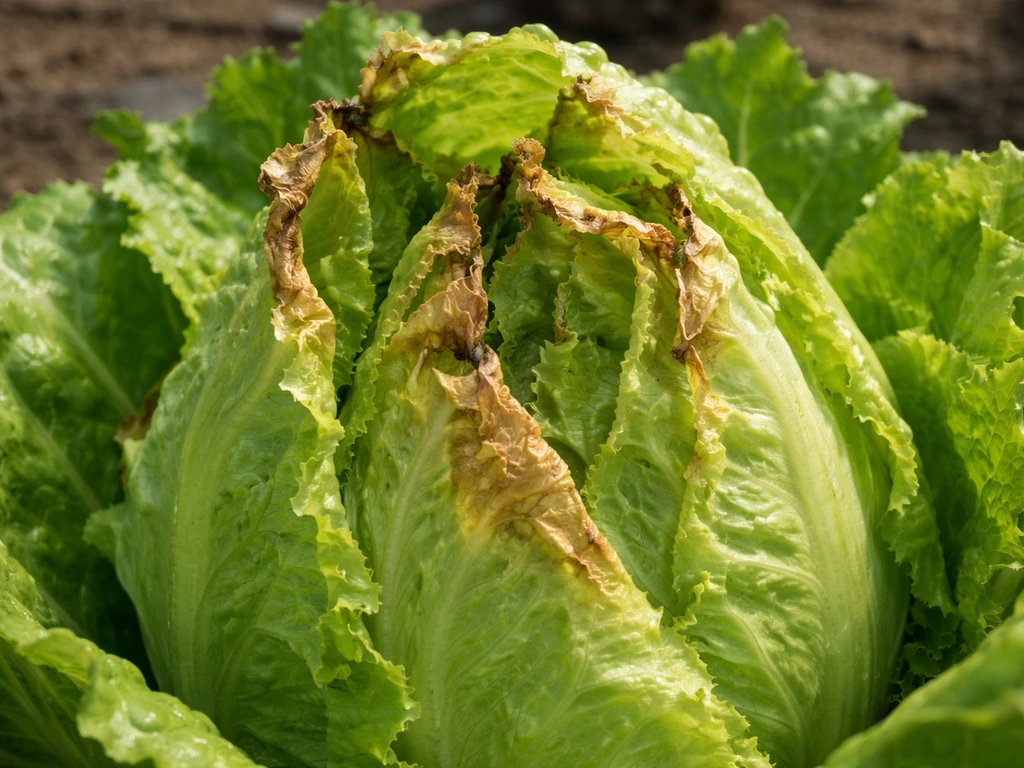
Tip burn shows up as brown, papery edges on inner leaves, especially on head lettuce types. It's caused by a calcium deficiency at the leaf margins, but the trigger is often heat and low humidity, not actually a lack of calcium in the soil. The plant transpires so fast in heat that calcium can't move to the rapidly growing inner leaves quickly enough. Reducing temperature, improving airflow, and not letting the soil dry out completely are the main fixes. This is especially common in hydroponic systems when solution temperature climbs above 72°F.
Getting temperature right is the foundation everything else builds on. Nail the 60–70°F range consistently, protect against the extremes on both ends, and most of the other lettuce-growing challenges become much easier to manage.
FAQ
What’s the safest temperature range for lettuce if I don’t know my exact variety?
Aim for about 60 to 65°F during the day, and keep nights near or above 50°F. If you regularly hover closer to 68°F on cool nights, you’ll still usually get a harvest, but watch for early stretching once daytime temps approach 75°F.
Can I grow lettuce when daytime temps hit the low 70s sometimes?
Yes, brief dips into the low 70s usually slow growth rather than instantly triggering bolting. The risk rises when hot days are repeated, especially if nights stay warm. If nights are not cooling below roughly 60°F to 65°F, bolting accelerates.
How cold is too cold for lettuce seedlings versus mature plants?
Mature plants tolerate brief light frost better, while seedlings are much more vulnerable. If you expect temps near 28 to 32°F, protect young plants with row cover and avoid leaving them uncovered through a hard freeze.
Should I prioritize air temperature or soil temperature outdoors?
Soil temperature matters a lot. Cold air can recover, but cold soil can still stall growth for a week or more. If you’re not seeing progress, check soil temperature directly and use row cover to warm it during the day.
In a grow room, how do I tell if my lights are making the canopy too hot?
Don’t rely only on room thermostat readings. Measure temperature at leaf level (or use a small probe at the canopy). If leaf-zone temps run several degrees higher than your target, raise the light or dim it, because lettuce stress often starts there first.
What night temperature should I target indoors, and does it matter?
Yes, the nighttime drop matters. A practical target is roughly 55 to 60°F in the dark period (even if your day is 60 to 68°F). That overnight cooldown helps prevent overly fast, stretchy growth.
For hydroponics, is water temperature just as important as air temperature?
Water temperature is crucial. Keep nutrient solution around 65 to 72°F, because warmer water holds less dissolved oxygen and increases root-rot risk. If you’re struggling with stunted or browning roots, check solution temperature first.
What should I do if my lettuce is bolting but it hasn’t fully formed a seed stalk yet?
Once temperatures run into the 75 to 80°F range consistently, bolting can start quickly. To delay it, provide afternoon shade, harvest outer leaves more aggressively, and switch to bolt-resistant varieties for future plantings. You can’t fully reverse bolting, but you can often extend leaf production.
Why does my lettuce taste bitter, and what temperature change fixes it fastest?
Bitter flavor is commonly triggered by heat stress in the 70 to 75°F range or higher. The fastest improvement is usually reducing leaf-zone heat (shade or cooler grow-space air) and harvesting in the morning when the leaves are typically less stressed.
How does humidity relate to temperature issues like tip burn?
Tip burn is calcium-related at the leaf margin, but heat and low humidity often trigger the transport problem. If your plants are hot and transpiring quickly, calcium can’t reach inner growth fast enough. Stabilize temperature and avoid letting the growing medium dry out.
What’s a good way to plan lettuce dates if weather varies year to year?
Use a temperature-based plan instead of a calendar-only plan. Work backward from your local warm-up period or first fall frost, then adjust using the 7 to 14 day forecast. A cold snap can extend the window, and an early heat wave can cut it.
Which lettuce varieties help most if my home is often warmer than the ideal?
If your indoor temperatures are frequently above 70°F, choose heat-tolerant types such as Jericho or Muir. Even with those, expect a shorter harvest and monitor closely for early stretching when warm stretches repeat.