It is almost certainly not too late to grow lettuce, but the right answer depends on where you live, what your current temperatures look like, and how you plan to grow. If your daytime highs are still below about 80°F and you have at least 4 to 6 weeks before brutal summer heat peaks, you can direct sow today and realistically harvest in 30 to 45 days by choosing the right varieties. If you are already deep into summer heat, growing indoors under lights or in a climate-controlled space removes almost all of the timing pressure entirely.
Is It Too Late to Grow Lettuce? Quick Late-Season Plan
Marcus Holloway
30 May 2026
How to tell if it's actually too late for your situation
Lettuce is a cool-season crop with a tight temperature window. The practical cut-off for outdoor direct sowing is a soil temperature around 80°F. Above that threshold, seeds often go dormant instead of germinating, and even if they do sprout, the seedlings will bolt fast once daytime highs consistently hit 75 to 80°F with warm nights above 60°F. Bolting, where the plant sends up a flower stalk, makes leaves bitter and ends your harvest window. It cannot be reversed once it starts.
Today is May 30, which puts most of the continental US in late spring to early summer conditions. Here is how to diagnose your own window quickly: Check your soil temperature with a probe thermometer 2 inches deep. Check your 6-week forecast for daytime and nighttime highs. Then use this as your decision guide.
| Your current conditions | Verdict | Best path forward |
|---|---|---|
| Soil under 75°F, nights under 60°F | Good window open | Direct sow heat-tolerant loose-leaf today |
| Soil 75–80°F, warm nights | Tight but workable | Start indoors or use shade cloth outdoors, choose bolt-resistant varieties |
| Soil above 80°F, heat already spiking | Outdoors risky now | Grow indoors under lights or wait for fall |
| Expecting frost in 6 to 8 weeks (northern zones, high elevation) | Excellent fall window | Start seeds immediately for harvest before first frost |
Day length is also a factor. More than about 14 hours of daylight combined with temperatures above 75°F during the day and above 60°F at night is a classic recipe for rapid bolting. In most of the US on May 30, days are close to their longest. That is not automatically a deal-breaker, but it means variety selection matters a lot right now.
If you are in a cooler climate (think Pacific Northwest, northern states, high-altitude areas, or the UK), late May is actually still a perfectly normal planting window and you have nothing to worry about. If you are in the Southeast, Southwest, or anywhere that already sees consistent daytime highs above 85°F, outdoor growing will be challenging until fall. If you’re trying to plan around the weather in North Carolina, use your local forecasts and target the cooler part of the season first when to grow lettuce in nc. If you are wondering when to grow lettuce in Georgia, focus on sowing before sustained hot weather and use heat-tolerant varieties when temperatures climb outdoor growing will be challenging until fall. In that case, skip ahead to the indoor and hydroponic options below.
Starting today: the fastest route to an actual harvest
If you want lettuce as fast as possible, the single best decision you can make right now is to direct sow a loose-leaf variety rather than waiting for transplants or starting with a head-forming type. Loose-leaf lettuce can be harvested as baby greens in as little as 25 to 30 days and reaches full leaf size in 40 to 45 days. That is a realistic window even in late May.
Transplants from a local nursery can shave another week or two off that timeline if you can find them. Potted starter plants are already past the germination stage, so you get a running start. The trade-off is you get less variety choice and you pay more per plant. For the fastest harvest from seed, focus entirely on quick-maturing loose-leaf types rather than romaine (which runs 75 to 85 days to a full head) or crisphead types like iceberg.
- Check your soil temperature today before anything else. If it is above 80°F, pre-cool your seedbed by watering deeply in the evening and covering with shade cloth or a board for 24 hours before sowing.
- Choose a fast-maturing, bolt-resistant loose-leaf variety (see the variety section below).
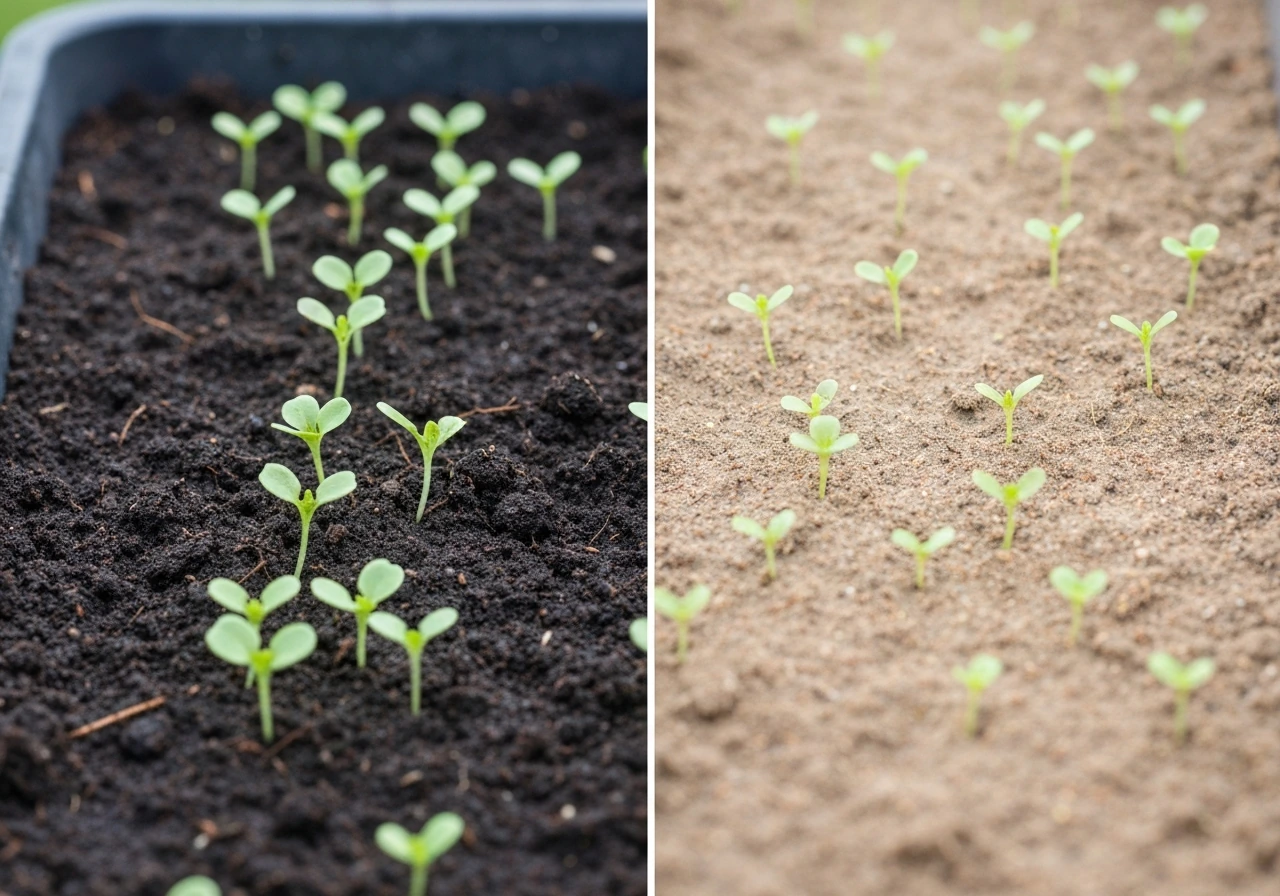
- Sow seeds very shallowly, no more than ¼ inch deep. Lettuce seeds need light to germinate well, so barely cover them with fine vermiculite or leave them almost at the surface.
- Water gently with a fine rose or misting nozzle so you do not wash seeds away or bury them deeper.
- If temperatures are warm, set up shade cloth (30 to 40%) over the seedbed immediately. This can drop soil temperature by 5 to 10°F and reduces bolting pressure significantly.
- Expect germination in 3 to 7 days under good conditions (soil between 60 and 75°F). Slower at the edges of that range.
- Start harvesting outer leaves as soon as they reach 3 to 4 inches long. You do not have to wait for the full plant to mature.
Best varieties for planting right now
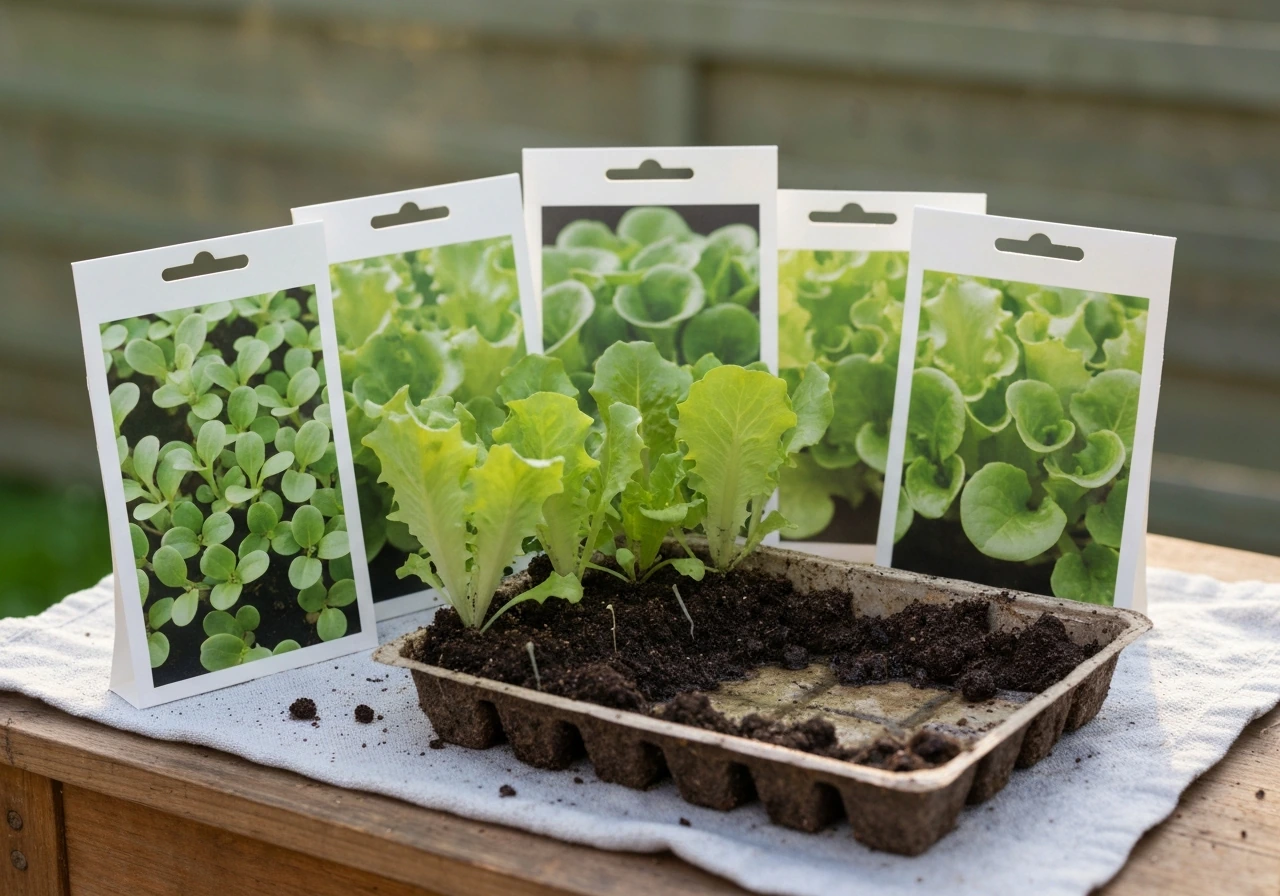
Variety selection is probably the most important single decision you make when starting late. At this time of year, you want three things: short days to maturity, bolt resistance, and ideally some heat tolerance. Here is the hierarchy to use: loose-leaf types are the most bolt-resistant overall, followed by romaine, then butterhead, with crisphead (iceberg) being the most prone to bolting. Cornell’s blank" rel="noopener noreferrer">Vegetable Varieties for Gardeners (lettuce listings) shows many cultivar days-to-maturity options, including looseleaf types and bolt-resistant looseleaf varieties. For a late-May start, stick with loose-leaf as your primary option.
| Variety | Type | Days to maturity | Why it works now |
|---|---|---|---|
| Red Sails | Loose-leaf | ~40 days | Fast, reliable, widely available, good bolt resistance |
| Red Salad Bowl | Loose-leaf | ~50 days | Oak-leaf type, excellent heat tolerance, attractive color |
| Super Jericho | Romaine | ~50–55 days | One of the best heat-tolerant romaines; harvest as baby leaf at ~30 days or let it head up |
| Black Seeded Simpson | Loose-leaf | ~45 days | Classic fast-maturing loose-leaf, very reliable in warm conditions |
| Buttercrunch | Butterhead | ~55–60 days | Moderate bolt resistance; works in partial shade; slightly richer flavor |
When shopping seeds or transplants, look for labels or catalog descriptions that specifically say "heat tolerant" or "slow to bolt." Seed companies like Johnny's Selected Seeds tag heat-tolerant varieties explicitly, which takes the guesswork out of it. Super Jericho is worth calling out specifically because it is a romaine-type with genuine bolt resistance rated at 50 to 55 days, but you can harvest it as baby lettuce starting around 30 days. That flexibility is useful when your window is uncertain.
For fall-only growers (if you are in a northern zone and actually planning for autumn harvest rather than a summer push), slightly different rules apply. You want early-maturing cultivars that can handle light frosts, and you should target maturity about one to two weeks before your first fall frost. With most first frosts in northern zones arriving between late September and October, a May 30 start is actually ideal for a fall lettuce crop if you skip summer and replant in late July or August.
Planting methods for any growing setup
Outdoor garden beds
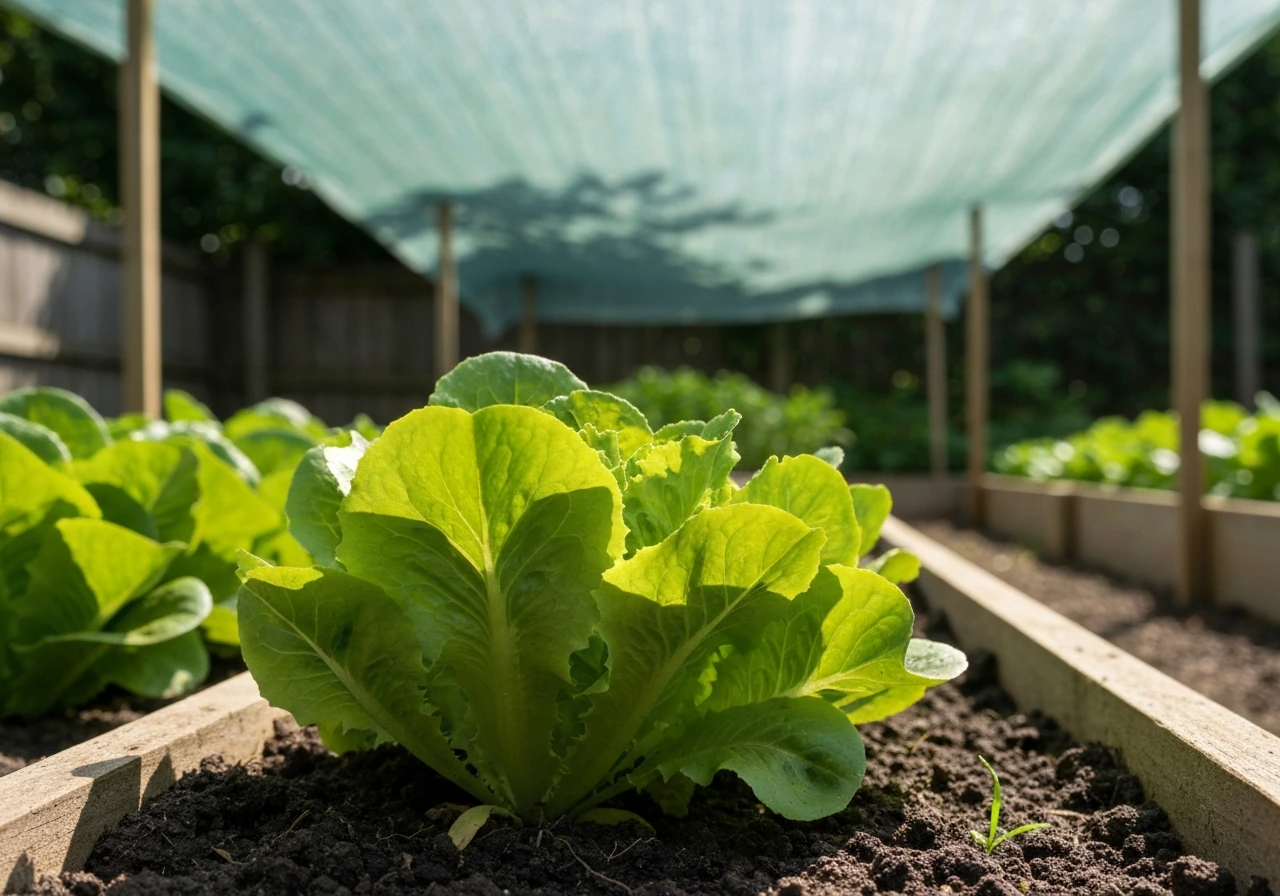
Outdoor beds are the simplest setup but the most weather-dependent. Sow seeds ¼ to ½ inch deep (erring toward shallower given the light requirement), spacing loose-leaf types about 6 to 8 inches apart or broadcasting and thinning later. Lettuce seeds need light to germinate, so if you cover them at all, do it very lightly rather than burying them so light can reach the seeds light requirement. The biggest late-season lever you have outdoors is shade. A 30 to 40% shade cloth suspended over the bed will meaningfully cool soil temperature and slow bolting. Water in the morning so leaves dry before evening, which reduces disease risk. Mulching between plants keeps soil cooler and retains moisture.
Containers and pots
Containers are great for late-season lettuce because you can move them. A pot or window box can go into morning sun and afternoon shade, which gives you free cooling without shade cloth. Use a container at least 6 to 8 inches deep and fill it with a quality potting mix (not garden soil, which compacts). Container soil dries faster than in-ground beds, so you will likely need to water once a day, sometimes twice in hot weather. The advantage is you can bring containers inside or onto a shaded porch if a heat spike hits.
Growing indoors under lights
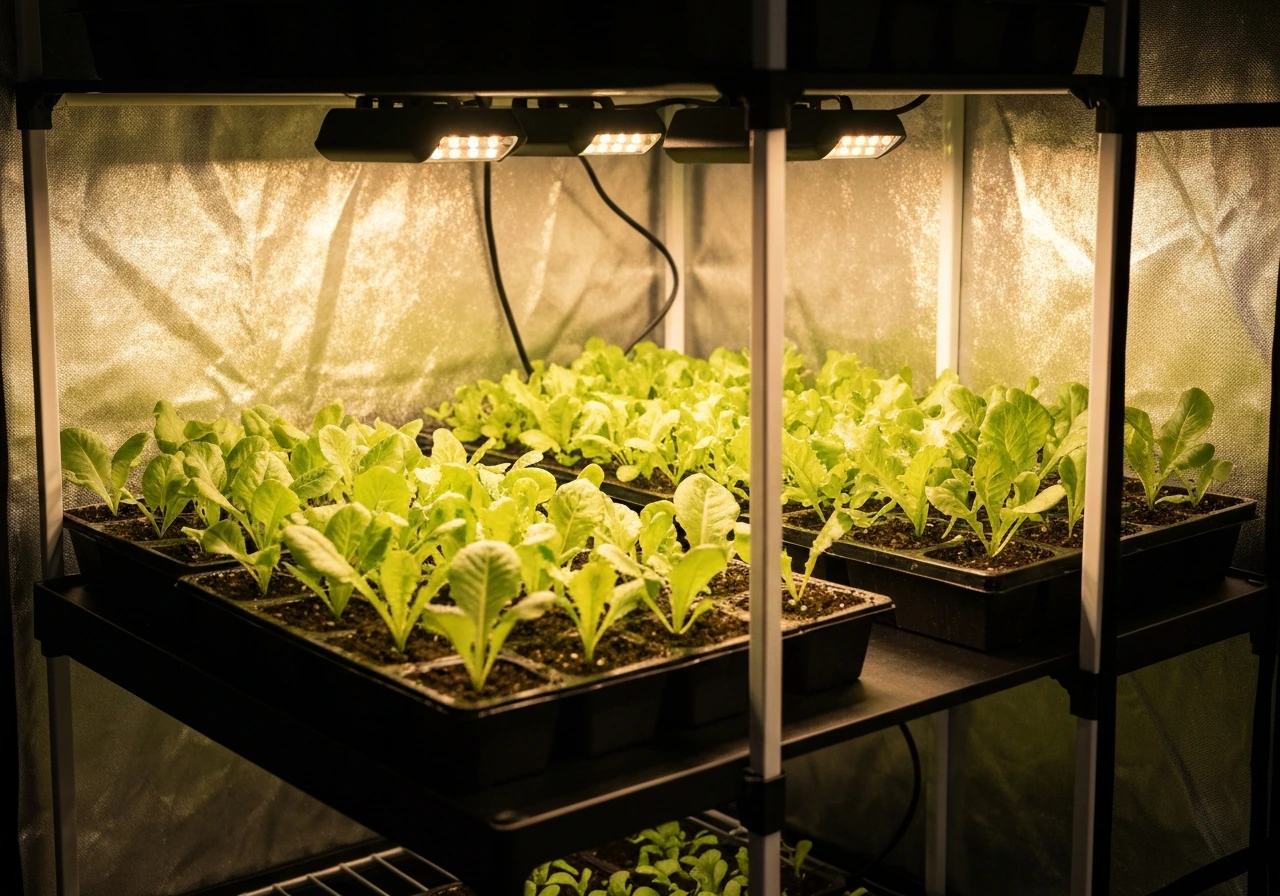
Indoor growing removes almost all of the "is it too late" pressure. Under grow lights, you control temperature, photoperiod, and humidity, so bolting risk drops dramatically. Lettuce grows well under LED grow lights on a 12 to 14 hour photoperiod per day. Keep temperatures in the 65 to 70°F range during the day and 55 to 60°F at night if possible. A sunny south-facing windowsill can work in a pinch, but most windows do not deliver enough light intensity for tight, flavorful leaves. A dedicated grow light setup typically produces harvest-ready lettuce in 30 to 45 days year-round. Leggy, pale seedlings almost always mean insufficient light, not a watering or soil problem.
Hydroponic systems
Hydroponics is arguably the best environment for year-round lettuce, and it is genuinely beginner-friendly once you learn the basics. Lettuce is one of the most forgiving crops for simple systems like Kratky (passive, no pump) or NFT (nutrient film technique). Target a nutrient solution EC of 1.2 to 1.8 mS/cm and a pH of 5.5 to 6.5. Keep solution temperature around 65 to 68°F; warm water holds less oxygen and increases disease risk. Use the same 12 to 14 hour light schedule as indoor soil growing. Hydroponic lettuce often matures 25 to 30% faster than soil-grown lettuce because roots have constant access to nutrients and water.
Growing conditions checklist
Whether you are growing outdoors, in containers, indoors, or hydroponically, these are the core conditions to get right. Get these dialed in and late-season obstacles become manageable.
- Light: 12 to 16 hours for indoor/hydroponic setups; full sun outdoors in cool weather, morning sun plus afternoon shade when temperatures are warm. Insufficient light is the top cause of leggy, flavorless indoor lettuce.
- Watering: Keep soil consistently moist but never waterlogged. Outdoors, water at the base of plants in the morning. In containers, check daily. In hydroponics, ensure the solution is always topped up and the pump or wick system is working.
- Soil or growing medium: Loose, well-draining potting mix for containers; fertile, amended loam for garden beds. For hydroponics, use an inert medium like rockwool, perlite, or clay pellets.
- Spacing: 6 to 8 inches between plants for full-size heads; 4 inches or even a dense broadcast works if you plan to harvest as baby greens and thin as you go.
- Soil pH: Target 6.0 to 7.0 for soil growing; 5.5 to 6.5 for hydroponic nutrient solutions.
- Temperature: Germination optimum is 60 to 75°F soil temperature. Growth optimum is 60 to 65°F air temperature. Avoid prolonged soil temps above 80°F for germination.
- Nutrients: Lettuce is not a heavy feeder. A balanced slow-release fertilizer at planting works well for soil growing. Avoid excess nitrogen late in the season, which can push lush growth that is more vulnerable to pests and disease.
- Sowing depth: ¼ inch or less. Lettuce seeds need light to germinate. Barely cover with fine vermiculite if you need to keep them moist.
Late-start problems and how to fix them
Bolting
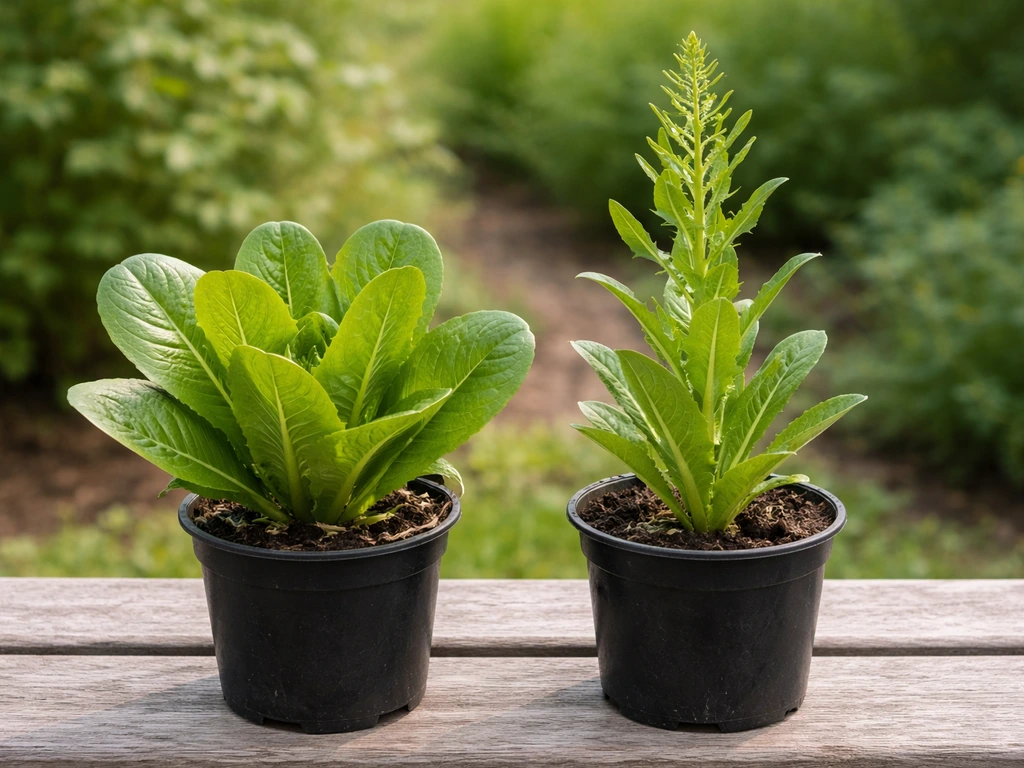
Bolting is the number one late-season killer. You will recognize it when a plant suddenly sends up a tall central stalk, leaves get smaller and more pointed, and the flavor turns intensely bitter. Once bolting starts, it cannot be undone. Remove bolting plants and replace them rather than hoping they recover. Prevention is the only real strategy: choose bolt-resistant varieties, use shade cloth, keep soil moist (dry soil accelerates bolting), and harvest outer leaves early and often to slow the plant's reproductive urge.
Poor or patchy germination
If seeds are not germinating within 10 days, the most likely causes are soil too hot (above 80°F), seeds buried too deep, or soil dried out between waterings. Check soil temperature first. If it is too warm, try germinating seeds indoors in a cool spot and transplanting once they have sprouted. You can also try chilling seeds in a damp paper towel in the refrigerator for 24 hours before sowing, which can break heat dormancy.
Leggy, pale seedlings indoors
Tall, spindly seedlings reaching for light mean your light source is too far away or not strong enough. Move grow lights to within 4 to 6 inches of seedlings for LED panels, or 2 to 3 inches for fluorescent tubes. A windowsill usually cannot produce compact, productive lettuce on its own without supplemental light. If seedlings are already leggy, you can bury the stem slightly deeper when transplanting to pots, similar to how you would handle tomato seedlings.
Aphids and slugs
Aphids cluster on the undersides of leaves and are most active in warm weather. A strong spray of water knocks most of them off. Reflective mulch around plants helps confuse winged aphids looking to land. Slugs are more active in cool, moist, shady conditions, which is exactly what you create when you use shade cloth or row covers. Check under leaves and around the soil surface at night if you see irregular notches eaten out of leaves. Diatomaceous earth around the base of plants or simple beer traps work well for slugs.
Downy mildew and other disease
Downy mildew shows up as pale yellow patches on upper leaf surfaces and grey-white fuzz underneath. It is favored by cool temperatures and wet leaves, so it can sneak in during row-cover growing or when you water overhead in the evening. Improve airflow between plants, water at the base in the morning only, and avoid overcrowding. Powdery mildew (white powdery coating on upper surfaces) is more common in warm, dry conditions. If caught early, removing affected leaves and improving spacing usually stops the spread.
Uneven growth across the bed
Uneven growth in outdoor beds usually comes down to soil inconsistency, uneven watering, or shading from taller neighboring plants. If one area of your bed is consistently slower, check moisture levels and whether it gets full sun exposure. In containers, rotation matters: turn pots a quarter turn every few days if they are next to a wall or fence that blocks light from one side.
When and how to harvest, plus keeping greens coming
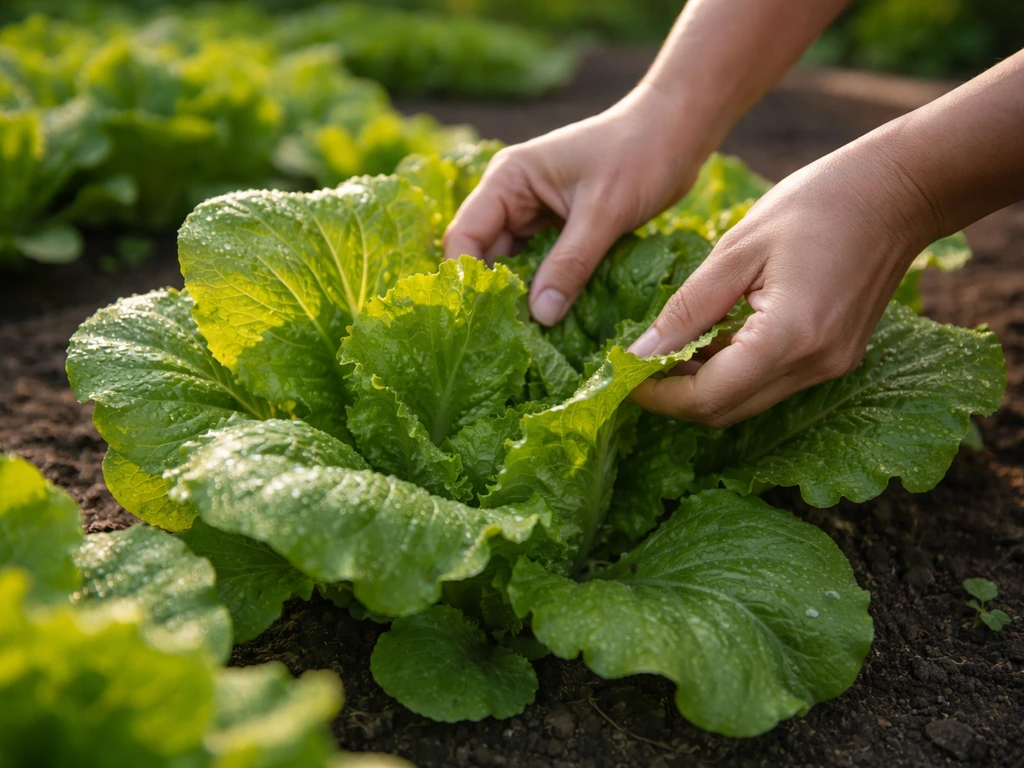
For loose-leaf lettuce, you do not have to wait for a "full" plant. Start harvesting outer leaves as soon as they reach 3 to 4 inches long, usually around 25 to 30 days after sowing. Cut or snap leaves from the outside of the plant, leaving the central growing point (the crown) intact. The plant will keep producing new leaves from the center. This cut-and-come-again method can extend a single plant's harvest window by several weeks, which is especially valuable when you started late and want to maximize every plant.
For best flavor and texture, harvest in the morning when leaves are hydrated and cool. Lettuce harvested in afternoon heat is more likely to wilt and loses flavor quickly. Refrigerate unwashed in a damp cloth or bag. Properly stored, fresh-cut lettuce stays crisp for 5 to 7 days.
Succession planting is the strategy that takes you from one harvest to continuous greens. Instead of sowing everything at once, sow a small batch every 10 to 14 days. Each batch matures a couple of weeks after the last, so you always have something coming in. If you started late and are worried about the timing, succession planting is also your insurance: if the first batch bolts or fails in a heat spike, the next batch goes in while conditions improve. Even two or three plantings staggered through late spring into summer will give you far more harvest than one large sowing.
For anyone dealing with a genuine summer gap where outdoor growing becomes impractical, the smart move is to pause outdoor sowing in July and restart in mid to late summer for a fall crop. Target maturity about one to two weeks before your first expected frost, and use row covers to protect plants as nights cool. A heavyweight floating row cover can protect against frosts down to about 28°F, which effectively extends your fall harvest by three to four weeks beyond when unprotected lettuce would give up.
The bottom line: whether you are racing a heat wave, planning for fall, or growing under lights year-round, lettuce rewards action over hesitation. Sow something today, keep the soil cool and consistently moist, pick bolt-resistant varieties, and start your second sowing in two weeks. If you want a quick answer for your specific dates and climate, check our guide on where to grow lettuce and how to plan your planting window. You will be surprised how much you can harvest even from a "late" start.
FAQ
How do I tell if it is too late based on my exact conditions, not general guidance?
Use soil temperature plus a forecast sanity check. Measure soil at 2 inches deep (aim to be under about 80°F), then look at the next 4 to 6 weeks and count how many days stay below roughly 75 to 80°F in the day and how warm nights are. If you only have a brief cool spell, plan for baby-leaf harvest (loose-leaf, earlier maturity) or switch to container shade or indoor lighting.
What should I do if my soil is around 80°F, right at the cutoff?
Treat it as a borderline case. Start indoors to get germination, or sow outdoors under shade cloth to cool the soil and slow bolting. If you direct sow, err shallower (closer to 1/4 inch) and keep the top layer evenly moist, since warm soil is also likely to dry out quickly.
My lettuce seeds sprouted but growth stalled or looked weak. Is it because it is too late?
Often it is temperature stress rather than “lateness.” If seedlings look normal at first then stop, check whether daytime highs are pushing into the bolting range and whether nights stay warm. Move containers to afternoon shade, water in the morning, and consider switching to faster loose-leaf varieties for the next sowing while the current plants are salvaged for baby leaves.
Can I save a bolting plant by harvesting sooner or cutting the flower stalk?
Cut-and-come-again works only while the plant is still leaf-forming. Once a real flower stalk is underway, flavor will keep worsening and the reproductive push accelerates. The best practice is to remove bolting plants promptly and replant, then rely on prevention for the next round (slow-to-bolt or heat-tolerant varieties, shade, and frequent outer-leaf harvest).
What is the best strategy if my forecast changes and I am not sure I have 4 to 6 weeks?
Plan for “short harvest” instead of “full crop.” Choose loose-leaf types and target baby greens in about 25 to 30 days, then begin a second small batch within 10 to 14 days as backup. This reduces the risk that one heat spike wipes out everything you planted on the same date.
Do I need to thin lettuce, and what happens if I do not?
Yes, thinning matters, especially late in the season. If seedlings are crowded, they compete for light and airflow, which can increase mildew risk and slows leaf development. For loose-leaf, space plants around 6 to 8 inches (or thin to that range after thinning). If you broadcast, thin early rather than waiting.
How can I prevent bolting beyond shade and variety choice?
Keep moisture consistent and harvest outer leaves early. Dry soil accelerates bolting, so avoid letting the bed or container swing between dry and soaked. Also consider shortening the stress window by sowing in the coolest part of your day (morning) and keeping airflow good, because overly wet, poorly ventilated conditions can trigger disease that forces you to lose plants anyway.
Will row covers help in warm weather, or can they make things worse?
Row covers cool and protect, but they also trap heat during sunny midday periods. If it is already warm, use vented/low-tunnel setups or monitor closely, lifting or venting on hot days to prevent overheating. For frost protection, heavyweight floating row covers are helpful, but they still need temperature monitoring in spring and early summer.
What is the common mistake with hydroponics and lettuce in hot weather?
Water temperature. Even if light timing and pH are correct, warm nutrient solution reduces oxygen and increases disease pressure. Aim to keep the solution around the mid-60s (about 65 to 68°F), and insulate or shade the reservoir to buffer daily temperature swings.
My indoor seedlings are pale and leggy, but I am watering correctly. What else should I check?
Light intensity and distance are the usual culprits. Adjust grow lights to the recommended close range for your fixture type, and confirm your photoperiod is long enough (about 12 to 14 hours). If your setup has long periods of darkness and then sudden bright exposure, plants can stretch, so keep the schedule consistent daily.
How should I store freshly harvested lettuce for maximum crispness?
Harvest in the morning, then refrigerate quickly. Store unwashed in a damp cloth or sealed bag, and keep it cold with minimal air exposure to slow wilting. If lettuce dries out in storage, it turns limp faster even if it started crisp.
Is succession planting still worth it if it is already late in the season?
Yes, and it is even more valuable late. Since timing windows narrow, stagger sowings (every 10 to 14 days) so one batch can fail to heat or bolting without eliminating your total harvest. Even 2 or 3 small plantings can outperform a single larger sowing when conditions are shifting.