For most lettuce setups, you need at least 6 inches (15 cm) of soil depth and roughly 0.5 to 1 gallon of growing mix per plant. A single 12-inch pot holds enough soil for 1 to 2 heads. A 4x4-foot raised bed filled 8 inches deep takes about 5 to 6 cubic feet of mix and can grow 16 or more plants. The exact amount depends on your container size, bed dimensions, and how many plants you're fitting in, and all of it is easy to calculate once you know what lettuce actually needs from its root zone.
How Much Soil to Grow Lettuce: Depth and Volume Guide
Marcus Holloway
12 Jun 2026
Lettuce's root depth and the soil depth you actually need
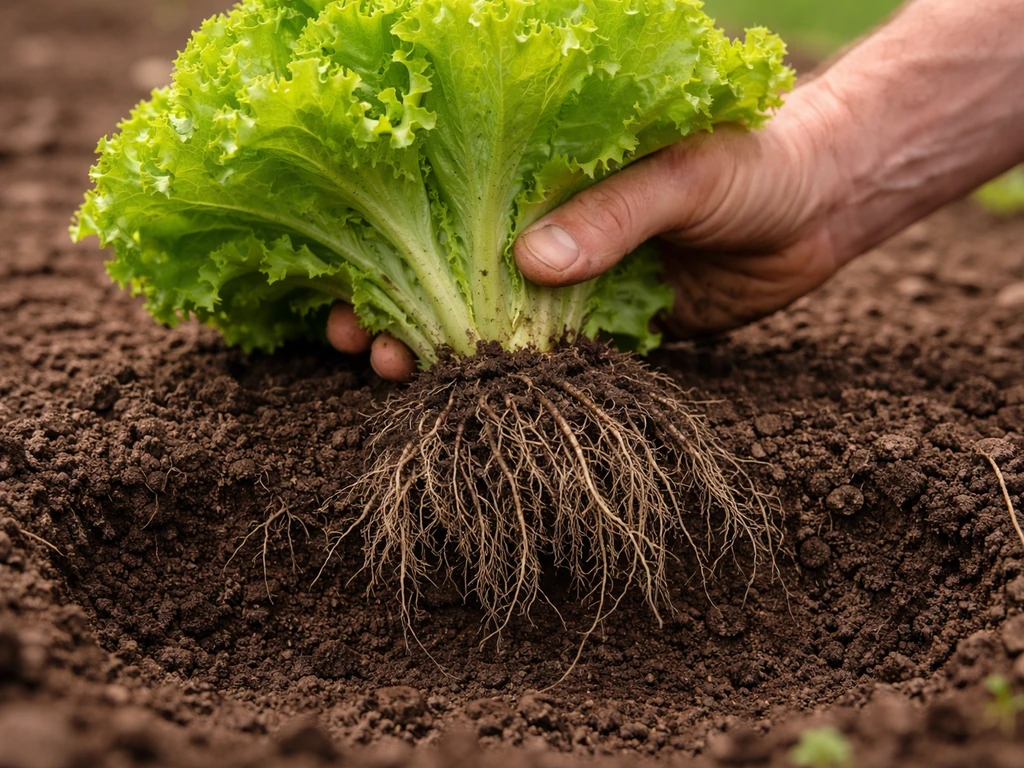
Lettuce is a shallow-rooted crop. Most of its feeder roots stay in the top 6 to 8 inches of soil, and it rarely pushes deeper than 12 inches even in loose, well-prepared ground. That's good news if you're working with containers or shallow raised beds because you don't need a lot of depth to keep a plant happy.
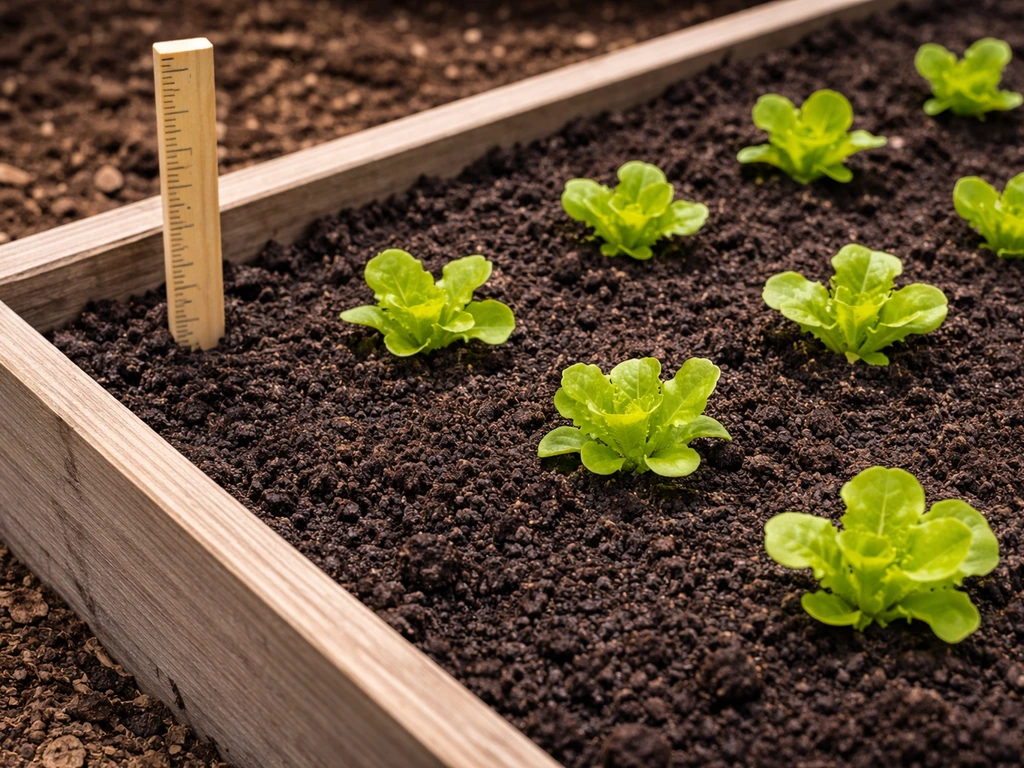
The minimum useful soil depth for lettuce is 6 inches. At that depth, roots can establish well, the soil holds enough moisture between waterings, and you get decent insulation from temperature swings. The Old Farmer's Almanac specifically calls out 6 inches as the minimum for shallow-rooted crops like lettuce in raised beds, and blank" rel="noopener noreferrer">Illinois Extension recommends 6 to 12 inches for raised vegetable beds generally. I'd shoot for 8 inches whenever you have the option. That extra 2 inches gives you a meaningful buffer for moisture retention and keeps roots from running into drainage material or a hard container bottom.
Going deeper than 12 inches is not harmful, but it doesn't benefit lettuce much either. You'd just be filling extra space with soil the roots never use. If you're building a new bed, 8 to 10 inches of quality growing mix is the sweet spot: deep enough to support the plant fully, not so deep that you're wasting materials.
One related factor worth knowing: how deep your lettuce roots actually grow in your specific soil or mix can vary by variety and texture. If you're wondering how deep to plant lettuce in a pot, aim for about 10 to 12 inches in most cases so the roots have room as the mix settles. Loose, fluffy potting mix allows roots to explore more freely than compacted garden soil. If your soil tends to compact, err toward 10 to 12 inches so roots have room even after the mix settles.
Soil quantity by growing method: beds vs containers vs indoor pots
The three setups most people use for lettuce (raised beds, outdoor containers, and indoor pots) have different practical requirements. Here's how to think about each one.
Raised beds and in-ground plots
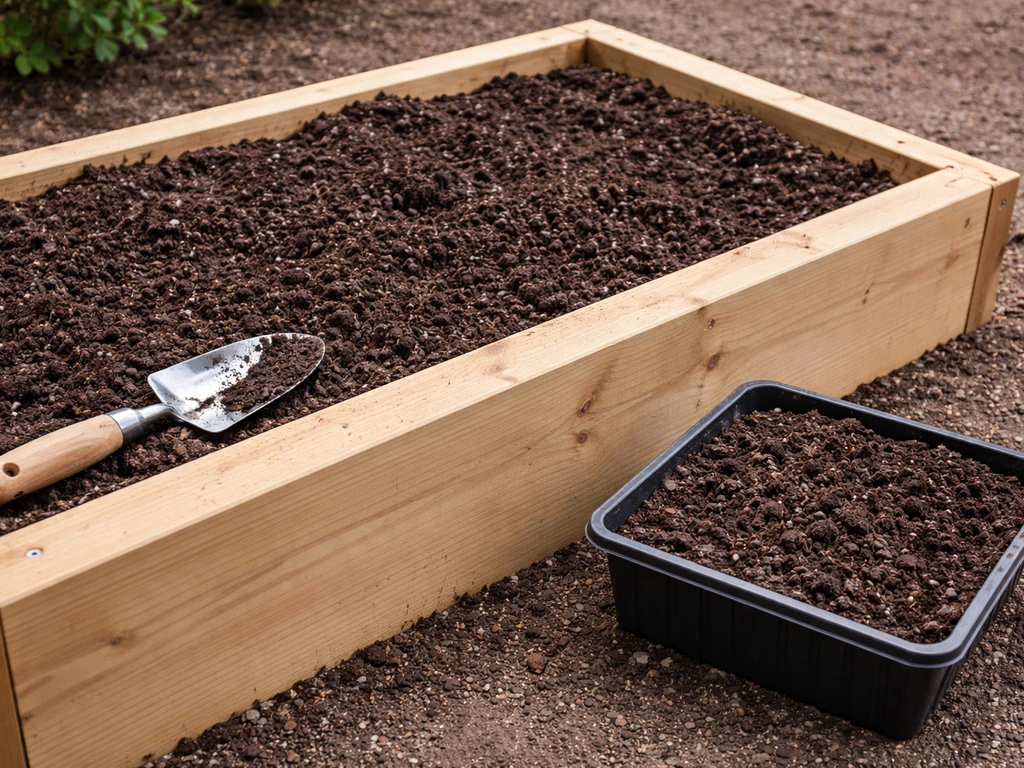
Raised beds give you the most flexibility. You control the depth completely, drainage is easy to manage, and you can fill the bed with a custom mix. For a standard raised bed, fill it to 8 to 10 inches with a quality mix. If you're growing in-ground, you're usually amending the top 6 to 8 inches of existing soil rather than buying bulk volume, but the depth target is the same.
Outdoor containers and window boxes
Containers need at least 6 inches of growing media, and 8 to 10 inches is better for heat tolerance and moisture stability. University of Maryland Extension recommends a minimum of 4 to 6 gallons of growing media for most vegetable containers, and that lines up well with lettuce. A 5-gallon container is roughly the minimum I'd use for a single full-size head of romaine or butterhead. For cut-and-come-again leaf types, you can get away with less, even a 2-gallon pot works fine for 2 to 3 loose-leaf plants if you keep up with watering.
Indoor pots and grow boxes
Indoors, you're usually working with smaller volumes and less forgiving conditions because there's no rain to bail you out and no soil mass to buffer temperature. Aim for a minimum of 8 inches of growing media depth even indoors, and keep the pot large enough to hold at least 4 to 6 quarts (roughly 1 to 1.5 gallons) per plant. University of Maryland Extension notes that containers should have media pH around 6.2, which is easy to hit with a standard peat or coco-based potting mix. Smaller pots dry out faster and stress roots more quickly, so going slightly bigger than you think you need is almost always worth it indoors.
Calculating soil volume for your space
The math here is straightforward. Once you know your bed or container dimensions and your target depth, you can figure out exactly how much soil to buy.
For rectangular beds and planters
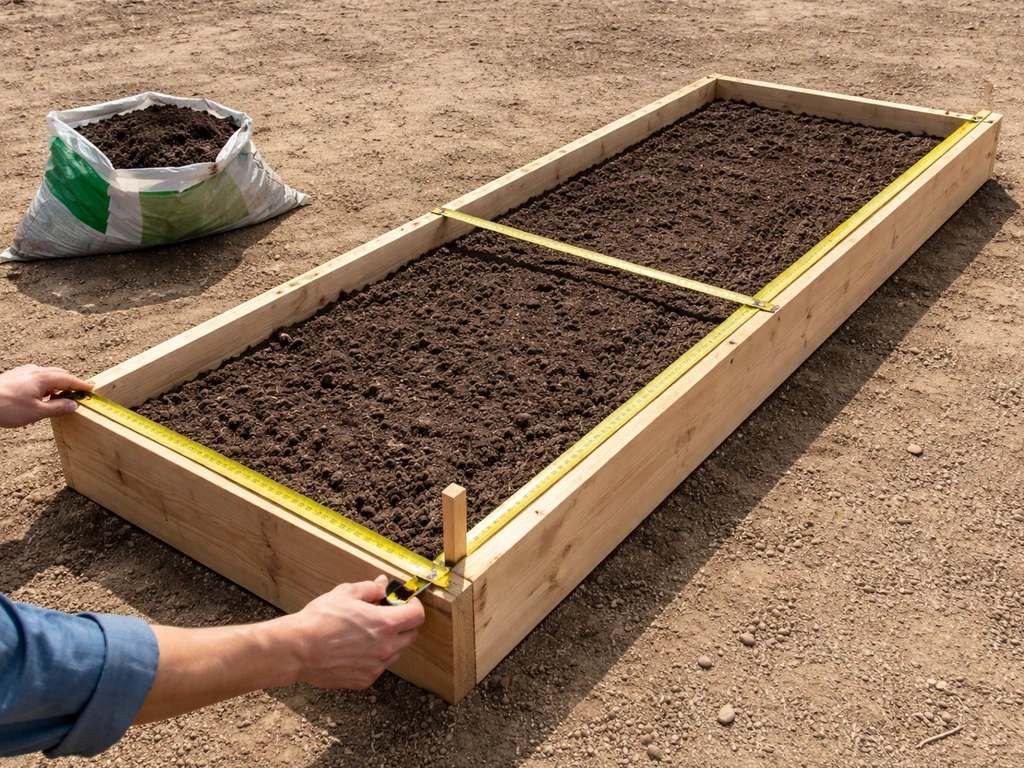
- Measure the length and width of your bed in feet (or inches, then convert).
- Decide on your fill depth in inches (8 inches recommended for lettuce).
- Convert the depth to feet: divide inches by 12. So 8 inches = 0.67 feet.
- Multiply: Length (ft) x Width (ft) x Depth (ft) = cubic feet of soil needed.
- To convert cubic feet to gallons, multiply by 7.48. To convert to liters, multiply by 28.3.
Example: a 4x8-foot raised bed filled 8 inches deep = 4 x 8 x 0.67 = 21.4 cubic feet. That's about 160 gallons of mix, or roughly four to five large bags of potting soil (most bags are 1 to 2 cubic feet). Illinois Extension confirms soil calculators use exactly this formula, so you can trust the result.
For round containers
- Measure the diameter of the pot in inches, then divide by 2 to get the radius.
- Convert the radius to feet by dividing by 12.
- Use the formula: 3.14 x radius² x depth (in feet) = cubic feet of soil.
- Multiply by 7.48 to get gallons.
Example: a 12-inch diameter pot filled 8 inches deep. Radius = 6 inches = 0.5 feet. Volume = 3.14 x 0.25 x 0.67 = 0.53 cubic feet, or about 4 gallons of mix. That's just right for one or two lettuce plants.
How spacing affects soil needed per plant or row
Spacing determines how many plants fit in your bed or pot, which directly affects how much soil each plant gets to work with. To dial in spacing, use a few key distance guidelines like how far apart to grow lettuce based on whether you're growing loose-leaf or full heads. More plants in the same volume means less root space per plant and faster moisture depletion. Utah State University Extension recommends 8 to 12 inches between plants in the row, and 12 to 18 inches between rows for in-garden planting. Those numbers are for full-size heads. For loose-leaf varieties and cut-and-come-again growing, you can tighten spacing to 4 to 6 inches between plants.
Here's the practical implication: if you're spacing plants 6 inches apart in a 12-inch-deep bed, each plant has roughly 0.5 to 1 gallon of soil to itself. That's workable for leaf lettuce but tight for a romaine or butterhead that needs to size up. Space tighter and you either need to water more often or accept smaller plants. Space wider and each plant gets more moisture reserve and nutrient access from the existing soil volume.
In a square-foot gardening setup, the common recommendation is 4 loose-leaf lettuce plants per square foot. That works fine in an 8-inch-deep bed because each plant still has about 3 to 4 quarts of soil. Pushing to 6 or more plants per square foot puts real stress on the available soil volume and requires very consistent watering.
Picking the right soil mix for lettuce
The type of mix matters as much as the volume. Lettuce roots are fine and sensitive. They don't push through dense, heavy soil well, and they suffer quickly in waterlogged conditions. For containers and raised beds, a loose, well-draining mix outperforms garden soil in almost every case.
For containers and indoor pots, use a quality peat-based or coco coir-based potting mix. These are lightweight, drain well, and hold just enough moisture to keep lettuce happy between waterings. Aim for a mix with a pH between 6.0 and 7.0, with 6.2 to 6.5 being ideal. University of Delaware Extension confirms this pH range works well for leaf lettuce, and it's where most off-the-shelf potting mixes land naturally.
For raised beds, a blend of topsoil, compost, and a drainage amendment like perlite or coarse sand works well. A common ratio is 60% topsoil or loam, 30% compost, and 10% perlite. This gives you good structure, fertility, and drainage in a single mix. Pure garden soil dragged into a raised bed tends to compact over time and slows root development, so the amendment step is worth it.
One thing to avoid: don't use heavy, moisture-retentive mixes in containers with poor drainage. Lettuce can develop root rot surprisingly quickly in soggy soil, and it also increases the risk of tipburn, a physiological disorder where leaf edges brown off due to water stress affecting calcium uptake. The relationship between soil moisture and tipburn is well-documented by UC IPM and Utah State University Extension, and it comes down to keeping roots evenly moist rather than cycling between wet and bone dry.
Quick sizing examples for common planters and bed sizes
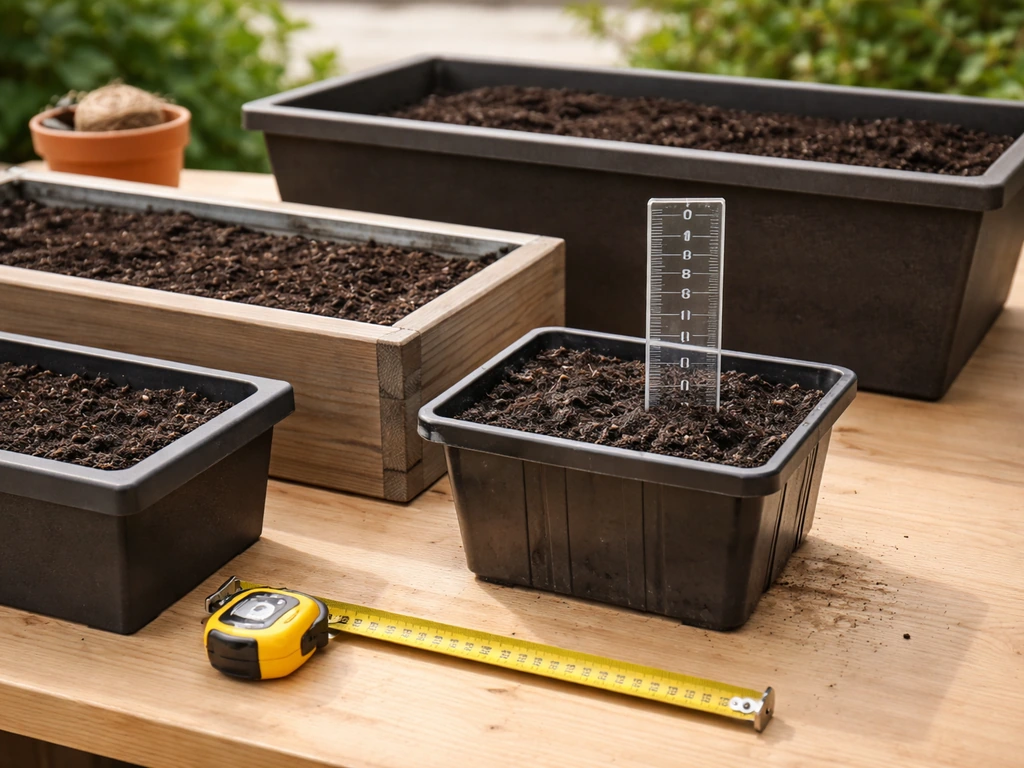
Rather than recalculating every time, here's a reference table covering the most common growing setups. All volumes assume 8 inches of soil depth, which is the recommended target for lettuce.
| Growing Setup | Dimensions / Size | Soil Volume Needed | Plants (Leaf Lettuce) | Plants (Head Lettuce) |
|---|---|---|---|---|
| Small indoor pot | 6-inch diameter | ~0.65 gallons (2.5 L) | 1 | Not recommended |
| Medium container | 10-inch diameter | ~1.8 gallons (6.8 L) | 1–2 | 1 |
| Standard pot | 12-inch diameter | ~2.6 gallons (9.8 L) | 2–3 | 1–2 |
| 5-gallon bucket | ~11-inch diameter | 5 gallons (19 L) | 2–3 | 1–2 |
| Window box (24 in) | 24 x 6 x 8 inches | ~4.8 gallons (18 L) | 4–6 | 2–3 |
| Small raised bed | 2 x 4 ft, 8 in deep | ~5.3 cu ft (40 gal) | 12–16 | 6–8 |
| Standard raised bed | 4 x 4 ft, 8 in deep | ~10.7 cu ft (80 gal) | 24–32 | 12–16 |
| Large raised bed | 4 x 8 ft, 8 in deep | ~21.4 cu ft (160 gal) | 48–64 | 24–32 |
These are practical estimates. Actual plant counts depend on your spacing choice and variety. Romaine and butterhead types need the wider end of the spacing range (10 to 12 inches), while loose-leaf types can sit at 4 to 6 inches apart and still produce well.
Troubleshooting when you used too little or too much soil
Signs you don't have enough soil
The most common symptom of too-shallow or too-little soil is fast drying. If your container or bed dries out within a day or two of watering in mild weather, there's simply not enough soil mass to hold moisture for the roots. You might also notice stunted plants, thin outer leaves, or tipburn on the leaf margins, which is often caused by the moisture stress that shallow soil creates rather than any actual nutrient deficiency.
If you're in a container, the fix is to repot into something bigger with more soil volume. It sounds like extra work, but lettuce transplants easily, especially young starts. If you're in a raised bed that's too shallow, you can top-dress with 2 to 3 inches of additional mix and work it into the existing surface before planting. The goal is to get back to that 8-inch minimum depth.
Signs you have too much soil (or the wrong kind)
Too much soil isn't usually a problem for lettuce directly, but too much of the wrong kind is. If you're using heavy garden soil in a deep container and watering normally, the lower layers can become waterlogged because water doesn't drain fast enough through dense material. Symptoms include yellowing lower leaves, mushy stem bases, and a soil surface that stays wet for days after watering.
The fix here isn't removing soil volume, it's improving drainage. Check that your container has adequate drainage holes (Missouri Extension emphasizes drilling holes in raised beds and containers for exactly this reason). If the holes are fine, you may need to repot with a lighter, better-draining mix or mix perlite into the existing soil at roughly a 1:4 ratio. University of New Hampshire Extension notes that frequent, appropriate watering with a well-draining mix prevents root stress and keeps plants productive, so getting the mix right is worth the effort.
When soil settles significantly after planting
New potting mix and raised bed soil often settles by 1 to 2 inches over the first few weeks, especially after watering. If your depth drops below 6 inches as a result, top up with additional mix around (not on top of) your plants. This is normal and not a sign of a problem, just something to watch for in the first month.
Your next steps: measure, calculate, and fill
Here's how to get from reading this to actually filling your space with the right amount of soil.
- Measure your bed or container: length, width (or diameter for round pots), and available depth.
- Set a target fill depth of 8 inches (6 inches minimum if you're constrained).
- Use the formulas above to calculate cubic feet, then convert to gallons to match bag sizes at the garden center.
- Choose a mix suited to your setup: potting mix for containers and indoor pots, a topsoil-compost blend for raised beds.
- Check pH is in the 6.0 to 7.0 range, ideally around 6.2 to 6.5, before planting.
- Plan your spacing (4 to 6 inches for leaf types, 8 to 12 inches for head types) to know how many plants your soil volume can comfortably support.
- After the first few waterings, check if soil has settled. Top up to your target depth if needed.
Once you've nailed the soil volume and depth, the rest of growing lettuce falls into place much more easily. Consistent moisture, good drainage, and enough root space are the three things lettuce genuinely needs from its soil, and hitting that 8-inch depth with the right mix takes care of all three at once.
FAQ
If I only have room for 4 to 5 inches of soil, can I still grow lettuce?
You can grow it, but expect faster moisture swings and more tipburn or stunting, especially in containers. If you go below 6 inches, plan on more frequent watering and consider cut-and-come-again loose-leaf types rather than romaine or butterhead.
How do I calculate soil for irregular shapes or window boxes?
Break the box into sections you can measure, estimate each section’s surface area, then multiply by your target depth in feet. For example, for a tapered or angled bottom, use the average width across the box times length, then apply the same depth conversion.
Do I subtract space taken by plants when calculating how much soil to buy?
No. Buy for depth and bed volume, not for the “air space” between plants. Even when spacing leaves little gaps, roots still occupy surrounding soil, and those gaps usually fill with irrigation water and settling, so underbuying is more common than overbuying.
What’s the best way to prevent lettuce from drying out in shallow containers?
Use a deeper planting depth when possible, choose a well-draining potting mix, and keep soil evenly moist by watering thoroughly until water drains, then repeating when the top inch feels dry. Mulch the soil surface with a thin layer of compost or shredded leaves to slow evaporation.
How much soil do I need if I’m growing microgreens or very young lettuce starts instead of full heads?
Smaller stages still need enough moisture and aeration, but you can often use less depth than for full heads. As a rule, plan on at least 4 to 6 inches of media for trays or small containers, then move seedlings into a deeper container (8 to 10 inches) if you’re aiming for mature heads.
Does lettuce need soil, or can I use hydroponics or coco only?
Lettuce can be grown hydroponically, but the “how much soil” volumes don’t apply. If you use coco coir as your only medium, treat it like a container substrate: keep the same depth and focus on root-zone oxygen, consistent moisture, and drain-to-waste or well-managed recirculation.
How do I convert cubic feet or gallons if my measurements are in liters or inches?
First convert depth and dimensions to feet, then compute volume in cubic feet (length in feet x width in feet x depth in feet). Convert cubic feet to gallons by multiplying by about 7.5. If you work in inches, convert inches to feet by dividing by 12 before calculating volume.
If my mix settles after planting, should I add more soil on top of seedlings?
Yes, top up only when needed to restore the intended root-zone depth, but avoid covering the crown or stem. Add mix around the plants, keep the soil level consistent, and water gently afterward to prevent compaction and disturb roots.
What if my container has drainage holes but the soil surface stays wet for days?
That usually means the mix is too dense or you’re overwatering. Switch to a lighter potting mix, and if you must use existing mix, blend in perlite or coarse amendment (roughly a 1:4 ratio is a practical starting point). Also confirm you’re watering to fully drain, then letting the top inch dry slightly.
Should I use garden topsoil in a raised bed, or does it change the soil amount I need?
Use it only if you amend for structure, otherwise it can compact and reduce oxygen in the root zone. The required depth is the same, but you may need additional drainage amendment to keep roots healthy and prevent waterlogging and related tipburn risk.
How much soil can I expect to lose from spillage, compaction, or making a “top-up” mound?
Plan a small buffer. In practice, you might lose a bit to settling, leveling, and compaction, so if you’re right at a minimum like 6 inches, buy slightly more to maintain depth after the first few weeks. For most setups, buying 5 to 10% extra is a safe approach.
What’s a quick check that my soil volume is too low for my spacing?
Watch how fast it dries and whether plants show moisture-stress symptoms. If you’re watering more than once daily in mild weather, plants are wilting quickly, or tipburn appears, you likely don’t have enough soil per plant. Reduce plant density or increase container size if possible.