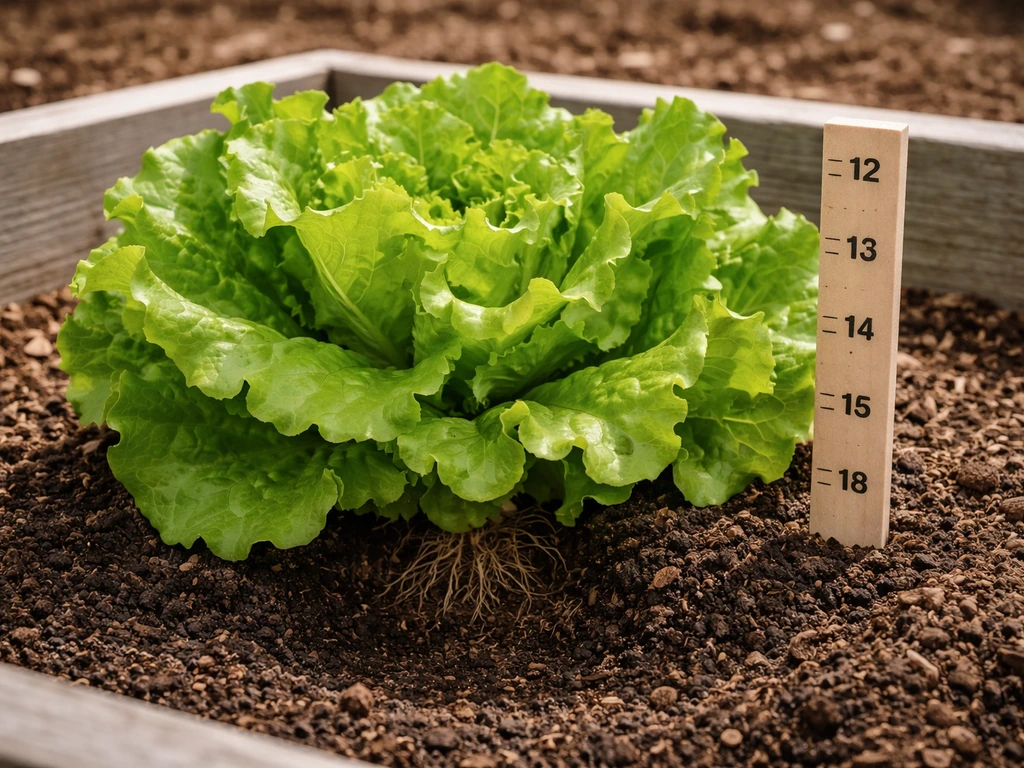
Lettuce roots are shallow, full stop. Most lettuce varieties keep the bulk of their root system in the top 12 to 18 inches of soil, with a realistic maximum somewhere around 18 to 20 inches under ideal, unobstructed conditions. For most home gardeners, that means you do not need deep beds or giant pots, but you do need consistent moisture because those roots are never far from the surface and dry out fast.
How Deep Do Lettuce Roots Grow? Depth by Variety
Marcus Holloway
22 Apr 2026
The actual root depth range for lettuce
University of Nebraska-Lincoln Extension classifies lettuce as a shallow-rooted crop with roots reaching about 12 to 18 inches (30 to 45 cm). A Kennesaw State University Extension table of maximum rooting depths pushes that ceiling slightly to 12 to 20 inches (30 to 50 cm). A University of Tennessee Extension guide puts it even more plainly: lettuce's main root system lives in the top 1 to 2 feet of soil. Those three sources are all pointing at the same practical window, which is roughly 12 to 18 inches for everyday planning purposes, with 20 inches being an outlier maximum you would only see in deep, loose, highly fertile soil.
The UC Master Gardener Program classifies lettuce under the 'shallow' category in its root-depth tables, and North Carolina State University Extension explicitly calls lettuce's root system 'shallow' while stressing that consistent moisture is essential as a direct result. The reason those moisture recommendations are so emphatic is exactly because shallow roots have a small buffer zone. They cannot chase water deeper into the soil the way a tomato or squash plant can.
Romaine vs. loose-leaf vs. butterhead: does variety change anything?
Honestly, not by a huge amount. All lettuce varieties are shallow-rooted, but romaine does tend to develop a slightly more robust, deeper-reaching root system than loose-leaf types. NCSU Extension's romaine-specific page calls it a shallow root system while noting that the variety's thicker midribs and taller heads mean it keeps growing longer and therefore has more time to extend those roots. Research on romaine in containers (published in Acta Horticulturae) showed that romaine roots were actively drawing water from 30 cm depth at 15 days after transplanting and from 60 cm depth at 30 days after transplanting, meaning the roots were progressing deeper through the growing season rather than stopping at a fixed point.
Loose-leaf varieties like Red Sails or Black-Seeded Simpson tend to mature faster, so their roots simply have less time to go deep before you harvest. Butterhead types sit somewhere in between. For container planning, this means romaine benefits most from that deeper end of the range (closer to 12 inches minimum, ideally more), while cut-and-come-again loose-leaf types can get away with shallower containers if needed.
| Lettuce Type | Typical Root Depth | Minimum Container Depth | Notes |
|---|---|---|---|
| Loose-leaf (e.g., Red Sails, Oak Leaf) | 6–12 inches | 6–9 inches | Fast maturing; roots stay shallow |
| Butterhead (e.g., Buttercrunch, Boston) | 8–14 inches | 8–10 inches | Moderate depth; good for medium pots |
| Romaine (e.g., Cos, Little Gem) | 10–18 inches | 10–12 inches | Deepest of the group; needs more room |
| Iceberg/Crisphead | 10–18 inches | 10–12 inches | Similar to romaine; slow maturing |
How root depth develops from seedling to harvest
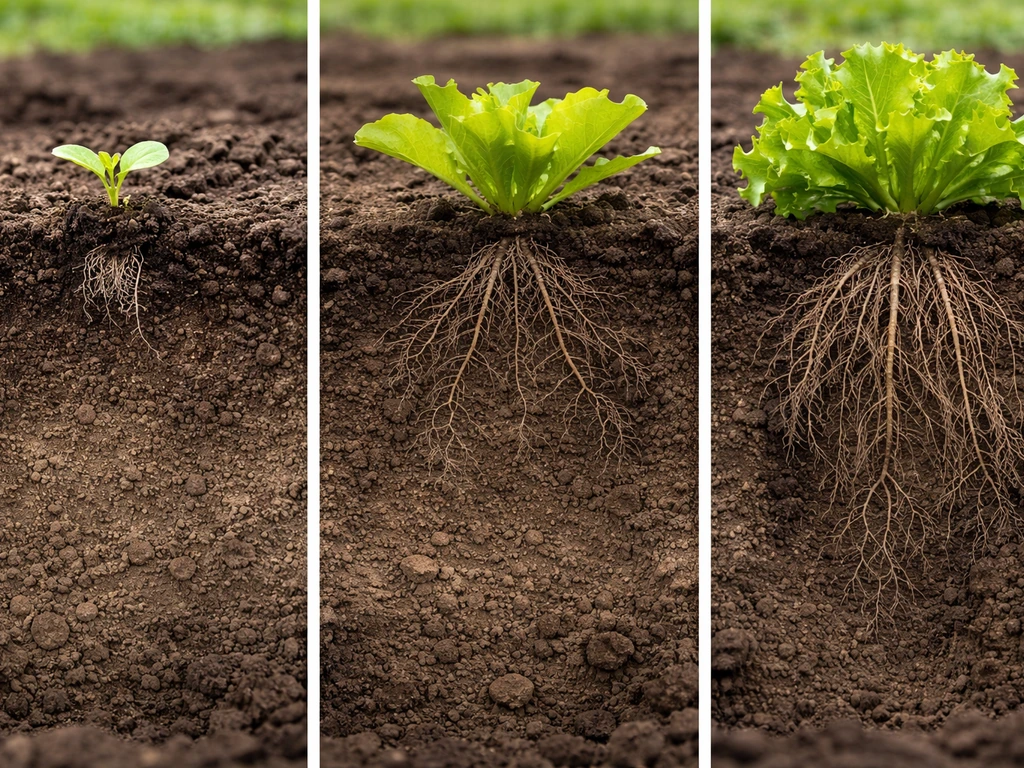
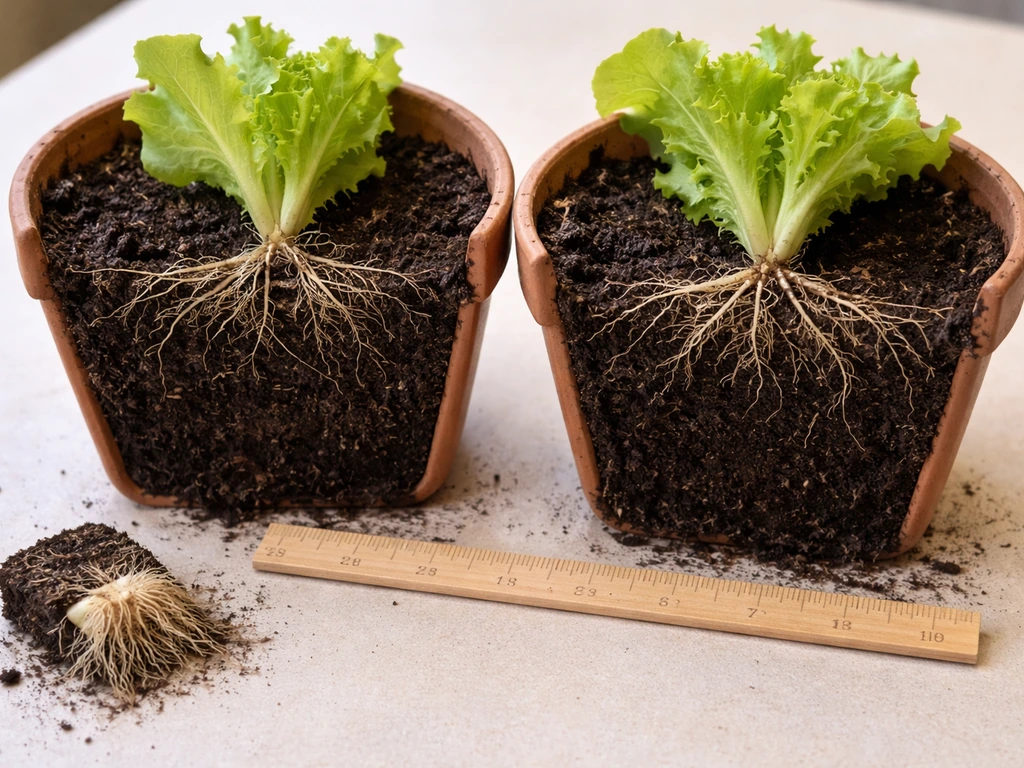
Roots do not reach their full depth on day one. At transplant, a lettuce seedling's roots are mostly confined to whatever plug or cell it came from, usually 1 to 2 inches deep at most. The first week after transplanting is all about establishment: the plant is focused on pushing roots outward and downward into the surrounding soil before it puts much energy back into leaf growth. If you disturb those roots during transplanting (something University of Florida IFAS Extension explicitly warns against), expect a week or more of stalled top growth while the plant recovers.
The Acta Horticulturae romaine container study gives us a useful real-world timeline. By 15 days after transplanting, roots had reached and were drawing water from 30 cm (about 12 inches) depth. By 30 days after transplanting, water depletion showed up at 60 cm (about 24 inches) depth in that particular deep-container trial. That 60 cm figure is beyond what you will see in most home garden setups because the experiment used a 100 cm deep container specifically to measure potential. The practical takeaway is that roots are actively extending through weeks two through five, which lines up with the period when consistent watering matters most.
In hydroponic systems, where root length can be measured directly rather than inferred from soil moisture, research shows lettuce roots grow surprisingly fast with no physical resistance. Under aeroponic conditions, total root length at 40 days after transplanting can reach 70 cm or more. Hydroponic roots at five weeks are typically far longer than what you would find in a pot of soil, but they are also more fragile and fine. In soil, roots are shorter but anchored and branching. The point is that the 'depth' number changes a lot based on what the roots are growing through.
How your growing setup changes everything
Outdoor soil beds
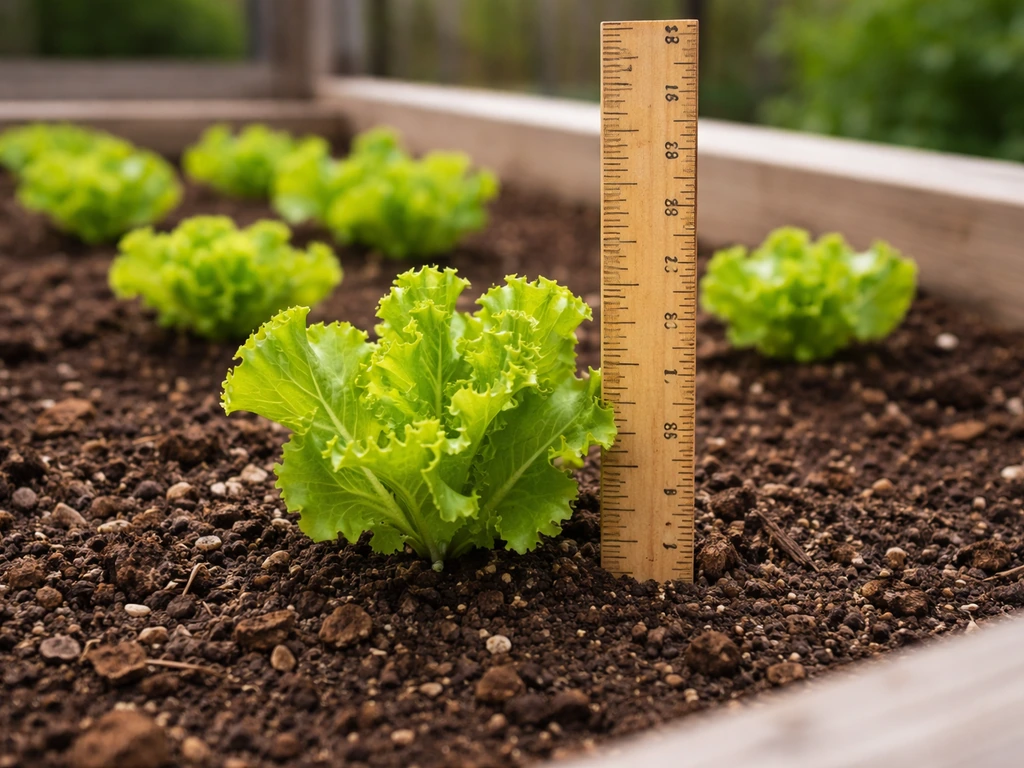
In a proper garden bed with loose, well-amended soil, lettuce roots can explore freely and will naturally reach toward the lower end of that 12 to 18 inch range given enough time. This is the setup where the published depth figures are most accurate. If your soil is compacted or clay-heavy, roots hit resistance and tend to spread laterally instead of going deep, which actually makes shallow watering even more important because the roots never get past the top few inches.
Containers and pots
Containers physically cap how far roots can go. UC ANR Master Gardener program guidance recommends 9 to 12 inches of container depth for leaf lettuce, and that matches the science well. I would say 8 to 10 inches is workable for loose-leaf varieties harvested young, but romaine really wants at least 10 to 12 inches or you will see it stall before forming a full head.
The related question of what size pot to use and how deep your soil layer should be are worth thinking through together, since a wide, shallow tray can work for cut-and-come-again harvesting in a way it cannot for full heads. If you are wondering how deep a pot to grow lettuce, focus on container depth that matches lettuce’s shallow rooting habit rather than trying to overdo it.
For the most practical guidance on pot size, use container depth as your starting point and pick a pot that fits the shallow rooting habit of lettuce what size pot to use.
Hydroponics and aeroponics
In hydroponic systems (NFT channels, deep water culture, vertical towers), there is no 'soil depth' to worry about. Root length becomes the relevant measurement instead, and it depends almost entirely on how much space the reservoir or channel gives the roots to hang. Research comparing aeroponics, hydroponics, and substrate culture shows that aeroponics produces the longest, most branched root systems because the roots are misted rather than submerged and have maximum oxygen.
Hydroponic lettuce roots at harvest are typically 15 to 30 cm long in most home systems, though they can go much further in commercial setups. For most home hydroponic growers, the practical concern is not root depth but root health: brown, slimy roots in your reservoir signal a problem (usually low oxygen or pathogens), not insufficient depth.
What to actually do with this information
Container depth
Use at least 8 inches of actual growing medium for loose-leaf lettuce and at least 10 to 12 inches for romaine or butterhead. 'Container depth' means the depth of soil or growing mix, not the outside height of the pot. A pot advertised as 12 inches tall may only give you 10 inches of usable root space after accounting for drainage and headspace. When choosing between container sizes, the depth question and the pot size question are closely linked, so think about both at once.
Spacing
Shallow roots spread laterally as well as downward, so spacing matters more than you might expect. Lettuce spacing is one of the biggest factors in how well each plant grows because its shallow roots compete in that top soil zone spacing for lettuce. Crowded plants compete in that top 12-inch zone hard and fast. For loose-leaf varieties, 6 to 8 inches between plants is workable. For romaine or butterhead heads, 10 to 12 inches is better. In containers, this translates directly to pot diameter: a single romaine plant does well in a 10 to 12 inch pot, but you can fit two or three loose-leaf plants in the same space.
Watering
Shallow roots mean the soil surface dries out quickly and the plant has almost no buffer. Water frequently and aim to keep the top 6 inches consistently moist (not soggy, just consistently damp). University of Maryland Extension advises not to over-water lettuce because it can contribute to root and leaf diseases, so aim for moist but not soggy conditions [not over-water lettuce](https://extension. umd.
edu/resource/growing-lettuce-home-garden). In hot weather or small containers, that could mean daily watering. NCSU Extension notes that dry soil does not just stress the plant: it can trigger bolting, which ends your harvest prematurely. On the flip side, UC IPM warns that constantly damp soil surfaces create favorable conditions for pests and root diseases, so you want moisture in the root zone but not standing water.
The target is moist soil that drains well, not wet mud.
Fixing shallow roots and common transplant problems
If your lettuce looks wilted, yellow, or stunted shortly after transplanting, the most common culprits are root disturbance during planting, compacted soil blocking root expansion, or a watering mismatch. Here is how to work through it.
- Check your soil structure first. Push a finger 3 to 4 inches into the soil next to a struggling plant. If it is hard to push through, your roots are hitting a wall. Loosen the surrounding soil with a hand fork, being careful not to damage existing roots.
- If you just transplanted and the plant is wilting, give it deep, gentle water immediately and shade it for two to three days. Transplant shock is normal. University of Florida IFAS Extension emphasizes that root disturbance is the main transplant risk, so the less you disturb roots during planting, the faster recovery happens.
- If older plants are yellowing or wilting and you have not had a drought, check for waterlogging. University of Maryland Extension notes that overly wet, poorly drained soil reduces oxygen around the roots and causes the same wilting and yellowing symptoms as drought. Poke a stick into the soil. If water seeps in immediately, drainage is the problem, not dryness.
- If roots are visibly matted and circling the bottom of a pot, the plant is root-bound. Pot up to a container at least 2 inches deeper and wider. Root-bound lettuce bolts early and grows poorly.
- If you are growing in hydroponic systems and roots look brown and slimy, increase aeration (add an air stone or increase pump frequency) and check water temperature. Lettuce roots prefer water temperatures below 68°F (20°C). Warm, stagnant water is the fastest path to root rot.
- If your lettuce keeps drying out even with regular watering, the container is probably too small or too shallow. Move up to a pot that gives at least 10 inches of growing medium depth, and consider adding perlite or coarse compost to improve moisture retention without waterlogging.
One thing I have found helps enormously in containers is a layer of mulch or shredded leaves on the soil surface. It cuts surface evaporation dramatically, which is exactly where lettuce loses moisture fastest given those shallow roots. Even half an inch of material on top of a pot makes a noticeable difference in how long the soil stays moist between waterings.
The bottom line is that lettuce roots are not trying to go deep. They are designed for the top foot or so of the soil, which is actually great news for container growers and anyone working with raised beds or window boxes. You just need to match your watering and container depth to that shallow habit, and the plants will do their part.
If you are planning in-ground beds, the same shallow rooting habit is why the right soil depth and consistent moisture matter for growing lettuce how much soil to grow lettuce (soil depth for lettuce). If you want the best soil to grow lettuce, focus on loose, well-draining mix that stays consistently moist in that top 12 to 18 inches match your watering and container depth to that shallow habit.
FAQ
How can I tell if my lettuce roots are staying shallow or if the roots are getting blocked by my soil?
Check the plant a few weeks after transplanting for strong lateral spreading and quick surface drying. If soil remains loose but plants still wilt fast, roots may be hitting compaction or a hardpan below (you can confirm by gently probing with a hand trowel beside a plant, looking for root reach and whether roots stop abruptly).
Does fertilizing change how deep lettuce roots grow?
Fertilizer mostly changes leaf growth and how long the plant stays in production, not the maximum rooting depth. Overfeeding nitrogen can speed leaf growth and reduce the time plants spend expanding roots, which indirectly keeps the root system shallower. Use a balanced approach and avoid heavy top-dressing that encourages surface rooting without adding root space.
If lettuce roots are shallow, should I water less often but soak deeper?
Not typically. Lettuce depends on keeping the top several inches consistently moist, so watering should target the root zone rather than deep soaking. If you soak deeply, much of the water may pass below the main root mass in compacted or heavy soil, leading to waste and still-dry surface conditions.
How do I adjust watering if I’m growing lettuce in a self-watering planter or wicking system?
Use the reservoir level to keep moisture stable in the root zone, not to saturate. Self-watering can keep the surface too wet in cool weather, which raises disease risk. A good rule is to allow the medium to feel evenly damp but not mushy, and to improve airflow around the container.
Can I grow lettuce deeper in a pot by filling the bottom with gravel to reduce soil use?
Be careful. Lettuce needs usable growing medium depth, and a gravel layer can create a dry, low-oxygen zone that roots cannot cross easily. If you want to save soil, reduce the pot width rather than removing usable depth, or use a wicking medium system designed for that setup.
Why does my romaine look stunted even when I water enough, if lettuce is shallow-rooted?
Romaine is more likely to need adequate container depth and less crowding than loose-leaf types. If it is planted too shallow or too close to neighbors, the shallow root zone competes quickly, and the plant can stall even with correct watering. Confirm you have at least about 10 to 12 inches of usable medium depth and the recommended spacing.
What’s the safest way to transplant lettuce without damaging shallow roots?
Handle the root plug gently, keep the root ball intact, and avoid pressing or twisting it into the hole. Water immediately after transplanting and avoid working the soil again around the plant for about a week, since repeated disturbance can delay top growth.
How long does it take for lettuce roots to “catch up” after transplanting?
Expect a brief establishment period, often around the first week, where root recovery comes before vigorous leaf growth. If plants remain wilted or stunted beyond that, the issue is more likely soil compaction, drainage problems, or inconsistent moisture than normal transplant timing.
In hydroponics, what should I watch instead of root depth?
Monitor root health and oxygenation. Brown, slimy, or rotting roots usually signal low dissolved oxygen or pathogens rather than a lack of “soil depth.” Keep nutrient solution aerated, maintain clean tubing, and ensure roots are not constantly submerged in systems that are not designed for it.
Do lettuce roots branch more in containers, and does that affect watering?
Yes, shallow containers often encourage stronger lateral branching in the top layer. That means the effective root zone stays closer to the surface, so the plant can still dry quickly even if roots spread widely. Use shorter intervals and consistent moisture, especially in small or hot conditions.
Can I successfully grow lettuce in a very wide but shallow tray?
It can work for cut-and-come-again loose-leaf lettuce harvested young, because frequent harvest reduces the plant’s demand for deeper, longer-root support. For full heads, especially romaine, shallow trays more often lead to stalling, so increase usable depth rather than relying only on surface area.