For most lettuce, the practical rule is 4 to 8 inches apart for loose-leaf types and 10 to 12 inches apart for heading types like romaine, butterhead, or crisphead. If you're growing in a raised bed or container and just want a quick number: 6 inches covers a lot of situations. That said, the exact spacing that works best for you depends on the variety you're growing, how you plan to harvest, and whether you're planting in a garden row, a raised bed, a container, or a hydroponic system. The rest of this article breaks it all down so you can plant with confidence.
How Far Apart to Grow Lettuce: Spacing Guide for Every Setup
Marcus Holloway
17 May 2026
The basic spacing rule for lettuce
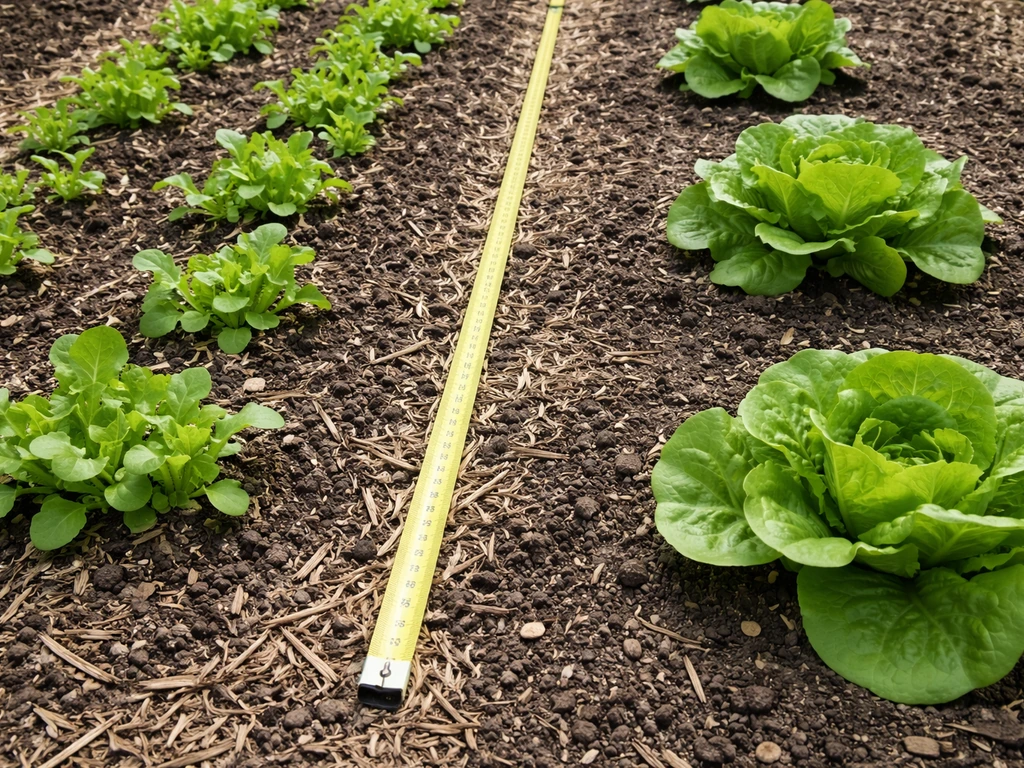
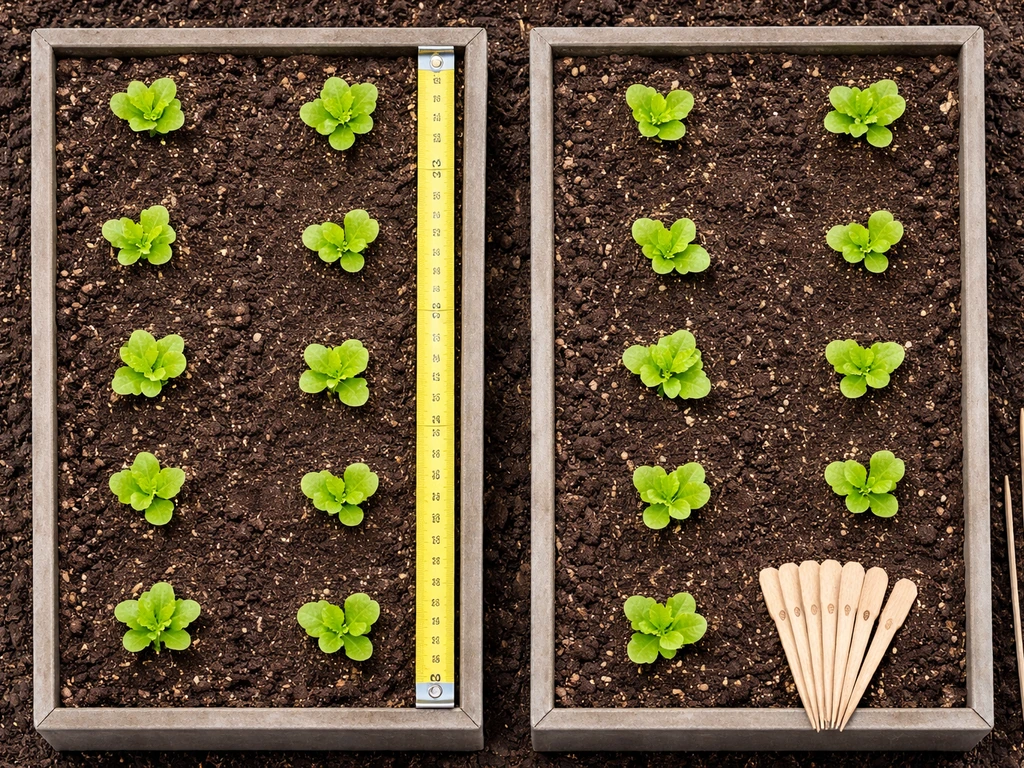
Think of lettuce spacing in two categories: small-leaf and cut-and-come-again plants versus full-size heads. Leaf lettuce needs 4 to 8 inches between plants on all sides. Heading types (romaine, butterhead, crisphead) need 10 to 12 inches between plants. Those ranges come directly from university extension research and they hold up in real-world gardens.
Row spacing is a separate question from in-row plant spacing. If you're working in traditional rows rather than a raised bed, keep rows 12 to 18 inches apart for leaf lettuce and up to 20 to 30 inches apart for crisphead types. University of Maryland Extension recommends that outdoor row spacing for lettuce also vary by type, with leaf lettuce typically getting about 12 to 18 inches between rows and crisphead needing wider spacing keep rows 12 to 18 inches apart for leaf lettuce and up to 20 to 30 inches apart for crisphead types. In a raised bed or square-foot layout, you can ignore row spacing and just use the plant-to-plant spacing in all directions.
| Lettuce type | In-bed plant spacing | Row spacing (traditional rows) |
|---|---|---|
| Loose-leaf / baby greens | 3–6 inches (7–15 cm) | 12–18 inches (30–45 cm) |
| Leaf lettuce (full size) | 6–8 inches (15–20 cm) | 12–18 inches (30–45 cm) |
| Butterhead / Bibb | 8–10 inches (20–25 cm) | 12–18 inches (30–45 cm) |
| Romaine / Cos | 8–10 inches (20–25 cm) | 18–24 inches (45–60 cm) |
| Crisphead (iceberg-type) | 12–15 inches (30–38 cm) | 20–30 inches (50–75 cm) |
Spacing by lettuce type and how you plan to harvest
The biggest factor in spacing is not just the variety but what you're actually harvesting. Baby greens and cut-and-come-again production let you plant much more densely than if you're waiting for a full head. Here's how to think through each style.
Baby greens and cut-and-come-again harvest
If you're growing lettuce to cut young leaves repeatedly, you can sow seeds thickly and thin or harvest early. Scatter seeds and thin to about 3 to 4 inches apart once seedlings have their first true leaves. When plants reach 4 to 6 inches tall, cut them about 2 inches above the soil and they'll regrow. The plants never compete long enough for spacing to cause serious problems, and you're prioritizing leaf density over head development. This is the most space-efficient way to grow lettuce.
Loose-leaf at full size
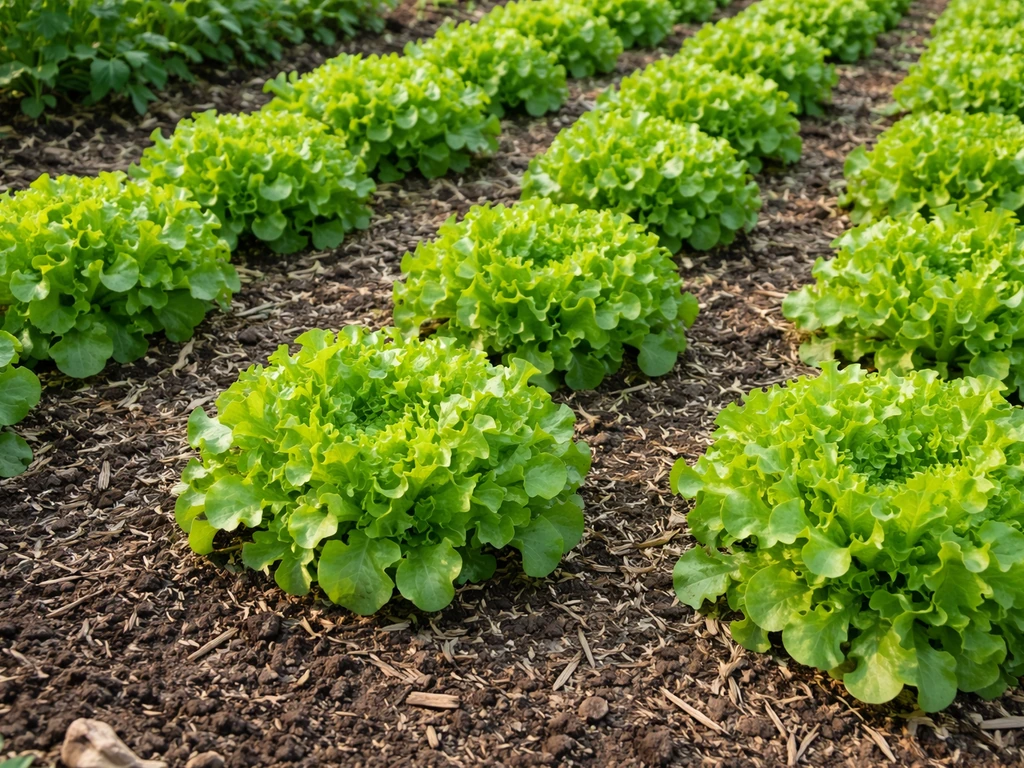
Loose-leaf varieties like Red Sails, Black Seeded Simpson, or Oak Leaf reach their best size, typically 6 to 12 ounces, in about 50 to 60 days. For that full-leaf harvest, 6 to 8 inches between plants gives each one enough room to spread without letting light and airflow drop too much. You can start tighter and thin as you go, eating the thinnings as baby greens.
Butterhead, romaine, and crisphead
These types need to form a head, which means more space and more time. Butterhead and romaine do well at 8 to 10 inches apart. Crisphead (the iceberg-type varieties) are the most demanding at 12 to 15 inches. Squeeze these types and you'll get undersized, loose heads that never close properly, and the dense canopy they create is exactly the environment where diseases like gray mold (Botrytis) and bottom rot get started. Better spacing that supports air movement can help reduce diseases like gray mold (Botrytis) and bottom rot, as recommended by Utah State University Extension.
Spacing for different growing setups
Traditional outdoor rows
In a traditional garden row, sow seeds about half an inch deep and 1 inch apart, then thin progressively. First thin to 2 inches once seedlings emerge, then to the final spacing once plants are 2 to 3 inches tall (4 inches apart for leaf lettuce, 6 to 8 inches for cos or butterhead, and 12 to 15 inches for crisphead). Keep rows at least 12 inches apart for leaf types and up to 30 inches apart for heading types. This wider row spacing sounds like wasted space but it's necessary for air movement at soil level, which is where rot starts.
Raised beds
Raised beds let you use intensive spacing because you're working from the sides and never compacting the soil. Stagger plants in a grid rather than rows. Use 3 to 6 inches for leaf and baby green varieties, and 10 to 12 inches for heading types. A standard 4-foot-wide raised bed can hold about 3 to 4 columns of leaf lettuce at 6-inch spacing, giving you roughly 8 plants per square foot at the tighter end, or about 4 plants per square foot at 6-inch spacing. That's a lot of lettuce from a small space.
Containers
Lettuce grows well in containers as long as the pot is deep enough (6 to 12 inches of soil depth is the practical minimum) and you don't overcrowd. A 1-gallon container can support 4 to 6 leaf lettuce plants if you're growing them as cut-and-come-again greens. If you want full-size leaf lettuce, aim for 2 plants per 1-gallon container, keeping them roughly 4 to 6 inches apart. Heading types need a larger pot with at least 10 to 12 inches of space per plant, so a 12-inch-diameter pot holds one head lettuce comfortably. Heading types need a larger pot with at least 10 to 12 inches of space per plant, so a 12-inch-diameter pot holds one head lettuce comfortably, and that same logic guides what size pot to grow lettuce for your variety. The soil depth question connects to root development too, so worth thinking through alongside your container choice. For a deeper dive on the pot-depth side of the equation, see how deep a pot to grow lettuce is soil depth. Choosing the best soil to grow lettuce also means balancing moisture and drainage so roots can develop without staying waterlogged.
Indoor and hydroponic spacing
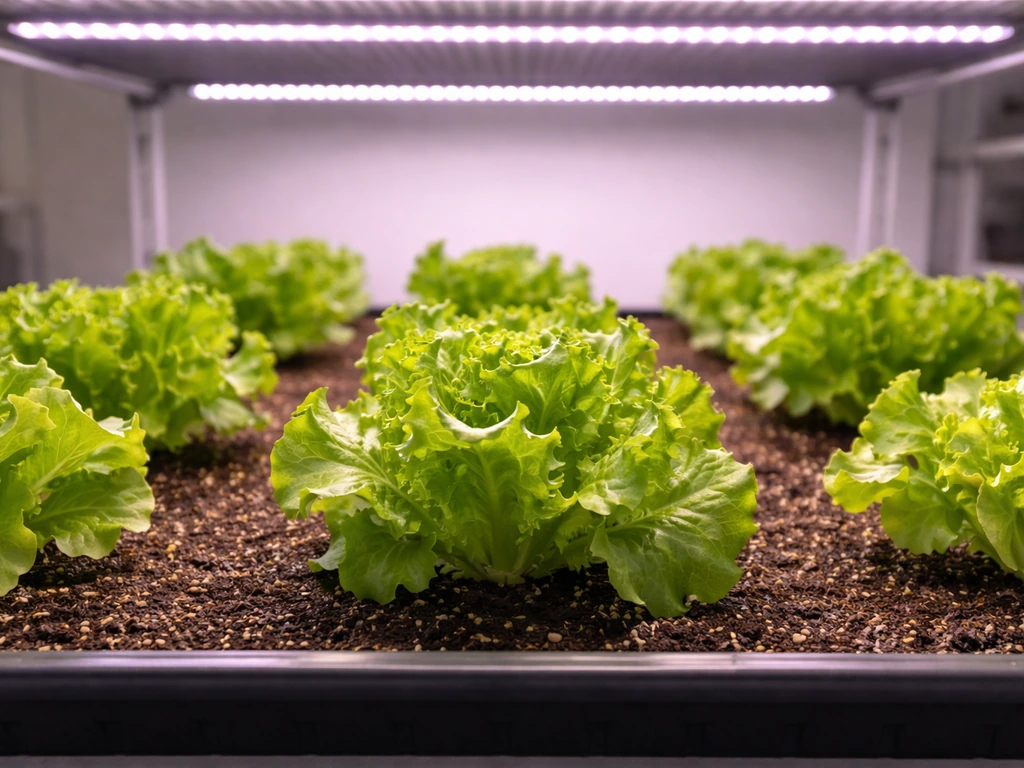
Indoor growing changes the spacing equation in two ways: your light source has a fixed footprint, and airflow is something you have to engineer rather than get for free from wind. Both of these mean spacing matters more indoors, not less.
NFT (nutrient film technique) channels
The industry-standard spacing for lettuce in NFT channels is 8 inches on center. That means center-to-center, hole to hole, measuring 8 inches between each plant site. This is the spacing you'll see pre-drilled in commercial NFT channel lids and it works well for most leaf lettuce and butterhead varieties. If you're building or buying your own system, plan for 8-inch spacing and you won't go wrong. For compact baby-leaf varieties, you could tighten to 6 inches, but 8 inches is the safe default.
Raft/deep water culture (DWC) beds
Raft beds typically use a 6 by 6 inch grid spacing, which gives you 4 plants per square foot. This is a productive density for leaf and butterhead varieties, and it's commonly used in small-scale commercial and home raft systems. Keep airflow active in your growing space, because at this density, stagnant humid air between plants is a quick path to downy mildew and Botrytis.
Grow lights and canopy management indoors
Under grow lights, the light intensity drops off from the center of the fixture toward the edges. If you pack plants in too tightly, the outer plants stretch toward the light (etiolation) while center plants can get burned. Stick to the same 6 to 8 inch spacing indoors and make sure your light footprint actually covers all the plant sites. Running a small fan on a timer for a few hours each day helps dry leaf surfaces and keeps the air moving, which is your best defense against fungal issues in a closed indoor space.
Thinning: how to do it and when
Thinning is not optional, it's part of the process. When you direct sow lettuce, seeds germinate unevenly and you'll almost always end up with clumps. Don't try to pull plants from a clump; use scissors to snip the extras at soil level so you don't disturb the roots of the plant you're keeping.
- First thinning: when seedlings are about 1 inch tall, thin to roughly 2 inches apart. Just snip the weakest-looking ones.
- Second thinning: when plants reach 3 to 4 inches tall, thin to your target final spacing. For leaf lettuce, that's 4 to 8 inches. For heading types, 10 to 12 inches.
- Eat the thinnings: every plant you pull at this stage is a perfectly good baby green. Rinse and toss them in a salad rather than composting them.
- Final check: once plants have filled in a bit, look for any spots where two plants are touching. If heads are starting to form, remove the weaker of the two.
If you transplanted seedlings from a tray and planted them too close together, you can still thin them even after a few weeks of growth. Dig carefully, keeping as much root intact as possible, and transplant the extras to another spot or a container. Lettuce handles transplanting pretty well as long as you do it in the cool part of the day and water immediately after.
What crowding and over-spacing actually look like
Spacing problems show up pretty clearly once you know what to look for. Here's how to read what your plants are telling you.
Signs your lettuce is too crowded
- Leaves are thin, pale, or reaching upward (stretching for light)
- The base of the plant stays wet and doesn't dry between waterings
- You notice gray fuzzy patches at the crown or lower leaves (Botrytis/gray mold)
- Yellow or water-soaked lesions on older leaves, especially during humid weather (downy mildew)
- Heading types are forming loose, open heads that won't close
- Plants seem to bolt earlier than expected, especially in warmer weather
If you're seeing any of these, the fix is to remove the weakest plants immediately. You don't have to pull the whole bed. Just get 2 to 3 inches of air gap between remaining plants and see if conditions improve over the next week.
Signs your lettuce is spaced too wide
- Heads are forming but surrounded by large patches of bare soil
- Weeds are outcompeting your lettuce because there's no leaf canopy to shade them out
- In containers, the plant looks lonely and the potting mix dries out very fast between waterings
- Overall yield feels low for the space you're using
Too-wide spacing is the less urgent problem, but it still costs you yield and makes weed management harder. If you notice large gaps in an established bed, fill them with a quick succession sowing of a fast-growing loose-leaf variety. You won't disrupt the plants already there, and you'll close the canopy gap.
Putting it all together: quick layout reference
Here's how I'd actually set up spacing in the most common situations. These are the layouts I come back to because they work consistently.
| Setup | Lettuce type | Recommended spacing | Notes |
|---|---|---|---|
| Traditional garden row | Leaf lettuce | 4–8 inches in-row, 12–18 inch rows | Thin progressively; eat thinnings |
| Traditional garden row | Crisphead | 12–15 inches in-row, 20–30 inch rows | Needs the wide row spacing for airflow |
| Raised bed (intensive) | Leaf lettuce | 6 inches on all sides | Stagger in a grid, not straight rows |
| Raised bed (intensive) | Head lettuce | 10–12 inches on all sides | 3 plants per square foot maximum |
| Container (1-gallon) | Leaf lettuce cut-and-come-again | 4–6 plants per container | Cut at 2 inches, regrows 2–3 times |
| Container (large, 12+ inch pot) | Butterhead or romaine | 1 plant per 10–12 inches of diameter | One plant per pot works best |
| NFT hydroponic channel | Leaf or butterhead | 8 inches on center | Standard channel hole spacing |
| Raft/DWC hydroponic bed | Leaf or butterhead | 6 × 6 inch grid (4 plants/sq ft) | Run a fan; monitor for downy mildew |
Spacing ties directly into how deep your soil or growing medium needs to be, because lettuce roots need room to develop even if they don't go very deep. If you’re wondering how deep lettuce roots grow, most varieties stay relatively shallow, which is why soil depth and spacing both matter in containers and raised beds roots need room to develop. If you're working with containers or raised beds, it's worth matching your spacing plan to your pot size and soil depth at the same time so everything works together.
FAQ
How far apart should I space lettuce if I’m not sure whether it’s loose-leaf or heading type?
Start with the looser end for your harvest goal. If you plan to cut baby leaves or do repeated cut-and-come-again harvests, use about 4 to 6 inches between plants. If you intend to wait for full heads, budget the heading spacing from the start (about 10 to 12 inches for romaine and butterhead, and 12 to 15 inches for crisphead). When in doubt, err wider, because overcrowding leads to loose heads and faster disease risk.
Do I measure spacing from the center of each plant or edge-to-edge?
Use the “on center” idea when you can. In practical gardening, the easiest way is plant-to-plant distance from where one plant will be, not from the outer leaves. For example, if a guide says 6 inches, aim for about 6 inches between plants when they reach usable size, not 2 or 3 inches between leaf edges later in the season.
If I want a lot of baby greens, can I sow lettuce at full heading spacing and just harvest early?
You can, but you will usually get less yield per area than you could with baby-green spacing. For cut young leaves, density is the point. Use the tighter approach (thin to roughly 3 to 4 inches for cut-and-come-again, or about 4 to 6 inches for loose-leaf leaf harvest), because plants are intended to be repeatedly cut before they crowd each other.
What should I do if my lettuce seedlings grow taller than expected before I thin?
Thin as soon as seedlings have their first true leaves (or when you see clumps), and keep only the healthiest plants. If they are already leggy, don’t wait, remove the extras with scissors at soil level to avoid root disturbance, and ensure soil stays evenly moist but not waterlogged to support steadier growth.
Can I “make up” for tight spacing later by trimming or harvesting earlier?
To an extent, yes for loose-leaf and cut-and-come-again types. If you are heading-type, early trimming does not fully solve the core issue because the plants still need room to close properly, and overcrowding keeps humidity trapped at the canopy and soil surface. For heading lettuce, it’s safer to correct the spacing by thinning sooner rather than relying on harvest timing.
How do I space lettuce plants in a raised bed if my bed is irregularly shaped or I can’t fit a perfect grid?
Use the spacing in all directions, then translate it to your available space by staggering rather than using straight rows. Leave the full in-row distance, and keep at least the recommended clearance to the bed edges so leaves can expand without hitting the boundary. If you must choose, prioritize the “all directions” gap over perfect alignment to ensure airflow between plants.
What are the earliest signs my lettuce spacing is too tight?
Look for stretched, weak growth and consistently damp-looking leaf surfaces, especially near the center of tight clusters. You may also see faster onset of leaf spotting or early fungal problems in humid conditions. A good diagnostic step is removing the weakest plants and restoring a couple inches of air space between the remaining plants to see if the problem slows.
If my lettuce has gaps because germination was uneven, should I replant immediately or fill later?
Fill gaps with a quick succession sowing while the existing plants are still young, ideally within a week of noticing the empties. Use the same spacing plan for the variety you chose. This avoids creating mature competition zones later and helps close canopy gaps without having to disturb larger plants.
Does spacing change if I’m using mulch or shade cloth?
Yes, indirectly. Mulch can help keep soil evenly moist, but it does not replace the need for airflow, so keep the same plant-to-plant spacing. Shade cloth can slow growth and extend the time plants stay in a dense canopy, so if plants are staying humid or slow to dry, lean toward wider spacing within the given range.
How far apart should lettuce be in containers if I’m growing multiple varieties in one pot or multiple rows in a long planter?
Treat it as the pot-to-plant spacing problem. For loose-leaf, keep plants about 4 to 6 inches apart and do not exceed about 4 to 6 plants per 1-gallon container when growing as baby greens. For full-size heads, give roughly 10 to 12 inches of space per plant and use a pot diameter that matches that scale (for example, a 12-inch pot typically fits one head). When mixing varieties, place the widest-spacing type at the center and keep the tighter type around it to avoid competing canopies.