Leaf lettuce is the best type to grow in a pot, and if you want a single variety to start with today, go with 'Black-Seeded Simpson' or 'Buttercrunch'. If you’re growing lettuce in raised beds, the best varieties tend to be heat-tolerant and quick to mature so you can keep harvests going through changing temperatures best lettuce to grow in raised beds. Both are fast (ready in 45 to 60 days), compact enough for a 1 to 2 gallon container, and far more forgiving of temperature swings than most other lettuces. If you have partial shade and cooler conditions, butterhead types like 'Buttercrunch' are genuinely hard to beat. If you're in a warmer spot or just want the fastest results, a loose-leaf mix or 'Black-Seeded Simpson' will get you there quickest.
Best Lettuce to Grow in a Pot: Top Varieties and Tips
How to pick the right lettuce for your specific setup
The word 'best' really depends on what you're working with. Before you buy seeds, answer three quick questions: How much light does your pot get? What's the average temperature where the pot will live? And how big is your container? Those three factors will narrow your variety choice faster than any top-ten list.
Lettuce is a cool-season crop. It does best when average daily temperatures sit between 60 and 70°F, and once temperatures consistently push above 75°F, most varieties start to bolt (send up a flower stalk) and turn bitter. That means a variety that's perfect on a shaded balcony in spring might be completely wrong for a sunny south-facing window box in July. So the 'best' lettuce for your pot is really the one that matches your current season, your light level, and the space you have. If you want the best-tasting lettuce to grow, focus on varieties that match your temperature and container conditions the 'best' lettuce for your pot.
Here's a simple way to think about it. If you're planting right now in late spring or early summer with warm temperatures creeping in, prioritize bolt-resistant and heat-tolerant varieties. If you're heading into fall or you have a reliably cool spot (indoors under a grow light, a shaded patio, or a cool apartment), you can get away with more delicate butterhead or romaine types without them bolting on you mid-season.
The best lettuce varieties for pots, ranked by container performance
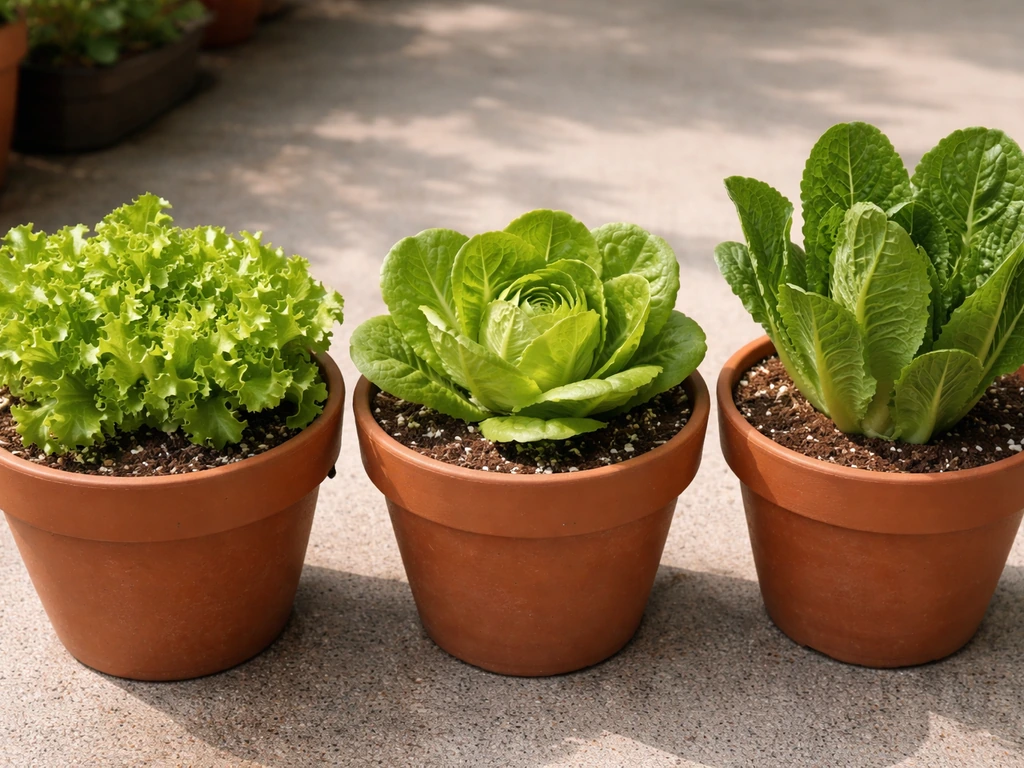
Not every lettuce type handles life in a container the same way. Here's a breakdown of how the main types perform and which specific varieties to look for.
Loose-leaf lettuce: the easiest, fastest option
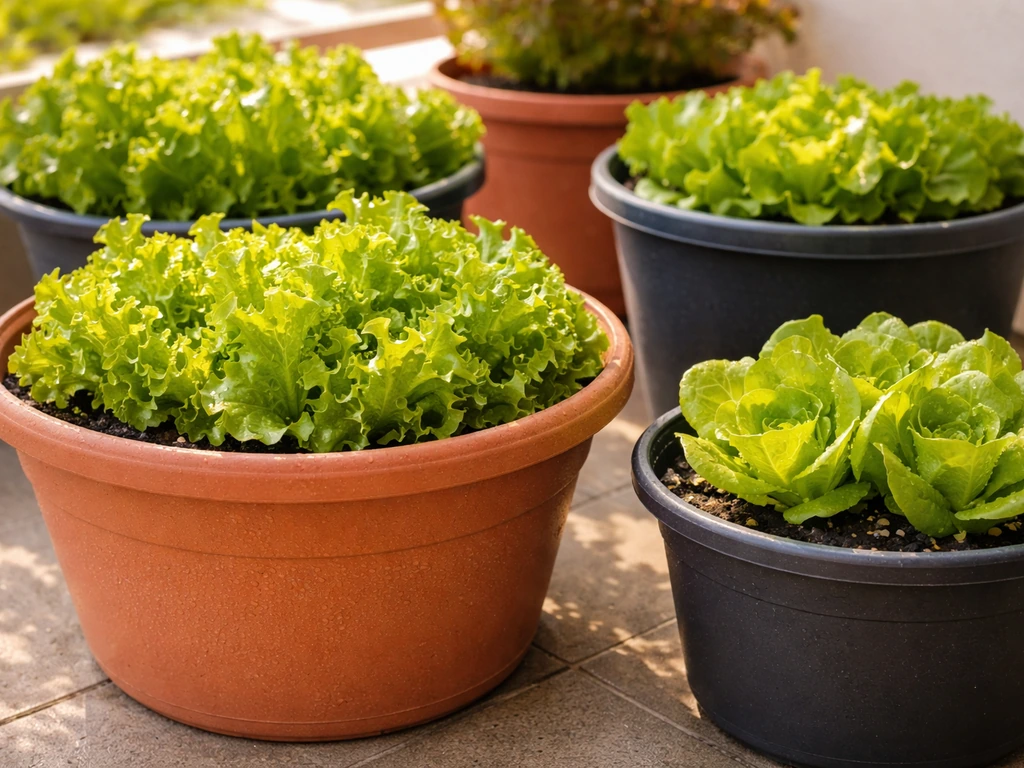
Loose-leaf is the top choice for pots, full stop. These varieties don't form a tight head, so you can harvest outer leaves continuously without pulling the whole plant. They grow quickly (baby leaves in as little as 25 to 30 days, full harvest around 45 days), they tolerate shallower containers, and they bounce back well after cutting. Recommended varieties include 'Black-Seeded Simpson' (bright green, mild flavor, widely available), 'Red Sails' (reddish-bronze, good heat tolerance), 'Green Ice' (frilly, crisp texture), and 'Salad Bowl' (oak-leaf shape, heat-tolerant, a classic). Any of these work well in a 1 to 2 gallon pot.
Butterhead lettuce: best flavor, needs a little more care
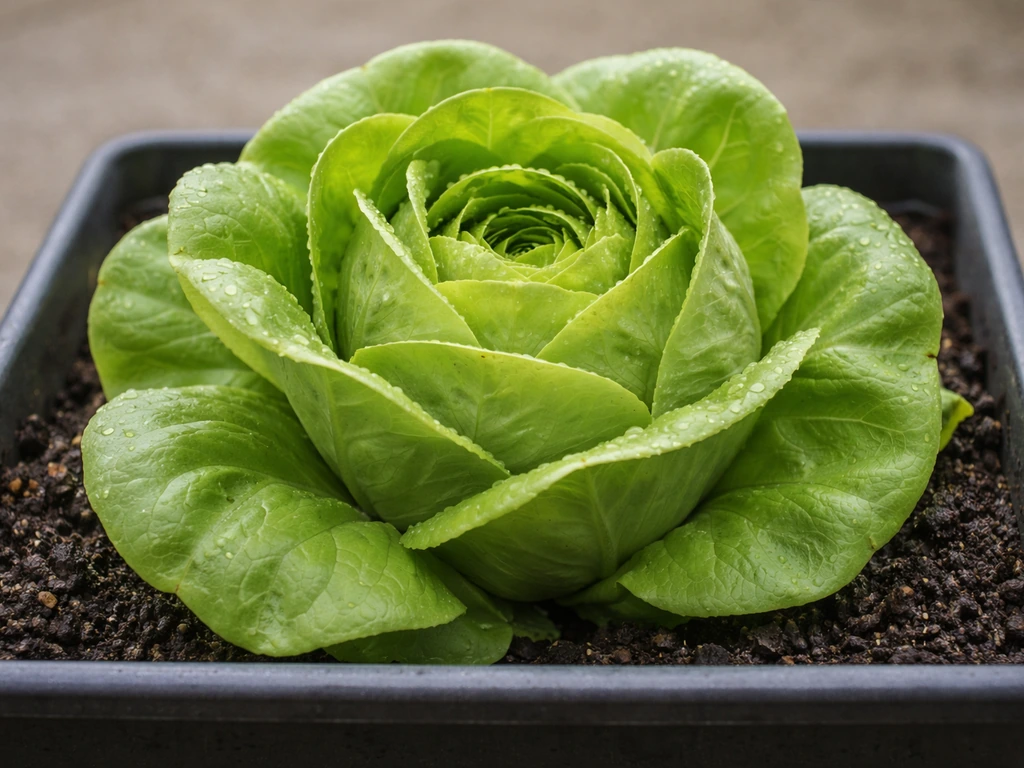
Butterhead (also called Bibb) lettuce produces soft, buttery-textured heads with a mild, slightly sweet flavor. 'Buttercrunch' is the standout container variety here. It forms a loose head, handles partial shade well, and is more heat-tolerant than most butterheads. The catch: butterhead types are the first to develop bitterness when temperatures climb above 75°F, so if you're growing in a warm environment, watch your timing carefully. Give butterhead varieties a slightly larger pot (6 to 8 inches deep, at least 2 gallons) for the best head development. Days to maturity are typically 55 to 65 days for a full head, though you can start harvesting outer leaves much earlier.
Romaine lettuce: possible in pots, but needs more depth
Romaine grows taller and develops a deeper root system than loose-leaf or butterhead, so it's a bit more demanding in a container. It needs at least 8 to 10 inches of soil depth and a container of at least 2 to 3 gallons per plant. Compact romaine varieties like 'Little Gem' are a smarter choice than full-size romaine if you're working with limited pot space. 'Little Gem' forms a small, dense head in about 60 days and has excellent crunch and flavor. It's genuinely well-suited to container growing in a way that full-size romaine isn't. If you enjoy growing indoors or hydroponically, romaine and butterhead types both perform well in those setups too.
| Variety | Type | Days to Harvest | Min. Pot Size | Heat Tolerance | Best For |
|---|---|---|---|---|---|
| Black-Seeded Simpson | Loose-leaf | 45 days | 1 gallon / 4–6" deep | Moderate | Fast harvests, beginners |
| Red Sails | Loose-leaf | 45 days | 1 gallon / 4–6" deep | Good | Warmer spots, color |
| Salad Bowl | Loose-leaf | 45–50 days | 1 gallon / 4–6" deep | Good | Cut-and-come-again |
| Green Ice | Loose-leaf | 45 days | 1 gallon / 4–6" deep | Moderate | Texture, continuous harvest |
| Buttercrunch | Butterhead | 55–65 days | 2 gallons / 6–8" deep | Moderate | Best flavor, partial shade |
| Little Gem | Romaine | 60 days | 2–3 gallons / 8–10" deep | Low–Moderate | Compact romaine heads |
Pot size, soil, and planting setup
Container size matters more than most beginners expect. Leaf lettuce needs a minimum of about 2 gallons of volume and at least 4 to 6 inches of depth. Illinois Extension recommends fitting 4 to 6 leaf lettuce plants in a 1-gallon container, which works for baby-leaf harvesting but gives individual plants more room to develop in a larger pot. For a single butterhead or romaine head, aim for a 6 to 8 inch deep container with at least 2 gallons of space per plant.
Good drainage is non-negotiable. Use a container with drainage holes and fill it with a lightweight potting mix, not garden soil. Garden soil compacts in containers, restricts roots, and holds too much moisture. A standard all-purpose potting mix works well. You can also mix in some perlite (about 20 to 25% of the volume) to improve drainage and airflow around roots. If you're interested in soilless growing, lettuce is one of the best crops for hydroponic-style setups, and the same varieties that thrive in pots generally do well hydroponically too. Hydroponic lettuce often performs best with the same compact, fast-maturing varieties you would choose for containers hydroponic-style setups.
For spacing, don't overcrowd. Leaf lettuce plants need about 4 inches between them for a continuous cut-and-come-again setup. If you're growing heads (butterhead or romaine), space them 6 to 8 inches apart. Overcrowding leads to leggy growth, poor air circulation, and increased disease risk. A 12-inch wide pot comfortably fits about 3 to 4 leaf lettuce plants side by side.
Light, temperature, and watering: the rules that actually matter
Light
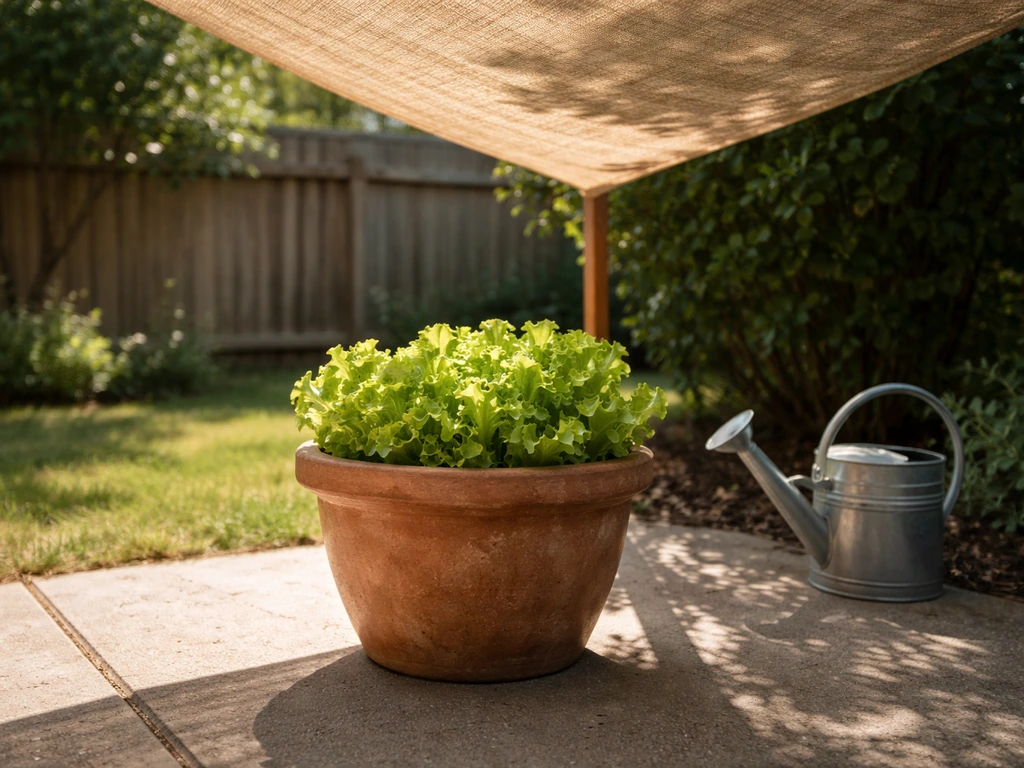
Lettuce needs about 6 hours of light per day for steady growth, but it tolerates partial shade better than almost any other vegetable. In fact, in warm weather, afternoon shade can actually slow bolting and extend your harvest window significantly. In a greenhouse, the goal is to create cooler conditions with airflow and some shading so lettuce does not bolt too quickly afternoon shade. If you're growing outdoors, a spot with morning sun and afternoon shade is ideal once temperatures climb past 65°F. Indoors, a bright south- or east-facing windowsill works, but a small LED grow light set to 14 to 16 hours per day will produce noticeably faster and denser growth.
Temperature
Keep it cool. The sweet spot is 60 to 70°F for average daily temperature. Lettuce can handle brief dips into the high 30s°F without permanent damage, and it can push through temperatures up to about 80°F for short periods, but multiple consecutive days above 75°F will trigger bolting in most varieties. If your pot is outdoors and a heat wave is coming, move it to a shadier, cooler spot. A pot gives you mobility that an in-ground plant doesn't, so use that advantage.
Watering
Containers dry out much faster than garden beds, so consistent watering is critical. Check the soil daily once temperatures are warm. Water thoroughly when the top 1/4 inch of soil feels dry. The University of Maryland Extension also advises watering containers thoroughly to re-moisten the entire container and letting excess water freely drip out of the drain holes (or overflow holes for self-watering containers) blank" rel="noopener noreferrer">Water thoroughly when the top 1/4 inch of soil feels dry. UNH Cooperative Extension advises blank" rel="noopener noreferrer">watering containers thoroughly when soil dries to a depth of 1/4 inch. 'Thoroughly' means adding water until it freely drips from the drainage holes, which ensures the entire root zone gets moisture, not just the top layer. In hot weather, you may need to water once or even twice a day. Letting lettuce dry out causes stress that speeds bolting and leads to bitter leaves, so don't skip checks. Self-watering containers work extremely well for lettuce because they maintain even moisture, which is exactly what lettuce wants.
When to sow and how to harvest
Spring and fall sowing schedule
For a spring crop, start sowing seeds outdoors once nighttime temperatures are reliably above 35°F. Lettuce seeds germinate best between 60 and 65°F. For a fall crop, count back about three months from your average first frost date and start seeds then. The goal is to have established plants in the ground before the really hot summer days arrive (spring) or to have them maturing as temperatures cool down (fall). Stagger your sowings every 10 to 14 days if you want a steady supply rather than one big harvest followed by nothing.
Cut-and-come-again vs. harvesting full heads
Cut-and-come-again (also called leaf harvesting) is the best method for containers. Start harvesting outer leaves once plants are 4 to 6 inches tall, cutting individual leaves at the base rather than pulling the whole plant. The plant continues to produce from the center, giving you multiple harvests from a single sowing. For butterhead or romaine types grown for full heads, wait until the head feels dense and firm, then cut the whole head at the base with a sharp knife. You can sometimes get a second flush of smaller leaves from the stump afterward, especially with butterhead varieties.
When things go wrong: container lettuce troubleshooting
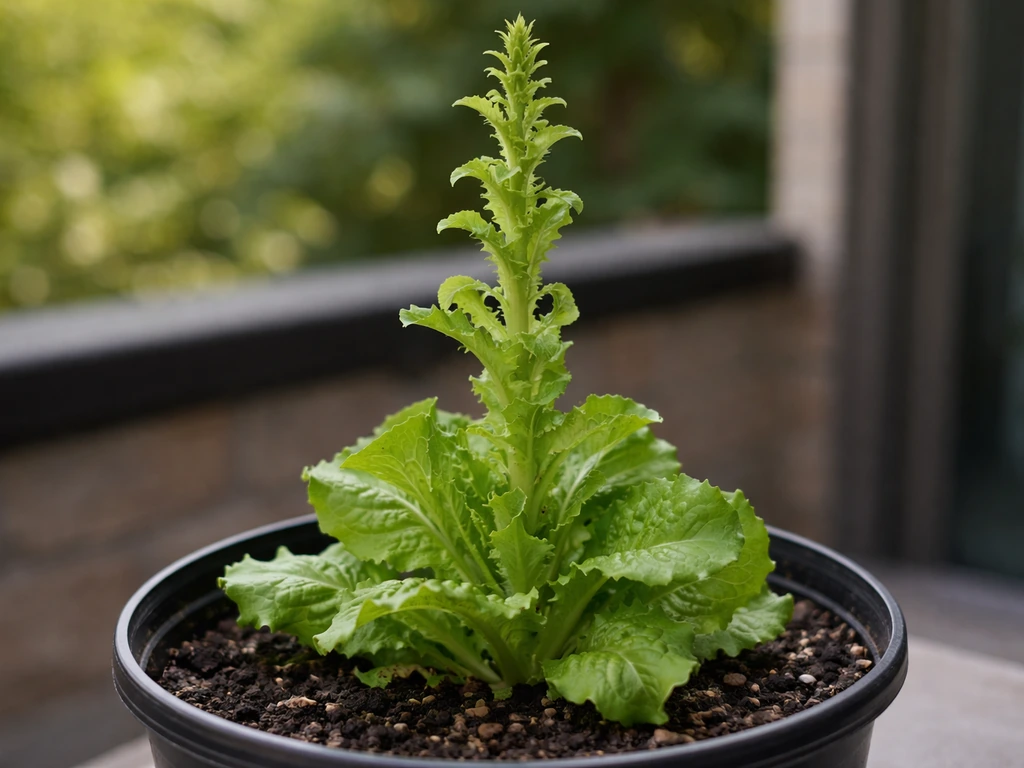
Bolting (the plant suddenly goes tall and stops producing leaves)
If your lettuce is shooting up a tall center stalk with small, increasingly bitter leaves, it's bolting. This is triggered by heat and long days, not by anything you necessarily did wrong. Once a plant bolts, it won't recover, so harvest whatever leaves look reasonable and then pull it. Going forward, switch to a bolt-resistant variety like 'Red Sails' or 'Jericho' romaine, move the pot to a cooler and shadier spot, or wait for fall temperatures to plant again. Choosing heat-tolerant varieties from the start is the most reliable prevention strategy.
Bitter leaves
Bitterness is almost always caused by heat or water stress. If the leaves taste unpleasantly bitter, check whether the plant has been sitting in temperatures above 75°F or whether the soil has been drying out completely between waterings. Both conditions trigger the same bitterness response. Harvest in the morning when leaves are coolest and freshest, keep the soil evenly moist, and consider moving the pot to a shadier spot. Butterhead varieties are especially sensitive to bitterness from heat, so if you're in a warm climate or season, lean toward loose-leaf types instead.
Slow or leggy growth
If seedlings look spindly and stretched, they need more light. Thin indoor plants and move pots closer to a brighter window or add a grow light. If the plant looks healthy but just isn't sizing up fast, check whether you're fertilizing. Container-grown lettuce uses up available nutrients faster than in-ground plants. A diluted balanced liquid fertilizer (like a 10-10-10 formula) applied every two to three weeks will make a real difference. Don't over-fertilize with nitrogen though, as it can encourage lush but tasteless growth.
Pests
Aphids and slugs are the two most common container lettuce pests. Aphids cluster on the undersides of leaves and can be knocked off with a strong spray of water or treated with insecticidal soap. Slugs tend to attack at night and leave ragged holes in leaves. If slugs are the issue, check the base of the pot and the drainage holes at night with a flashlight. Elevating the pot on pot feet helps, and copper tape around the rim can deter them. Fungus gnats are common in containers with consistently wet soil. If you see tiny flies around your pot, let the top inch of soil dry out more completely between waterings.
Root-bound or waterlogged plants
If you see roots poking out of the drainage holes and growth has stalled, the plant is root-bound. In a container, this usually means it's time to either harvest the whole plant or transplant it to a larger pot. Waterlogging (soggy soil that never seems to dry out) usually points to either a blocked drainage hole or a mix that's too dense. If the soil smells sour or the lower leaves are yellowing and falling off, check the drainage holes first, then consider repotting into fresh mix with more perlite added.
Your right-now starter plan
It's mid-June 2026. Depending on where you are, temperatures may already be warming up. Here's a practical plan you can start today.
- Choose your variety: If temperatures in your area are already hitting the mid-70s°F or above, go with 'Red Sails' or 'Salad Bowl' for their heat tolerance. If you have a cool indoor spot or can put the pot in afternoon shade, 'Buttercrunch' or 'Black-Seeded Simpson' are excellent choices.
- Get the right container: A 12-inch wide, 6-inch deep pot (at least 2 gallons) is the minimum for 3 to 4 leaf lettuce plants. Bigger is always better for moisture retention.
- Fill it with potting mix: Use a standard lightweight potting mix. Add perlite if you have it (about a quarter of the total volume). Make sure drainage holes are clear.
- Sow seeds: Sprinkle seeds thinly across the surface, cover with about 1/8 inch of mix, and press gently. Water lightly. Keep the soil moist until germination, which takes 7 to 14 days.
- Place it in the right spot: Morning sun and afternoon shade for outdoor pots in warm weather. Under a grow light (14 to 16 hours) or a bright windowsill for indoor growing.
- Start harvesting at 4 to 6 inches: Begin cutting outer leaves once plants are 4 to 6 inches tall using the cut-and-come-again method. You should hit this point in about 3 to 4 weeks.
- Sow a second pot in 10 to 14 days: Starting a second container shortly after the first one means you'll have a continuous supply rather than a gap between harvests.
- Plan your fall crop: For an autumn harvest, count back three months from your first expected frost date and mark that date to start your next sowing. Fall-grown lettuce is often the best-tasting of the year.
Container lettuce is genuinely one of the most rewarding things you can grow. The turnaround is fast, the requirements are minimal, and the difference between store-bought and freshly cut homegrown leaves is remarkable. If you find yourself wanting to expand beyond pots, the same principles translate well to raised beds, and if you're curious about maximizing yields in a small space, exploring hydroponic setups for lettuce is a natural next step. To learn the specific steps and timing for your setup, see this guide on how to grow lettuce in raised beds. But for right now, a pot, a bag of potting mix, and a packet of 'Black-Seeded Simpson' seeds is genuinely all you need to get started.
FAQ
Is it better to grow one lettuce plant per pot or multiple plants in the same container?
It depends on the type. For cut-and-come-again leaf lettuce, you can pack several plants in one pot (about 4 inches apart) and harvest outer leaves continuously. For butterhead or romaine heads, give each plant more space (roughly 6 to 8 inches apart, at least 2 gallons per plant) because they need room to form a denser root and head.
Can I start lettuce from store-bought heads or scraps instead of seeds?
Sometimes, but it is unreliable for most container systems. Lettuce heads are often cut so the core may not regrow well, and regrowth is usually uneven compared with seed-started plants. If your goal is dependable harvest timing, seeds are the best route, especially for matching your local temperature window.
What pot material is safest for heat control in summer?
Light-colored plastic or fabric grow bags usually perform better than dark, heat-absorbing containers. Dark ceramic or metal can overheat the root zone during sunny afternoons, which speeds bolting and can cause bitterness even if you water correctly. If using a darker pot, place it where it gets morning sun only, or use a light-colored saucer or insulation wrap to reduce heat buildup.
Do I need to fertilize lettuce in a pot, or can I rely on potting mix alone?
Potting mix usually supports only the first part of the cycle because container watering leaches nutrients. A practical approach is to start with a balanced diluted liquid fertilizer once plants are established, then repeat every 2 to 3 weeks. Avoid heavy nitrogen, because it can produce soft, fast growth that tastes blander and is more prone to disease.
How do I keep lettuce from bolting when the weather warms suddenly?
Act fast and adjust more than one variable. Move the pot to afternoon shade immediately, water thoroughly to avoid stress, and consider switching future sowings to bolt-resistant varieties. Also, harvest earlier when the plant is still tender, rather than waiting for full-size outer leaves, since once the center stalk starts, quality declines quickly.
Why is my lettuce bitter even though I’m watering regularly?
Bitter leaves can still happen if the pot gets too hot between waterings, even when watering seems frequent. Check the soil temperature, not just the soil moisture. Afternoon sun on the pot can raise root temperatures, so add shade, rotate the pot, or insulate the sides, and harvest in the morning when leaves are coolest.
Is it normal for lettuce to look pale or thin even if I keep it watered?
Often it signals low light rather than lack of water. If seedlings are stretched or spaced out, move the pot closer to a brighter window, increase outdoor sun exposure gradually, or run a grow light longer. Lettuce typically needs steady light (around 6 hours of direct or strong light minimum) to grow compactly.
How often should I harvest leaf lettuce, and can I harvest too much at once?
Harvest regularly once outer leaves are usable (generally when plants reach about 4 to 6 inches tall). Use cut-and-come-again by removing outer leaves, leaving the center intact. Avoid stripping most of the plant in one session, because removing too much leaf area at once can slow regrowth and increase stress during warm spells.
What should I do if pests keep returning in the same container spot?
Don’t only treat the leaves. Improve the container environment by checking undersides of leaves weekly for aphids, removing damaged leaves promptly, and ensuring the pot drains well. For slugs, use a nighttime check and consider barriers like copper tape around the rim, since slugs often return from nearby mulch or ground cover.
My pot stays wet and the plants are declining, what’s the first thing to check?
Check that drainage holes are open and the potting mix is light enough to drain. Waterlogging usually comes from blocked holes or a dense mix that holds too much water. If the soil smells sour, lower leaves yellow and drop, or growth stalls, repot into fresh potting mix with added perlite and discard any waterlogged mix.
How do I know when to resize the pot because my lettuce is root-bound?
Look for roots circling heavily at the bottom, roots poking out of drainage holes, and stalled growth despite adequate light and watering. When that happens, you can either harvest and start a new sowing, or transplant into a larger pot with fresh mix, since lettuce benefits from quick, renewed growth rather than long struggling periods.
Can lettuce be grown in a self-watering container, and will it increase disease risk?
Self-watering containers can work very well for lettuce because consistent moisture reduces stress and bitterness. The key is balancing moisture with airflow, so avoid leaving the reservoir too high for long periods. Ensure the wick and mix provide oxygen to roots, and if you notice fungus gnats, allow the top inch of soil to dry a bit between refills when practical.