Butterhead lettuce is the best overall choice for hydroponics, especially for beginners. Varieties like 'Buttercrunch' and 'Bibb' grow fast, stay compact, tolerate indoor light conditions better than most, and produce tender, mild-flavored leaves that are genuinely satisfying to eat. If you're growing in a pot, choose compact loose-leaf types like Buttercrunch or Bibb so you get tender leaves with less hassle. Loose-leaf varieties like 'Black Seeded Simpson' and 'Red Sails' are an equally strong pick if you want the fastest possible harvest and a cut-and-come-again setup. Romaine works well too, though it takes a bit longer. Crisphead (iceberg-type) is the one to skip in most home hydroponic systems, it's slow, finicky, and rarely worth the effort indoors.
Best Lettuce to Grow Hydroponically: Top Varieties
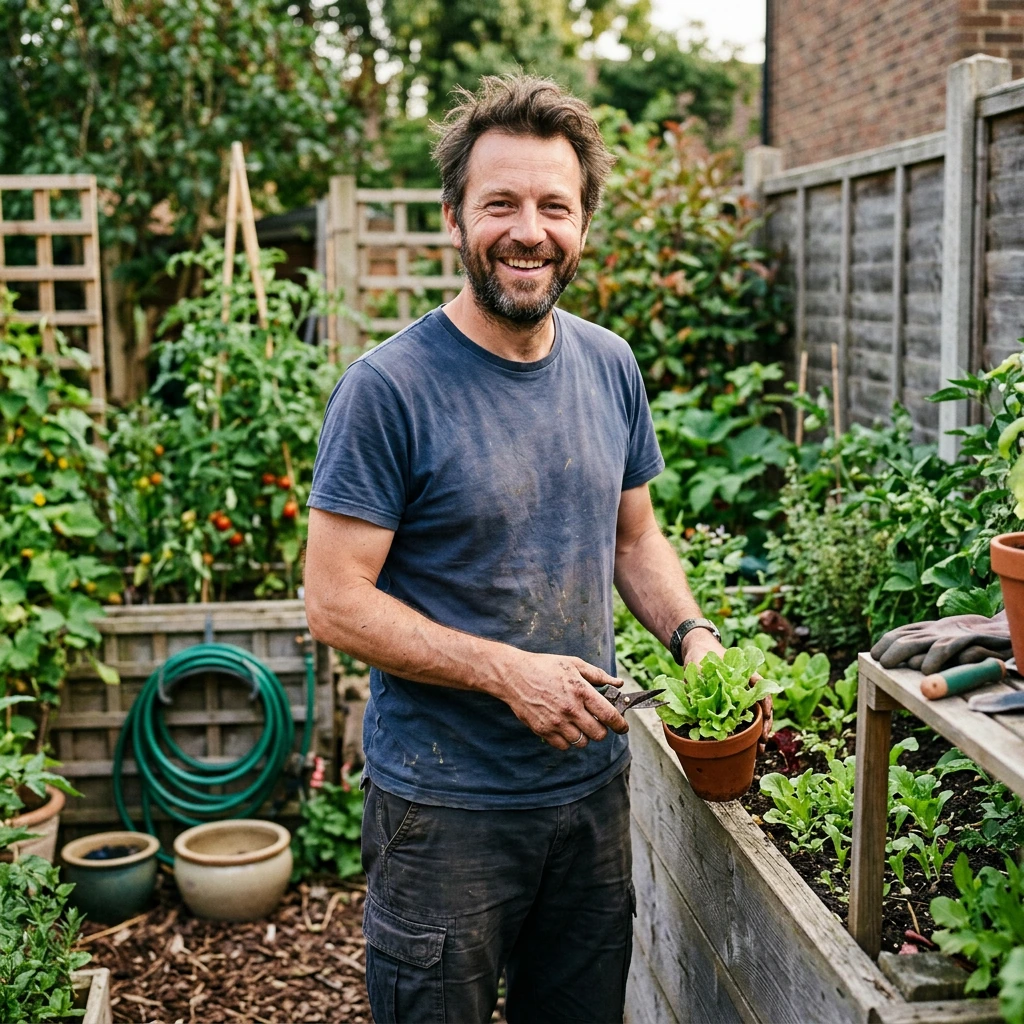
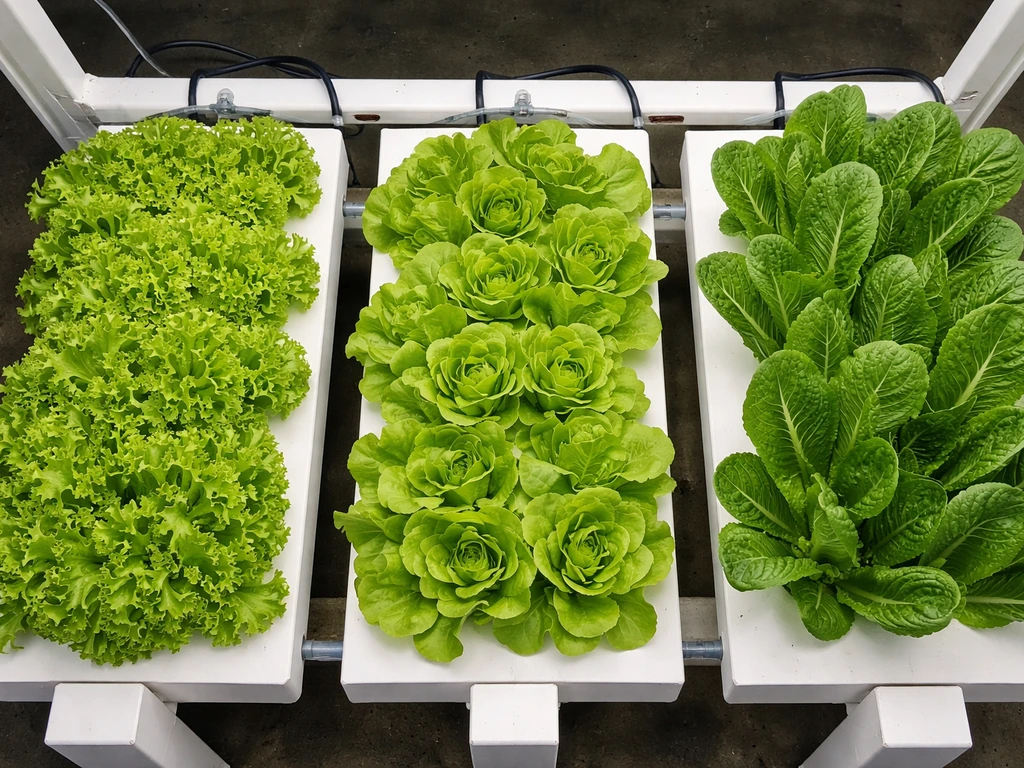
Top lettuce varieties for hydroponics
Not all lettuce behaves the same in a hydroponic system. The type you choose directly affects how fast you harvest, how the plant handles warmth and light fluctuations, and how much space you need. Here's how the four main categories stack up.
Leaf lettuce: fastest and most forgiving
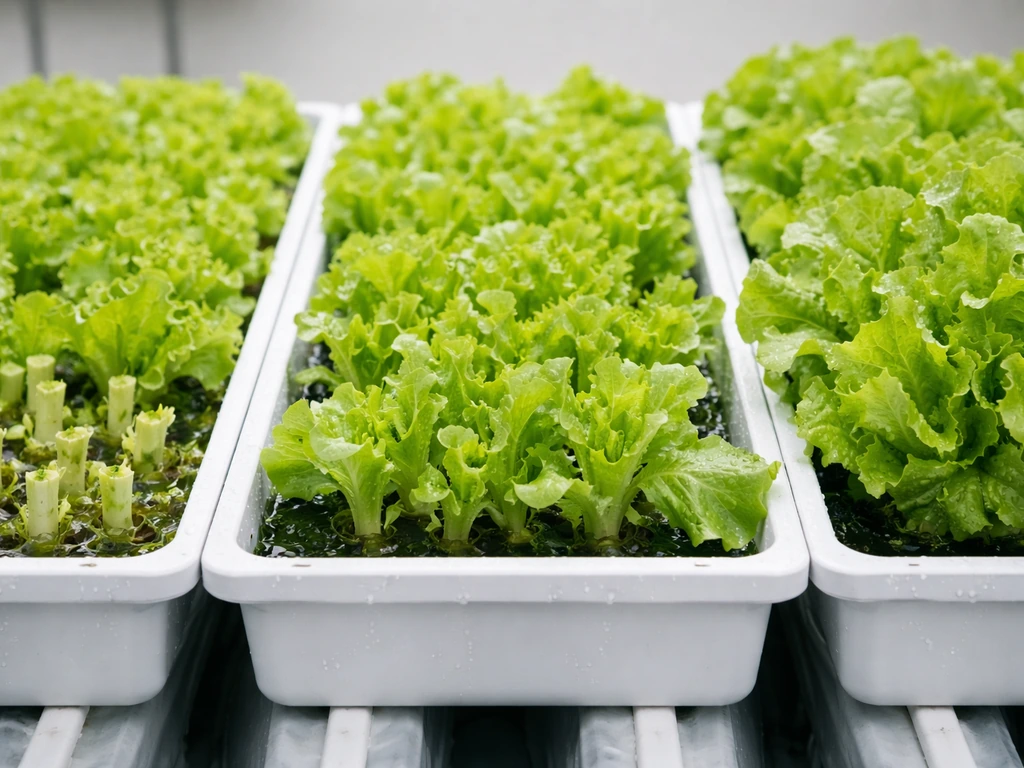
Loose-leaf types are the workhorses of hydroponic growing. They're fast, they bounce back after cutting, and they don't need as much root space or spacing as heading types. Top performers include 'Black Seeded Simpson' (green, mild, incredibly quick), 'Red Sails' (reddish color, slightly more heat-tolerant), 'Oak Leaf' (delicate lobed leaves, good flavor), and 'Salad Bowl' (frilly leaves, highly productive). You can start harvesting outer leaves in as little as 28 to 35 days from transplant. If your main goal is a steady stream of salad greens rather than full heads, leaf lettuce in a hydroponic system is the most reliable path.
Butterhead: the best all-around hydroponic lettuce
Butterhead varieties form a loose, soft head with a buttery texture and mild, sweet flavor that many people prefer over crispier types. For greenhouse setups, the best lettuce to grow is typically butterhead because it handles fluctuating conditions well and stays reliably tender best lettuce to grow in greenhouse. 'Buttercrunch' and 'Bibb' are the classic choices and they perform exceptionally well in deep water culture (DWC), NFT, and Kratky setups alike. They mature in roughly 52 to 60 days in a well-managed system, though you can harvest outer leaves earlier. Butterhead types are also more forgiving of minor temperature fluctuations than crisphead and less prone to bolting than romaine when conditions drift slightly warmer. If you're growing indoors year-round and want reliable, good-tasting results, butterhead is the variety type I'd tell anyone to start with.
Romaine: great flavor, slightly more space and time
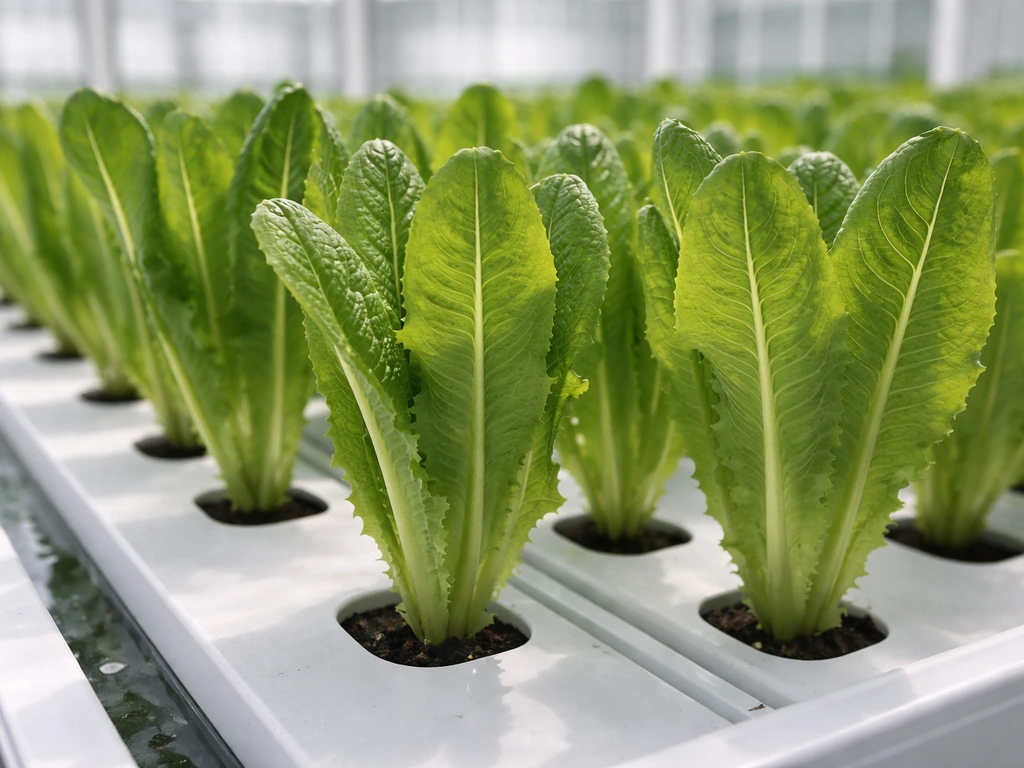
Romaine (cos) lettuce grows upright with crisp, elongated leaves and a more pronounced flavor than butterhead. Varieties like 'Parris Island Cos', 'Little Gem', and 'Jericho' do well hydroponically, with 'Little Gem' being a smart choice for smaller systems because of its compact size. Expect 50 to 70 days to a full head. The upside is excellent flavor and a satisfying crunch. The downside is that romaine is more sensitive to heat than butterhead, if your growing space warms up above 75°F consistently, you'll start to see bolting and bitterness before the head fully develops. 'Jericho' is bred for better heat tolerance if that's a concern.
Crisphead: skip it unless you have a controlled setup
Crisphead (iceberg-type) lettuce takes 42 to 70 days under ideal conditions, but those conditions are demanding. It needs cooler temperatures, high light levels, and precise nutrition to form a proper tight head. In outdoor or seasonal growing, it can stretch to 130 days in fall and winter. Indoors in a home setup, the returns rarely justify the investment of space and time. Butterhead gives you a similar eating experience (soft, mild, satisfying) without the frustration. If you are growing in soil, use the same cool-season mindset but follow a raised-bed workflow for spacing, moisture, and compost so you can still get tender heads and steady cut-and-come-again harvests how to grow lettuce in raised beds. I'd only bother with crisphead if you have a dedicated, temperature-controlled grow room and a specific reason to chase it.
Best choice by goal
| Your Goal | Best Type | Top Variety Picks | Why It Works |
|---|---|---|---|
| Fastest harvest | Leaf lettuce | Black Seeded Simpson, Red Sails | Outer leaves ready in 28–35 days; cut-and-come-again extends harvest |
| Most reliable/beginner-friendly | Butterhead | Buttercrunch, Bibb | Forgiving of light and temp variation; quick full heads in ~52–60 days |
| Best flavor | Butterhead or Romaine | Little Gem, Jericho, Buttercrunch | Sweet and mild (butterhead) or crisp and savory (romaine) |
| Heat tolerance | Leaf or Romaine (heat-tolerant cvs.) | Red Sails, Jericho, Slobolt | Slower to bolt at higher temps; better for warmer grow spaces |
| Sweetest leaves | Butterhead | Bibb, Tom Thumb | Soft texture and mild sweetness; less bitterness than romaine or crisphead |
System requirements for lettuce
Lettuce is one of the easiest crops to grow hydroponically, but it still has some non-negotiable targets you need to hit consistently. Get these right and you'll have healthy plants. Let them slip and problems show up fast.
pH and EC targets
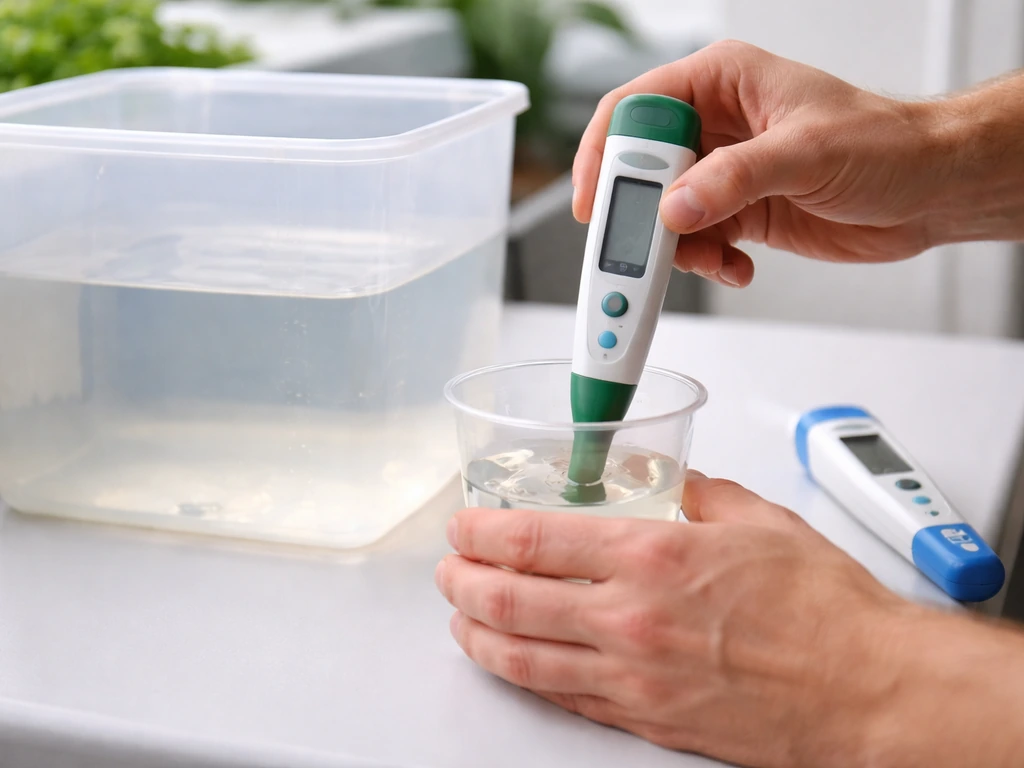
Keep your nutrient solution pH between 6.0 and 7.0, with 6.0 to 6.5 being the sweet spot where nutrient uptake is most efficient for lettuce. If pH drifts above 7.0, you'll start seeing nutrient lockout, the plants can't absorb what's in the water even if your nutrient levels are correct. For electrical conductivity (EC), target 1.2 to 1.8. Most experienced growers land around 1. Purdue Extension’s HO-309-W discusses optimal hydroponic lettuce nutrient solution concentration and reports that growers use an EC level of about 1.3 (using the EC units as defined in the publication) blank" rel="noopener noreferrer">Most experienced growers land around 1.. 3 as a reliable working number for full-cycle lettuce production. OSU Extension also provides an EC target range for hydroponic lettuce of about 1.2 to 1.8, alongside a pH range of about 6.0 to 7.0 1.3 as a reliable working number for full-cycle lettuce production. Seedlings and young transplants prefer the lower end of that range (around 1.0 to 1.2) because high EC can stress tender roots. As plants size up, you can nudge toward 1.5 to 1.8. Check pH and EC every day when you're starting out, and at minimum every 2 to 3 days once you're comfortable with how your system behaves.
Nutrient solution and water temperature
A balanced lettuce nutrient formula (available as premixed hydroponic nutrients like MaxiGro, General Hydroponics Flora series, or similar) is all you need. Lettuce is not a heavy feeder. Mix at the lower end of package recommendations, then dial in by EC reading rather than by volume. Keep your reservoir water temperature between 65°F and 72°F (18–22°C). Warmer water holds less dissolved oxygen, encourages root rot pathogens, and stresses plants. This is one of the most overlooked variables in home setups.
Dissolved oxygen: don't skip this
Lettuce roots need oxygen. In DWC and Kratky systems, roots that sit in stagnant, low-oxygen water will rot and the plant will crash. Research from Cornell's controlled environment agriculture program identifies dissolved oxygen levels below 3 ppm as a crop failure threshold. Aim for 6 to 8 ppm or higher. In practice, this means running an air pump with air stones in DWC systems, ensuring your reservoir isn't sealed off from air exchange in Kratky setups, and keeping water temps cool (warm water depresses oxygen levels). If your plants look wilted even though the reservoir is full, check water temp and aeration before anything else.
Light and temperature targets for success
Light intensity and photoperiod
Lettuce needs moderate light, not as much as tomatoes or peppers, which makes it well-suited to indoor LED setups. Target a PPFD (photosynthetic photon flux density) of 150 to 250 micromoles per square meter per second at canopy level for most growth stages. A daily light integral (DLI) of 14 to 16 mol/m²/day is a solid target for consistent growth. Run lights for 14 to 16 hours per day. Lettuce is a long-day plant, which means extended light periods encourage flowering (bolting) rather than leaf growth, so don't assume more light hours are always better. Stick to 16 hours maximum. Budget LED grow lights work fine for lettuce because of its modest light requirements, which is one reason it's such a popular crop for indoor systems. If you're growing near a bright south-facing window, you may get enough natural light in spring and summer, but supplemental lighting almost always improves consistency.
Temperature: keep it cool
Lettuce is a cool-season crop and performs best with daytime temperatures between 65°F and 72°F (18–22°C) and nighttime temperatures a few degrees cooler, around 60°F to 65°F (15–18°C). The cooler nights are important, they slow respiration and contribute to sweeter, more flavorful leaves. Above 75°F to 80°F consistently, you'll see bolting and bitterness accelerate. This is especially relevant if your grow space heats up in summer or if your lights run hot. Seasonal adjustments matter: in warmer months, shift to heat-tolerant varieties like 'Jericho' or 'Red Sails', run lights during cooler parts of the day, and keep the grow area ventilated. In winter, if your space drops below 55°F regularly, growth will slow dramatically.
Planting, spacing, and harvest strategy
Starting seeds and transplanting
Start lettuce seeds in rockwool cubes, rapid rooter plugs, or oasis cubes. Keep them moist and at around 70°F for germination, which usually happens in 2 to 5 days. Once seedlings have their first true leaves (usually 10 to 14 days after germination), they're ready to move into your hydroponic system. At this stage, lower your EC to around 1.0 to ease them into the nutrient solution. Transplanting in small net pots (2-inch cups work well for leaf lettuce; 3-inch for butterhead and romaine) filled with clay pebbles or hydroton is the standard approach.
Spacing by variety type
Spacing matters more in hydroponics than people expect, because crowded plants shade each other, restrict airflow, and compete for nutrients. If you are growing in raised beds instead, spacing and variety choice change a bit because soil depth and airflow matter more. For leaf lettuce grown for continuous harvest, 6 to 8 inches between plants is workable. Butterhead and romaine need a bit more room, 8 to 10 inches between plants is a solid target. If you're growing full heads (especially romaine), give them 10 to 12 inches to develop properly. Tighter spacing works for baby leaf harvests; looser spacing is needed if you want a full head. USU Extension notes that spacing for heading crops varies with the size of the plant at harvest, which is just a reminder that different cultivars and harvest goals require different spacing rather than a one-size-fits-all number.
Sow-to-harvest timelines
| Lettuce Type | Days to First Leaf Harvest | Days to Full Head | Cut-and-Come-Again? |
|---|---|---|---|
| Leaf lettuce | 28–35 days from transplant | N/A (no head) | Yes — highly productive |
| Butterhead | 30–40 days (outer leaves) | 52–65 days | Partial — works until head forms |
| Romaine | 35–45 days (outer leaves) | 55–70 days | Partial — works on compact types |
| Crisphead | Not recommended early | 65–90+ days | No — needs to head fully |
Harvest methods and succession planting
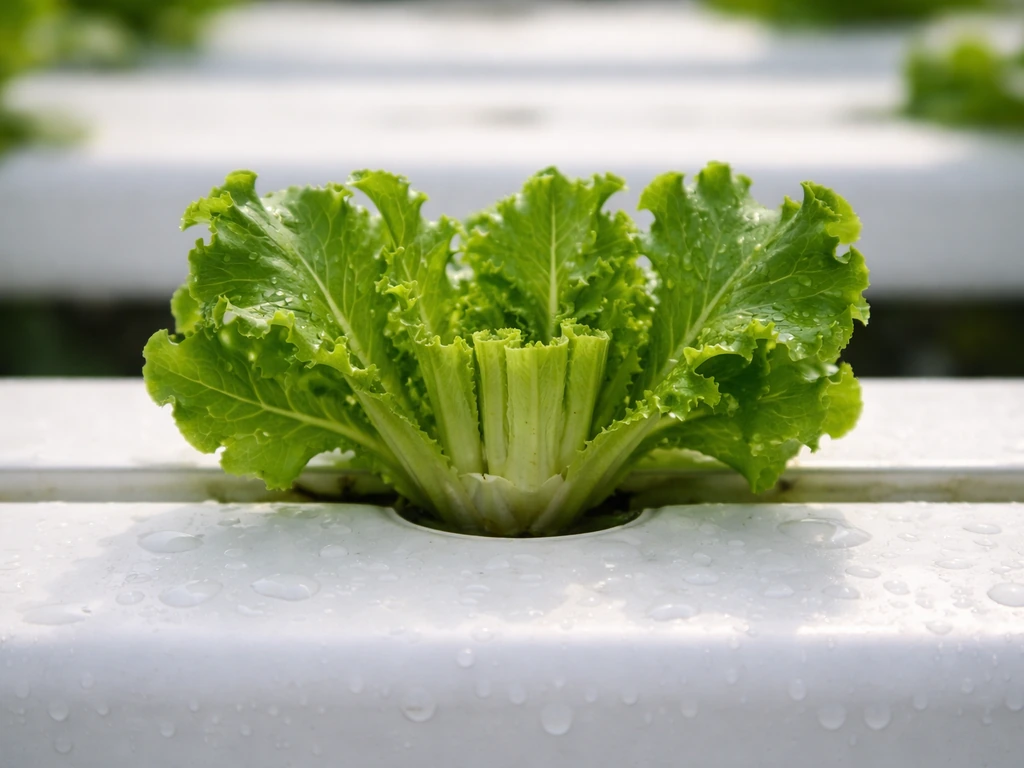
For leaf lettuce, use the cut-and-come-again method: trim outer leaves to within an inch or two of the base and leave the growing center intact. The plant regrows and you can harvest again in 7 to 14 days depending on growth rate. You'll usually get 3 to 5 cycles before the plant starts to bolt or decline. For butterhead and romaine grown to full head size, cut the whole head at the base just above the root zone. Some growers leave the root and bottom leaves in place hoping for regrowth, but in my experience you get cleaner, faster results by pulling the plant and starting a new one. The best approach for a steady supply is succession planting: start a new batch of seeds every 2 to 3 weeks so you always have plants at different stages. This keeps harvests coming continuously rather than getting everything at once and then waiting.
Troubleshooting common hydroponic lettuce problems
Bolting (plants going to seed too early)
Bolting is when the plant shifts from leaf production to flowering, producing a tall central stalk and increasingly bitter leaves. In hydroponics, the two main triggers are heat and extended light exposure. If your grow space consistently exceeds 75°F to 80°F, or if you're running lights for more than 16 to 18 hours, bolting risk climbs quickly. University of Minnesota research notes that bitterness and bolting are both driven by high temperatures and long days. If you're seeing plants bolt before you've had a chance to harvest, switch to heat-tolerant varieties like 'Jericho' or 'Slobolt', shorten your light period to 14 to 16 hours, and improve ventilation in your grow space. Harvesting frequently (especially with leaf types) also slows bolting by keeping the plant in a vegetative mode.
Tip burn (brown leaf edges)
Tip burn shows up as brown, dead tissue along the edges of inner leaves, especially on young, rapidly developing tissue. It's caused by a localized calcium deficiency in those fast-growing cells, not necessarily because your nutrient solution lacks calcium, but because water and calcium aren't moving fast enough to the leaf margins to keep up with rapid growth. UC IPM and USU Extension both emphasize that tip burn is linked to water stress and low evapotranspiration rather than a calcium shortage in the medium. In practice, this means increasing airflow directly around and through the plant canopy so leaves are transpiring actively. A small fan directed at your plants makes a real difference. Avoid letting your reservoir fluctuate dramatically between refills, as irregular moisture conditions worsen tip burn. Some varieties (especially inner-leaf types) are genetically more resistant, 'Buttercrunch' is notably more tip burn-resistant than many others, which is another reason I recommend it for beginners.
Root problems (rot, slime, brown roots)
Healthy hydroponic lettuce roots should be white or light tan and slightly fuzzy. If you're seeing brown, slimy, or mushy roots, you likely have root rot, most commonly caused by Pythium, a water mold that thrives in warm, low-oxygen water. The fix is straightforward in theory: drop your water temperature below 72°F, increase aeration with a stronger air pump or additional air stones, and ensure your reservoir isn't getting any light exposure (algae growth depletes oxygen and feeds pathogens). If the rot is advanced, you can try beneficial bacteria products like Hydroguard (Bacillus amyloliquefaciens), but honestly it's often faster to clean the system, start fresh water, and replant. Prevention is far easier than treatment.
Yellowing leaves and nutrient issues
Yellowing older (lower) leaves usually points to nitrogen deficiency, your EC is probably too low or your plants have consumed the available nutrients and you're overdue for a reservoir refresh. Top off with fresh nutrient solution rather than plain water when levels drop, since plain water dilutes EC over time. If new growth is yellowing while older leaves stay green, suspect iron or manganese deficiency linked to pH being too high, check and correct pH first before adding more nutrients. As a rule, change your reservoir completely every 7 to 14 days to prevent nutrient imbalances from building up.
Pests and disease in indoor systems
Indoor hydroponic lettuce is generally less pest-prone than outdoor growing, but it's not immune. Fungus gnats are the most common nuisance, their larvae live in moist growing media and can damage roots. Keep your hydroton or growing medium surface as dry as possible between top-watering cycles, and use yellow sticky traps to monitor adults. Aphids can appear if plants are near open windows or other infested plants. Inspect the undersides of leaves regularly and remove them with a strong water spray or diluted neem oil solution. Powdery mildew can show up in humid, low-airflow environments, the fix is better ventilation and wider plant spacing. If you're also growing lettuce indoors in containers or other settings, many of these same pest pressures apply, though hydroponic systems skip soil-borne issues entirely.
A quick-start checklist to get growing
- Choose your variety: Buttercrunch (butterhead) for reliability and flavor, Black Seeded Simpson (leaf) for fastest harvest, Little Gem or Jericho (romaine) for crunch and flavor, or Red Sails if your grow space runs warm.
- Set up your system: DWC, NFT, or Kratky all work well for lettuce. Make sure you have an air pump and air stones for DWC/Kratky.
- Mix your nutrient solution to an EC of 1.0 to 1.2 for seedlings, targeting 1.3 to 1.5 for established plants. Set pH to 6.0 to 6.5.
- Set lights to run 14 to 16 hours per day at a PPFD of 150 to 250 at canopy level.
- Keep grow space between 65°F and 72°F during the day, slightly cooler at night.
- Transplant seedlings at 10 to 14 days old. Space leaf types 6 to 8 inches apart, butterhead and romaine 8 to 12 inches apart.
- Run a fan to improve airflow and reduce tip burn risk.
- Check pH and EC every 2 to 3 days. Top off with nutrient solution (not plain water). Do a full reservoir change every 7 to 14 days.
- Start a new batch of seeds every 2 to 3 weeks for continuous harvests.
- Harvest leaf lettuce with the cut-and-come-again method from 30+ days; cut full butterhead or romaine heads at 55 to 70 days.
FAQ
What is the best lettuce to grow hydroponically if I want baby leaves instead of full heads?
Choose a loose-leaf variety like Black Seeded Simpson or Red Sails (for speed) and harvest earlier than you think, trimming only a small outer portion. Baby-leaf harvests benefit from tighter spacing (closer than full-head targets) because you will not let plants reach the mature, crowd-sensitive stage.
Which hydroponic lettuce variety is most resistant to bolting in hot rooms?
If your grow area sometimes stays above 75°F, prioritize Jericho or Slobolt-style genetics over butterhead or most standard romaine. Also keep the photoperiod at 14 to 16 hours, since long days can trigger flowering even when temperatures are only mildly warm.
Is iceberg (crisphead) ever worth growing in a home hydroponic setup?
It can be worth it only if you can reliably control water temperature, light intensity, and airflow (and you are aiming for true tight heads). If you are mostly hoping for an easy, forgiving crop, butterhead will usually outperform iceberg in both success rate and taste consistency.
Can I mix multiple lettuce types in the same hydroponic system?
Yes, but plan for staggered growth. Loose-leaf types often mature and need to be harvested earlier than butterhead or romaine, so mixing can create crowding issues unless you separate plants by size or do frequent thinning.
Do I need to start with lower EC for every lettuce variety, or just seedlings?
Lower EC is most important for seedlings and early transplants, but variety still matters. Butterhead and compact leaf types usually handle a gradual ramp better, while fast-growing loose-leaf plants can show stress if EC jumps too quickly during the first week.
How do I prevent bitter lettuce without changing every parameter at once?
Start by verifying temperature and light timing, since bitterness is commonly driven by heat and long photoperiods. Then check pH against 6.0 to 6.5, because when pH drifts high, nutrient uptake can become uneven, which can also worsen flavor.
What should I do if my lettuce keeps getting tip burn even though my nutrient solution looks fine?
Increase airflow through the canopy and keep reservoir conditions stable, tip burn worsens when leaves transpire slowly or when water conditions swing between refills. Also consider switching to a more tolerant variety like Buttercrunch, and avoid harvesting so aggressively that the center grows too fast between cycles.
How often should I fully change the reservoir, and what if I am using Kratky?
For recirculating systems, a complete reservoir refresh every 7 to 14 days usually prevents nutrient drift. For Kratky, you cannot “top back” forever without changing concentrations, so monitor EC closely and plan to end the batch and replant rather than stretching the same reservoir too long.
If my lettuce roots are healthy, why does the plant still wilt?
Wilt with good-looking roots often points to water temperature being too warm, insufficient dissolved oxygen, or light stress. Recheck reservoir temperature and aeration first, then verify that your canopy PPFD is not excessive, since strong light plus warm water can outpace the plant’s ability to take up moisture.
What spacing should I use for continuous cut-and-come-again harvesting?
For leaf harvests, 6 to 8 inches between plants is a workable baseline, then adjust based on how quickly your plants fill in. If regrowth takes too long or the canopy becomes crowded, loosen spacing or shorten the time between trims to keep airflow high.