From seed to first harvest, indoor lettuce takes about 30 to 60 days depending on what you're growing and how well you control the environment. Baby greens and loose-leaf varieties are ready to cut in as little as 21 to 30 days. Full heads of butterhead or romaine take 50 to 70 days under good indoor conditions. If you're growing hydroponically with a reliable light schedule, you can shave a week or two off those numbers. Soil-based containers are slightly slower but totally workable for most home growers.
How Long Does It Take to Grow Lettuce Indoors
Marcus Holloway
17 Jun 2026
Typical indoor lettuce growth timeline
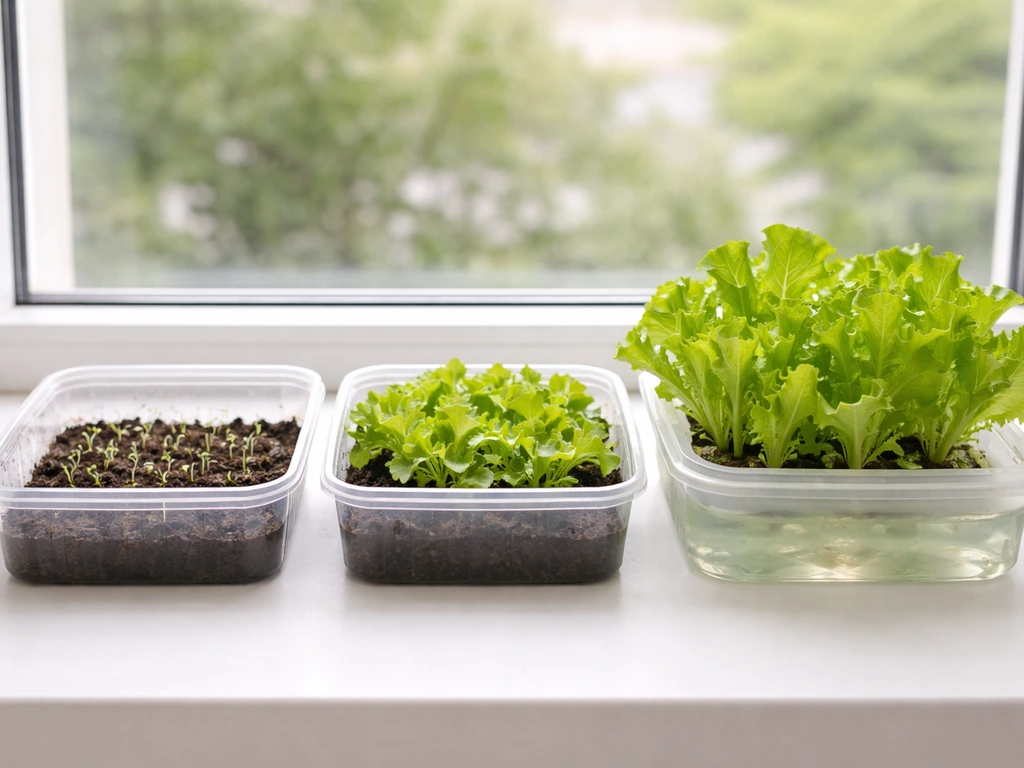
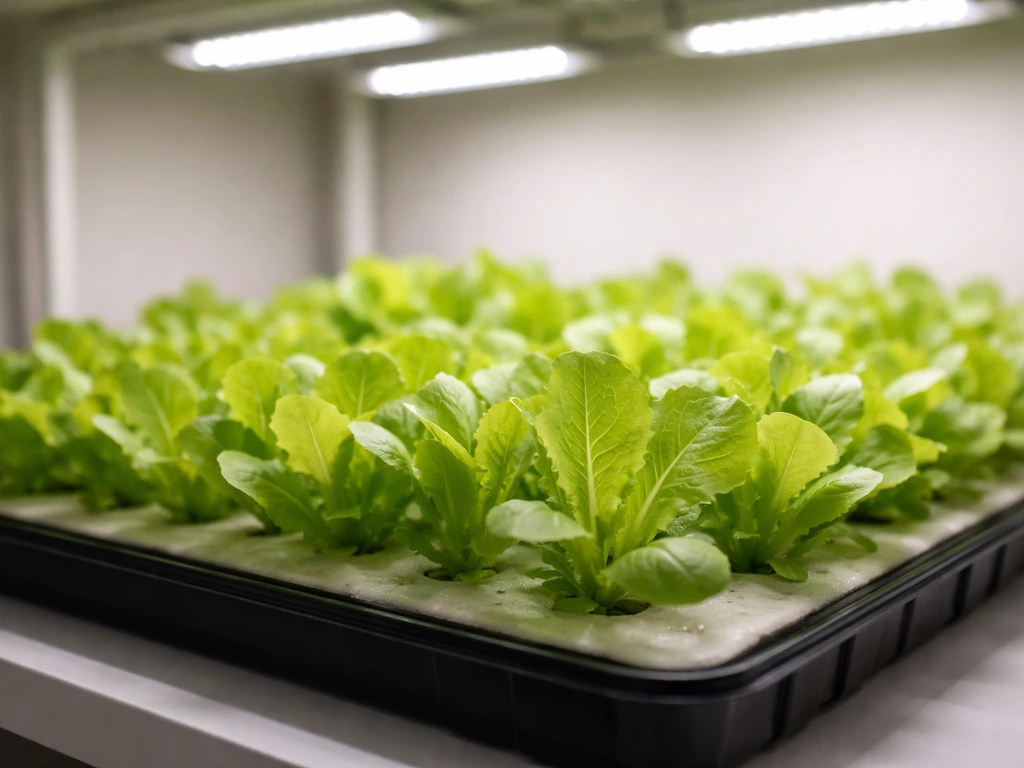
Let's break this down by stage so you know what to expect at each point. Lettuce germinates in 2 to 10 days depending on temperature. According to the WSU Extension vegetable guide, lettuce typically takes about 45, 60 days to maturity and 3, 10 days to germinate (range) 3–10 days to germinate (range). The sweet spot for germination is around 65 to 75°F. Once sprouts emerge, most loose-leaf types hit the harvestable baby-leaf stage around days 21 to 30. Full-sized leaf lettuce reaches maximum weight (roughly 6 to 12 oz) closer to 50 to 60 days. Butterhead and romaine heads take 52 to 70 days to fully form, and crisphead types can stretch to 70 to 80 days indoors. Hydroponics tends to run faster: looseleaf is often harvestable in 28 to 35 days and romaine heads around 55 to 65 days.
| Lettuce Type | Baby Leaf Harvest | Full Harvest (Soil/Container) | Full Harvest (Hydroponic) |
|---|---|---|---|
| Looseleaf / Salad Mix | 21–30 days | 45–60 days | 28–45 days |
| Butterhead | 28–35 days | 52–70 days | 45–60 days |
| Romaine / Cos | 30–35 days | 50–70 days | 55–65 days |
| Little Gem | 28–35 days | 50–60 days | 35–50 days |
| Crisphead / Iceberg | Not typical | 70–80 days | 60–75 days |
A note on transplants: if you start seeds in a tray and transplant seedlings after 14 to 21 days (when they hit the 2 to 3-leaf stage), your first harvest date is still counted from the original seed date. Transplanting doesn't reset the clock, but it does let you get a head start indoors before moving plants to their final container.
What actually changes how long it takes
Light: the biggest lever you have indoors
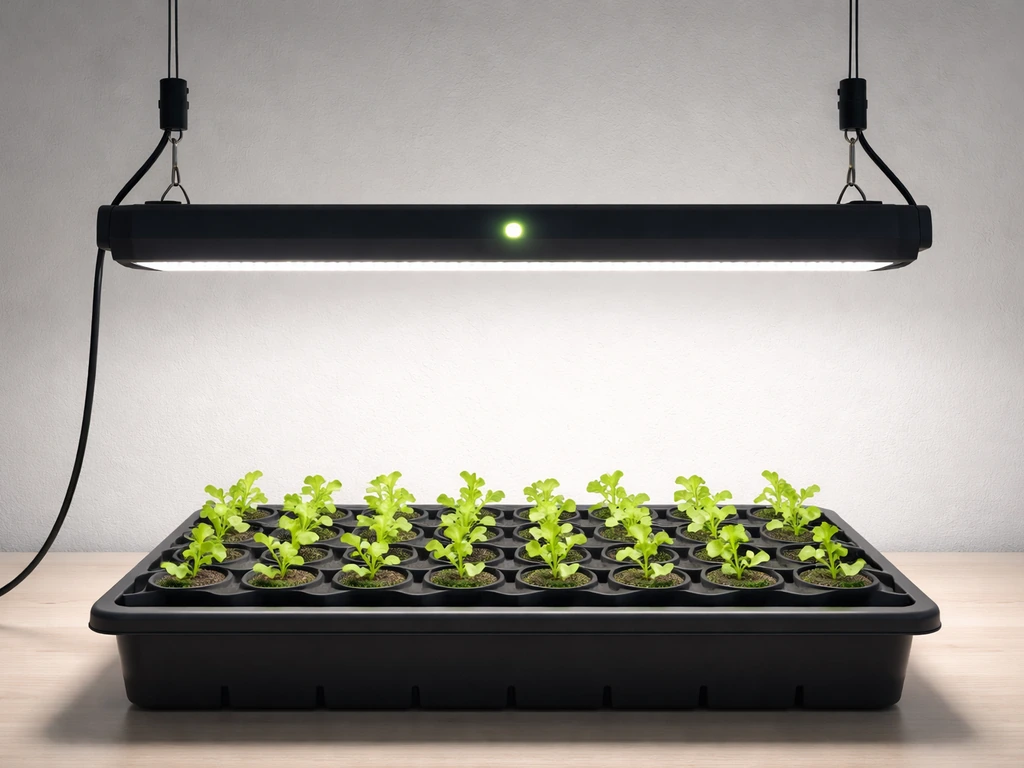
Light duration and intensity matter more than almost anything else for indoor lettuce. Seedlings under grow lights need 16 to 18 hours of light per day. Mature plants in hydroponic systems do well on 12 to 16 hours. If you drop below 10 hours, expect noticeably slower growth and pale, spindly plants. That said, more light is not always better: running lights for 20 to 24 hours can actually trigger early bolting rather than faster harvests, which defeats the whole purpose. Set a timer for 14 to 16 hours and leave it alone. Aim for a light intensity around 200 to 400 µmol/m²/s if you're measuring it, or just use a quality full-spectrum LED panel positioned 6 to 12 inches above the canopy.
Temperature: stay in the sweet spot
Lettuce is a cool-season crop. It grows best at 60 to 70°F during the day and can tolerate nights down to about 40°F. The University of Maryland Extension puts the optimum transplant day temperature at 60 to 65°F. If your growing space regularly hits 75°F or above, you'll start seeing stress and slower uptake. Once you cross 80°F, germination drops off sharply and established plants can start bolting, which cuts your harvest window short. Indoors, this is usually a summer problem near south-facing windows or under lights that generate too much heat. Keep a thermometer near the plants, not just in the room.
Variety selection
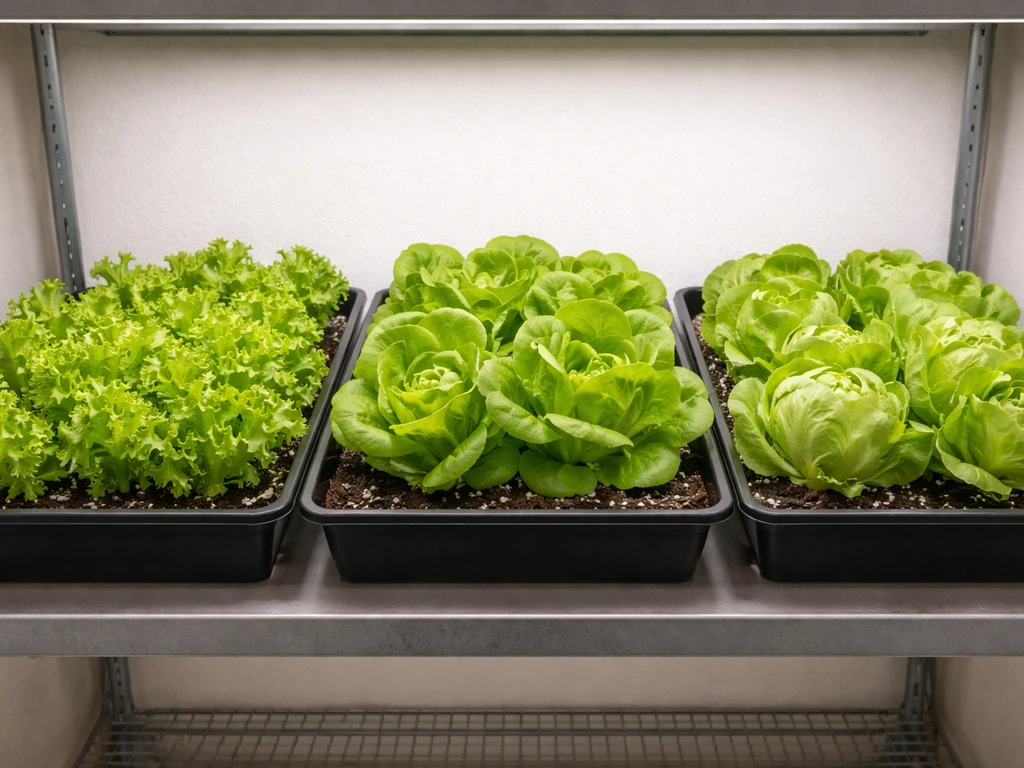
Looseleaf and butter lettuce varieties are your fastest and most forgiving choices for indoor growing. Crisphead types like iceberg are slower and more demanding, and honestly not worth the space in a small indoor setup unless you specifically want them. Romaine is a good middle ground. Little Gem is especially popular for indoor containers because it forms a compact head in 50 to 60 days and doesn't need much space. If you want the fastest possible harvest, choose a named looseleaf or salad mix variety. If you're growing hydroponically and want a tighter timeline, looseleaf types can be cut as early as 28 days.
Soil vs. containers vs. hydroponics
Hydroponic systems consistently beat soil-based containers on speed because the roots have constant access to water and dissolved nutrients with no digging required. In a simple deep water culture or Kratky setup, expect looseleaf lettuce to be ready 5 to 14 days faster than in a soil container. AeroGarden and similar countertop systems sit in the hydroponic category and generally match those faster timelines. Soil containers are still excellent for beginners because there's more buffer room for watering mistakes, but they're slower and require consistent moisture. If you keep the soil too dry even once during the first few weeks, expect the timeline to stretch.
Water and nutrient consistency
Lettuce has a shallow root system and stresses quickly if moisture fluctuates. Inconsistent watering is probably the most common reason indoor lettuce takes longer than it should. For hydroponic growers, keep your nutrient solution temperature between 60 and 72°F and maintain a pH of 5.8 to 6.2. An EC around 1.5 mS/cm works well for most varieties. For soil growers, water when the top inch feels dry and don't let the pot sit in standing water.
How to speed up your indoor lettuce
There are a handful of practical moves that reliably cut days off your harvest timeline. None of them require expensive equipment, just attention to the setup.
- Use a seedling heat mat during germination to hit 70 to 75°F and cut germination down to 2 to 3 days instead of 7 to 10.
- Switch to a hydroponic method like Kratky or DWC if you want the fastest possible timeline with minimal fuss.
- Set your grow light timer to 14 to 16 hours and keep the light within 8 to 12 inches of the canopy to maximize photosynthesis without burning.
- Thin seedlings early (when first true leaves appear) so plants aren't competing for light and nutrients. Start at 1 to 2 inches apart, then thin to final spacing once they're established.
- Keep room temperature consistently between 60 and 68°F. Warmer rooms slow nutrient uptake and push plants toward bolting.
- Add a small fan set to low to keep air moving across the canopy. This reduces tipburn, which can force an early unplanned harvest.
- If growing hydroponically, pre-germinate seeds in damp rockwool or a paper towel before placing in net cups. This can shave 3 to 5 days off early-stage timing.
Step-by-step planting approach for predictable harvests
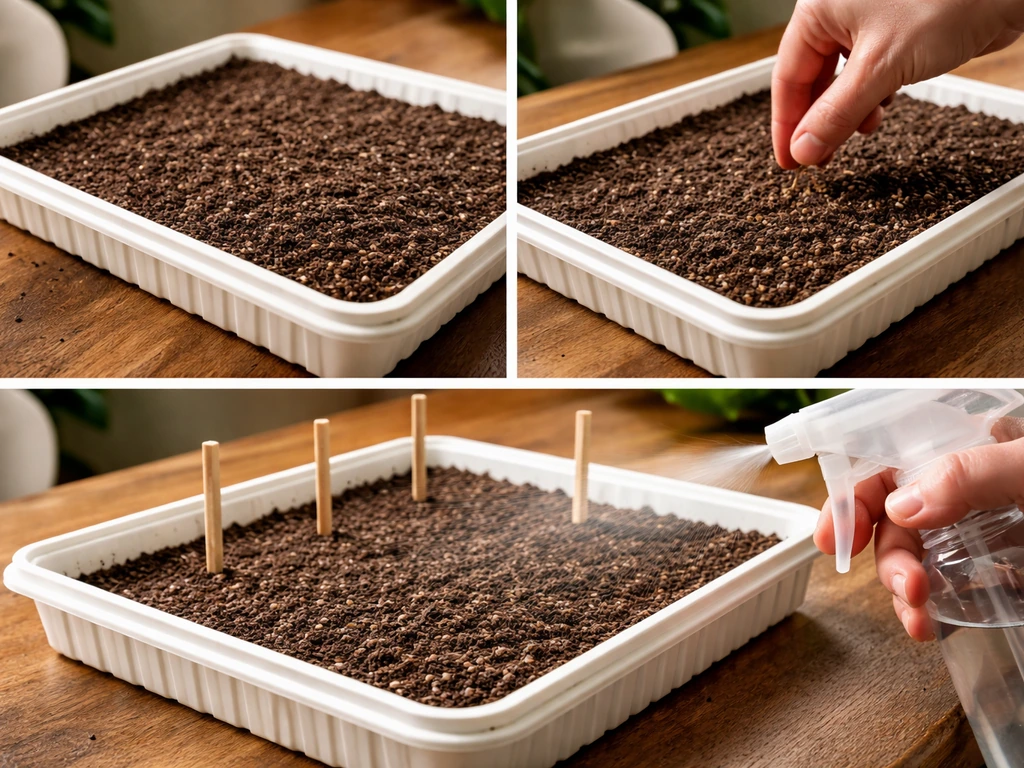
The most common reason indoor lettuce harvests feel unpredictable is a scattered start: seeds sown at different depths, inconsistent moisture during germination, no thinning plan. Here's a straightforward method that gives you a consistent result every time.
- Fill your container or seed tray with a light, well-draining growing medium. For soil, a mix of potting mix and perlite (around 3:1) works well. For hydroponics, use rockwool cubes or net cups with a hydroponic medium like clay pebbles.
- Sow seeds at 1/8 inch deep (about the thickness of a coin). Press lightly to ensure soil contact. Deeper planting slows emergence noticeably.
- Space seeds about 1 inch apart in rows or clusters. You'll thin later, so this is just a starting density, not final spacing.
- Water gently or mist the surface. Keep moisture consistent until germination, which should happen in 2 to 3 days at 70 to 75°F, or up to 10 days in cooler conditions.
- Once the first true leaves appear (around day 7 to 12), thin to 1 to 2 inches apart by snipping at soil level with scissors. Don't pull, as this disturbs neighboring roots.
- When plants are 2 to 3 inches tall, thin or transplant to final spacing: 4 to 6 inches apart for looseleaf varieties, 6 to 8 inches for butterhead, and 8 to 10 inches for romaine. Crisphead needs 12 to 15 inches but is rarely worth the indoor space.
- Start your second succession batch 10 to 14 days after your first sowing. This staggers your harvest so you always have something ready to cut.
One thing worth noting: if you're going the transplant route, seedlings are typically ready to move to their final container about 14 to 21 days after sowing, once they have 2 to 3 true leaves. Just factor those weeks into your overall timeline when planning your first harvest date.
When and how to harvest, and keeping it going
Baby greens: harvest early and often
For baby greens and salad mixes, you can start cutting once leaves reach 3 to 4 inches tall, which is typically 21 to 30 days from sowing. Use clean scissors and cut about an inch above the growing point, leaving the base and center intact. The plant will regrow and give you another cut in roughly 3 to 4 weeks. This cut-and-come-again approach is the most efficient use of your indoor space. You can usually get 2 to 3 harvests from a single sowing before the quality drops.
Full heads: timing the harvest right
For butterhead and romaine, the head is ready when it feels firm and the outer leaves are full-sized but haven't started yellowing or loosening. For butterhead, that's usually 52 to 70 days from seed. Romaine is similar, around 50 to 70 days. If you see the center starting to elongate or the plant sending up a central stalk, harvest immediately because it's beginning to bolt. Once bolting starts, the leaves turn bitter fast. Don't wait for a prettier head if you see signs of bolting.
A useful trick from Illinois Extension: instead of harvesting the whole row at once, cut every other plant at ground level. The remaining plants then have more room to size up further, effectively giving you two harvests from the same planting.
Succession planting: the key to steady greens
If you want lettuce on the table consistently rather than in one big glut, succession planting is the answer. Sow a new batch every 10 to 14 days. By the time you're harvesting your first planting, the second is a few weeks behind it, and the third is just getting started. Two or three staggered plantings running simultaneously is enough to keep most households in fresh greens without letting anything bolt or go to waste. This same principle applies whether you're growing in soil containers, a hydroponic system, or something like an AeroGarden where pod slots let you rotate plantings easily.
If you're also curious about growing lettuce in water (like simple water-rooting or hydroponics without a formal system), or want to dig into specific variety timelines like Little Gem or lamb's lettuce, those have their own quirks worth exploring separately. If you keep the water fresh and maintain good light, you can estimate how long each lettuce type will last in hydroponic or water-rooting setups growing lettuce in water. But the foundation is the same: control the light, keep things cool, start seeds on a rolling schedule, and you'll have fresh indoor lettuce on a predictable rhythm all year.
FAQ
Can I harvest lettuce multiple times indoors, or do I have to pull the whole plant at first harvest?
Yes, but only with baby greens and cut-and-come-again harvesting. If you leave the growing point intact and cut outer leaves at about 3 to 4 inches, you can typically get multiple harvests (often 2 to 3) from the same sowing before quality drops.
What should I do if my indoor temperature is above the recommended range, will it still grow lettuce quickly?
If your space is warmer than ideal, expect both slower germination and earlier bolting. A practical fix is to keep the grow area near 60 to 70°F, and if needed, raise lights slightly or run them for the shorter end of the schedule to reduce heat buildup.
Why does my lettuce grow slowly even though my lights are on the right schedule?
Aim for steady moisture and stable salt levels. For hydroponics, temperature, pH, and EC matter together, and nutrient solution that’s too warm or too strong can stunt plants even if light timing is perfect.
Will leaving grow lights on 24/7 make lettuce mature faster?
You can, but don’t rely on “more hours” of light to speed things up. For indoor lettuce, going too long can increase the risk of early bolting, so keep a timer and target roughly the mid-range (around 14 to 16 hours) for mature plants.
How do I tell if slow growth is from too little light versus other issues like watering or temperature?
Not always. If lettuce is pale, stretchy, or has weak growth, it usually indicates insufficient light intensity or too high a light height. Tighten the setup by bringing lights closer within the recommended range and check that the crop is receiving enough brightness.
Does germination time affect the total indoor timeline, or does transplanting reset the schedule?
If you germinate seeds at the low end of the temperature range, germination can take the full 2 to 10 days, which shifts everything later. Use a consistent room or heat source, and plan your first harvest from the original sowing date even if you transplant.
Should I thin lettuce seedlings indoors, and will overcrowding make harvests take longer?
It’s usually better to thin or plan spacing early rather than waiting. Lettuce that’s overcrowded gets smaller heads, slower regrowth after cuts, and it reaches bolting conditions sooner, so reduce density as soon as plants are large enough to handle.
How often should I succession plant if I’m growing in a hydroponic system?
Succession sowing works best when you stagger by the slowest part of the cycle you’re targeting. If you sow every 10 to 14 days, you’ll typically get overlapping harvest windows; the exact interval may need to shorten if you’re growing in hydroponics.
How can I tell when to harvest to avoid bitter lettuce, and what if I miss the first bolting signs?
For cut-and-come-again, stop cutting once you see the center beginning to elongate. Harvest immediately at the first signs of bolting because flavor turns bitter quickly, and waiting usually ruins what would otherwise be your last good harvest from that planting.
Is the timeline similar for growing lettuce in water at home, like simple water-rooting, or is it much slower?
Yes, you can use the same core timeline strategy, but water-based setups vary. The big decision is whether your system keeps nutrients stable (hydroponic-style) or relies on short-term water quality (simpler water rooting), and that affects how quickly plants size up.
Which lettuce type is best if my main goal is the shortest possible time to first harvest indoors?
Start with varieties that match your goal and space. If you want the fastest and most forgiving harvests, looseleaf and salad mixes usually outperform crisphead types, which take longer and need more consistent conditions to avoid frustration.