Lettuce is one of the easiest crops to grow in cold weather, but you have to work with the temperature rather than fight it. By choosing winter-friendly varieties and using cold protection like a cold frame, you can grow winter lettuce reliably through the coldest months how to grow winter lettuce. It thrives when average daily temps sit between 60 and 70°F, tolerates light frost, and can push growth down to around 35°F, which means early spring and fall are actually your sweet spots, not a compromise. The trick is picking varieties built for cold, timing your sowing correctly, and protecting plants just enough without accidentally cooking them on a sunny afternoon. A cold frame makes all of this dramatically easier, and I'll walk you through exactly how to use one.
How to Grow Lettuce in Cold Weather With a Cold Frame
Pick the right varieties for cold weather
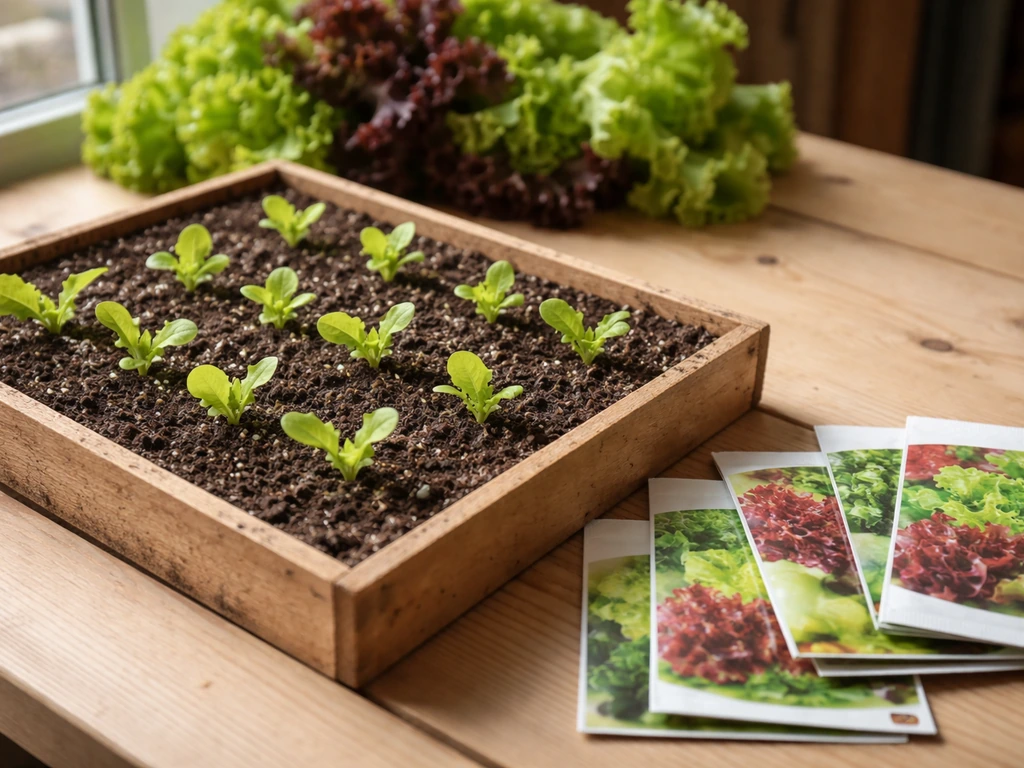
Not all lettuce handles cold the same way. If you want to can you grow lettuce in july successfully, choose varieties that handle warmer temperatures better and start them early in the month Not all lettuce handles cold the same way.. Loose-leaf and butterhead types are your most reliable cold-weather performers because they mature faster and tolerate temperature swings better than crisphead (iceberg-style) varieties. If you're growing through late fall or pushing into early spring, these are the ones to reach for first.
Here are varieties worth growing when temperatures dip:
- Black Seeded Simpson (loose-leaf) — fast to mature, very cold-tolerant, great for cut-and-come-again harvests
- Red Sails (loose-leaf) — handles near-freezing nights without turning bitter
- Winter Density (romaine/cos) — compact, slow to bolt, specifically bred for cool conditions
- Arctic King (butterhead) — one of the most frost-hardy lettuces available, bred for cold-frame and winter use
- Rouge d'Hiver (romaine) — a classic cold-season variety with deep red coloring that intensifies in cold weather
- Merveille des Quatre Saisons (butterhead) — French heirloom that performs well from fall through early spring
Pay attention to days-to-maturity on the seed packet and match it to your window. Loose-leaf types typically hit harvest in 45 to 50 days from direct sowing, or 30 to 45 days from transplant. Crisphead varieties take longer, closer to 70 to 80 days, which makes them risky if you're working with a short fall window before hard freezes arrive. For cold weather, I almost always go with loose-leaf or butterhead first.
Plan your timing, spacing, and sowing method
Timing is everything with cold-weather lettuce. You want plants established and growing before temperatures regularly drop below freezing at night. In fall, that means counting backward from your first expected frost date and sowing 6 to 8 weeks ahead. In early spring, you can start sowing outdoors as soon as the soil is workable, lettuce seed germinates in soil as cool as 40°F, though it's faster closer to 60°F.
If you're growing through winter, which is absolutely doable with a cold frame, sow your final round in late summer or early fall so plants are well-established before the shortest, darkest days hit. If you’re wondering can you grow lettuce in the winter, the answer is yes when you plan for cold protection and good timing. Lettuce won't do much growing when temperatures are consistently freezing, but established plants will survive and start growing again as conditions improve. Think of winter cold-frame lettuce as a storage crop that wakes up in late winter and early spring.
Spacing for cold-weather beds
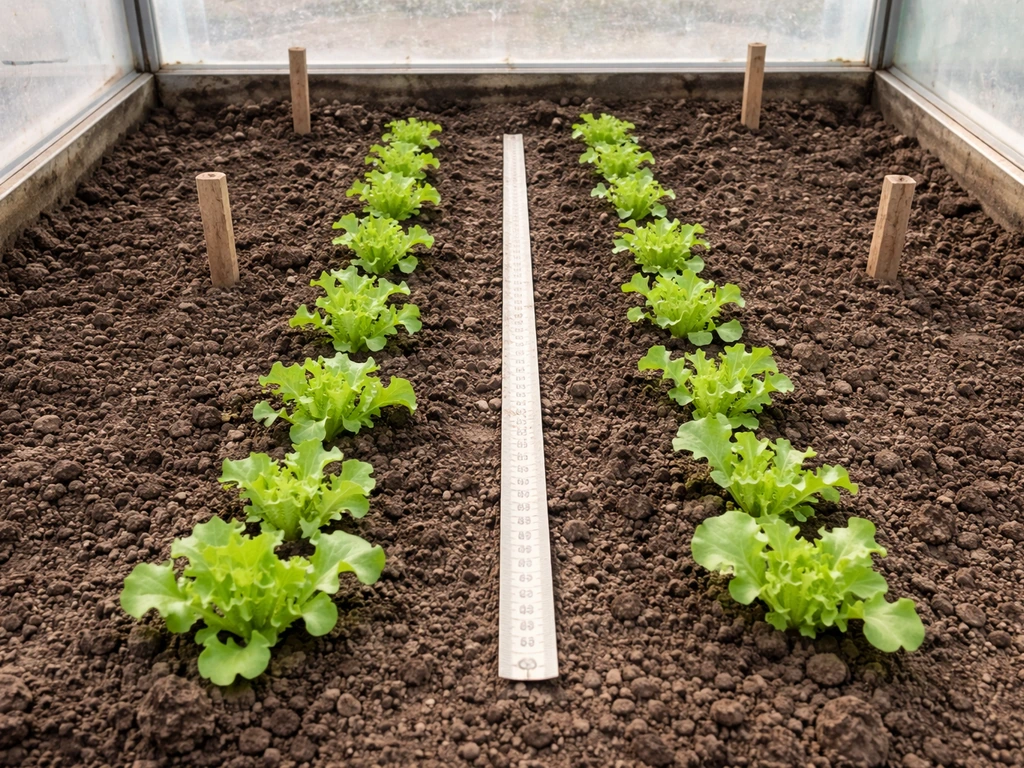
| Lettuce type | In-row spacing | Between rows |
|---|---|---|
| Loose-leaf, cos, butterhead | 4–10 inches | 12–24 inches |
| Crisphead (iceberg) | 12–15 inches | 20–30 inches |
In a cold frame, you can push toward the closer end of those ranges since you're controlling the environment. Tighter spacing also means the leaf canopy closes faster, which helps retain soil moisture and keep temperatures a little more stable at ground level. Just make sure you're not overcrowding to the point where leaves are always wet and touching, that's how fungal problems start.
Set up your growing area for cold conditions
Soil and bed preparation
Lettuce has shallow roots, so soil quality in the top 6 inches matters most. Work in compost before planting to improve drainage and add slow-release nutrients. Cold, waterlogged soil is one of the fastest ways to lose lettuce in winter, roots sitting in saturated, freezing soil rot quickly. If your garden bed drains poorly, consider building it up a few inches with added compost and topsoil, or switch to containers.
Growing in containers in cold weather
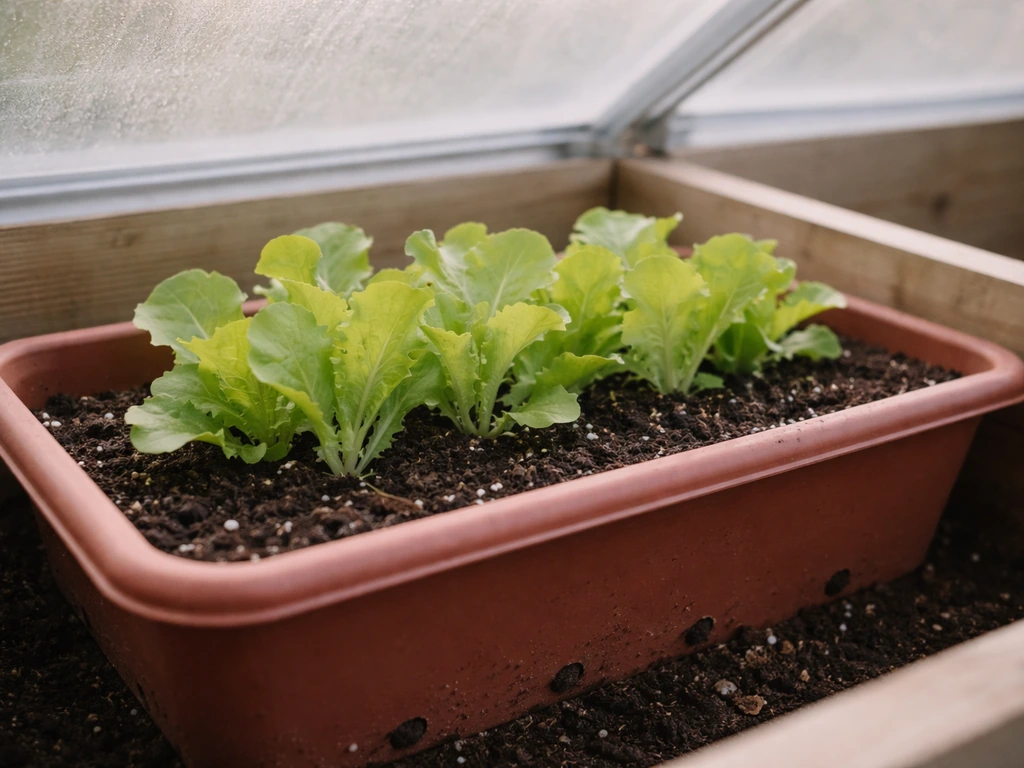
Containers work really well for cold-weather lettuce, especially if you're moving them under shelter or into a cold frame setup. Use a quality potting mix (not garden soil, which compacts and drains poorly in containers), and make absolutely sure your containers have drainage holes. Lettuce needs to stay evenly moist, but waterlogged roots in a cold container are fatal. A pot that drains freely but holds moisture well, something with peat, compost, and perlite, is your best bet.
One practical advantage of containers in cold weather: you can move them. If a hard freeze is coming that your cold frame won't handle, bring the containers into a garage or shed overnight and put them back out in the morning. You can't do that with a bed.
Cold frame basics
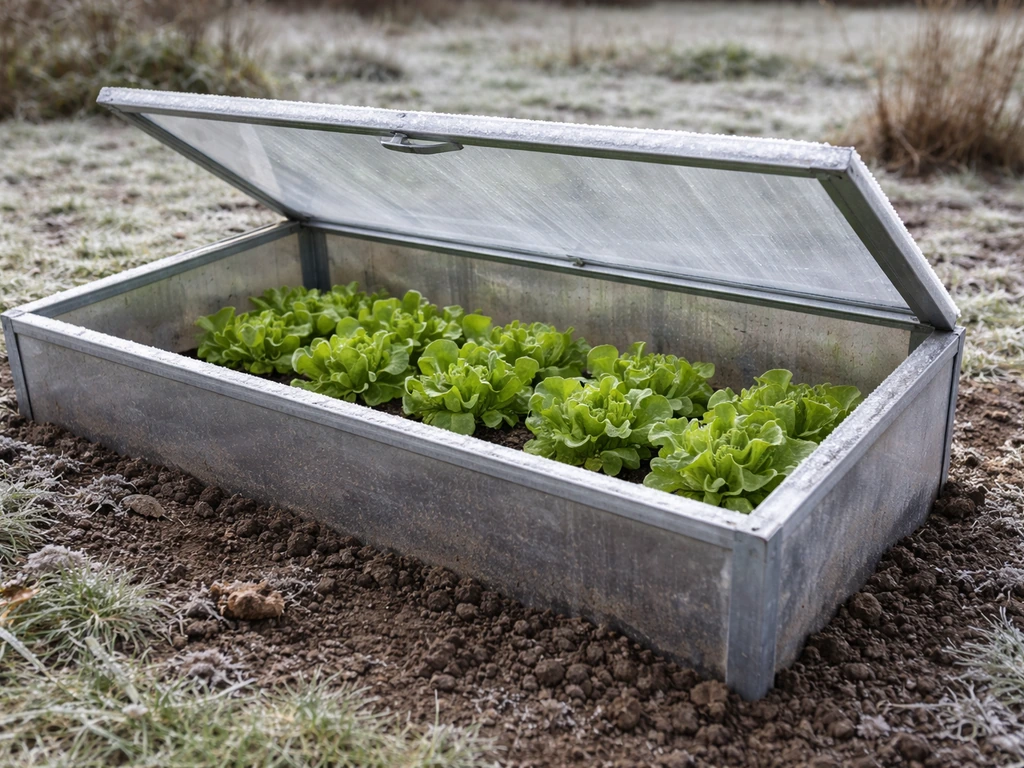
A cold frame is essentially a box with a transparent lid, glass, polycarbonate, or even a repurposed window frame, that sits over your lettuce bed. It creates a microclimate that can keep temperatures inside 5 to 15°F warmer than the air outside, depending on sun exposure and how well it's sealed. You don't need anything fancy. A simple wooden frame with an old window on top will absolutely work. Position it on the south or southeast side of a structure if possible, to capture the most winter sun.
Managing temperature and light when it's cold
Lettuce grows well when average daily temps are in the 60 to 70°F range, and it can keep growing down to around 35°F, just slowly. What stops growth cold (literally) is sustained freezing. A single night of light frost won't kill established lettuce, but multiple days of temperatures stuck below 32°F will. Inside a cold frame, you're buffering against exactly this.
Light is the other variable that bites people in winter. Short days mean less photosynthesis, which means slower growth. There's not a lot you can do about this outdoors without supplemental lighting, but you can maximize what's available: keep the cold frame glazing clean so it transmits as much light as possible, and orient your growing area to avoid shade from fences, buildings, or trees on the south side.
If you're growing lettuce in containers indoors or under grow lights alongside your cold-weather outdoor setup, the rules shift, you're working with 14 to 16 hours of artificial light and stable temperatures, which is a different challenge from what we're focused on here. For cold-weather outdoor growing, the main goal is capturing every bit of natural light and preventing temperature extremes in both directions.
Watering and feeding cool-season lettuce
Cold weather slows everything down, including how fast your soil dries out. That's a good thing in some ways, but it also means it's easy to overwater. Check soil moisture before watering rather than watering on a schedule. Stick your finger an inch into the soil, if it feels moist, hold off. If it's dry, water thoroughly but make sure it drains. In a cold frame, condensation under the lid can make the soil look wetter than it actually is, so always check at root level.
Lettuce likes to stay evenly moist, not wet and not bone dry. One thing worth knowing: consistent watering in the few days before harvest actually makes leaves crisper and more flavorful. So if you've let the soil dry out a bit in the week before you plan to pick, give the plants a good drink a day or two ahead.
For fertilizing, cold-weather lettuce grows slowly and doesn't need heavy feeding. A balanced, slow-release granular fertilizer worked into the soil at planting is usually enough for a full season. If plants look pale or growth stalls out during a mild stretch, a diluted liquid fertilizer (a half-strength fish emulsion or balanced liquid feed) every couple of weeks can help. Avoid going heavy on nitrogen in cold conditions, it pushes soft, tender growth that's more vulnerable to frost damage.
Cold frame technique: venting, hardening off, and frost protection
Venting is non-negotiable on sunny days
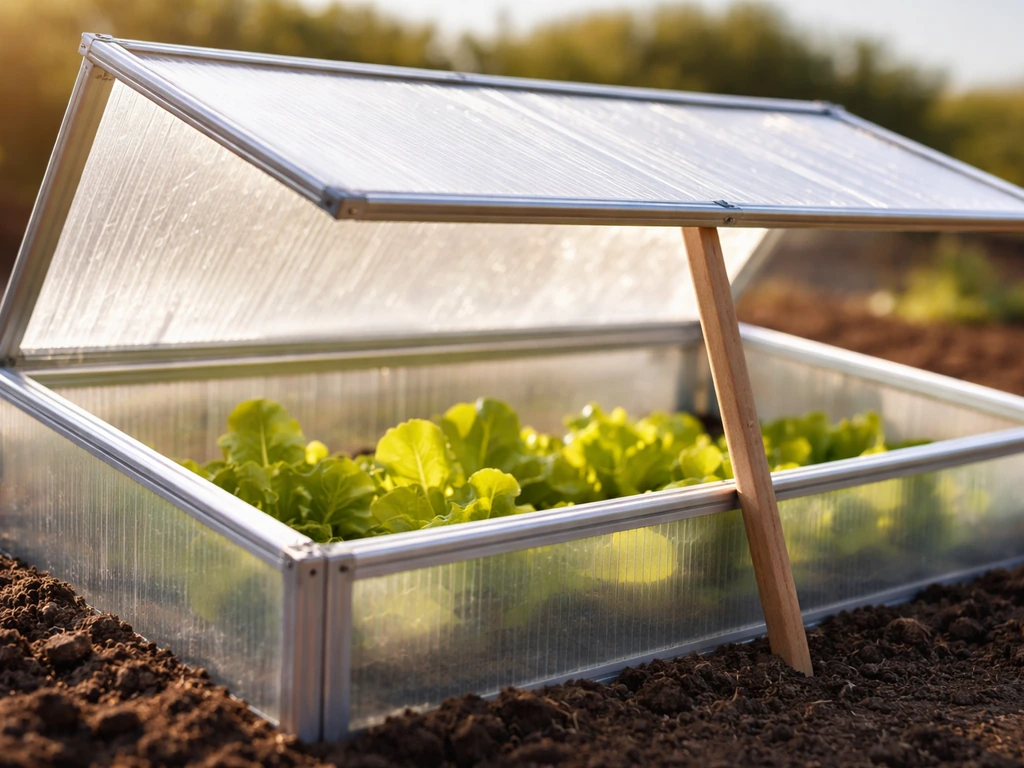
This is the mistake that kills the most cold-frame lettuce: forgetting to vent on a sunny day. Even in February or March, a cold frame with the lid closed can heat up to 80°F or higher inside on a bright afternoon. Lettuce starts to bolt and stress when temperatures push past 75°F, and a sealed cold frame on a sunny day can hit that threshold fast. I've seen people lose entire plantings this way, the outside temperature is 40°F and the lettuce is baking inside.
The fix is simple: prop the lid open on warm, sunny days to let heat escape. Even a few inches of venting makes a significant difference. Check the temperature inside the frame midday, if it's approaching 70°F, open it more. Automatic vent openers exist and are genuinely useful if you can't check the frame during the day. They open when temperatures inside reach a set point (typically around 65 to 70°F) and close as it cools. They're inexpensive and worth every penny if you're away from home during the day.
Frost protection: when to keep the lid closed
On nights when air temperature is expected to drop below 32°F, keep the cold frame lid fully closed and sealed. If you're in a region where temperatures drop hard, below 20°F, add an extra layer of insulation: a piece of old carpet, burlap, or even cardboard laid over the lid on the coldest nights. This isn't elegant, but it works. The goal is to keep the air inside the frame above freezing, or at least to buffer the drop so the lettuce doesn't experience a sudden hard freeze.
Row covers used inside a cold frame add another layer of protection and are worth keeping on hand. USU Extension explains that row covers or low tunnels help shield crops from environmental factors like cold or hot temperatures, providing frost and temperature protection Row covers used inside a cold frame add another layer of protection. A floating row cover (garden fleece) laid directly over plants inside the frame can buy you a few more degrees on the coldest nights. When air temperature is below 32°F and wind speeds are low, that extra layer of fabric can mean the difference between wilted, damaged leaves and a healthy harvest.
Hardening off transplants before moving them into a cold frame
If you're starting lettuce seeds indoors and then moving transplants into a cold frame, don't skip hardening off. Seedlings raised in a warm house are soft and will struggle if you move them directly into a cold environment, even a protected one. Spend 2 to 3 days before transplanting by reducing watering slightly and, if possible, moving trays to a cooler spot, a garage, porch, or cool room. This toughens the plants and reduces transplant shock significantly. Skipping this step is one of the most common beginner mistakes, and it shows up as wilting, yellowing, or stunted growth in the first week after transplanting.
Harvesting and fixing common cold-weather problems
When and how to harvest
Loose-leaf lettuce can be harvested as cut-and-come-again from the time leaves are a few inches tall, just take the outer leaves and let the center keep growing. For head-forming types, wait until the head feels firm and full. In cold weather, that might take longer than the seed packet says because lower temperatures slow growth. That's normal. Don't rush it. Cold-grown lettuce is often sweeter and more tender than summer lettuce, so the wait is worth it.
Harvest in the morning when leaves are crisp, and give plants a good drink of water a day or two before you plan to harvest for the best texture. Lettuce keeps well at just above freezing (around 32°F) with high humidity, so if you have a refrigerator crisper drawer, that's ideal short-term storage.
Troubleshooting common cold-weather issues
| Problem | Likely cause | What to do |
|---|---|---|
| Seedlings collapse at soil level | Damping-off (fungal) | Improve airflow, reduce watering, use sterile seed-starting mix with perlite or vermiculite — avoid reusing old potting mix for starting seeds |
| Pale green or yellow spots on leaf surface | Downy mildew (encouraged by cool, damp conditions) | Vent the cold frame more, reduce leaf wetness, remove affected leaves and improve airflow |
| Brown papery edges on inner leaves | Tipburn (localized calcium deficiency) | Often triggered by rapid growth spurts or poor airflow — vent more consistently and avoid over-fertilizing with nitrogen |
| Plants bolting (sending up a flower stalk) | Heat or stress | Check daytime cold-frame temperature — if it's above 75°F, you need more venting; harvest immediately when bolting starts |
| Slow or stalled growth in winter | Low light and cold temperatures | Normal in the darkest weeks — plants will resume growing as days lengthen; make sure glazing is clean to maximize light transmission |
| Yellowing outer leaves on container plants | Overwatering or poor drainage | Check that drainage holes are clear, reduce watering frequency, and confirm the potting mix isn't compacted |
Damping-off deserves a specific mention because it's the most common killer of cold-weather seedlings. It shows up as brown, water-soaked areas at the base of stems, and affected seedlings simply fall over and die. The conditions that cause it, cool temperatures, poor airflow, and consistently wet soil, are exactly what you get in a closed cold frame with overwatered seedlings. The best prevention is starting seeds in sterile mix (vermiculite, perlite, or commercial seed-starting mix), watering carefully, and venting the frame to keep air moving.
Downy mildew is another cold-weather regular. UC Statewide IPM Program (UC IPM) notes that damp, moist conditions and cool weather are ideal for lettuce downy mildew to develop and spread. Cool, damp, still air is its ideal environment, which describes a closed cold frame perfectly. The fix is almost always the same: vent more, water less frequently, and make sure you're not splashing water onto leaves. If you catch it early and improve conditions, the plant often recovers. If it spreads to most of the leaf surface, pull that plant so it doesn't spread.
Your next steps right now
- Choose a variety: pick Arctic King, Winter Density, or Rouge d'Hiver if you're sowing now for fall or early winter harvest
- Count back from your frost date: sow 6 to 8 weeks before the first expected frost outdoors, or start transplants indoors and harden off before moving to a cold frame
- Prepare your bed or container: amend with compost, confirm drainage is good, and set up your cold frame in a south-facing spot
- Set a venting routine: check your cold frame midday on any sunny day and prop the lid open if the temperature inside is approaching 70°F
- Water by feel, not by schedule: check soil moisture before every watering and let the top inch dry slightly between waterings in cold weather
- Harvest outer leaves regularly on loose-leaf types to keep plants productive, and water a day or two before big harvests for the best flavor and crunch
Cold-weather lettuce is genuinely one of the most rewarding things you can grow, it's low maintenance once established, rarely bothered by pests, and gives you fresh greens when almost nothing else is producing. The cold frame technique has a slight learning curve around venting and temperature management, but once you've done it through one season you'll wonder why you ever let your garden sit empty all winter. If you're also curious about pushing lettuce into the summer months or extending your growing calendar in other directions, the same principles of temperature management and variety selection apply, just with the opposite problem to solve. If you want to grow lettuce in summer, you’ll need to manage heat and choose heat-tolerant varieties.
FAQ
If my fall frost is earlier than expected, can I still grow lettuce to harvest before winter?
Choose a variety with the shortest days to maturity you can find, then sow at the beginning of your fall window so plants are established before nights stay near freezing. In practice, this usually means prioritizing loose-leaf or butterhead and starting seedlings earlier than you would for heads, because crisphead types may not firm up before the coldest weather hits.
Can I fertilize during the coldest weeks to speed up lettuce growth?
Most of the time, you should not. Wait until you see new leaf growth or the plant has settled for a week after cold exposure, then fertilize lightly. Cold-grown lettuce is slow and extra feeding can worsen watery, weak growth that is more vulnerable to freezing or rot.
Should I leave the cold frame closed all day and only vent at night?
No. Treat the cold frame like a temperature system, not a simple shelter. On bright days, vent the lid enough to keep internal temps from climbing toward the mid-70s, and keep it fully closed on nights below freezing. Midday checking is more reliable than setting it and forgetting it.
I started lettuce indoors, when is it safe to move seedlings into a cold frame?
You can, but aim for gradual hardening rather than sudden cold. Reduce watering slightly for a couple of days, then expose transplants to the cold frame (with the lid open during mild daytime if possible) before keeping them fully under cover. Sudden moves after warm indoor growth commonly cause wilting and stalling even if you use protection.
How do I prevent fungal problems when it’s very humid under the cold frame?
Yes, but only if you manage moisture at the leaf surface. If you see persistent leaf wetness under the lid, increase venting and avoid watering late in the day. If the mix stays soggy or the soil never dries slightly between waterings, you will raise the odds of damping-off and mildew.
What’s the best watering method and frequency for cold-weather lettuce in a cold frame?
For cold-weather lettuce, water deeply, then let the top inch or two of soil approach “slightly dry” before watering again. A schedule often leads to overwatering because evaporation is slow in winter, so check soil moisture each time you think you need water.
If I want lettuce through winter, how late is too late to sow the seeds?
Sow with extra margin and expect slower development in winter. If you transplant, use plants that are sturdy and established, and plan your final sowing so harvest window lands in late winter to early spring when conditions begin to improve. In many gardens, the biggest difference is avoiding late sowing right before the darkest stretch.
Can I plant lettuce closer together in a cold frame to keep it warmer and harvest sooner?
Use spacing that allows air movement, even though canopy closure helps stabilize microclimate. If leaves are constantly touching and staying wet, thin slightly or harvest cut-and-come-again earlier to reduce density. Keeping foliage from becoming a damp blanket is key for preventing mildew.
How can I tell whether my cold-frame seedlings have damping-off versus mildew?
If you can smell a sour odor, see collapsing seedlings at the base, or notice brown, water-soaked stems with poor airflow, damping-off is likely. If most plants look healthy but leaves develop fuzzy growth or stippling patterns in cool damp conditions, downy mildew is more likely. Either way, immediately adjust airflow and watering, and consider removing the worst-affected plants.
Are containers actually better than a raised bed for extreme cold snaps?
Yes, and the main benefit is mobility during extreme events. Bring containers into a garage or shed for a severe freeze that your cold frame might not buffer, then move them back out during milder daytime conditions to keep them growing.