Yes, you can grow lettuce in winter, but how well it grows depends almost entirely on where you're growing it. A 1995 paper in the Journal of the American Society for Horticultural Science describes lettuce as a blank" rel="noopener noreferrer">quantitative long-day plant, meaning bolting and flowering are tied to long days when adequate light is available. In July, you cannot rely on winter methods, but you can still grow lettuce by choosing bolt-resistant varieties and giving it shade and consistent moisture can you grow lettuce in july. For a step-by-step approach, see the section on how to grow lettuce in cold weather, including setup, varieties, and protection methods how to grow lettuce in winter. Outdoors in a UK winter, hardy varieties will survive and slowly produce leaves, especially with cloche or fleece protection. Indoors under grow lights, you can get fast, productive harvests all winter long regardless of what's happening outside. In a greenhouse, you're somewhere in between: better protection than outdoors, but you'll still need to manage low light and cold snaps. The bottom line is that winter lettuce is genuinely doable for beginners, but you need to pick the right variety, set up the right environment, and adjust your expectations on speed.
Can You Grow Lettuce in the Winter UK and Indoors?
Can lettuce actually grow in winter (and when it won't)
Lettuce is a cool-season crop, which means it actually prefers cooler temperatures over the summer heat that makes it bolt. That works in your favour in winter, up to a point. Lettuce grows actively between about 7°C and 18°C (45°F to 65°F). It can survive brief dips to around 0°C if it's hardened off and protected, but sustained freezing will kill unprotected plants or turn leaves to mush. Below about 5°C, growth slows dramatically, so outdoor-only winter lettuce in the UK is more of a slow-harvest situation than a full productive crop.
Where winter lettuce fails is usually one of three scenarios: no frost protection outdoors, not enough light indoors, or trying to grow tender summer varieties that just aren't built for cold. If you're in the UK and expecting window-grown lettuce to thrive on a north-facing sill in December, it won't. But fix the light problem, choose a hardy variety, and give plants a bit of insulation, and you're in business.
What winter lettuce actually needs: temperature, light, water, and airflow
Getting these four conditions right is the difference between thriving plants and a tray of yellowing, slow-rotting disappointment. Here's what matters and what the real targets are.
Temperature
Keep lettuce between 10°C and 18°C for active growth. At or below 5°C, growth slows to almost nothing. If you're growing outdoors or in an unheated greenhouse, accept that growth will be slow from November through February and plan your harvest expectations accordingly. Indoors, aim for a consistent room temperature of 15°C to 18°C and avoid placing plants directly above radiators, which creates hot, dry air that stresses plants.
Light
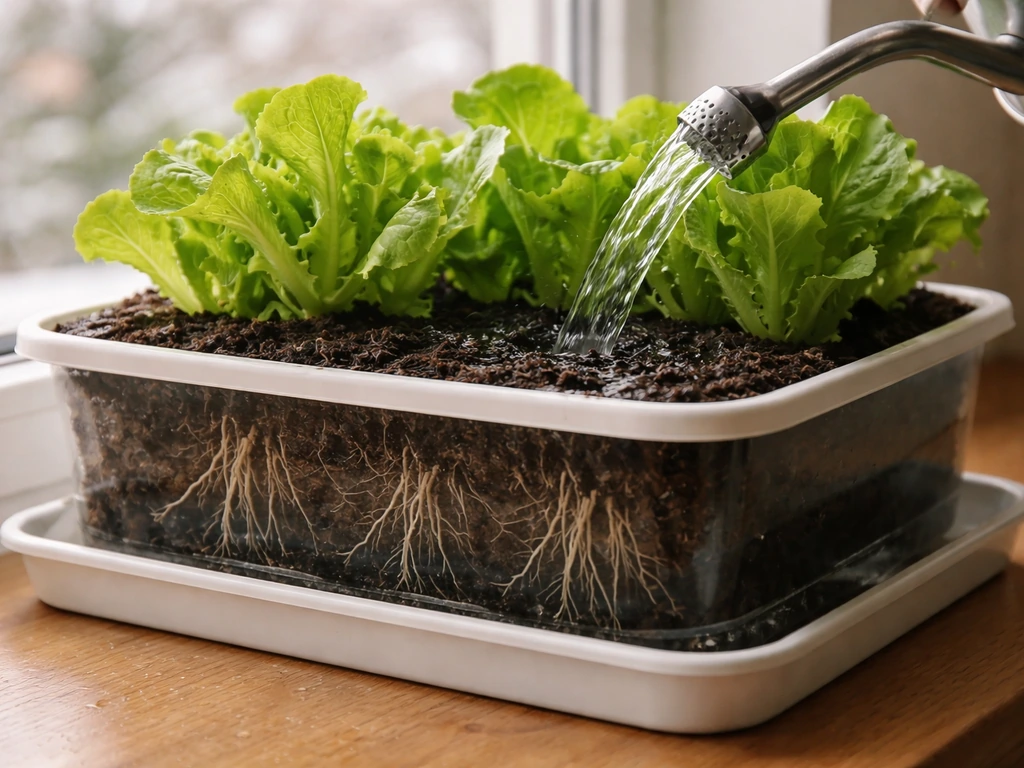
This is the biggest limiting factor in winter, especially in the UK. Lettuce needs around 12 to 14 hours of light per day for productive growth. In a UK winter, you're lucky to get 7 or 8 hours of weak daylight, and windowsill plants often stretch, go pale, and produce spindly leaves as a result. Outdoors and in unheated greenhouses, there's nothing you can do about the day length, so growth is naturally slower. Indoors, supplemental LED grow lights are the single biggest thing you can do to make winter lettuce actually productive.
Water
Lettuce roots need consistent moisture but hate sitting in wet soil, and this gets trickier in winter because evaporation is slower. Outdoors, rainfall usually handles it, but make sure water isn't pooling around roots under cloches. Indoors and in greenhouses, water less frequently than you would in summer, let the top centimetre of compost dry slightly between waterings, and always water at the base rather than over the leaves. Wet leaves in cold, low-airflow conditions are a direct path to grey mould (botrytis).
Airflow
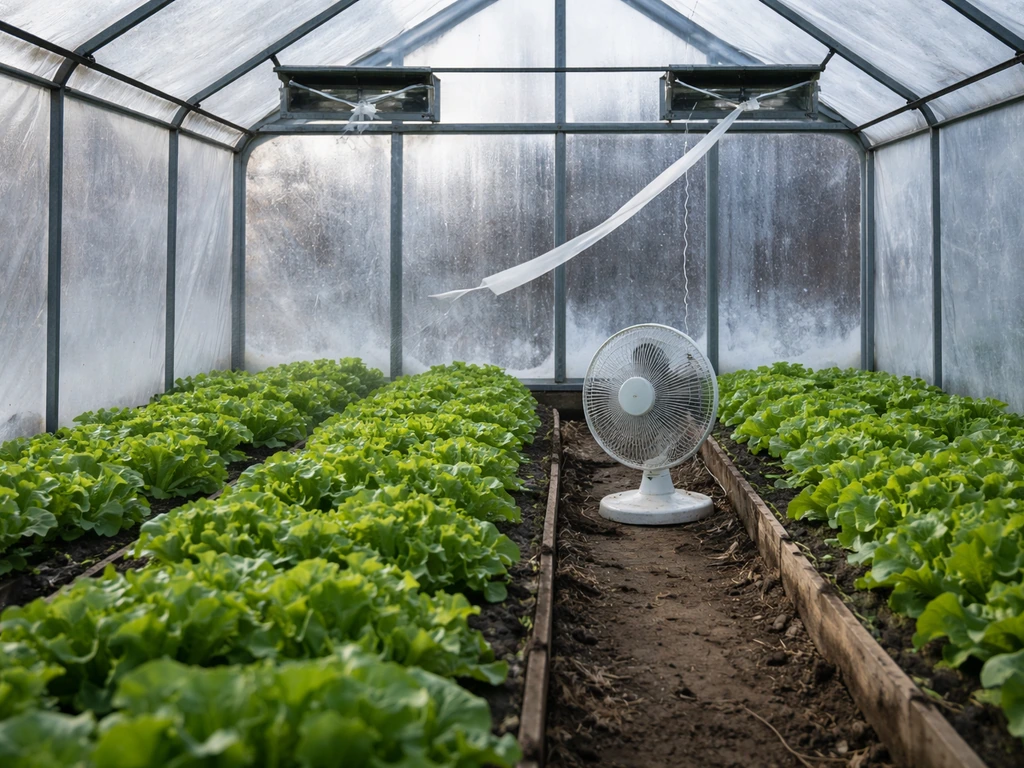
Cold, damp, still air is where lettuce disease really takes hold. In a greenhouse, open vents for at least a short period on mild days even in winter. Indoors, don't cram plants together, and avoid placing them in dead corners with no air movement. A small fan on a low setting running for a few hours a day makes a real difference if you're growing in a grow tent or enclosed space.
The best lettuce varieties to grow in winter
Not all lettuce handles cold equally. Summer varieties like Butterhead or Batavian types tend to sulk in the cold, produce poorly, and are more vulnerable to frost. For winter growing, you want varieties specifically bred for cold tolerance and low-light resilience. Here are the ones I'd actually recommend.
| Variety | Type | Best for | Cold tolerance | Notes |
|---|---|---|---|---|
| Winter Density | Cos/Romaine | Outdoors, greenhouse | High | Classic UK winter variety, compact and reliable |
| Arctic King | Butterhead | Outdoors, greenhouse | Very high | One of the hardiest butterheads, bred for UK winters |
| Valdor | Butterhead | Outdoors, greenhouse | Very high | Overwinters well, harvest from February onwards |
| Rouge d'Hiver | Cos | Outdoors, greenhouse | High | Red-tinged, good flavour, handles cold well |
| Lobjoits Green Cos | Cos | Greenhouse, indoors | Medium-high | Good in low light, large crisp leaves |
| All Year Round | Butterhead | Indoors, greenhouse | Medium | Versatile, works under grow lights in winter |
| Little Gem | Cos | Indoors, greenhouse | Medium | Fast-maturing, works well in containers |
| Tom Thumb | Butterhead | Indoors, containers | Medium | Compact, great for windowsills or grow setups |
For outdoor UK winter growing, Arctic King and Valdor are my top picks. For greenhouse growing, Winter Density and Rouge d'Hiver both perform well. For indoor growing under lights, Little Gem, All Year Round, and Tom Thumb are the most practical because they're compact and mature relatively quickly. If you're growing cut-and-come-again baby leaves rather than full heads, loose-leaf mixes marketed as 'winter salad' or 'mixed winter leaves' are also excellent choices and very forgiving for beginners.
How to grow lettuce indoors in winter
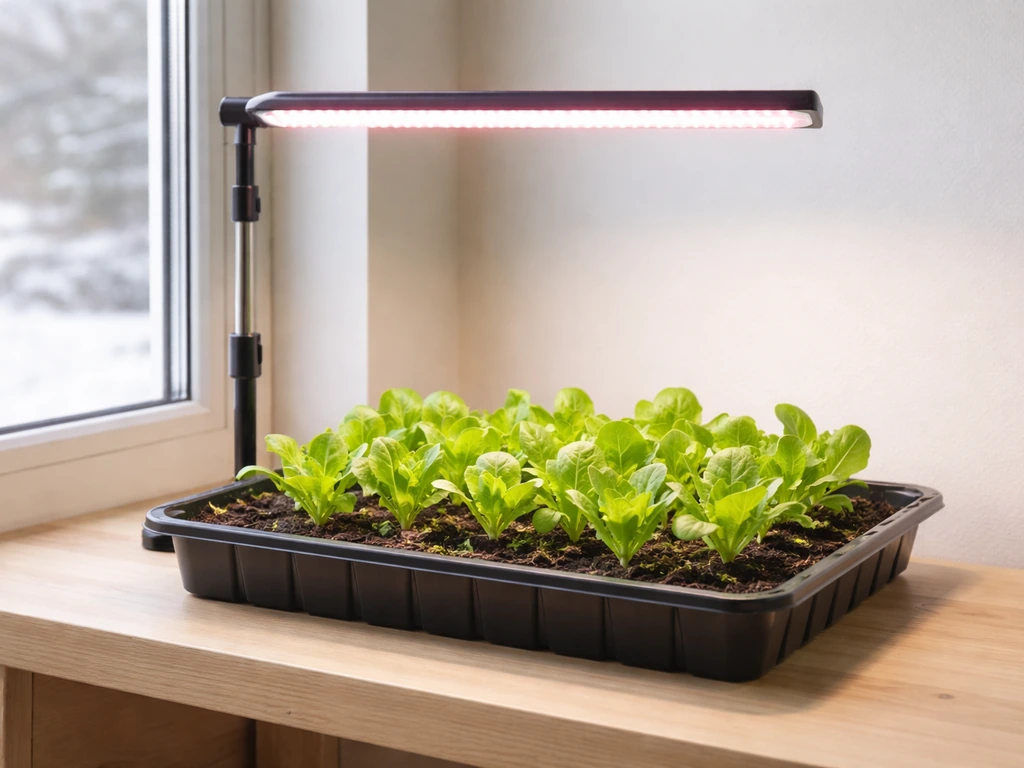
Indoor winter growing is where you have the most control and, if you set it up right, the most reliable results. If you later want warmer-weather results, see how to grow lettuce in summer for what changes when heat and bolting become your main concerns. The key difference between indoor winter growing and summer growing is that light, not warmth, becomes your main challenge.
What setup you need
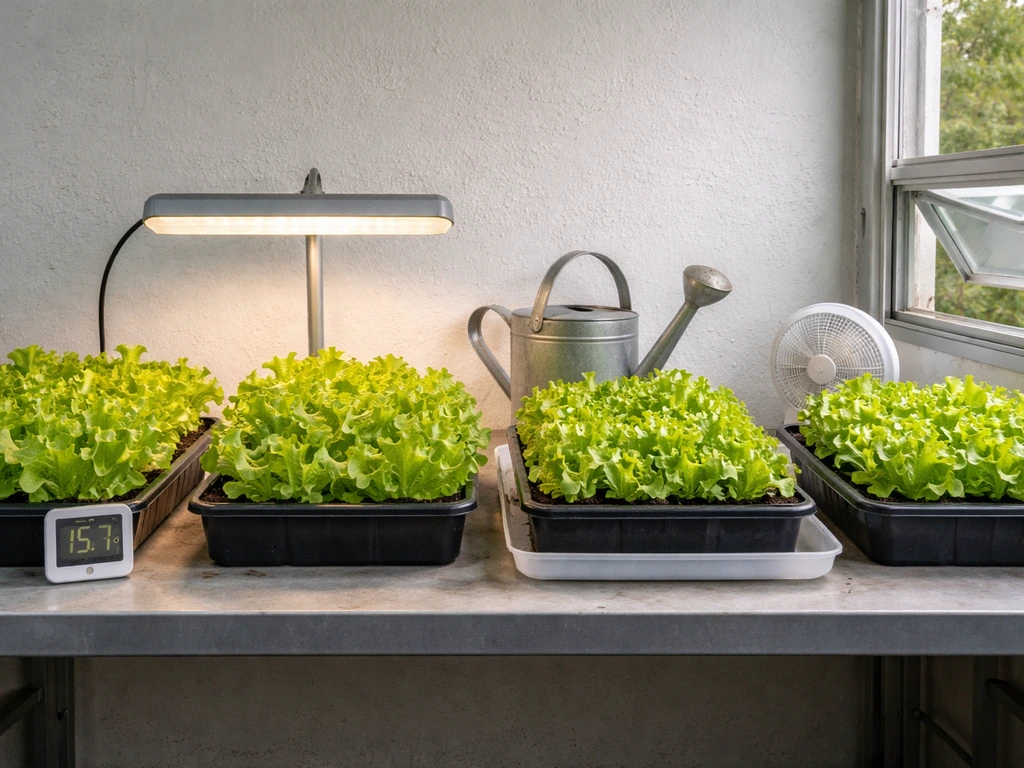
You don't need anything fancy. A shallow tray or container at least 10 to 15cm deep, a good multipurpose or seed compost, and a full-spectrum LED grow light. Grow lights don't have to be expensive: a basic LED panel in the 20W to 45W range positioned 15 to 30cm above your plants is enough for a decent-sized tray of lettuce. If you're apartment growing without much natural light, a grow light isn't optional in winter, it's essential. A sunny south-facing windowsill can work if you're in a location with brighter winters, but in the UK between October and February, even a south-facing window often won't provide enough light hours for productive growth.
When to start and how to sow
You can start indoor winter lettuce at any point from October through to February. Fill your container with moist compost, scatter seeds thinly across the surface (about 1 to 2cm apart for cut-and-come-again, or in small clusters 15 to 20cm apart if growing whole heads), and press them lightly into the surface without burying them. Lettuce seeds need light to germinate, so don't cover them with more than the thinnest dusting of vermiculite or compost. Keep the container at around 15°C and seeds will germinate in 7 to 14 days. Germination under grow lights is reliable and much faster than on a cold windowsill.
Managing light so plants actually produce
Set your grow light on a timer for 14 to 16 hours per day. This mimics a long spring day and keeps plants growing steadily rather than stretching toward inadequate light. If you notice seedlings getting very tall and thin quickly (this is called etiolation or 'legginess'), it means they're not getting enough light. Either lower the light closer to the plants or increase the hours. The light should be close enough that you can comfortably hold your hand under it without it being hot. If it's burning your hand, it's too close. Rotate the container every few days if you notice uneven growth.
Care and harvest indoors
Water from the base when possible by setting the tray in a shallow dish of water for 20 minutes, then draining. This keeps the foliage dry and reduces disease risk. Avoid overwatering: check the top of the compost before each watering. Baby leaves are ready to harvest in as little as 3 to 4 weeks from germination. Cut leaves with scissors about 2cm above the base and the plant will regrow for two or three more cuts. Full heads take around 6 to 8 weeks indoors under good light conditions.
Growing lettuce in a greenhouse in winter
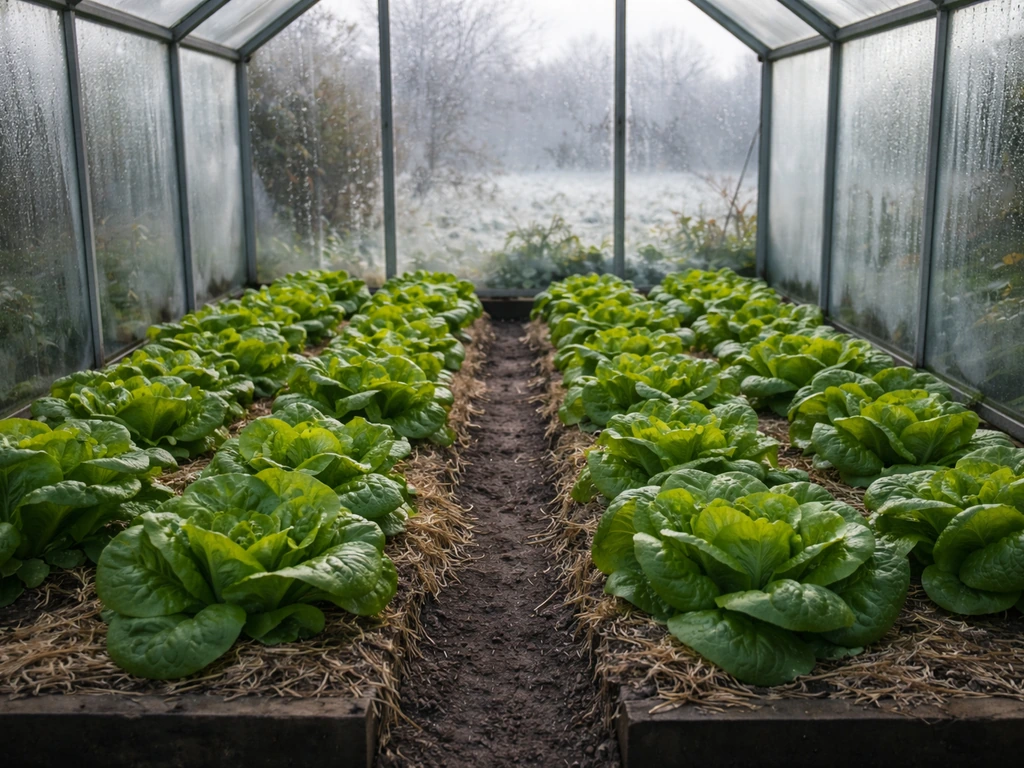
A greenhouse gives you a meaningful buffer against outdoor cold and wet while still working with natural daylight. An unheated greenhouse in the UK will typically stay 3°C to 5°C warmer than outside, which keeps frost-hardy varieties ticking along through most winters. Add a small electric heater to maintain a minimum of 5°C on the coldest nights, and you significantly extend what's possible.
Setting up for winter production
Sow hardy varieties like Winter Density or Arctic King in modules or direct into greenhouse beds from September through October for harvests from November onwards. The RHS recommends sowing outdoors in early August and covering with cloches from late September for early winter harvests, and the same principle applies in a greenhouse: get plants established before the light drops sharply. Plants established before the end of October tend to perform much better through the darkest months than anything sown in November or December.
Space plants 20 to 25cm apart for full heads, or much closer (5 to 10cm) if you're growing cut-and-come-again. Raise pots off the floor to avoid cold ground temperatures affecting roots. Line the inside of the greenhouse with bubble wrap or fleece on the coldest nights for extra insulation, especially if you're not running a heater.
Managing light and ventilation in a greenhouse
Clean your greenhouse glass before winter: dirty glazing can block 20% or more of already-limited winter light. Keep the structure as clear as possible and remove any shading you put up in summer. On mild days above 5°C, open vents briefly to refresh the air and reduce humidity. Close everything up well before sunset to trap daytime warmth. If growth is very slow or leaves are pale, consider adding a simple LED strip or panel above the growing area for supplemental lighting, running it during the darkest morning and evening hours to extend the effective day length.
Growing lettuce outdoors in winter
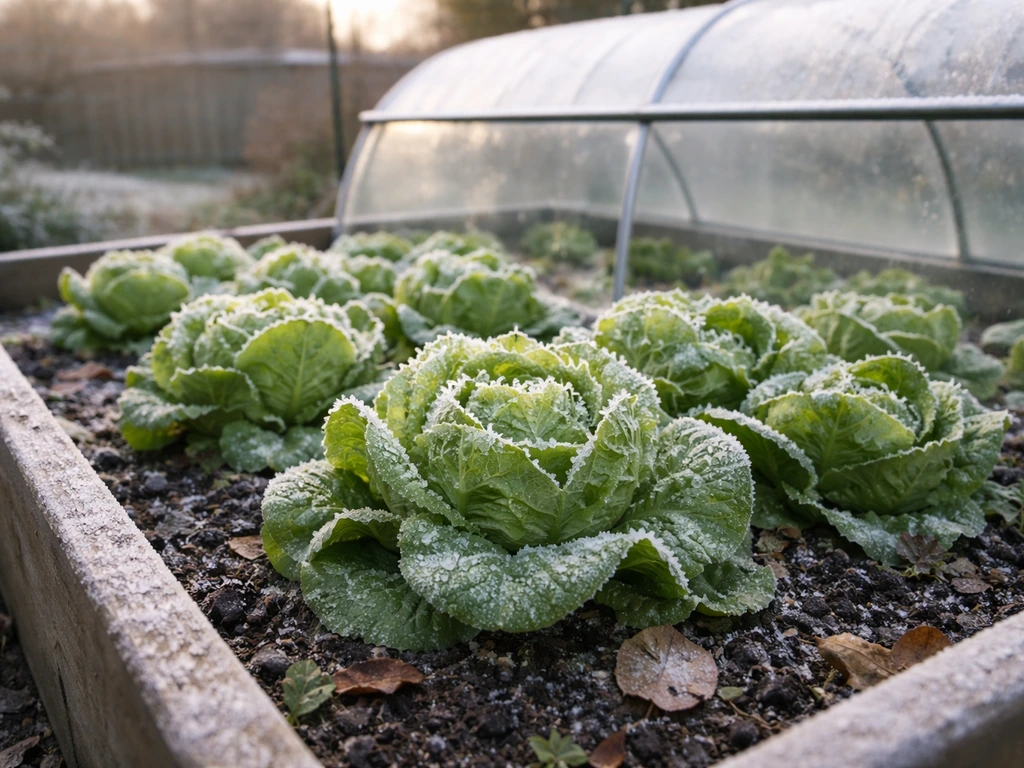
Outdoor winter lettuce in the UK is a legitimate option, but you have to be realistic: growth will be slow from November through to late February, and you're more harvesting at a leisurely pace than generating continuous abundant salad. The payoff is that hardy varieties left under cloches or fleece can survive through winter and then start actively growing again in early spring, giving you very early harvests with almost no spring effort.
Timing and planting
For outdoor winter production, you need to sow earlier than most people think. Following RHS guidance, sow outdoors in early August so plants are well-established by late September, when you should start covering them. Plants that go into winter as small seedlings sown in October tend to struggle. By contrast, plants with several true leaves already formed going into autumn are much more resilient. If you missed the August window, you can still sow under cloches in September in milder UK regions. Sow hardy varieties like Valdor, Arctic King, or Winter Density directly or in modules for transplanting.
Protection methods
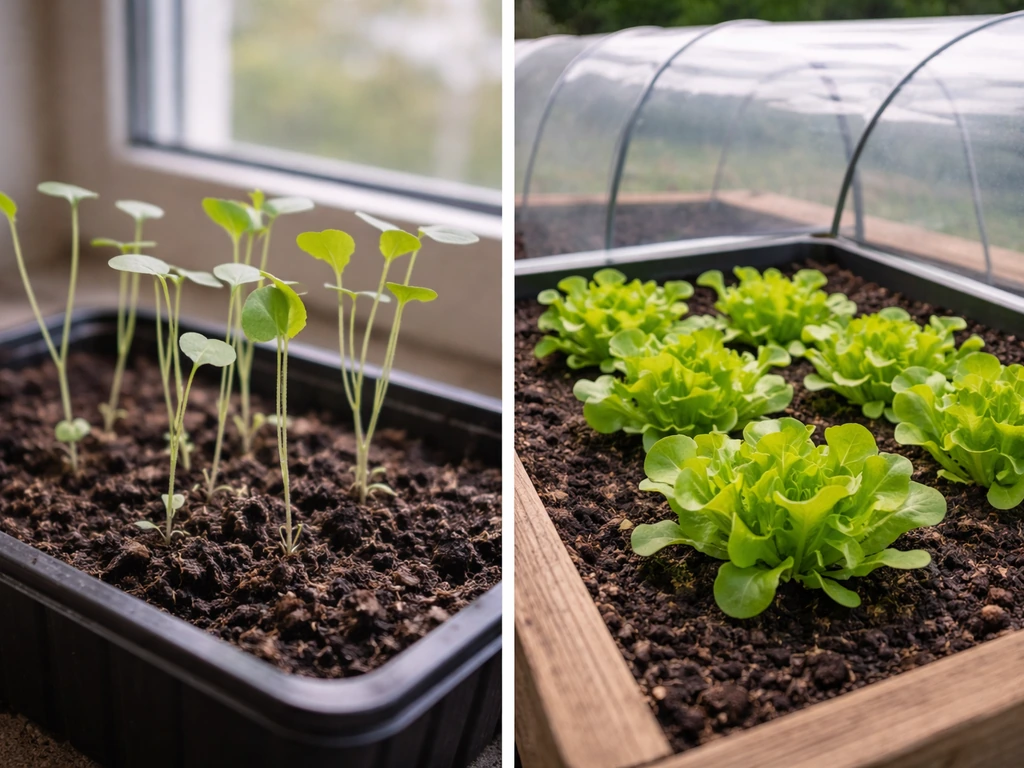
Cloches, cold frames, and fleece are your main tools. A cloche (glass or polycarbonate) raises the temperature underneath by several degrees and keeps the worst of the rain and wind off. A cold frame is even better as it creates a more stable microclimate. Horticultural fleece (the lightest grade, around 17gsm) can be laid directly over plants without a frame and provides a few degrees of frost protection while still letting in light. Double layer fleece in hard frosts. Remove covers on mild days to allow ventilation and prevent fungal problems.
Space outdoor winter lettuce 20 to 25cm apart. Don't sow too thickly: crowded plants in cold, wet conditions are more vulnerable to disease. Water sparingly since winter rainfall usually takes care of moisture, and too much water in heavy soil can cause root rot. The RHS confirms that hardy varieties managed this way can provide harvests over winter and right into early spring, which makes the August sowing very much worth it if you're planning ahead.
Troubleshooting common winter lettuce problems
Winter growing comes with a predictable set of problems. Here's how to deal with the most common ones.
- Leggy, stretched seedlings indoors: This almost always means not enough light. Lower your grow light, increase the daily hours to 14 to 16, or move plants to a brighter spot. Leggy seedlings can be buried slightly deeper when transplanted to compensate.
- Slow or no growth: In winter, slow growth outdoors and in unheated greenhouses is normal below 5°C. Indoors, if growth has stalled, check that temperatures aren't dropping too low at night (below 10°C) and that light hours are sufficient. Adding bottom heat with a propagation mat for seedlings can help.
- Grey mould (botrytis) on leaves: Fuzzy grey patches on leaves mean humidity is too high and airflow is too low. Remove affected leaves immediately, improve ventilation, reduce watering frequency, and make sure plants aren't touching each other.
- Yellowing leaves: Could be overwatering, too little light, or nutrient deficiency. In winter, the most common cause is overwatering combined with poor light. Let the compost dry slightly more between waterings and check your light setup.
- Bolting (plants going to seed): Unlikely in true winter conditions since bolting is usually triggered by heat and long days, but it can happen indoors if temperatures are too high (above 22°C consistently) or grow lights are on for 18+ hours. Reduce light hours to 14 to 15 and keep temperatures cooler.
- Frost damage outdoors: Leaves that have turned slimy and collapsed have been frozen. Remove damaged leaves and protect remaining plants more thoroughly. Established plants of very hardy varieties like Arctic King or Valdor often recover from brief frosts if the crown survives.
Your next steps based on where you're growing
If you're growing indoors, get a basic LED grow light and a shallow container, pick Little Gem or a winter loose-leaf mix, and sow now. You can have baby leaves in 3 to 4 weeks. If you're using a greenhouse, check your glazing is clean, get hardy varieties established as soon as possible, and add fleece or bubble wrap insulation for the coldest nights. If you're gardening outdoors in the UK and it's already past October, focus on protecting any existing plants through winter and plan an August sowing next year to get ahead of the light drop. For more detail on making the absolute most of the cold season in all these settings, the guidance on how to grow winter lettuce and how to grow lettuce in cold weather goes deeper into specific techniques. And when spring arrives, switching your focus to growing spring mix lettuce is a natural next step to extend your salad season further. When you’re ready, focus on how to grow spring mix lettuce for steady harvests as temperatures rise growing spring mix lettuce.
FAQ
If I have a north-facing window in winter, can I still grow lettuce?
Yes, but only if you move past the “windowsill only” idea. In the UK between October and February, a north-facing sill is usually not bright enough for sturdy growth, so you will need either a grow light on a timer or a much brighter spot, plus a cold-weather hardy variety.
Why do my winter lettuce leaves turn brown or rot, even though I’m watering carefully?
Aim for two things: tight moisture control and lots of airflow. Water only when the top of the compost has dried slightly, water at the base, and avoid crowded plants. If leaves stay wet in cold, still conditions, grey mould is much more likely.
How long does winter lettuce take to harvest in the UK?
It depends on whether you’re growing for baby leaves or heads. With LEDs indoors, baby leaves can be ready in 3 to 4 weeks, while full heads generally take 6 to 8 weeks under good light. Outdoors and in unheated greenhouses will be much slower from November to February.
My lettuce seeds won’t germinate. What’s the most common winter mistake?
Don’t bury seeds. Lettuce needs light to germinate, so cover with only the thinnest dusting of compost or vermiculite, keep around 15°C, and use a timer-controlled light indoors so seedlings do not stretch and go pale.
Can I use a radiator to warm my indoor lettuce in winter?
For indoor winter growing, you generally avoid extra heat. Keep room conditions steady, and prevent hot, dry air by not placing trays directly above radiators. If plants look stressed but compost is moist, the issue is often hot airflow rather than temperature being too low.
How do I plan sowing so I’m not harvesting all at the same time?
If you want a steady supply, stagger sowings every 2 to 3 weeks. This reduces the “everything is ready at once” problem and also lets you replace plants that slow down when light levels dip.
Can I grow winter lettuce without ever growing full heads?
Yes, but lose the expectation of fast growth. In cold weather, aim for cut-and-come-again or loose-leaf harvests, because tender summer types tend to sulk and are more frost prone. Use hardy varieties and protect with cloches or fleece to keep leaves crisp.
What should I do if my lettuce seedlings are tall and thin (leggy) in winter?
It usually means either insufficient light or light that’s too far away. If you see tall, thin seedlings, lower the light closer (without making it hot to the touch) or extend the timer hours. Etiolated plants are weaker and yield less.
Does a small heater in an unheated greenhouse always help lettuce?
You can, but you need to keep it above the risk zone and manage humidity. A heater is mainly for cold snaps, targeting a minimum around 5°C, and you still need ventilation on mild days to prevent damp, still-air problems.
Will lettuce survive hard freezes outdoors in the UK?
Be realistic about frost exposure, especially outdoors. Hardy varieties can survive brief dips if protected and hardened off, but sustained freezing will damage unprotected plants. In severe weather, double-layer fleece over the top is more reliable than relying on cold tolerance alone.