You can grow spring mix lettuce indoors year-round with nothing more than a shallow container, a quality seed mix, good potting soil, and a grow light. Sow seeds 1/8 inch deep in at least 6 inches of soil, keep the room between 60 and 70°F, give plants 14 to 16 hours of light per day, and you can start cutting baby leaves in as little as 30 to 40 days. The real trick is harvesting early and often, keeping temperatures cool, and starting a new tray every two to three weeks so you never run out of greens.
How to Grow Spring Mix Lettuce Indoors Step by Step
Marcus Holloway
16 May 2026
What spring mix actually is (and why it grows differently than head lettuce)
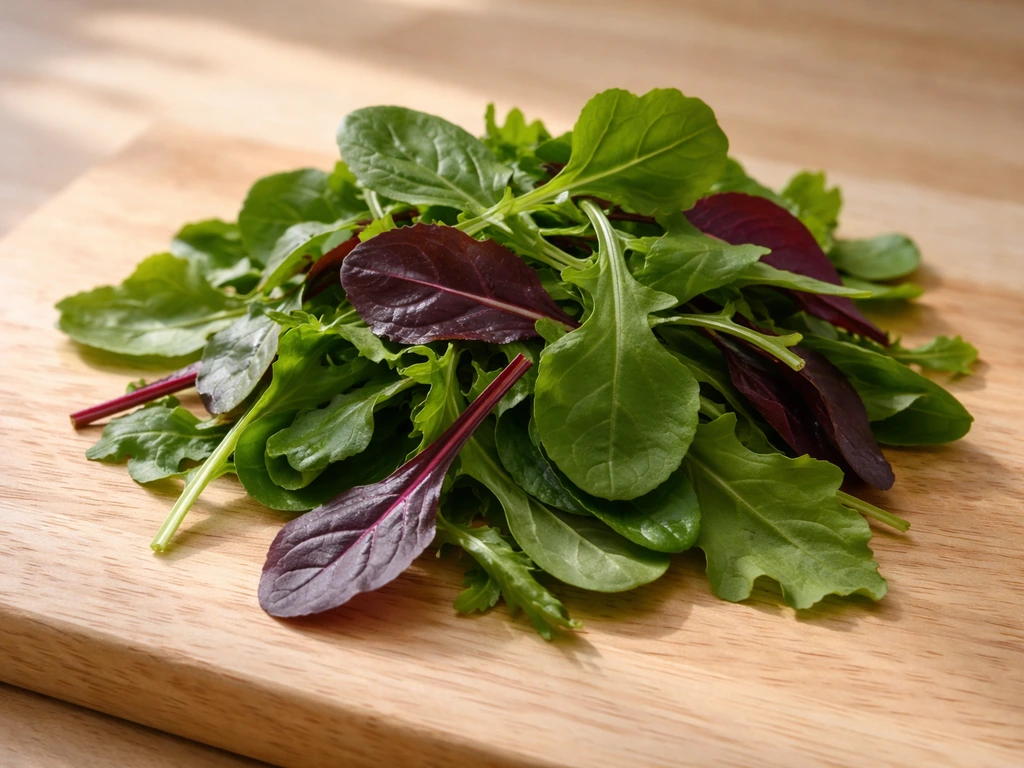
Spring mix is a blend of multiple baby leafy greens harvested young, before any single plant has time to form a head. What you buy in a bag at the grocery store usually includes a mix of loose-leaf lettuce varieties, sometimes with baby spinach, arugula, mizuna, or other mild greens folded in. When you grow it yourself, you're essentially doing the same thing: sowing a blend of seeds together, then cutting the leaves as baby greens rather than waiting for mature heads to develop.
This is exactly what gardeners call cut-and-come-again growing, and it changes your whole approach. Instead of spacing plants 8 to 12 inches apart like you would for head lettuce and waiting 60 to 80 days, you sow spring mix seeds more densely and harvest at the baby-leaf stage, typically when leaves are 3 to 5 inches tall. Because you're cutting rather than pulling, the plant's crown stays intact and pushes out a new flush of leaves. A single tray can give you two to four cuttings before quality declines.
For indoor growing, a few blends work especially well. Look for mixes labeled as baby mesclun, cut-and-come-again, or looseleaf blend. A classic mix might combine varieties like Royal Oakleaf, Red Salad Bowl, Sucrine, and Cimarron in equal parts. If your indoor space gets warm in summer, blends labeled Heatwave or hot-weather mixes with slow-bolt romaine types will hold longer before going bitter. But for most of the year indoors, a standard looseleaf mesclun blend is exactly what you want.
Setting up your indoor growing space: containers, soil, and placement
The container question is simpler than most people expect. For baby-leaf spring mix, you don't need deep pots. Any container with at least 6 inches of depth works well. Shallow window boxes, nursery flats, plastic storage trays with holes drilled in the bottom, even repurposed takeout containers all do the job. Wider is better than deeper for spring mix because you want surface area for sowing, not root depth. A 12-by-24-inch tray gives you a genuinely useful harvest every cutting.
Drainage is non-negotiable. Lettuce roots sitting in wet soil is one of the fastest ways to lose a tray. Make sure your container has holes, and set it in a tray or saucer so water can drain freely. If you're using a decorative pot without drainage, plant in a nursery liner and slip it inside.
For growing medium, use a high-quality potting mix, not garden soil, which compacts and drains poorly in containers. A mix labeled for containers or seed starting works well. You want something that holds moisture without staying soggy, because spring mix needs consistent moisture to stay tender. Some growers mix in a small amount of perlite (about 20 to 25 percent by volume) if they tend to overwater or if the mix feels dense. Skip garden compost-heavy blends for seedling trays since they can harbor mold and fungus gnats indoors.
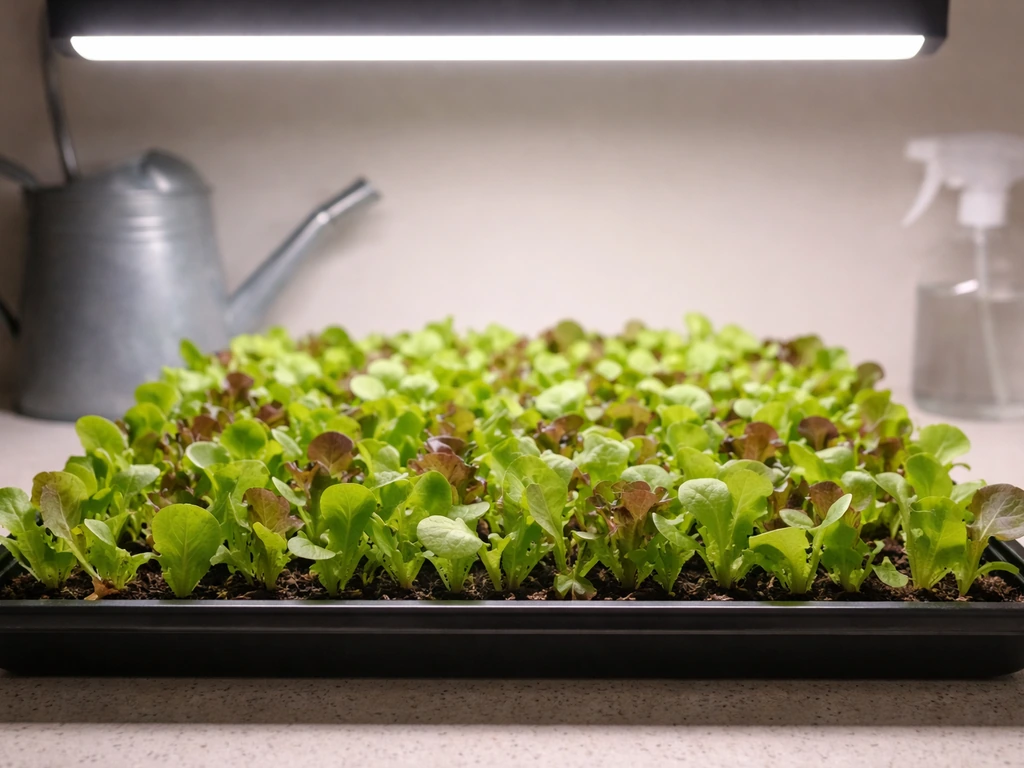
Placement depends on your light situation. A south-facing window is your best natural-light option, but honest experience tells you that most indoor window light is rarely enough on its own, especially in winter or if you're more than a foot or two back from the glass. A dedicated LED grow light positioned 6 to 12 inches above the tray is far more reliable and gives you total control regardless of the season or what's happening outside. More on that in the light section below.
Sowing spring mix seeds: depth, spacing, and timing
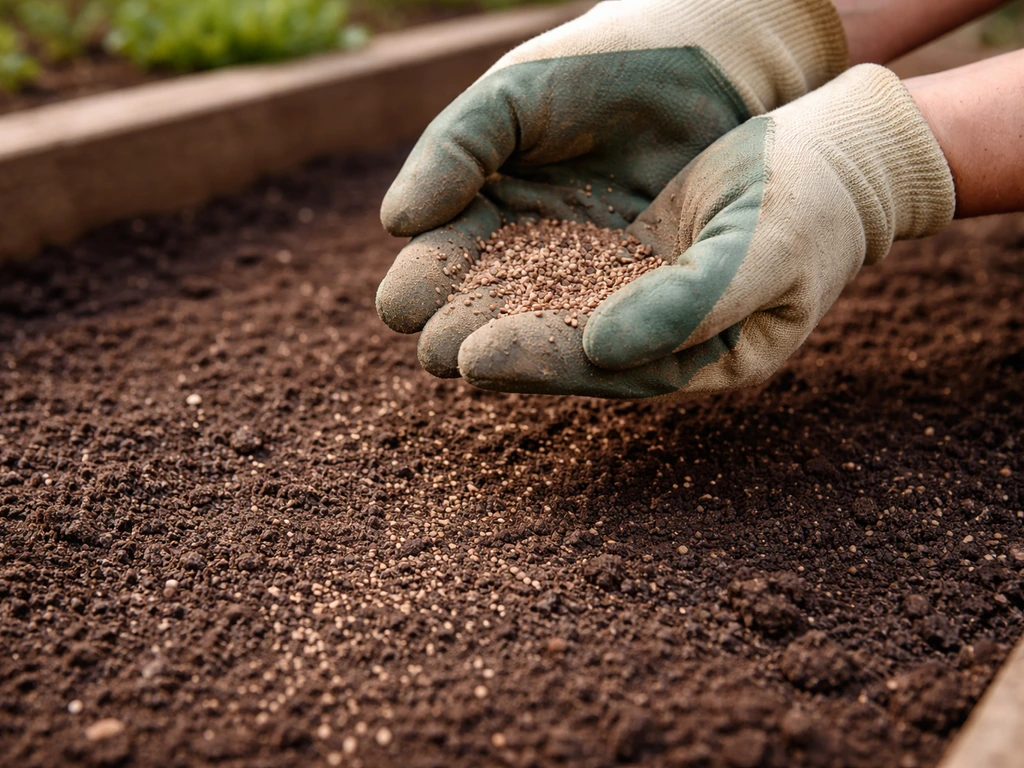
Lettuce seeds need light to germinate, which means you sow them shallow. The target depth is 1/8 inch, and no more than 1/4 inch. Many experienced growers simply scatter seeds on the surface of moist soil and press them in gently, then dust the thinnest possible layer of potting mix over the top just to keep them from drying out. That's all they need.
For baby-leaf cut-and-come-again production, sow more densely than you would for head lettuce. A good target is roughly 1/2 to 1 inch between seeds across the tray. You're not trying to grow individual plants to maturity; you're growing a leafy mat that you'll cut. Crowding is fine at this scale because you'll harvest before competition becomes a problem.
After sowing, water gently using a spray bottle or a watering can with a fine rose head. You want the surface moist but not flooded. Cover the tray loosely with plastic wrap or a humidity dome and set it somewhere warm. The optimal germination temperature for lettuce is 70 to 75°F. You'll typically see sprouts in 3 to 7 days at those temperatures. If your space is cooler, germination slows noticeably but still happens. Once you see the first sprouts, remove the cover and move the tray under your light immediately.
On timing: indoors, you can technically sow spring mix any month of the year. The main seasonal challenge is temperature, not sunlight, since you're controlling light with a grow lamp. That said, if your home gets warm in summer, keeping the lettuce cool enough to avoid bolting becomes the harder task. Can you grow lettuce in July? Yes, as long as you manage temperature to prevent bolting. This is where heat-tolerant blend varieties earn their keep.
Light, temperature, and watering: the three levers that control everything
Light
The target for indoor lettuce is 14 to 16 hours of light per day from a grow light, or a daily light integral (DLI) of roughly 12 to 17 mol/m²/day. Lettuce is not photoperiod-sensitive in the way some other crops are, so you have flexibility on the schedule as long as total light exposure is adequate. A simple plug-in timer set to 16 hours on, 8 hours off is the most practical setup. For grow light intensity, position the light so the canopy gets adequate PPFD, which for most clip-on or panel LED grow lights marketed for greens means keeping it 6 to 10 inches above the leaves and following the manufacturer's chart.
One practical note: if you're relying on a bright window supplemented by a small grow light, watch the plants. Leaves that are pale, long, and floppy instead of compact and richly colored are a clear sign they're not getting enough light. Move the light closer or increase the daily hours. Using a grow light also means you're not at the mercy of short winter days or cloudy weeks, which is one of the real advantages of indoor growing year-round.
Temperature
Lettuce is a cool-season crop, and that matters indoors just as much as outdoors. The sweet spot for growing (not just germinating) is roughly 60 to 70°F during the day, with nights slightly cooler if possible. Prolonged temperatures above 75 to 80°F, especially at night, push the plant toward bolting, where it sends up a flower stalk, leaves turn bitter, and the harvest is essentially over. If your home gets warm in summer, this is the single biggest challenge for indoor spring mix.
Practical fixes for warm homes include placing trays near an air conditioning vent, choosing a basement or north-facing room, or switching to a heat-tolerant blend as mentioned above. Indoor growing gives you more seasonal control than outdoor beds, but temperature is the one variable you still need to manage actively.
Watering
Water when the top half-inch of soil feels dry to the touch, and water thoroughly until it drains from the bottom. Then let the soil approach dry again before repeating. Lettuce needs consistent moisture but absolutely cannot sit in soggy soil. In most indoor conditions with a 6-inch tray under a grow light, you'll likely water every 2 to 3 days. In warmer or drier rooms, that can be every day. In cooler conditions, every 3 to 4 days. Use your finger, not a schedule, to decide when to water.
Bottom watering, where you pour water into the saucer and let the soil wick it up, is an option that reduces moisture on the leaf surface and around the base of seedlings, which helps prevent mold. It works well for lettuce trays once plants are established. For seeds and very young seedlings, a gentle top-water with a spray bottle is still the easiest approach.
Harvesting your spring mix: when to cut and how to keep it coming
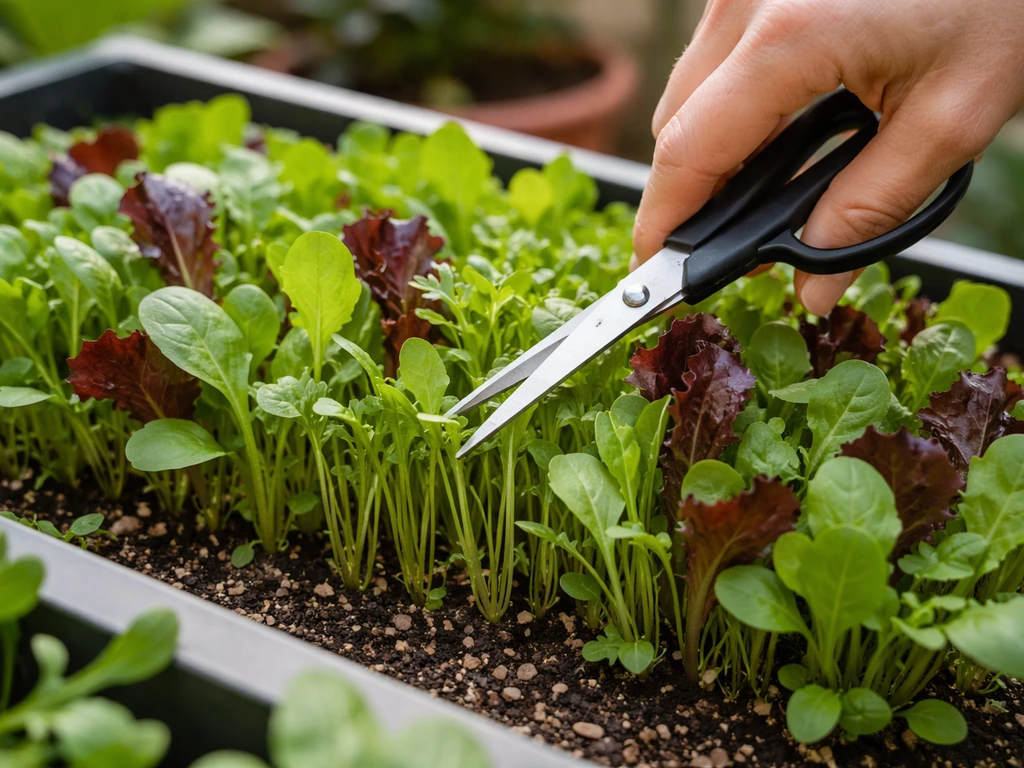
Spring mix is ready for its first cut when leaves are 3 to 5 inches tall, which usually happens 30 to 40 days after sowing for baby-leaf size. Don't wait for leaves to get large and mature. Bigger doesn't mean better here; older leaves are tougher, more bitter, and the window to bolt narrows quickly. Early and regular cutting is the whole strategy.
To harvest, use clean scissors or a sharp knife and cut across the tray about 1 to 2 inches above the soil level, leaving the growing crowns intact. The plants will push new leaves within 7 to 14 days, and you can cut again. Most trays yield two to four cuttings before growth slows, leaves become bitter, or plants start bolting. At that point, pull the tray and start a fresh one.
An alternative approach for individual varieties rather than dense-sown trays is to snip individual outer leaves at the baby stage, leaving the center growing point and smaller leaves behind. This can extend the productive life of each plant a bit longer. Both methods work; the whole-tray cut is faster and more practical when you're running multiple trays on a succession schedule.
The single most important rule of cut-and-come-again harvesting: don't let it bolt. Once you see a central stalk rising and elongating from any plant in the tray, harvest everything in that tray immediately, even if leaves are smaller than you'd like. Bolted lettuce is bitter and not worth saving. If you're harvesting on schedule and keeping temperatures cool, bolting should be rare.
Troubleshooting the most common indoor problems
| Problem | Likely Cause | Fix |
|---|---|---|
| Slow or no germination | Soil too cold or seeds sown too deep | Warm the tray to 70–75°F; make sure seeds are no deeper than 1/8–1/4 inch; check seed viability |
| Leggy, pale, floppy seedlings | Insufficient light intensity or too few hours | Move grow light to 6–10 inches above canopy; increase to 14–16 hours per day |
| Bitter leaves | Harvest delayed, temperatures too warm, or plant bolting | Harvest earlier (3–5 inch leaves); lower room temperature; use heat-tolerant blends |
| Wilting despite moist soil | Root rot from overwatering or poor drainage | Check that drainage holes are clear; let soil dry before next watering; reduce watering frequency |
| White fuzzy growth on leaves or soil surface | Mold or powdery mildew from high humidity and poor airflow | Add a small fan for airflow; water less frequently; bottom-water to keep leaf surfaces dry |
| Tiny flies hovering around soil | Fungus gnats | Let soil dry between waterings; use yellow sticky traps; apply BTI (Bacillus thuringiensis israelensis) as a soil drench |
| Sticky residue or clusters on leaves | Aphids | Rinse leaves with water; remove affected plants; inspect regularly and quarantine new plants |
Fungus gnats deserve a little extra attention because they're the most common indoor lettuce pest and beginner gardeners often don't see them coming. The adults are mostly a nuisance, but larvae feed on roots in the growing medium, which can stunt or kill young seedlings. The fastest fix is to let the top inch of soil dry out completely between waterings, since fungus gnats need moist soil to breed. Yellow sticky traps placed just above the soil surface will catch adults and let you gauge how bad the problem is. For active infestations, a BTI drench applied to the soil according to label directions is safe for food crops and specifically targets the larvae.
Mold and powdery mildew follow a different pattern: they thrive when humidity sits high and air is stagnant around the canopy. A small USB fan running on low pointed near (not directly at) the tray makes a meaningful difference. Even just cracking a window occasionally helps. The goal isn't to dry out the plants, just to keep air moving so leaf surfaces don't stay wet.
Succession planting: the real key to endless spring mix
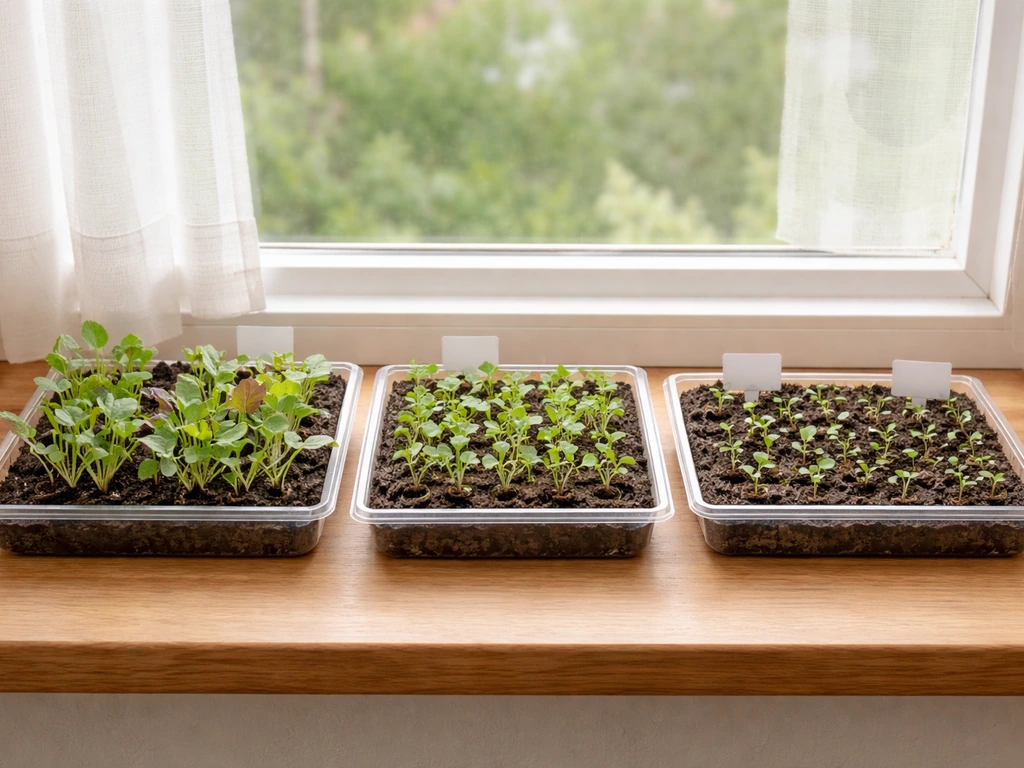
One tray of spring mix gives you a few weeks of harvests. Two trays started two weeks apart gives you a nearly continuous supply. That's the whole principle of succession planting, and it's more achievable indoors than outdoors because you control the environment year-round.
A practical schedule for beginners looks like this: start Tray 1. Two weeks later, start Tray 2. Two weeks after that, start Tray 3. By the time you're making your second or third cut from Tray 1, Tray 2 is ready for its first cut, and Tray 3 is just sprouting. Pull and replant each tray when it declines rather than trying to revive it.
- Week 1: Sow Tray 1
- Week 3: Sow Tray 2; Tray 1 nearing first harvest
- Week 5: First cut from Tray 1; Sow Tray 3; Tray 2 nearing first harvest
- Week 7: Second cut from Tray 1; First cut from Tray 2; Tray 3 nearing first harvest
- Week 9: Retire Tray 1; Sow replacement tray; continue rotating
Three trays on a two-week offset is a comfortable rhythm for most home growers. If you want more volume, add a fourth tray or use wider containers. If you find yourself drowning in lettuce (it happens), stretch the sowing interval to three weeks instead of two.
As seasons shift, the main adjustments are temperature-related, not light-related, since you're controlling light with a timer. In summer, if your home gets warm, switch to a heat-tolerant or slow-bolt blend and consider moving trays to a cooler room. In winter, the ambient air is actually ideal for lettuce, so you may find your best harvests happen during the coldest months, as long as the grow light is compensating for short days. If you want lettuce outdoors when temperatures drop, follow the same core idea and learn how to grow lettuce in cold weather by protecting plants and keeping them from freezing. If you’re asking can you grow lettuce in the winter, the indoor approach is the easiest way to keep plants producing consistently In winter. This is one of the big advantages indoor growing has over outdoor beds, where timing is everything and you're working around the weather rather than around a thermostat.
If you eventually want to scale up beyond trays, the same principles apply. Wider shelving units with one or two LED shop lights per shelf let you run six to eight trays at once, which is genuinely enough to keep a household in salad greens year-round. Many apartment growers find that a single wire shelving unit in a spare corner, outfitted with grow lights on a timer, handles everything. The mechanics are exactly the same as a single tray; you're just running more trays in the same rhythm.
Growing spring mix indoors rewards consistency more than anything else. Keep temperatures cool, keep the light on a timer, water when the soil needs it rather than on a fixed schedule, and harvest early. The cut-and-come-again model is genuinely forgiving once you understand it: even imperfect trays usually give you something worth eating, and each new tray is another chance to refine your setup. If you're interested in pushing your lettuce growing into other seasons outdoors, the same cool-temperature principles that make indoor spring mix work apply directly to growing lettuce through winter and into summer, though each of those comes with its own set of timing and variety choices. To learn how to grow lettuce in summer outdoors, focus on heat management and choose the right heat-tolerant varieties.
FAQ
What if my spring mix won’t germinate after a week?
First check the temperature (aim for about 70 to 75°F during germination). Also confirm the seeds were only lightly covered (about 1/8 inch, no deeper than 1/4 inch). If the surface dried out before sprouts appeared, re-wet gently and keep the tray covered loosely for the next few days to maintain humidity.
Do I need to thin spring mix seedlings?
Usually no, because you are harvesting baby leaves from a dense cut-and-come-again mat. If seedlings are so crowded that they look tangled or form a thick carpet, you can snip just the weakest seedlings with clean scissors so light and airflow reach the surface.
How do I prevent leaves from getting bitter or tough?
Harvest at 3 to 5 inches (do not wait for bigger leaves), and protect the tray from heat. The fastest fix when leaves start turning more bitter is to cut immediately and also cool the environment, since bolting pressure builds quickly when temperatures run high.
My lettuce is getting pale and stretched, what should I change?
That’s a light-intensity problem, not a watering problem. Move the grow light closer (roughly 6 to 10 inches above the canopy), and verify your timer gives you the full daily light window (about 14 to 16 hours). If you are using a window plus a small light, rely less on the window and increase grow light time.
How often should I water, and what are the signs I’m overwatering?
Use the finger test, water when the top half-inch dries. Overwatering shows up as consistently wet soil, slowed growth, algae on the surface, and sometimes fungus gnats. Improve drainage first, then space out watering so the mix can dry slightly between waterings.
Can I grow spring mix without a grow light using only a window?
You can try, but winter and poor window placement usually lead to weak, elongated growth. If you go window-only, choose the brightest south-facing spot and rotate the trays every couple of days. If leaves get floppy or pale, plan to add a grow light rather than increasing water or fertilizer.
Should I fertilize spring mix indoors?
Often you can skip feeding for the first few cuttings if your potting mix is reasonably fresh. If your leaves stay small and look washed out after a couple of harvests, apply a diluted, balanced liquid fertilizer (at a reduced rate) once growth restarts, then harvest normally. Avoid heavy feeding, since it can promote soft growth that’s more prone to disease.
Is bottom watering always better than top watering?
Bottom watering helps reduce moisture on leaves, which can lower the chance of mold, but it works best once seedlings are established. For very young seedlings, gentle top watering or spraying is safer to avoid uneven moisture in the crown area.
Why do I see white fuzz or powdery spots on leaves?
White fuzz can be mold from stagnant, humid air, powdery mildew can also appear when airflow is limited. Add airflow with a small fan on low (aim near the tray, not directly blasting leaves), water earlier in the day so the surface can dry, and avoid piling trays too close together.
What’s the best way to harvest so I get more cuttings?
Use clean scissors and cut about 1 to 2 inches above the soil, leaving the growing crowns intact. Harvest the whole tray as a batch when leaves reach baby size, rather than letting some plants grow large, since older leaves reduce tenderness and can increase bitterness.
How do I know when to restart a tray?
Restart when harvest quality drops, growth becomes slow, or any plant begins to bolt. A practical cue is when leaves are consistently smaller and more bitter than the last cut, pull the tray and start a fresh one instead of trying to revive it.
Can I reuse the same soil in my trays?
It’s not recommended. After multiple cuttings, soil can accumulate root residue, salt buildup from water, and potentially mold or gnats. For best results, discard the used mix and start with fresh potting mix in a clean tray each cycle.
How do I handle fungus gnats if they show up?
Let the top inch dry out between waterings, since larvae need consistently moist conditions to thrive. Add yellow sticky traps just above the soil to monitor adults, and if they’re persistent, use a BTI soil drench labeled for food crops according to directions.
What should I do if my tray starts to bolt?
If you see a central stalk or elongating stem from any plant, harvest the entire tray immediately, even if leaves are smaller. Then cool the setup and start a new tray on the next succession interval so you do not waste time trying to keep a bolting crop producing.
How can I stagger harvests if I only have room for one tray at a time?
If space is limited, you can sow smaller “mini trays” in the same container by dividing the area, then cut them separately when they reach baby size. Another option is to sow a second batch into a shallow section about 10 to 14 days after the first, so you get an overlap without needing full separate trays.