Lettuce is one of the easiest and most rewarding crops to grow in aquaponics. It thrives in the nutrient-rich, fish-waste-fed water, grows fast enough to see real progress week to week, and does not demand a complicated setup to get started. You can expect baby leaves in as little as 25 to 30 days and full heads in 45 to 60 days once your system is cycled and your water parameters are dialed in. The keys are picking the right variety, keeping your pH between 6.8 and 7.0, giving roots access to well-oxygenated water, and providing at least 12 to 16 hours of light indoors. Get those basics right and lettuce almost grows itself.
How to Grow Lettuce in Aquaponics Step by Step
Marcus Holloway
15 Jun 2026
Best lettuce varieties for aquaponics
Not every lettuce variety performs equally well in aquaponics. You want types that mature quickly, tolerate consistent moisture around the roots, and resist bolting in your particular climate or indoor environment. Loose-leaf varieties are almost always the best starting point because they let you harvest continuously without pulling the whole plant.
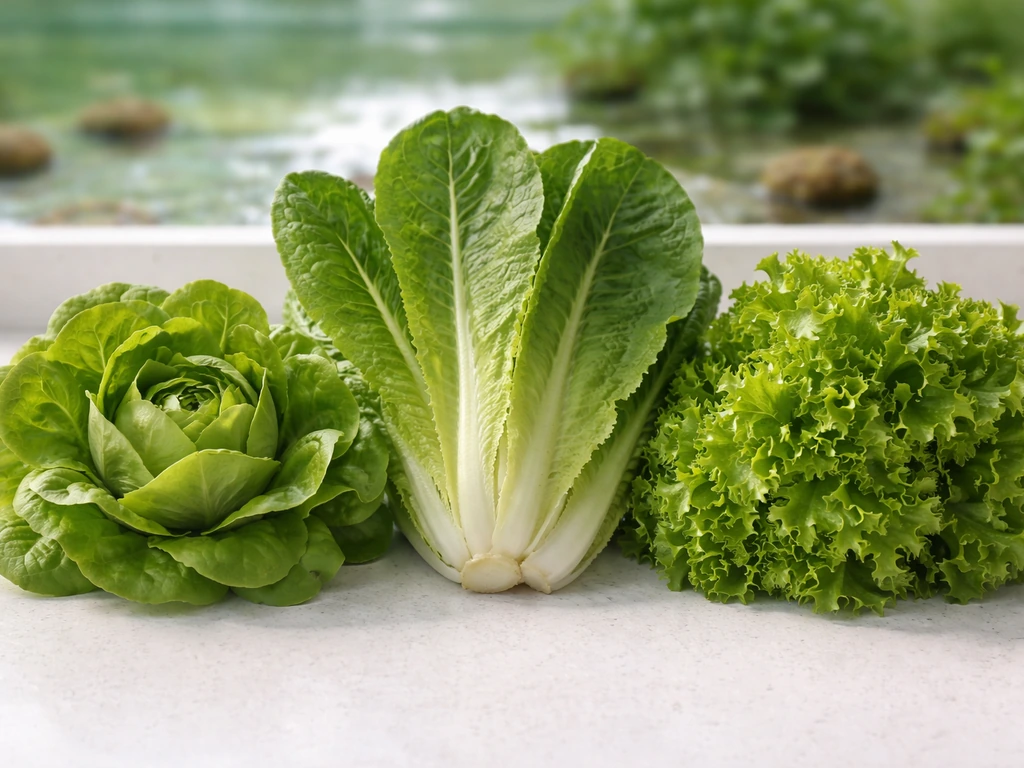
- Butterhead (Bibb, Boston): One of the top choices. It forms compact, soft heads, handles fluctuating temperatures better than most, and does well in both media-bed and float (raft) systems. Harvest in about 45 to 55 days.
- Loose-leaf (Oak Leaf, Black Seeded Simpson, Red Sails): Fast, forgiving, and ideal for cut-and-come-again harvesting. You will be eating fresh lettuce within 25 to 35 days. Great for beginners.
- Romaine (Cos): A bit slower at 60 to 70 days but produces dense, crisp heads. Romaine handles higher nutrient loads well, which is helpful when fish numbers are high.
- Mini Romaine / Baby Gem: Compact version of romaine; perfect for smaller systems with limited grow-bed space.
- Batavian types (Nevada, Sierra): Heat-tolerant and slow to bolt, which makes them valuable if you are running your system outdoors in warmer months or in an indoor space without great temperature control.
- Varieties to avoid: Iceberg/crisphead types take 70 to 80-plus days and are fussier about conditions. They are possible but not a smart first crop.
If I had to recommend just one variety to start with, it would be Butterhead or a loose-leaf mix. Both are forgiving, productive, and will give you early confidence that your system is working.
Setting up your aquaponics system for lettuce
Before a single seed goes in, your system needs to be properly cycled, meaning the beneficial bacteria that convert fish ammonia to nitrates (the nitrogen lettuce actually uses) are established. Cycling typically takes 3 to 6 weeks. Do not rush this step. Planting into an uncycled system almost always results in poor germination, yellowing, and stunted seedlings.
Grow bed type and media
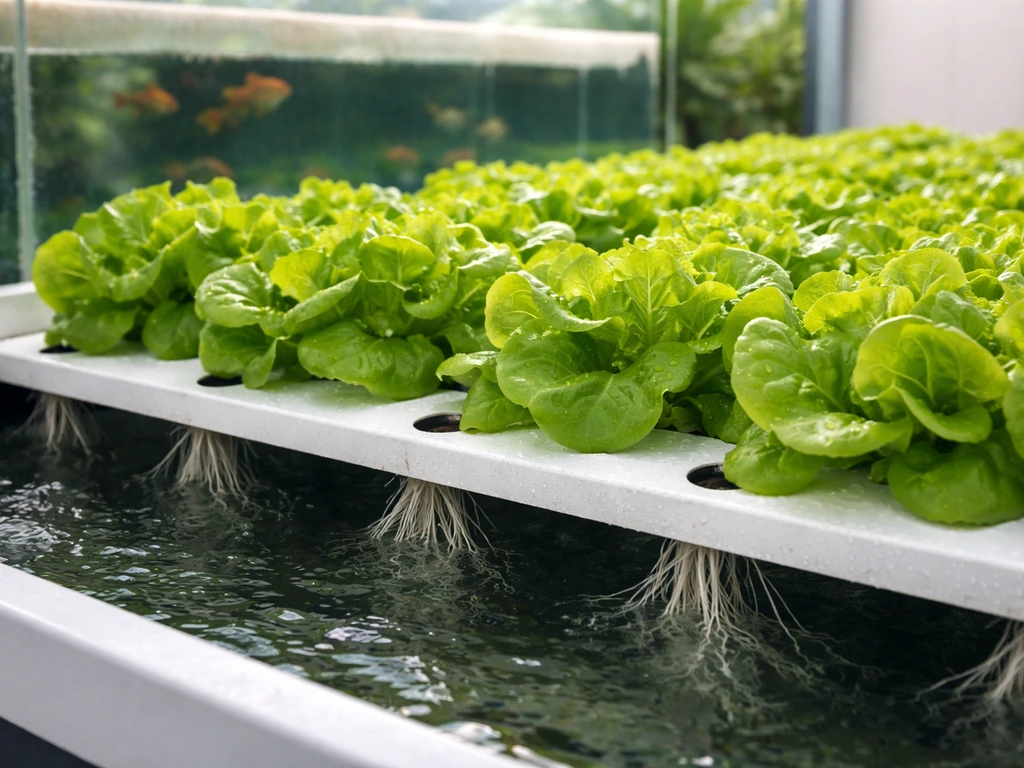
Lettuce grows well in two main aquaponics configurations: media-bed systems and deep water culture (DWC or raft) systems. Media beds use a container filled with an inert growing medium like expanded clay pebbles (hydroton), lava rock, or rinsed pea gravel. Raft systems float lettuce in net pots on a sheet of polystyrene or foam over a channel of continuously flowing nutrient water. Both work, but media beds are more beginner-friendly because the medium provides physical support, buffers water fluctuations, and houses a huge population of beneficial bacteria. Raft systems grow lettuce slightly faster once dialed in, and they are easier to scale.
For media beds, expanded clay pebbles are the most popular choice: they are pH-neutral, lightweight, drain well, and do not compact over time. Use a medium with particles around 8 to 16 mm in diameter. Beds should be at least 12 inches (30 cm) deep so roots have room to develop without clogging the drainage outlets. If you use smaller media like sand or fine gravel, you will get root clogging and anaerobic (oxygen-starved) zones, which leads to root rot and a very unhappy system.
Water flow and flood/drain cycles
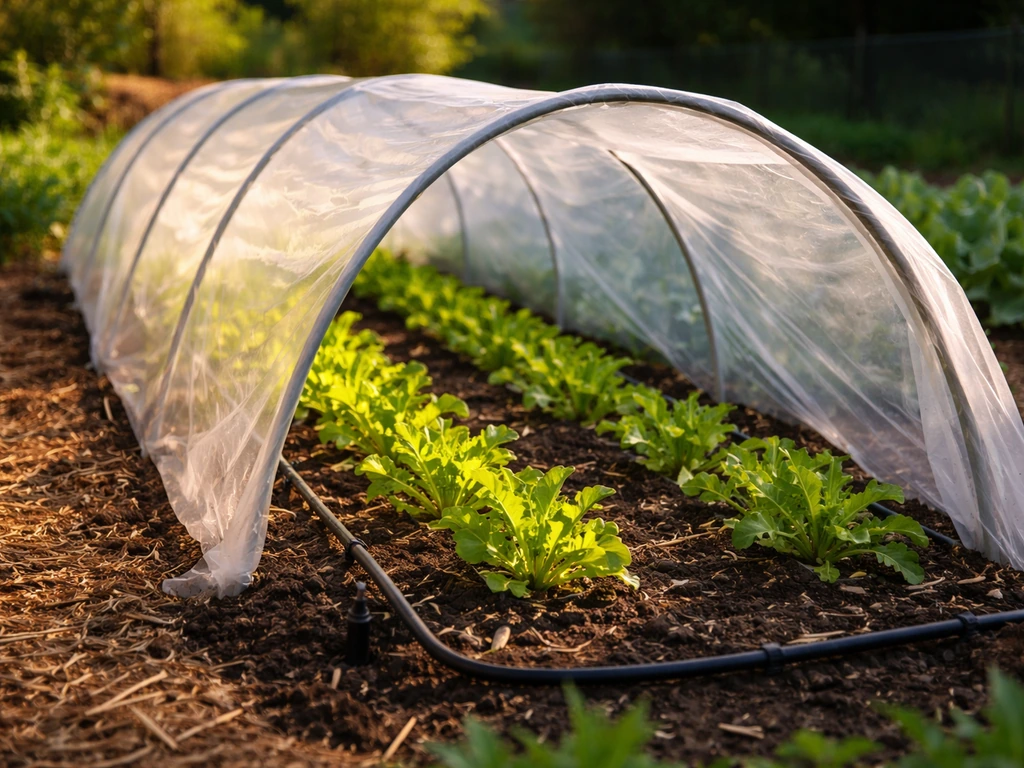
In a flood-and-drain (ebb and flow) media-bed system, you typically flood the bed for 15 minutes and drain for 45 minutes using a bell siphon or timer. This cycling keeps roots oxygenated between floods, which is critical. Lettuce roots sitting in permanently flooded media will rot within days. For raft systems, water flows continuously but slowly, and an air stone or diffuser keeps dissolved oxygen (DO) levels up. OSU recommends one air stone per 10 square feet of float-bed area as a minimum. Your target for dissolved oxygen is at least 5 mg/L, and ideally 6 to 7 mg/L. If your DO drops below 3 mg/L, you will see slow growth, wilting, and root disease even when everything else looks fine.
System placement
Outdoors, place your system where it gets morning sun and afternoon shade in hot climates, or full sun in cooler regions. Avoid locations with strong wind, which dehydrates seedlings and drives water temperature swings. Indoors, placement near a south-facing window helps but rarely provides enough light intensity on its own; most indoor setups need supplemental grow lights. If you are wondering can you grow water lettuce indoors, you can set up a similar indoor water-garden style system with the right light, water flow, and clean water conditions. Wherever you place the system, make sure you can easily reach all plant sites for routine checks, top-offs, and harvesting without leaning awkwardly over the fish tank.
Planting: seeds vs transplants, spacing, and schedules
Seeds vs transplants
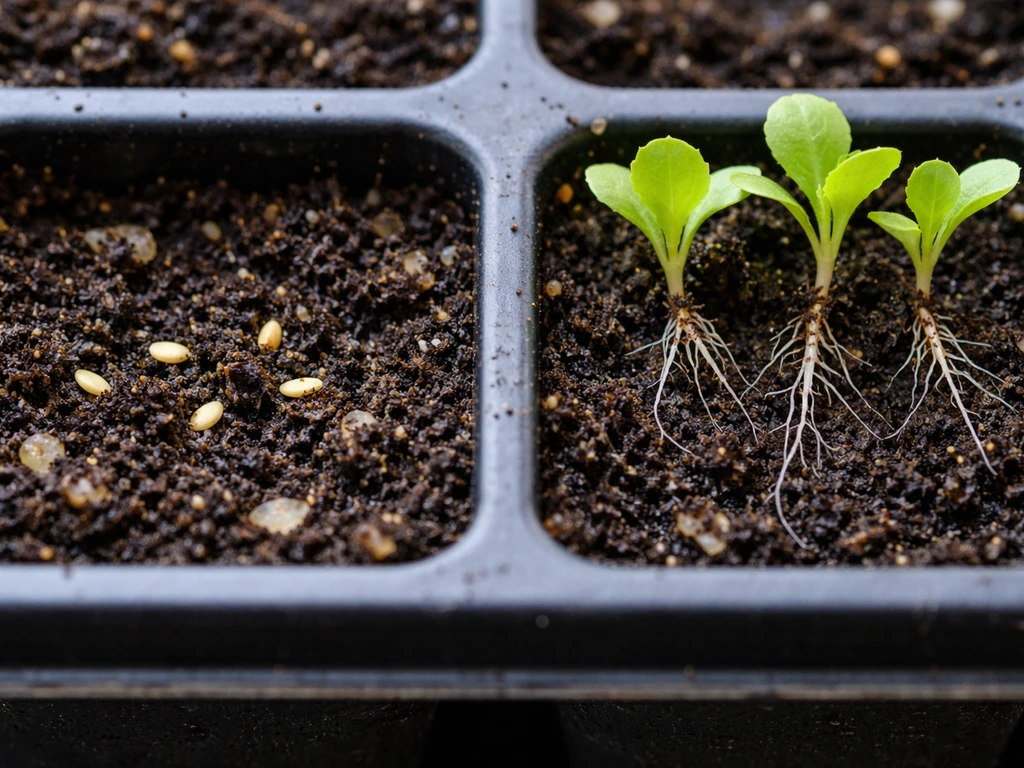
You can start lettuce directly in the aquaponics system or germinate seeds in a separate seedling tray and transplant once they have a root system. I prefer germinating in a separate 50-cell or 72-cell plug tray using a neutral medium like rockwool cubes, coconut coir plugs, or moistened perlite. Germinate the seeds under humidity for 3 to 5 days at around 65 to 70 degrees F (18 to 21 degrees C). Once seedlings have their first true leaves, typically around 10 to 14 days after sowing, they are ready to transplant into net pots and into the system. This approach protects delicate seedlings from the system's water chemistry while it stabilizes.
Direct seeding into media beds works fine too. Drop 2 to 3 seeds per planting hole, cover lightly with medium, and thin to one plant once seedlings are an inch tall. Germination takes 3 to 7 days at proper temperatures. Just know that seeds can wash around during flood cycles, so use a slightly denser medium or place seeds in a small depression.
Spacing
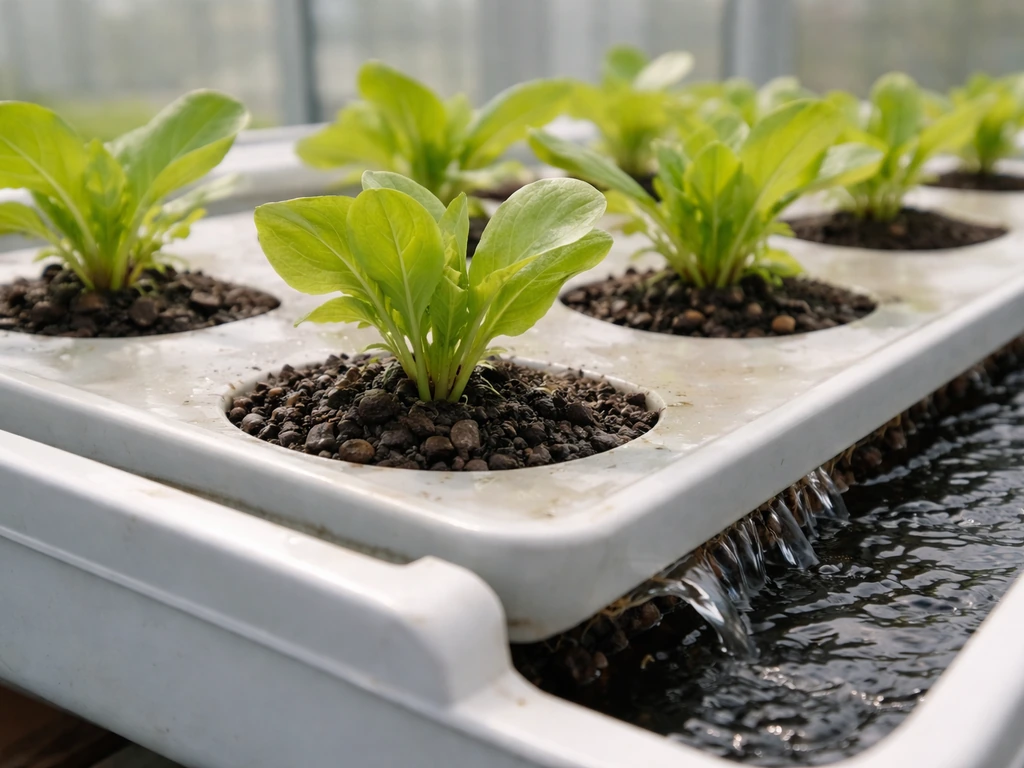
Spacing matters more in aquaponics than in soil gardening because crowded plants compete for the limited nutrient flow passing through their root zone. For loose-leaf varieties, space plants 6 to 8 inches (15 to 20 cm) apart. For butterhead and romaine, use 8 to 10 inches (20 to 25 cm). In raft systems, standard net-pot spacing is typically 8 inches center to center. Overcrowding reduces airflow, increases humidity around leaves, and creates conditions for fungal disease.
Succession planting
To keep harvests continuous rather than getting one big glut followed by a gap, stagger your plantings every 2 weeks. In a system with 20 plant sites, for example, transplant 10 seedlings on week one and another 10 on week three. By the time you harvest the first batch, the second batch is halfway to maturity. This rhythm keeps your kitchen stocked and your system running at full capacity.
Environmental targets: temperature, light, pH, and oxygenation
Lettuce is a cool-season crop, and your environmental targets reflect that. Getting these numbers right is the difference between a thriving system and one that keeps frustrating you with slow growth or bolting.
| Parameter | Target Range | Notes |
|---|---|---|
| Water temperature | 65–72°F (18–22°C) | Above 75°F (24°C) triggers bolting and tip burn |
| Air temperature | 60–75°F (15–24°C) | Cooler nights are fine and can actually improve flavor |
| pH | 6.8–7.0 (system target) | Acceptable range 6.5–7.5; stay consistent rather than chasing perfection |
| Dissolved oxygen (DO) | 5–7 mg/L | Minimum 3 mg/L; below this causes root and growth problems |
| EC (nutrient level) | 1.2–1.8 mS/cm (560–840 ppm) | Fish stocking density largely controls this in aquaponics |
| Light (indoor) | 12–16 hours/day, 200–400 µmol/m²/s | LED grow lights at 6–12 inches above canopy |
| Light (outdoor) | 6+ hours direct sun | Shade cloth (30–40%) helps in summer heat |
Light for indoor systems
Indoor aquaponics systems rarely get enough natural light unless they are in a greenhouse. A window simply does not deliver the intensity lettuce needs. Use a full-spectrum LED grow light and run it 14 to 16 hours per day on a timer. Keep the light 6 to 12 inches above the canopy and raise it as the plants grow. Under-lighting is one of the most common reasons indoor aquaponic lettuce stays small and leggy. If plants are stretching or leaning toward the light source, the light is too dim or too far away. If you are exploring a simpler system without fish, the approach for how to grow lettuce hydroponic covers similar lighting principles in more detail. If you are aiming for hydroponic lettuce specifically, the same light timing and intensity targets are key to helping it grow best how to grow lettuce hydroponic. If you want to grow lettuce without fish, the hydroponic approach covers many of the same light, pH, and spacing basics how to grow lettuce hydroponic.
pH management
pH in aquaponics is a constant balancing act because fish, plants, and the nitrifying bacteria all have slightly different preferences. The practical working target for your system pH is 6.8 to 7.0. This is the sweet spot where lettuce can absorb most nutrients, fish stay comfortable, and the bacteria that run your nitrogen cycle remain highly active. If pH drops below 6.5, add small amounts of potassium hydroxide or calcium hydroxide to raise it. If it climbs above 7.5, a small addition of food-grade phosphoric acid or natural acidifiers like diluted vinegar can nudge it down, but always make adjustments gradually (no more than 0.2 pH units per day) to avoid shocking the fish.
Feeding and water management for leafy growth
One of the advantages of aquaponics for lettuce is that the fish largely handle fertilization for you. Fish waste breaks down through the nitrogen cycle into nitrates, which lettuce absolutely loves. Your job is to monitor the system and make sure that cycle is running cleanly rather than adding external nutrients the way you would in a purely hydroponic setup.
What to test and how often
- pH: Test every 2 to 3 days initially, then weekly once the system is stable. Sudden drops often mean you need to do a partial water change or check fish health.
- Ammonia and nitrite: Should be near zero (below 1 ppm) in a fully cycled system. Spikes mean the bacterial colony is overwhelmed or stressed.
- Nitrate: Healthy range for lettuce production is 20 to 80 ppm. Below 20 ppm and growth slows; above 80 to 100 ppm you risk fish stress.
- Dissolved oxygen: Test with a DO meter weekly, or invest in a continuous monitor if you are running a larger system. Check more often in summer when warm water holds less oxygen.
- Water temperature: Monitor daily, especially in outdoor systems. Even a few days above 75°F (24°C) can trigger bolting.
- Water level: Top off with dechlorinated or aged tap water as evaporation drops the level. Do not replace more than 10 to 20% of system volume at once.
Supplementing nutrients when fish alone are not enough
In lightly stocked systems, lettuce may show deficiencies in iron (yellowing between veins), potassium, or calcium even when the nitrogen cycle is working fine. Chelated iron is the most commonly needed supplement in aquaponics and is safe to add directly. Seaweed extract or diluted fish emulsion can address micronutrient gaps without disrupting the bacterial colony. Always use aquaponics-safe products, meaning no synthetic chelates that contain EDTA in high concentrations, as they can harm fish. When in doubt, a small partial water change and a slight increase in fish feeding rate will often nudge nutrient levels up more safely than adding supplements.
Care routine and harvesting timeline
Daily and weekly tasks
- Daily: Feed fish at a consistent time, check that pumps and air stones are running, scan plants for signs of wilting, yellowing, or pest activity, and top off water if needed.
- Every 2 to 3 days: Check pH and water temperature. Look at the base of plants for any slime or root discoloration.
- Weekly: Full water parameter test (ammonia, nitrite, nitrate, pH, DO). Remove any dead leaves promptly since they decompose and cause ammonia spikes. Clean any blocked emitters or drain screens.
- Monthly: Inspect grow media for compaction or root accumulation around drains. Check fish health and adjust feeding rates if growth or appetite changes.
Harvesting baby leaves
For a cut-and-come-again approach with loose-leaf varieties, start harvesting outer leaves once plants are 4 to 6 inches tall, typically 25 to 35 days after transplanting. Use clean scissors or snips and cut leaves 1 inch above the growing point (crown). Leave the inner leaves and growing tip intact. The plant will regrow and you can harvest again in another 10 to 14 days. You can typically get 3 to 4 harvests from a single plant before it starts to bolt or decline.
Harvesting full heads
For butterhead or romaine heads, wait until the head feels firm and full, usually 45 to 60 days after transplanting for butterhead and 60 to 70 days for romaine. Cut the entire head at the base. In aquaponics, some growers leave the root system in place and let a secondary shoot regrow from the stump, though the regrowth head is typically smaller. Most commercial growers remove the whole plant and replant to maintain productivity. After pulling a plant, rinse the net pot and grow media slot, then drop in a new seedling within a day or two to keep the bed producing.
Troubleshooting common aquaponic lettuce problems
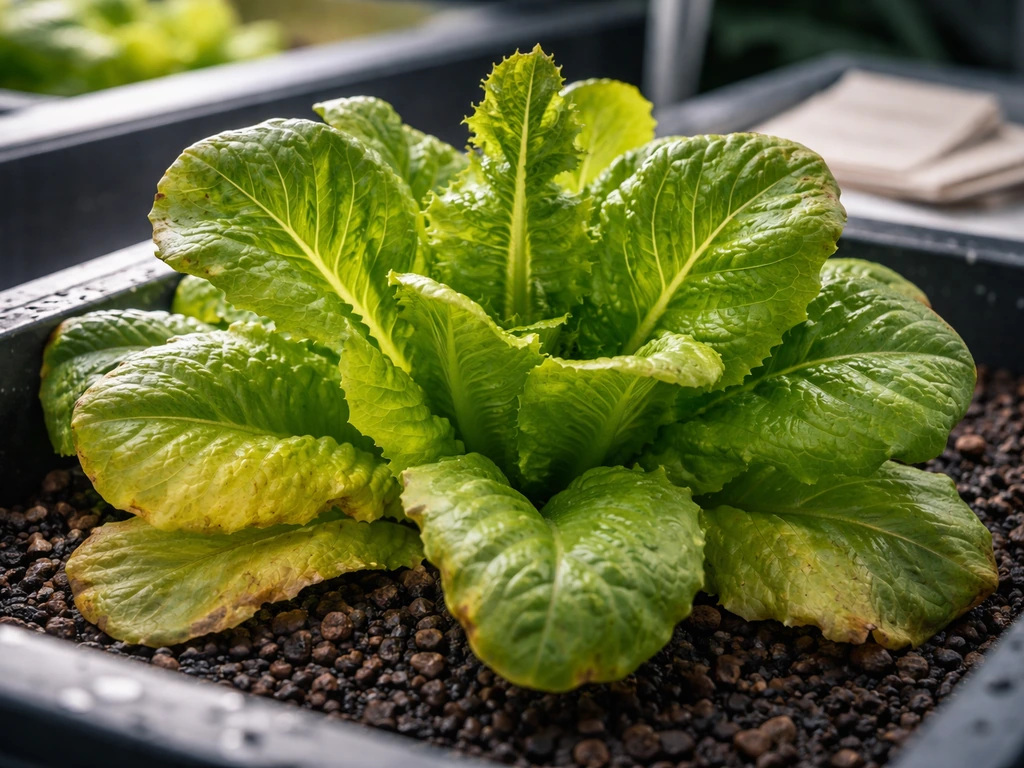
Even a well-designed system hits snags. Here are the problems I see most often and what actually fixes them.
Yellowing leaves
If older (lower) leaves yellow while newer growth stays green, that is usually nitrogen deficiency. Check that your nitrate levels are at least 20 ppm and that your fish are being fed adequately. If younger leaves are yellowing with green veins remaining, that points to iron deficiency, which is very common in aquaponics if pH has crept above 7.2 (high pH locks out iron). Lower pH slightly and add a small dose of chelated iron. Uniform yellowing across the whole plant usually means the system is not cycled yet or ammonia/nitrite is toxifying the roots.
Tip burn
Brown, papery edges on inner leaves are tip burn, caused by calcium not reaching the leaf tips fast enough rather than an actual calcium deficiency. It is almost always a circulation and transpiration problem. Increase airflow around plants (a small fan helps), improve water circulation in the grow bed, and make sure your DO is at or above 5 mg/L. Choosing tip-burn-resistant varieties like Buttercrunch or Nevada also helps significantly. In aquaponics specifically, tip burn often spikes when water temperature climbs and plants grow faster than their calcium transport can keep up with.
Bolting
If your lettuce is sending up a tall central stalk and turning bitter, it has bolted. The triggers are heat, long days, or water stress. If you are in summer: add shade cloth (30 to 40%), increase the water circulation rate to cool roots, or switch to heat-tolerant varieties like Batavian or Muir. Indoors, check that your grow space is not heating up above 75°F (24°C) during the light period. Once a plant bolts, there is no reversing it. Pull it, compost it, and replant. Prevention is the only real fix.
Slow or stunted growth
If plants are alive but barely growing, run through this checklist in order: Is your system fully cycled (nitrate above 20 ppm, ammonia and nitrite near zero)? Is pH between 6.5 and 7.5? Is DO at or above 5 mg/L? Is light intensity adequate (for indoor systems especially)? Is water temperature below 75°F (24°C)? Slow growth is almost always one of these five things. Nine times out of ten when I troubleshoot a struggling indoor system, the answer is insufficient light or an uncycled system, not a complex nutrient deficiency.
Root problems
Healthy aquaponic lettuce roots are white to cream-colored with a slightly fuzzy appearance. Brown, slimy, or foul-smelling roots indicate root rot, usually caused by low dissolved oxygen or by the system being flooded continuously without draining. Fix this by checking your bell siphon or drain mechanism is working, ensuring your flood/drain cycle is running on schedule, and adding an air stone to any stagnant water zones. If root rot is widespread, you may need to remove affected plants, clean the grow bed thoroughly, and reintroduce seedlings once DO is confirmed above 5 mg/L.
Pests and disease
Aphids and fungus gnats are the most common pest visitors in both indoor and outdoor aquaponic lettuce systems. For aphids, a strong water spray to dislodge them works well for mild infestations. Introduce beneficial insects like ladybugs or lacewings for outdoor systems. For fungus gnats, let the top layer of media dry slightly between cycles if possible, and use yellow sticky traps to monitor and reduce adult populations. Do not use conventional pesticides in an aquaponic system because even many organic options can harm fish. Neem oil in very dilute concentrations (and applied only to foliage, not the water) is sometimes used but requires caution. Powdery mildew appears in humid indoor setups with poor airflow; a small oscillating fan running during light hours usually prevents it entirely.
Your next steps, starting today
Here is how I would approach this if I were starting from scratch today. If your system is not yet cycled, start the cycling process now and order your seeds while you wait. If it is already cycled, pick a butterhead or loose-leaf variety, start seeds in rockwool cubes or coir plugs today, and you will have transplant-ready seedlings in 10 to 14 days. While seeds germinate, test and adjust your pH to 6.8 to 7.0, confirm your DO is above 5 mg/L, and set up your light timer if growing indoors.
- This week: Cycle your system if needed, or confirm water parameters (pH, ammonia, nitrite, nitrate, DO) are in range. Start seeds in a separate germination tray.
- Week 2: Transplant seedlings into net pots once first true leaves appear. Space at 6 to 10 inches depending on variety.
- Week 3 to 4: Monitor growth rate. Test pH and DO every 2 to 3 days. Look for early signs of yellowing or tip burn and address immediately.
- Week 4 to 5: Begin harvesting outer leaves from loose-leaf varieties. Continue monitoring and top off water as needed.
- Week 6 to 8: Harvest full heads of butterhead or romaine. Replant the same day to keep the system productive and succession planting on schedule.
- Ongoing weekly habit: Full water parameter test, fish health check, root inspection, and debris removal.
Aquaponics has a learning curve in the first few weeks while you get a feel for how your particular system behaves. But once it is stable, growing lettuce this way is genuinely easier than soil gardening: no watering decisions, no fertilizer mixing, and growth rates that make every week feel like progress. Stick to the basics, stay consistent with your monitoring, and you will be harvesting fresh lettuce faster than you expect. If you are specifically wondering how to grow water lettuce at home, keep the same water-quality mindset and tune lighting, oxygen, and pH. If you want a simpler approach, you can also learn how to grow a lettuce in water using hydroponic-style setups aquaponics.
FAQ
Can I plant lettuce right away before my aquaponics system is cycled?
No. Lettuce is sensitive to ammonia and nitrite, so if your system is not cycled you should expect poor germination and yellow, stunted seedlings. If you want to speed up readiness, use bacteria from an already running system (from a filter or media you trust), but still confirm nitrate is present (and ammonia and nitrite are near zero) before planting.
Do I have to harvest lettuce as whole heads, or can I keep cutting it?
If you are targeting loose-leaf cut-and-come-again, you do not need to pull whole plants. Harvest outer leaves once plants reach about 4 to 6 inches tall, cut just above the crown, and leave the growing tip intact so regrowth continues. If you pull the entire plant too early, you will break the regrowth cycle and reduce total yield.
What’s the safest way to raise pH if it’s drifting above 7.0?
Yes, but do it gently. Raise pH in small steps, and after each adjustment wait and re-test. If your pH is creeping up, look for causes first, such as overfeeding, low biofilter activity, or source water with high alkalinity, rather than repeatedly dosing chemicals.
How do I know my flood-and-drain schedule is correct for lettuce?
Run the flood-and-drain timer based on oxygen needs, not on a fixed day schedule. For lettuce, the typical pattern is short floods with long enough drains that roots are exposed to well-oxygenated water between cycles. If plants show wilt or root issues, check whether the drain is completing fully and whether the bell siphon is clogging or mis-timing.
My nitrate and pH look good, but lettuce is struggling, what should I check next?
Do not rely only on pH and assume the rest is fine. Lettuce often struggles when dissolved oxygen is off even if pH and nitrate look acceptable. Treat DO as a primary variable, especially in raft systems, and confirm it with an actual DO meter. Aim for at least 5 mg/L, ideally 6 to 7 mg/L.
How hot is too hot for aquaponic lettuce?
Yes. Most growers find lettuce performs better when water stays cool, especially during lights-on. If your water temperature climbs above about 75°F (24°C), growth slows or lettuce may bolt or develop disorders like tip burn faster than it can transport calcium. Simple fixes include shading, better insulation, and increasing water circulation or adding a chiller if needed.
Is it better to germinate lettuce separately or direct seed into the aquaponics grow bed?
It depends on the stage. Seedlings typically need extra protection because they are more easily stressed by water condition swings. If you germinate separately and transplant once they have true leaves (around 10 to 14 days), you reduce early shock. If you direct seed, use denser medium or seed placement to prevent seeds from drifting during flood cycles.
How strict do I need to be with lettuce spacing in aquaponics?
Spacing is not just about leaf size, it affects airflow and humidity around the canopy. If plants are too close, you increase fungal risk and reduce how effectively nutrients reach each root zone. For loose-leaf varieties, use about 6 to 8 inches between plants, and thin promptly if you started with multiple seeds per hole.
How can I tell if my indoor grow light is the problem?
It should be clean and consistent. If your seedlings look healthy but growth is sluggish, check whether your grow light is too far away, dim, or on too few hours per day. For indoor setups, typical practice is a full-spectrum LED on a timer for about 14 to 16 hours daily, with the light close enough to avoid stretching.
What should I do if I see brown or slimy lettuce roots?
For root rot, the best intervention is improving oxygen and fixing drainage issues. Remove affected plants if the problem is spreading, verify bell siphon or drain function, ensure flood-and-drain fully drains, and add air for stagnant zones. After you correct DO and circulation, reintroduce seedlings once roots can stay healthy.
How does fish feeding affect lettuce growth, and what if nitrate is low?
Overfeeding can increase ammonia and stress fish and biofilters, while underfeeding can starve the nitrogen cycle. Use fish feeding as your primary lever, but adjust gradually and confirm the system response with water tests. A common sign that fish are underfed is that nitrate stays low (for example, not reaching roughly 20 ppm).
If my lettuce bolts, can I rescue it or should I start over?
For bolting, there is usually no fix that saves the current plant. Prevention matters, reduce heat stress with shade or cooler root temperatures, and avoid long day lengths indoors. Once you see a tall central stalk and bitter leaves, pull the plant and replant with a more suitable, faster or heat-tolerant variety for your conditions.
What are safe ways to handle aphids and fungus gnats in an aquaponics system?
Yes for minor pests. Aphids can often be dislodged with a strong water spray, and fungus gnats can be reduced by drying the top layer slightly between wetting cycles and using yellow sticky traps to track adults. Avoid conventional pesticides in aquaponics, because many can harm fish and biofilter performance.
My lettuce has brown tips, does that always mean I need more calcium?
Usually, yes. A common cause of tip burn is not that you lack calcium in the system, it’s that calcium delivery to leaf tips can’t keep up. Increase airflow and water movement, confirm dissolved oxygen, and watch water temperature swings. If you repeatedly see it, switching to tip-burn-resistant varieties can help.
What’s the fastest troubleshooting checklist when aquaponic lettuce growth stalls?
If your plants are alive but barely growing, follow a priority order. First confirm the system is truly cycled (nitrate present, ammonia and nitrite near zero), then verify pH is in range, check dissolved oxygen, confirm light intensity and timing, and finally check water temperature. In most cases this sequence identifies the bottleneck quickly.