Yes, lettuce absolutely grows in water, and it does so really well when you give it the right setup. I've grown full heads of butterhead lettuce in a simple bucket of nutrient solution on a kitchen counter, and the results beat anything from a grocery bag. The catch is that 'water' alone won't cut it. Plain tap water can get a lettuce seedling going for a week or two, but if you want a harvestable head, you need a nutrient solution, oxygen in that water, and some light discipline. Once you understand those three things, the rest is straightforward.
How to Grow Lettuce in Water: Step-by-Step Indoors
Marcus Holloway
21 Apr 2026
Can lettuce grow in water (and when it works)
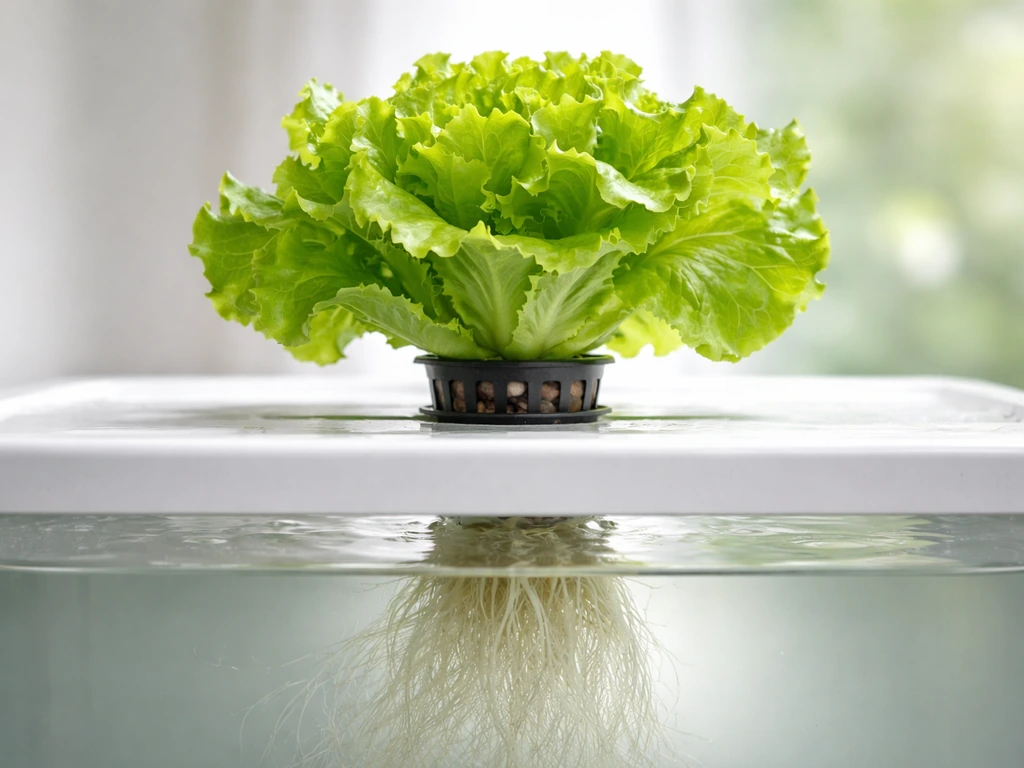
Lettuce can grow entirely in water, from seedling to harvest, without a single handful of soil. This is the foundation of hydroponic lettuce production, and it works just as well at home as it does commercially. What matters is that the water isn't just water: it needs dissolved nutrients, the right pH, and dissolved oxygen. Plain water lacks all three in the right balance, which is why you'll see cuttings or seedlings perk up briefly in a glass of water and then stall or rot. That's not a failure of the method; it's a signal that the water needs to become a proper nutrient solution.
The method works best for loose-leaf and butterhead varieties because they form heads faster and tolerate the controlled conditions of water culture more reliably than dense crisphead types. It works especially well indoors, where you control temperature and light, and for apartment growers who have no garden space. It does not work well if you just drop seeds into a jar of tap water and walk away. That approach almost always produces weak, yellowing seedlings that never size up.
Best water setups for lettuce
There are two main approaches to growing lettuce in water at home, and choosing between them comes down to how much equipment you want to manage and how serious you are about reaching a full head versus just getting fresh snipping greens.
Root-in-water (Deep Water Culture style)
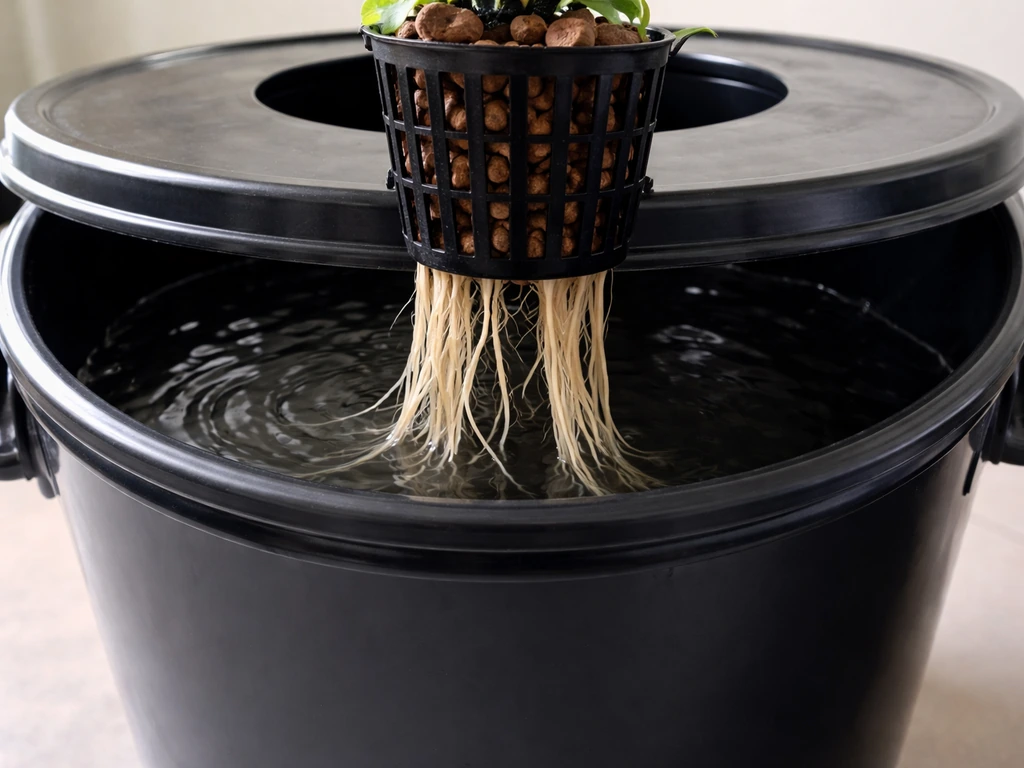
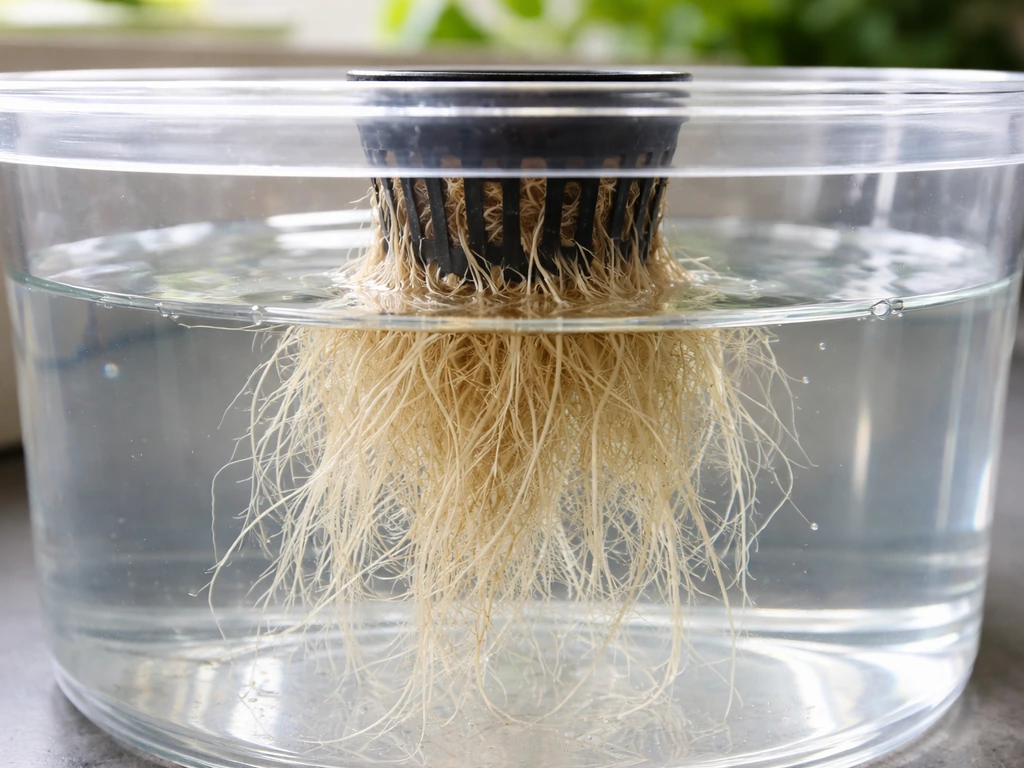
This is the most beginner-friendly option. You suspend a net pot (a small plastic cup with slots) in the lid of a bucket or opaque tote, fill the bucket with nutrient solution, and let the roots hang into the water. An aquarium air pump and air stone keep dissolved oxygen above 6 ppm, which is the level where lettuce roots function properly. Without aeration, roots sitting in still water suffocate and rot within days. This setup is sometimes called a DWC (deep water culture) system, and it's the one I recommend if you're starting out. A 5-gallon bucket can hold two to four lettuce plants comfortably.
Nutrient Film Technique (NFT) style
NFT runs a thin stream of nutrient solution over the roots continuously. The roots are exposed to air above the flow, which handles oxygenation naturally without an air stone. This method is more common in commercial setups and a bit more involved to build at home, but it scales well if you want to grow many plants. The principle is that roots never sit fully submerged, so oxygen isn't a problem, but you do need a pump, a timer, and a sloped channel or pipe to keep the flow moving.
| Feature | Deep Water Culture (DWC) | Nutrient Film Technique (NFT) |
|---|---|---|
| Root environment | Fully submerged in nutrient solution | Roots sit in thin flowing film |
| Oxygenation method | Air pump and air stone required | Roots exposed to air above flow |
| Complexity | Low (bucket, pump, net pots) | Medium (pump, channel, slope) |
| Best for | Beginners, 1–6 plants | Intermediate growers, larger setups |
| Risk if pump fails | Roots suffocate quickly | Solution stops flowing but roots dry out |
| Variety suitability | All lettuce types | All lettuce types |
For most home growers, DWC is the right call. It costs less, requires fewer parts, and is easy to monitor. If you later want to scale up or explore other water-based approaches, NFT and full hydroponic systems (including aquaponic setups, which add fish to the equation) are natural next steps.
Growing lettuce from seeds in water
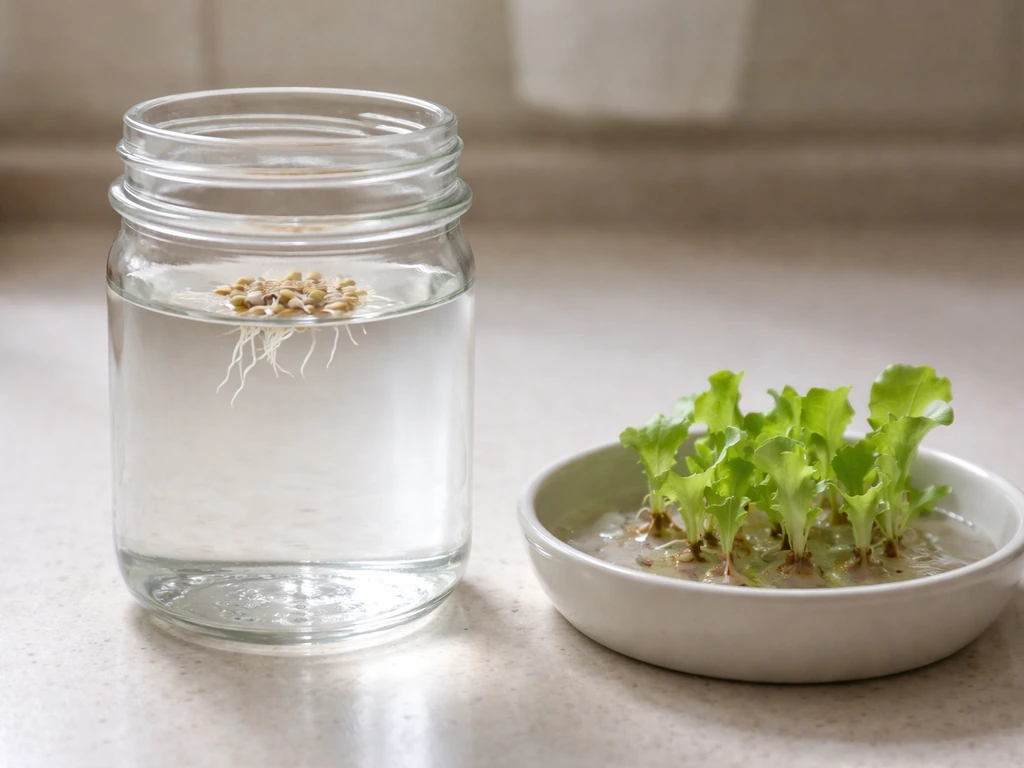
Here's something people get wrong: you do not germinate lettuce seeds directly in a reservoir of water. Seeds need oxygen to germinate, and sitting fully submerged in water actually suppresses germination by cutting off that oxygen supply. What works instead is a two-step process: germinate the seed in a moist (not soaked) medium, then transfer the seedling to your water system once it has roots.
- Soak seeds for 6–8 hours in plain water to 'wake' them up. This is a quick pre-soak, not a long submersion.
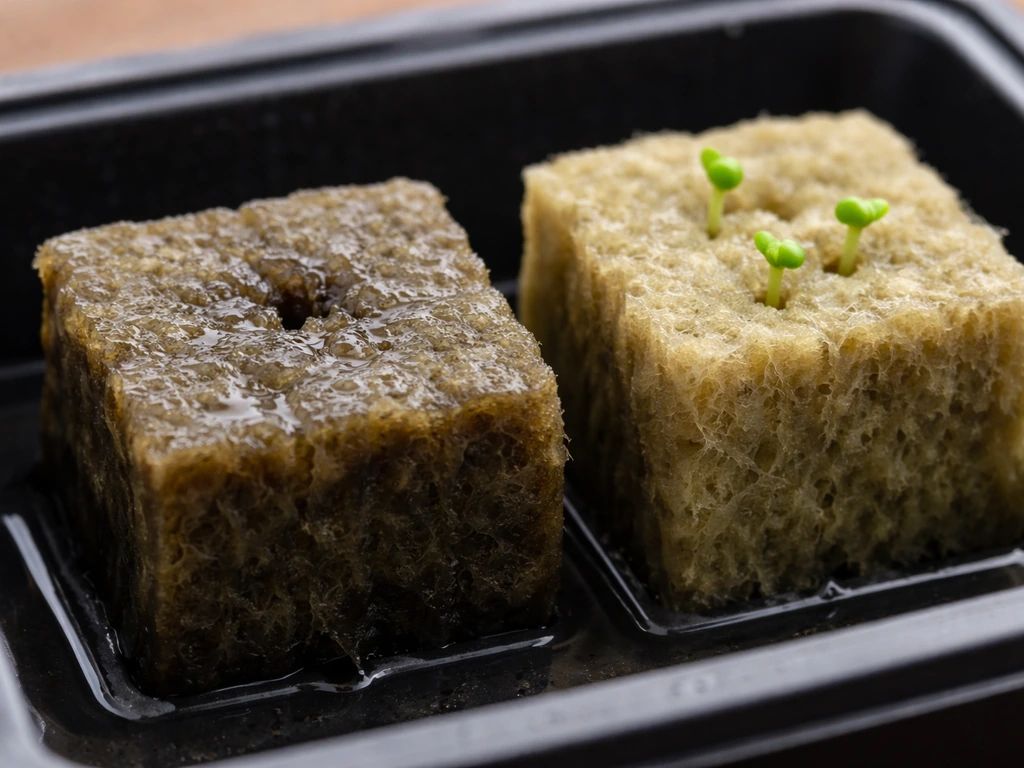
- Place each seed into a small grow cube: rockwool, Oasis, or a Jiffy peat pellet all work. Push the seed just below the surface.
- Keep the cubes moist and covered in a humid environment (a tray with a clear dome or a loosely covered container). You want moisture around the seed, not pooling water.
- Germination happens in 2–4 days at room temperature. You'll see the seed crack and a small root emerge.
- Once seedlings have a root extending out of the cube and a small set of true leaves, transplant the whole cube into your net pot in the DWC bucket.
- Top off the nutrient solution so it just touches the bottom of the net pot for the first few days, then lower it slightly as roots grow down into the reservoir.
If you skip the grow cube and try to float seeds directly in the reservoir, you'll get mixed results at best. The seed needs that moist-but-aerated environment to sprout, and a grow cube provides exactly that. This step takes about a week from seed to transplant-ready seedling, and it's worth doing right.
How to grow indoor lettuce in water
Indoor water culture is where this method really shines. You control every variable, which means you can grow year-round regardless of what's happening outside. Here's what you need to dial in.
Light
Lettuce needs a daily light integral (DLI) of roughly 12–17 mol per square meter per day. In practical terms, that means either a very bright, south-facing window for 10–12 hours or, more reliably, a full-spectrum LED grow light set to 150–250 µmol per square meter per second for 14–16 hours a day. I run my lights on a simple outlet timer. A windowsill in winter rarely delivers enough light, so if your seedlings are stretching toward the glass and getting leggy, add a grow light. Photoperiod matters too: lettuce grown under too-short days (under 10 hours) grows slowly and may bolt faster once days lengthen.
Temperature
Target 65–75°F during the day and keep nights above 60°F. Lettuce is a cool-season crop, so it tolerates the lower end of that range well, but it struggles above 75°F indoors: growth slows, tip burn risk rises, and bolting becomes more likely. If your indoor space runs warm in summer, position the bucket away from heat sources and consider running lights at night when ambient temps drop. Solution temperature also matters; warm nutrient solution holds less dissolved oxygen, so keep your reservoir in a spot that stays below 70°F if possible.
Space and container setup
A single 5-gallon opaque bucket with a net pot lid can grow two to four heads. Opacity is important: light hitting the reservoir promotes algae, which competes with roots and clogs the system. You can paint a bucket or use a dark-colored tote. Leave at least 8–10 inches of vertical clearance above the bucket for plant canopy, and make sure your grow light is positioned 6–12 inches above the tops of the plants. Smaller setups, like a single wide-mouth mason jar fitted with a net pot lid, work for one plant and are perfect for a dorm room or small counter.
Nutrient solution basics
Use a pre-mixed hydroponic nutrient solution formulated for leafy greens. Mix it to an electrical conductivity (EC) of 1.2–1.8 dS/m and check pH with a basic meter or test kit. The sweet spot is pH 6.0–7.0, with 6.2–6.8 being ideal. Outside that range, nutrients become unavailable even if they're present in the water, which is one of the most common reasons plants stall or yellow. Check pH and EC once or twice a week and top off with fresh nutrient solution (not plain water) as the level drops.
Growing a full head of lettuce in water
Growing a full head rather than just harvesting outer leaves takes longer and requires keeping conditions consistent for the entire grow cycle. Here's what to expect on the timeline.
| Stage | Timeframe | What to watch for |
|---|---|---|
| Seed pre-soak | 6–8 hours | Seeds swell slightly |
| Germination in grow cube | 2–4 days | Seed cracks, root tip visible |
| Seedling to transplant | 7–10 days after germination | One set of true leaves, roots extending |
| Transplant to early head formation | 2–3 weeks | Rapid leaf production, roots in reservoir |
| Head maturity (butterhead/leaf) | 35–52 days from transplant | Loose but full head, inner leaves pale |
| Head maturity (romaine) | 50–70 days from transplant | Upright, elongated head, dense center |
Commercial hydroponic operations consistently hit a 35-day cycle from transplant to a roughly 5-ounce (150 g) head under optimized conditions. At home, with a basic DWC setup and reasonable light, expect 40–55 days from transplant to harvest for butterhead types. That's a realistic target. If you push toward romaine or crisphead, add another 2–3 weeks. The full timeline from seed to harvest is roughly 50–65 days for butterhead and 60–80 days for romaine when everything goes right indoors.
To get a full head rather than a loose cluster of outer leaves, resist harvesting too early. Let the plant form its inner rosette before cutting. You'll know a butterhead is ready when the inner leaves have curled slightly inward and the center feels gently packed when you press it. Harvest by cutting the whole head at the base of the stem.
Butter lettuce vs other varieties in water
Butter lettuce (also called butterhead or Bibb) is widely considered the best variety for water culture at home. It forms a compact, loose head quickly, tolerates the nutrient-solution environment well, and is forgiving of minor pH fluctuations. The soft, tender texture is also a result of the steady moisture supply in water culture, so the method actually enhances what makes butter lettuce appealing.
The one thing to watch with butterhead in water is tip burn. Because the inner leaves are enclosed, calcium-rich solution can't reach the growing tips via transpiration as easily. This is an internal calcium distribution issue, not always a sign that your nutrient solution is low in calcium. The fix is improving airflow around the plant (a small fan helps), keeping temperatures below 75°F, and making sure your EC and pH are in range so calcium is available in the first place.
| Variety | Time to harvest in water | Tip burn risk | Notes |
|---|---|---|---|
| Butterhead (Bibb) | 35–52 days from transplant | Moderate | Best overall for home water culture; compact head, great flavor |
| Loose-leaf (e.g., Oak Leaf, Red Sails) | 28–40 days from transplant | Low | Easiest for beginners; harvest outer leaves continuously |
| Romaine | 50–70 days from transplant | Low–moderate | Longer cycle but excellent yield; needs consistent light |
| Crisphead (Iceberg) | 70–90 days from transplant | Low–moderate | Difficult in home setups; needs very consistent temperature |
| Water lettuce (Pistia stratiotes) | N/A (aquatic ornamental) | N/A | Not an edible lettuce; grown as a floating pond/aquarium plant |
One point worth clarifying: 'water lettuce' (Pistia stratiotes) is a floating aquatic plant, not an edible lettuce variety. If you've seen that name and wondered how to grow it at home, that's a separate topic involving ponds, aquariums, or decorative water features, and the care requirements are completely different from growing edible lettuce in a hydroponic setup. If what you meant was water lettuce, which is a floating aquatic plant, you can grow it indoors in a very different setup than hydroponic lettuce can you grow water lettuce indoors. For eating, stick with butterhead, loose-leaf, or romaine in your water system.
If you want to adapt the setup per variety: loose-leaf types need less nutrient concentration (EC toward the lower end at 1.2–1.4 dS/m), while romaine benefits from a slightly richer solution (EC 1.4–1.8 dS/m) and longer photoperiod. Butterhead sits comfortably in the middle of both ranges.
Troubleshooting: why it won't grow (and how to fix it)
Most water-culture failures come down to one of five problems. Here's how to diagnose and fix each one.
Yellowing leaves
This is almost always a nutrient availability problem caused by pH being out of range. Even if your nutrient solution looks right, a pH above 7.0 or below 5.5 locks out key minerals. Check pH first. If it's off, use pH up or pH down solutions to bring it back to 6.2–6.8, then wait 48 hours to see if new growth recovers. If pH is fine, check EC: a reading below 1.2 dS/m means the solution is too dilute. Replace or refresh the solution.
Slimy or brown roots
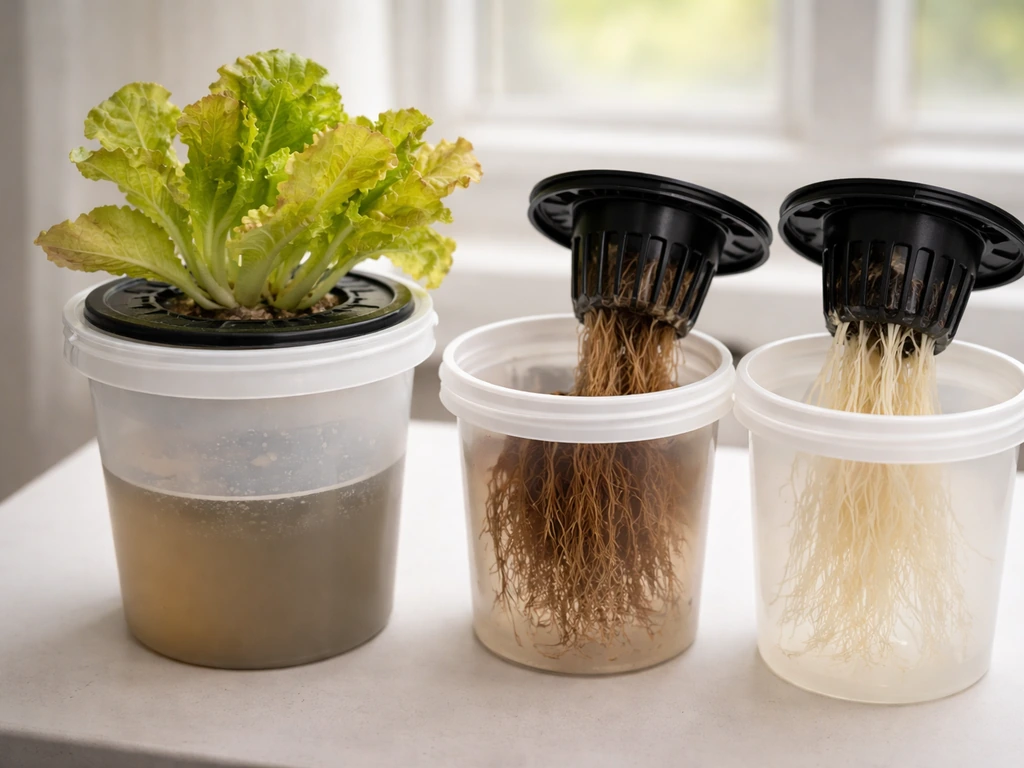
Root rot is caused by low dissolved oxygen and often by light leaking into the reservoir and feeding algae. If your roots are brown and slimy instead of white and fibrous, the first thing to check is your air pump. Make sure it's running, the air stone is submerged, and there are no kinks in the tubing. Dissolved oxygen should stay above 6 ppm; if you don't have a meter, just make sure you can see constant bubbling in the reservoir. Also check that your container is fully opaque. Even a small light leak can trigger algae growth.
Leggy, stretched seedlings
If your seedlings are tall and thin with long gaps between leaves, they're not getting enough light. Move them closer to the grow light or extend the photoperiod to 16 hours. A target of 150–250 µmol per square meter per second at the plant canopy is a practical goal. If you're relying on a window, add a supplemental LED strip directly above the plants.
Tip burn on inner leaves
Tip burn shows as brown, papery edges on the inner leaves, particularly on butterhead varieties. For head lettuce, UC IPM notes that tipburn risk is strongly related to leaf transpiration patterns, where inner leaves transpire less than outer leaves and are more likely to develop tipburn. The cause is insufficient calcium reaching the growing tissue, which can happen even when calcium is present in the solution if temperatures are high, airflow is poor, or transpiration is limited. Run a small fan to improve air circulation around the canopy, keep room temperature below 75°F, and make sure your nutrient solution contains calcium (most balanced hydroponic formulas do). Crop failure from tip burn is preventable if you catch it early.
No germination or seedlings that stall
If seeds aren't germinating in your grow cubes, the most common culprits are the cubes being too wet (soggy cubes deprive seeds of oxygen) or temperature being too cold (below 60°F, germination slows dramatically). Squeeze excess water from rockwool cubes before seeding. Keep germinating cubes at 65–72°F. If seeds sprout but seedlings stall after transplanting, check that the solution level is touching the base of the net pot and that the air pump is running. A seedling with its roots dangling in dry air above a low reservoir will desiccate and stop growing fast.
Plants bolt (go to seed) before heading
Bolting is triggered by high temperatures and, in some varieties, by very long photoperiods. If your lettuce sends up a tall central stalk before forming a head, the growing environment is too warm or the days are too long. Drop temperature below 72°F and cap your photoperiod at 16 hours. Some heat-sensitive varieties bolt faster; if this is a recurring problem, switch to a bolt-resistant cultivar like 'Buttercrunch' or 'Nevada'.
What to do next
If you're starting today, the simplest path is: buy a bag of butterhead or loose-leaf lettuce seeds, a pack of rockwool cubes, a small DWC bucket kit (most come with net pot lid, air pump, and tubing), and a bottle of hydroponic nutrient solution for leafy greens. If instead you mean water lettuce, learn the specific steps and conditions it needs as a floating aquatic plant how to grow water lettuce at home. If you want a step-by-step walkthrough beyond the basics, see this guide on how to grow lettuce hydroponic. If you want to grow lettuce using fish waste as the nutrient source, check out how to grow lettuce aquaponics next. Pre-soak your seeds for 6–8 hours, drop one per cube, keep them moist and warm, and expect transplant-ready seedlings in about 10 days. From there, keep pH at 6.2–6.8, EC at 1.2–1.6 dS/m, light on for 14–16 hours, and air pump running continuously. In 40–55 days, you'll have a full head of lettuce that cost you almost nothing per harvest after the initial setup.
Once you're comfortable with a single DWC bucket, the natural next steps are expanding to a multi-bucket system, exploring NFT channels for more plants, or looking into full hydroponic setups with recirculating systems. Each of those builds directly on the basics you've already learned here. The fundamentals don't change: nutrient-rich water, dissolved oxygen, the right light, and consistent temperature are what turn a jar of water into a productive lettuce garden.
FAQ
Can I use plain tap water and still get a full head of lettuce in water?
No, you should not rely on “water-only” or reusing the same plain reservoir for long. For seedlings, you can use clean water briefly, but for a harvestable crop you need a formulated nutrient mix, pH control (target about 6.2–6.8), and dissolved oxygen. If you want the simplest schedule, plan on checking pH and EC 1–2 times per week and topping off with fresh nutrient solution when the level drops.
How do I know if my lettuce is getting enough light when growing in water indoors?
An easy decision aid is to start at DLI targets, not just “hours of light.” If you get leggy growth or long gaps between leaves, add time or intensity. With an LED, aim roughly 150–250 µmol/m²/s at the canopy and keep it around 14–16 hours per day. With a window only setup, you may need more than 12 hours because light intensity is usually lower than people assume.
What should I do if my indoor room is warm and my lettuce is struggling?
If your reservoir warms up, dissolved oxygen drops and tip burn risk rises. A practical rule is to keep the solution under about 70°F when possible (especially in summer), and insulate or move the bucket away from heat sources. You can also run the lights during the cooler part of the day at times when your room temperature stays lower.
My seedlings sprouted in cubes but stopped after transplant, what’s the most common mistake?
For DWC, seedlings often stall after transplanting when the net pot sits too high. Make sure the nutrient level reaches the bottom of the net pot so roots stay in solution while the seedling crown stays above it. If roots are hanging into dry air, they desiccate fast and growth slows noticeably within a few days.
How can I prevent algae in my lettuce water system?
The safest approach is to keep the reservoir opaque and also prevent algae from getting a light boost. If you notice algae, stop feeding it with light by covering the bucket fully, reduce light leaks around the setup, and consider a reservoir cleaning before refilling. Algae is a common contributor to oxygen problems and root rot in water culture.
Why does my pH keep changing even though I set it correctly at the start?
If pH is drifting, check how you’re topping off. Adding plain water (or water without nutrients) can change pH and dilute EC, even if the initial mix was correct. Top off with nutrient solution as the water level drops, then recheck pH and EC and adjust only after you’ve made a consistent top-off routine.
Is yellowing in water-grown lettuce a nutrient problem, a pH problem, or something else?
Yes, and the “look” can vary by nutrient deficiency. If the problem is pH-related, you’ll often see pale or yellowing leaves across the plant rather than a localized edge problem. If you see brown, papery edges on inner leaves (especially butterhead), think tip burn and focus on airflow, temperature, and calcium availability, not just general nutrient strength.
How do I stop tip burn before it ruins my butterhead lettuce?
For calcium-related tip burn, improving airflow around the canopy is often as important as the nutrient recipe. Use a small fan so leaves move gently, keep temps under about 75°F, and verify your nutrient mix is balanced (most leafy-green hydroponic formulas include calcium and the related ratios). If tip burn appears early, intervene quickly because damaged tissue cannot fully recover.
What night-time temperature range is safe for lettuce growing in water?
Don’t ignore temperature swings at night. Lettuce prefers cool-season conditions, and nights dropping below about 60°F indoors can slow growth or slow recovery after transplant. If your home gets colder at night, move the bucket to a less drafty location or adjust lighting schedule so the reservoir experiences more stable temperatures.
Can I harvest lettuce as “cut-and-come-again” from a DWC bucket instead of waiting for a full head?
Yes. If you want to harvest outer leaves for ongoing snipping, do partial harvesting so the inner rosette stays intact. Plan for a shorter and less uniform cycle than full-head production, and avoid cutting too close to the growing point because water-culture plants rely on steady conditions for the center to keep forming.
What varieties are easiest for beginners to grow in water?
Lettuce typically performs best with loose-leaf and butterhead for home water culture. Crisphead types (like many iceberg varieties) generally need more consistent control and can take longer, making them less forgiving if your light or oxygenation fluctuates. If you have frequent problems, switching to butterhead or a bolt-resistant loose-leaf is usually faster than tweaking the same setup endlessly.