Yes, you can absolutely grow lettuce hydroponically, and honestly it's one of the best crops to start with. Lettuce is shallow-rooted, fast-growing, and thrives in the controlled conditions that hydroponic systems provide. Most home growers go from seed to harvest in 30 to 45 days depending on the variety, and once you nail your nutrient solution and lighting, you get consistent, clean heads without ever touching soil. To get the best results, focus on the basics like lighting, temperature, and nutrient solution strength how does hydroponic lettuce grow best.
How to Grow Lettuce Hydroponically Step by Step Guide

Marcus Holloway
23 Apr 2026
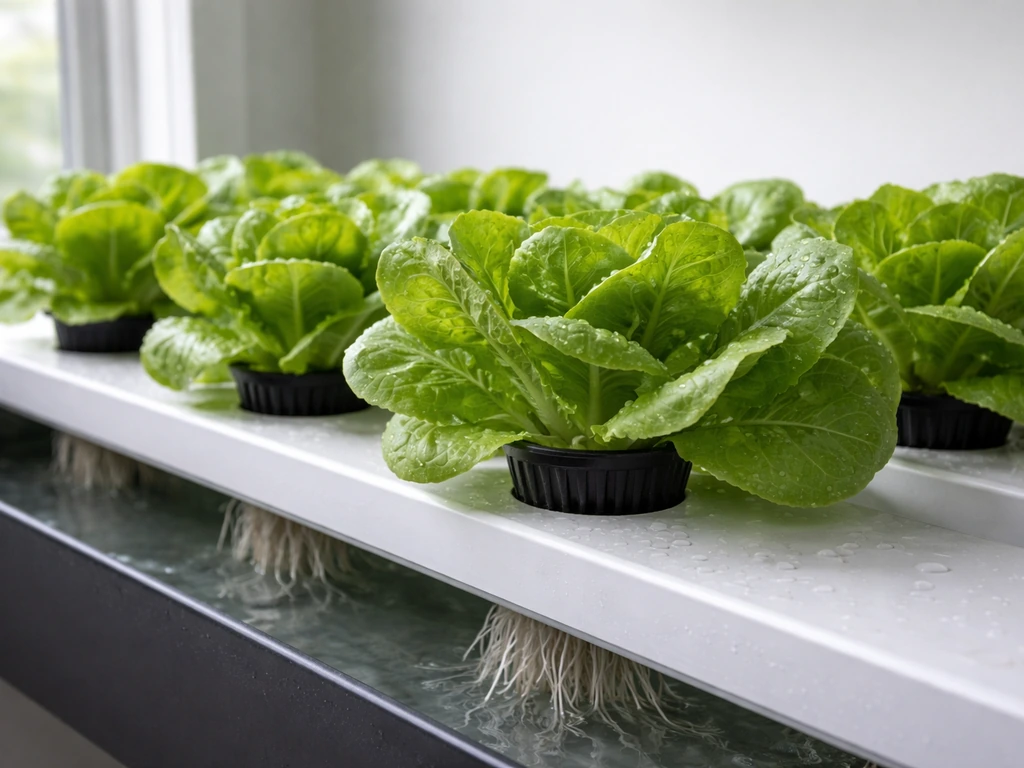
Can you actually grow lettuce hydroponically?
Lettuce is one of the most commonly grown hydroponic crops in the world, from large commercial greenhouse operations to small apartment setups. Its shallow root system makes it a natural fit for systems like deep-water culture (DWC) and nutrient film technique (NFT), where roots either float in oxygenated nutrient solution or receive a thin, continuous stream of it. Research comparing NFT and DWC for butterhead lettuce specifically has confirmed that both systems produce strong yields and high-quality heads.
Research comparing NFT and deep-water culture (DWC) for butterhead lettuce in an ISHS study also evaluates differences in nutrient uptake and water consumption between the systems. If you're new to hydroponics, lettuce is genuinely the best place to start because it's forgiving enough to learn on but rewarding enough to keep you motivated.
Choosing the right hydroponic setup: indoor vs. outdoor
Before you buy anything, decide where you're growing. Indoor and outdoor setups have different demands, and the right choice shapes everything from your light source to how often you check your system.
Growing hydroponics indoors
For most home growers and apartment dwellers, indoors is the practical choice. You control the environment completely, which means year-round production and no worrying about pests, rain, or seasonal temperature swings. The tradeoff is that you need to supply artificial light, which adds cost and requires a little planning. A DWC system (essentially a bucket or tote with an air pump and net pots) is the most beginner-friendly indoor option. It's inexpensive to build, easy to monitor, and hard to get catastrophically wrong.
Growing hydroponics outdoors
Outdoors, you get free sunlight, but you also get temperature fluctuation, algae problems from light hitting your reservoir, and potential contamination. NFT channels work well outside because they're modular and drain well, but you need to cover your nutrient solution from direct sunlight to prevent algae growth and temperature spikes. Outdoor hydroponic lettuce does best in spring and fall when temperatures stay between 60 and 70°F. Summer heat is a real problem because lettuce bolts quickly above 75°F and dissolved oxygen in warm water drops fast.
Which system is best for beginners?
For a first setup, I'd recommend a simple DWC system indoors. Aquaponics works a bit differently because fish waste supplies nutrients, but the lettuce growth targets and setup details are similar lettuce aquaponics. It's cheap, easy to monitor, and the stationary reservoir means you're not dealing with pump clogs or flow-rate issues the way you would with NFT. Once you understand your nutrient solution and light schedule, NFT is a great step up, especially if you want to scale to more plants. Both systems are well-supported by research and extension guidance for lettuce production specifically.
| System | Best For | Key Advantage | Watch Out For |
|---|---|---|---|
| Deep-Water Culture (DWC) | Beginners, indoor setups | Simple, low-cost, forgiving | Water temperature, DO levels |
| Nutrient Film Technique (NFT) | Intermediate growers, larger setups | Scalable, efficient with solution use | Pump/flow failures, clogging |
| Kratky (passive DWC) | Apartment growers, very small scale | No pump needed | Limited plant count, less control |
Starting from seed: how to get your lettuce seedlings going
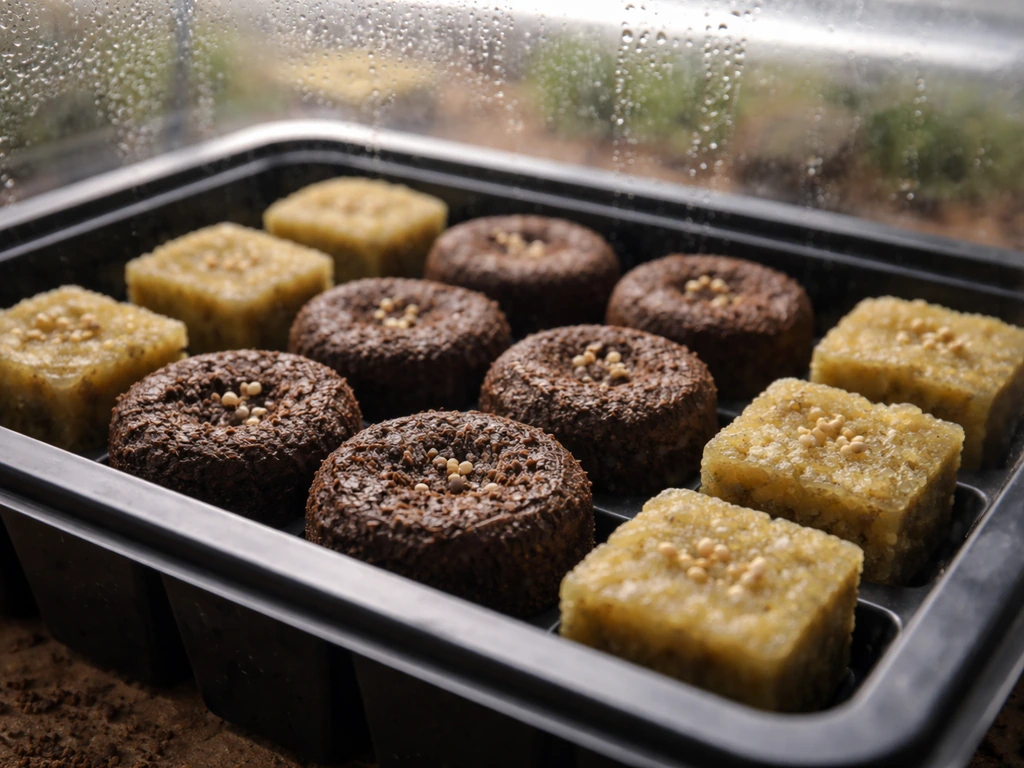
You don't plant seeds directly into your hydroponic system. Instead, you start them in a small growing medium, wait for germination and early root development, then transfer the seedling into your system. This gives you much better control and prevents seeds from washing around in your nutrient solution.
What you need for seed starting
- Rockwool cubes, peat plugs, or small net pots filled with perlite, vermiculite, or coconut fiber
- A humidity dome or plastic wrap to retain moisture during germination
- Plain water or a very dilute nutrient solution (EC around 0.5 to 0.8) for the first week
- Warmth: lettuce germinates best around 65 to 70°F; keep seeds warm but not hot
Place one or two seeds per cube or plug, cover lightly, and keep them consistently moist but not soggy. Lettuce germinates quickly, usually within 2 to 5 days at the right temperature. Once you see the seedling emerge and develop its first true leaves (around day 7 to 10), you can start feeding a dilute nutrient solution at EC 1.2 to 1.4 and pH around 5.7 to 5.9. At this stage roots should be visible and white. If they're already showing through the bottom of the plug or cube, the seedling is ready to transplant.
Transplanting seedlings into your system
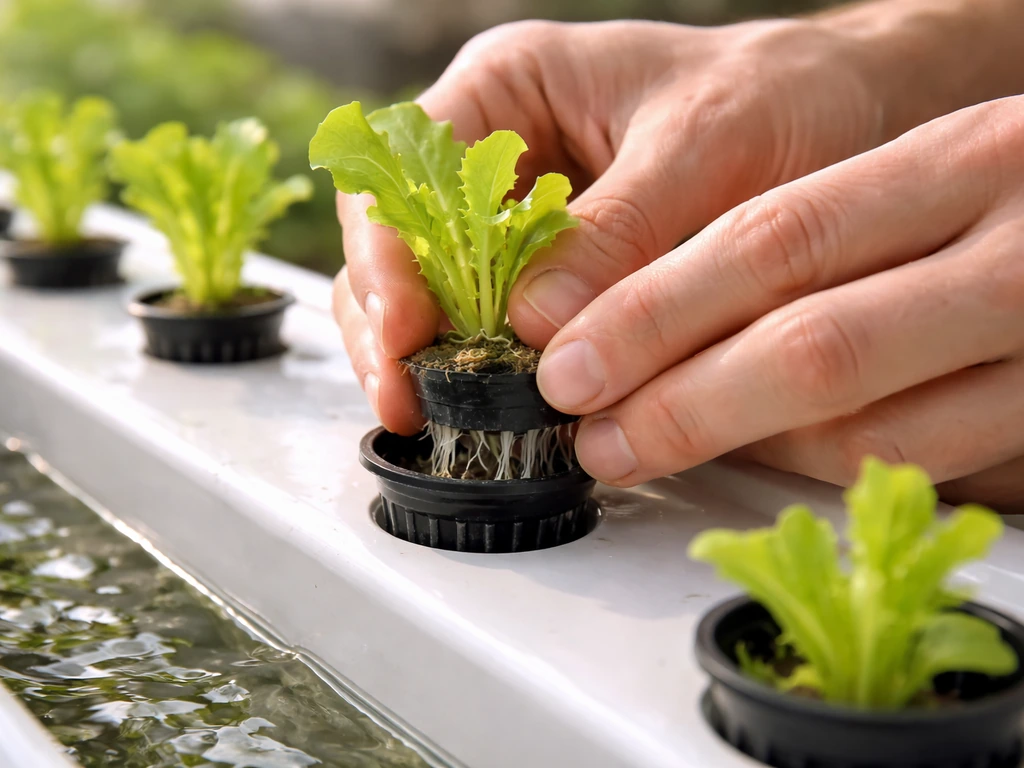
Transfer seedlings into 2-inch net pots, which are the standard size for NFT and DWC lettuce production. Set the net pot so the bottom just touches or sits just above the nutrient solution in DWC, or sits in the NFT channel where the flow will wet the roots. Don't disturb the root ball more than necessary. In DWC, the air pump needs to be running before you transplant so roots get oxygen from the start.
Setting up and running your hydroponic system
Spacing your plants
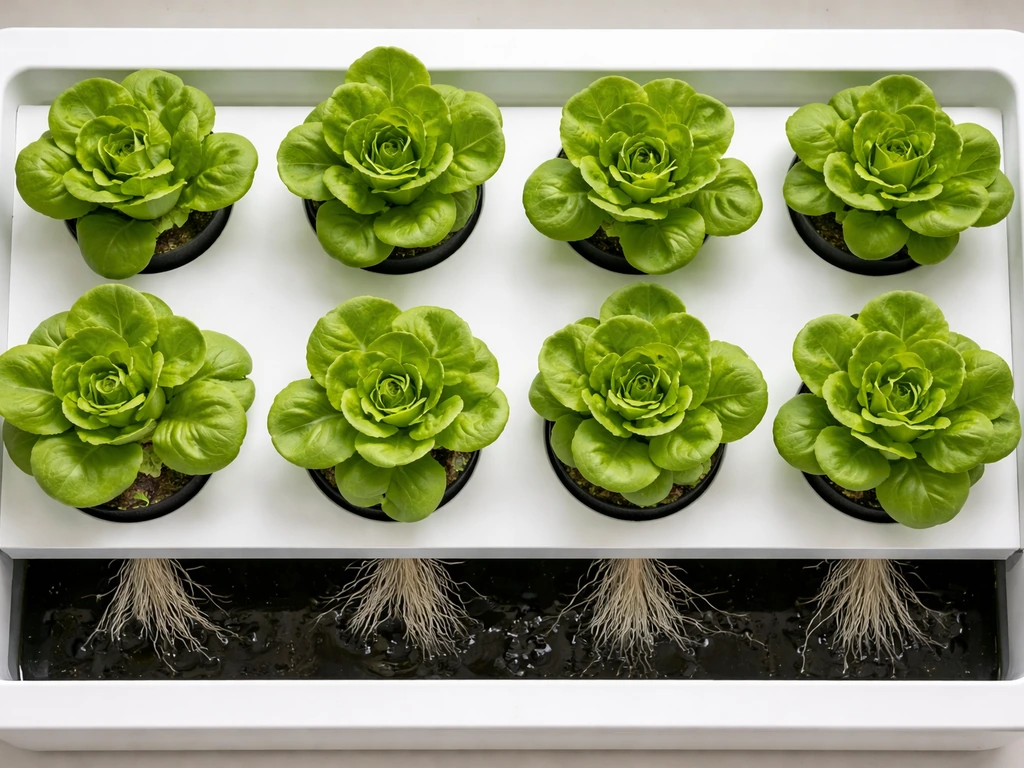
Spacing matters more in hydroponics than people expect, especially for varieties that form heads. For loose-leaf types, 6 to 8 inches between plants is workable. For butterhead and romaine varieties that fill out, give each plant at least 8 to 10 inches. Crowding cuts airflow around the leaves, which contributes to tipburn and disease.
pH and EC targets
These two numbers matter more than anything else in your solution. For lettuce, target a pH of 6.0 to 7.0, with the sweet spot around 6.0 to 6.5. Your nutrient solution EC should sit between 1.2 and 1.8 mS/cm for most growth stages. Seedlings prefer the lower end (around 1.2 to 1.4), while established plants handle up to 1.8 comfortably. Going much above 1.8 risks salt stress and can cause tip damage on sensitive varieties like butterhead.
Mixing and managing your nutrient solution
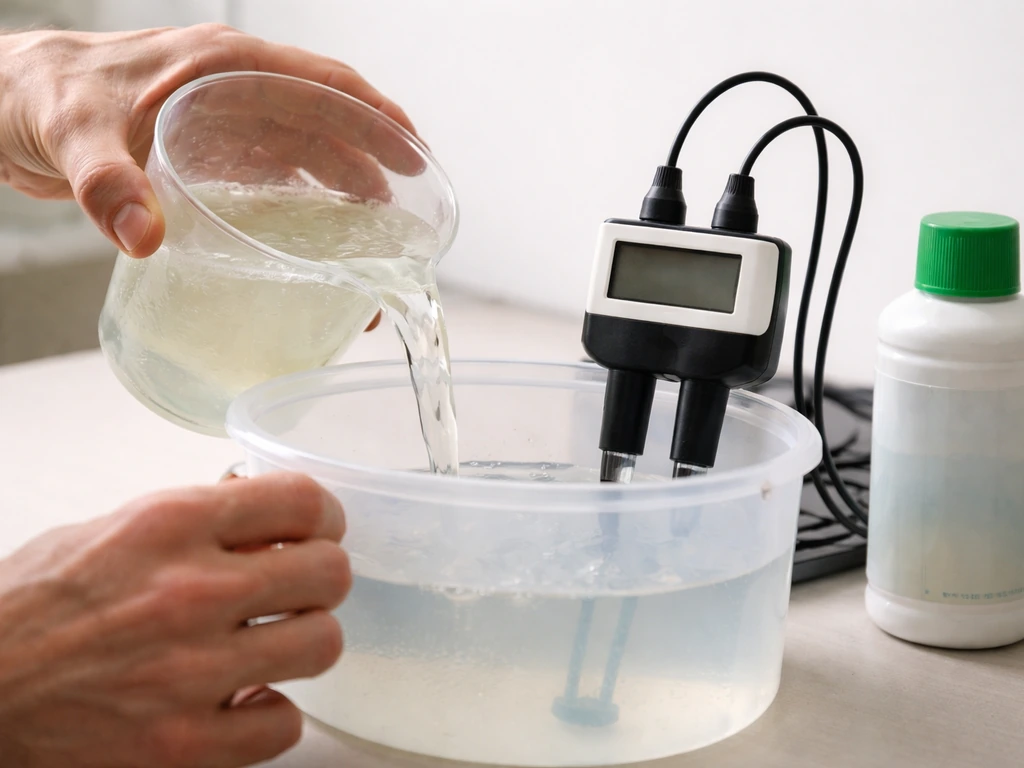
Use a complete hydroponic nutrient formula designed for leafy greens. Mix it into water according to the label, then check your EC and pH. Always adjust pH after mixing nutrients, because adding nutrients changes the pH. Keep a simple log: what your EC and pH were when you checked, how much you topped off with, and whether you see any changes in plant appearance. In DWC, top off with plain water between full reservoir changes to keep EC stable, since plants drink water faster than nutrients. Change your full reservoir every 7 to 14 days to prevent nutrient imbalances from building up.
Oxygenating your solution
Dissolved oxygen above 6 ppm is the target for healthy hydroponic roots. In DWC, an air pump with a quality airstone handles this. In NFT, the thin film of solution flowing over bare roots naturally picks up oxygen from the air. Keep your water temperature below 68°F if possible, because warmer water holds less oxygen. This is the single most common reason beginners see root rot: warm, low-oxygen water.
Light, temperature, and airflow for indoor lettuce
How much light does hydroponic lettuce need?
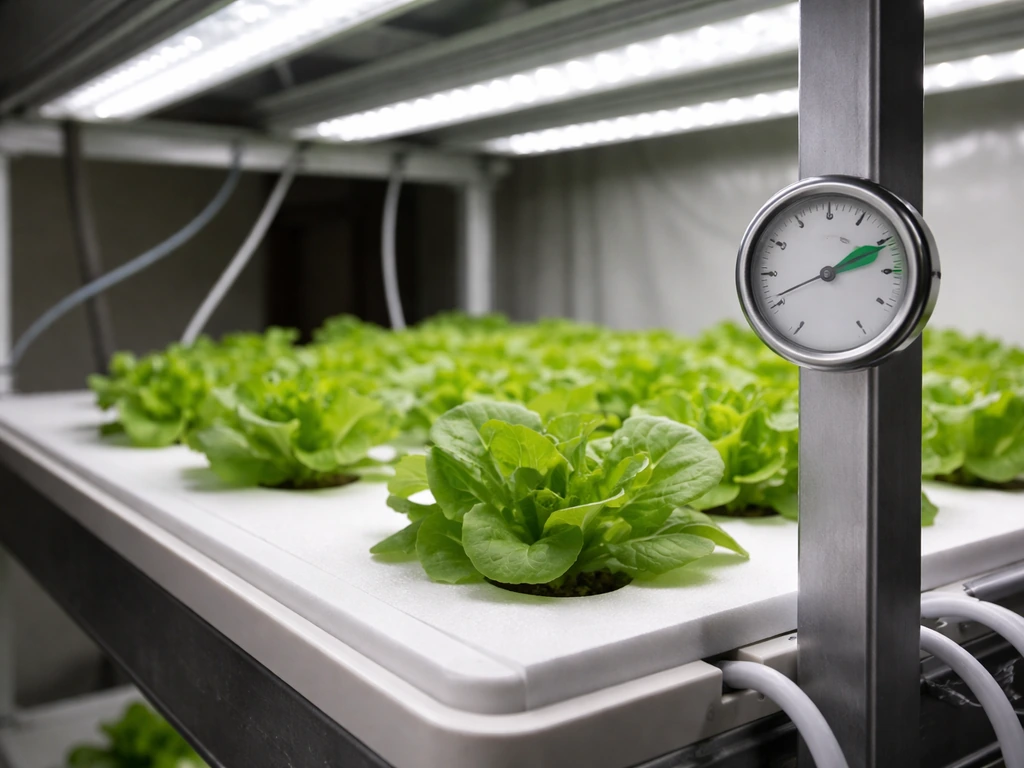
For indoor growing, aim for a PPFD of around 200 µmol/m²/s and a photoperiod of 16 hours on, 8 hours off. This corresponds to a daily light integral (DLI) of roughly 11.5 mol/m²/day, which research on indoor iceberg lettuce production identified as optimal for growth and quality. Full-spectrum LED grow lights are the practical choice for home setups because they're energy-efficient and generate less heat than older HID systems. Position your light 12 to 18 inches above the canopy and adjust as plants grow to maintain even coverage without burning.
Temperature
Lettuce prefers air temperatures between 60 and 70°F. Above 75°F, plants start bolting, leaves turn bitter, and tip burn becomes much more common. Root-zone temperature is equally important: studies on hydroponic lettuce production found optimal root-zone cooling around 24.5°C (roughly 76°F for the roots), and growth degrades noticeably when roots get too warm or too cold. If your room gets warm in summer, chilling your reservoir or placing it in a cooler location makes a noticeable difference.
Airflow and humidity
A small oscillating fan running at low speed does more for indoor hydroponic lettuce than most growers expect. It strengthens stems, reduces surface moisture that can lead to fungal issues, and helps prevent the stagnant air pockets around leaves that contribute to tip burn. Keep relative humidity between 50 and 70%. Above 80% humidity consistently, you're inviting fungal problems.
Butter lettuce and other varieties: what to expect
Butter lettuce (butterhead) is genuinely one of the best varieties for hydroponics. It forms a soft, loose head with tender leaves, handles controlled conditions well, and has been the subject of direct research comparing NFT and DWC system performance. In a hydroponic system with good conditions, butterhead varieties typically reach harvest in 45 to 55 days from transplant. They're a bit more sensitive to EC spikes than loose-leaf types, so stay toward the lower end of the EC range (1.2 to 1.6) for best results.
Other varieties that perform well hydroponically include loose-leaf types like 'Black Seeded Simpson' and 'Red Sails' (faster, around 30 to 40 days), romaine (slightly longer, 50 to 60 days, needs a bit more space), and oakleaf varieties. Loose-leaf lettuce is the most forgiving for beginners because you can harvest outer leaves continuously without waiting for a full head to form. If you want to compare how growing lettuce in pure water differs from a nutrient-fed hydroponic system, that's worth exploring as a separate approach. You can also learn the simpler approach of how to grow a lettuce in water with fewer moving parts than full hydroponics.
Typical growth timeline
| Stage | Timing | What to Watch |
|---|---|---|
| Germination | Days 1–5 | Keep moist, warm (65–70°F), no nutrients yet |
| Seedling/first true leaves | Days 5–14 | Introduce dilute nutrients (EC 1.2–1.4) |
| Transplant to system | Around day 10–14 | Roots visible, white, and healthy |
| Active vegetative growth | Days 14–35 | Monitor EC, pH, and DO every 2–3 days |
| Harvest (loose-leaf) | Days 28–40 from transplant | Begin outer-leaf harvest when leaves are 4–6 inches |
| Harvest (butterhead/head) | Days 45–55 from transplant | Harvest full head when firm and before bolting |
Harvesting your hydroponic lettuce
For loose-leaf varieties, use the cut-and-come-again method: snip outer leaves when they reach 4 to 6 inches, leaving the inner growing point intact. The plant regrows and you can harvest multiple times over several weeks. For butterhead and other heading types, harvest the whole plant at once when the head feels firm and full. Cut at the base with clean scissors. Don't wait too long on heading types because once they start bolting (sending up a flower stalk), leaves turn bitter fast and there's no reversing it.
Troubleshooting common hydroponic lettuce problems
Slow growth or stunted plants
Check your EC first. If it's below 1.2, plants aren't getting enough nutrients. If it's above 2.0, salt stress is likely slowing them down. Then check pH: outside the 6. UMN Extension’s guidance for small-scale hydroponics notes that plants generally do best in water with a pH of about 5.4, 7.0 (as general background before you apply crop-specific targets) check pH. 0 to 7.0 range, nutrient lockout happens even when EC looks fine. Finally, check your light duration and intensity. Undersupplied light is probably the most common hidden cause of slow indoor growth.
Leggy, stretched seedlings
If seedlings are stretching toward the light with long, weak stems, your light is too far away or too dim. Move the light closer (stay at least 12 inches to avoid burning) or increase your photoperiod slightly. This almost always happens early on and is easy to fix before transplant.
Tip burn
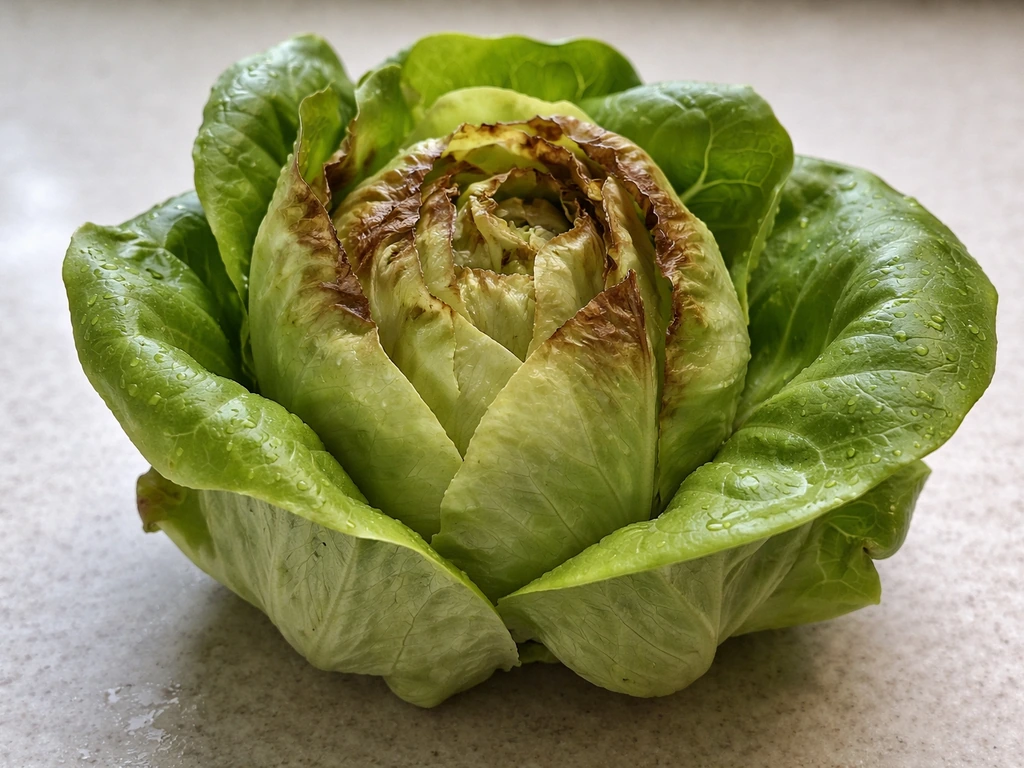
Tip burn shows up as brown, papery edges on inner leaves, especially on butterhead varieties. It's a physiological issue, not a disease, and it's strongly linked to temperature stress, poor airflow, and calcium uptake problems driven by high transpiration demand. To fix it: lower your air temperature below 70°F, improve airflow with a fan, and make sure your EC isn't too high. Consistent watering (no dry-out cycles in DWC) helps calcium reach the leaf edges. If you're seeing it regularly on butterhead, it may help to reduce EC slightly and increase air circulation before anything else.
Algae in the reservoir
Green or brown slime in your reservoir is algae, and it competes with your plants for oxygen and nutrients. The fix is light exclusion: cover all parts of your reservoir and channels so no light reaches the solution. Use opaque materials, black-and-white poly sheeting, or purpose-built covers. Once algae establishes, drain the system, scrub with a dilute hydrogen peroxide solution (3%), rinse thoroughly, and refill with fresh nutrient solution.
Brown, slimy roots
Healthy hydroponic roots are white and often slightly fuzzy (root hairs). Brown, slimy, or smelly roots mean low dissolved oxygen, warm water, or both. Check your air pump is running, your airstone isn't clogged, and your water temperature is below 68°F. If the damage is severe, change the whole reservoir, clean the system, and consider adding a higher-output airstone. Pythium (root rot pathogen) thrives in warm, low-oxygen water, so prevention through DO management is much easier than recovery.
Yellowing leaves and nutrient imbalances
Yellow lower leaves often point to nitrogen deficiency (EC too low, or solution has been running too long and is depleted). Yellow between the veins on younger leaves suggests iron or manganese issues, usually tied to pH being too high (above 7.0). The fix is almost always to check and adjust pH first, then reassess whether your solution needs a full change. If you haven't changed the reservoir in more than two weeks, do a full change with fresh nutrient mix before spending time chasing individual deficiencies.
Bolting
If your lettuce sends up a tall center stalk and leaves start tasting bitter, it's bolting, triggered by heat or long light exposure. Once it starts, there's nothing you can do except harvest immediately and use what you can. Prevention means keeping temperatures under 75°F and sticking to a 16-hour photoperiod rather than leaving lights on continuously. This is especially important for indoor setups in summer when room temperatures can creep up without you noticing.
If you're interested in related approaches, growing lettuce directly in water without added nutrients, aquaponic systems that combine fish and plants, or exploring whether water lettuce can be grown indoors are all natural next steps once you have your core hydroponic system dialed in. To get started with water lettuce at home, focus on light, water temperature, and how you manage nutrients so the plant stays healthy how to grow water lettuce at home. If you want a simple indoor setup, follow these tips for can you grow water lettuce indoors to keep it thriving water lettuce at home. If you want the most natural route, aquaponics combines fish and plants, and learning how to grow lettuce aquaponics-style can be a great next step after hydroponics.
FAQ
When should I start feeding hydroponic lettuce nutrients, do seedlings need fertilizer right away?
For lettuce, you generally want to start a nutrient solution after the seedlings show true leaves (about day 7 to 10). If you feed earlier or at high strength, the plug can dry out unevenly and seedlings can stall, even if EC looks “in range.” Keep the early mix dilute (roughly EC 1.2 to 1.4) and raise gradually only after transplant.
Can I grow lettuce hydroponically for repeated harvests instead of replanting every time?
It can, but you need to stabilize your environment and water chemistry. If you keep the reservoir covered to block algae, prevent warm temperatures, and maintain target pH and EC, you can harvest repeatedly from outer leaves without repeatedly replanting. Expect the longest and most productive runs from loose-leaf types using cut-and-come-again, and plan to replace plants when growth slows (often within a few weeks).
Why does my lettuce keep growing slowly, even though my pH is right?
Yes, but it’s a common hidden cause of slow growth and root problems. Even if your pH is correct, many home mixes drift in EC quickly, especially in warm rooms. Use plain water top-offs only in between full reservoir changes, and do a full change (about every 7 to 14 days) rather than endlessly topping off nutrient solution.
What should I do first if I see tip burn on butter lettuce?
If you see tip burn on butterhead, don’t assume “more fertilizer” will fix it. Start by lowering EC slightly (stay toward the lower end for butterhead), improve airflow, and verify reservoir temperature stays below about 68°F. Also check that the plants are getting consistent water uptake, because calcium delivery to leaf edges depends on steady transpiration.
My lettuce seedlings are tall and leggy, how can I correct stretching indoors?
Feed-light mismatch is one of the most frequent causes of stretching. If seedlings are reaching toward the light with long weak stems, bring the light closer (without burning, usually keep at least about 12 inches) and use a schedule that matches the recommended indoor photoperiod. Also confirm you’re using the right intensity for your setup, not just “a bright light.”
How do I prevent pH from drifting in a hydroponic lettuce reservoir?
If the pH drifts, check mixing order and timing. Adjust pH after adding nutrients, then recheck 30 to 60 minutes later, because nutrient salts can continue to affect pH slightly right after mixing. Also make sure you aren’t repeatedly adding nutrients instead of topping off with plain water, since repeated additions can push pH and EC in opposite directions.
What’s the fastest way to troubleshoot brown or slimy roots in DWC?
Root rot is usually about oxygen and temperature. First, confirm the air pump runs continuously and the airstone isn’t clogged or worn. Next, measure water temperature, warm water holds less oxygen, and DO can drop fast. If roots are already brown and slimy, clean the system, replace the reservoir, and consider upgrading to a stronger air stone rather than trying to “patch” a failing setup.
Should I keep adding nutrients to fix low EC, or do a full reservoir change instead?
Lettuce can be sensitive to salts, so aim to keep EC in the recommended band and avoid chasing symptoms by over-correcting. If you’re consistently below target EC, do a full refresh with fresh nutrient mix rather than adding “a little more nutrient” repeatedly, since that can push salts and cause tip damage. If EC is high, dilute only using a planned approach, then re-check pH afterward.
When is the best time to harvest hydroponic lettuce, cut-and-come-again or whole head?
Yes, but pick a method that matches your growth plan. For loose-leaf varieties, cut-and-come-again works well, harvest outer leaves at about 4 to 6 inches while keeping the center growing point intact. For butterhead or romaine, harvest once when the head feels firm, because delaying past the ideal window increases bitterness risk from bolting.
How can I prevent algae in outdoor hydroponic lettuce systems?
If your reservoir water gets light exposure, algae can build and reduce dissolved oxygen. Cover the reservoir and any channels with opaque or light-blocking materials, and avoid checking on bright schedules that leave the system uncovered for long periods. Once algae is established, removing it requires draining and scrubbing, light-blocking alone may not fully fix the problem.