Yes, you can absolutely grow water lettuce indoors. It thrives in a container of water on a windowsill or under grow lights, needs no soil, and can produce new plants continuously once it gets going. The catch is understanding what water lettuce actually is before you start, because it is not the same plant as the butterhead or leaf lettuce you might be thinking of. Get that distinction clear, set up the right container, give it enough light and warmth, and you will have a healthy, spreading plant within a few weeks.
Can You Grow Water Lettuce Indoors? Yes How-To Guide

Marcus Holloway
20 Jun 2026
What water lettuce actually is (it's not salad lettuce)
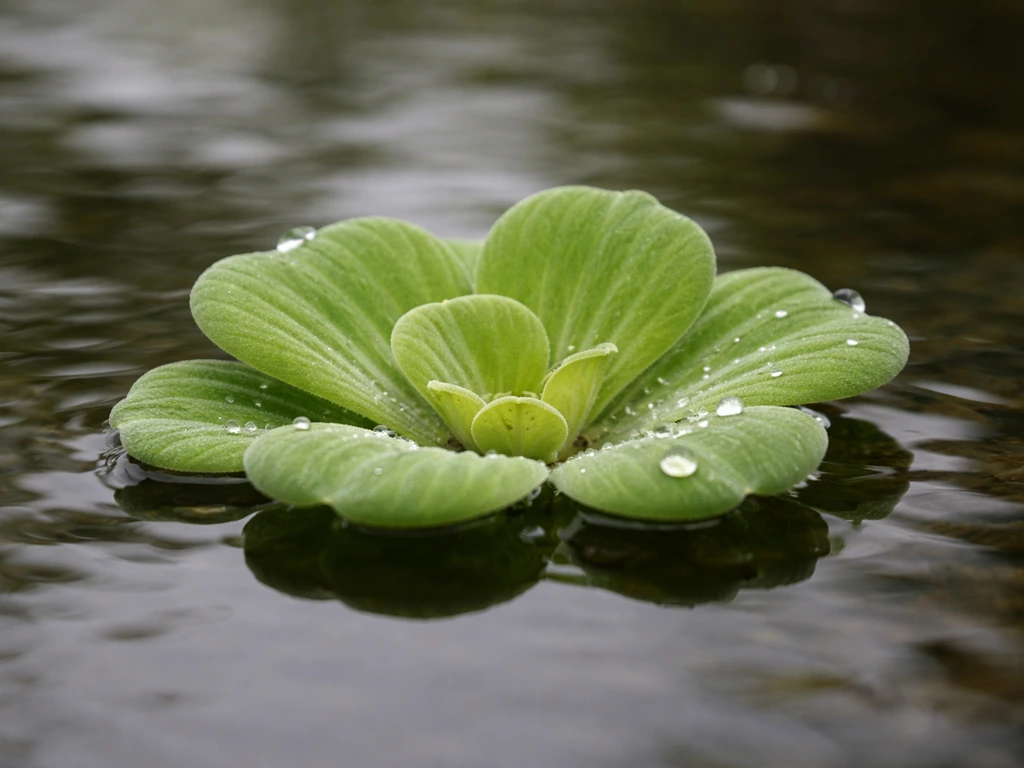
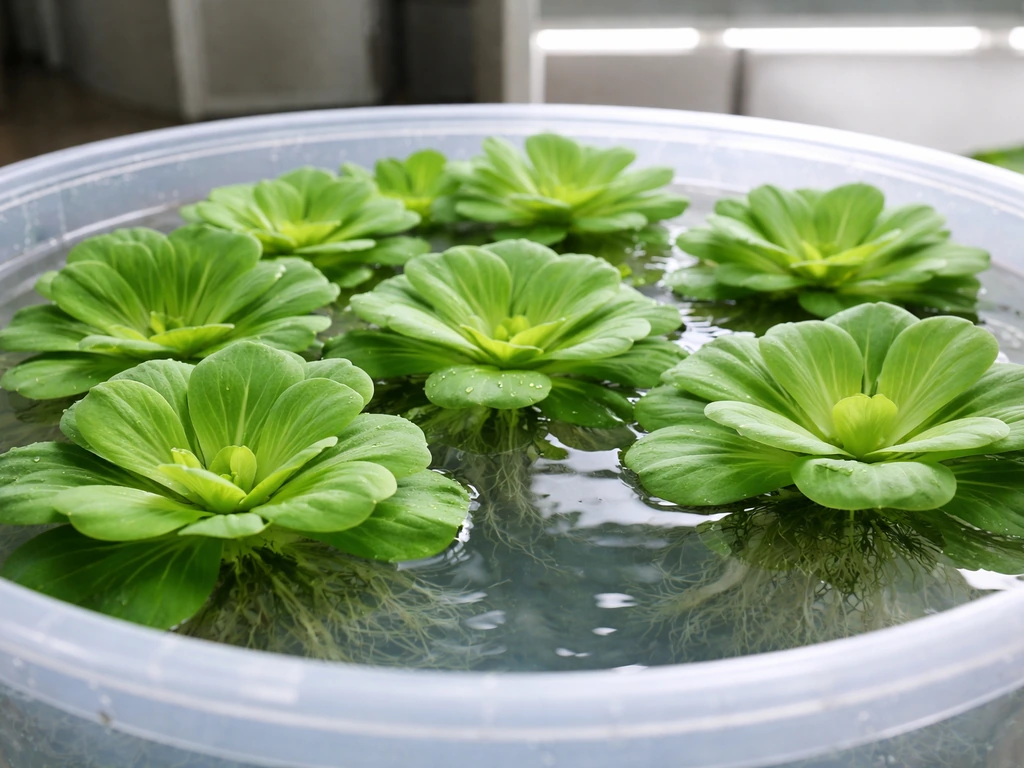
Water lettuce is Pistia stratiotes, a tropical aquatic plant that floats on the water surface. Its rosette of soft, ribbed, light-green leaves looks almost identical to an open head of lettuce, which is where the name comes from. Beneath the rosette, long feathery roots dangle down into the water, sometimes reaching 50 cm in depth. It is a perennial in warm climates and completely frost-sensitive, which means indoors is actually a natural home for it in most parts of the world.
This is not the same thing as growing regular lettuce in water, which is a hydroponic technique for crops like butterhead, romaine, or loose-leaf varieties. If you mean the classic hydroponic method for salad greens, you will want the specific steps for regular lettuce in water and how to set up the nutrient solution growing regular lettuce in water. If you want to grow those indoors in a water-based system, that is a separate topic.
Water lettuce (Pistia stratiotes) is an ornamental and water-filtering plant. You can eat the young leaves in some traditional cuisines, but most indoor growers keep it for its air-purifying roots, its aesthetic appeal in aquariums and tanks, and its surprisingly satisfying growth habit. Just be clear on which plant you are after before you buy.
Indoor setups that work: tank, bucket, or hydroponic-style container
Water lettuce is flexible about its container as long as the setup gives it open water surface to float on. Here are the three setups that work reliably indoors.
Aquarium or fish tank
This is the most popular indoor option and for good reason. A 20-gallon or larger aquarium gives the plants room to spread, and if you keep fish in the tank, their waste naturally provides nitrates that feed the plants. Lettuce can also be grown with aquaponics by using fish waste as a nutrient source for the plants. Water lettuce loves this arrangement. The roots act as a biological filter, pulling nutrients out of the water and keeping it clear. The main challenge is light, since standard aquarium hoods often sit too close and can dry the air right around the leaves. Use a raised or clip-on light positioned about 30 cm above the plant canopy.
Wide bucket or storage tub
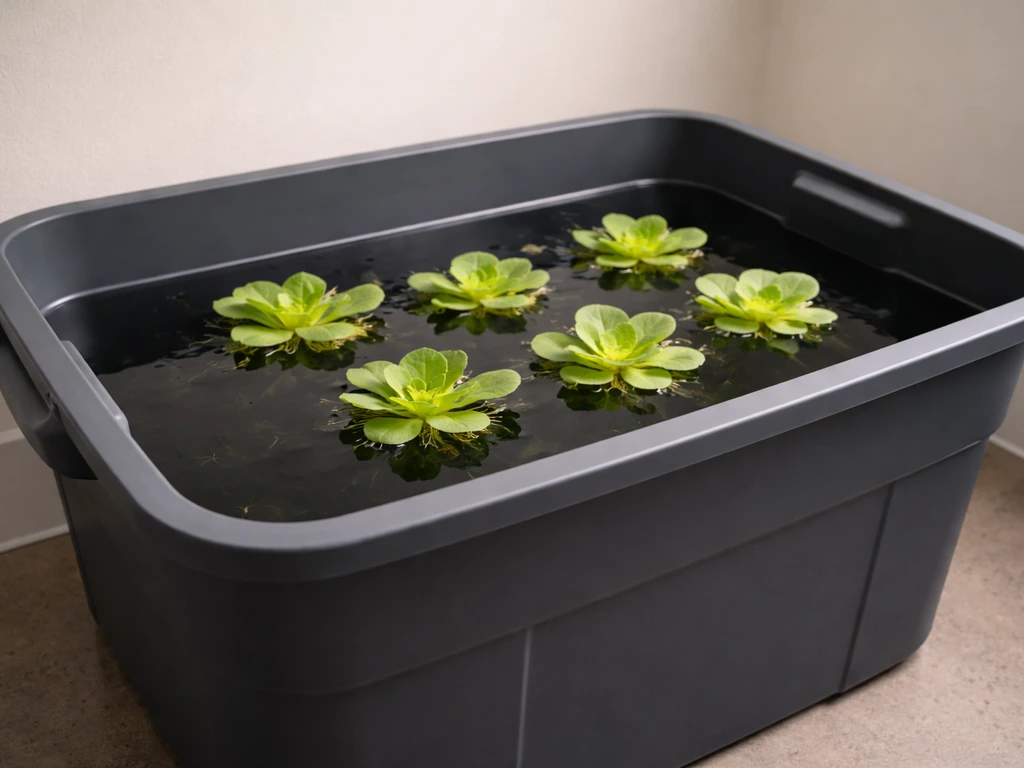
A wide, opaque bucket or a dark-colored plastic storage tub works extremely well. Dark or opaque walls block light from reaching the water, which dramatically reduces algae growth. Fill it with water, float your water lettuce on the surface, and hang a grow light above. This is the simplest setup for beginners who do not keep fish. You will need to add liquid nutrients to the water since there are no fish to supply them naturally.
DWC or hydroponic-style tray
A deep water culture (DWC) reservoir or a shallow NFT-style hydroponic tray can host water lettuce, though it is less common. In a DWC setup, the plants float naturally without needing net pots or anchoring. You get the advantage of an air stone for oxygenation, which noticeably improves root health and plant vigor. Aeration matters because a thick mat of water lettuce can block oxygen exchange at the water surface, and stagnant, low-oxygen water leads to root rot.
AquaPlant’s water lettuce identification page notes that Pistia stratiotes can form thick surface mats, which can affect oxygen exchange and light a thick mat of water lettuce can block oxygen exchange at the water surface. If you are already running a hydroponic system for regular lettuce, you can often add water lettuce as a floating companion to help manage nutrient levels.
| Setup | Best for | Nutrients | Algae risk | Oxygenation needed |
|---|---|---|---|---|
| Aquarium with fish | Beginners with existing tanks | From fish waste | Moderate | Filter usually sufficient |
| Opaque bucket/tub | Apartment growers, no fish | Add liquid fertilizer | Low (dark walls help) | Air stone recommended |
| DWC/hydroponic reservoir | Growers already in hydroponics | Hydroponic nutrient solution | Moderate | Air stone essential |
Light, temperature, and daily care indoors
Light requirements
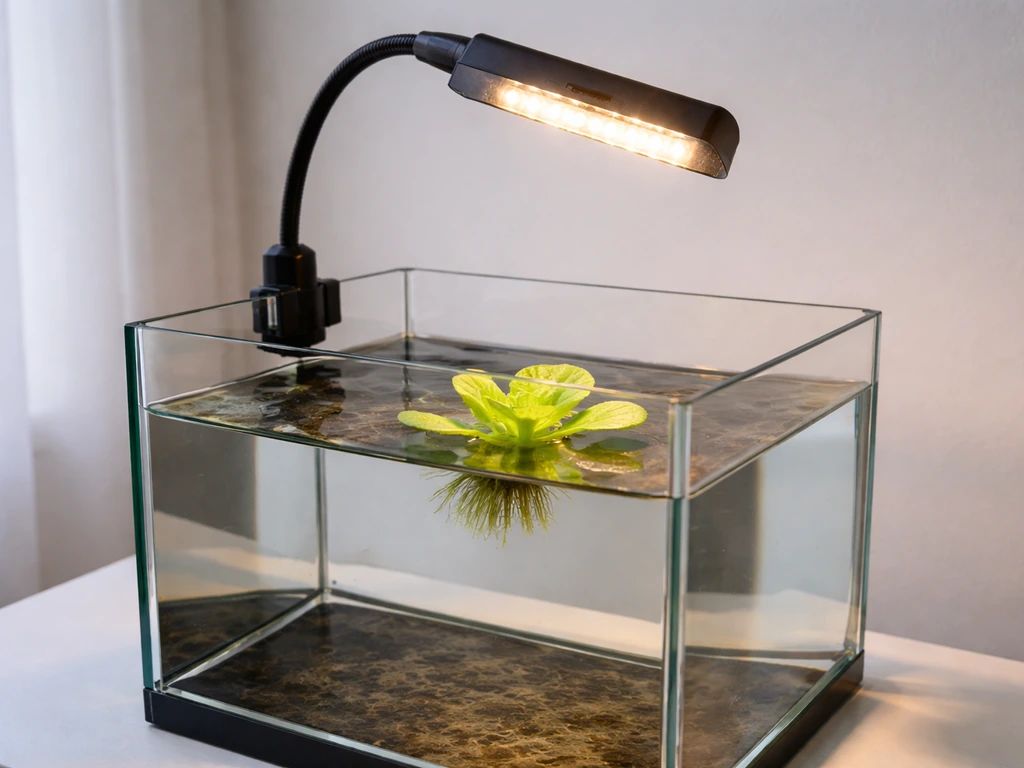
Water lettuce needs a lot of light indoors. A bright south-facing window can work in summer, but for reliable year-round growth, a full-spectrum LED grow light is your best bet. Aim for 12 to 14 hours of light per day. Position the light roughly 30 cm above the top of the leaf rosettes. Too close and the leaves will scorch or dry out from the heat; too far and growth becomes slow and leggy. I use a simple plug-in timer so I never have to think about it.
Temperature
The optimal temperature range for water lettuce is 22 to 30°C (72 to 86°F). It can tolerate up to about 35°C but growth slows significantly below 22°C and the plant will not survive frost. Most homes sit comfortably in this range, which is one of the reasons water lettuce does well indoors. If your setup is near an air conditioning vent or a cold window in winter, move it. Consistent warmth matters more than most people expect.
Humidity and airflow
Water lettuce likes humid air, which makes sense for a tropical plant. Indoor heating and air conditioning can dry the air significantly, and when the air directly around the leaves gets too dry, the soft leaf tissue starts to brown at the edges. Good airflow is still important to prevent fungal issues, but avoid directing a fan or vent directly at the plant. A small USB fan nearby on low setting, aimed at the general area rather than straight at the rosette, strikes the right balance.
Water quality and nutrients: keeping it healthy
Water lettuce is a heavy feeder, especially for nitrates. In a tank with fish, the fish waste usually supplies enough. In a stand-alone container, you need to add nutrients, or the plant will stall, yellow, and eventually melt. To get the best results, keep your hydroponic-style water lettuce at the right nutrient strength and water parameters.
Use a balanced liquid fertilizer formulated for aquatic plants or a general hydroponic nutrient solution diluted to a mild strength. For a hydroponic-style setup, aim for an EC around 0. 8 to 1. 2 mS/cm and a pH between 6.
0 and 7. 0. Water lettuce tolerates a pH of 5 to 8, but the sweet spot for both plant health and algae prevention is closer to 6. 5.
Change out about 25 to 30 percent of the water every one to two weeks, especially in a closed bucket system without fish. This prevents salt buildup from fertilizers and keeps the nutrient balance fresh. In a fish tank, follow your normal water change schedule. Stagnant water with no movement or aeration will develop low dissolved oxygen levels, which stresses roots and encourages anaerobic bacteria. Adding a small air stone connected to a basic aquarium pump solves this immediately and makes a noticeable difference in how vigorously the roots grow.
Keep the water level consistent. Water lettuce floats naturally, so the water level determines how much of the root system is submerged. Aim for at least 15 to 20 cm of water depth to give the roots room to hang without touching the bottom and sitting in stagnant sediment.
Starting out: seeds, cuttings, and spacing
Seeds vs cuttings (offsets)
Skip seeds if you can. Water lettuce propagates naturally and vigorously by sending out stolons, which are short horizontal stems that produce new daughter plants (called ramets) connected to the mother. These offset plants are the easiest way to start. Buy a healthy starter plant from a garden center, aquarium shop, or online seller, float it in your container, and within a few weeks it will begin producing offsets on its own. You can separate the offsets once they have developed their own root cluster, usually when the rosette is about 5 to 8 cm in diameter.
If you do start from seed, sow on the water surface in a warm, bright spot and keep temperatures above 22°C. Germination is slow and inconsistent, and seedlings are fragile for the first few weeks. Offsets are far more reliable for an indoor setup.
Spacing and anchoring
Individual water lettuce rosettes grow to 6 to 30 cm in diameter depending on conditions. Indoors with moderate nutrients, expect them to reach 10 to 15 cm across. Allow at least 10 cm of open water surface per plant when starting. Using enough open water surface helps each rosette grow well, which is key to learning how to grow water lettuce at home open water surface per plant.
Overcrowding reduces light to individual rosettes, slows growth, and increases the risk of rot in the lower leaves. No anchoring is needed; the plants float freely. If your container has any water movement from a pump or filter, position the outflow gently so it does not flip the rosettes or push them into a corner.
Harvest timeline and keeping it producing
If you are growing water lettuce as an edible, the young tender leaves from the center of the rosette can be harvested once the plant reaches a healthy size, typically 6 to 10 weeks after starting from an offset under good indoor conditions. Harvest outer leaves first to leave the growing center intact. This is similar in concept to a cut-and-come-again approach for regular lettuce varieties.
For most indoor growers, the ongoing harvest is really about managing spread. Water lettuce can colonize a container quickly once it hits its stride. Separate and remove offsets regularly to prevent overcrowding. You can pot up extras in another container, share with other growers, or compost the excess. A single healthy mother plant can produce several offsets per month under ideal indoor conditions, so you will go from one plant to many faster than you expect.
Realistic timeline from a single offset: expect visible new root growth in 1 to 2 weeks, a well-established rosette by week 4, and the first offsets appearing by weeks 6 to 8. From seeds, add another 2 to 4 weeks onto those numbers and expect more variability.
Common problems and how to fix them
Yellowing leaves and slow growth
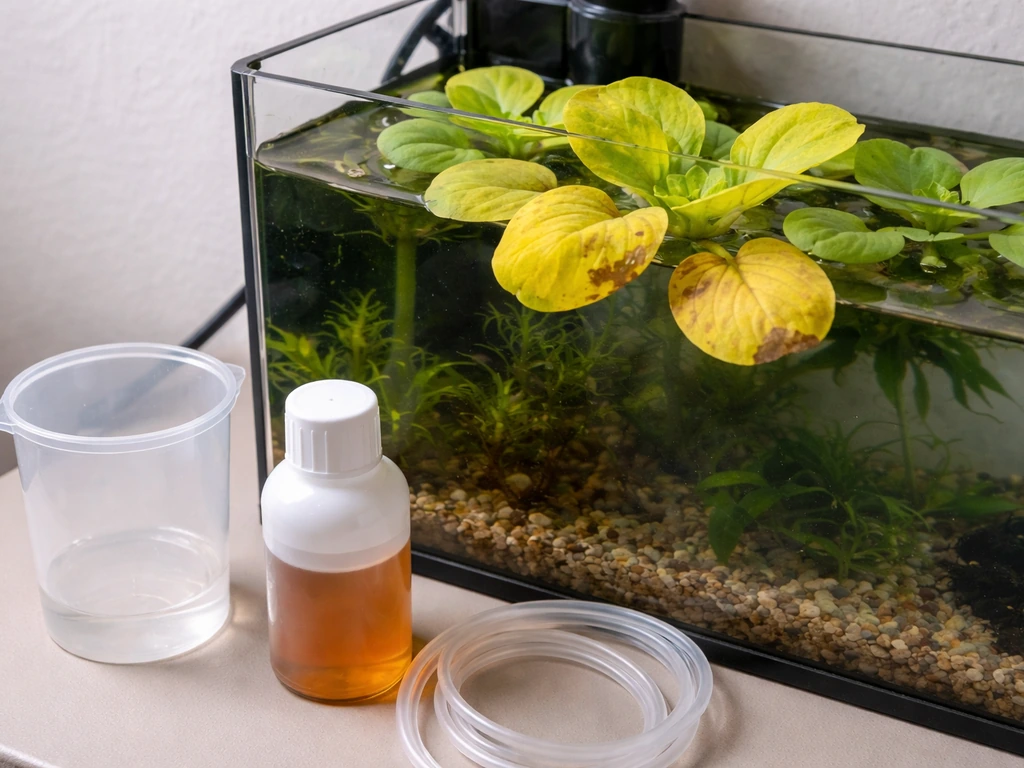
This is almost always a nutrient deficiency, specifically low nitrates. If you are running a fish-free setup and have not been adding fertilizer, start now. Add a balanced aquatic plant fertilizer or a diluted hydroponic nutrient solution and you will usually see improvement within a week. If you are in a tank with fish but the plant still looks pale and stunted, your fish load may simply not be producing enough waste. A small dose of liquid fertilizer will bridge the gap.
Leggy or stretched rosettes
If the leaves are reaching upward and the rosette looks elongated rather than compact and round, the plant is not getting enough light. Move your grow light closer (but not below 30 cm from the leaves) or increase your photoperiod toward 14 hours. A healthy water lettuce rosette should look like a tight, rounded cabbage head, not a stretched-out star.
Root rot
Brown, slimy, or disintegrating roots are a sign of root rot, usually caused by low dissolved oxygen or stagnant water. Add an air stone immediately. Do a 50 percent water change to remove any organic buildup. If the plant itself still has healthy leaves and a firm central stem, it will usually recover once the water conditions improve. Trim away the badly damaged roots with clean scissors to reduce the bacterial load.
Algae blooms
Green water or algae coating the container walls usually means too much light is reaching the water, or nutrients are too high, or both. Switching to an opaque or dark container solves most light-penetration algae problems instantly. Reduce fertilizer concentration if the water has turned bright green. Partial water changes every week will help reset the balance. Water lettuce itself will compete with algae for nutrients once it is established, which is actually one of its useful qualities.
Pests
Indoors, the most common pests on water lettuce are aphids and spider mites, both of which are attracted to the soft leaf tissue. If you spot small insects on the leaves, remove the plant from the water, rinse the leaves gently under room-temperature water, and wipe them down with a soft cloth. Do not spray pesticides into the water, especially if you have fish. Neem oil diluted in water can be applied carefully to the leaf surfaces only, keeping it off the roots and water surface.
Leaf browning at the edges
If the outer leaf edges are turning brown and crispy, the air around the plant is too dry or the grow light is too close and too hot. Move the light up a few centimeters, add a small tray of water nearby to increase local humidity, or mist the leaves lightly once a day. Do not mist to the point of standing water on the leaves, which can encourage rot.
Your starter supply checklist
- 1 healthy water lettuce plant or offset (from a garden center, aquarium shop, or online)
- Opaque container: a dark bucket, large storage tub, or aquarium (minimum 20 liters of water volume)
- Full-spectrum LED grow light with a timer (set to 12 to 14 hours daily)
- Small aquarium air pump and air stone
- Liquid aquatic plant fertilizer or diluted hydroponic nutrient solution
- pH test strips or a basic pH meter (target 6.0 to 7.0)
- EC meter if using hydroponic nutrients (target 0.8 to 1.2 mS/cm)
- Room-temperature dechlorinated or aged tap water for filling and top-ups
If you are already running a hydroponic setup for regular lettuce varieties indoors, water lettuce fits naturally into that world. If you want a dedicated hydroponic-style setup for lettuce, the same basics apply and you can tune light timing, nutrients, and oxygen for best results hydroponic setup. It can float in the same reservoir and help balance nutrients in a way that complements your existing system. And if you are curious about growing standard lettuce varieties in water-based systems, the principles around pH, EC, and dissolved oxygen overlap significantly with what you have just read here.
FAQ
Can you grow water lettuce indoors without grow lights, using only a windowsill?
Yes, but only if the spot gets strong, direct light for part of the day. Aim for a very bright south-facing or west-facing window, and plan to supplement in winter. If you notice rosettes becoming narrow and stretched, that is usually a light shortfall, not a nutrient problem.
Is it safe to eat water lettuce grown indoors?
It can be eaten in some traditional cuisines when harvested young, but most indoor growers treat it as ornamental. If you plan to eat it, do not use any pesticide treatments, avoid nutrient mixes not intended for edible use, and rinse leaves well. Also harvest only from healthy, green plants with firm centers.
What size container do I need for more than one plant?
Leave at least about 10 cm of open water surface per plant when starting. If you pack them tightly, you will get less light per rosette, faster spread of offsets into each other, and a higher chance of lower-leaf rot. Plan to remove and re-home offsets regularly once it colonizes the surface.
Do I need to add nutrients if I have no fish?
Yes. In a fish-free bucket or tub, water lettuce will eventually stall if you do not supply nitrate and other trace nutrients. Use a diluted liquid fertilizer formulated for aquatic plants or hydroponics, then adjust based on color and growth speed rather than guessing once.
How do I tell the difference between nutrient deficiency and low oxygen/root rot?
Nutrient issues usually show as pale, slow growth and yellowing while roots remain reasonably intact. Low oxygen shows up as brown, slimy, collapsing roots and often coincides with a stagnant, smellier environment. In the second case, add aeration immediately and do a sizable water change.
Should I use an air stone, even if the water looks clear?
It is a good idea, especially in tubs or reservoirs where water is not constantly moving. Clear water does not guarantee adequate dissolved oxygen, and dense mats of water lettuce can block gas exchange at the surface. A small air stone helps prevent the stress that leads to rot.
How often should I change water in a no-fish indoor setup?
A practical baseline is about 25 to 30% every one to two weeks. If you see algae rising quickly or nutrient strength drifting, switch to the shorter end of that range. Consistent partial changes also reduce salt buildup from fertilizer.
Can water lettuce live in hard water or tap water?
Often yes, but extreme hardness or high alkalinity can push pH up over time, which can encourage algae and nutrient lockout. If your tap water is very alkaline, monitor pH and adjust toward the plant’s preferred sweet spot rather than relying on initial conditions.
What’s the best way to prevent algae in an opaque bucket setup?
Dark or opaque containers are the biggest win because they block light from reaching the water. Also keep fertilizer diluted and consistent, avoid overfeeding, and do regular partial water changes. If algae still shows, reduce light exposure time rather than repeatedly adding fertilizer.
How do I separate offsets without damaging the mother plant?
Separate once the daughter rosettes have their own root cluster, typically when the rosette is around 5 to 8 cm across. Use clean hands or sanitized scissors, lift carefully so the roots stay attached, then float the new rosette on fresh water at the same depth and conditions.
Can water lettuce survive power outages or a failed pump?
It depends on how long oxygenation stops. In setups without an air stone, a prolonged loss of aeration or stagnant mixing can quickly worsen dissolved oxygen and lead to root problems. If you are using a timer or pump, consider redundancy or at least a battery backup for the air pump.
What pests should I expect indoors, and what is the safest first response?
Aphids and spider mites are the most common. The safest first step is to remove the plant from the water, rinse the leaves gently, wipe with a soft cloth, then return it to fresh, stable conditions. Avoid spraying chemicals into the water, especially if you keep fish.