Hydroponic lettuce grows best in a nutrient film technique (NFT) or deep water culture (DWC) system, with water pH held between 5.5 and 6.5, an EC (electrical conductivity) of 0.8 to 1.6 mS/cm, water temperature around 65 to 72°F (18 to 22°C), and 14 to 16 hours of light per day at 200 to 400 µmol/m²/s. Get those four things right and you can go from seed to harvest in as little as 30 days.
How Does Hydroponic Lettuce Grow Best Indoors Step by Step

Marcus Holloway
12 Jun 2026
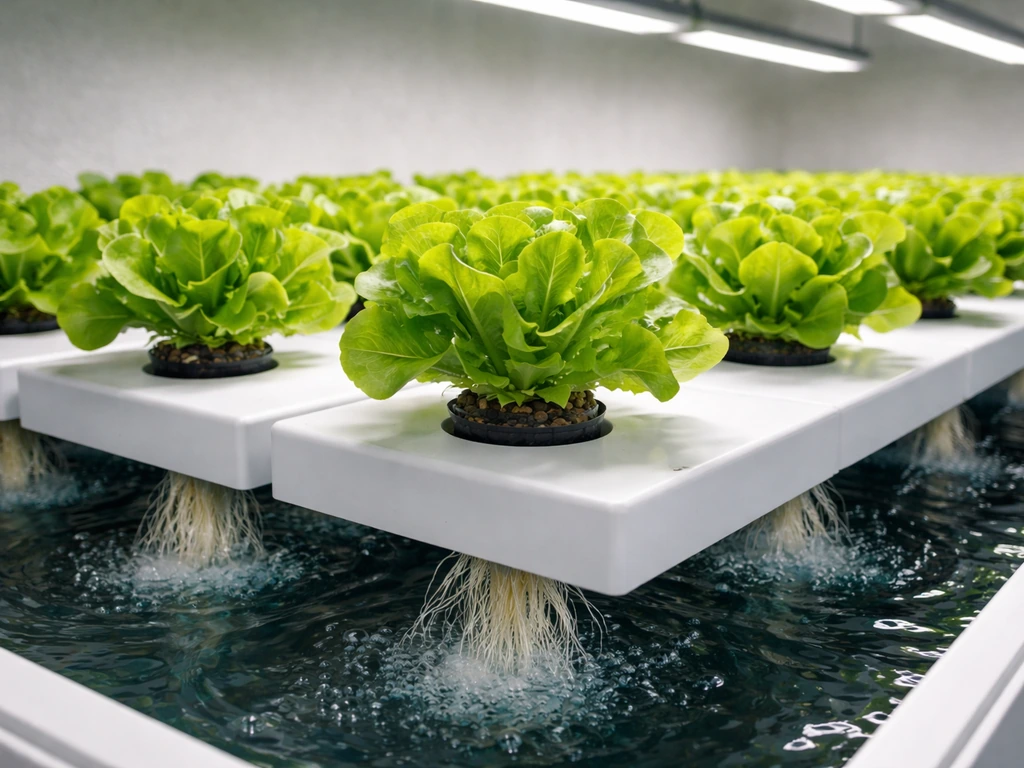
Best hydroponic setup for lettuce
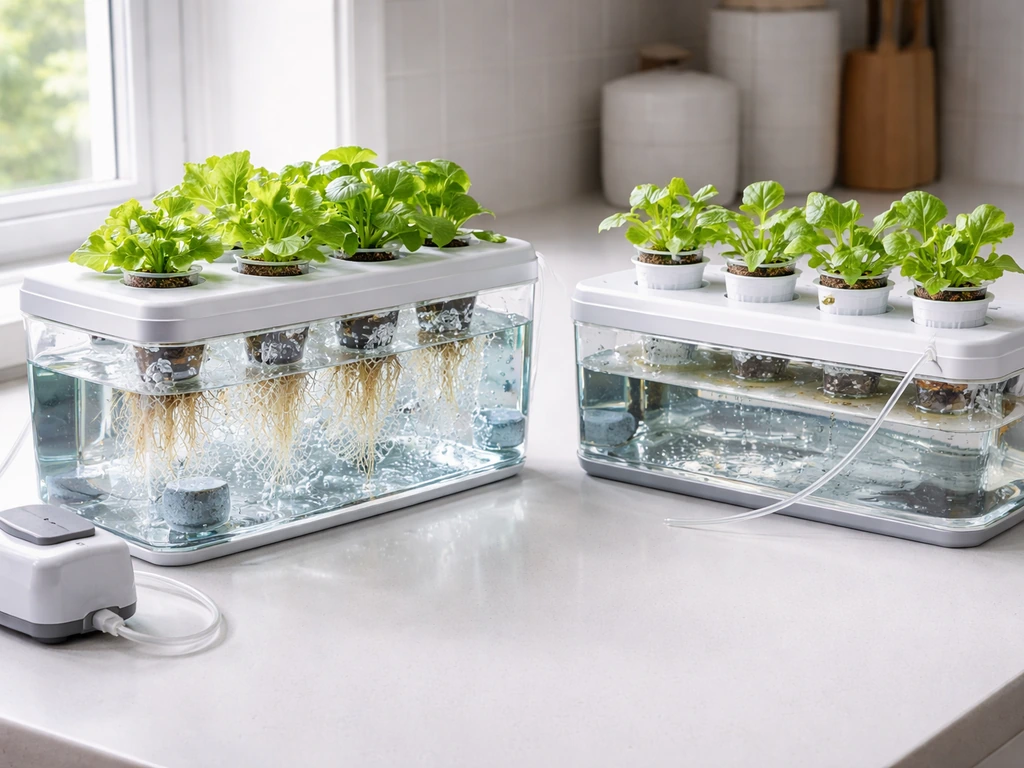
Two systems work better than anything else for lettuce at home: deep water culture (DWC) and nutrient film technique (NFT). If you want to start specifically with water lettuce, the same home hydroponic basics apply, just dial the water and light so the plant stays crisp and healthy how to grow water lettuce at home. Both are beginner-friendly, affordable, and genuinely good at producing quick, quality crops.
DWC is the easiest place to start. You suspend net pots over a reservoir of nutrient solution so the roots hang directly into the water. An air pump and airstone keep the solution oxygenated, lettuce roots need dissolved oxygen levels around 5 mg/L to stay healthy and absorb nutrients efficiently. DWC setups cost very little to build, require minimal maintenance, and give you a big root zone without complexity. A 5- to 10-gallon tote can comfortably support four to six lettuce plants.
NFT uses a pump to send a thin film of nutrient solution continuously down a sloped channel (usually PVC tube or square channel), over the roots, and back into a reservoir. The tops of the roots stay exposed to air, which means excellent oxygenation without an airstone. NFT is slightly more efficient on water and nutrients once you scale up, and it is the system most commercial hydroponic lettuce growers use. The tradeoff is that pump failures can damage roots fast because there is no buffer reservoir in the channel itself.
Kratky method (passive DWC with no pump or electricity) is worth mentioning for small setups or beginners who want zero moving parts. You fill a container, plant into it, and let roots grow as the water level drops. Growth is a bit slower than active DWC, and you have to top up carefully, but many home growers have consistent success with it for leaf varieties.
| System | Best for | Startup cost | Oxygenation method | Main risk |
|---|---|---|---|---|
| Deep Water Culture (DWC) | Beginners, small indoor setups | Low ($15–$40 DIY) | Air pump and airstone | Root rot if air pump fails |
| Nutrient Film Technique (NFT) | Scaling up, multiple plants | Medium ($40–$150) | Passive via exposed roots | Root damage if pump fails |
| Kratky (passive DWC) | Ultra-simple, no electricity | Very low ($5–$15 DIY) | Air gap as water drops | Slower growth, needs careful monitoring |
If you are just getting started, build a DWC bucket or tote first. Once you understand how pH and nutrients behave, transitioning to NFT is straightforward. Avoid ebb-and-flow or wick systems for lettuce specifically, they tend to produce slower growth and more variability in moisture.
Ideal water and nutrient mix (how to dial it in)
Water chemistry is where most home growers either get consistent results or spin their wheels troubleshooting forever. Get pH and EC dialed in early and adjust them as the plant matures, that is the whole game.
pH targets
Keep pH between 5.5 and 6.5, with a sweet spot around 6.0 to 6.2. Below 5.5 and you start getting nutrient lockout for calcium and magnesium. Above 6.5 and iron, manganese, and phosphorus become unavailable. Check pH daily when starting out, pH drift happens fast in small reservoirs, especially in warm rooms. Use a digital pH pen (not drops or strips, accuracy matters here), and adjust with food-grade pH Up (potassium hydroxide) or pH Down (phosphoric acid) in small increments. One milliliter at a time in a 5-gallon system can shift pH by 0.3 to 0.5 points.
EC and nutrient strength
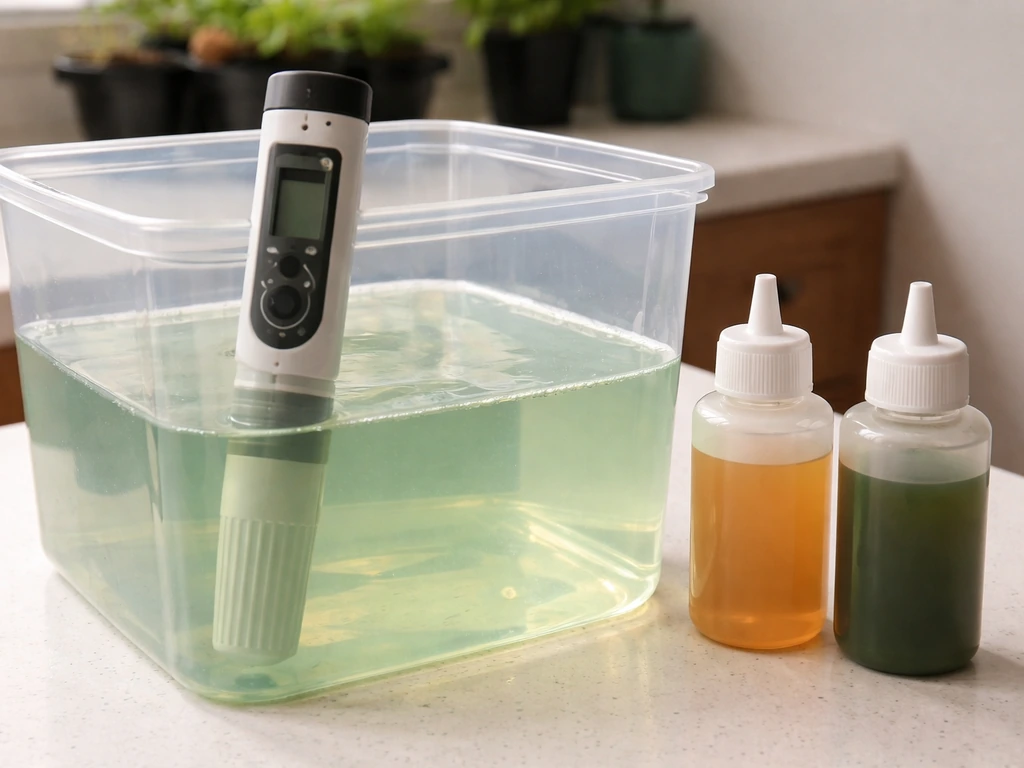
EC tells you the total concentration of dissolved nutrients. For lettuce, lower is better than higher, this is not a heavy feeder. Start seedlings at 0.8 to 1.0 mS/cm and increase to 1.2 to 1.6 mS/cm once plants are established and actively growing (usually after week two). Running EC above 1.8 to 2.0 for extended periods can cause tip burn and bitter flavor. If you are growing in a warm room or during summer, stay on the lower end of EC ranges.
For nutrient formulas, a two-part or three-part hydroponic nutrient solution designed for leafy greens works well. Look for a formula with a higher nitrogen ratio relative to phosphorus and potassium during vegetative growth, something like a 3-1-2 NPK ratio. Calcium and magnesium are worth supplementing separately if you are using soft or RO water, since deficiencies in both cause tip burn and yellowing.
Keeping the solution stable
Change the reservoir fully every 7 to 14 days rather than just topping up continuously. Topping up with plain water raises EC over time as plants consume water faster than nutrients. A full reservoir change resets the chemistry and prevents salt buildup. In between changes, top up with plain pH-adjusted water and check EC before adding more nutrient solution. Always mix nutrients into the water before adjusting pH, and let the solution sit in the reservoir for 30 minutes before checking pH again, it continues to shift slightly after mixing.
Light, temperature, and humidity targets
Light intensity and photoperiod
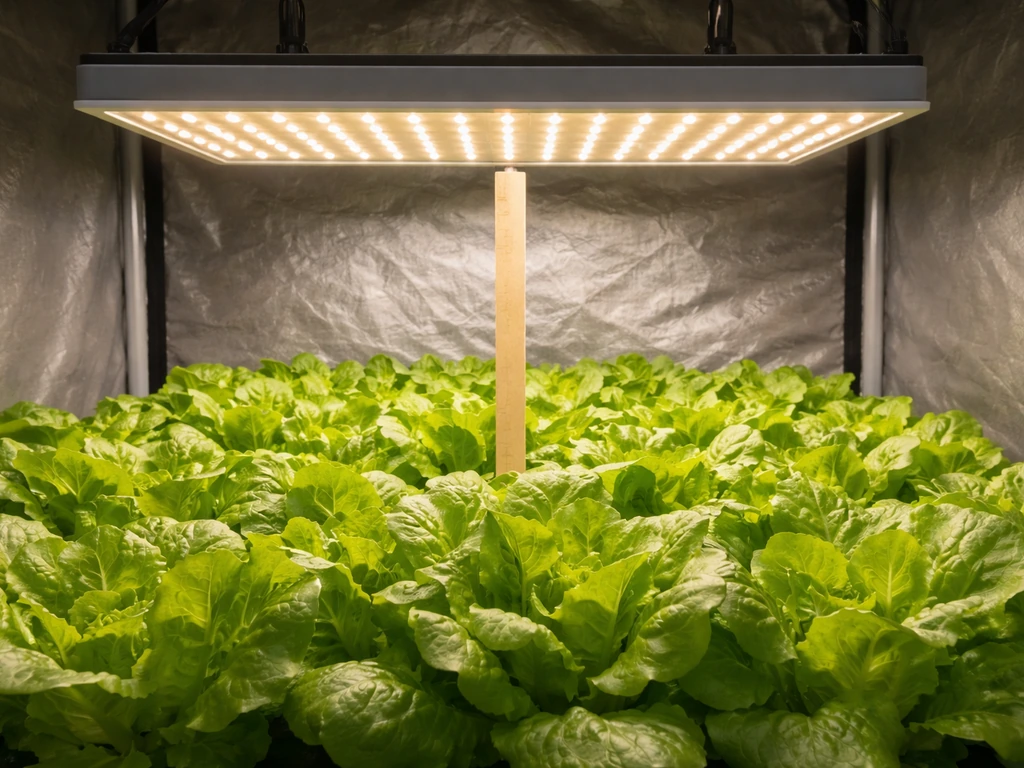
Lettuce is a low-to-medium light crop compared to tomatoes or peppers. Target 200 to 400 µmol/m²/s PPFD (photosynthetic photon flux density) at canopy level. Most quality LED grow lights marketed for leafy greens will hit this range at a distance of 12 to 18 inches above the plants. Run lights for 14 to 16 hours per day with a true dark period of 8 to 10 hours. Continuous light (24 hours) can trigger early bolting and actually slows growth in many varieties, give them a rest.
If you do not have a PPFD meter, a practical rule of thumb: if your lettuce is stretching toward the light with elongated stems and widely spaced leaves, it needs more light or the fixture needs to move closer. If leaf edges are bleaching or developing white patches, the light is too intense or too close. Full-spectrum LEDs with a 4000K to 6500K color temperature work well for leaf growth.
Temperature
Air temperature should stay between 60 and 75°F (15 to 24°C). Lettuce is a cool-season crop and it will bolt and turn bitter once air temperatures consistently exceed 75 to 80°F. Water temperature matters just as much, keep the reservoir between 65 and 72°F. Warm water holds less dissolved oxygen and promotes root rot pathogens like Pythium. If your space runs warm, insulate the reservoir with foam or a dark cover, or use a small aquarium chiller if temps regularly exceed 75°F in the water.
Humidity and airflow
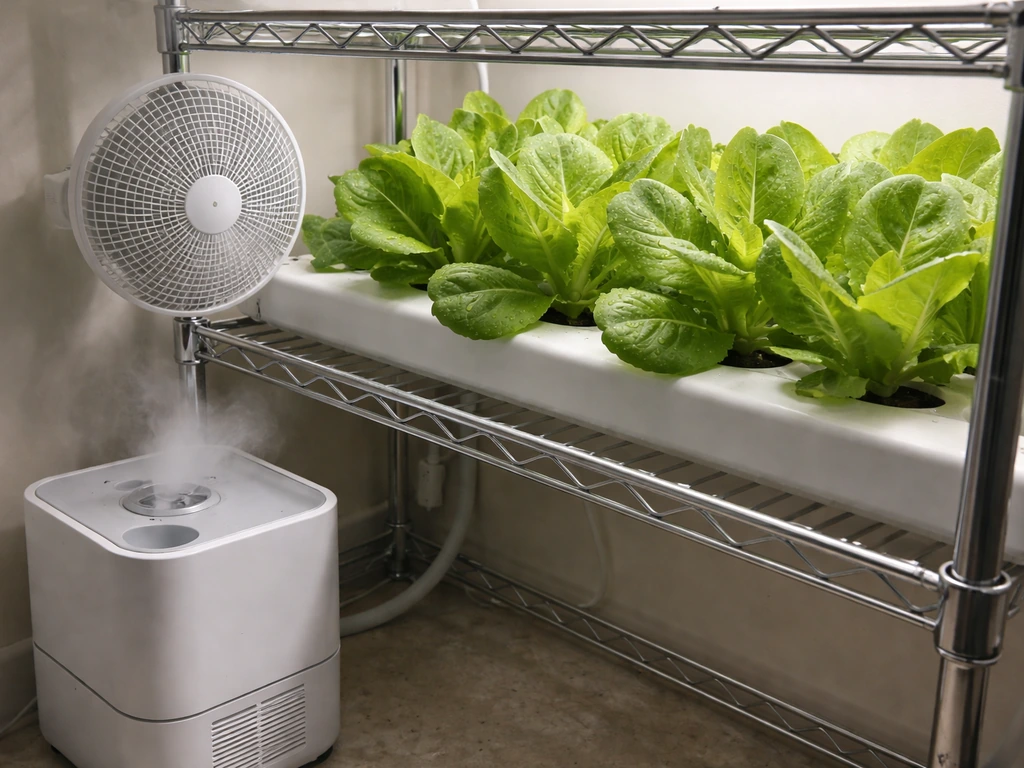
Aim for 50 to 70% relative humidity. Below 40% and lettuce may show leaf edge browning. Above 80% and you increase the risk of fungal issues like powdery mildew or botrytis. A small oscillating fan running on low continuously is genuinely one of the most important and underappreciated tools in an indoor hydroponic grow. It strengthens stems, prevents moist stagnant air pockets around leaves, and drops the boundary layer temperature on leaf surfaces, all of which directly reduce tip burn.
Seed to harvest timing and transplanting strategy
From seed to first harvest, expect 30 to 45 days for loose-leaf varieties and 45 to 60 days for butterhead or romaine heads. These are honest ranges, conditions vary, and beginners often see their first run take a bit longer while they dial things in.
Starting seeds
Start seeds in rockwool cubes, rapid rooter plugs, or foam plugs rather than sowing directly into the hydroponic system. Soak rockwool cubes in pH 5.5 water for an hour before planting. Press one to two seeds per cube about 3mm deep, cover lightly, and keep in a warm (70 to 75°F), humid spot with low light until germination. Lettuce germinates in 2 to 4 days at these temperatures. Once seedlings emerge, move under full light immediately, even one day too long in dim conditions causes leggy stretching that never fully corrects.
Transplanting into the system
Transplant into the hydroponic system once seedlings have developed their first true leaves, typically 7 to 10 days after germination. At transplanting, start with a low nutrient solution (EC around 0.8 to 1.0) and gradually increase over the following week. Lower your light slightly for the first 24 to 48 hours after transplanting to reduce transplant stress. Roots should be visible poking out of the cube or plug and starting to reach toward the nutrient solution within a few days. To dial this in for water-based growing, focus on pH, EC, and dissolved oxygen in your lettuce reservoir.
Harvesting: cut-and-come-again vs. full heads
For loose-leaf varieties, cut-and-come-again harvesting extends your production significantly. Use clean scissors to harvest the outer leaves when they reach about 4 to 6 inches long, always leaving the inner growth center and at least 3 to 4 inner leaves intact. You can typically harvest this way 3 to 4 times before the plant bolts or flavor declines. UF/IFAS Extension (HS1258) notes lettuce can be a fast-growing crop for novice growers when using correct variety selection and protected culture or hydroponic strategies 3 to 4 times. For butterhead or romaine, it is more productive to harvest the whole head at once by cutting the stem at the base just above the root collar when the head feels firm and compact.
Variety selection for hydroponics
Variety choice affects speed, flavor, heat tolerance, and how well a plant handles the slightly humid, controlled conditions of an indoor system. Lettuce has been well-studied for hydroponic performance, choosing the right cultivar genuinely makes the setup easier.
Loose-leaf varieties
Loose-leaf types are the fastest and most forgiving choice for hydroponics. 'Black Seeded Simpson' is a classic, mild flavor, fast growth, very tolerant of moderate temperature variation. 'Oak Leaf' types (red and green) have excellent flavor and look great in a home system. 'Red Sails' adds color and has some heat tolerance. 'Salanova' types, bred specifically for cut-and-come-again production, are increasingly available and give very uniform, restaurant-quality leaves.
Butterhead varieties
'Buttercrunch' is one of the most reliable butterhead varieties for hydroponics and stays compact enough for most home systems. 'Tom Thumb' is a miniature butterhead that matures in about 45 days and works perfectly in smaller DWC setups with tight spacing. 'Nancy' and 'Ostinata' are commercial butterhead types bred for protected culture (greenhouse and hydroponic) and show strong tip burn resistance, worth seeking out if tip burn has been a recurring issue.
Romaine varieties
Romaine takes longer (50 to 70 days) and needs more vertical space but delivers excellent crunch and flavor. 'Little Gem' is the best choice for home hydroponic systems, it forms a compact semi-cos head that matures faster than full-size romaine and fits well in standard net pot spacing. 'Parris Island Cos' is a larger traditional romaine that works in NFT systems with adequate spacing. Romaine is generally more heat-sensitive than loose-leaf varieties, so temperature management matters more if you are growing this type.
| Type | Best variety | Days to harvest | Tip burn resistance | Best system |
|---|---|---|---|---|
| Loose-leaf | Black Seeded Simpson, Oak Leaf | 30–40 days | Moderate | DWC, NFT, Kratky |
| Butterhead | Buttercrunch, Tom Thumb, Ostinata | 45–55 days | Good (Ostinata: excellent) | DWC, NFT |
| Romaine | Little Gem, Parris Island Cos | 50–70 days | Moderate | NFT, DWC |
Spacing, airflow, and preventing disease
Crowding is one of the most common mistakes in home hydroponic lettuce setups. It looks efficient to pack plants close together, but it creates exactly the conditions that lead to disease and tip burn.
Space loose-leaf varieties at least 6 to 8 inches apart (center to center). Butterhead and romaine need 8 to 10 inches minimum. In NFT channels, this translates to one plant per hole at 6 to 8 inch intervals. In DWC totes, resist the urge to add extra net pots, four plants in a 10-gallon tote is appropriate, six is pushing it.
Keep a small fan running at all times to ensure air moves between and around plants. This lowers humidity at leaf surfaces, strengthens cell walls, and dramatically reduces fungal pressure. If you notice any yellowing, mushy outer leaves, or white fuzzy patches, remove affected leaves immediately and increase airflow. Avoid getting water or nutrient solution on leaves when topping up reservoirs. Wet foliage in an enclosed space is an invitation for botrytis.
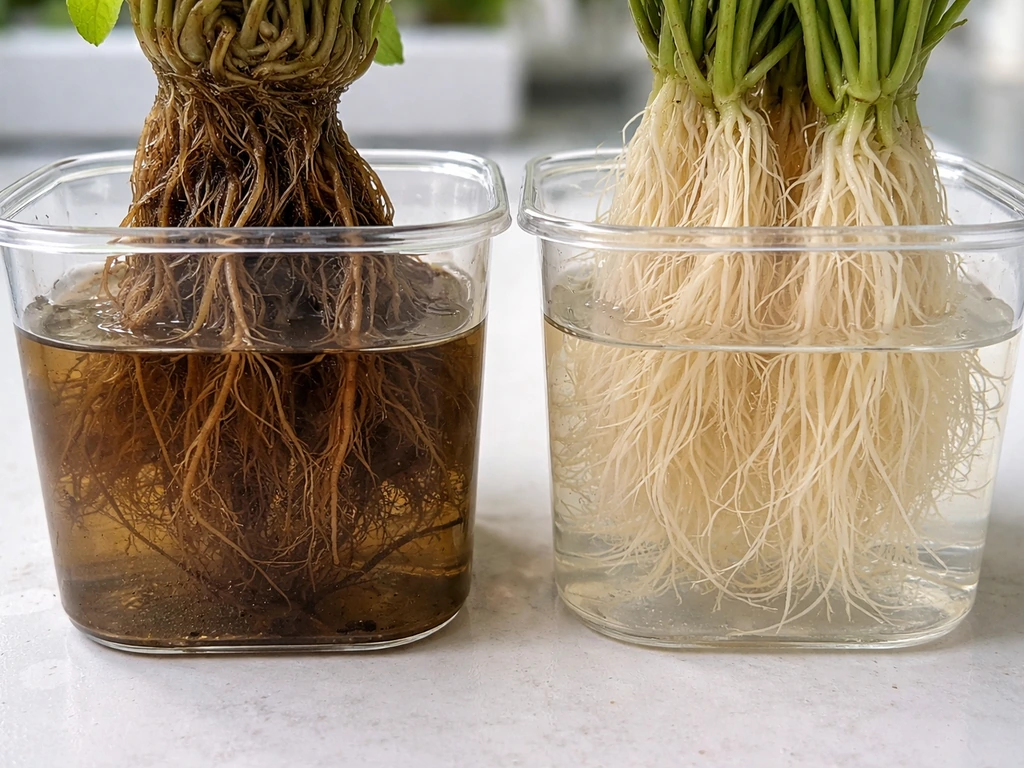
Root health is equally important. In DWC, check roots every few days when you are getting started. Healthy lettuce roots are white to cream-colored and smell faintly earthy. Brown, slimy, or foul-smelling roots indicate Pythium (root rot), usually caused by warm water, insufficient oxygen, or both. If you catch it early, lower water temperature, increase aeration, and consider adding a beneficial bacteria product like Hydroguard (Bacillus amyloliquefaciens). Caught late, root rot usually means starting over.
Troubleshooting common hydroponic lettuce problems
Tip burn (brown or dead leaf edges)
Tip burn is the most frustrating hydroponic lettuce problem and it is almost always caused by inadequate calcium delivery to rapidly expanding leaf tissue, not usually by a lack of calcium in the solution. Plants cannot move calcium fast enough through transpiration in still, humid air. Fix it by: increasing airflow with a fan, reducing EC slightly, checking that pH is not above 6.5 (which locks out calcium), and switching to a tip burn-resistant variety like Ostinata or Buttercrunch for future runs.
Bitter or off-flavor leaves
Bitterness in hydroponic lettuce is usually caused by heat stress, bolting, or high EC. If air or water temperatures are consistently above 75°F, plants trigger early bolting and start producing bitter compounds. Lower EC to 0.8 to 1.2 mS/cm, drop temperatures if possible, and harvest more aggressively. Once a plant has sent up a central flowering stalk, the leaves will be bitter, harvest everything immediately and start fresh.
Leggy, stretching plants
If stems are elongated and leaves are small or widely spaced, the plant is reaching for more light. Move your light source 2 to 4 inches closer (check for heat stress at the canopy, if it feels warm to your hand, stop there), increase the photoperiod to 16 hours, or upgrade to a higher-output fixture. This is very common with seedlings left under weak light for even a day or two too long. You cannot reverse legginess in the current plant, but you can prevent it in the next run.
Slow or stunted growth
If plants are not sizing up after 2 to 3 weeks in the system, check these in order: pH (most likely cause if it has drifted above 7.0 or below 5.0), EC (too low means plants are underfed), water temperature (too cold below 60°F slows metabolism significantly), dissolved oxygen (if your air pump has stopped or the airstone is clogged), and light (insufficient intensity or too short a photoperiod). Fix pH first, a drift to 7.5 or above will lock out most nutrients and look identical to a deficiency even when the solution is full of nutrients.
Root rot and brown slime
Brown, slimy roots almost always mean Pythium or a similar water mold. Causes: water above 72°F, insufficient dissolved oxygen, or light leaking into the reservoir and warming or greening the water. Immediate steps: drain and replace the reservoir with fresh, properly oxygenated, cool nutrient solution; check and clean the airstone; cover any light leaks in the reservoir lid; add Hydroguard or a similar beneficial bacteria product. Keep water below 70°F going forward. Algae in the reservoir (green water or green slime) is a separate issue caused purely by light reaching the water, block all light from the reservoir with black tape or a solid lid.
Yellowing leaves
Uniform yellowing of older (lower) leaves usually indicates nitrogen deficiency, increase EC slightly or check that your nutrient formula has not expired or been stored incorrectly. Yellow between leaf veins with green veins remaining (interveinal chlorosis) on newer leaves points to iron or manganese deficiency, almost always caused by pH above 6.5. Drop pH to 6.0 to 6.2 and you will usually see improvement within 3 to 5 days as the plant accesses the nutrients already in solution.
Bolting (plants going to seed prematurely)
Bolting is triggered by high temperatures and, in some cases, by very long photoperiods (over 18 hours) combined with warmth. Keep air temps below 75°F and water temps below 72°F. Running lights for exactly 14 to 16 hours rather than 18 to 24 helps reduce bolting risk. If a plant bolts, harvest everything immediately, the leaves are still edible if harvested before the stalk fully elongates, though they will be more bitter than usual.
Hydroponic lettuce is genuinely one of the easiest and most rewarding crops you can grow indoors once the fundamentals are locked in. Most failures trace back to just three variables: pH drift, insufficient light, and warm water. Check those first in any troubleshooting scenario. From there, variety selection and consistent reservoir management will get you to reliable 30 to 45 day harvests of clean, crisp greens year round. If you want to take it one step further, you can learn how to grow lettuce aquaponics by pairing these same basics with fish and beneficial filtration reservoir management. If you want a step-by-step guide, use this approach for how to grow lettuce hydroponic with a DWC or NFT setup.
FAQ
Should I grow hydroponic lettuce from seed directly in the system, or start in plugs first?
For best results, start seedlings in rockwool, plugs, or rapid rooters, then transplant once they have true leaves (about 7 to 10 days after germination). Going straight into the hydroponic system often leads to uneven nutrient exposure and leggy, weak roots that struggle to establish.
How often should I check pH and EC during the first 2 weeks?
Check at least daily at the beginning, because small reservoirs drift quickly (especially with warm indoor rooms). After you stabilize your routine, checking 2 to 3 times per week is usually enough as long as you still fully change the reservoir on schedule.
If pH rises above 6.5, should I flush immediately or just keep adjusting?
In most cases, lower pH back into the 6.0 to 6.2 range right away and recheck after 30 minutes. If pH has stayed high for more than a day or two, consider a full reservoir change because nutrient lockout can cause symptoms that do not quickly reverse.
What EC should I run for germination and early seedlings?
Use a lower EC for seedlings (around 0.8 to 1.0 mS/cm) and then ramp up after the plant is established, usually after week two. Jumping to adult EC too early increases tip stress and can stunt growth even if pH is correct.
How do I measure dissolved oxygen, and is an air stone always required?
A direct dissolved oxygen meter is optional for home growers. In DWC, you rely on an airstone and air pump to keep roots oxygenated; for NFT, oxygenation is improved because roots are exposed to air, but you still need to keep the pump running reliably.
Why do some people get tip burn even when calcium is present?
Tip burn is often about delivery speed, not just calcium quantity. If calcium uptake cannot keep up with fast leaf expansion in warm, humid, still air, you will see tip burn. The practical fixes are stronger airflow, slightly lower EC, and ensuring pH is not above 6.5.
Can I use hard tap water for hydroponic lettuce, and do I always need extra calcium and magnesium?
If your tap water is hard, you might not need as much separate calcium and magnesium, but you still should supplement if you see tip burn or magnesium-related yellowing. The key is monitoring symptoms and adjusting your nutrient program rather than assuming the source water will always be sufficient.
How do I prevent algae and green slime in my reservoir?
Block light from reaching the nutrient solution. Use a solid lid or black tape over translucent parts, and keep the reservoir shaded. Even if your chemistry is perfect, light exposure can cause algae that competes with nutrients and worsens water quality.
What should I do if my pump stops, especially in NFT?
In NFT, root damage can happen quickly because there is no buffer reservoir within the channel itself. If you suspect a failure, stop the cycle, check roots immediately, and restore flow with properly oxygenated, correctly mixed nutrient solution. Consider a backup power plan if you have frequent outages.
My lettuce is stretching and getting thin leaves, what is the fastest fix?
That usually means insufficient light or seedlings were in dim conditions too long. Move the light closer by 2 to 4 inches and confirm you are running the recommended photoperiod (about 14 to 16 hours). You cannot fully correct the current plant’s leggy growth, but you can prevent it from worsening in the next run.
Is 24-hour lighting ever okay for hydroponic lettuce?
For most lettuce varieties, continuous light increases the risk of early bolting and can reduce performance. Use a true dark period of 8 to 10 hours unless you are testing a specific cultivar under controlled conditions.
How do I handle bolting if temperatures are hard to control?
Bolting is driven mainly by heat and often worsened by extended warm photoperiods. Keep air below about 75°F, water below about 72°F, run lights for 14 to 16 hours, and harvest as soon as a central stalk forms. Leaves harvested after bolting will be more bitter, so timing matters.
What spacing should I use if I only have a small DWC tote or limited net pots?
Resist crowding. Loose-leaf typically needs at least 6 to 8 inches between plants (center to center), and butterhead or romaine needs 8 to 10 inches. Overcrowding can raise humidity at leaf surfaces and increases disease and tip burn risk.
Should I harvest leaves right away if plants look slightly undersized?
If plants are reaching the minimum size for your target and quality is acceptable, cut-and-come-again harvesting can extend productivity for loose-leaf types. For head-forming types (butterhead, romaine), wait for firmness before cutting, because early cuts tend to reduce the head’s eating quality.
Why do my plants look nutrient-deficient right after I adjust nutrients?
Nutrient and pH adjustments take time to equilibrate. Always mix nutrients into water first, adjust pH after mixing, then let the solution sit for about 30 minutes before rechecking. If you check immediately, you can chase a moving target and overcorrect.
If growth stalls after 2 to 3 weeks, what is the best troubleshooting order?
Check pH first (especially if it drifted outside roughly 5.5 to 6.5), then EC, then water temperature, then dissolved oxygen, then light intensity and photoperiod. Fixing pH early prevents misleading deficiency symptoms that look like low nutrients.