You can grow wild lettuce (Lactuca serriola) indoors in containers or a hydroponic setup, and it follows most of the same rules as regular lettuce, just with a few quirks you need to know upfront. Keep temperatures between 15 and 25°C (59–77°F), give it 14–16 hours of light at around 150–250 µmol/m²/s PPFD, sow seeds about 3–5 mm deep, and harvest outer leaves regularly to keep it producing. The biggest mistakes people make are sourcing the wrong plant entirely, giving it too little light indoors, and letting it get too warm, all of which I'll walk you through right now.
How to Grow Wild Lettuce Indoors Step by Step Guide
Marcus Holloway
11 Jun 2026
What wild lettuce actually is (and why sourcing the right seeds matters)
Here's where a lot of people go wrong before they even start: "wild lettuce" is a common name that gets used loosely. The plant most people mean when they say wild lettuce is Lactuca serriola, also called prickly lettuce or compass plant. It's technically a weed species, and it's the closest wild relative to the cultivated head lettuces you know from the grocery store. Cornell, UC IPM, and several extension services all list Lactuca serriola under the "wild lettuce" name, but you'll also see the same name used for other Lactuca species depending on the seller or region.
That matters for indoor growing because not all "wild lettuce" seeds behave the same way. If you order seeds online and the listing just says "wild lettuce" without a Latin name, ask for clarification or look for Lactuca serriola specifically. Some seed lots sold under that name come from weed populations, which means germination rates can be inconsistent and the plants may be scraggier than you expect. For the most reliable indoor results, source seeds from an established herb supplier or a seed library that lists the Latin name. Starts (small transplants) are harder to find for this species, so plan to start from seed.
Once you have true L. serriola seeds, you're working with a plant that's genuinely vigorous and adaptable. It can grow quite tall if left unchecked (sometimes exceeding 1–1.5 meters outdoors), so indoors you'll want to harvest regularly to keep it compact and productive. The leaves are edible and mildly bitter, similar to chicory or arugula in character.
Choosing your indoor setup: containers, soil, or hydroponics
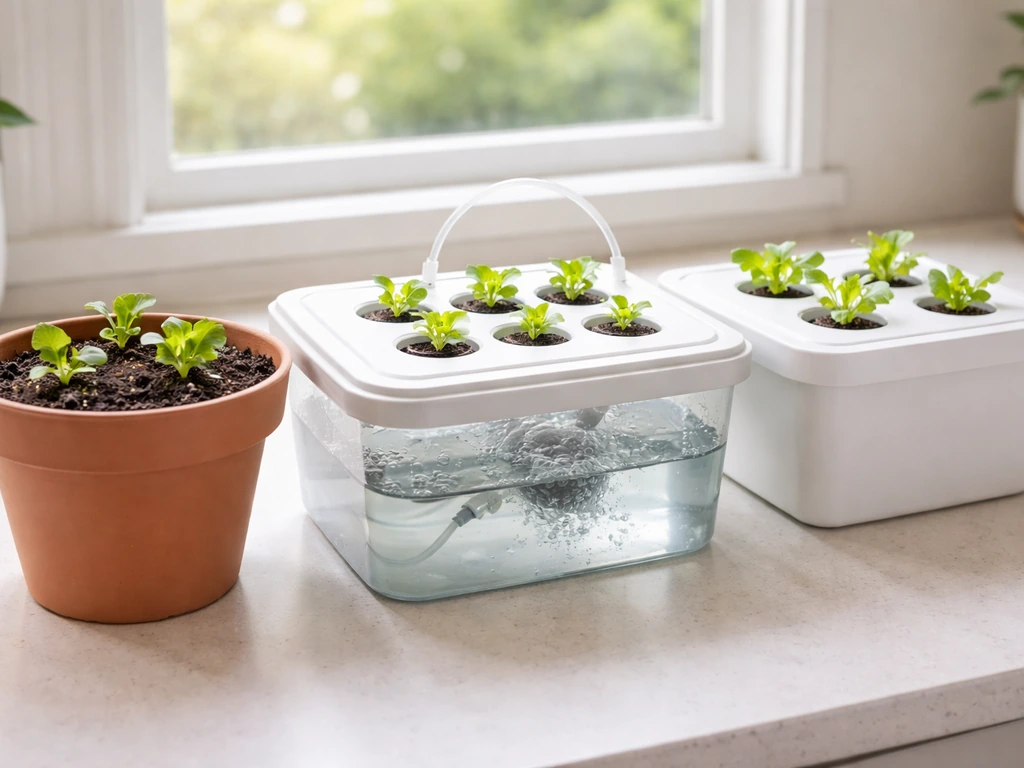
Wild lettuce is flexible about how you grow it, which is one of the reasons it does well indoors. Your main decision is soil-based containers versus hydroponics, and both work, they just need slightly different management.
Container and soil setup
For container growing, use pots that are at least 6–8 inches deep and 6 inches wide per plant. Wild lettuce has a moderate taproot, so it appreciates more depth than shallow window boxes offer. Fill with a lightweight potting mix, not garden soil, which can carry pathogens that cause damping-off in seedlings. A mix of high-quality commercial potting compost with about 20–30% perlite added for drainage works well. Avoid heavy, water-retentive mixes, which promote root rot in a warm indoor environment. Make sure every container has drainage holes.
Hydroponic setup
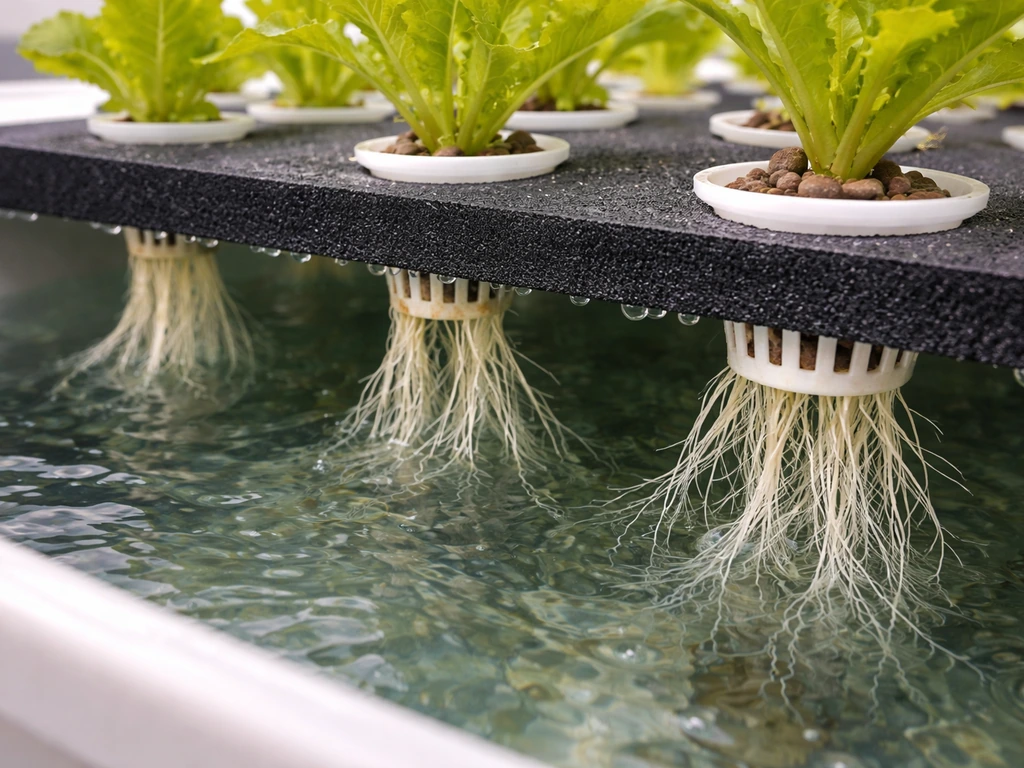
Hydroponics is genuinely excellent for lettuce of all kinds, including wild lettuce, because you control nutrition precisely. A simple deep water culture (DWC) or NFT (nutrient film technique) system works well at home. Target a nutrient solution pH of 5.5–6.5 and an EC (electrical conductivity) of 1.0–2.0 mS/cm, with nitrogen around 150–200 ppm. If you see pale, slow growth, the EC is usually too low or the pH has drifted out of range. OSU Extension's EC/pH reference is a useful tool to keep bookmarked when you're dialing in your solution. Purdue's research on hydroponic lettuce also points out that accumulated fertilizer salts can suppress growth over time, so refresh or top up your solution regularly rather than just topping off with plain water indefinitely.
| Setup | Best for | Main advantage | Watch out for |
|---|---|---|---|
| Soil containers | Beginners, low-cost start | Forgiving, easy to adjust | Overwatering, pathogens in soil |
| Hydroponics (DWC/NFT) | Faster growth, higher yield | Precise nutrition, no soil pathogens | pH/EC drift, pump failures |
| Self-watering containers | Busy schedules | Consistent moisture | Can stay too wet in cool rooms |
If you're already growing other lettuce varieties indoors, Boston lettuce or standard leaf types, for example, you can use the same setup for wild lettuce with minimal changes. The core equipment requirements are nearly identical.
Light, temperature, and humidity: the numbers that matter
Light
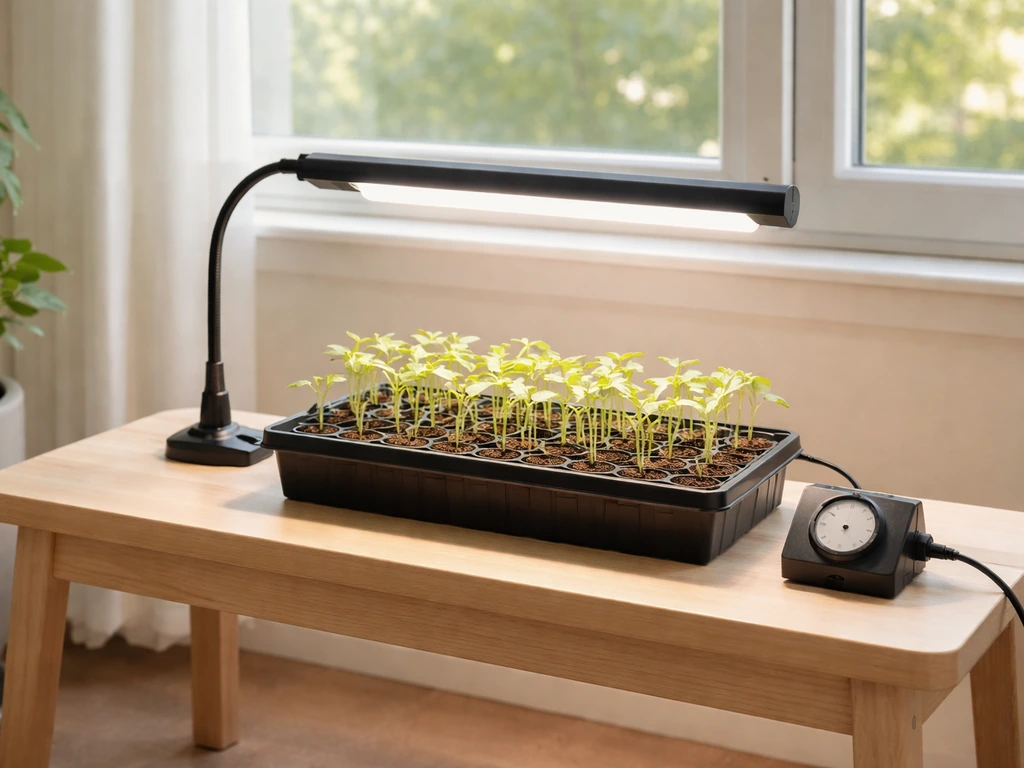
Light is where most indoor wild lettuce attempts fall apart. A south-facing window in summer might just barely get you enough light on bright days, but in most homes, a dedicated grow light is the reliable path. If you are wondering how to grow lettuce indoors with a grow light, aim for the right PPFD and keep the photoperiod consistent. Target a PPFD of 150–250 µmol/m²/s and run the light for 14–16 hours per day. That gives you a daily light integral (DLI) of roughly 12–18 mol/m²/day, which is the sweet spot for leafy lettuce production. A broad-spectrum LED panel positioned 6–12 inches above the canopy typically hits those PPFD numbers without generating excessive heat.
One practical note: keeping the photoperiod consistent at 14–16 hours also helps prevent premature bolting. Wild lettuce, like all Lactuca species, is sensitive to day-length cues. Long days combined with heat can trigger the plant to switch from leaf production to flowering. More on that in the harvesting section.
Temperature
Aim for 15–21°C (59–70°F) during the day and slightly cooler at night. A lettuce QTL study also reports that blank" rel="noopener noreferrer">germination is delayed below 10°C and suppressed near freezing temperatures, which supports targeting indoor temperatures for Lactuca-type starts. Germination works across a wider range (10–35°C), but the optimal for L. serriola is 15–25°C. In practice, a room that feels comfortable to you is fine for wild lettuce too. What you want to avoid is sustained heat above 25°C, which accelerates bolting significantly. Research showing lettuce bolting induced at 33°C daytime temperatures makes the case clearly: keep it cool, keep it producing leaves. If you want a more greenhouse-focused approach, review how to grow lettuce in a greenhouse, because airflow, temperature swings, and light schedules are the big differences to plan for bolting.
Humidity
Target relative humidity of 50–70%. Higher than that, especially with poor air circulation, creates exactly the conditions downy mildew needs. UC IPM research confirms that free moisture on leaves is what allows downy mildew spores to germinate and infect, so good airflow around your plants is as important as the humidity number itself. A small oscillating fan on low running a few hours a day does the job.
Germination and early care: sowing, depth, and thinning
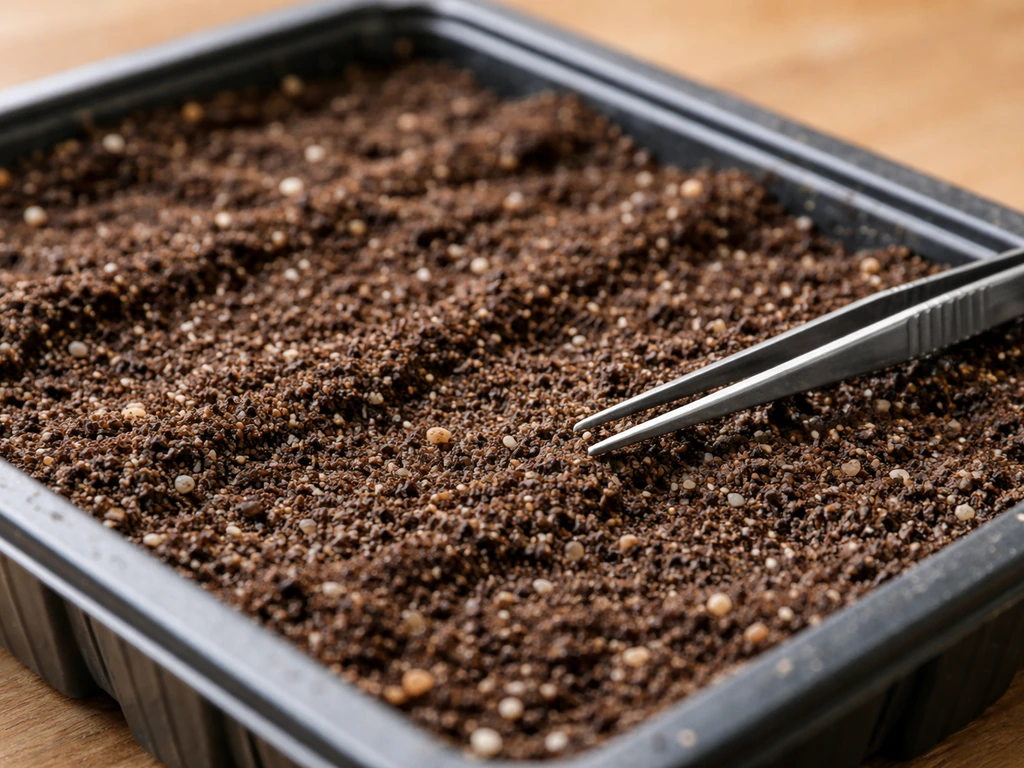
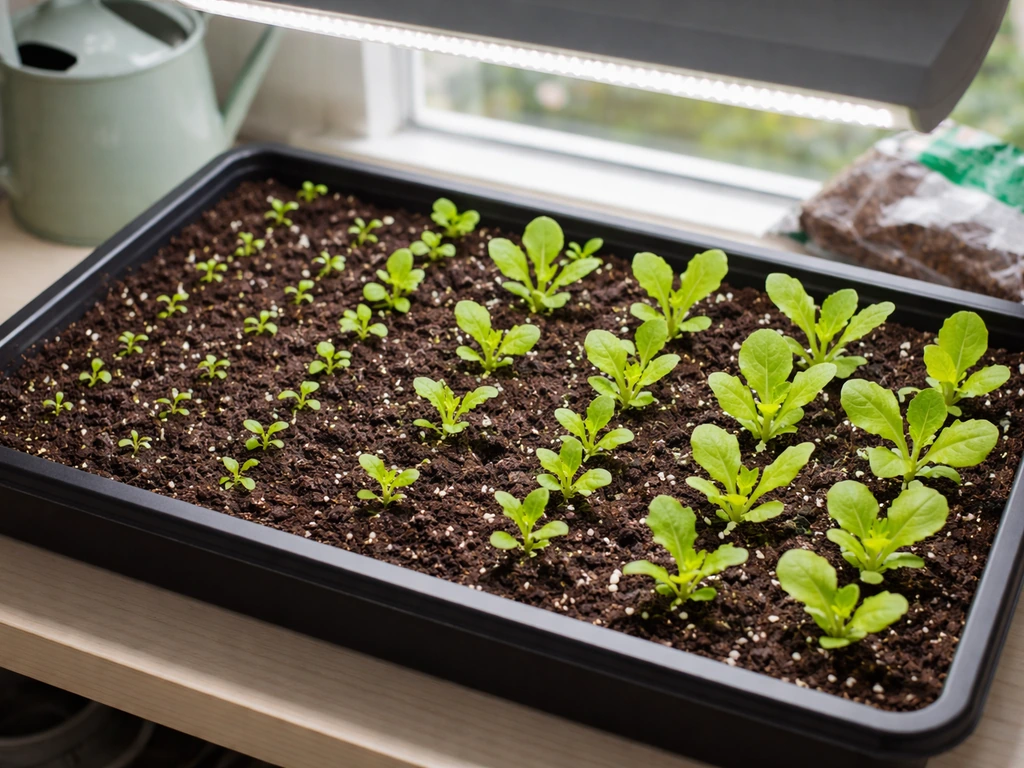
Start seeds in small cells or a shallow tray filled with moist seed-starting mix. Sow at about 3–5 mm depth (roughly 1/8 to 1/4 inch). L. serriola is classed as non-photoblastic, meaning light isn't the critical trigger for germination the way it is with some other species. What matters most is temperature, keep the germination area at 18–22°C for the most reliable and fastest sprouts. Covering trays with a clear humidity dome helps maintain moisture and temperature consistency.
Expect germination in 5–10 days under good conditions. If you're past 14 days with no sprouts, the seeds may be old (L. serriola seeds lose viability relatively quickly), the temperature may be too low, or the medium has dried out between checks. Once sprouts appear, remove the humidity dome and get them under your grow light immediately, even a few hours of stretching toward a window can start the leggy-seedling problem.
Thin seedlings to one plant per cell once they have their first true leaves. If you direct-sowed into a larger container, thin to 6–8 inches between plants. I know thinning feels wasteful, but overcrowded seedlings compete for light and air, and that's a fast track to damping-off and fungal issues. Snip the extras at soil level with scissors rather than pulling, which avoids disturbing the roots of the keepers.
Watering, feeding, and spacing for healthy growth
Watering
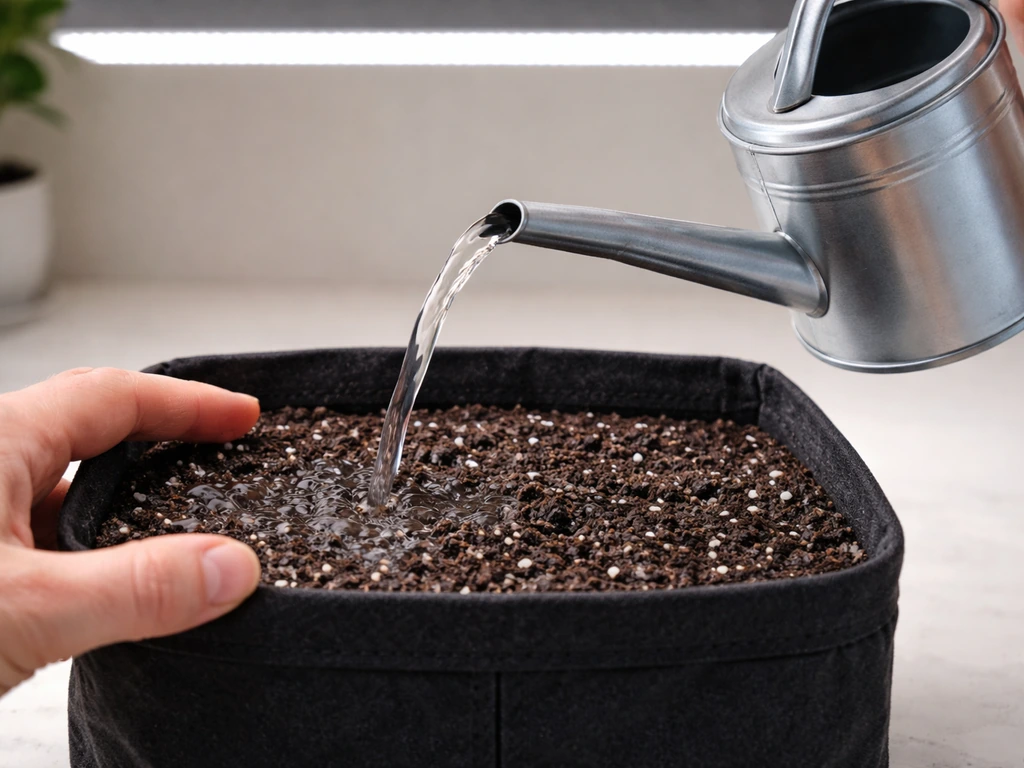
Water when the top inch of soil feels dry, not before. Wild lettuce likes consistent moisture but hates sitting in soggy soil. In a well-draining container under a grow light in a typical home environment, that usually means watering every 2–3 days. Bottom watering (setting the pot in a tray of water for 20–30 minutes) is a great technique indoors because it keeps leaves dry and reduces disease risk. Always empty the drainage tray afterward.
Feeding
For soil-based containers, start a diluted liquid fertilizer at half-strength once seedlings have 2–3 true leaves, and feed every 10–14 days. A balanced formula (something like 5-5-5 or similar NPK) or a purpose-made leafy greens fertilizer works well. For hydroponics, maintain your nutrient solution at 1.0–2.0 mS/cm EC and check pH every 2–3 days, adjusting back to 5.5–6.5 as needed. Pale yellow-green leaves usually mean nitrogen is too low or pH has climbed out of range.
Spacing
For container growing, give each wild lettuce plant at least 6 inches of horizontal space and ideally 8 inches. This is a larger plant than butterhead or looseleaf varieties when it's producing well, so don't try to crowd it. In a hydroponic system, 6–8 inch net pot spacing in a raft or DWC tray is appropriate.
Harvesting and keeping your plant producing
Start harvesting outer leaves once plants are 4–6 weeks old and have at least 6–8 leaves. The "cut-and-come-again" method works perfectly here: take the outermost, largest leaves first, leaving the central growing point intact. Never remove more than one-third of the plant at a harvest. This keeps the plant in active leaf production rather than triggering a stress response.
Wild lettuce leaves become more bitter as the plant matures and especially as it approaches bolting (flowering). Harvest young, tender outer leaves for the mildest flavor. If you see the central stem beginning to elongate rapidly, that's the early sign of bolting. At that point, harvest everything usable immediately, because once bolting is underway the leaves become very bitter very quickly.
To delay bolting indoors, keep temperatures below 22°C as consistently as possible, maintain your 14–16 hour photoperiod without extending it, and harvest regularly. Research confirms that the combination of heat (above ~25–33°C) and long photoperiods is the primary environmental trigger for bolting in lettuce species. Keeping your room cool and your light schedule consistent buys you several extra weeks of harvest.
Troubleshooting: fixes for the most common indoor problems
Leggy, stretching seedlings
This is almost always a light problem. If seedlings are stretching toward the light source, the PPFD is too low or the light is too far away. Move your grow light closer (aim for 6–8 inches above the canopy with a standard LED panel) or increase the wattage. Once a seedling is already leggy, you can bury the stem slightly deeper when transplanting to stabilize it, but prevention is easier than fixing.
Slow or failed germination
First, check seed age, L. serriola seeds stored for more than 1–2 years often have poor viability. Second, check temperature. If your germination area is below 15°C, sprouts will be very slow or won't appear at all. Add a seedling heat mat to bring the germination temperature up to 18–22°C. Third, make sure the medium hasn't dried out. Seeds need consistent moisture throughout germination. If you've checked all three and still have nothing at 14 days, start fresh with new seeds.
Damping-off (seedlings collapsing)
Damping-off is a fungal problem where seedlings rot at the soil line and topple over. It's caused by overwatering, poor drainage, high humidity, and contaminated growing media. Prevention is the only real strategy, once a seedling has damping-off, it won't recover. Use sterile seed-starting mix (never garden soil), water from the bottom, ensure good airflow, and avoid letting trays sit in standing water. Penn State Extension's guidance on damping-off sums it up well: the pathogen is almost always already in the environment, and you control it through conditions, not chemicals.
Downy mildew (yellow patches and white fuzz)
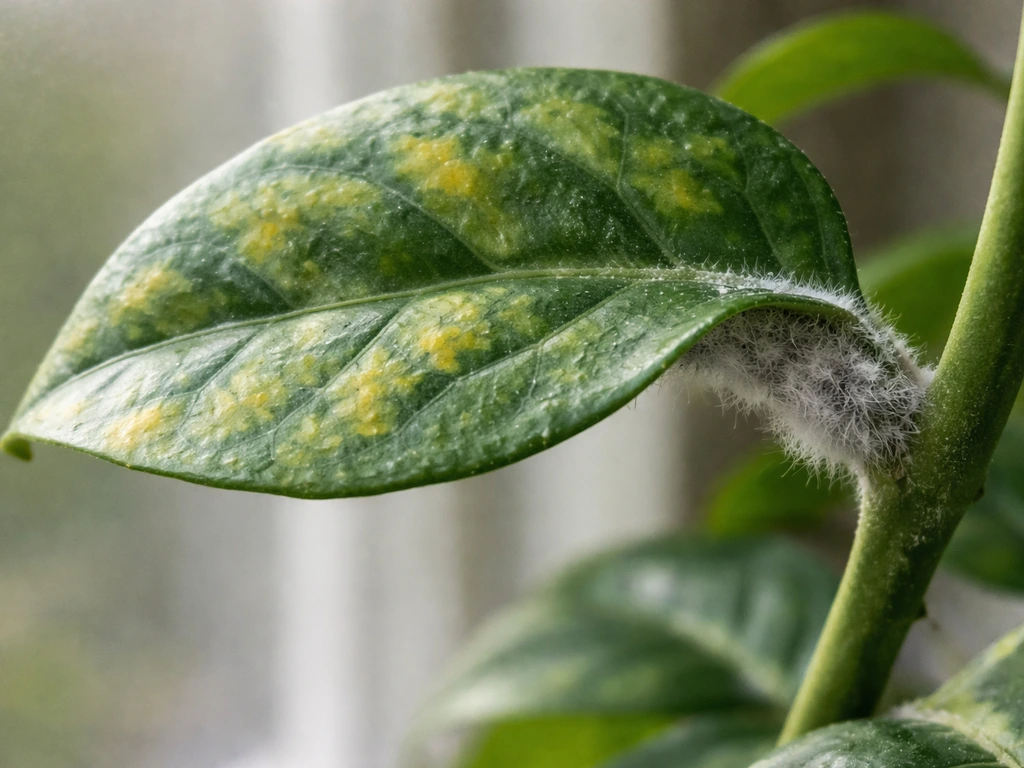
Yellow patches on the upper leaf surface and a grayish-white fuzzy growth on the underside of the same leaves is downy mildew. It thrives when humidity is high and leaves stay wet. Remove affected leaves immediately. Increase airflow with a fan, reduce humidity below 70%, and stop wetting leaves when you water. There's no effective home fungicide option, so cultural control is everything here. If the whole plant is heavily infected, remove it to prevent spreading to others.
Pests (aphids and fungus gnats)
Aphids cluster on new growth and leaf undersides. Blast them off with a strong stream of water, or use an insecticidal soap spray on affected areas. Repeat every 3–5 days until gone. Fungus gnats are a soil moisture issue, their larvae live in wet topsoil. Let the top inch of soil dry out between waterings more consistently, and consider yellow sticky traps to monitor and reduce adult populations. For hydroponics, keep the reservoir covered to block adults from laying eggs.
Bitter leaves (not from bolting)
Wild lettuce is naturally more bitter than cultivated varieties, but excessive bitterness that shows up in young plants is often a nutrient or stress issue. Inconsistent watering, high temperatures, or low nitrogen all increase bitterness. Harvest earlier (smaller, younger leaves), keep temperatures cool, and make sure plants aren't stressed by drought between waterings.
Succession planting: keeping a steady supply going
The best way to have continuous wild lettuce indoors is to stagger your sowings every 3–4 weeks. By the time your first batch is producing well (around weeks 4–6 after sowing), you start a second batch. When the first planting starts to show signs of bolting, you harvest everything and the second batch is already well underway. It's a simple rhythm once you get into it.
- Week 1: Sow batch 1 in seed trays, keep at 18–22°C under your grow light.
- Week 4–5: Transplant batch 1 to final containers or hydroponic net pots. Sow batch 2.
- Week 6–7: Begin harvesting outer leaves from batch 1. Batch 2 is in seedling stage.
- Week 8–9: Transplant batch 2. Start sowing batch 3 if desired.
- Week 10–12: Batch 1 nearing end of productive life (bolting signs). Harvest everything. Batch 2 in full production.
- Repeat the cycle with new seeds every 3–4 weeks.
For variety and strain choices, if you want milder flavor, look for cultivated Lactuca serriola accessions from herb or specialty seed suppliers rather than weed-sourced seed. Some sellers offer selected strains with more consistent leaf size and slightly less bitterness. That said, part of wild lettuce's appeal is exactly that wild character, so experiment with different seed sources until you find one you like.
If you find yourself wanting more predictable results with milder flavor and faster harvest times, it's worth exploring how regular indoor lettuce varieties, including Boston, butterhead, and standard looseleaf types, compare, since those are bred specifically for continuous indoor harvesting. Boston lettuce can be grown indoors using the same cool, consistent lighting approach and a simple cut-and-come-again harvest routine. Wild lettuce is a more specialized plant, and growing it alongside cultivated varieties gives you a useful comparison for flavor, yield, and effort. For anyone using a dedicated grow light setup, the same light parameters covered here apply across all indoor lettuce types, making it easy to run multiple varieties under the same rig.
Stick to the basics, cool temperatures, consistent light, clean media, and regular harvesting, and wild lettuce is genuinely one of the more rewarding greens to grow indoors. If you’re wondering how to grow lettuce indoors in general, the same light and watering principles will help you get reliable harvests grow indoors. It's fast-growing, interesting, and produces something you genuinely can't buy at most grocery stores.
FAQ
How can I reduce the bitterness when growing wild lettuce indoors?
If you want the mildest flavor, harvest earlier and more frequently. Aim for leaves that are tender and smaller, and stop once you see the central stem begin rapid elongation (early bolting). Letting a plant “ride” into flowering usually makes leaves intensely bitter, even if you harvest often.
What’s the best way to keep harvesting wild lettuce indoors without it going bitter or stopping?
For continuous harvests, don’t wait for full size. Start cut-and-come-again at 4–6 weeks, and take only outer leaves so the growing point stays active. If you wait until the plant is crowded or already tall, your next sowing window becomes the limiting factor, not the harvest method.
Can I grow wild lettuce indoors without a grow light (using only a window)?
Yes, but expect a higher bolting risk if your home gets warm. Place plants where the room stays closer to 15–22°C and avoid extending light beyond 16 hours. In winter you may still need a grow light because window light alone often won’t consistently hit the target PPFD.
How close can I plant wild lettuce seedlings in the same container?
If you are growing multiple plants in one large container, plan for spacing like you would for a single plant. Overcrowding reduces airflow, increases humidity around leaves, and makes damping-off more likely. Follow the stated spacing guidance (not close “microgreen” spacing) to keep stems compact and leaves usable.
How do I avoid nutrient-related issues like pale leaves or slow growth?
Use a light touch when feeding, and only after seedlings are established (2–3 true leaves for soil). Overfertilizing or salt buildup in hydroponics can suppress growth and worsen bitterness. For hydro, refresh or top up the nutrient solution rather than repeatedly adding plain water to maintain EC.
My seedlings are tall and leggy, what should I do first?
If your seedlings stretch early, the fix is to change light intensity and distance immediately, not just wait. Move the grow light closer (typically 6–8 inches for standard LEDs) or increase output, then keep the photoperiod consistent so they don’t drift into a weak, leggy phase.
Will frequent harvesting stop wild lettuce from bolting indoors?
Harvesting doesn’t permanently prevent bolting, it just delays it. The practical approach is to harvest outer leaves regularly, keep temperatures cooler (ideally under 22°C), and avoid pushing day length longer than the 14–16 hour window. Then stagger sowings so you always have a younger batch ready.
Does using a humidity dome for germination increase mold or mildew problems later?
Yes, if you cover trays properly during germination and remove the dome promptly once sprouts appear. Leaving humidity too high after germination increases downy mildew and damping-off risk. Also avoid watering in a way that wets leaves, bottom-water instead where possible.
What are the most common reasons wild lettuce seeds fail to germinate indoors?
Check viability when germination is poor by starting a small test batch and also confirming storage age. Many failures come from old seed lots, temperatures that are too cool (below about 15°C), or medium drying between checks. If you are consistently past 14 days with no sprouts, replace seed rather than repeatedly re-sowing the same old lot.
What should I do if I see signs of downy mildew on wild lettuce?
For downy mildew, the fastest containment step is removing infected leaves right away, then improving airflow and keeping leaf surfaces from staying wet. Avoid “extra” foliar watering, and consider reducing relative humidity if your room tends to run high. If infection is heavy, removing the entire plant helps protect the rest.
How do I handle aphids effectively on indoor wild lettuce without stressing the plants?
For aphids, early intervention matters. Blast them off and repeat treatments every few days, because eggs and survivors can repopulate new growth quickly. If you choose soap sprays, cover only affected areas and reapply on schedule so you don’t miss newly emerging colonies.