Yes, lettuce grows brilliantly in a greenhouse, and for UK gardeners especially, a greenhouse is one of the best tools you have. It extends your season from late winter right through to early winter, protects leaves from slugs and rain splash, and lets you control the two things lettuce cares about most: temperature and light. The catch is that lettuce is a cool-season crop, so your job in a greenhouse isn't just to keep it warm enough in winter but also to keep it cool enough in summer. Get that balance right, and you'll be cutting fresh leaves for most of the year.
How to Grow Lettuce in a Greenhouse UK: Best Way Guide
Marcus Holloway
4 May 2026
Why lettuce and greenhouses are such a good match (for UK conditions)
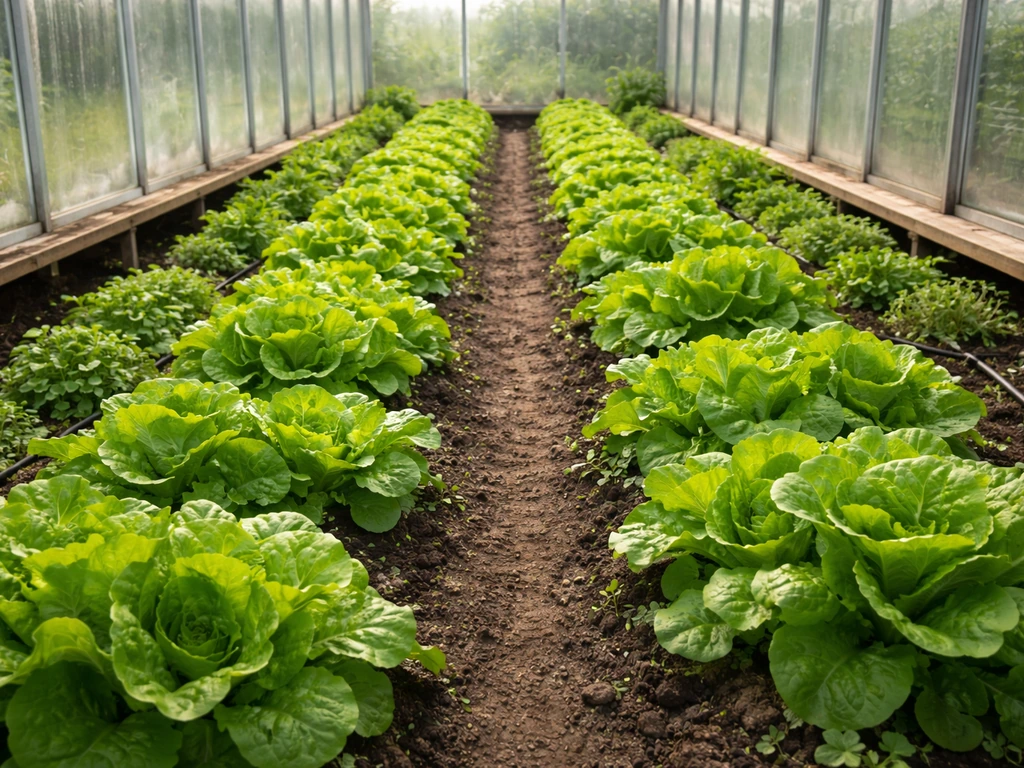
Lettuce is genuinely one of the easiest crops to grow under glass, and the UK climate is actually a big reason why. Our springs are cold, our summers are unpredictable, and our autumns turn wet fast. A greenhouse smooths all of that out. You can start sowing in late January or February when outdoor growing is impossible, and you can keep going into November when outdoor plants have turned to mush.
What lettuce needs is simple: consistent moisture, cool to mild temperatures (ideally 10–20°C), reasonable light, and shelter from hard rain that compacts soil and spreads disease. A greenhouse ticks every one of those boxes with minimal effort on your part. The only real risk is heat in July and August, when an unventilated greenhouse can climb well above 30°C and trigger bolting, which is when the plant switches from producing leaves to rushing into flower and seed production. Once a lettuce bolts, the leaves turn bitter and the plant is essentially done. The good news is that bolting is almost entirely preventable with the right setup.
The best greenhouse setup for lettuce
Temperature: the range that keeps lettuce happy
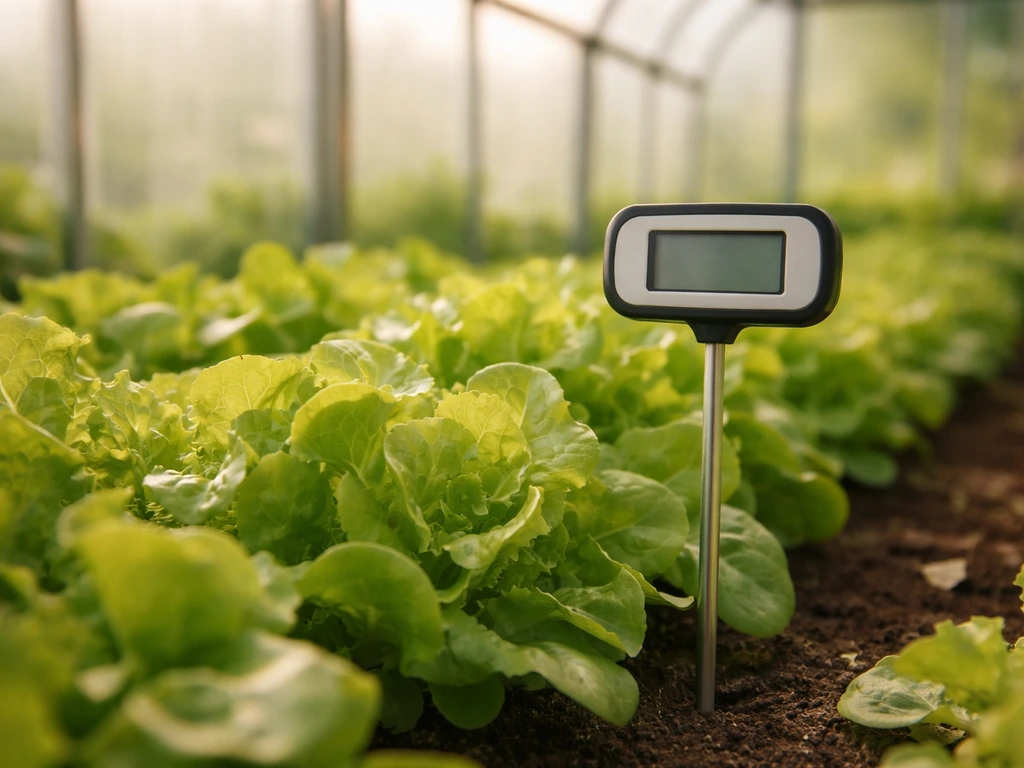
Aim to keep your greenhouse between 10°C and 20°C for the best leaf production. Below about 5°C, growth slows significantly, though hardy varieties can tolerate light frosts. Above 25°C, bolting risk rises sharply, and above 30°C you'll almost certainly lose your plants to bolting or tip burn (brown, scorched leaf edges). In winter, a small electric propagation mat or a frost-protection fleece over your trays is usually enough to keep the temperature in the right range overnight. In summer, the challenge flips completely and ventilation becomes your main tool.
Ventilation: the most overlooked part
If there's one thing I'd tell a new greenhouse grower to invest in, it's automatic vent openers. They cost around £15–25 each and open roof vents automatically when the temperature rises past a set point. For lettuce, set them to open around 20°C. Open your side door on warm days too. The goal is constant airflow, which does two jobs: it keeps the temperature down to prevent bolting, and it reduces humidity to prevent fungal diseases like grey mould (botrytis), which thrives in still, damp air. In UC IPM's guidance on Botrytis rot (gray mold) on lettuce, it describes light brown lesions with grey or brown fuzzy fungal growth, and notes that Botrytis cinerea can survive in decaying plant material and soil botrytis, which thrives in still, damp air. In the height of summer, you may need to shade the greenhouse with a 30–50% shade cloth or apply shading paint to the outside of the glass.
Light: enough but not too intense
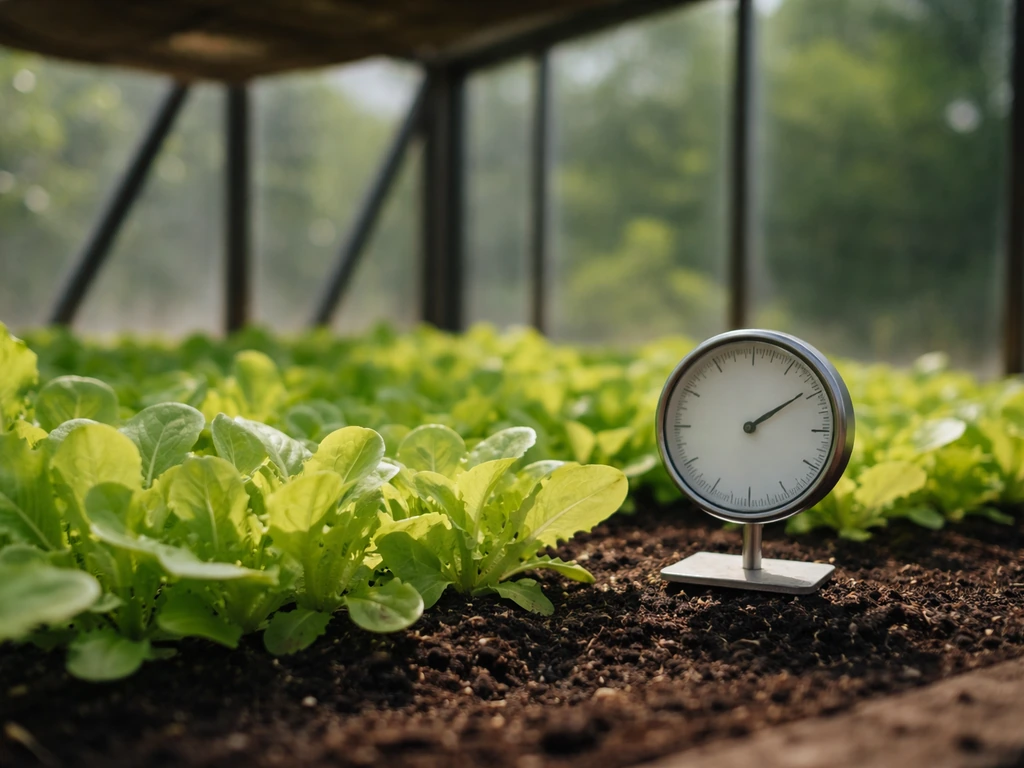
Lettuce needs around 10–12 hours of light per day for steady growth. From March to September in the UK, natural light through greenhouse glass is more than adequate. From October to February, days are too short and light levels too low for fast growth, so expect slower harvests in winter unless you supplement with LED grow lights. This indoor approach is the same idea as learning how to grow lettuce indoors with a grow light when natural light is too weak. A full-spectrum LED panel set to run for 14–16 hours a day positioned 30–40 cm above the plants will make a real difference to winter crops. This links to a broader world of indoor growing with artificial lighting, which follows different rules to greenhouse growing, but the principle of supplementing natural light in short days applies equally here. If you are aiming to grow lettuce indoors, you can use many of the same temperature and light principles, just with fully controlled indoor conditions.
Picking the right varieties and timing your sowings
Variety choice matters more in a greenhouse than outdoors because you're working across a wider range of seasons and conditions. The key attributes to look for are: heat tolerance for summer growing, cold hardiness for winter growing, and bolt resistance year-round.
| Variety | Type | Best season | Key strength |
|---|---|---|---|
| All Year Round | Butterhead | Autumn to spring | Classic, reliable, cold-tolerant |
| Winter Density | Cos/Romaine | Autumn to spring | Hardy, stands cold well |
| Little Gem | Cos | Spring and autumn | Compact, sweet, rarely bolts |
| Lollo Rossa | Loose-leaf | Spring to autumn | Slow to bolt, good summer variety |
| Batavian (e.g. Concept) | Batavian | Summer | Excellent heat tolerance, crisp |
| Valdor | Butterhead | Overwintering | Very hardy, ideal late sowing |
| Salad Bowl | Loose-leaf | Spring to summer | Cut-and-come-again, good value |
For UK greenhouse timing, you're essentially working in two main windows with a tricky summer bridge between them. Sow in late January to March for spring crops (harvest from March to May), sow again in July to August for autumn and early winter crops (harvest September to November), and for overwintering, sow in September to October using hardy varieties like Valdor or Winter Density for a slow but steady harvest from December to February. Avoid sowing heat-sensitive butterhead varieties in May or June unless your greenhouse ventilation is excellent, and lean on Batavian or loose-leaf types for midsummer instead.
How to plant lettuce in a greenhouse, step by step
Starting from seed
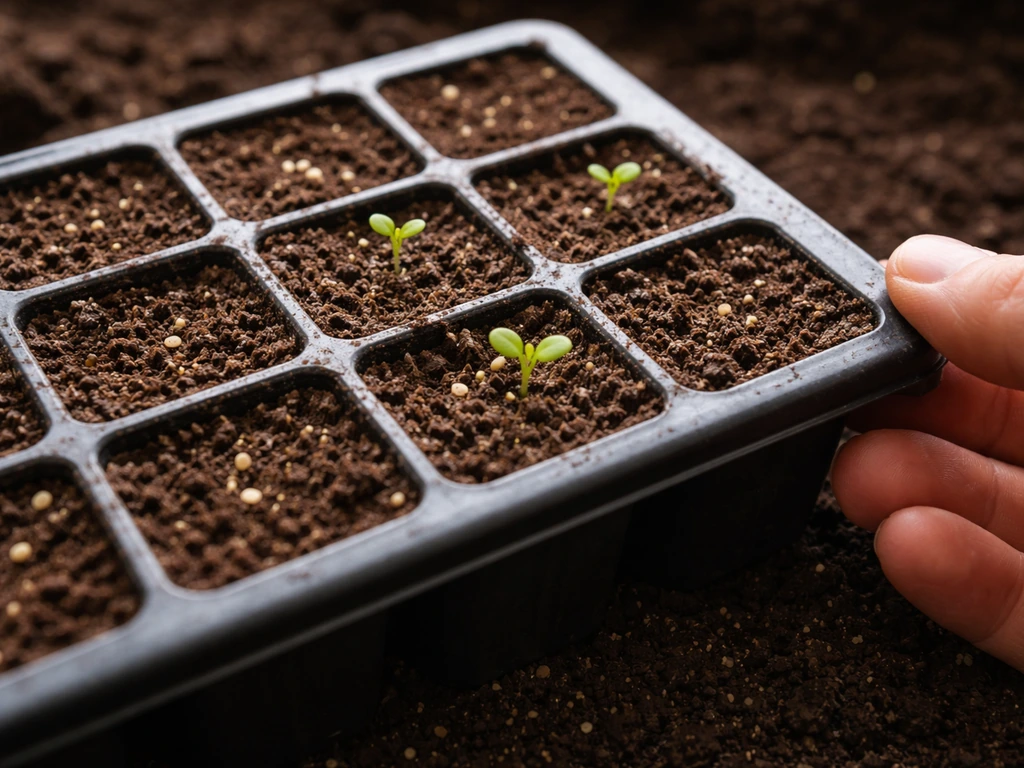
- Fill small cells or a seed tray with fine seed compost (not standard multipurpose, which can be too coarse and chunky for tiny seeds).
- Sow 2–3 seeds per cell at a depth of around 3–5 mm. Lettuce seed needs light to germinate, so don't bury it deep.
- Water gently with a fine rose and place the tray in a light spot at 15–18°C. Germination usually takes 5–10 days.
- Thin to one seedling per cell once the first true leaves appear, keeping the strongest plant.
- When seedlings have 3–4 true leaves and roots are just showing at the base of the cell (usually 3–4 weeks after sowing), they're ready to transplant.
Transplanting into beds or containers
For greenhouse beds, work in plenty of well-rotted compost or a good general-purpose compost to improve moisture retention, then plant at the following spacings: compact varieties like Little Gem at 20 cm apart, standard butterheads and cos types at 25–30 cm apart, and loose-leaf cut-and-come-again varieties at 15–20 cm apart if harvesting as baby leaves, or 25 cm if growing to full size. Plant at the same depth the seedling was growing at in its cell; burying the stem invites rot. Water in well.
Containers work just as well. A trough at least 20 cm deep and 30 cm wide can hold 3–4 plants comfortably. Use a good multipurpose or general potting compost, and make sure your containers have adequate drainage holes because waterlogged roots are a fast route to disease. If you're growing lettuce in containers indoors as well as in a greenhouse, the spacing principles are the same, but you'll need to be more attentive to watering since pots dry out faster.
Watering, feeding, and keeping pests and disease at bay
Watering
Lettuce is about 95% water, so consistent moisture is non-negotiable. The goal is to keep the soil evenly moist but never waterlogged or bone dry. In a heated winter greenhouse, you might water every 5–7 days. In a warm spring or summer greenhouse, every 2–3 days is more realistic, sometimes daily for containers. Water at the base of the plant rather than over the leaves, especially in autumn and winter when moisture sitting on foliage overnight encourages botrytis. Morning watering is better than evening for the same reason. If you can't be there regularly, a simple drip irrigation system on a timer is worth every penny.
Feeding
If you've planted into good compost, you won't need to feed for the first 4–5 weeks. After that, a liquid feed with a balanced fertiliser (something with roughly equal N:P:K, like a tomato feed diluted to half strength, or a dedicated lettuce feed) every 2 weeks is plenty. Avoid high-nitrogen feeds that push rapid, lush growth because fast-grown leaves can be more prone to tip burn and pest attack. In winter, don't feed at all since growth is slow and excess nutrients sitting in cold, wet soil can cause problems.
Pests to watch for
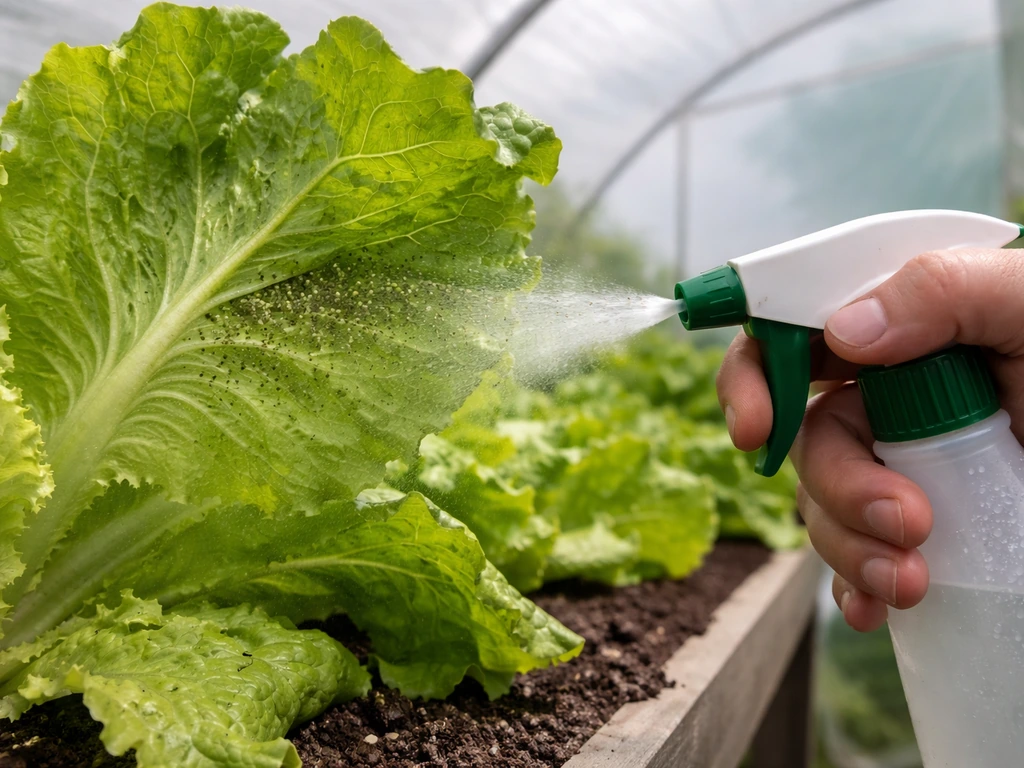
- Aphids: Check the undersides of leaves regularly. Squash small colonies by hand, or use an insecticidal soap spray. Introduce predatory insects like lacewing larvae if the problem is recurring.
- Slugs and snails: Even in a greenhouse they'll find a way in. Copper tape around staging legs, slug pellets (organic ferric phosphate type), or beer traps are all effective.
- Vine weevil: Grubs eat roots; you'll notice wilting with no obvious cause. Use a biological control (nematodes) watered in between March and October when soil is above 5°C.
- Whitefly: Less common on lettuce than on tomatoes but can appear in summer. Yellow sticky traps help monitor populations; use insecticidal soap for outbreaks.
Disease prevention
The two main diseases in a greenhouse are botrytis (grey mould, which shows as a fuzzy grey coating on leaves and stems) and downy mildew (yellow patches on upper leaf surfaces with grey fuzz underneath). Both are driven by high humidity and poor airflow. The fix is the same for both: ventilate more, water less in autumn and winter, remove dead or dying leaves promptly, and don't crowd your plants. If botrytis appears, remove affected material immediately and bin it (not compost). Rotating what you grow in your greenhouse beds from year to year also helps prevent soil-borne disease buildup.
Harvesting, keeping the supply going, and fixing problems fast
When and how to harvest
For hearting types (butterheads, cos, Little Gem), harvest when the head feels firm and full by cutting the whole plant at the base with a sharp knife. For loose-leaf and cut-and-come-again varieties, start cutting outer leaves when plants are 8–10 cm tall, leaving the central growing point intact so the plant regrows. You can usually get 3–4 cuts from a single loose-leaf plant before it loses quality. Harvest in the morning when leaves are cool and crisp. Lettuce goes from good to bolted faster than you expect in warm weather, so don't leave mature heads sitting in a warm greenhouse waiting for you.
Succession sowing: the key to never running out
The single best thing you can do for a continuous supply is sow little and often rather than all at once. To make your first season successful, follow a simple step-by-step routine for planting, watering, and succession sowing in your greenhouse. Sowing a tray of 10–12 plants every 3 weeks means you'll always have something coming through. In a greenhouse, you can maintain this rhythm from February right through to October with the right variety selection. Keep a simple sowing log (even a sticky note on the greenhouse shelf with dates) so you don't lose track of where you are in the cycle.
Troubleshooting the most common problems
| Problem | Likely cause | What to do |
|---|---|---|
| Bolting (plant goes to flower early) | Too much heat, long days, stress | Improve ventilation, switch to bolt-resistant varieties, harvest sooner, shade in summer |
| Bitter leaves | Bolting, heat stress, or water stress | Harvest before bolting starts; keep soil consistently moist; avoid letting plants dry out |
| Leggy, pale seedlings | Not enough light | Move to brighter position or add LED grow light; reduce sowing density |
| Slow or no germination | Soil too cold, seeds too deep, or old seed | Warm to 15–18°C; sow at 3–5 mm depth; use fresh seed (viability drops after 2–3 years) |
| Tip burn (brown leaf edges) | Heat stress, calcium uptake issue from inconsistent watering | Improve ventilation; water more consistently; avoid high-nitrogen feeding |
| Wilting despite moist soil | Root rot or vine weevil grubs | Check roots; if rotten, improve drainage; if vine weevil, apply nematodes |
| Grey mould on leaves/stems | Botrytis from high humidity | Remove affected material; ventilate more; water in the morning; space plants further apart |
The most common mistake I see from new greenhouse growers is treating a greenhouse like a warm outdoor bed and forgetting to manage the heat in summer. Lettuce grown outdoors in the UK rarely bolts as fast as it does in an unventilated greenhouse in June. If your plants are bolting or tasting bitter, heat and poor airflow is the first thing to address, not your sowing technique or variety choice. Sort the ventilation first, then reassess everything else.
Once you've got the basics dialled in, a greenhouse genuinely transforms what's possible with lettuce. You're no longer dependent on the unpredictable UK spring or racing to get crops in before autumn. If you later want to explore growing lettuce without any outdoor space at all, the principles around light, temperature, and watering carry across directly to growing lettuce indoors, whether that's on a windowsill, under grow lights, or in a hydroponic setup. If you want the step-by-step version of this indoors, see our guide on how to grow lettuce indoors growing lettuce indoors. The greenhouse is a brilliant middle ground: more control than outdoor growing, more natural than a full indoor setup, and very well suited to the UK's specific seasonal quirks.
FAQ
My greenhouse is 10 to 20°C in winter, but the temperature spikes to 25°C or more on sunny days. Will my lettuce still bolt?
It can, especially for heat-sensitive types. Use shading or paint early in the week when you first see peaks, and open vents as soon as the roof reaches your target (around 20°C). Also avoid thick, dark compost surfaces, because they absorb and radiate heat, warming soil near the plants.
How do I prevent tip burn in a greenhouse lettuce crop?
Tip burn is commonly linked to inconsistent watering, not just heat. Keep soil moisture even, water at the base, and avoid letting pots dry slightly between waterings. In containers, check moisture daily in warm periods because the risk is higher than in beds.
What’s the best way to water lettuce in autumn and winter so I don’t get botrytis?
Water in the morning so leaves are dry by evening, apply water at soil level, and avoid splashing soil onto lower leaves. If you can, use a drip line or a watering can with a narrow spout positioned low to the plant base.
Should I remove lettuce leaves that show grey mould immediately, and what should I do with them?
Yes, remove affected leaves as soon as you see grey coating or fuzzy growth, before it spreads to healthy tissue. Bin the material rather than composting, and briefly increase ventilation for a day or two to dry the canopy.
Can I grow lettuce in the same greenhouse bed year after year?
You can, but disease pressure rises. Rotate where lettuce sits each season, and avoid following lettuce with other leafy brassicas or crops that share similar disease risks. Fresh compost or at least top-dressing annually can help with vigor, but rotation is the bigger win.
Do I need to feed lettuce in a greenhouse if I used good compost?
Usually not immediately. Wait until about 4 to 5 weeks after sowing or transplanting, then use a balanced liquid feed at mild strength every couple of weeks. Stop feeding in winter, because slow growth means nutrients can accumulate in cold, wet soil and increase problems.
How close can I plant lettuce in a greenhouse without encouraging fungal disease?
Don’t just follow spacing, also leave room for airflow. If your greenhouse is prone to high humidity, aim for the wider end of spacing for each type, avoid dense rows, and remove any weak seedlings promptly so plants aren’t competing.
What humidity level should I aim for to reduce downy mildew and botrytis in a greenhouse?
You don’t need a specific number, focus on airflow and leaf dryness. If condensation forms on glass or leaves stay wet overnight, reduce watering frequency and increase ventilation. In practice, keeping the canopy dry in the evenings is more important than chasing a target humidity.
How do I time my sowings so I don’t end up with a glut that all bolts at once?
Use succession sowing with small batch sizes and a realistic harvest window. For UK greenhouse growing, sow every 3 weeks within each season window (spring and late summer), and include a mix of varieties with different bolt tolerance so one heat event doesn’t destroy everything at the same stage.
Can I grow lettuce successfully in a greenhouse without side vents, only roof vents?
It’s possible, but you must maximize automatic roof vent opening and keep airflow moving. Open the side door whenever conditions are safe (warm and not excessively windy), and consider a small circulation fan on still days to prevent stagnant humid air near the plants.
What’s the easiest way to switch from growing full-size heads to cut-and-come-again harvests mid-season?
Start with loose-leaf types if you want multiple cuts. If you already have hearting types, you generally cannot convert them into regrowing cut-and-come-again plants. For a mid-season change, begin sowing a separate batch of loose-leaf varieties rather than trying to modify the harvest method on existing plants.
I’m growing in containers, how do I avoid overwatering in cold months?
Check moisture before watering, because containers can hold cold wet soil longer than beds. Use containers with drainage holes, water in the morning, and reduce frequency when temperatures drop. If leaves stay damp overnight, delay watering until the surface has dried slightly.