You can grow lettuce indoors under a grow light from seed to harvest in as little as 25 days for baby leaf, or 45 to 60 days for full-sized heads. The setup is straightforward: a full-spectrum LED panel, a timer set to 14 to 16 hours of light per day, a shallow container with good drainage, quality potting mix, and a consistent watering routine. Get those basics right and you will be cutting fresh leaves long before any outdoor garden season starts.
How to Grow Lettuce Indoors With a Grow Light Step by Step
Marcus Holloway
16 Jun 2026
Choose the best lettuce varieties for indoor grow lights
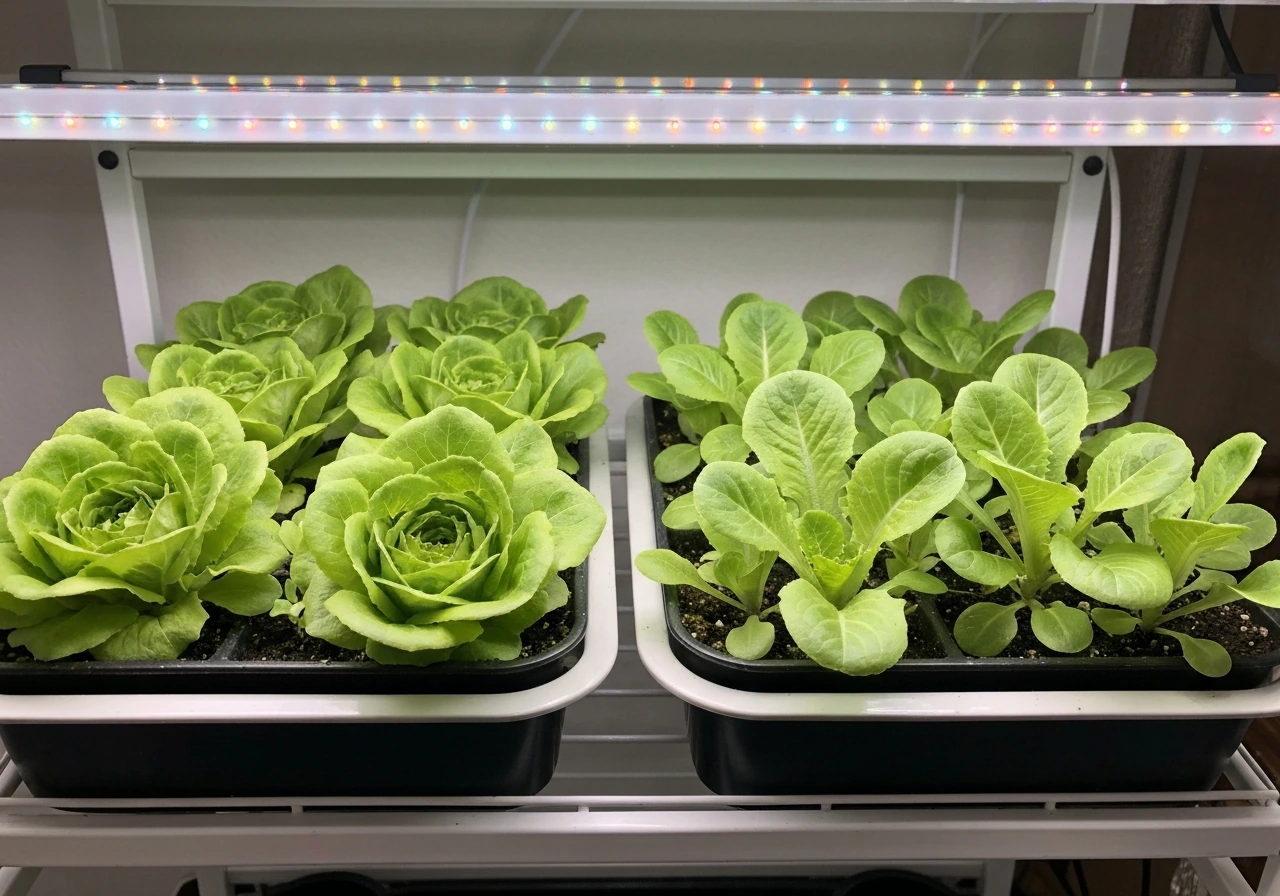
Not every lettuce variety handles indoor, artificial-light conditions equally well. The ones that do best are fast-maturing, heat-tolerant, and naturally compact. Loose-leaf types are your best starting point because they mature in roughly 40 to 50 days, tolerate lower light intensity without bolting as quickly, and are harvested as cut-and-come-again leaves rather than full heads, which means you get more cycles out of a single planting.
Butterhead varieties like Buttercrunch (around 65 days to maturity) are a solid second choice. They form a small, loose head that fits comfortably in a 6-inch pot, and the flavor is mild and sweet under artificial light. Romaine or cos types take longer, roughly 50 to 70 days, and need a bit more vertical space as leaves can reach 6 to 8 inches tall, but they work well if you have the room. Crisphead and iceberg types are the least practical indoors since they need a long cool season and more light to form a proper head.
- Loose-leaf varieties (Red Sails, Black Seeded Simpson, Oak Leaf): fastest, most forgiving, harvest-ready in 25 to 50 days
- Butterhead/buttercrunch (Buttercrunch, Tom Thumb): compact, great flavor, 60 to 70 days to full head
- Romaine (Giant Caesar, Little Gem): taller at harvest, 50 to 70 days, works well under taller lamp setups
- Avoid crisphead/iceberg indoors: long days-to-maturity and poor light tolerance under artificial conditions
If you want the fastest results possible, go with a loose-leaf mix or a baby-leaf blend. You can be harvesting in about 25 days at the baby-leaf stage, or wait until around 40 days for a fuller cut. If you are also thinking about growing Boston lettuce indoors specifically, the process is nearly identical but that variety deserves its own attention to spacing and light positioning.
Get the right setup: grow light, timer, containers, and soil
Choosing a grow light
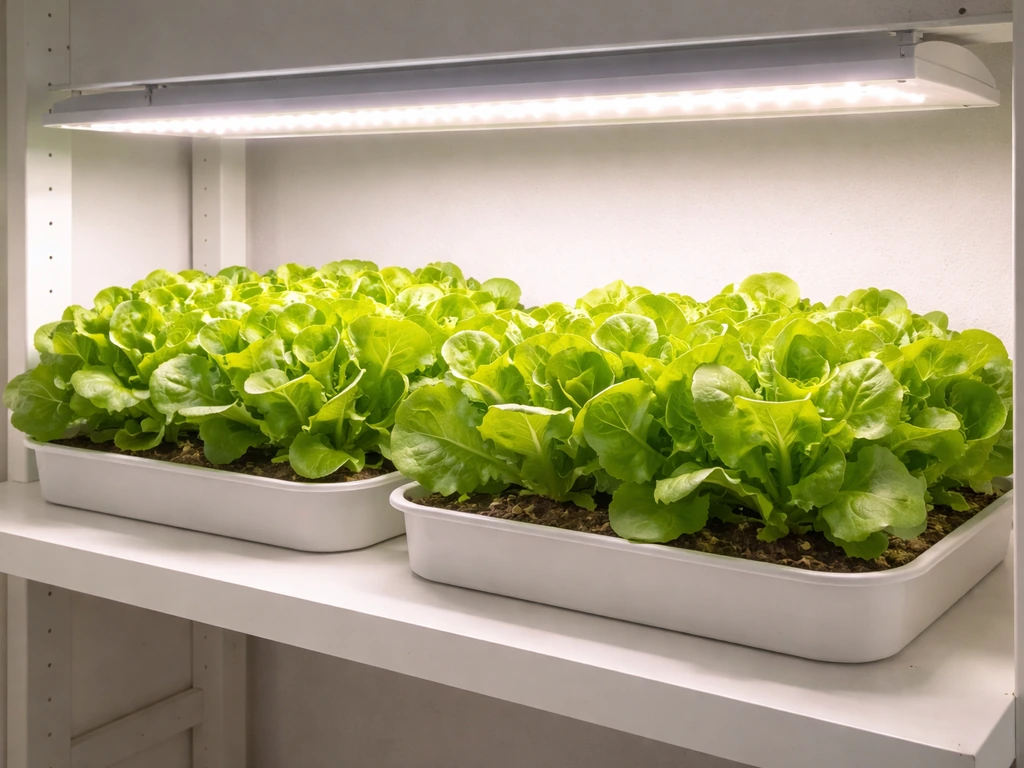
A full-spectrum LED panel is the best choice for indoor lettuce in 2026. LEDs run cool (which matters a lot for lettuce, since heat triggers bolting), draw far less electricity than fluorescent or HID options, and last tens of thousands of hours. For lettuce specifically, you are targeting a light intensity of roughly 150 to 300 micromoles per square meter per second (PPFD) at the canopy level. A quality LED panel rated at 30 to 60 watts is more than enough for a 2-by-2-foot growing area. Look for a panel that specifies its PPFD output at different hanging heights, because the number on the box is rarely what hits your plants.
T5 fluorescent tubes also work well for lettuce, especially for seedlings. They are inexpensive and easy to find. The downside is more heat and higher electricity use compared to LED. High-intensity discharge lights (HID, HPS, or MH) are complete overkill for lettuce and create far too much heat for a small indoor space.
Timers and light schedules
A simple plug-in mechanical or digital timer is all you need. Set it for 14 to 16 hours of light per day. At a PPFD of around 200 micromoles, 16 hours gives you a daily light integral (DLI) of roughly 12 mol per square meter per day, which is right in the target zone for productive lettuce growth.
The NYSERDA CEA Center for Excellence controlled-environment agriculture technical education research PDF provides example DLI values for lettuce, including baby-leaf and mature lettuce stage ranges used in modeling CO2 applicability [daily light integral (DLI) of roughly 12 mol per square meter per day](https://www. nyserda. ny. gov/-/media/Project/Nyserda/Files/Publications/Research/Environmental/Center-Excellence-Controlled-Environment-Agriculture-Tech-Education-Research.
pdf). Do not run lights 24 hours a day: lettuce benefits from a dark period and continuous light can actually stress some varieties.
Containers and drainage
Lettuce roots are shallow, so you do not need deep containers. A depth of about 6 inches is the functional minimum for most varieties, and it is enough for a full harvest cycle. Drainage holes are non-negotiable: sitting water at the root zone is the fastest way to kill lettuce indoors. Use a tray underneath to catch runoff, but always empty it after watering so roots are never sitting in pooled water. Plastic nursery trays, rectangular window boxes, or fabric pots all work well. For a single butterhead or romaine, a 6-inch pot is fine. For a cut-and-come-again leaf patch, a 12-by-24-inch window box gives you room to grow several plants at once.
Soil vs. hydroponics
For beginners, a quality indoor potting mix is the most forgiving option. Avoid heavy garden soil or topsoil: these compact in containers and choke roots. A seed-starting mix or a light, perlite-amended potting mix drains well and holds just enough moisture. If you want to go soilless, a simple deep water culture (DWC) or kratky hydroponic setup works beautifully for lettuce. In hydro, maintain your nutrient solution pH at 5.5 to 6.0 and target a nitrogen concentration of around 75 to 100 ppm. Hydroponic lettuce often grows faster and produces more uniform heads, but it requires a bit more monitoring. Either method works: pick the one that feels manageable.
Planting plan: sowing, spacing, thinning, and early germination
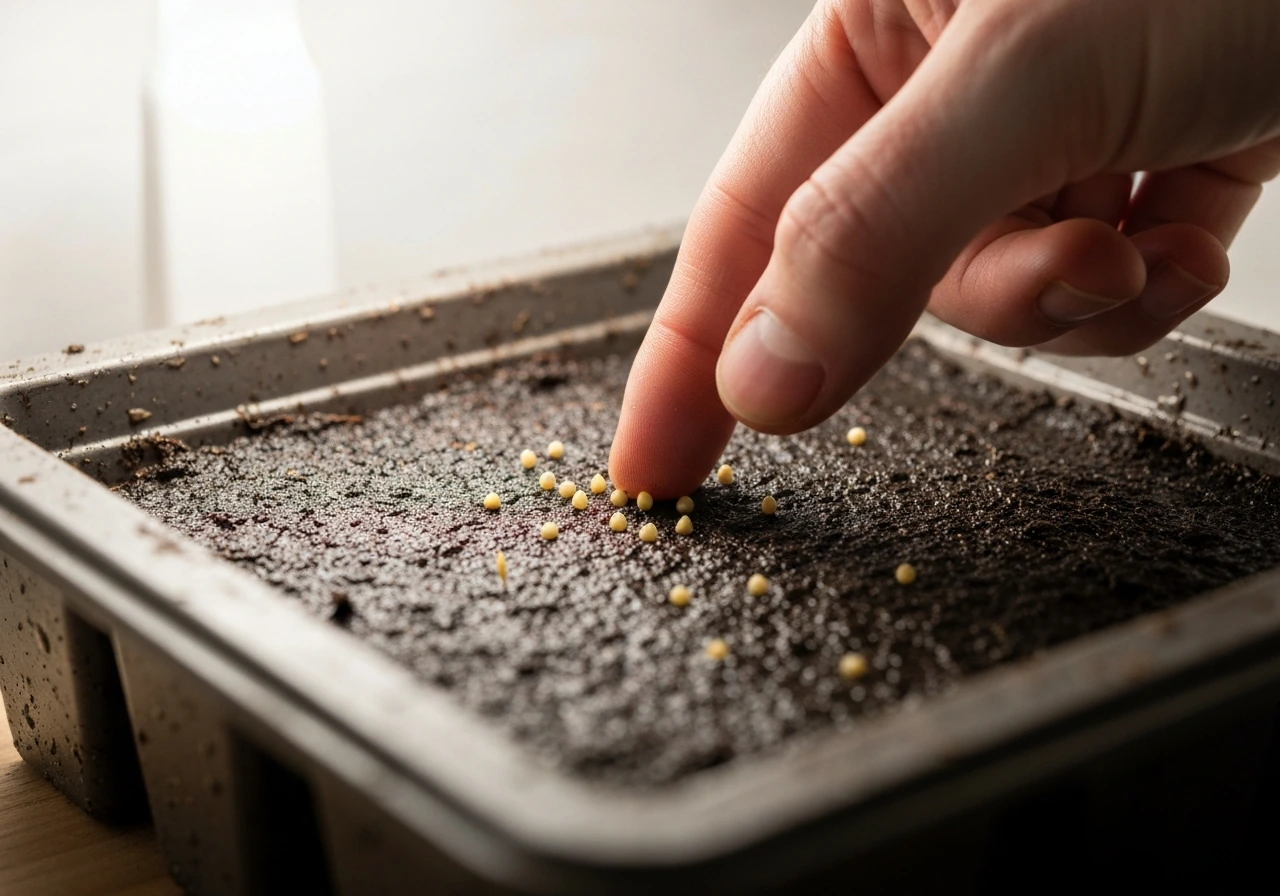
Lettuce seeds are tiny and they actually need light to germinate well. Do not bury them deep. Press seeds gently onto the surface of moist potting mix or seed-starting medium, then cover with only the thinnest possible layer of fine vermiculite or perlite, just enough to barely hide the seed. That thin, porous layer lets light through while keeping seeds from drying out. Germination happens best at 55 to 65 degrees Fahrenheit, and you should see seedlings emerge in 7 to 10 days.
Turn the grow light on immediately after sowing. Seedlings that germinate in low light are the main cause of leggy, weak starts. Keep the light 2 to 4 inches above the soil surface at germination stage (more on exact height in the next section). Once seedlings are up and showing their first true leaves, it is time to thin.
Thinning is one step beginners skip and then regret. Overcrowded plants compete for light and air, grow weak, and are more prone to disease. Use scissors to snip crowded seedlings at the soil line rather than pulling them out, which disturbs neighbors. Final spacing depends on what you are growing:
| Lettuce Type | Final Spacing | Days to Baby Leaf | Days to Maturity |
|---|---|---|---|
| Loose-leaf | 4 inches apart | ~25 days | 40–50 days |
| Butterhead/Buttercrunch | 6 inches apart | N/A | 60–70 days |
| Romaine | 6–8 inches apart | N/A | 50–70 days |
| Crisphead | 10–12 inches apart | N/A | 42–70 days |
For a continuous supply, stagger your plantings every 10 to 14 days. That way, when one tray is ready to harvest, the next is just getting going. This successive-planting approach is the single most practical move for keeping fresh lettuce on hand indoors all year long.
Dial in light and environment: height, hours, temperature, and airflow
Light height and intensity
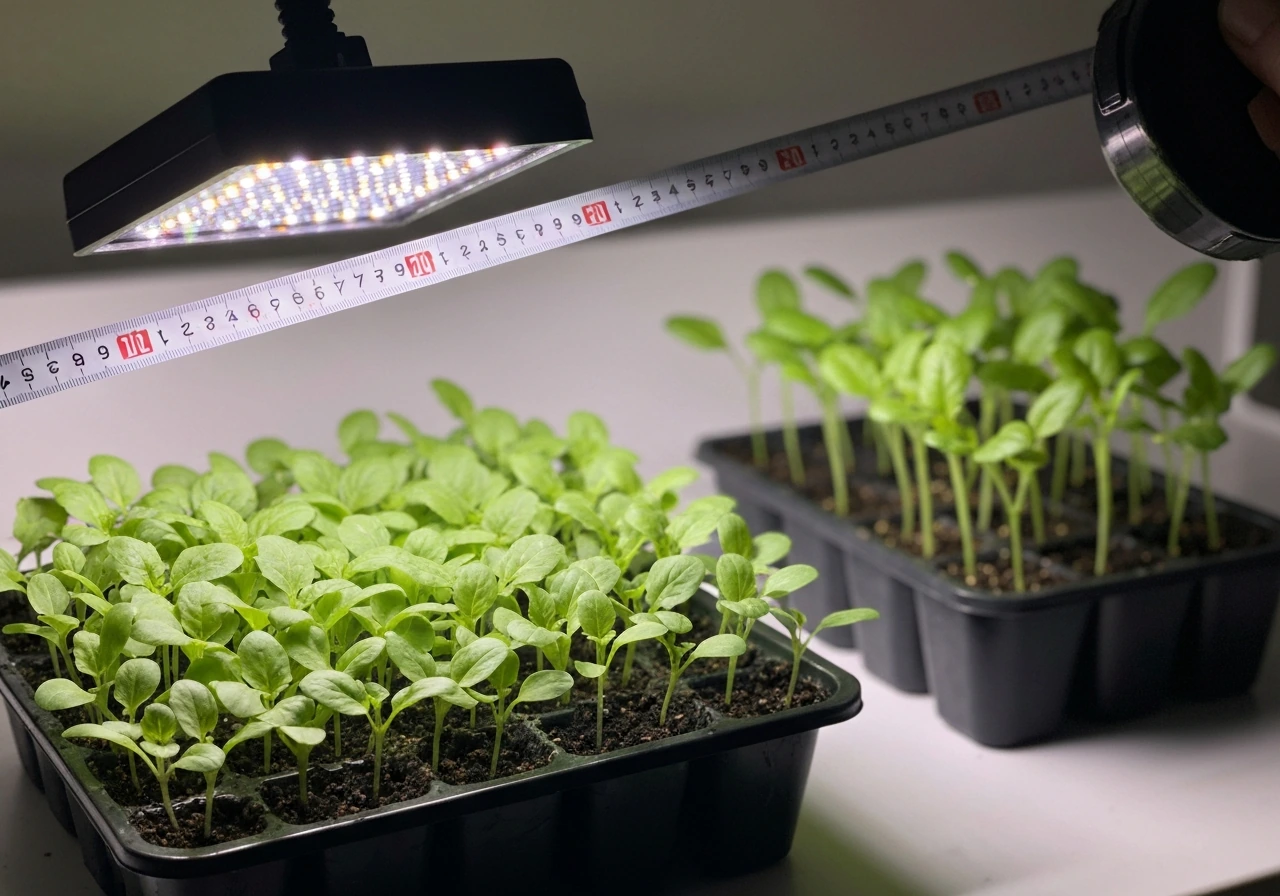
Light distance from the canopy is where most beginners get into trouble. Too far away and plants stretch and get leggy. Too close and you can bleach or heat-stress leaves. For seedlings and young plants, start with your LED panel about 4 to 6 inches above the tops of the plants.
As plants grow, raise the light to maintain that 4 to 6 inch gap until you reach the manufacturer's recommended hanging height for your panel's target PPFD. Most quality LED panels for home use are designed to hang 12 to 18 inches above the canopy for mature lettuce. If you see plants stretching toward the light, move it closer. If leaf edges look pale or bleached, move it up slightly.
Light duration and DLI
A 16-hour photoperiod at a PPFD of around 200 micromoles gives you a DLI of roughly 12 mol per square meter per day, which is within the optimal range for lettuce growth and quality. If your light is on the weaker side (lower PPFD output), you can stretch to 18 hours to compensate. Running 20 hours pushes the DLI to around 14 mol, which research shows is a sweet spot for compact, productive indoor lettuce. Just do not go 24 hours: lettuce appreciates a rest period.
Temperature and airflow
Lettuce is a cool-season crop, and this is one area where indoor growing under lights can work against you if you are not careful. Keep your grow space between 60 and 70 degrees Fahrenheit during the light period. Above 75 to 80 degrees, lettuce starts to bolt and leaves become bitter. LED lights run much cooler than fluorescent or HID, which helps, but a warm room plus lights on for 16 hours can still raise temperatures under the canopy.
Use a small thermometer near plant level to know what is actually happening. If temperatures creep too high, a small USB fan pointed gently across the tops of plants improves airflow, reduces heat buildup, strengthens stems, and lowers the risk of mold and disease.
Watering and feeding schedule for indoor lettuce
Watering
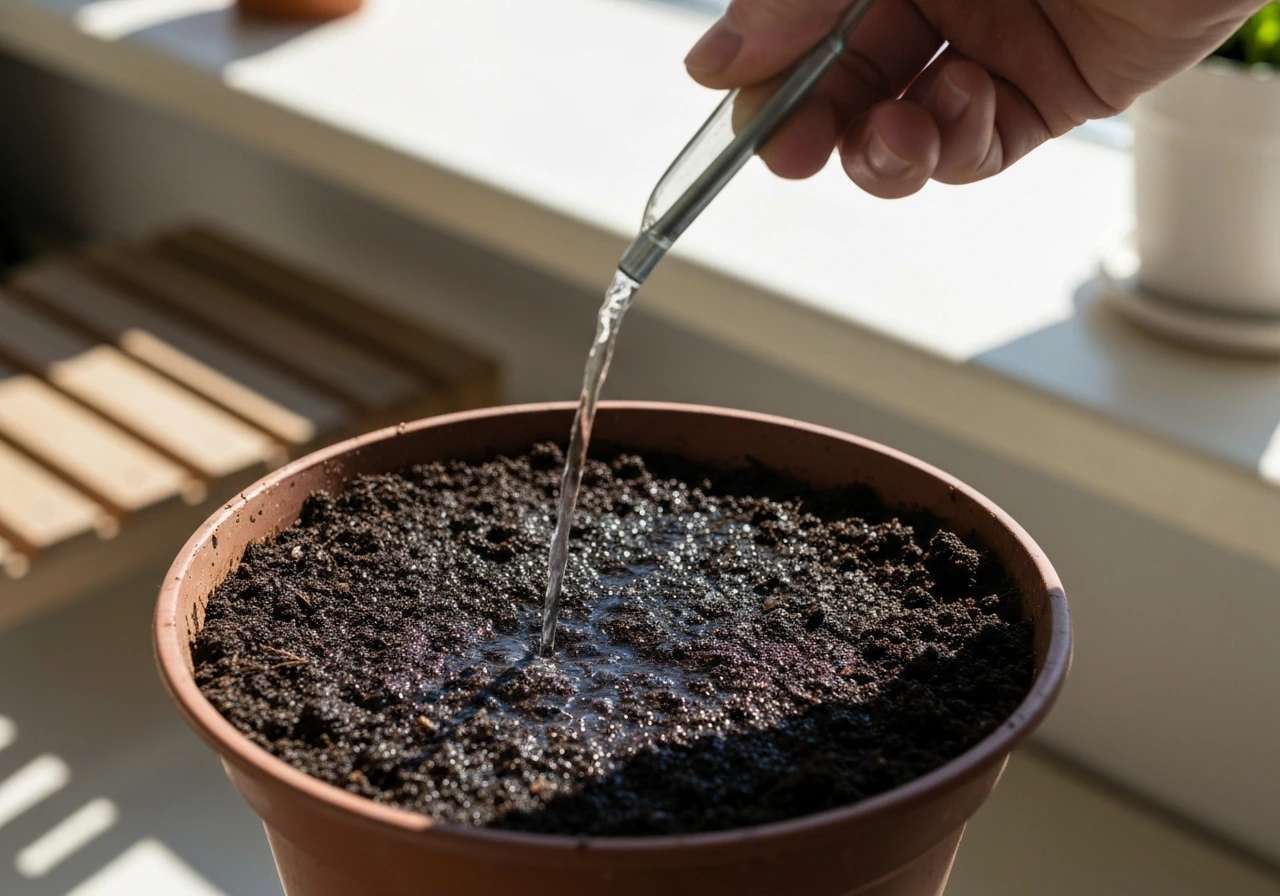
Consistent moisture is critical, but overwatering is the most common beginner mistake. The goal is soil that stays evenly moist but never waterlogged. In a 6-inch container under a grow light running 16 hours a day, you will likely need to water every 2 to 3 days. The best check: stick your finger about an inch into the soil. If it feels dry at that depth, water thoroughly until it drains out the bottom. Then wait until it dries to that 1-inch depth again before watering. Always water at the base of the plant, not over the leaves, to reduce the risk of fungal issues.
Feeding
Lettuce is a light feeder compared to fruiting crops, but it still needs nutrients. If you are growing in a quality potting mix with slow-release fertilizer already mixed in, you may not need to feed at all for the first 3 to 4 weeks. After that, a half-strength balanced liquid fertilizer (something like a 5-5-5 or similar NPK) every 10 to 14 days is enough. For hydroponic setups, mix your nutrient solution to target 75 to 100 ppm of nitrogen and keep pH at 5.5 to 6.0. Lettuce does not need heavy feeding: too much nitrogen pushes fast, leafy growth that can actually increase the risk of tipburn in enclosed, low-airflow spaces.
Harvesting methods and how to keep plants producing
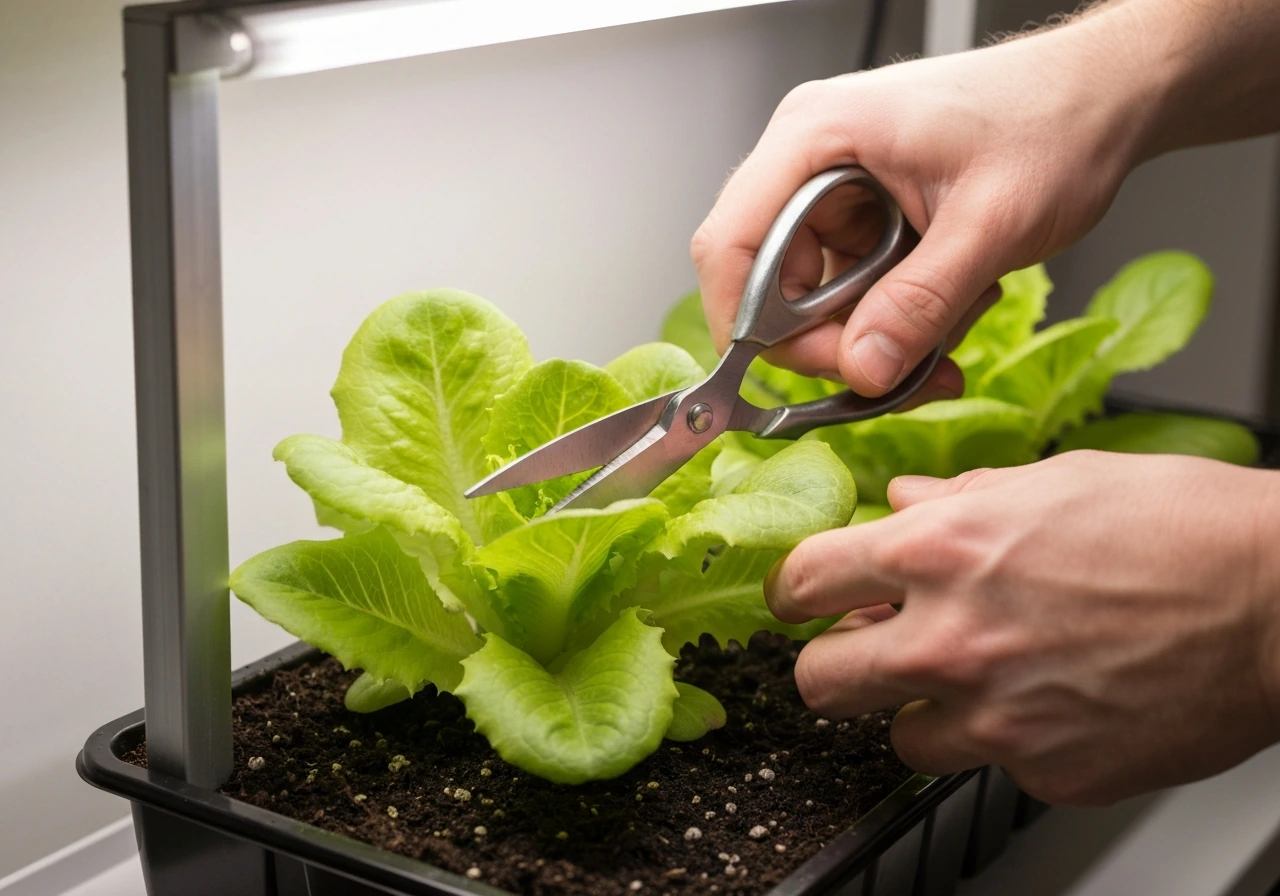
The cut-and-come-again method is the most practical approach for indoor grow-light lettuce, especially with loose-leaf varieties. Once outer leaves reach 3 to 4 inches long, use clean scissors to cut them about 1 inch above the base of the plant, leaving the inner growing point and youngest leaves intact. The plant regrows from the center, and you can repeat this cycle every 10 days or so for a total of 1 to 3 additional cuts before quality and flavor start to decline.
For butterhead and romaine varieties, you have two options: harvest the entire head at once by cutting at the base (around 60 to 70 days for butterhead, 50 to 70 days for romaine), or use the same cut-and-come-again approach on outer leaves early in the growth cycle. Full-head harvest gives you the best flavor and texture. Once you see a seed stalk forming in the center of any plant, harvest immediately: the leaves will turn bitter within days of bolting starting.
To keep supply continuous, combine the cut-and-come-again method with your staggered planting schedule. As you take your second or third cut from one tray, a new tray planted 14 days later is coming into its first harvest window. You end up with a rolling production system that gives you fresh lettuce on a near-weekly basis.
Troubleshooting common indoor grow-light problems and quick fixes
Leggy, stretching seedlings
This is the most common issue and the cause is almost always insufficient light. If seedlings are thin, tall, and flopping over, your light is either too far away or too dim. Move the light closer, aiming for 2 to 4 inches above seedling tops. If the light is already at minimum distance, you may need a higher-output panel. A small fan on low also helps build stem strength. Once seedlings are leggy, you can gently bury the extra stem when transplanting to a larger container, but prevention is easier.
Bitter flavor or bolting
Bitterness and bolting are almost always caused by heat stress. If your room temperature near the plants is above 75 degrees Fahrenheit, especially during the light cycle, lettuce will start the bolting process quickly (research shows bolting can be triggered within 8 to 10 days of consistent heat exposure). Add a fan, move the grow setup to a cooler location, or reduce light hours slightly. Irregular watering (letting plants dry out and then flooding them) also contributes to both bitterness and bolting, so stay consistent with your watering schedule.
Yellowing leaves
Yellowing older (outer) leaves is often normal leaf senescence, especially after multiple cut cycles. But widespread yellowing on younger leaves usually points to a nitrogen deficiency. In soil, apply a half-strength liquid fertilizer. In hydro, check your nutrient solution concentration and pH (if pH drifts above 6.5, plants cannot absorb nutrients properly even when they are present). Overwatering can also cause yellowing by suffocating roots, so check that soil is draining properly between waterings.
Brown leaf edges (tipburn)
Tipburn shows up as brown, papery edges on inner leaves, especially on fast-growing plants in enclosed spaces. It is caused by a localized calcium deficiency in rapidly expanding leaf tissue, usually because transpiration (the plant's ability to move water through its leaves) is limited by low airflow or high humidity, not because calcium is actually absent in your soil or solution. The fix: improve airflow with a small fan, avoid pushing growth too fast with heavy feeding, and make sure humidity is not above 70 percent in your grow area.
Fungus gnats and aphids
Fungus gnats are a sign of consistently wet soil at the surface. Their larvae live in the top inch of moist growing medium and can damage roots. Let the top inch of soil dry out between waterings, and consider a thin layer of perlite on the soil surface, which dries fast and makes the environment less hospitable for egg-laying. Yellow sticky traps placed near the soil surface catch adults. Aphids on indoor lettuce usually hitchhike in on new plants or tools. Blast them off with a gentle stream of water or apply insecticidal soap diluted to label strength, focusing on the undersides of leaves.
Mold or damping off in seedlings
Damping off (where seedlings suddenly collapse at the soil line) is a fungal issue driven by overwatering and poor airflow. Use a sterile seed-starting mix, water only when necessary, and always have a small fan running near seedlings. If you see white fuzzy mold on the soil surface, water less frequently and improve air circulation immediately. Seedlings that have already damped off cannot be saved, but improving conditions protects the remaining plants.
Uneven growth across the tray
Plants on the edges of a tray often grow more slowly or stretch more than those directly under the center of the light. This is a hot-spot issue: most affordable LED panels have uneven light distribution with a brighter center. Rotate your trays 180 degrees every 3 to 4 days, or raise the light slightly to spread coverage more evenly across the canopy. A reflective white surface (even just white foam board) around the grow area also helps bounce light back to edge plants.
Seeds not germinating
If seeds are not coming up after 10 to 14 days, the most likely causes are seeds buried too deep (lettuce needs light to germinate), soil temperature too cold (below 55 degrees Fahrenheit will slow or prevent germination), or seeds that are too old. Surface-sow fresh seeds with just a whisper of vermiculite on top, ensure the room temperature at soil level is at least 60 degrees, and keep the grow light on from day one. Germination should follow within 7 to 10 days under good conditions.
FAQ
Can I grow full heads of lettuce indoors under a grow light, or is it only good for baby leaf?
Yes, but plan for a longer schedule. If your goal is full heads, you generally need more time than baby leaf harvest, and you may need either a stronger panel or a smaller growing area so the PPFD stays in range at the leaf canopy. For best results, use cut-and-come-again for the first cycle, then trial a few plants for full-head harvest once your setup is dialed in.
How often should I water lettuce indoors when using a grow light?
Aim for the soil or seed-starting medium to be evenly moist, not soggy. In practice, with shallow containers under a 14 to 16 hour photoperiod, many people water every 2 to 3 days, then adjust based on how quickly the top inch dries. The key check is finger-depth moisture (about 1 inch down), not the surface crust.
My seedlings look pale but not crowded, should I fertilize sooner?
If seedlings are up but pale or weak, increase light before increasing fertilizer. Lettuce that is both leggy and pale is almost always light-limited, even if your medium contains nutrients. Keep seedlings close to the light (about 2 to 4 inches at first), and only start feeding after the first few weeks when slow-release nutrition is mostly used.
Do I need a fan for indoor lettuce even if I am using LED grow lights?
Use airflow to prevent disease while avoiding leaf damage from direct blasting. A small fan that creates gentle movement across the canopy is enough, and you do not need strong wind. If you see the soil staying wet longer after you add airflow, that is a sign to back off watering rather than adding more fertilizer.
What container size and type works best, can I use a deeper tub or must it be shallow?
Lettuce is forgiving about container shape, but not about drainage. Fabric pots and nursery trays work well, as long as runoff is allowed to escape and roots are not sitting in standing water. If you use trays under pots, empty the tray every time you water.
How long should I run the grow light each day, and when should I adjust it?
Start with the DLI approach, then adjust for your actual light output. If your panel is dim at canopy level, extending the photoperiod helps only up to a point, for example up to around 18 hours. Avoid 24-hour lighting, because the plants still need an actual dark period for proper stress recovery.
How do I tell if my problem is tipburn versus general yellowing?
White crispy edges on inner leaves can be tipburn, but the trigger is usually rapid growth paired with limited water transport, often from low airflow or high humidity. Reduce feeding to avoid pushing growth too fast, add gentle airflow, and keep humidity below about 70 percent. Also check that you are not letting the root zone dry out between waterings.
Can I transplant lettuce after it germinates, and does burying the stem help indoors?
Repotting a young lettuce plant can be hard on roots if you do it too early or with dry medium. If you transplant, do it when true leaves are present, keep the root ball intact, and water in gently. Because lettuce roots are shallow, avoid burying too deeply, instead keep the base of the plant at the same level as before.
My lettuce seeds are not germinating. What are the most common reasons and the quickest fixes?
Seedlings usually fail from a few predictable causes: seeds buried too deep, light not turned on right away, medium that stays too cold, or overwatering before roots establish. If germination drops, confirm the room and soil level are at least around 60 degrees, and keep the thinnest possible cover over seeds (just barely hiding them).
What should I do first if I see aphids or fungus gnats on indoor lettuce?
For pests like aphids, prevention matters because they hitchhike in on new plants and occasionally on tools. Inspect undersides of leaves early, rinse lightly with water first, then use insecticidal soap only if needed and follow label dilution. For fungus gnats, drying the top inch between waterings and adding a perlite layer on the surface often reduces the problem fastest.
How can I prevent damping off, and can damaged seedlings be saved?
Overwatering is the most common cause, but poor airflow can mimic it. If you notice damping off, stop frequent watering, switch to sterile seed-starting mix, and run a small fan nearby to keep air moving across seedlings. Unfortunately, once seedlings collapse, they generally cannot recover, so focus on saving the remaining healthy flats.
If my plants start to bolt, should I try to save them or harvest immediately?
Once you see the first signs of bolting (seed stalk development) harvest immediately, even if heads are not fully formed. For romaine and butterhead, you can often extend quality by using the cut-and-come-again approach early, but any consistent heat spike can accelerate bitterness and stalk formation.