Bibb lettuce takes about 55 to 75 days to reach full harvest from seed, or roughly 30 to 40 days if you start from transplants. If you want to grow black seeded Simpson lettuce specifically, the same Bibb timing and care tips apply, with a few small variety-focused tweaks. That range isn't vague, it genuinely depends on your growing method, temperatures, and how patient you're willing to be. If you're in cool spring weather with consistent moisture and decent light, you'll land closer to 55 days. If you're dealing with heat, inconsistent watering, or low light, expect to be on the longer end or even push past it.
How Long Does It Take to Grow Bibb Lettuce
Marcus Holloway
28 May 2026
Typical days to harvest for Bibb lettuce
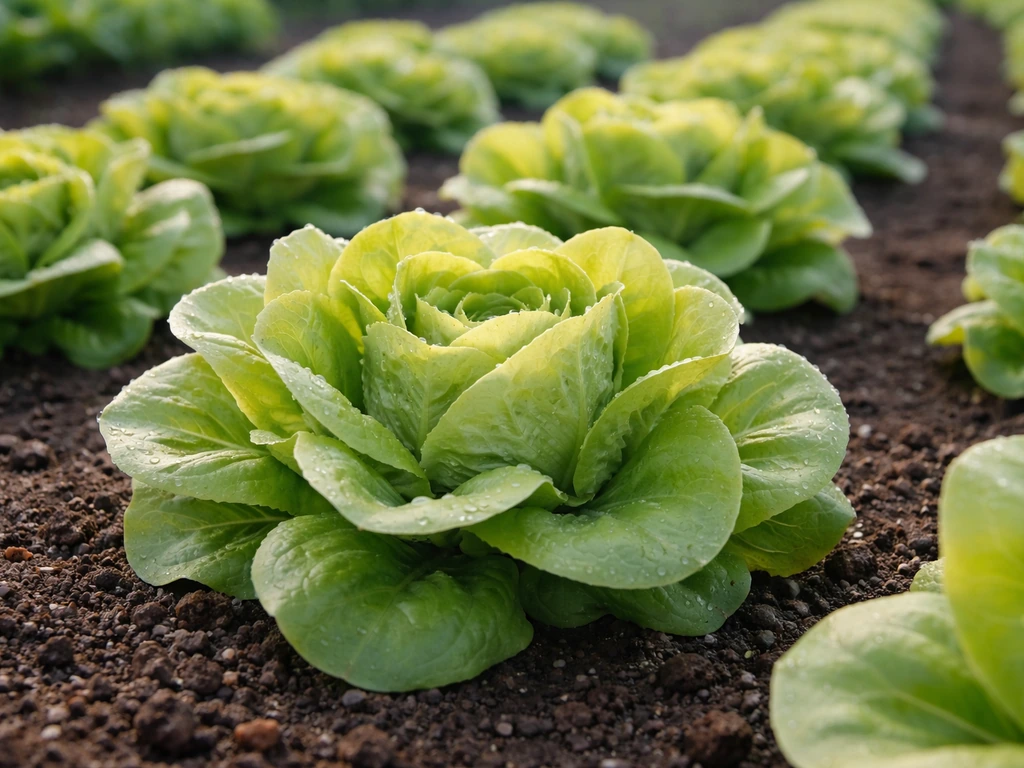
Most Bibb lettuce varieties are labeled 55 to 75 days to maturity from direct sowing, though I've consistently harvested full heads closer to 60 days under ideal spring conditions. Bibb is a butterhead type, and what you're waiting for isn't a tight, firm head like iceberg. According to both University of Maryland Extension and UC Davis, Bibb is technically mature when the leaves begin to cup inward and form a loose head. That cupping is your real cue, not calendar days alone. Days-to-maturity numbers on seed packets assume ideal conditions (cool temps, full sun, consistent moisture), so treat them as a target, not a guarantee.
| Starting Point | Days to Baby Leaf Harvest | Days to Full Head Harvest |
|---|---|---|
| Direct seed (outdoor) | 20–30 days | 55–75 days |
| Transplant (started indoors) | N/A | 30–40 days from transplant |
| Hydroponic system | 15–25 days (baby leaf) | 45–55 days |
| Indoor grow lights (containers) | 25–35 days (baby leaf) | 55–65 days |
One thing worth noting: you don't have to wait for a full head. Baby Bibb leaves are ready to snip at just 3 to 4 inches tall, often within 3 weeks of germination. Cut-and-come-again harvesting from young plants lets you get something on your plate fast while the main head develops.
Seed vs transplant timelines and when to sow
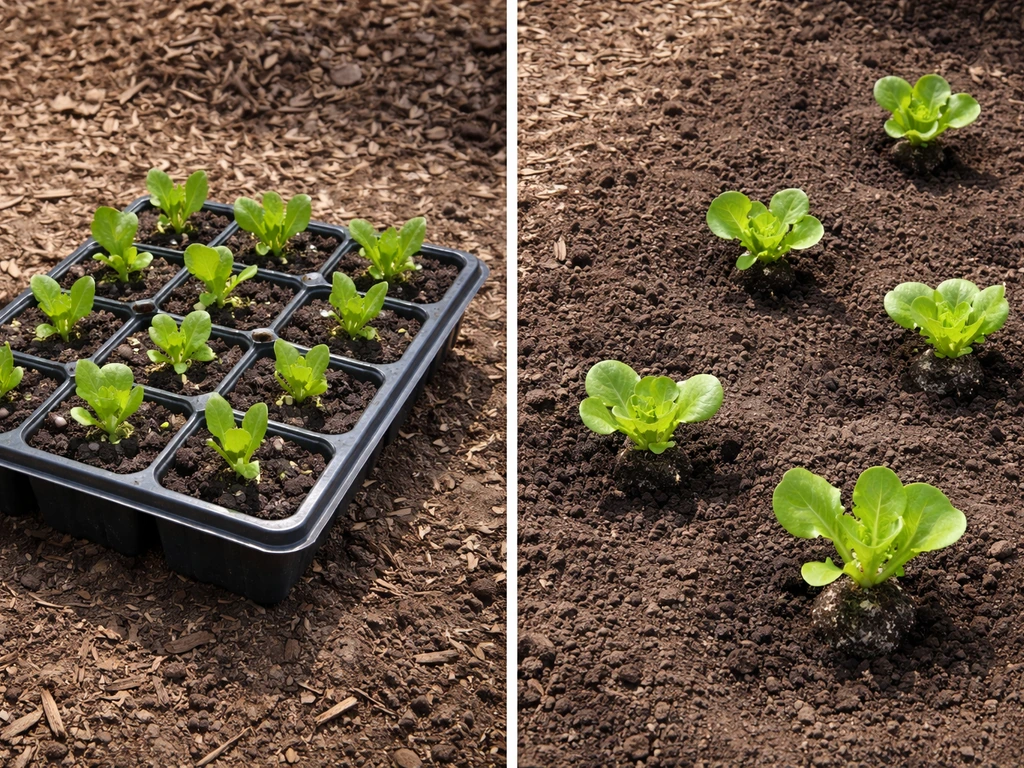
Starting from seed directly in the garden is the most common approach, but it adds 4 to 6 weeks to your timeline compared to transplanting seedlings you started indoors. If you want the full step-by-step process, see how to grow Bibb lettuce for sowing, light, water, and harvest tips. If you want the earliest outdoor harvest, start seeds indoors 4 to 6 weeks before your last frost date, then transplant seedlings outdoors once nighttime temps stay above 28°F. That buys you a significant head start, especially in short-season climates.
For spring growing, direct sow outdoors 4 to 6 weeks before your last expected frost, Bibb can handle light frost and actually tastes sweeter after a cold snap. For fall growing, count backward from your first expected frost date: you want to transplant at least 6 to 8 weeks before that date, or direct sow 10 weeks out to allow time for a full head. Succession sowing every 2 to 3 weeks keeps a steady harvest going rather than one big glut.
- Spring direct sow: 4 to 6 weeks before last frost
- Spring transplant: start indoors 4 to 6 weeks before last frost, transplant 2 to 4 weeks before
- Fall direct sow: 10 to 12 weeks before first frost
- Fall transplant: 6 to 8 weeks before first frost
- Succession sow: every 2 to 3 weeks for continuous harvest
What speeds up or slows down Bibb lettuce growth
Temperature is the single biggest lever you have. Bibb grows fastest between 60°F and 70°F. Below 45°F, growth slows noticeably. Above 75°F, it starts to struggle, and above 80°F, bolting becomes a real risk. Bibb lettuce grows best when you keep conditions cool, consistent, and lightly moist, because heat and drying out can quickly trigger bolting how does bibb lettuce grow. If you're gardening through late spring or summer heat, expect a slower, shorter harvest window and more chance of bitterness.
Light
Outdoors, Bibb does best with 6 hours of direct sun in cool weather. In hot weather, afternoon shade actually helps it grow better (and slower to bolt) than full sun. Indoors near a window, you need a south-facing window with 6 or more hours of bright light. Grow lights make a real difference, 14 to 16 hours of fluorescent or LED light per day at 2 to 4 inches above the seedlings pushes growth noticeably faster than window light alone.
Water and consistency
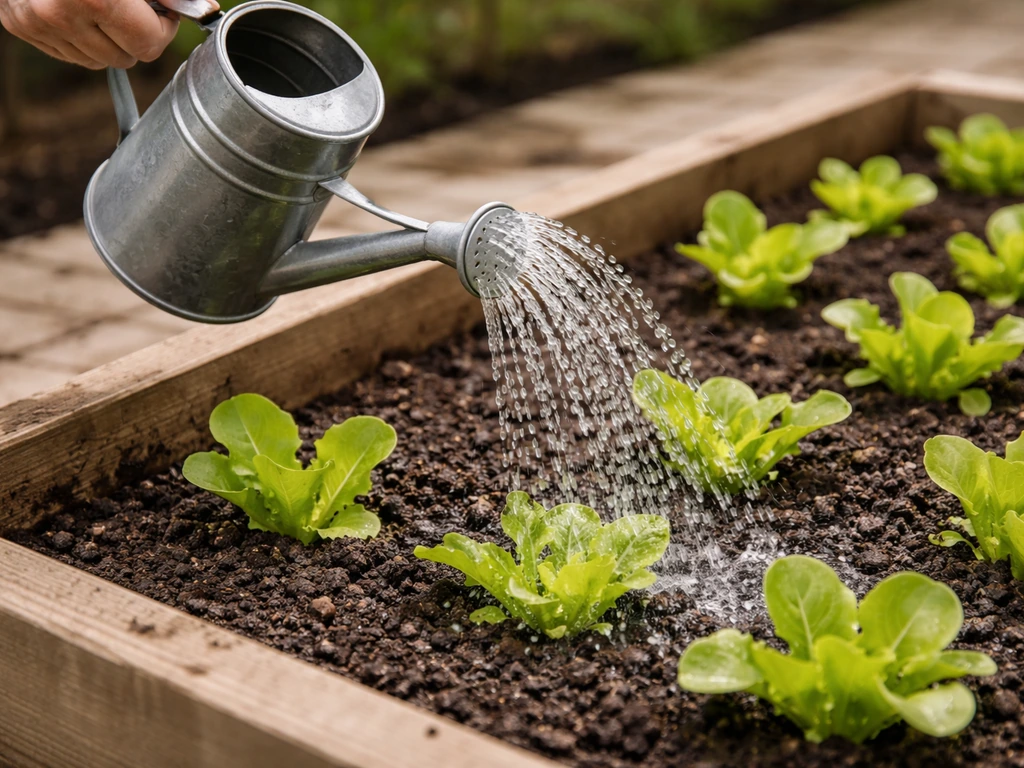
Lettuce is about 95% water, so inconsistent watering is a growth killer. Aim to keep the soil consistently moist but never waterlogged. In containers, this often means watering daily in warm weather. Letting it dry out, even once, stresses the plant, can trigger early bolting, and makes leaves bitter. Mulching the soil surface helps retain moisture and keeps root temps stable.
Growth timelines by growing method
Where and how you grow Bibb changes the timeline meaningfully. Here's what to expect from each setup:
Outdoor garden beds
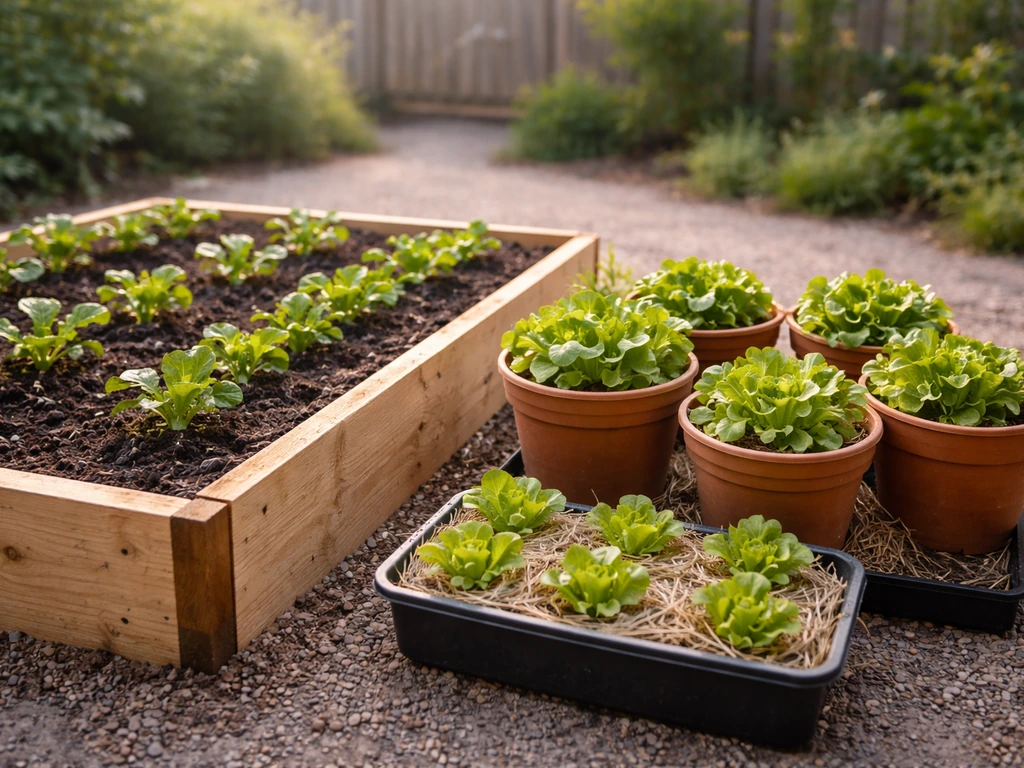
This is the classic approach and gives you the widest seasonal window. Expect 55 to 75 days from seed in spring or fall. The big advantage is volume and minimal input cost. The downside is you're at the mercy of weather, and summer heat shortens your window fast.
Containers and pots
Container Bibb takes roughly the same time as outdoor beds, 55 to 70 days from seed, but you have more control. You can move pots into shade during heat waves or bring them inside before a late frost. Use at least a 6-inch deep container (8 inches is better) and a mix that drains well but holds moisture. Containers dry out faster than ground soil, so watering frequency matters more here.
Indoor growing with grow lights
Growing Bibb indoors under LED or fluorescent grow lights gives you year-round production and a timeline of 55 to 65 days from seed to a full head. You're controlling temperature and light, which means fewer surprises. Keep lights on 14 to 16 hours per day and maintain temps between 60°F and 70°F. The tradeoff is setup cost and electricity. If you're curious about the full approach to indoor growing, that warrants its own deep dive, how to grow Bibb lettuce indoors covers the specifics in detail.
Hydroponics
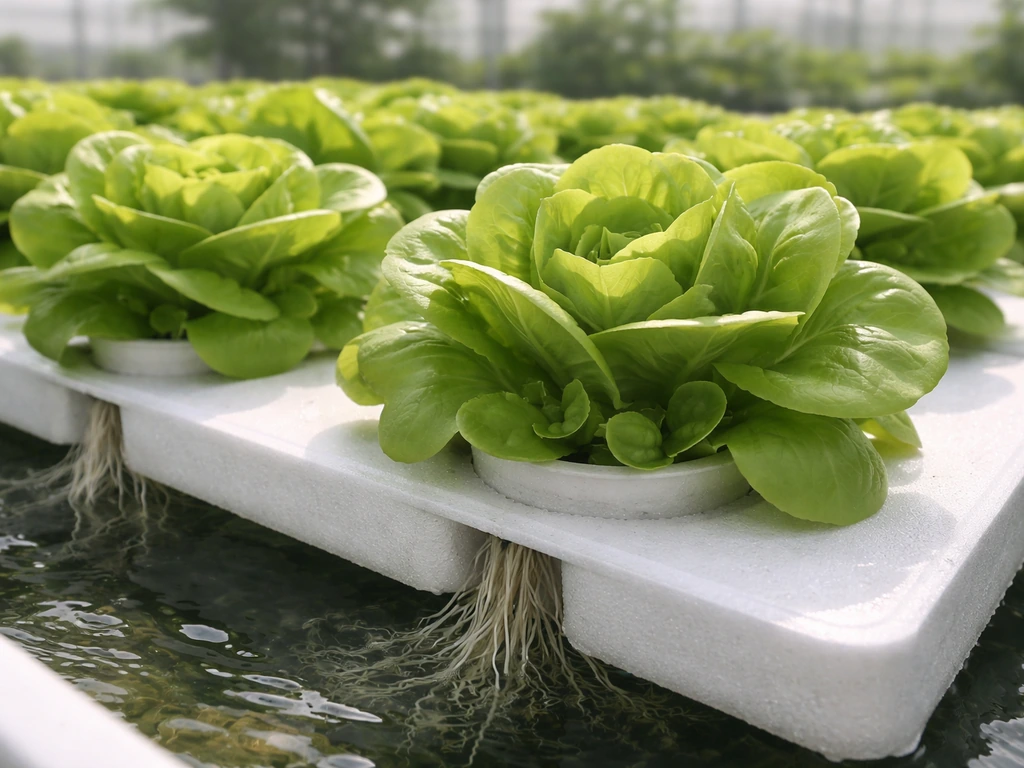
Hydroponic Bibb is the fastest method. With direct nutrient access and optimized light, you can get a full head in 45 to 55 days, and baby leaves in as little as 15 to 20 days. Systems like kratky (passive, no pump) or NFT (nutrient film technique) both work well. Hydroponics is particularly good for apartment growers who want fresh greens fast and don't have outdoor space.
Soil prep, sowing depth, spacing, and thinning
Getting these basics right at planting time cuts days off your harvest and prevents the stunted, bitter heads you get from crowded or nutrient-starved plants.
Soil and bed prep
Bibb wants loose, well-draining soil with plenty of organic matter. Work in 2 to 3 inches of compost before planting, lettuce is a shallow-rooted, fast-growing crop that benefits enormously from a nutrient-rich top layer. Aim for a soil pH of 6.0 to 7.0. If your soil is heavy clay, growing in raised beds or containers will serve you better and actually speed up your harvest by keeping roots from sitting in soggy soil.
Sowing depth and germination
Bibb seeds are tiny and need light to germinate. Sow them just barely covered, no deeper than 1/8 inch, and press gently so the seed makes good contact with the soil. Germination happens in 7 to 14 days at soil temps between 60°F and 65°F. Below 40°F or above 80°F, germination slows dramatically or fails. If your soil is cold in early spring, a cloche or row cover warms it up and speeds germination by several days.
Spacing and thinning
This is where a lot of gardeners accidentally slow down their own crop. Bibb heads need 8 to 10 inches between plants at maturity. Most people sow too densely and don't thin aggressively enough, which leads to undersized, weak heads that take longer to mature. Thin seedlings to 4 inches apart when they're 2 inches tall, then thin again to 8 to 10 inches when they're about 4 inches tall. Eat the thinnings as baby greens, nothing wasted. Crowded plants compete for light, water, and nutrients, and all three slow them down.
How to tell when Bibb lettuce is ready to pick
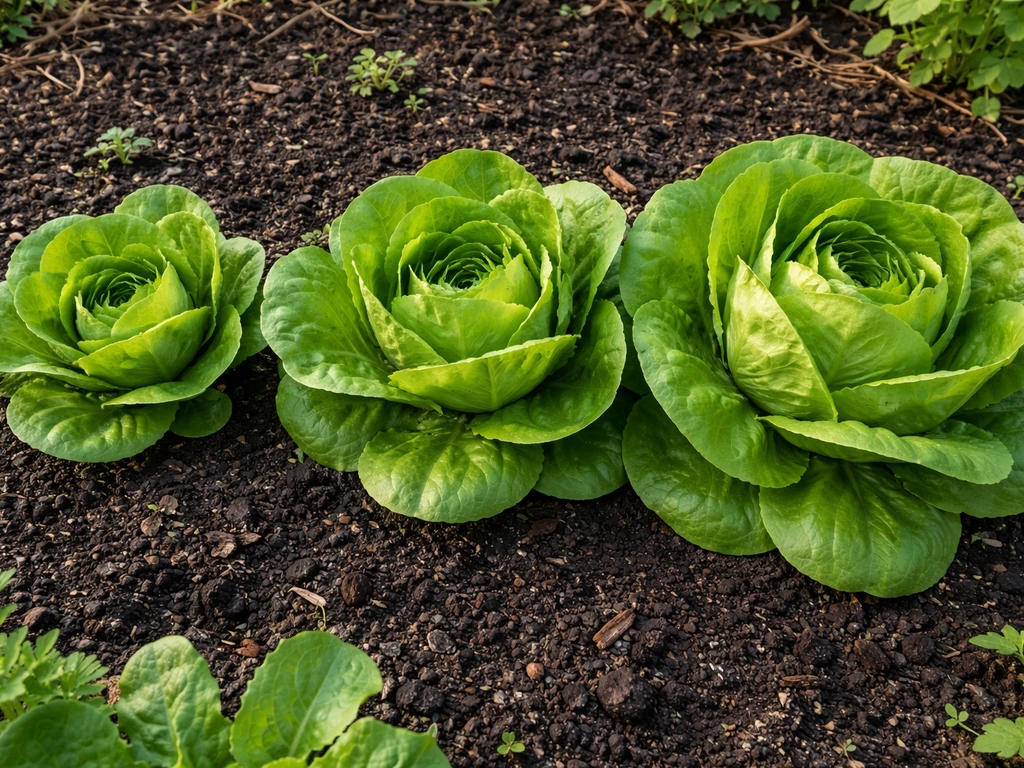
Don't rely only on the calendar. The real signs of readiness are visual and tactile. A mature Bibb head will have leaves that cup inward toward the center, forming a loose, rounded rosette. That cupping is the definitive cue, both University of Maryland Extension and UC Davis point to it as the maturity indicator for butterhead types. The head will feel soft and tender when you squeeze it gently (unlike the firm, dense head of a romaine or iceberg), and the center leaves will be pale yellow-green or creamy, which is normal.
- Leaves cup inward and form a loose rosette shape
- Head measures 4 to 6 inches across
- Center leaves are pale yellow-green or creamy colored
- Head feels soft and tender, not firm
- Outer leaves are deep green and full-sized
- No visible flower stalk emerging from the center (that means it's bolting — harvest immediately)
To harvest, cut the entire head at the base with a clean knife, or pull the whole plant. If you want to extend the harvest slightly, you can remove outer leaves individually starting at about day 45 to 50, letting the center continue to develop. Once a flower stalk starts forming in the center, the window is closing fast, harvest everything that day.
When something goes wrong: troubleshooting timeline delays
Most timeline problems fall into a handful of categories. Here's how to diagnose and fix the common ones.
Bolting (going to seed too early)
If a flower stalk shoots up from the center before you've gotten a proper head, that's bolting, and it's usually caused by heat or long days. Once a plant bolts, the leaves turn bitter and the harvest is essentially over. If you see it happening, harvest the whole plant immediately rather than hoping it recovers. Prevention is the real fix: plant in early spring or fall, provide afternoon shade if temps push above 75°F, and choose bolt-resistant varieties like 'Buttercrunch' if you're in a warm climate.
Slow or failed germination
If seeds haven't germinated in 14 days, temperature or moisture is usually the issue. Check that soil temps are between 60°F and 65°F and that the seed bed stays consistently moist (not wet). Old or improperly stored seeds also germinate poorly, if your seed packet is more than 2 to 3 years old, germination rates drop significantly. Pre-sprouting seeds on a damp paper towel at room temperature for 24 to 48 hours before sowing can help improve germination rates.
Stunted or slow growth
Slow-growing plants that look pale or yellowish are usually telling you they're hungry or cold. If temps are fine, suspect nitrogen deficiency, a diluted balanced liquid fertilizer (like a 10-10-10 or fish emulsion) applied every 2 to 3 weeks gives Bibb the nitrogen boost it needs for fast leaf production. If the whole plant looks small and crowded, you haven't thinned enough. Crowding is one of the most common reasons home-grown Bibb takes longer than expected.
Pest damage slowing growth
Aphids, slugs, and caterpillars are the main culprits. Aphids cluster under leaves and cause them to curl and yellow, blast them off with water or use insecticidal soap. Slugs chew ragged holes in leaves and are most active at night; a ring of diatomaceous earth around the base of the plant or a slug trap works well. Row covers over young seedlings keep most pests away during the critical early weeks when damage has the most impact on your final harvest date.
Inadequate light indoors
If you're growing Bibb near a window and it looks stretched, leggy, or just isn't sizing up, it's not getting enough light. A window that looks bright to you might only deliver 3 to 4 hours of usable light, not enough for a full head. Move the plant to a brighter spot or add a grow light 2 to 4 inches above the plants for 14 to 16 hours per day. Leggy seedlings can be buried deeper at transplant to compensate for stretched stems.
A simple plan to hit your harvest window
If you want reliable Bibb harvests, the approach that works best is: sow in cool weather, thin aggressively, water consistently, and watch for the leaf-cupping cue rather than just counting days. Succession sow every 2 to 3 weeks so you always have a plant coming in at different stages.
In a typical spring season, your first planting will be ready in 55 to 65 days under good conditions, meaning if you sow today (late May), you'll be harvesting in late July at best, and you'd likely be fighting summer heat by then. In that case, a fall planting starting in mid-to-late July will be your better window for a full, quality head.
For a faster result right now, start seeds indoors under lights and transplant to a shaded container to buy yourself cooler root temps and a protected environment through the heat of summer.
FAQ
Can I harvest bibb lettuce earlier than the typical 55 to 75 days? If so, what’s the best way?
Yes, but bibb usually has a quality limit. You can harvest baby leaves as early as 3 to 4 inches tall (often within about 3 weeks), and you can also remove some outer leaves around day 45 to 50. Once the center starts forming a flower stalk, you should harvest the whole plant the same day, because leaf bitterness increases quickly.
What should I check if my bibb is not forming a loose head by day 65?
A common sign is failure to form inward “cupping” leaves, even if days-to-maturity are passing. If the plants stay flat, grow slowly, and look pale or weak, check temperature first (aim for roughly 60°F to 70°F), then confirm the soil is kept evenly moist and not waterlogged. If you are too dense, add thinning right away, because crowding can delay maturity even in good weather.
Does afternoon shade change how long it takes to grow bibb lettuce?
Yes. In warm periods, morning sun plus afternoon shade often improves timing because it reduces heat stress and slows bolting, which otherwise cuts the harvest short. If your location regularly exceeds about 75°F, treat shade as part of your plan, not an afterthought, and expect slower growth during the hottest weeks.
If I start from transplants, how can I make sure the timeline actually improves?
Seed packets assume ideal conditions, so transplanting can shorten the full-head timeline by about 4 to 6 weeks, but only if the seedlings establish quickly outdoors. Transplant right when nighttime temps stay above about 28°F, keep the first week consistently moist, and avoid transplanting during heat waves, because stressed seedlings can catch up slowly and erase some of the time advantage.
My bibb started bolting early, can it recover or should I just pull it?
Bibb can bolt sooner than expected if it gets stressed, especially from heat and dry-down. Watch for a stalk developing in the center and, once you see it, harvest immediately rather than waiting for a “late recovery.” For prevention, plan sowing for cooler windows, and consider bolt-resistant varieties if your summers are warm or long days are common.
Why does my bibb taste bitter even though it’s close to maturity?
It can, and it’s usually due to uneven moisture, low light, or overcrowding. If leaves turn bitter or the center never fully cups, check whether the bed is drying out between waterings (lettuce is very water-hungry), then confirm you are not under-lighting (window light often provides only a few usable hours). If plants are crowded, thin aggressively to maintain the needed spacing at maturity.
What causes bibb lettuce germination delays that throw off the harvest date?
Because bibb seeds are tiny and need light to germinate, planting deeper than about 1/8 inch, sowing in overly cold soil, or letting the seed bed dry out can all delay germination and push the harvest later. If you miss germination, check soil temperature (roughly 60°F to 65°F is ideal) and moisture, then consider pre-sprouting the next batch to tighten up your schedule.
Does planting too densely really make bibb take longer to mature, or is it just smaller?
Use spacing as a timing tool. If you overcrowd and don’t thin, the heads stay smaller and take longer, often turning the expected harvest window into an extended, frustrating stretch. Thin to about 4 inches apart when seedlings are around 2 inches tall, then thin again to about 8 to 10 inches when they are about 4 inches tall.
Which growing method gives the shortest timeline for full bibb heads?
For the fastest timeline, hydroponics is usually quickest, roughly 45 to 55 days for a full head, with baby leaves sometimes in 15 to 20 days. If you want the next-fastest option with more control than outdoor growing, indoor setups under grow lights typically land around 55 to 65 days. The key is consistent temperature and enough light duration, since both directly affect how fast plants progress to cupping.
How can fertilizing (or not fertilizing) affect how long bibb takes to harvest?
It can if you manage nutrients and light correctly. In soil, letting lettuce go pale or stunted often points to low nitrogen or cold stress, and the fix is usually either warming (within reason) or adding a light nitrogen-containing feed on a schedule. In containers, nutrient washout is faster, so a diluted balanced fertilizer every 2 to 3 weeks can help you stay on the earlier side of the timeline.