Yes, you can grow lettuce from scraps, and it actually works better than most people expect, as long as you keep the right part of the plant. If you’re asking can you grow lettuce from the core, the answer is yes, and the process is basically the same as regrowing from the crown grow lettuce from scraps. The key is saving the base or core, that dense bottom inch or so where all the leaf growth originates.
How to Grow Lettuce From Scraps: Step-by-Step Guide
Marcus Holloway
22 Apr 2026
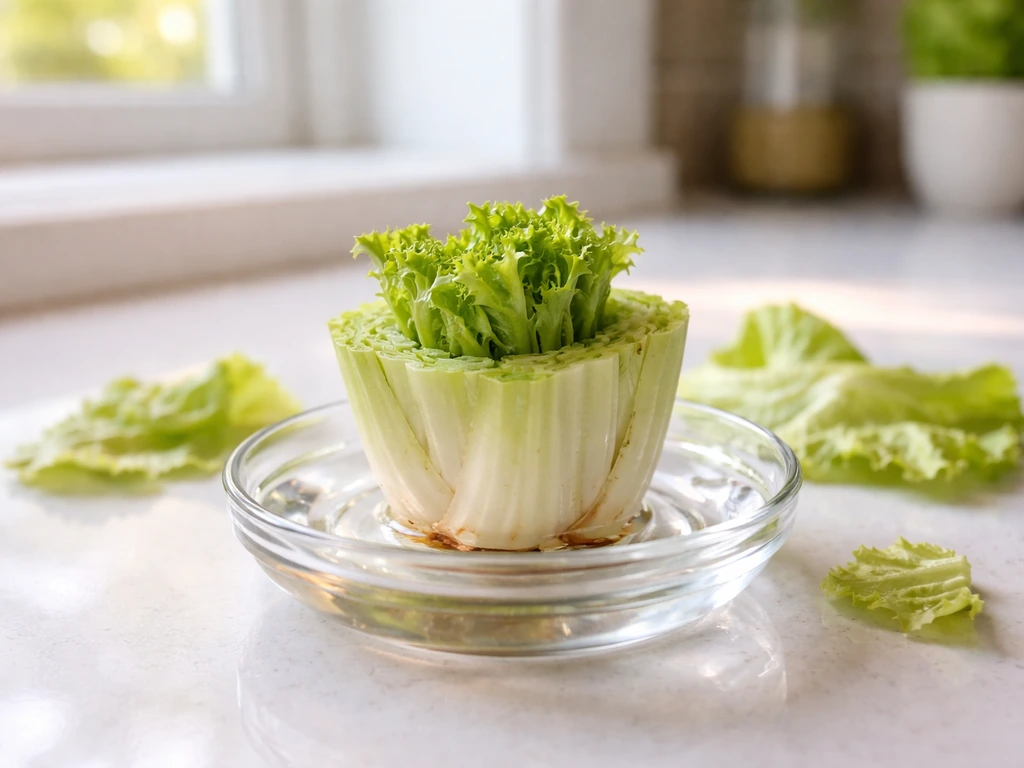
Toss that in a shallow dish of water on your windowsill and within a few days you'll see new leaves pushing up from the center. It's not magic, it's just how lettuce grows: from the crown outward. What you're doing is preserving that crown and giving it what it needs to keep going.
Can you grow lettuce from scraps (and which scraps actually work)
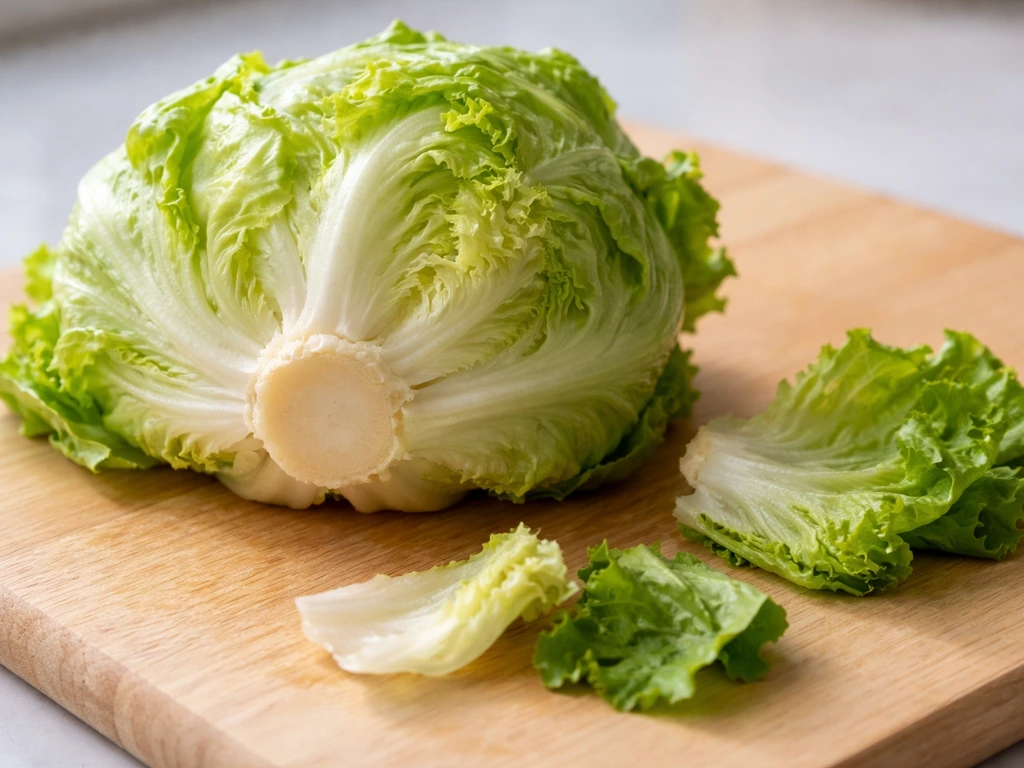
The part of your lettuce that makes regrowth possible is the growing center, sometimes called the crown or core. This is the dense, pale base where leaves are still tightly packed together. When you cut lettuce for a salad and toss the bottom, you're usually throwing away the exact piece you need. Save roughly 1 inch (about 3 to 4 cm) of that base and you have everything required to start a new round of leaves.
Loose-leaf varieties work best for this, and that includes both red leaf and green leaf types, along with romaine. Loose-leaf lettuce has a cut-and-come-again growth habit, meaning the plant is wired to keep producing leaves after the outer ones are removed. Butterhead and iceberg can produce some regrowth too, but the results are less reliable and the new leaves tend to be smaller and slower. If you have a choice, grab a loose-leaf variety from the store or your garden and you'll have a much easier time.
One realistic expectation to set upfront: you're going to get leaf regrowth, not a full rebuilt head of lettuce. The plant won't reconstruct itself into a dense, store-bought head. What you'll get instead is a flush of tender new leaves, usually within 7 to 14 days, that you can harvest and use. For most people that's exactly what they want from a scrap-regrow project.
If you want a full head, starting from seed is the better path, and the topic of growing lettuce from seed or from a full head is worth exploring separately. If you want the closest results to a true head, start with a full head or seedlings and follow a traditional lettuce-growing plan growing lettuce from seed or from a full head.
Red leaf vs green leaf: what changes (and what stays the same)
The regrowth process for red leaf and green leaf lettuce is identical. You cut the same part, use the same water depth, follow the same timeline, and harvest the same way. The color difference between red and green leaf lettuce comes down to pigmentation, specifically the presence of anthocyanins, which are the same compounds that make red cabbage and blueberries purple. Red leaf varieties tend to be higher in those antioxidants, but from a growing standpoint, they behave the same way.
Where you might notice a difference is in light response. Red leaf varieties tend to develop their color most intensely under bright light, and if you're growing indoors with limited light, the new leaves may come in a bit lighter or more green than you expect. That's cosmetic, not a problem. The texture and taste differences between red and green leaf lettuce have more to do with the specific variety than the color category, so don't overthink it. Pick whatever you have in your fridge and the regrowth method works the same either way.
How to regrow lettuce from scraps: step-by-step setup
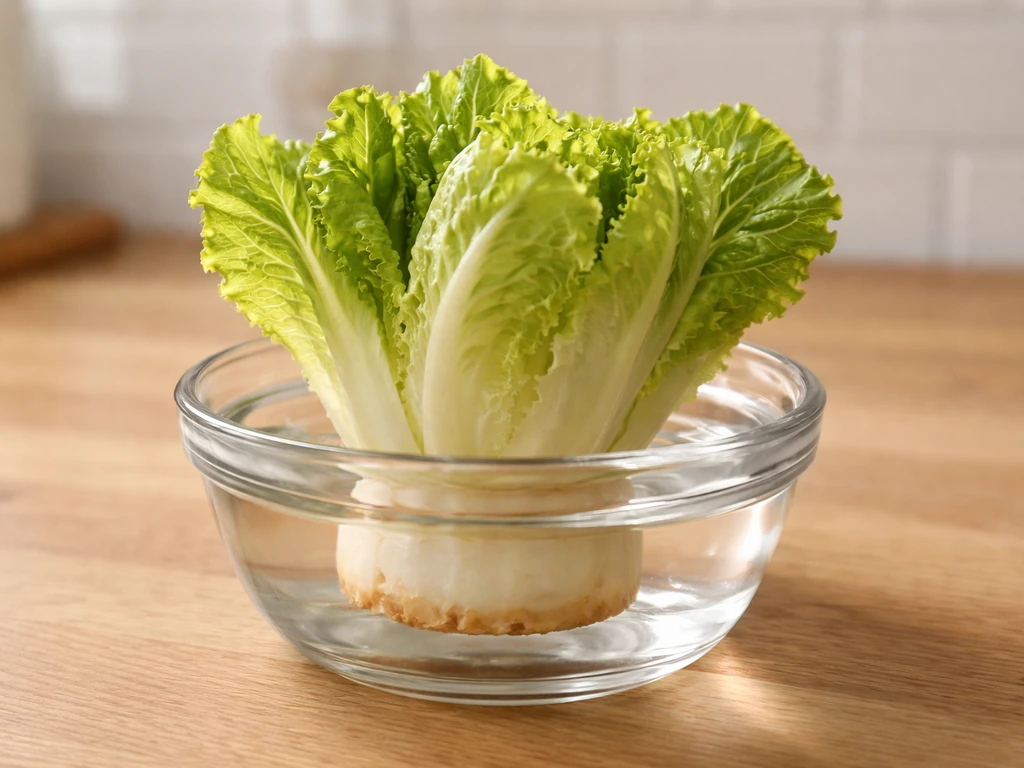
This is the part where most people overthink it. The setup is genuinely simple. Here's exactly what to do from the moment you finish prepping your salad.
- Cut the lettuce base: When you're done using the leaves, cut the bottom inch off the head. You want a clean, flat base with the crown intact. Aim for about 1 inch (3 to 4 cm) of the core.
- Trim the outer leaf stubs: Remove any brown or mushy outer leaf material. You want the base to look relatively clean so it doesn't rot in the water.
- Find a small, shallow container: A bowl, a wide glass, or a small dish all work. You just need it to hold the base upright without it tipping over. A snug container is actually ideal for this.
- Add water to a depth of about 1 inch (2 to 3 cm): You don't want to submerge the whole base, just enough to keep the bottom moist. Too much water leads to rot.
- Place the base cut-side down in the water: The flat cut end goes in the water; the former top of the crown faces upward.
- Put it somewhere bright: A windowsill with good natural light is perfect. Indoors, this is where most of the success or failure happens.
- Refresh the water every 1 to 2 days: Don't let it sit. Stagnant water causes slime buildup on the base, which leads to rot. Just pour out the old water, rinse the base gently, and refill.
- Watch for roots in a few days: Within 3 to 5 days you should see small white roots extending from the base and new pale leaves pushing up from the crown center.
- Transfer to soil after about 10 to 12 days (optional but recommended): Once you have visible roots, you can move the base into soil for longer-lasting regrowth. More on that in the soil method section below.
That's really it for the water phase. Most people are surprised by how quickly it responds. The water method is also a great way to check whether your scrap is viable before committing it to a pot of soil.
Indoor lettuce-from-scraps growing: light, containers, and temperature
Growing lettuce indoors from scraps is very doable, but light and temperature are the two things that will make or break you. Get those right and the rest is easy.
Light requirements
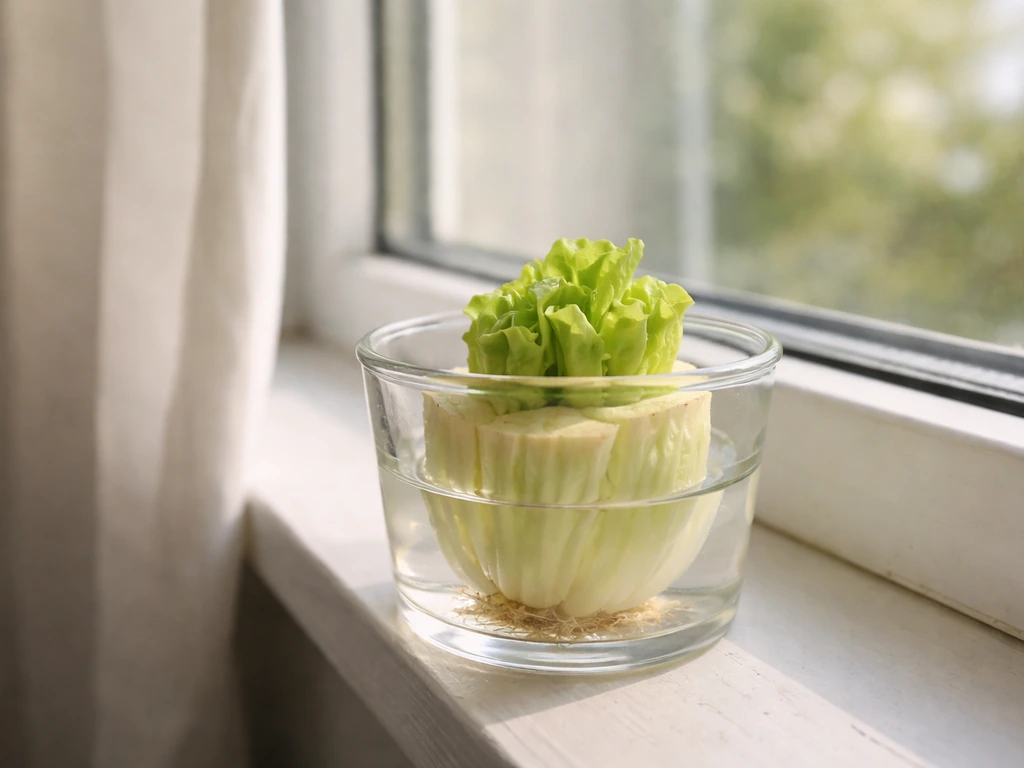
Lettuce needs real light, not just the ambient glow from a room. A south-facing windowsill in April is often enough to get initial regrowth going, but if you want sustained leaf production, you'll do much better with a grow light. The general target for leafy greens indoors is [14 to 16 hours of light followed by 8 to 10 hours of darkness each day. ](https://aero-gro.
com/wp-content/uploads/2023/09/DLI-for-Commonly-Grown-Vegetables-1. pdf) Urban Harvest Lab recommends running indoor hydroponic lettuce on a 14, 16 hour photoperiod followed by 8, 10 hours of complete darkness per 24-hour cycle 14–16 hour photoperiod followed by 8–10 hours of darkness. Don't run lights for 24 hours straight.
It sounds counterintuitive, but continuous light stresses lettuce and actually reduces growth quality. Give it a real dark period.
If you're relying on a window, place the container as close to the glass as possible. Low light slows regrowth noticeably and can cause leggy, weak new leaves that flop over. If your window gets fewer than 4 to 5 hours of direct sun per day, a simple LED grow light on a timer will make a significant difference and doesn't have to be expensive.
Temperature
Lettuce prefers cool to moderate temperatures. The sweet spot for indoor growing is a daytime temperature around 65 to 72°F with a nighttime dip to 60 to 65°F. Once your room hits 75°F or above consistently, you're in territory where the plant may bolt, which means it shifts from producing leaves to producing a flower stalk. Bolting makes leaves bitter and tough, and it effectively ends the regrowth cycle. If your home runs warm in spring or summer, keep your lettuce away from heat vents and out of direct afternoon sun through a south-facing window, which can push temperatures up quickly in a small container.
Containers
For the water phase, almost any small bowl or glass works. Once you move to soil, use a container that's at least 4 to 6 inches deep with drainage holes. Drainage is non-negotiable. Lettuce roots are sensitive to sitting in waterlogged soil, and without drainage holes you're going to rot the base before it establishes properly. A standard plastic nursery pot, a terracotta pot, or even a repurposed yogurt container with holes punched in the bottom all work fine.
The soil method for growing lettuce from scraps
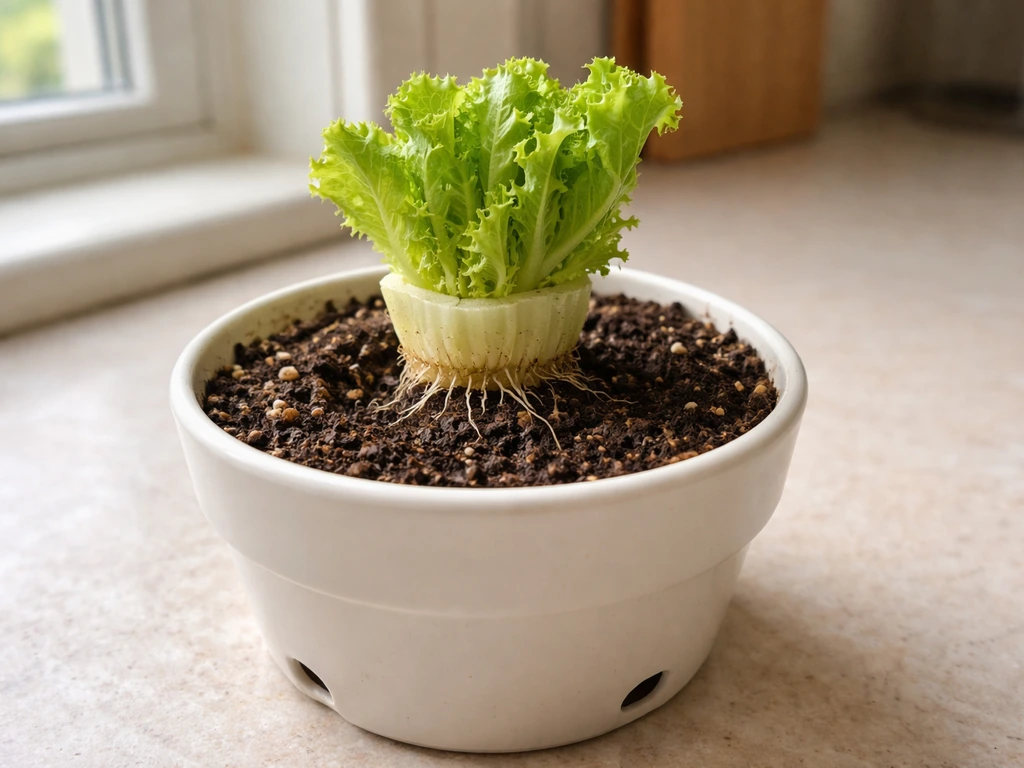
You can keep your lettuce scrap in water indefinitely and harvest a few rounds of leaves that way, but transferring it to soil gives the plant more to work with and typically produces fuller, more flavorful regrowth. The soil method is the better long-term approach, and it's straightforward once you have visible roots on your scrap.
- Wait until roots are visible on the base, usually after 7 to 12 days in water.
- Prepare a container with potting mix. A general-purpose potting mix or a mix formulated for vegetables works well. Avoid straight garden soil in containers since it compacts and drains poorly.
- Make a small depression in the center of the soil with your finger, just wide enough to hold the base.
- Place the rooted base in the depression so the crown (the top, where new leaves are emerging) sits just at or slightly above the soil surface. Don't bury the crown or it will rot.
- Firm the soil gently around the base to hold it upright.
- Water gently but thoroughly until water runs out of the drainage holes. Then let the top inch of soil dry slightly before watering again.
- Place the container in your brightest indoor spot or under a grow light set to 14 to 16 hours on.
- Continue harvesting outer leaves once they reach a usable size, cutting about 1 inch above the crown to protect the growing center.
If you want to plant outdoors instead of in a container, the same principle applies. Transplant the rooted scrap into a garden bed or outdoor container once nighttime temperatures are consistently above 40°F. Loose, well-draining soil with some compost worked in is ideal. Outdoor light is generally not a limiting factor in spring, but watch for temperature spikes above 75°F which will push bolting faster than indoor conditions.
Care during rooting and regrowth: watering, timing, and troubleshooting
The water phase is where most regrowth attempts fail, and it almost always comes down to one of three problems: too much water, not enough light, or letting the water go stagnant. Here's how to handle each stage and what to watch for.
During the water phase
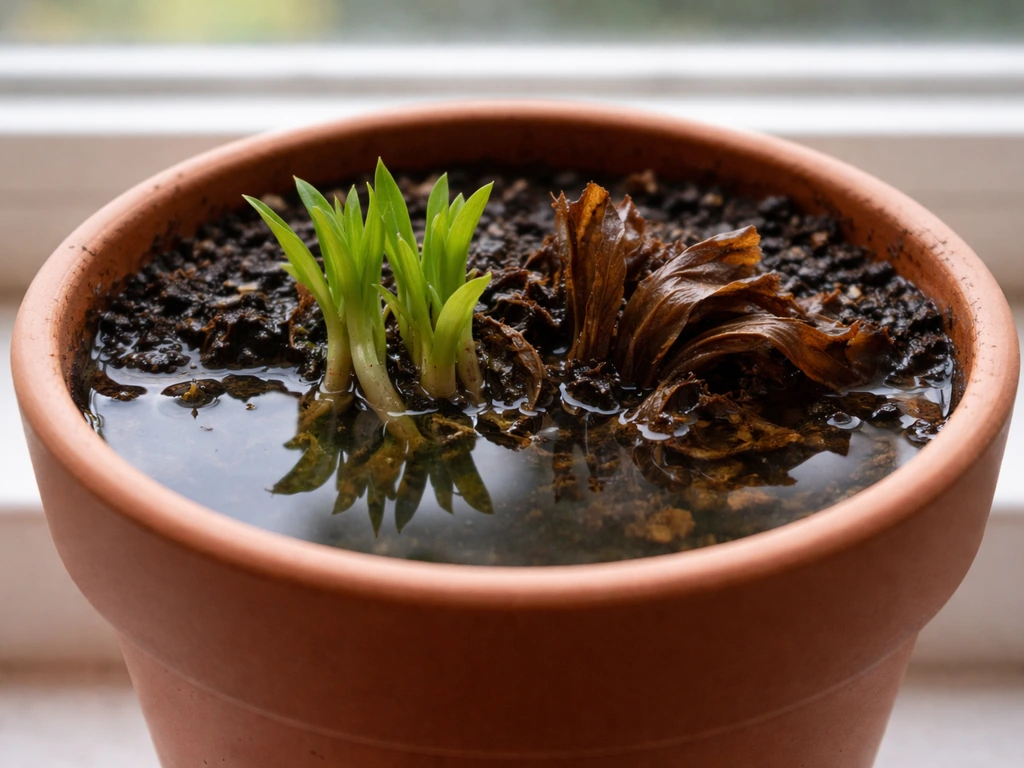
Keep water depth at about 1 inch (2 to 3 cm). The base should sit in water but the whole thing shouldn't be submerged. Change the water every 1 to 2 days without fail. If you see slime developing on the base, rinse it off gently under cool running water before refilling. Slime is a sign of bacterial buildup and if you ignore it, the base will rot from the bottom up. A little sliminess is normal and manageable. A completely mushy, discolored base that smells bad is finished and should be composted.
During soil establishment
Water when the top inch of soil feels dry, not on a fixed schedule. Overwatering in soil is just as damaging as stagnant water in the water phase. The new root system is small and can't handle being waterlogged. Under-watering is also a real risk since lettuce is sensitive to moisture stress, and even a short dry period can slow or stunt new leaf growth. Check the soil every day during the first two weeks and you'll develop a feel for how quickly your particular container and mix dries out.
Troubleshooting common problems
| Problem | Likely cause | Fix it by |
|---|---|---|
| No new leaves after 5 to 7 days | Insufficient light or crown was submerged | Move to brighter spot or lower water level so crown is above water |
| Base is slimy or mushy in water | Stagnant water or too-deep water level | Rinse base, change water daily, reduce water depth to 1 inch |
| Leaves growing leggy and pale | Not enough light | Add a grow light or move closer to window |
| Leaves taste bitter after regrowth | Temperature too warm, plant is bolting | Move to cooler spot, aim for 65 to 70°F, harvest leaves sooner |
| Base rotting after planting in soil | Overwatering or crown buried too deep | Check drainage, let soil dry between waterings, replant with crown at soil surface |
| Regrowth stops after first flush | Natural limit of the scrap | Start a fresh scrap; most bases have 2 to 3 rounds in them |
When to harvest and how to keep the regrowth cycle going
New leaves from a regrown scrap are usually ready to harvest within 7 to 14 days of starting the water phase, depending on light levels and temperature. Don't wait for a full head to form because, as mentioned earlier, that's not what's happening here. Harvest when the outer leaves are 3 to 4 inches long and look healthy. They'll be tender and mild at that stage.
The right way to harvest is to cut outer leaves about 1 inch above the crown, leaving the innermost leaves and the central growing point untouched. This is the same cut-and-come-again technique that works so well with loose-leaf lettuce in a garden bed. Done correctly, the plant will push out another flush of leaves within a similar timeframe. So yes, lettuce can keep growing back after harvesting, as long as you leave the crown and central growing point intact.
Most scraps can support 2 to 3 rounds of regrowth, and plants that have been successfully transferred to soil may give you even more. Some dedicated cut-and-come-again plants in good conditions can yield 3 to 5 cuttings before they bolt or run out of energy.
Once the plant bolts (you'll see a central stalk shooting up quickly, with leaves becoming narrower and more pointed), the regrowth cycle is effectively over for that scrap. The leaves will taste bitter and tough. At that point, compost the plant and start fresh. This is actually a good moment to think about whether you want to transition from scrap regrowth to starting from seed or from a fresh head, which gives you a more predictable harvest timeline and more control over the whole growing cycle.
If you want to keep a continuous supply of fresh leaves going, start a new scrap every time you use a head of lettuce. Stagger three or four containers so they're at different stages of regrowth, and you'll have something to harvest every few days. It takes almost no setup time once you've done it once, and it's a genuinely satisfying way to stretch your grocery budget while keeping fresh greens on the counter.
FAQ
Why won’t my lettuce scrap regrow, even after a week or two?
If the crown looks dry, pale, and firm but no new leaves appear after about 10 to 14 days, the scrap is usually not viable anymore, or it was cut too high. Try again with a base that includes the dense bottom inch, keep the water depth near 1 inch, and place it where it gets stronger light (a grow light on a timer is the fastest fix).
Can I keep regrowing lettuce scraps in water the whole time, without moving to soil?
You can, but it changes the timing and quality. Lettuce regrown in water will often give tender outer leaves, but it typically produces a fuller, longer-lasting flush after you transfer to soil once you see small roots. If you keep it in water, refresh frequently and expect fewer total cuttings.
What should I do if my lettuce base gets slimy in the water?
No, the rinse-and-refill approach is the best option when you see slime. Gently rinse under cool running water to remove buildup, then refill with fresh water and keep the base at about 1 inch depth. Don’t scrape aggressively, since damaging the crown can stop leaf regrowth.
My water looks cloudy, but the base doesn’t smell bad yet, should I worry?
If the water turns cloudy but the base is still firm and not mushy, it’s usually bacterial buildup rather than instant failure. Still, do not extend the time between water changes, rinse the crown, and replace the water right away. If the base becomes soft, discolored, and smells bad, compost it instead of trying to save it.
Do I need fertilizer when regrowing lettuce from scraps?
There is no need to fertilize during the first water phase. Once you transplant into soil, use a light approach, because the plant’s root system is small. A mild, diluted leafy-green fertilizer can help after you see active new growth, but over-fertilizing can make leaves taste off and can slow regrowth.
How do I harvest without ruining the next round?
Harvesting too early or cutting too close to the crown reduces the next flush. Wait until outer leaves are about 3 to 4 inches long, then cut around 1 inch above the crown, leaving the innermost leaves and the center untouched. If you accidentally nick the crown, regrowth may be smaller or stop.
Can I transplant my water-regrown lettuce outdoors, and when is it safe?
Yes, but timing matters. If you move the rooted scrap outdoors and nights are still cold, growth can stall. Wait until nighttime temperatures stay above about 40°F, and shelter it from strong afternoon heat until it stabilizes.
Why does my regrown lettuce taste bitter?
If it tastes bitter, the scrap is likely near the bolting stage, or it was stressed by heat or low light. Check for a central stalk, and if bolting is starting, compost the plant and start a new scrap. For future attempts, keep temperatures below the mid-70s and ensure a real dark period each day.
How many times can I realistically harvest lettuce from the same scrap?
Most loose-leaf types can do 2 to 3 solid rounds, and some can manage more. If you see smaller leaves, slower growth, or the crown starts to look exhausted, reduce expectations and start a fresh scrap in parallel so your supply stays consistent.
Is it okay to run a grow light all day to speed things up?
Continuous light can make lettuce weaker, with smaller, floppier leaves and reduced growth quality. Use a timer aiming for about 14 to 16 hours on and 8 to 10 hours off, and keep the container close to the light source or window so the crown gets strong intensity.