Yes, you can regrow lettuce from a head of lettuce, but you're not growing a new full head. What you're actually doing is regrowing new leaves from the cut base, also called the core or crown. If you want the quick answer on whether this regrowth counts as real growing, see can you grow lettuce from the core as a related option.
How to Grow Lettuce From a Head of Lettuce: Step-by-Step
Marcus Holloway
27 Apr 2026
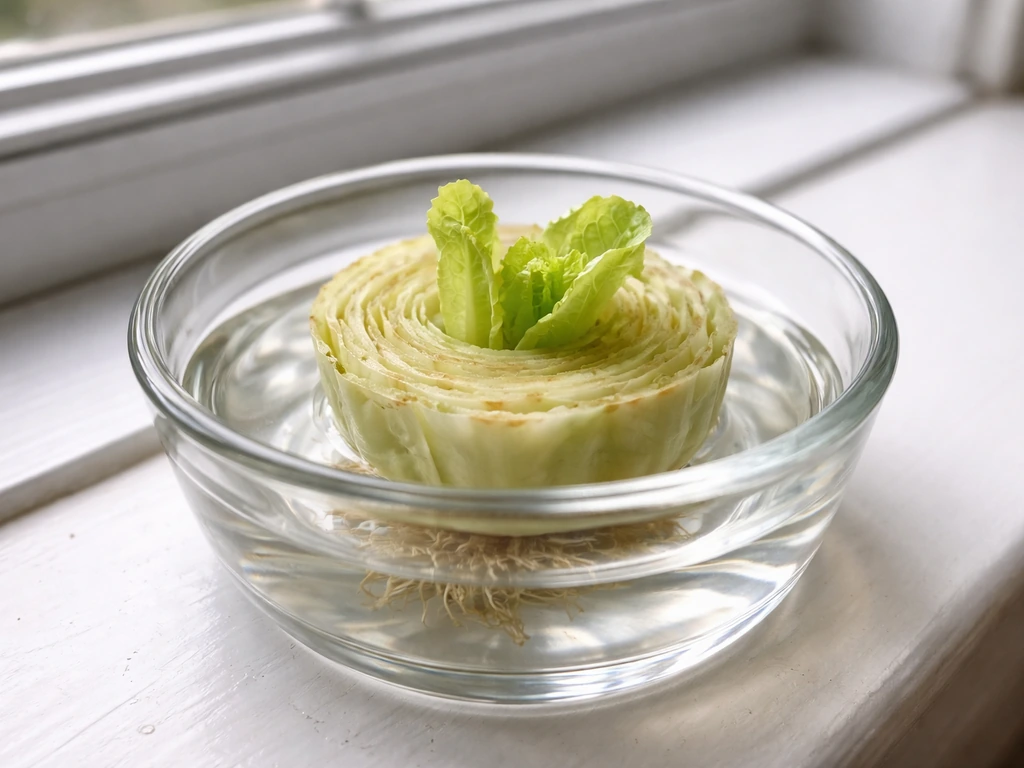
Slice off the bottom inch or two of a store-bought or garden head, set it in shallow water on a windowsill, and within 3 to 5 days you'll see fresh green leaves sprouting from the center.
It won't give you a second full head, but it will give you a real flush of edible leaves, enough for a salad topping or sandwich greens, and with the right follow-through, you can extend that harvest even further by transferring the base to soil.
Can you really grow lettuce from a head (and what actually works)
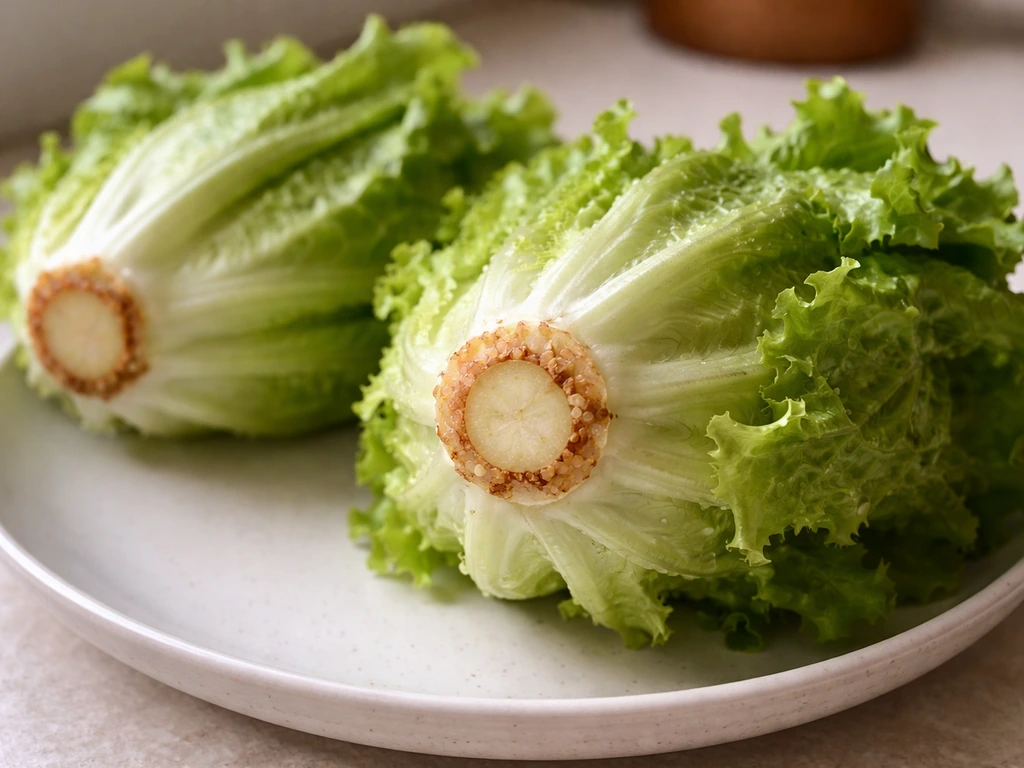
The honest answer is: it works, with realistic expectations. The base of a lettuce head contains the growing point, a tight cluster of cells that, when given moisture and light, will push out new leaves. You're not planting a seed, so you won't get a genetically fresh plant with full root development. What you're doing is triggering regrowth from an already-mature plant that has been harvested. Think of it like cutting a plant back hard and letting it resprout, not starting from scratch.
Loose-leaf varieties like green leaf, red leaf, and romaine tend to regrow the best and the fastest. Iceberg and tightly-packed crisphead lettuces are less reliable, the growing point is more compressed and the leaves are harder to separate without damaging it. If you've got a romaine or a loose-leaf head from the grocery store, you're in the best possible starting position. Butterhead (like Boston or Bibb) falls somewhere in the middle and is worth trying.
What won't work: trying to regrow from individual outer leaves (no growing point there), or from a head that's already bolted or heavily wilted. And don't expect the regrowth to replace a full head, you're looking at a bonus harvest of tender inner leaves, not a reboot of the whole plant. That said, even that modest yield is genuinely useful, and it costs you nothing extra.
Choosing the right head and saving the base
The best candidate is a fresh head with a visible intact base, ideally at least an inch thick at the bottom, with the outer leaves still attached at the crown. At the grocery store, look for romaine hearts or whole heads where the cut end is light-colored, not brown or slimy. Brown oxidation is fine and will rinse off; sliminess means the base is already breaking down and won't regrow reliably.
When you're ready to use the head for cooking or eating, cut the leaves off about 1 to 2 inches above the base. You want to keep as much of the pale inner core as possible, that's where the new growth comes from. Don't cut too close to the very bottom or you risk removing the growing point entirely. A base between 1 and 2.5 inches tall is ideal.
- Use romaine, green leaf, red leaf, or butterhead for the best results
- Save a base that is 1 to 2.5 inches tall with the core intact
- Look for a firm, light-colored cut end — not slimy or heavily browned
- Rinse the base gently under cool water before setting it up
- One head gives you one base; you can run several at once to maximize yield
Step-by-step: regrowing in water (the quickest method)
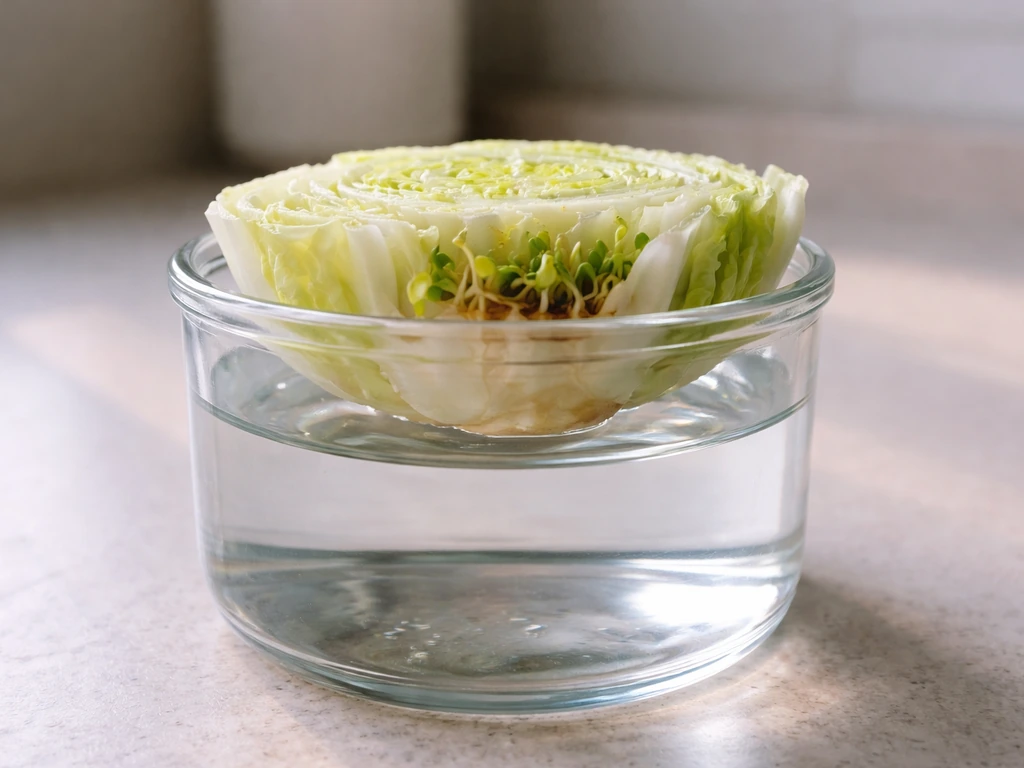
The water method is the fastest way to see results and the best starting point for beginners. It requires no soil, no containers, and almost no setup. Here's exactly how to do it.
- Rinse the lettuce base under cool water and pat it gently dry.
- Place it cut-side up in a shallow dish, bowl, or glass. The container only needs to be deep enough to hold about half an inch of water — you want the base to sit in water, not be submerged.
- Pour in just enough cool water to cover the bottom of the base, roughly a quarter to half an inch. Do not submerge the whole thing or it will rot.
- Set the dish on a bright windowsill that gets at least 4 to 6 hours of indirect or direct light per day. A south- or east-facing window works well indoors.
- Change the water every 1 to 2 days. This is the single most important step. Stale water breeds bacteria and mold, which will kill the base before it can regrow.
- Within 3 to 5 days, you should see small leaves emerging from the center of the base. By day 7 to 10, those leaves will be 2 to 4 inches tall and ready for a first snip.
- Harvest the outer new leaves by cutting them at the base, leaving the innermost growth to continue. You can repeat this cut-and-come-again harvest two or three times before the base exhausts itself.
The water method is genuinely fast and satisfying, but it has a ceiling. Because the base has no real root system and no nutrients in plain water, the second and third flush of leaves will be smaller and less vigorous than the first. That's normal. If you want to push the plant further and get more leaves over a longer period, move it to soil after the first flush.
Step-by-step: planting the base in soil or a container
Transferring your water-sprouted base to soil, or planting it directly in soil without the water phase, gives it access to nutrients and allows small roots to develop. Once you know how to grow lettuce from lettuce, you can extend the regrowth by keeping light, temperature, and watering consistent. This extends the productive life of the regrowth significantly and is worth the extra step.
- Wait until the base has produced at least a few small roots in water, usually after 5 to 7 days. Tiny white root nubs are enough — you don't need a full root system.
- Choose a pot or container at least 4 inches deep and 4 to 6 inches wide per base. A small 6-inch pot or a shallow window box both work well. Outdoors, you can plant directly in a garden bed or raised bed.
- Fill with a lightweight, well-draining potting mix. Lettuce doesn't need rich soil to regrow from a base, but it does need good drainage to prevent the crown from sitting in wet soil and rotting.
- Make a small indent in the soil and nestle the base into it so the bottom half is covered and the growing point (the center of the top) is just above the soil surface. Do not bury the growing point.
- Firm the soil gently around the base so it stays upright.
- Water in lightly — you want the soil moist but not waterlogged. Let the top inch of soil dry out slightly between waterings.
- Keep the container in a spot with 4 to 6 hours of light per day, ideally around 60 to 65°F. Outdoors in spring or fall is ideal; indoors near a bright window works too.
- New leaves should appear or continue growing within a few days. Begin harvesting outer leaves once they reach 3 to 4 inches tall, always leaving the center intact to keep the plant producing.
If you're an apartment gardener or working fully indoors, a container on a windowsill or under a small grow light is a perfectly legitimate setup for this. Lettuce is one of the most forgiving plants for indoor growing, and the regrowth phase doesn't need intense light, just consistent, bright indirect light or a few hours of direct sun through a window.
Light, temperature, and watering during regrowth
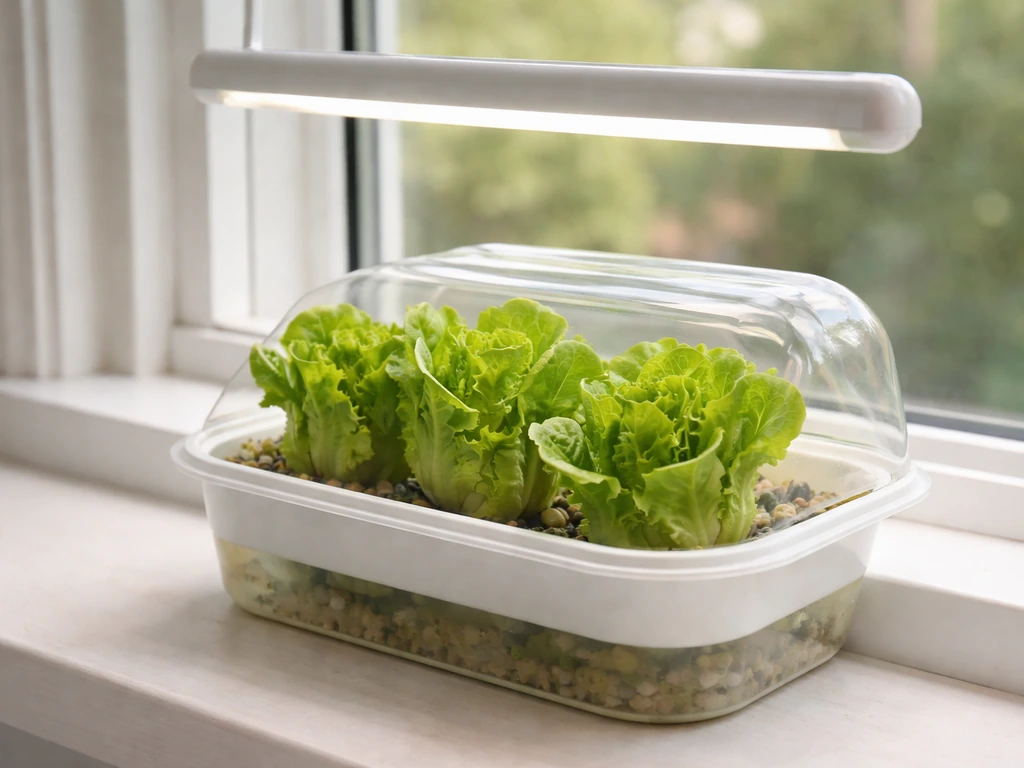
Lettuce is a cool-season crop, and that matters even when you're just regrowing a base. The ideal temperature range for good leaf development is 60 to 65°F, though it tolerates anywhere from about 55°F up to 70°F without much complaint. Once temperatures climb above 75°F consistently, growth slows and the new leaves start turning bitter. [Above 80 to 85°F, lettuce will bolt](https://ipm.
ucanr. edu/home-and-landscape/bolting/), pushing up a seed stalk, even if it's just a regrowth base, and the leaves become too bitter to eat comfortably. A peer-reviewed quantitative proteomics study on high-temperature-induced bolting in lettuce reports that supra-optimal temperatures trigger bolting-related physiological changes [Above 80 to 85°F](https://pmc. ncbi.
nlm. nih. gov/articles/PMC8190844/). If you're doing this in spring or fall outdoors, you're in great shape.
If it's midsummer, grow indoors with air conditioning, or wait for cooler weather.
For light, aim for 4 to 6 hours minimum. Lettuce doesn't need as much sun as tomatoes or peppers. A south-facing windowsill in spring or fall is usually enough indoors. If your regrowth is stretching toward the light and the stems look weak and pale (called etiolation), you need more light, either move it to a brighter spot or add a simple LED grow light for 12 to 14 hours a day.
Watering is where most beginners go wrong in both directions. Too little and the base shrivels; too much and the crown rots. In water: change it every 1 to 2 days and keep the level shallow. In soil: water when the top inch of soil feels dry, and never let the container sit in standing water. Misting the leaves is not necessary and can actually promote fungal problems, just water at the base.
Harvesting and extending the crop
Once new leaves reach 3 to 4 inches tall, you can start harvesting. Always use the cut-and-come-again approach: take the outer, larger leaves by cutting or snapping them at the base, and leave the inner, younger leaves to keep growing. This is the same technique that works for any loose-leaf lettuce, and it extends your harvest window considerably. This is the same technique that works for any loose-leaf lettuce, and it extends your harvest window considerably, which is the practical answer to does lettuce grow back after harvesting.
In water only, you'll typically get two to three rounds of leaves before the base runs out of energy. In soil, a well-positioned base can keep producing for three to five weeks, especially in cool conditions. If you started in water and transferred to soil, expect your first soil-based harvest about one to two weeks after transplanting.
To keep a steady supply going, stagger your setups: start a new base every one to two weeks. Three or four bases running on a rotating schedule will give you a near-continuous supply of fresh lettuce leaves from your kitchen counter or windowsill. This is the same principle behind growing lettuce from scraps more broadly, the key is succession, not relying on a single base to do all the work.
Once the base stops producing new central leaves, or if it starts sending up a tall seed stalk, it's done. Pull it, compost it, and start fresh. There's no way to revive an exhausted base, and a bolted base produces leaves that are genuinely too bitter to enjoy.
Troubleshooting: rot, no sprouting, leggy growth, pests, and bitterness
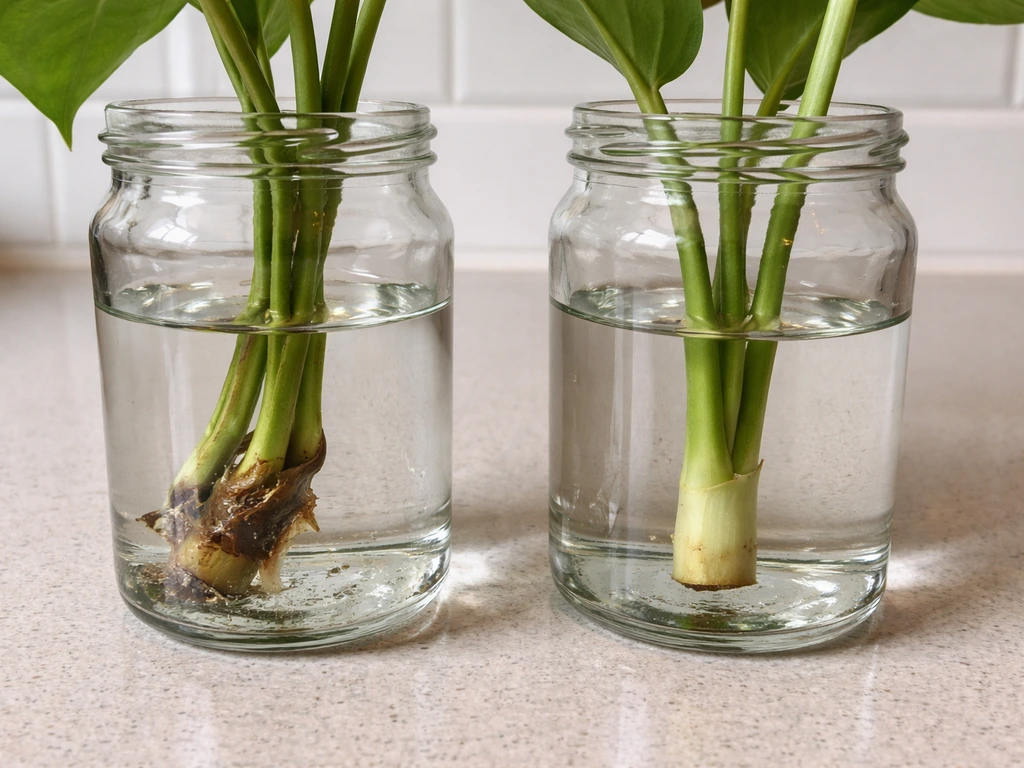
The base is rotting or getting slimy
This is the most common problem and it almost always comes down to too much water. In the water method, make sure only the very bottom of the base is touching the water, not the sides, not the top. Change the water every day if needed in warm conditions. In soil, check your drainage: if water pools on the surface or the soil stays wet for days, the mix is too dense. Add perlite to improve drainage, or switch to a lighter potting mix.
Nothing is sprouting after a week
First, check that the growing point wasn't removed when you cut the head, look at the center of the base for a tiny cluster of tightly packed leaves or leaf nubs. If that area looks hollowed out or flat, the base won't regrow. If the growing point is there but nothing is happening, the base may be too old or the conditions too dark or too cold. Move it to a warmer, brighter spot (65°F and good window light), and give it another three to four days before giving up.
Leaves are growing but they're pale and leggy
Leggy, stretched, pale growth means not enough light. The plant is reaching toward whatever light source it has. Move it closer to the window, rotate the container daily so all sides get light, or add a grow light. Even a basic LED panel 6 to 8 inches above the plant for 12 to 14 hours a day will fix this quickly.
The new leaves taste bitter
Bitterness in lettuce regrowth is almost always a temperature problem. If the base has been sitting in warm conditions above 70 to 75°F, the plant starts producing more bitter compounds. Move it somewhere cooler. If the base is also starting to send up a central stalk that looks taller and more rigid than usual, it's bolting and the bitterness will only get worse, time to start fresh.
Pests or mold on the leaves
Indoors, the main culprits are fungus gnats (if your soil stays too wet) and occasionally aphids if you brought in a head from outside. Let the top inch of soil dry between waterings to discourage fungus gnats. For aphids, a quick spray with water or a very diluted neem oil solution handles them fast. White fuzzy mold on the surface of the soil is usually harmless surface mold from poor air circulation, improve airflow around the plant and reduce watering frequency.
Quick troubleshooting reference
| Problem | Most likely cause | What to do |
|---|---|---|
| Base rotting or slimy | Too much water contact | Reduce water level, change water daily, improve soil drainage |
| No sprouting after 7 days | Growing point damaged, too cold, or too dark | Check for growing point, move to brighter warmer spot, wait 3 more days |
| Leggy pale growth | Insufficient light | Move closer to window or add a grow light 12-14 hrs/day |
| Bitter leaves | Temperature too high or bolting | Move to cooler spot below 70°F, discard if bolting |
| Fungus gnats in soil | Overwatering | Let top inch of soil dry between waterings |
| Aphids on leaves | Brought in from outside or contaminated soil | Spray off with water or diluted neem oil solution |
| No roots forming after 7 days in water | Water too deep or base too old | Reduce water to quarter inch, try fresher base |
FAQ
Can I regrow lettuce from the individual outer leaves instead of the whole base?
Don’t. The lettuce base needs a living growing point at the crown. If you peel off outer leaves, you’ll usually get nothing because those leaves do not contain the tight cluster of growth tissue. If you’re unsure, look at the cut end, you should see an intact center with small leaf nubs or a tight, pale core rather than a flat, hollow cut.
What’s the safest water container setup to avoid rotting the crown?
Yes, you can use a glass or jar, but the key is contact only at the very bottom. Support the base so the sides and the top of the cut core stay dry, and keep the water level shallow. Also change the water every 1 to 2 days (daily if it’s warm) to prevent bacterial slime that can stop regrowth.
My lettuce base looks slimy, can I save it?
If the base smells sour, looks slimy, or turns dark and mushy at the cut surface, it’s usually rotting and you generally can’t fix it. If there’s any sliminess, discard it and start with a fresher head. For borderline cases, trim off only the soft, damaged bottom tissue, then restart in fresh water with the water level lower than before.
When exactly should I start harvesting the regrown lettuce?
Use harvest timing by leaf size, not by a calendar. Start cutting once outer leaves are about 3 to 4 inches long, and always remove the outer leaves first (leave the inner younger leaves). If you wait until leaves are fully mature and wide, the plant slows down and new growth gets smaller.
How long can I keep the lettuce regrowth in water before moving it to soil?
Only for a short period. In plain water, the plant has no real roots or nutrient supply, so the second and third flushes are smaller. To get a longer, stronger cycle, move the water-sprouted base into soil right after the first flush, then you can expect about 3 to 5 weeks in cooler conditions.
Which lettuce types regrow best, and which ones are usually a waste?
Choose a loose-leaf or romaine-type head for the highest success rate, but butterhead can work too. Crispheads like iceberg are less reliable because the growth point is more compressed, and the leaves separate in a way that more easily damages the core during cutting. If you try iceberg, cut carefully and keep the crown intact.
If my regrown lettuce tastes bitter, can I rinse or soak it to make it edible?
Rinse is fine, just keep it simple. If you used the water method, pour off and replace water, then rinse any visible film from the base before restarting. If you see bitterness in the leaves, rinsing won’t fully undo it, the flavor comes mainly from temperature and bolting conditions. Fix the growing conditions and harvest earlier next time.
How should I manage temperature indoors so regrowth doesn’t bolt?
Yes, but keep it cool and steady. Target roughly 55 to 70°F, ideally around 60 to 65°F, and avoid consistent warmth above about 75°F. Above 80 to 85°F, regrowth can bolt quickly, leading to a seed stalk and more bitter leaves. If your kitchen runs hot, grow near a cooler window, use airflow, or turn on AC.
What should I do if my lettuce regrowth is leggy and pale?
Aim for bright light rather than lots of heat. If it’s stretching and getting pale (leggy), increase light and rotate the container daily. A small LED grow light placed about 6 to 8 inches above the plant for 12 to 14 hours a day is often enough to correct weak, stretched growth.
What’s the best way to have a continuous supply of lettuce leaves?
Staggering works. Start a new regrowth base every 1 to 2 weeks so you are not relying on one crown to carry the whole harvest. Using 3 to 4 bases in rotation usually gives you a steady supply, because each base fades after a few rounds depending on whether you keep it in water or transfer to soil.
Is there any way to revive a base that stopped growing or is close to bolting?
Don’t. Succulent, mushy, or fully dry centers are signs the crown tissue is gone, and there’s no practical way to revive it. Once the base stops producing central leaves or sends up a tall seed stalk, compost it and start a new head for another attempt.
How do I troubleshoot pests and soil issues during regrowth?
For fungus gnats, let the top inch of soil dry between waterings and make sure drainage is good so the crown is not sitting in soggy mix. Improve soil aeration by using a lighter potting mix or adding perlite if water stays wet for days. For aphids, a quick rinse with water or a very diluted neem solution can help, but don’t keep the soil too wet while you treat.