Winter Density is a specific lettuce variety, a compact romaine-butterhead cross that forms tight, upright heads about 8 inches tall and thrives in cold weather. But when most people search for 'winter density lettuce how to grow,' they're really asking a two-part question: how do you grow this particular variety, and how do you manage lettuce densely in winter so you actually get crisp, sweet heads instead of rot, slime, or bolted disappointment? This guide covers both. Winter Density matures in roughly 54 to 55 days from direct seeding, handles light frost without protection, and can be planted more closely than most head types because of its upright, narrow habit.
Winter Density Lettuce How to Grow Dense, Cold-Hardy Greens
Marcus Holloway
30 Jun 2026
What 'winter density' actually means in the garden
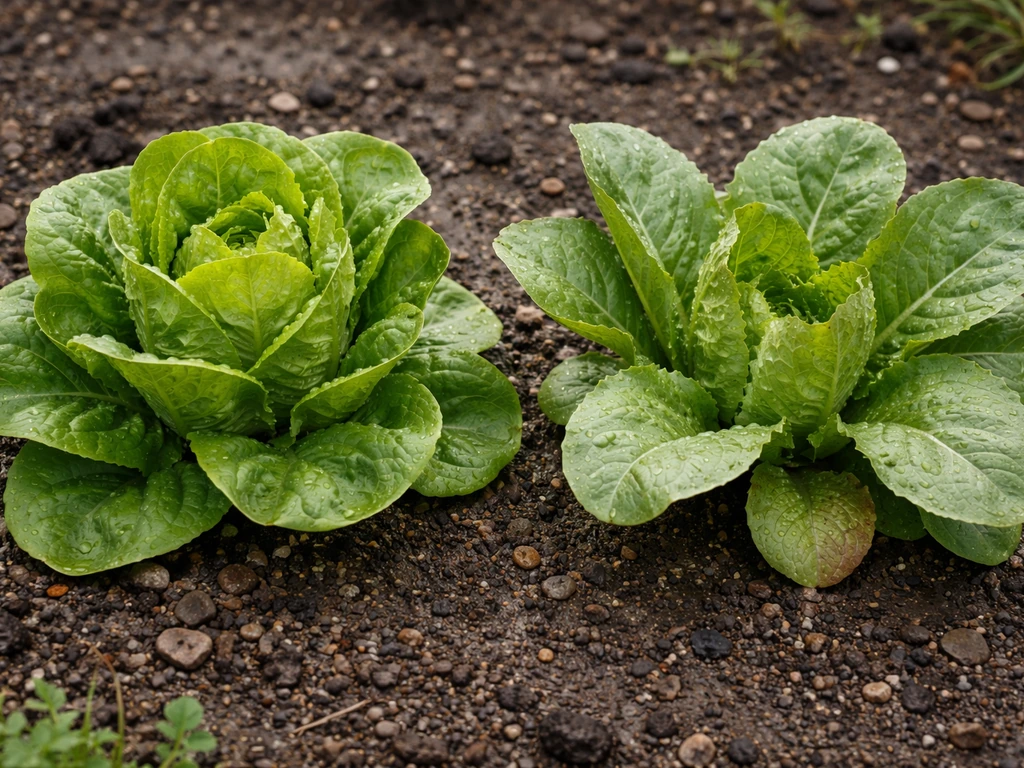
The name does a lot of work here. 'Winter' refers to cold-season performance: this is a lettuce bred to grow slowly and steadily through short days, low light, and chilly temperatures without turning bitter or bolting. 'Density' refers to both its compact head structure and the fact that you can plant it at higher populations than a typical crisphead or full-size romaine.
In practical terms, Winter Density forms a small, dense, semi-upright head that sits somewhere between a romaine and a butterhead. It doesn't spread out wide like loose-leaf types, and it doesn't need the full 12-inch spacing that iceberg or large romaines require. That tighter footprint is exactly what lets you pack more plants into a cold frame, raised bed, or deep container during winter.
Standard head lettuce is typically spaced 8 to 12 inches apart within rows, with rows 12 to 18 inches apart. For head lettuce, USU Extension recommends spacing plants 8 to 12 inches apart in-row and 12 to 18 inches apart between rows 8 to 12 inches apart within rows. Winter Density can comfortably sit at the tighter end of that range, around 6 to 8 inches between plants, because of its narrow profile. For leaf lettuce grown as cut-and-come-again, Penn State's guidance of about six plants per square foot gives you a useful benchmark for denser sowings.
Best varieties for cold-season growing and dense planting
Winter Density is the standout for this style of growing, but it's worth knowing what company it keeps. The University of Maryland Extension lists Winter Density alongside Brune D'Hiver, Winter Marvel, Arctic King, Black Seeded Simpson, Waldmann's Dark Green, and Salad Bowl as recommended cultivars for overwintering. Each has different characteristics worth knowing.
| Variety | Type | Cold Tolerance | Head or Loose Leaf | Notes |
|---|---|---|---|---|
| Winter Density | Romaine x Butterhead | Excellent | Compact head | 54–55 days, upright habit, dense planting friendly |
| Brune D'Hiver | Butterhead | Excellent | Head | French heirloom, slow to bolt in cold |
| Winter Marvel | Butterhead | Very good | Head | Soft, sweet heads, good for late fall/winter |
| Arctic King | Butterhead | Excellent | Head | One of the hardiest; bred for very cold conditions |
| Black Seeded Simpson | Loose-leaf | Good | Loose leaf | Fast grower, great for cut-and-come-again |
| Waldmann's Dark Green | Loose-leaf | Good | Loose leaf | Compact rosette, good cold frame candidate |
| Great Lakes | Crisphead | Good | Head | Slow to bolt, frost-resistant, resists tipburn |
If you want a dense, harvestable head in winter, Winter Density or Arctic King are my first recommendations. If you want quicker returns and cut-and-come-again flexibility, Waldmann's Dark Green or Black Seeded Simpson give you leaves faster. For beginners, starting with two varieties side by side is worth the small extra effort because you'll quickly see which performs better in your specific setup.
Step-by-step setup and sowing
Choosing and preparing your growing space
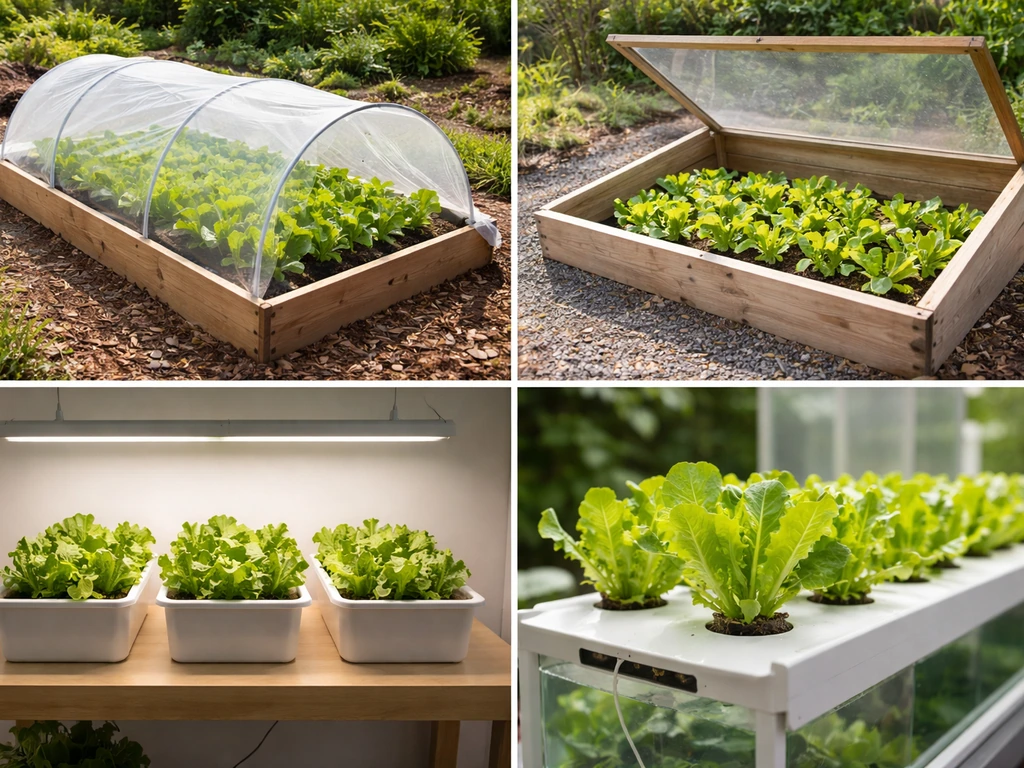
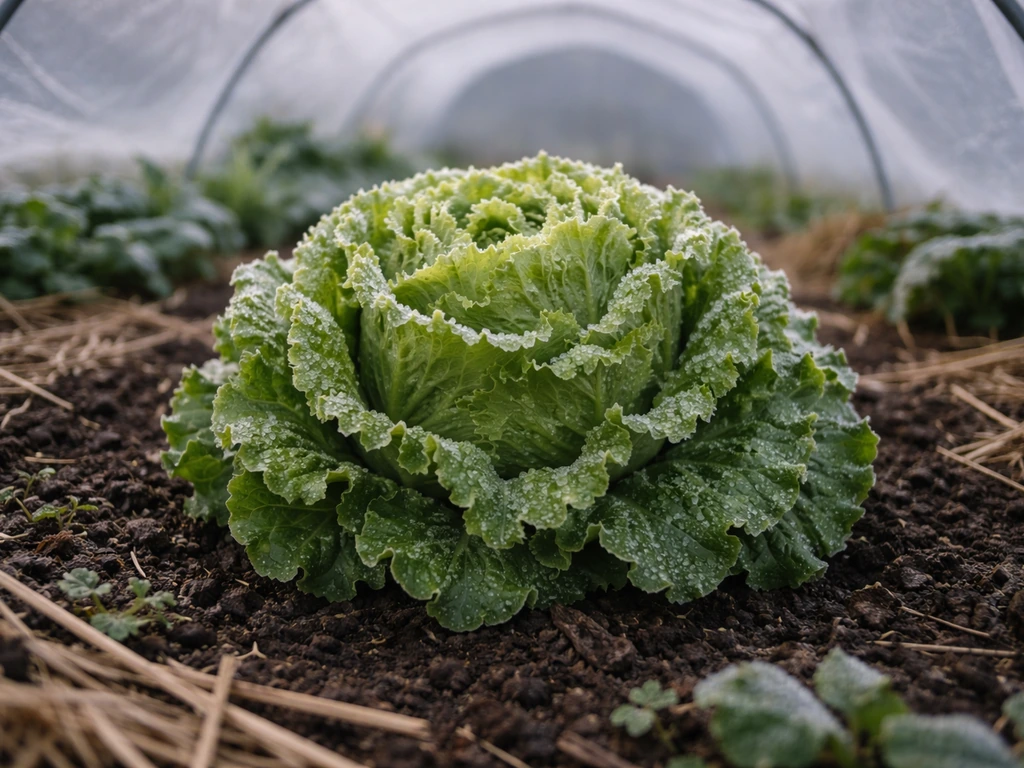
You have four realistic options for winter lettuce: an outdoor raised bed with row cover, a cold frame, indoor containers under grow lights, or a hydroponic setup. Each works, but they have different management needs. If you're growing outdoors, a cold frame or low tunnel with row cover is strongly worth the investment. USU Extension is direct about this: repeated exposure to freezing temperatures reduces quality even in frost-hardy varieties, so protection matters more than hardiness alone.
For outdoor beds, pick a spot that drains well. Poorly drained soil is one of the fastest ways to lose winter lettuce to rot. Amend the top few inches with about 1 inch of well-composted organic matter per 100 square feet before planting. Avoid areas where lettuce or other brassicas had disease problems in previous seasons.
For containers, use a pot at least 8 inches deep. Lettuce has shallow roots, but you need enough volume to hold moisture without waterlogging. A good all-purpose potting mix works fine. Make sure there are drainage holes. For indoor growing under lights, a standard seed tray or a 10-inch pot both work depending on how many plants you want.
Sowing seeds
Direct sowing is straightforward. Scatter seeds thinly or place them about 1 inch apart in rows, roughly 1/4 inch deep. They need light to germinate well, so barely cover them with fine soil or vermiculite. Keep the surface consistently moist but not soggy until germination, which typically happens in 7 to 14 days depending on temperature. Soil temperature between 40°F and 65°F is the sweet spot for germination. Below 40°F, germination slows significantly.
For indoor starts, sow in small cells or a tray, then plan to transplant at 3 to 4 weeks when seedlings have 2 to 3 true leaves. Handle roots gently as lettuce doesn't love root disturbance. Harden off any indoor starts for 5 to 7 days before moving them into a cold frame or outdoor bed.
Transplanting
Set transplants at the same depth they were growing in their cells. Firm the soil around the roots and water in well immediately. Transplanting in late afternoon or on a cloudy day reduces transplant stress. If moving plants into a cold frame or under row cover, close the cover overnight after transplanting to keep temperatures stable.
Light, temperature, and moisture: your winter targets
Light
Lettuce needs at least 4 to 6 hours of direct sun per day, according to UC IPM guidelines. In winter, this is often the hardest requirement to meet outdoors, especially in northern latitudes where days are short and the sun sits low. South-facing beds or cold frames tilted toward the south make a real difference. Indoors, a grow light running 12 to 14 hours a day compensates well. Without enough light, plants will be leggy and slow to develop. This is the single most common reason winter lettuce underwhelms.
Temperature
Lettuce grows best between 45°F and 65°F. It can tolerate light frost and handle brief dips below freezing, but repeated hard freezes degrade leaf quality over time. The bigger winter risk isn't actually cold, it's warmth. If temperatures inside a closed cold frame or under row cover creep above 75°F on a sunny day, lettuce will start to bolt. Vent your cold frame on warmer winter days by propping the lid open a few inches. High temperatures sustained over multiple days are one of the main bolting triggers.
Watering
Lettuce has shallow roots, so it dries out faster than you might expect but also stays wetter longer in cold, slow-draining soil. As a practical guideline for head lettuce, aim for about 1 inch of water per week, adjusted for rainfall and how quickly your soil dries how much water does lettuce need to grow. The goal is consistent moisture without sitting water at the crown or on leaves.
Water at the soil level when possible, and always water in the morning so any splashed foliage can dry before evening. Wet leaves overnight in cold weather are an invitation for Botrytis and downy mildew. In winter, you'll water less often than in summer, but don't let the soil dry out completely. A brief drought followed by heavy watering is a recipe for tipburn, which shows up as brown, crispy leaf edges.
Spacing and thinning for dense, healthy heads
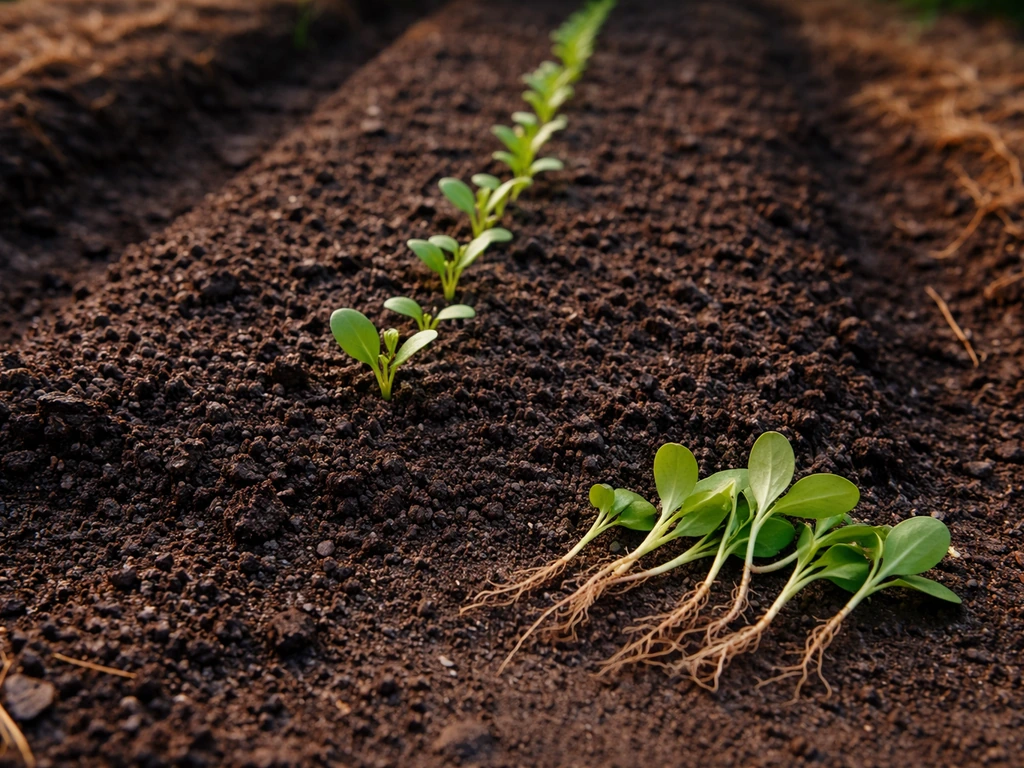
Density is a balancing act. Plant too close and you get poor airflow, disease pressure, and stunted heads. Too far apart and you're wasting your limited winter growing space. For Winter Density specifically, I aim for 6 to 8 inches between plants. For loose-leaf varieties in cut-and-come-again mode, closer to 4 to 6 inches (roughly six plants per square foot) works fine because you're harvesting leaves before heads fully develop.
Thinning is non-negotiable if you direct sow. When seedlings reach about 2 inches tall and have their first true leaves, thin to 2 to 3 inches apart. A few weeks later, thin again to your final spacing. Use scissors rather than pulling, since pulling disturbs neighboring roots. The thinnings at the second stage are perfectly edible baby greens, so nothing goes to waste.
Good airflow between plants is what separates a productive dense planting from a disease-ridden one. Stagger your plants in a grid rather than straight rows to maximize spacing in both directions while still planting densely. If you're in a container, resist the urge to cram in extra plants as the season goes on. If you need a practical rule of thumb, start by estimating how many heads you want per week and then convert that to square feet using the spacing you plan to grow at cram in extra plants. Two healthy plants in an 8-inch pot will outperform five cramped ones every time.
Common winter problems and how to fix them
Slow growth
This is normal in deep winter when temperatures drop and light is scarce. Growth doesn't stop, it just pauses. If things seem completely stalled, check your light first. Adding a row cover or closing your cold frame at night to keep temperatures above 40°F usually gets things moving again. Indoor grows should bump light duration to 14 hours if plants seem stuck.
Rot and fungal issues
Botrytis crown rot is the most common winter killer. It shows up as a water-soaked soft rot at the base of older leaves, often with a fuzzy gray coating on affected tissue. The cause is almost always too much moisture sitting on the crown or leaf surface combined with poor airflow. Remove affected outer leaves immediately, improve spacing, and stop overhead watering.
Downy mildew presents as yellow patches on upper leaf surfaces with a grayish, fuzzy coating underneath. It develops in cool, moist conditions and spreads fast. Watering in the morning rather than evening, directing water to the soil rather than the leaves, and increasing spacing all help prevent it. If it appears, remove infected leaves and consider whether your planting is too dense.
Legginess
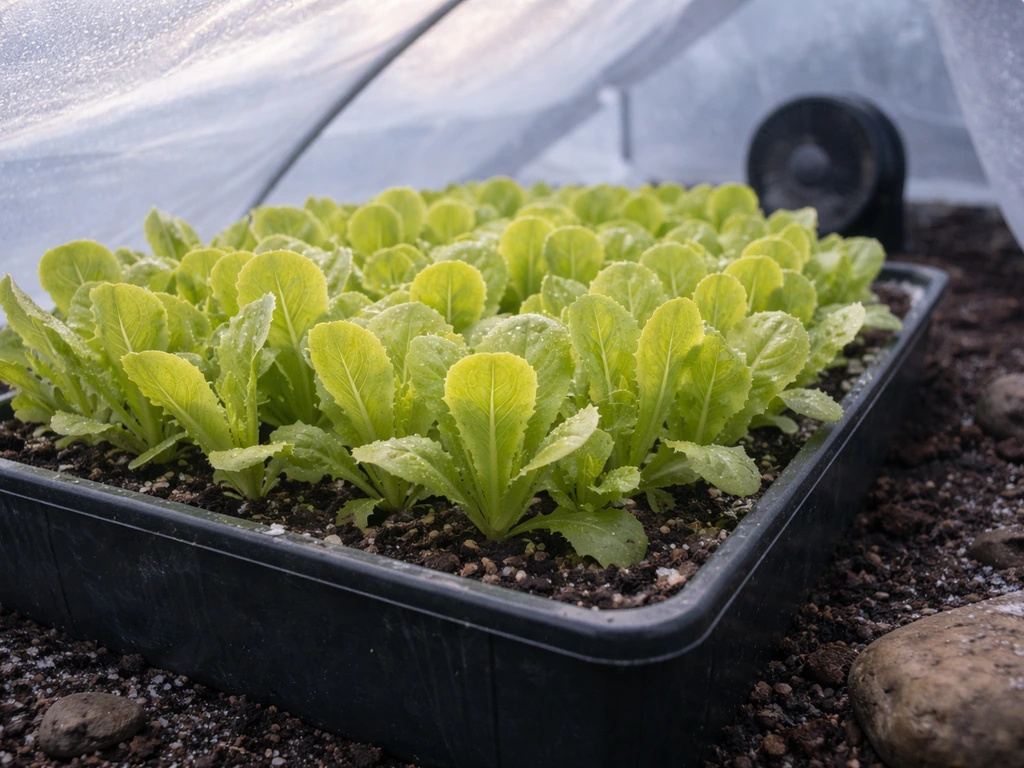
Leggy, stretched plants with long stems and small pale leaves mean one thing: not enough light. This is almost entirely a winter light problem. Move outdoor containers to a sunnier spot, angle your cold frame more toward the sun, or add supplemental grow lighting for indoor plants. There's no fixing legginess after the fact, but improving light immediately will give you better growth from the existing plant going forward.
Bolting
When lettuce bolts, it sends up a flowering stalk and leaf production stops. In winter, the most common bolting trigger isn't heat, it's temperature swings. A few warm sunny days in a closed cold frame followed by cold nights can push plants toward flowering. Keep an eye on daytime temperatures inside any protected growing structure and vent aggressively when temperatures climb above 65°F. Choosing cold-tolerant varieties like Winter Density or Arctic King significantly reduces bolting risk compared to heat-tolerant summer varieties grown in the wrong season.
Pests
Slugs and snails are the main winter pest problem, especially in damp conditions under row cover or in cold frames. They thrive when the soil surface stays wet. Letting the soil surface dry slightly between waterings, using drip irrigation instead of overhead watering, and removing any debris around the base of plants reduces slug habitat. Check under leaves in the evening and remove any you find by hand.
Tipburn
Brown, crispy leaf edges on inner leaves are tipburn. It's a calcium availability problem tied to inconsistent watering rather than a soil nutrient deficiency in most cases. The fix is keeping soil moisture consistent rather than letting it swing between dry and wet. Once tipburn shows up on existing leaves, it doesn't reverse, but new growth will be clean if you improve watering consistency.
When and how to harvest
Harvesting head-forming varieties like Winter Density
Winter Density reaches harvestable maturity around blank" rel="noopener noreferrer">54 to 55 days from direct seeding, though winter's shorter days and lower temperatures often push that to 60 to 70 days. To grow lettuce well, focus on the key nutrients lettuce needs, like nitrogen, phosphorus, and potassium, plus consistent micronutrients in your soil or fertilizer what nutrients do lettuce need to grow. A mature head will feel firm when you press it gently, and the leaves will be tightly wrapped. Harvest in the morning when leaves are crisp and well-hydrated. Cut the head at the base with a clean knife. Watering thoroughly the day before harvest makes a real difference in crispness, according to UMN Extension guidance.
Don't wait too long once heads are firm. A plant that sits at maturity in warming spring conditions will bolt quickly. If you're growing multiple plants and they all mature at once, harvest them even if you don't need them all immediately. Lettuce holds reasonably well in the refrigerator for a week.
Cut-and-come-again harvesting for leaf types
Loose-leaf varieties like Black Seeded Simpson or Waldmann's Dark Green work brilliantly as cut-and-come-again crops. Once plants reach 4 to 6 inches tall, use scissors to cut leaves to about 1 inch above the growing point. Don't cut into the crown. Plants will regrow and you can harvest again in 10 to 14 days under good conditions. You can get three to four harvests from a single planting before the plant either bolts or the leaves become noticeably more bitter.
For Winter Density grown as a semi-heading type, you can also harvest outer leaves progressively before the head fully matures. Pull the largest outer leaves off at the base as needed and let the inner leaves continue developing. This extends your harvest window and keeps you in fresh greens longer without replanting. Just make sure to avoid damaging the central growing point when pulling outer leaves.
Keeping production going all winter
Succession sowing is the most reliable way to have continuous lettuce rather than a single glut followed by nothing. Sow a new small batch every three to four weeks. In an outdoor cold frame or indoor setup, this keeps a steady pipeline of plants at different stages. Pair a head-forming variety like Winter Density with a fast loose-leaf variety so you have something to cut while the heads are still developing. Given that lettuce can take anywhere from 40 to 80 days depending on variety and conditions, that staggered approach is what makes winter growing feel genuinely productive rather than frustrating.
FAQ
Can I keep harvesting Winter Density before the whole head is ready?
Winter Density is best harvested when the head feels firm and the outer leaves look fully wrapped, but you can also extend the harvest window by removing only a few of the largest outer leaves while leaving the central growing point untouched. If the base starts to soften or you see fuzzy gray growth, harvesting outer leaves is not a cure, remove affected tissue and improve airflow immediately.
Will row cover or a cold frame ever cause Winter Density to bolt?
Yes, but dense winter lettuce fails more often from microclimates than from average temperature. If your cold frame or row cover regularly warms above about 65 to 70°F for hours, the plants may bolt even if nights are cold. Use daytime venting, remove one layer of cover on sunny days, or use shade cloth during bright midwinter afternoons.
What if I forgot to thin my winter lettuce seedlings?
For Winter Density, thinning is a big deal because overcrowding reduces airflow and increases crown rot risk. If you missed thinning, reduce plant stress by opening covers for ventilation during clear days and stop any overhead watering. However, it is still usually better to thin if plants are crowded, because you cannot fix airflow with watering changes alone.
My Winter Density is small and slow, should I fertilize more?
Skip feeding “more fertilizer” when heads are small but plants look healthy. In winter, slow growth is often light-limited rather than nutrient-limited. If you need a corrective move, apply a mild nitrogen source once, then reassess in 7 to 10 days, and avoid overdoing potassium or high-salt fertilizers in containers because salts concentrate as growth slows.
How do I prevent tipburn in winter densly planted lettuce?
If you see tipburn on inner leaves, the most effective fix is moisture stability, not calcium sprays. Water to keep the soil evenly moist, avoid large swings, and improve drainage so water does not pool then suddenly dry out. Tipburn will not reverse on damaged leaves, but new growth can improve after you steady watering.
What are the first steps when I see crown rot in winter lettuce?
Mold and rot usually come from water sitting on the crown or leaves plus low airflow. Clean the area around plants, remove badly affected leaves, and water at soil level in the morning. If you use row cover, vent enough to reduce humidity, because leaving everything tightly closed after a wet day increases Botrytis risk.
How can I protect Winter Density during repeated freeze-thaw weather?
Lettuce can tolerate some chill, but the crop is vulnerable to repeated freeze-thaw cycles and overly wet soil. Aim to protect so the growing environment stays more stable, such as using a cold frame with daytime venting and an outer layer of insulation at night during hard freezes. Do not rely on cold hardiness alone if your beds stay saturated.
Why does my Winter Density in a pot keep rotting or collapsing?
In containers, a common cause of failure is waterlogged mix near the roots because drainage is inadequate or the pot is too small. Use a deeper pot (at least 8 inches), confirm drainage holes are not blocked, and consider mixing in extra aeration (perlite or fine bark) for winter use. Water when the top inch of mix is dry to the touch, not on a fixed schedule.
How do I adjust an indoor grow setup if my heads are not getting dense or look leggy?
Indoor light is usually the limiting factor for dense winter growth. If plants are leggy, increase light duration first (often toward 14 hours) and ensure the light intensity is high enough, not just the number of hours. You can also raise airflow with a small fan for gentle movement, which helps reduce fungal pressure.
What is a practical succession plan for heads, not just leaves?
A simple way to stagger harvest is to sow in small batches every 3 to 4 weeks, but you should also match the spacing to your goal. If you are targeting head lettuce, plan the square footage using the 6 to 8 inch spacing between plants, then sow fewer seeds per batch than you would for cut-and-come-again leaf harvests.
Why did my Winter Density seeds fail to sprout?
If your lettuce is not germinating, the most common causes are planting too deep and soil that is too cold. Keep coverage minimal (about 1/4 inch or less) and maintain soil temperatures roughly in the 40°F to 65°F range when possible. If you are sowing outdoors during cold spells, use a protected bed or cold frame to stabilize conditions.