Lettuce needs about 1 to 2 inches of water per week, which works out to roughly 65 to 130 gallons per 100 square feet of bed. In cooler spring weather, 1 inch per week is usually enough. Once temperatures climb into the 80s or above, push toward 2 inches. For containers and raised planters, you'll likely water every 1 to 2 days rather than once a week because smaller volumes of soil dry out fast. The exact number shifts depending on your setup, the season, and even the size of your plants, but that 1 to 2 inch weekly range is the practical baseline to work from.
How Much Water Does Lettuce Need to Grow: Amounts and Schedule
Marcus Holloway
5 May 2026
Baseline watering needs for lettuce
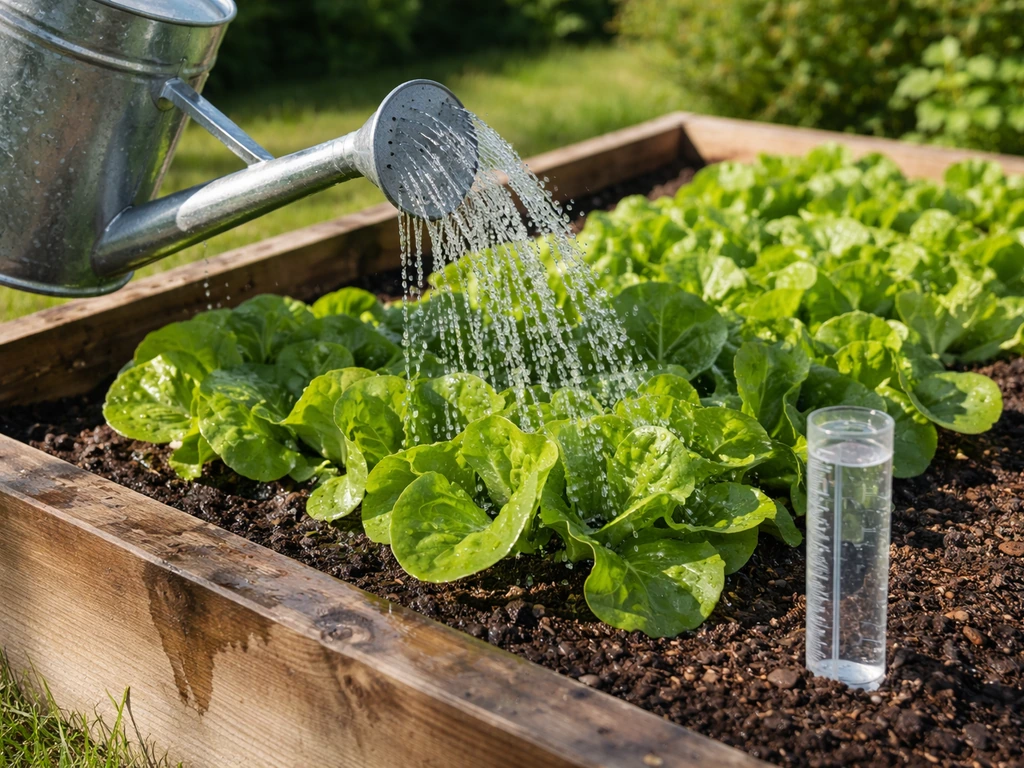
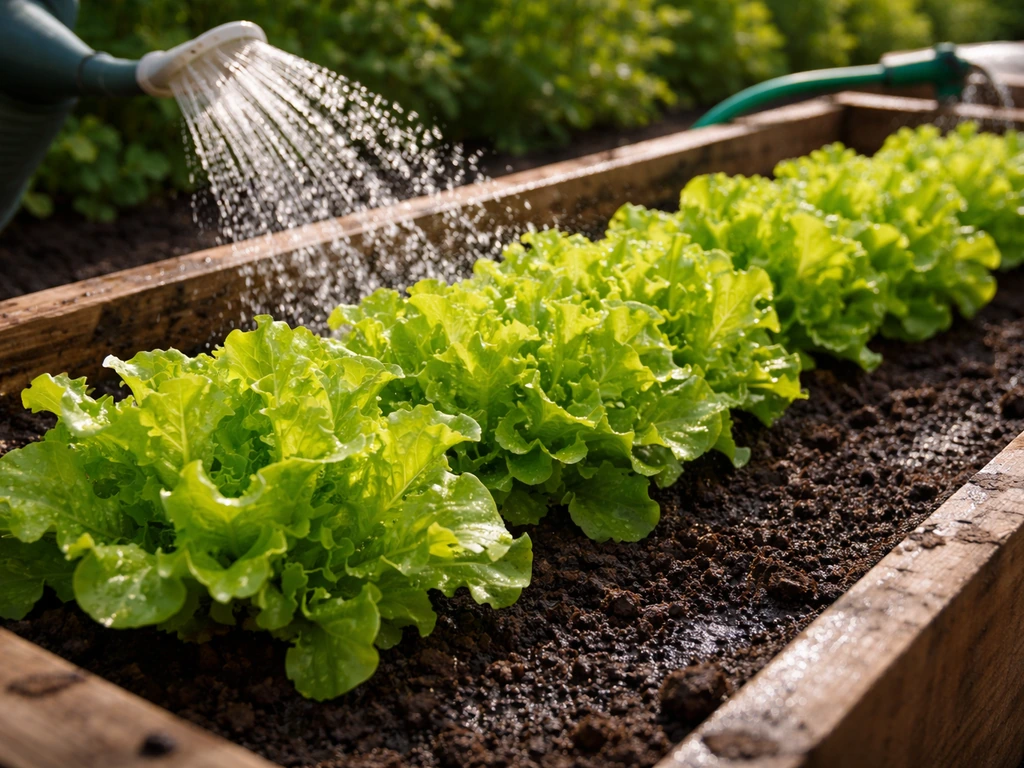
The 1 to 2 inch per week guideline comes from university extension research across multiple growing regions. Think of it this way: 1 inch of water over 100 square feet is about 65 gallons, and 2 inches is about 130 gallons. In practical terms for a home garden, that often means one deep watering session per week during mild weather, or two lighter sessions per week once things heat up.
The key word is consistent. Lettuce is genuinely sensitive to moisture swings. Letting it dry out and then drowning it is one of the quickest ways to end up with bitter, bolted greens. Steady, even moisture, right through the root zone, is what you're aiming for. When you water, you want to wet the soil to at least 6 to 8 inches deep, which is where most of lettuce's roots actively feed.
A good rule of thumb for frequency in a standard outdoor in-ground bed: every 5 to 7 days in spring and fall, tightening to every 3 to 4 days (or more) in hot summer weather. These are starting points, not fixed rules. Your actual schedule depends on variables covered below.
How to adjust for heat, light, wind, and growth stage
Plants use water faster when it's hot, sunny, and windy. If you also want to fine-tune based on sun exposure, the next step is to consider how much sun your lettuce gets and how that changes its water needs hot, sunny. Research from Oklahoma State Extension shows lettuce and other vegetables use about 1 inch per week in May through early June, gradually climb to roughly 2 inches per week during peak summer heat, then taper back down as fall arrives. That seasonal progression is a useful mental model for adjusting your schedule through the year.
Growth stage also matters. A tray of seedlings barely covering the soil surface loses very little water through the leaves. A full-grown head or a dense row of leaf lettuce has a much larger canopy and pulls far more moisture from the ground. Irrigation demand tracks leaf area, so water more as your plants size up, even if the weather hasn't changed.
- Cool spring or fall weather (under 70°F): 1 inch per week, water every 5 to 7 days
- Warm weather (70 to 80°F): 1.5 inches per week, water every 3 to 5 days
- Hot weather (above 80°F): 2 inches or more per week, water every 2 to 3 days
- Windy days: add an extra watering check because evaporation from the soil surface speeds up noticeably
- High-intensity sun or full afternoon sun: expect faster drying even at mild temperatures
- Seedling stage: water lightly and more often to keep the surface from drying out
- Mature plants with full canopy: water deeply and less frequently to encourage roots to grow downward
Mulching is one of the most practical adjustments you can make. A 2 to 3 inch layer of straw or shredded leaves over the soil surface dramatically slows evaporation, reduces how often you need to water, and keeps the root zone cooler during summer heat. If you're fighting bitterness or premature bolting, adding mulch is often the fastest fix alongside consistent irrigation.
Soil beds, containers, and raised planters: practical watering rules
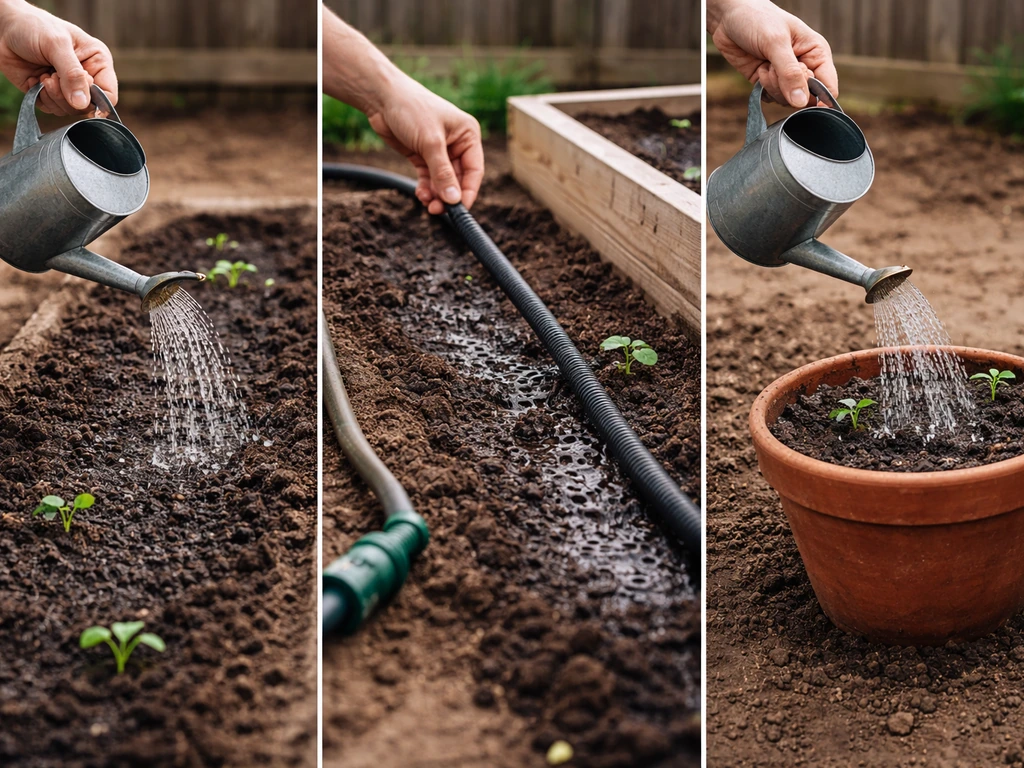
Where you grow lettuce changes how often you water more than almost any other factor. If you're also wondering how much space lettuce needs to grow, start by planning the right bed or container size for the variety you're planting how much space do lettuce need to grow. In-ground soil holds water much longer than a container or raised planter. Containers and potting mixes drain quickly, which means smaller water reserves and faster drying. Here's how to think about each setup:
| Setup | Typical frequency | Water per session | Key adjustment |
|---|---|---|---|
| In-ground soil bed | Every 5 to 7 days (cool), 2 to 4 days (hot) | Enough to wet soil 6 to 8 inches deep | Use finger test; clay soils hold longer, sandy soils dry fast |
| Raised bed | Every 3 to 5 days (cool), every 2 to 3 days (hot) | Water until some runs out the bottom or settles in | Raised beds drain faster than in-ground; check moisture more often |
| Container or planter | Every 1 to 2 days in most conditions | Water until runoff drains freely from the bottom | Small pots dry the fastest; weight test is your best daily check |
Soil type is the other big variable in outdoor beds. Sandy soil drains so fast that water passes through before roots can use it, so you water more often but apply less per session. UMN Extension similarly notes that sandy soil is better watered more often than once a week for lettuce and related greens, implying more frequent irrigation in sandy beds Sandy soil drains so fast that water passes through before roots can use it, so you water more often but apply less per session.. Clay soil holds water much longer, so you water less often but need to make sure you're not creating soggy, anaerobic conditions. Loamy soil with compost mixed in is the sweet spot because it retains moisture while still draining well.
For containers, the weight test is genuinely useful. Pick up the pot when you know it's fully watered, then pick it up again the next day. You'll feel the difference quickly, and within a week you'll know exactly what a dry container feels like for your specific pot and mix. Always water containers until water flows freely from the drainage holes. This ensures the whole root zone gets saturated, not just the top few inches.
Indoor lettuce: watering and the light-heat connection
Indoor lettuce grown on a windowsill or under grow lights behaves differently from outdoor plants. The biggest variable indoors is heat from your light source. A LED panel running 16 hours a day can warm the soil surface and dry out a container noticeably faster than you'd expect for an indoor environment. Conversely, a windowsill in a cool room in winter might only need watering every 3 to 4 days. If you are growing lettuce in winter, plan for slower growth and adjust watering to the cooler temperatures winter lettuce.
Because indoor growing almost always means containers, the same container rules apply. Check the soil every day, use the finger test (more on this below), and water when the top inch or two feels dry. You're probably looking at watering every 1 to 3 days depending on pot size, room temperature, light intensity, and humidity. Small containers under bright lights in a warm room are the thirstiest scenario. Large fabric pots in a cooler space with moderate light are much more forgiving.
One indoor-specific caution: tap water that's cold from the pipes can temporarily shock lettuce roots, particularly if your grow space is already cool. Let water sit for an hour to reach room temperature before using it if you can. It's a small thing but it helps. Light levels indoors also directly affect how much water lettuce uses, since low light means slower growth and lower water demand. If you're growing in a dim spot, be careful not to overwater out of habit.
Hydroponic lettuce: managing water and nutrients
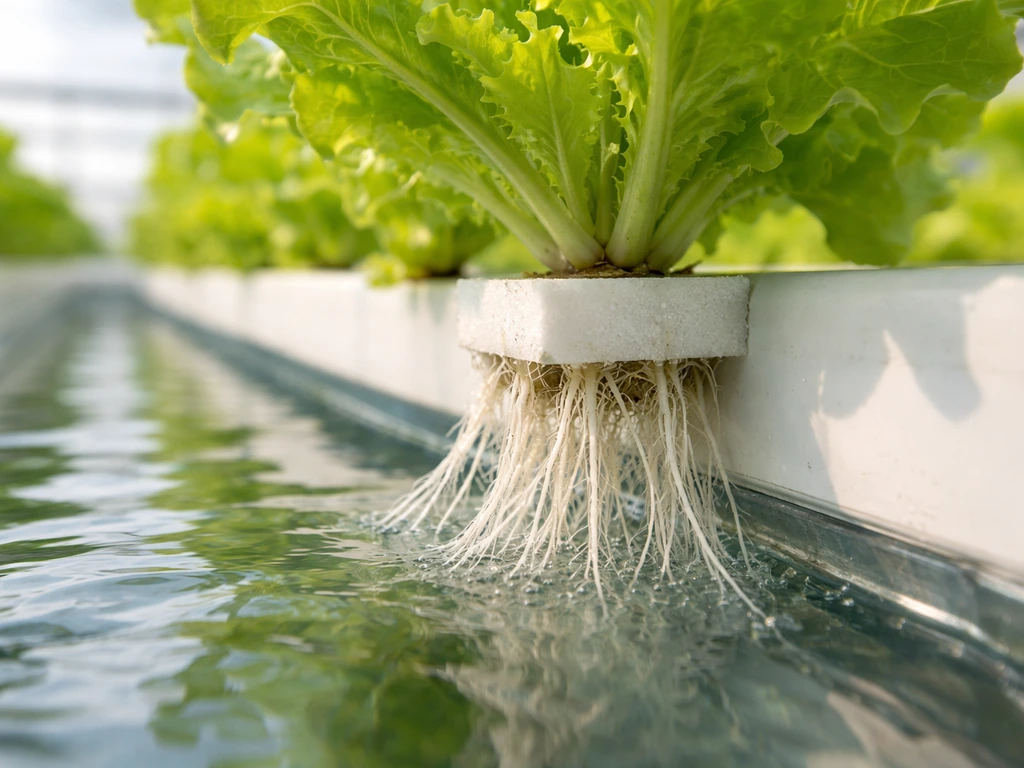
Hydroponics eliminates soil from the equation, but water management becomes more technical. Lettuce roots in a hydroponic system are bathed in nutrient solution continuously, so the question shifts from 'how much water per week' to 'what conditions does that solution need to keep roots healthy and growing.'
In a nutrient film technique (NFT) system, the operational target is around 10 liters of water flow per plant per hour. That continuous thin film of moving solution is what delivers both water and nutrients while also providing oxygen to the roots. In deep water culture (DWC) or raft systems, plants sit with roots submerged in solution, and the critical factor is dissolved oxygen (DO). Lettuce grows well when DO stays around 7 mg/L. If DO drops below about 3 mg/L, root health deteriorates fast and plants start to struggle.
Beyond flow rate and oxygen, the two numbers you need to monitor in any hydroponic system are pH and electrical conductivity (EC). pH affects whether nutrients in the solution are actually available to the plant. For lettuce, a pH between 5.5 and 6.5 is the workable range. EC is a proxy for nutrient concentration. Too low and plants are undernourished; too high and salts start to stress the roots. Check both daily or at minimum every other day, and top off your reservoir with fresh water (not concentrated solution) when the level drops, since lettuce takes up water faster than nutrients.
- NFT systems: target roughly 10 liters per plant per hour of flow
- DWC/raft systems: maintain dissolved oxygen at or above 7 mg/L; don't let it fall below 3 mg/L
- pH: keep between 5.5 and 6.5 for lettuce
- EC: keep within the recommended range for leafy greens (typically 0.8 to 1.6 mS/cm, depending on growth stage)
- Top off the reservoir with plain water when levels drop, not with full-strength nutrient solution
- Change the full reservoir every 1 to 2 weeks to prevent salt and pathogen buildup
- Keep water temperature between 65 and 72°F; warmer water holds less dissolved oxygen
How to tell if your lettuce needs water (and when you've gone wrong)
The finger test and other daily checks
The most reliable low-tech method is the finger test. Push your finger into the soil about 2 inches deep. If you don't feel moisture at that depth, it's time to water. UMN Extension recommends checking soil moisture and watering when the soil is dry about 2 inches below the surface. If it still feels clearly damp, wait. This test works for in-ground beds, raised beds, and containers. Do it at the same time each day until you develop a feel for your specific soil and container mix. Most experienced gardeners eventually learn their setup well enough to water by observation, but the finger test is the best training tool for getting there.
For containers, try the weight method as a supplement. Lift the pot when it's freshly watered. Lift it again after a day or two. The difference in weight is the water that's left the system through drainage and plant uptake. Once you're familiar with the feel, you can often skip the finger test entirely for container plants.
Underwatering symptoms and fixes
The first sign of underwatering in lettuce is wilting, especially during the heat of the day. Wilted lettuce in the afternoon on a hot day isn't always a crisis (some lettuce wilts in heat even with adequate water and recovers in the evening), but if it's wilted in the morning or not bouncing back by sunset, you need to water. The more damaging consequence of ongoing dry stress is bitterness. Lettuce under repeated drought stress increases its latex content, which is the compound responsible for bitter flavor. Once bitterness sets in, it's hard to reverse in the current plant. The fix is prevention: don't let it dry out repeatedly.
Consistent water stress, especially combined with heat, is also one of the main triggers for bolting, where the plant sends up a flower stalk and the leaves become inedible. Bolting is more tied to day length and temperature than water alone, but drought stress accelerates it. Keeping lettuce consistently moist during warm weather buys you more time before bolting becomes inevitable. Variety choice matters here too, since some types are bred to resist bolting better than others.
Overwatering symptoms and fixes
Overwatering looks different. Yellowing lower leaves, a general loss of vigor, and soggy or slimy roots are the main signs. In containers, if water is sitting in the saucer and never evaporating, or if the soil always feels wet even before you've watered, you're probably overwatering. Lettuce roots need oxygen as much as they need water. Waterlogged soil pushes oxygen out of the pore spaces, which starves the roots even as the plant looks like it should be fine.
The fix for overwatering depends on the setup. In containers, skip a watering cycle and let the soil partially dry before the next watering. Check that drainage holes aren't blocked. In garden beds, if the soil stays wet for days after rain, work in compost or coarse material to improve drainage over time. In the short term, just hold off on watering until the finger test tells you it's actually needed.
Quick symptom reference
| What you see | Likely cause | What to do |
|---|---|---|
| Wilting in the morning or evening | Underwatering | Water immediately, deeply; apply mulch |
| Bitter taste in leaves | Drought stress (often repeated) | Water consistently; avoid letting soil dry out |
| Bolting (flower stalk forming) | Heat + water/moisture stress combined | Keep soil consistently moist; provide shade in heat |
| Yellowing lower leaves, soggy roots | Overwatering or poor drainage | Skip a watering; check drainage; let soil dry partially |
| Soft or brown root crowns at soil level | Root rot from excess moisture | Improve drainage; reduce watering frequency |
| Pale, slow growth despite watering | Nutrient deficiency or pH issue (especially in hydro) | Check pH and EC; top-dress or adjust solution |
Getting water right for lettuce is mostly about paying attention in the first week or two with your specific setup, then adjusting from there. The 1 to 2 inch weekly baseline is a reliable anchor. The finger test is your daily reality check. And if your lettuce is tasting bitter, turning yellow, or bolting too fast, water is almost always part of the conversation. Along with water, things like spacing, sunlight, and nutrients all play into how well lettuce performs, so if you've got the watering dialed in and still seeing issues, those other factors are worth looking at next. To grow well, lettuce also depends on the right nutrients, especially nitrogen, phosphorus, potassium, calcium, and magnesium.
FAQ
How should watering change after I transplant lettuce seedlings into the garden?
Lettuce needs less water right after transplanting because roots are still establishing. For the first 3 to 7 days, water lightly to keep the top 1 to 2 inches evenly moist, then switch to the deeper 6 to 8 inch wetting schedule once you see new growth. If the weather is cool and rainy, you may skip a watering day entirely.
What should I do if it rains a lot and my watering schedule says to water?
Avoid watering on a strict calendar during extended rain. In humid or rainy stretches, check with the finger test at 2 inches (and, if you can, look for moisture at 6 to 8 inches). If the soil is still damp at depth, skip watering and reassess the next day to prevent soggy roots and slug and disease pressure.
Is it better to water lettuce once per day or split the watering up?
Yes, especially in containers. If you water only once in a day or two, try to apply enough to saturate the whole root zone, not just the surface. A quick burst that wets the top layer can encourage shallow roots and lead to fast wilting between waterings.
How can I tell whether I’m watering deeply enough for lettuce?
Use water depth as the target. If you consistently get only a wet top layer, increase volume per session so soil is moist down to about 6 to 8 inches. A practical check is to dig a small hole near the plant after watering to confirm depth, then adjust your hose time for future sessions.
What time of day is best to water lettuce?
Early mornings are usually best because plants dry less slowly than under evening watering, which can reduce fungal risk. If you only have late-day access, prioritize better drainage and avoid soaking leaves, aiming water at the soil rather than the canopy.
How do I tell the difference between heat wilt and underwatering?
If lettuce wilts in the heat but the leaves recover by evening, it may be heat stress rather than true drought. The decision point is morning wilting (it usually indicates you need water) and whether the 2 inch finger test shows dry soil at that depth.
Can I water lettuce with small amounts every day instead of deeper weekly watering?
For best results, keep moisture consistent, but do not “top off” daily with tiny amounts. Instead, aim for periodic deep watering that keeps the root zone evenly moist, then let the top inch or two lighten before the next session. Frequent shallow watering is a common cause of bitterness and uneven growth.
What changes if my garden soil is clay and holds water too long?
Yes, in-ground beds with heavy clay can stay wet for days after rain, so the risk is overwatering. If you notice standing water or the finger test stays wet at 2 inches long after rain, pause watering and improve drainage over time with compost and coarse organic material.
Does fertilizing change how much water lettuce needs?
Fertilizer can change how fast lettuce dries because richer growth pulls more water. If you recently fed, re-check soil moisture more often and make sure EC and salt buildup are not stressing roots (especially in containers). If leaves are pale and growth is weak, you may be dealing with nutrient imbalance rather than a pure watering problem.
What’s the most important factor to watch for water management in hydroponics besides flow?
In hydroponics, temperature affects dissolved oxygen and nutrient uptake. If your reservoir warms up, DO can drop and lettuce can stall even though “water” is plentiful. Use a water temperature check and keep it stable, and do not rely only on flow rate.
My hydroponic lettuce looks unhealthy, but pH and EC seem fine. What should I check next?
If your pH and EC are in range but plants look stressed, check airflow and root-zone oxygen first. In DWC, even short DO dips can cause problems, so make sure aeration is working and that the system is not overheating.
How do I know if my container lettuce is getting too much water?
If water starts pooling around the base or your pot stays heavy and wet even a day after watering, you should reduce watering frequency and verify drainage hole function. For containers, improve drainage with the right potting mix, and if possible, remove blocked saucer contact or ensure excess runoff can drain away.
Is cold tap water a problem for lettuce watering?
If you can only water with cold tap water, let it sit until closer to room temperature before using it, especially in a cool indoor space. Cold water can slow root function temporarily, making the plant look thirsty or stressed even if the soil is wet.
Why is the finger test at 2 inches more accurate than checking the topsoil?
Because lettuce is shallow-rooted, the 2 inch finger test is more reliable than guessing by surface dryness. If the top looks dry but the 2 inch layer still feels damp, wait. If both are dry, water deeply enough to reach 6 to 8 inches.