Most lettuce varieties need 6 to 12 inches (15 to 30 cm) of space between plants, but the exact number depends heavily on what type of lettuce you're growing and how you plan to harvest it. Loose-leaf types can get away with as little as 4 to 6 inches, romaine wants 10 to 12 inches, and full head lettuce like iceberg or butterhead needs 12 to 15 inches to size up properly.
How Much Space Do Lettuce Need to Grow? In Ground, Pots, Hydroponics
Marcus Holloway
24 Apr 2026
Texas A&M AgriLife Extension’s lettuce (leaf) planting guidance lists 12 to 24 inches between plants in-row and 2 to 3 inches for within-row thinning Loose-leaf types can get away with as little as 4 to 6 inches.
Get these numbers wrong in either direction and you'll either waste space or end up with stunted plants that bolt before they're worth harvesting.
Basic lettuce spacing rules
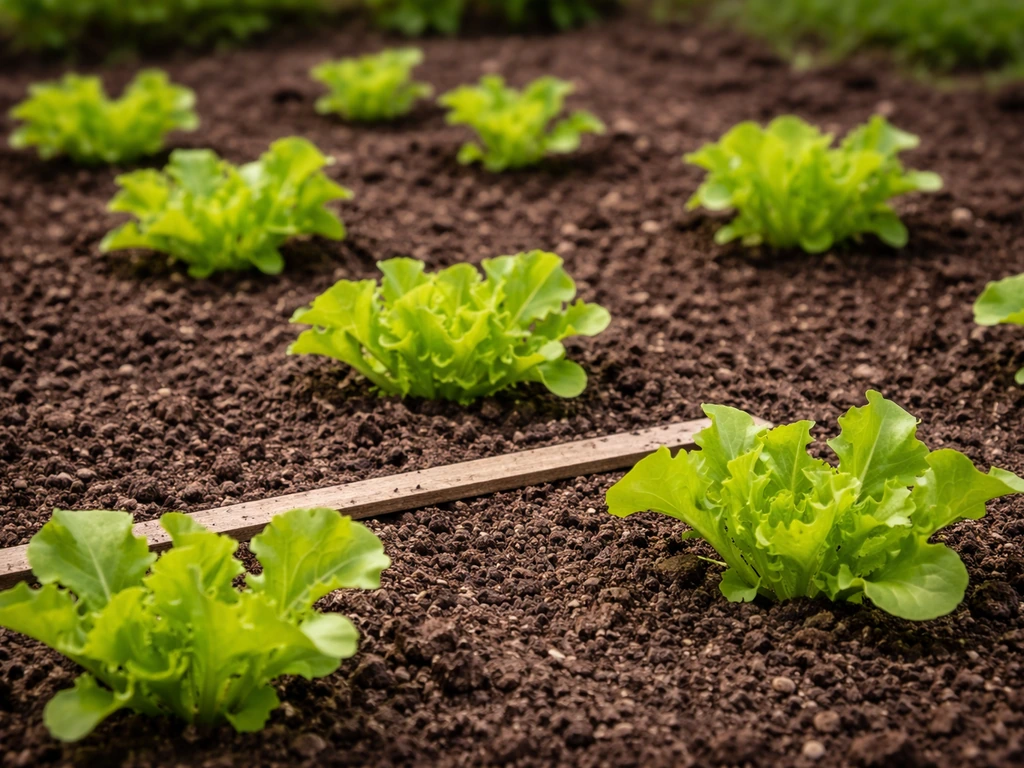
Lettuce is a shallow-rooted, relatively compact plant, which is good news for anyone working with limited space. But it still needs room to spread its leaves, get decent airflow, and not compete too hard with its neighbors for light and nutrients. The general rule of thumb most extensions agree on is blank" rel="noopener noreferrer">8 to 12 inches (20 to 30 cm) between plants, with rows spaced about 12 to 18 inches apart. That range covers most varieties grown in a typical home garden bed.
If you're direct-seeding for baby greens or a cut-and-come-again salad mix, you can go much tighter, broadcasting seed or sowing in rows as close as 3 to 6 inches apart works fine because you're harvesting young leaves before the plants ever crowd each other out. The spacing rules really kick in when you want mature, full-size plants or actual heads.
Airflow is the other reason spacing matters. Crowded lettuce is a magnet for fungal problems, especially in humid conditions or when plants aren't getting much wind. Keeping plants at the right distance apart isn't just about head size, it's also your first line of defense against rot and mildew.
Spacing by lettuce type
This is where most beginners get into trouble. They treat all lettuce the same and use one spacing for everything in the bed. In reality, leaf lettuce, romaine, and head types have meaningfully different space requirements, and mixing them without a plan leads to some plants getting crowded out.
| Lettuce Type | In-Row Spacing | Row Spacing | Notes |
|---|---|---|---|
| Loose-leaf (cut-and-come-again) | 4–6 inches (10–15 cm) | 8–12 inches (20–30 cm) | Can go tighter for baby greens; harvest outer leaves repeatedly |
| Butterhead / Bibb | 8–10 inches (20–25 cm) | 12 inches (30 cm) | Compact heads; tolerates slightly closer spacing than iceberg |
| Romaine / Cos | 10–12 inches (25–30 cm) | 18–24 inches (45–60 cm) | More heat-tolerant; taller plant needs row clearance |
| Head (Iceberg / Crisphead) | 12–15 inches (30–38 cm) | 24 inches (60 cm) | Largest footprint; needs full spacing to size up |
| Baby greens / salad mix (broadcast) | 3–6 inches (8–15 cm) | Broadcast or 3–6 in rows | Harvest before maturity; no final head spacing needed |
Loose-leaf varieties are by far the most forgiving and the best choice if you're working with a small bed or containers. You can start harvesting outer leaves when plants are still young, which means they never really reach the size where crowding becomes a crisis. Romaine takes up more vertical and horizontal space than most people expect, those tall, upright heads need clearance between rows so you can actually reach in and harvest without damaging neighboring plants. Head lettuce like iceberg is the most demanding: give it 12 to 15 inches and full rows 2 feet apart, or the heads simply won't fill out.
Container and raised-bed spacing
Container gardening changes the math a bit because you're working with fixed dimensions and you want to use every inch efficiently. The good news is that lettuce is genuinely one of the best vegetables for containers, its shallow roots and relatively small size mean a modest pot can support a real harvest.
Pots and planters
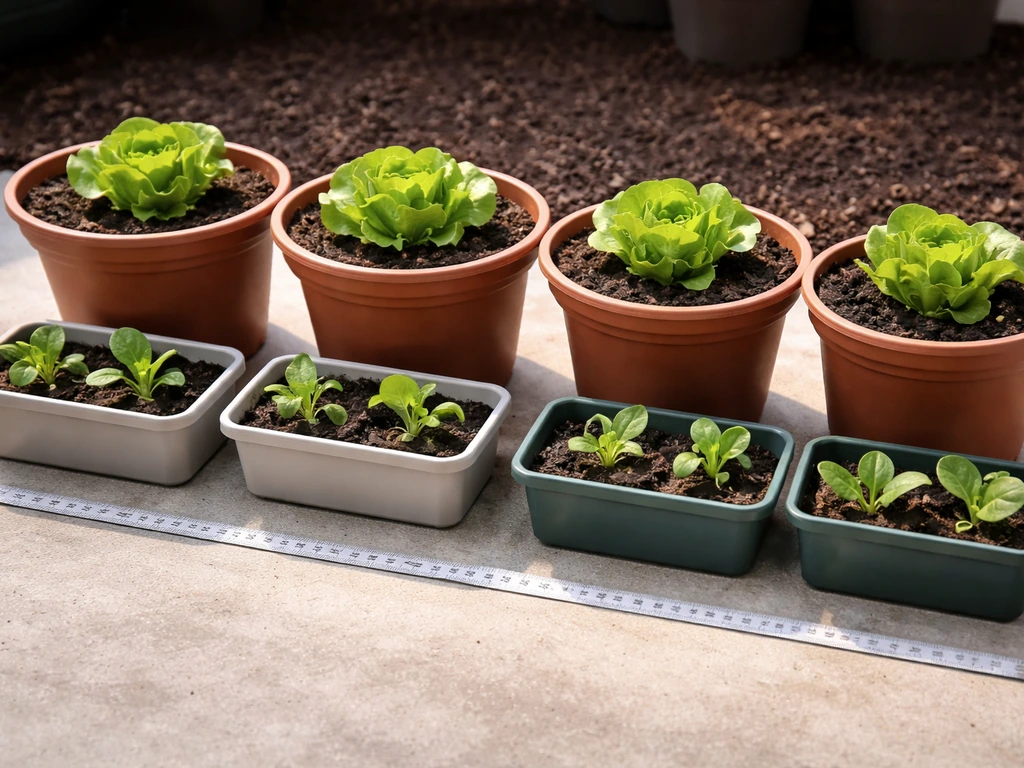
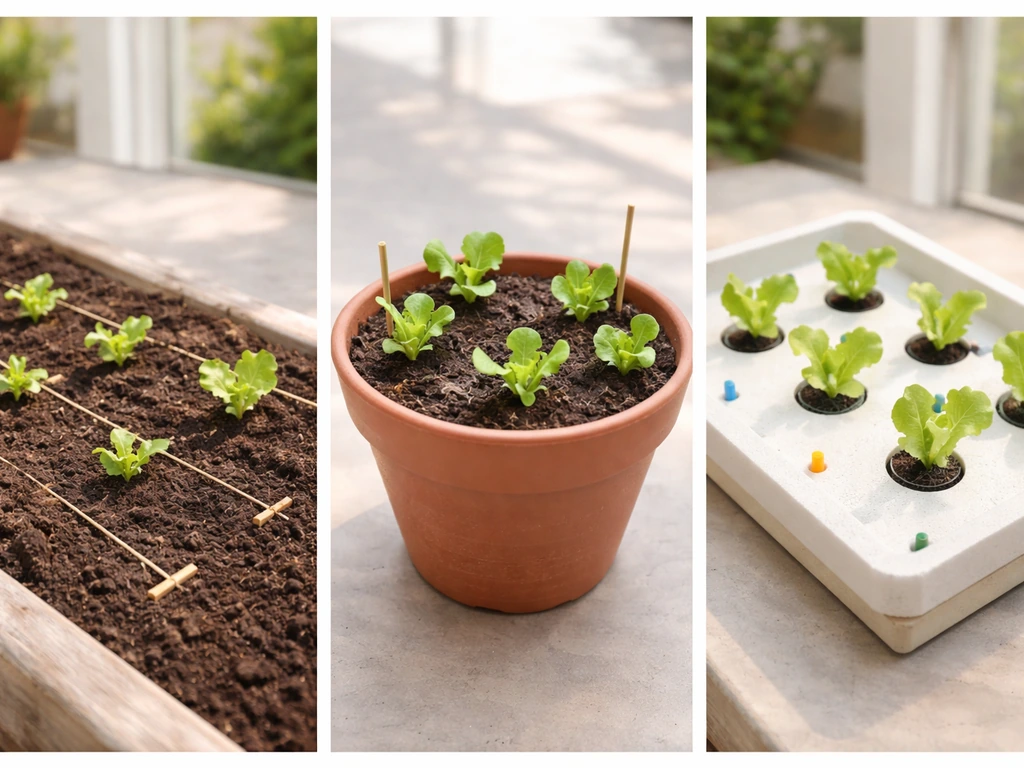
For small pots in the 1 to 2 gallon range (roughly 6 to 8 inches in diameter), you're realistically looking at one plant per pot for heading types, or two to three loose-leaf plants if you keep them to a 4 to 6 inch spacing and harvest young. An 18-inch diameter container can hold about four to six leaf lettuce plants at 6-inch spacing, or two to three heading types at 10 to 12 inches apart. A standard window box (about 24 to 36 inches long and 6 to 8 inches wide) works well for a row of loose-leaf lettuce spaced 6 inches apart, that gives you four to six plants in a single box.
Raised beds
Raised beds are where intensive spacing really pays off. Because the soil is loose, well-amended, and you're not walking between rows (so you're not compacting anything), you can push plants a bit closer than you would in a traditional row garden. A good raised-bed target is 10 inches between plants with 12 inches between rows. In a 4-foot-wide raised bed, that gives you three to four plants across the width comfortably. If you're using the square-foot gardening method, lettuce fits at four plants per square foot with 6-inch spacing in a grid, that's the intensive end of the range, and it works well for leaf types harvested frequently. For head lettuce, drop to one plant per square foot.
Kansas State Extension recommends 10 to 12 inches for head lettuce even in intensive raised beds, with the understanding that tighter spacing increases efficiency but airflow management becomes more important. I'd keep it at 10 inches minimum and make sure you're not blocking light from shorter plants by putting taller romaine on the north side of the bed.
Indoor growing: what space really means under grow lights
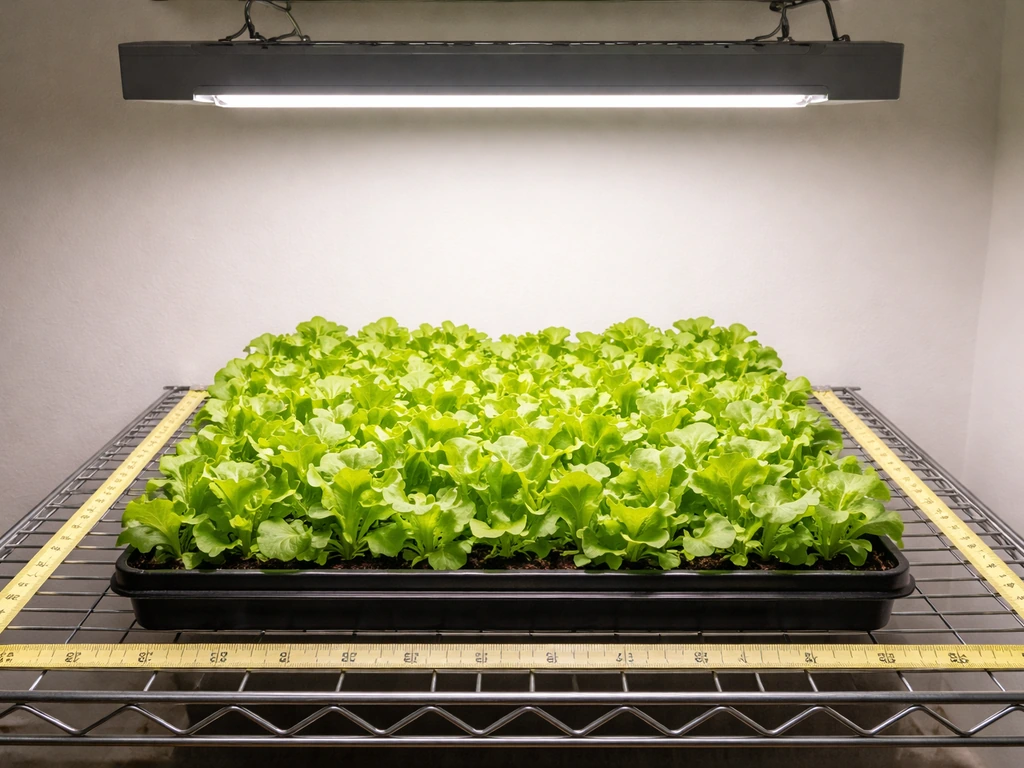
When you're growing lettuce indoors, 'space' has two dimensions that matter equally: the footprint on your shelf or table, and the coverage area of your grow light. You can have a perfectly spaced tray of lettuce that still underperforms because half the plants are at the edge of the light's effective zone.
A single 100-watt LED grow light covers roughly a 2-foot by 2-foot area effectively for lettuce. That's your planning unit indoors. Within that 2x2 footprint, you can fit about nine leaf lettuce plants at 8-inch spacing, or up to 16 plants at 6-inch spacing if you're growing baby greens or compact leaf varieties and harvesting frequently. Trying to squeeze more plants than that under one light means the outer plants won't get enough intensity to grow well.
The plant spacing rules themselves don't change much indoors, leaf lettuce still wants 6 to 8 inches between plants, and butterhead still wants around 8 to 10 inches. If you are growing lettuce in winter, you can also tune the spacing and density to keep plants healthy and produce more reliable harvests winter density lettuce. What changes is that you're now planning your layout around light coverage zones rather than garden rows.
If you have two grow lights side by side covering a 2x4 area, think of it as two independent 2x2 growing blocks and plant each one accordingly. Keep lights 12 to 18 inches above the canopy for LED panels to avoid light burn while still delivering adequate intensity across the whole footprint.
Hydroponic spacing and plant density
Hydroponics is where you get the most flexibility with lettuce density, and also where it's easiest to over-plant and create airflow problems even without soil competition. The standard recommendation across most home hydroponic setups is 6 to 8 inches (15 to 20 cm) between plants, and that holds for most common systems. For standard butterhead and loose-leaf hydroponic lettuce, Urban Harvest Lab recommends spacing transplants about 8 inches between net cup centers.
Deep Water Culture (DWC) rafts
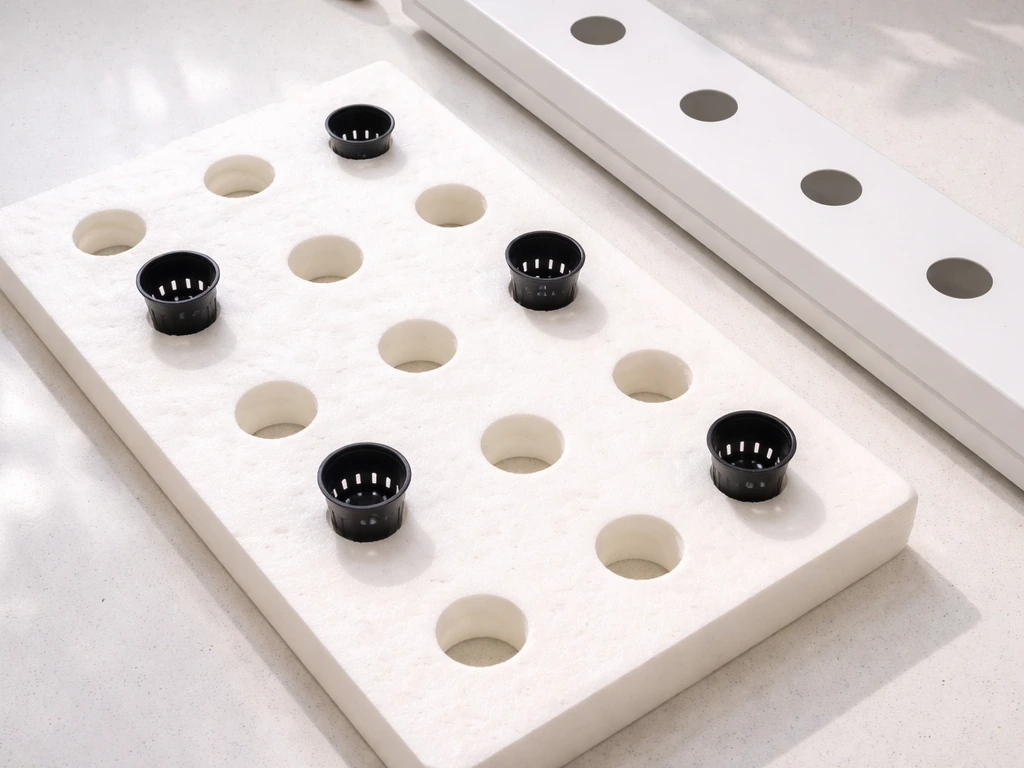
In a DWC raft system, plant spacing is determined by where you cut the holes in the foam raft. For leaf lettuce and butterhead, 6 to 8 inches between net cup holes works well. That gives your roots enough room to spread in the reservoir without tangling too badly, and gives the canopy enough space for airflow. A standard 2x4-foot raft can hold anywhere from 12 plants at 8-inch spacing to about 20 plants at 6-inch spacing, depending on variety.
NFT (Nutrient Film Technique) channels
For NFT systems, most DIY guides put lettuce plant holes at about 8 inches on-center for standard varieties. Research setups have used spacings around 20 cm (roughly 8 inches) per plant in NFT channels, and that lines up well with practical home grower experience. Going tighter than 6 inches in NFT starts to cause leaf overlap that reduces airflow and can invite disease.
Vertical tower systems
In a vertical tower like a ZipGrow-style system, 6-inch spacing between plant sites gives you roughly 8 to 10 lettuce plants per 5-foot tower. Towers themselves should be positioned about 8 inches apart (center to center) for average-sized lettuce crops, that leaves about 4 inches of clearance between towers for air circulation and access. Vertical systems are efficient for leaf types; head varieties are generally too large and top-heavy to work well in towers.
How to measure your bed or container and plan for successive harvests
Before you plant anything, take five minutes to sketch out your space and do the math. It's the single most useful thing you can do to avoid overcrowding or wasting room.
- Measure your bed or container: length, width, and depth. Lettuce needs at least 6 inches of soil depth; 8 to 10 inches is better for heading types.
- Choose your target spacing based on the variety you're growing (use the table above as a reference).
- Divide your bed width by the spacing to get plants per row. For example, a 48-inch raised bed at 10-inch spacing fits 4 plants across (with a couple inches of clearance at the edges).
- Divide your bed length by your row spacing to get the number of rows. A 96-inch bed at 12-inch row spacing holds 8 rows — that's 32 plants total.
- Reserve one third of your bed for a succession sowing. Instead of planting everything at once, plant the first two thirds now and sow the final third 2 to 3 weeks later. That staggered timing keeps you harvesting continuously rather than having everything ready at once and then nothing.
- Mark your spots before you plant using a ruler or a piece of string with knots tied at your spacing interval. Eyeballing leads to uneven spacing that's hard to fix once plants are in.
- When a plant is harvested or done, replant that spot immediately to keep the bed productive. Lettuce turns around fast — you can go from seed to harvest-size leaf lettuce in 30 to 45 days.
For containers, the same logic applies but the scale is smaller. If you have a 12-inch pot, you fit one head lettuce or two to three leaf lettuce plants. If you have a 24-inch window box, sketch out your 6-inch intervals and you'll see you have room for four plants with about 3 inches of buffer at each end. Planning this out before you buy transplants means you actually buy the right number instead of cramming in extras.
Succession planting is also the answer to one of the most common beginner questions: how much lettuce to grow per person. Lettuce also has clear watering needs, and getting them right helps prevent bitterness and bolting how much water does lettuce need to grow. To grow well, lettuce also needs specific nutrients in its soil or hydroponic solution.
Once you know how much lettuce to grow per person, the next step is dialing in the light, since the amount of sun you give it directly affects growth and harvest size how much sun does lettuce need to grow. If you're growing for one or two people, two to three plants per person in a staggered succession gives you consistent weekly harvests without drowning in more lettuce than you can eat.
Spacing directly affects how many plants you can fit, so getting the spacing right is what makes succession planning actually work.
Common spacing mistakes and how to fix them
These are the mistakes I see most often, and most of them are easy to fix if you catch them early.
- Planting too tight because the seedlings looked so small: Transplants at 2 to 3 inches tall don't give you any sense of how big they'll get. If you've already done this, thin aggressively within the first two weeks before roots compete — thinning feels wasteful but it pays off fast. Eat the thinnings as microgreens.
- Not accounting for row spacing, only in-row spacing: A lot of beginners space plants correctly within a row but then plant rows 6 inches apart, which creates dense walls of foliage with no air movement. Fix this by measuring row-to-row distances before you plant, not after.
- Using head-lettuce spacing for leaf lettuce (or vice versa): Head spacing of 12 to 15 inches on leaf lettuce wastes half your bed. Leaf lettuce at 4 to 6 inches will give you far more harvest per square foot. Check your seed packet or variety name before you decide on spacing.
- Skipping thinning after direct seeding: If you broadcast seeded or sowed thickly, the plants will crowd each other out within three to four weeks. Thin to your target spacing when seedlings are 2 to 3 inches tall. Yes, every time. No exceptions.
- Ignoring grow-light footprints indoors: Spacing plants at 6 inches apart in a 3x3 tray that's only lit by one small lamp means the outer plants are growing in shade. Either add a second light or reduce your planting area to match the light's effective coverage zone.
- Bolt-inducing overcrowding in warm weather: Crowded plants stress faster in heat, and stressed lettuce bolts — that's when it sends up a flower stalk and turns bitter. If it's getting warm and you have overcrowded plants, thin immediately and consider shading the bed. Romaine handles heat better than head types, so if you're in a warm climate, choose that.
- Leaving gaps after harvesting: Once you pull a plant, that spot sits empty and weeds move in fast. Replant gaps within a week to keep your succession going and prevent weed competition that affects neighboring plants.
FAQ
What should I do if my plants are already too close together?
If you can only choose one spacing target, start at the larger end for your lettuce type, then thin or harvest early. For example, for romaine in-ground, use 12 inches as your starting point and plan to remove weak seedlings, because crowding delays heading and can trigger earlier bolting than people expect.
Can I use the tighter spacing for mature heads if I harvest often?
Yes, but only if your plan matches your harvest method. You can crowd leaf lettuce for baby greens by harvesting outer leaves or cutting individual plants early, but heading types need the full spacing to form tight heads. If you let crowded head lettuce mature, you will usually get loose, bitter heads.
Is it okay to plant leaf lettuce, romaine, and head lettuce together in one bed?
Mixing types is usually fine in the same bed if you respect different spacing by grouping. Put romaine and taller plants where you can give them their row distance for reach, and keep loose-leaf varieties around the edges or between spaces where they will be harvested frequently. Random mixing causes some plants to lose airflow and light.
Should I space lettuce farther apart in humid or rainy climates?
The “between plants” number assumes good airflow and a predictable planting pattern. If your soil is heavy, your bed stays wet, or you have frequent humid weather, use more spacing within the recommended range (or create narrower rows with wider aisles) to reduce the chance of mildew and rot near the base.
How does spacing change for cut-and-come-again lettuce (outer leaves only)?
For cutting and come-again, spacing can be tighter, but the key detail is timing. Leave enough room for regrowth, typically by harvesting no more than about one third of the leaf mass at a time and avoiding repeated heavy cuts on plants that were already planted close.
Does pot depth change how much space lettuce needs in containers?
Yes, pot depth matters because shallow roots still need stable moisture. As a rule, choose containers deep enough that the root zone stays consistently moist but oxygenated, and avoid tiny saucers that dry out fast in sun. Shallow containers often force you to thin earlier because plants become stunted even if spacing is “right.”
In a raised bed, how do I decide between square-foot planting spacing and wider spacing?
With raised beds and square-foot planting, your success depends on how you manage thinning and access. If you cannot easily reach the center plants to thin or harvest, stick to wider spacing (about 6 to 10 inches for leaf types, and closer to 10 to 12 inches for head types) because accessibility problems lead to overcrowding and damage.
How can I tell if my indoor spacing is too tight for my grow light?
Light coverage is the limiting factor indoors, not just plant spacing. If your lettuce looks pale at the edges or growth slows there first, that is a sign you have exceeded your effective footprint for that grow light, so reduce plant count or rotate the trays to equalize exposure.
Can I pack more lettuce under an LED by lowering the light or increasing wattage?
For LED panels, keep the fixture distance consistent and watch for leaf edge bleaching or curling. If you increase plant density under one light without adjusting height or intensity, inner plants may grow faster but outer plants can stay weak, leading to uneven harvests and a higher disease risk due to dense canopy.
What is the most common hydroponics spacing mistake with lettuce?
In hydroponics, holes that are too close create leaf overlap and wet microclimates between plants, which encourages disease even if roots have nutrients. If you notice canopy tangling, increase the hole spacing or thin plants at the first sign of overlap, rather than waiting for disease.
How do I combine spacing with succession planting so I do not end up with a glut?
Succession planning is about harvest windows, not just plant count. If you want weekly eating, stagger starts so each batch reaches harvest stage one week apart, and use looser spacing for baby greens batches that will be cut more frequently. Tight spacing for a long time with no thinning usually creates a sudden glut.
What spacing should I use if I have trouble reaching into the bed to harvest?
A simple decision aid is to plan for one “harvest reach.” If you cannot easily reach between plants without tearing leaves or stepping into the bed, you likely need wider spacing or more aisle width. This matters most for romaine and head lettuce because they are harder to harvest without disturbing neighboring plants.