Lettuce needs nitrogen most of all, followed by phosphorus and potassium, plus calcium, magnesium, and a handful of micronutrients like iron and boron. Penn State’s interpretive nutrient levels for plant analysis provide representative lettuce tissue concentrations, including example values like nitrogen near 2.49% (dry weight) and phosphorus near 0.39% (dry weight) representative nutrient concentrations for lettuce tissue. Get nitrogen right and you'll grow lush, fast leaves. Get all the others in reasonable balance and you'll rarely run into trouble. The tricky part isn't the list, it's knowing how to actually supply these nutrients reliably across different setups, how to spot problems early, and how to avoid overdoing it.
What Nutrients Do Lettuce Need to Grow Healthy Heads
Marcus Holloway
5 May 2026
The Big Three: N, P, and K for Lettuce
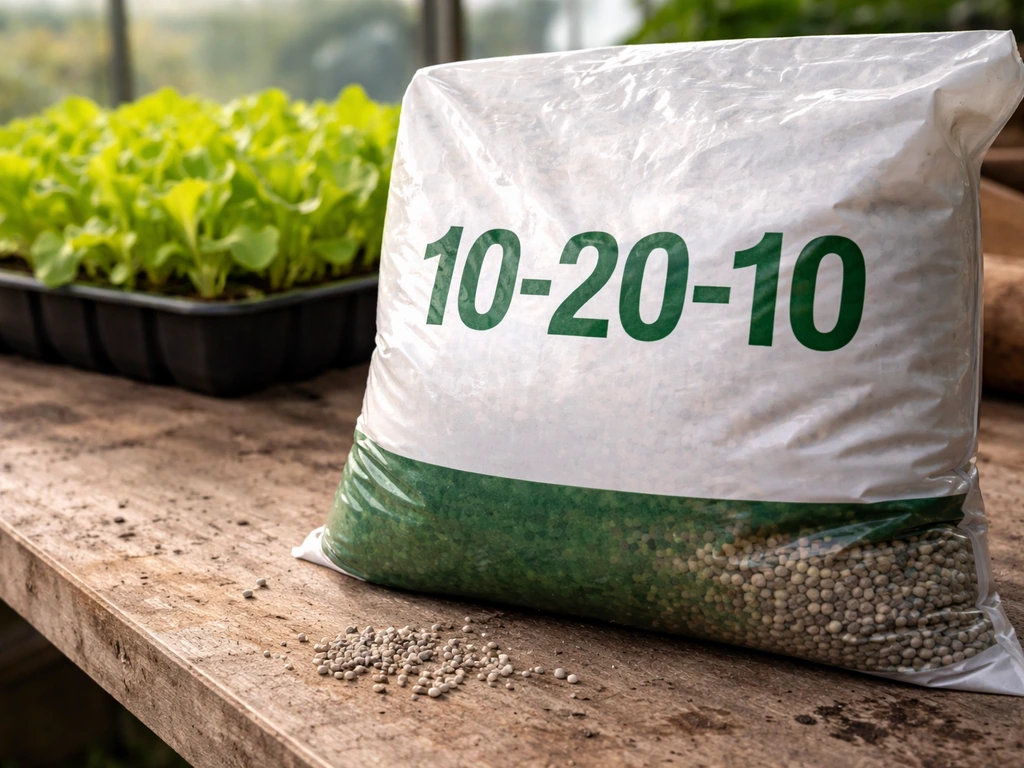
Nitrogen (N), phosphorus (P), and potassium (K) are the macronutrients you'll see listed on every fertilizer bag, and they each do something specific for lettuce.
Nitrogen: The leaf-builder
Nitrogen is the single most important nutrient for lettuce. Since you're growing it primarily for its leaves, N drives everything you care about: leaf size, color, and growth speed. Lettuce is considered a relatively heavy nitrogen feeder. At the field scale, leafy greens typically need 75 to 150 pounds of nitrogen per acre, and that same hunger shows up in your garden bed or container. Without enough N, older leaves go pale and yellow first (because nitrogen is mobile in the plant and gets pulled toward younger tissue), growth slows, and eventually the whole plant looks stunted and washed out. Too much N causes its own problems, which I'll cover later.
Phosphorus: The root and shoot starter
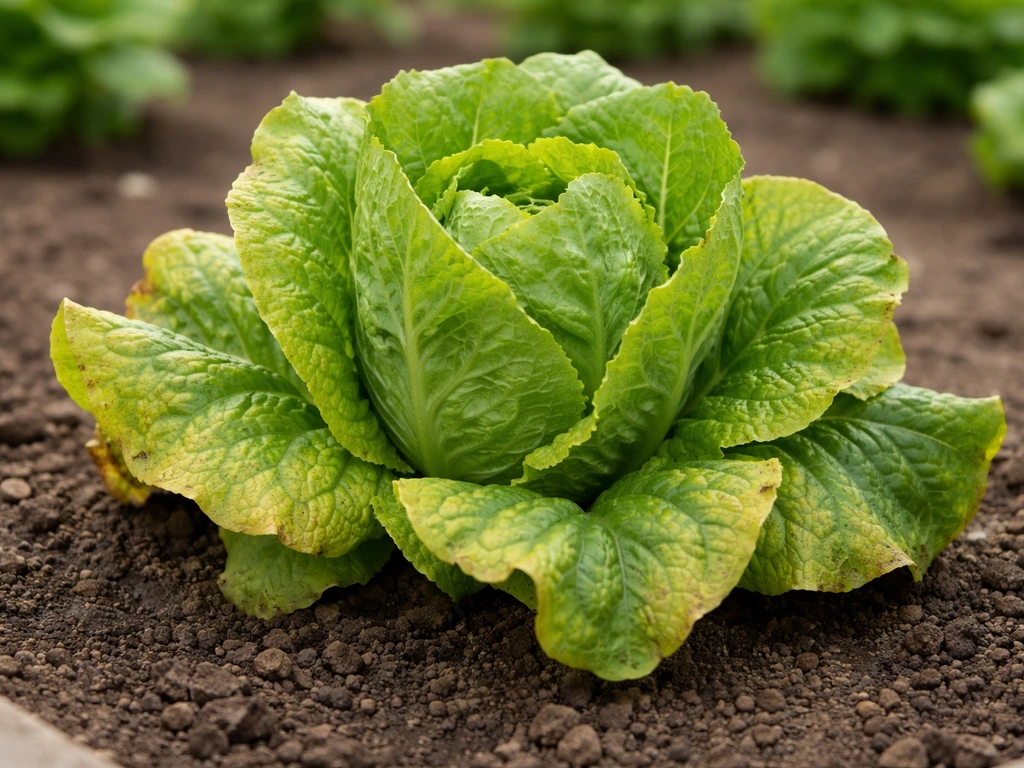
Phosphorus supports root development and early shoot growth. A phosphorus-deficient lettuce plant looks a bit odd: it often turns an unusually dark green at first, then shows purplish or reddish pigmentation on older leaf margins. Growth is reduced, leaves are smaller, and stems are thinner than they should be. Like nitrogen, phosphorus deficiency shows up on older leaves first because P is also mobile in the plant. Cold soil temperatures can lock up phosphorus even when it's present, so early-spring outdoor sowings sometimes show temporary P deficiency that resolves as the soil warms.
Potassium: The stress manager
Potassium helps lettuce regulate water movement, build cell walls, and handle stress. K deficiency starts as interveinal chlorosis on the oldest leaves (the leaf tissue between the veins yellows while veins stay greener), then progresses to speckling, marginal yellowing, and eventually brown, scorched leaf edges. Potassium is also mobile in the plant, so deficiency symptoms move from old growth toward new growth as it worsens.
Secondary Nutrients and Micronutrients That Actually Matter
Most soil and commercial fertilizers cover the N-P-K basics reasonably well. Where things get interesting, and where I've seen more real-world problems, is with the secondary nutrients and micronutrients below.
Calcium (Ca)
Calcium builds cell walls and is critical for new leaf development. Poor root development and stunted growth are classic calcium deficiency signs. In lettuce specifically, calcium is tied to tipburn, the browning of young inner leaf margins that shows up in both head and leaf types. Here's the nuance: tipburn is rarely caused by low calcium in the soil. It's almost always a delivery problem. When lettuce grows fast in warm conditions or when airflow is low, calcium can't move quickly enough through transpiration to reach rapidly expanding leaf tissue. The fix is usually managing water, heat, and airflow, not just dumping more calcium into the soil. Most garden soils, especially in drier western regions, already have plenty of calcium.
Magnesium (Mg)
Magnesium is the central atom in chlorophyll, so without it leaves can't photosynthesize properly. Mg deficiency is most common on sandy, acidic soils. Symptoms look like interveinal chlorosis on older leaves, somewhat similar to potassium deficiency but usually more widespread yellowing between veins rather than edge scorch. A soil test will tell you quickly if you're short, and a dose of Epsom salt (magnesium sulfate) or dolomitic lime is a simple fix.
Sulfur (S)
Sulfur is part of several amino acids and enzymes. It's uncommon to be deficient in most garden soils since organic matter releases it as it breaks down, but heavily leached sandy soils or purely hydroponic systems without sulfur-containing fertilizers can fall short. Unlike nitrogen, sulfur deficiency tends to show first on young leaves (it's relatively immobile in plants), producing a pale yellow-green color in new growth.
Iron (Fe)
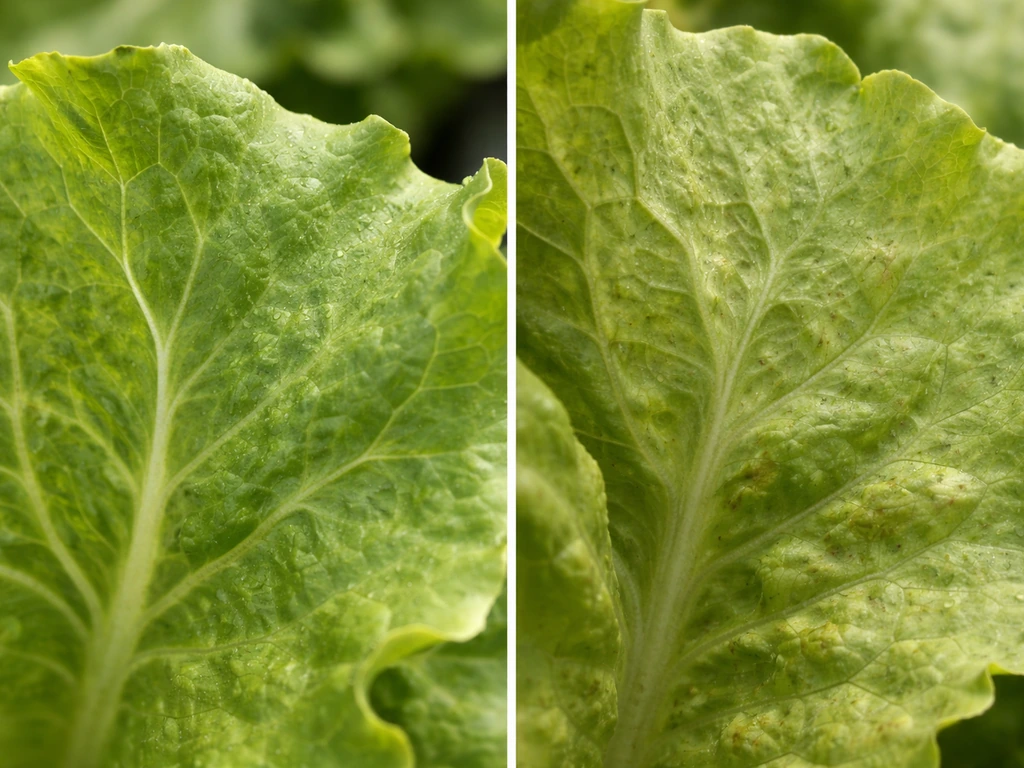
Iron deficiency is one of the most practically relevant micronutrient problems for lettuce growers, particularly in containers and hydroponic setups. It shows as interveinal chlorosis on young leaves (new growth goes yellow while veins stay green). The catch: the problem is almost never a lack of iron in the growing medium. It's almost always a pH issue. When soil or solution pH climbs above 7.0 (and sometimes above 6.5), iron becomes chemically unavailable even when it's present. Adjusting pH is the first move, not adding more iron.
Boron (B)
Boron is needed in tiny amounts but causes distinctive symptoms when deficient. The early warning sign is raised, corky areas on the main veins on the underside of young leaves, often before any yellowing appears. Leaf distortion and yellowing follow. Boron is one micronutrient where too much is also easy to cause since the margin between deficiency and toxicity is narrow, so don't add boron supplements unless you have a confirmed deficiency.
Manganese (Mn) and others
Manganese deficiency looks a lot like iron deficiency (interveinal chlorosis on young leaves) and is also pH-dependent. In hydroponics, if you see yellowing between veins on new growth and your pH is above 6.3, manganese or iron lockout is the likely culprit. Hydroponics growers on r/Hydroponics also commonly aim for a pH around 5.8 to 6.0 after mixing, since higher pH can make manganese and iron less available and lead to yellowing symptoms pH is above 6. Other micronutrients like zinc, copper, and molybdenum are rarely limiting in garden soils with decent organic matter, though hydroponic growers need to make sure their complete nutrient solution covers them.
How to Tell If Something's Off
The single most useful diagnostic trick is to notice whether symptoms show on old leaves first or new leaves first. Mobile nutrients (N, P, K, Mg) get pulled from old leaves to support new growth, so deficiencies in these show on the oldest, lowest leaves first. Immobile nutrients (Ca, Fe, Mn, B, S) can't move once deposited, so deficiencies in these show on the newest, youngest leaves first.
| Nutrient | First affected leaves | Main symptom | Common cause |
|---|---|---|---|
| Nitrogen (N) | Old leaves | Overall pale yellow, stunted growth | Depleted soil, underfeeding |
| Phosphorus (P) | Old leaves | Dark green then purple/red on margins | Cold soil, low P, high pH |
| Potassium (K) | Old leaves | Interveinal chlorosis, edge scorch | Sandy or depleted soil |
| Magnesium (Mg) | Old leaves | Interveinal yellowing, widespread | Acidic or sandy soil |
| Calcium (Ca) | Young/inner leaves | Tipburn, poor roots, stunting | Water stress, low airflow (not usually low soil Ca) |
| Sulfur (S) | Young leaves | Pale yellow-green new growth | Leached sandy soils, hydro without S |
| Iron (Fe) | Young leaves | Interveinal chlorosis (veins stay green) | High pH (above 6.5-7.0) |
| Boron (B) | Young leaves | Corky veins on leaf underside | Dry soils, high pH |
| Manganese (Mn) | Young leaves | Interveinal chlorosis similar to Fe | High pH (above 6.3 in hydro) |
Signs of too much nitrogen
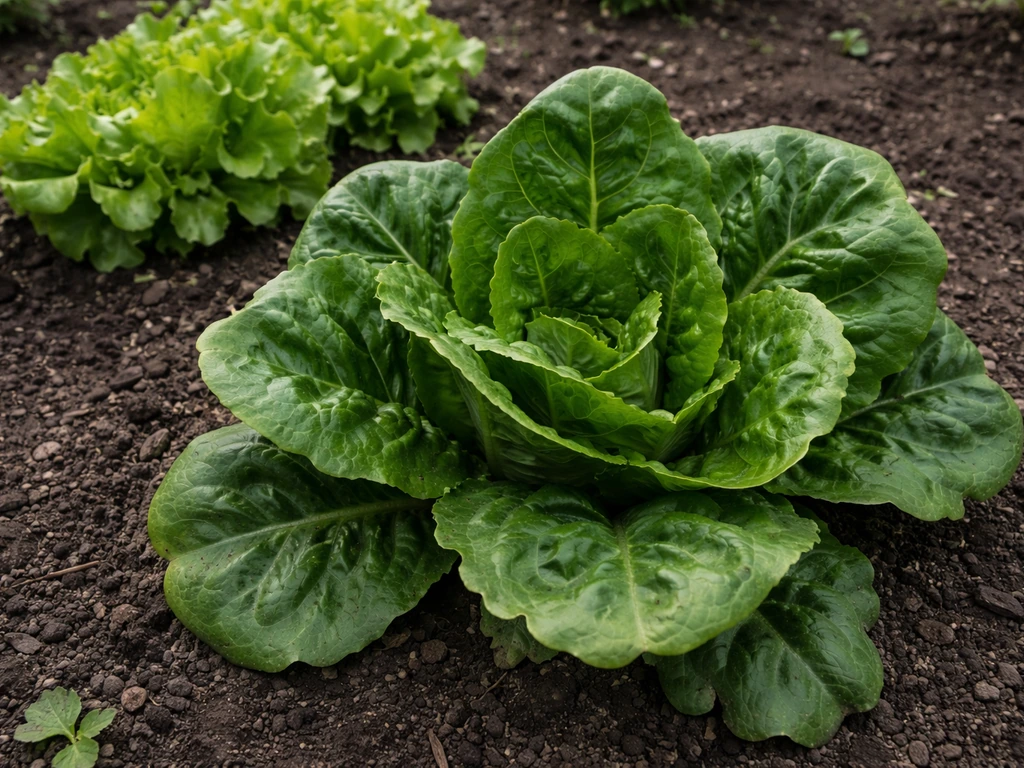
Overfertilizing with nitrogen is a real and common mistake, especially with containers and synthetic fertilizers. Symptoms include unusually thick, cupped leaves with a very deep green color, and eventual browning or yellowing at leaf tips and margins. If your lettuce looks almost too dark green and the leaves curl inward, ease off the fertilizer. Excess nitrogen can also push leafy growth at the expense of flavor and make plants more susceptible to disease.
Fertilizer burn
Fertilizer burn happens when concentrated salts from synthetic fertilizers contact roots directly, or when you apply too much at once. Symptoms are brown, crispy leaf tips and margins, often looking similar to drought stress. Always water after applying granular fertilizer and keep granules away from direct contact with plant stems and roots.
Fertilizer and Amendment Options for Soil and Containers
You have more options here than you probably need. Let me cut through it based on what actually works for typical setups.
Outdoor garden beds
If you're growing in the ground, start with a soil test if you haven't already. It costs almost nothing and removes the guesswork. Most garden soils benefit from working in 2 to 3 inches of compost before planting, which adds slow-release nitrogen, improves soil structure, and feeds soil microbes. For additional nitrogen through the season, a balanced granular fertilizer (something like 10-10-10 or a similar balanced NPK) worked in before planting gives a good baseline. For mid-season side-dressing, a nitrogen-focused fertilizer works well. As a practical home-garden reference: apply about 1/4 cup of a 21-0-0 ammonium sulfate fertilizer per 10 feet of row, placed to the side of plants (not directly on them), then water it in. Lettuce has shallow roots, mostly in the top foot of soil, so banded application near the root zone pays off better than broadcasting widely.
Container and indoor growing
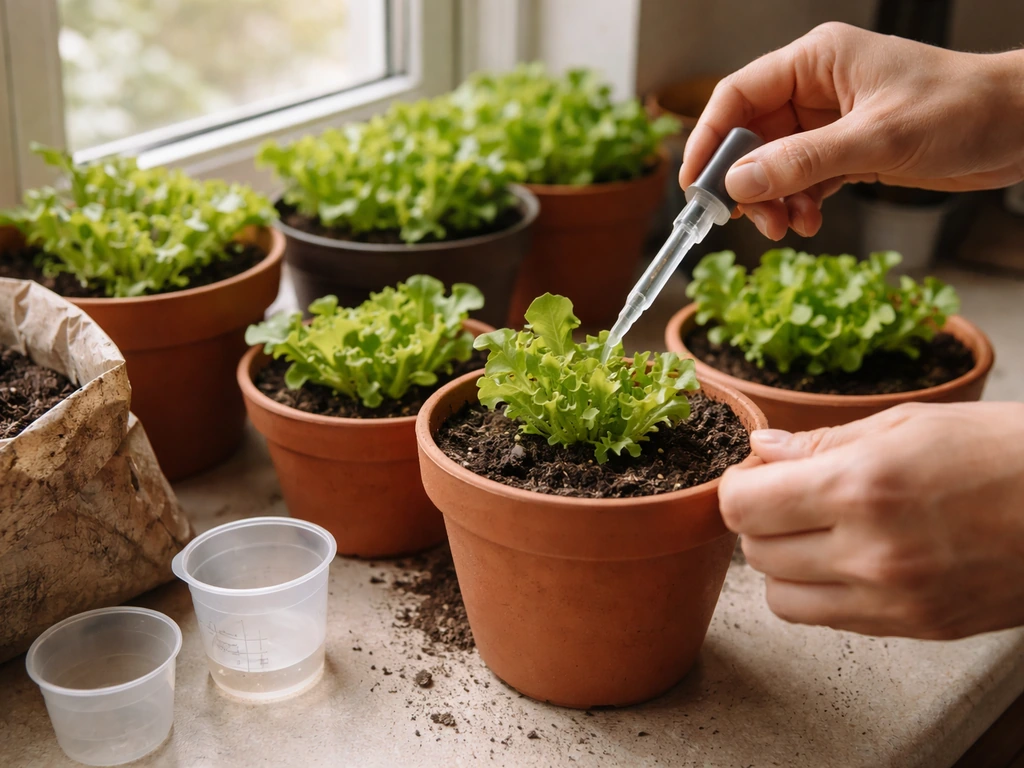
Containers are a different game. Potting mix breaks down faster than garden soil, nutrients leach out with every watering, and there's no soil ecosystem to buffer problems. I always start container lettuce in a quality potting mix that already contains some slow-release fertilizer, which buys you the first three to four weeks without additional feeding. After that, you have two practical approaches: apply a water-soluble balanced fertilizer (like a 20-20-20 or a leafy-green focused formula higher in N) every two weeks at the recommended rate, or fertilize at every watering using half the recommended dose. The every-watering approach at half strength tends to produce more consistent growth because nutrients stay more stable in the root zone instead of cycling between feast and famine.
Organic vs. synthetic
Organic options like fish emulsion, blood meal (high N), bone meal (high P), and kelp meal work well and are harder to over-apply. The tradeoff is slower release and sometimes inconsistent nutrient ratios. Synthetic fertilizers are precise and fast-acting but require more care to avoid burning. For beginners, I'd lean toward compost plus a diluted liquid organic fertilizer, and then move to synthetics if you want more control over timing and rates.
Feeding Schedule by Growth Stage
Lettuce's nutrient needs aren't constant. Seedlings are delicate, mid-growth is hungry, and late-stage plants are wrapping up. Match your feeding to the stage.
- Germination to 2 weeks old: No supplemental fertilizer needed. Seeds carry enough energy for germination and first true leaves. Starting seedlings in a seed-starting mix or well-amended potting soil is all you need. Heavy fertilizer at this stage burns tender roots.
- Weeks 2 to 4 (early vegetative growth): This is when roots are establishing and early leaf production ramps up. If using a potting mix with slow-release fertilizer already incorporated, you may not need anything yet. In garden beds with compost pre-worked in, hold off. In containers without built-in fertilizer, start light feeding with a diluted balanced liquid fertilizer at half the label rate.
- Weeks 4 to harvest (active leaf and head development): This is the hungry phase. For garden beds, apply a nitrogen side-dress around week 4 after transplanting or at thinning. If you're growing heading types like romaine or butterhead, a second nitrogen application when head development starts is worthwhile. For containers, shift to your regular every-two-weeks or every-watering routine at this point. This is when consistent moisture and consistent nutrients together produce the best results.
- Final 1 to 2 weeks before harvest: Back off fertilizing. Lettuce at this stage doesn't need a nutrient push, and late heavy nitrogen can actually make leaves taste more bitter and may encourage bolting. Let the plant finish on what's already in the soil or medium.
Hydroponic Nutrient Solutions: What You Need to Know
Hydroponics removes the soil buffer entirely, which means you're fully responsible for delivering every nutrient the plant needs in a form it can use. This sounds complicated but is very manageable once you understand two numbers: EC and pH.
EC (electrical conductivity) targets
EC measures the total concentration of dissolved nutrients in your solution. Too low and plants are hungry. Too high and you risk salt stress and root damage. For lettuce, the general targets are 0.8 to 1.0 mS/cm for seedlings and young plants, and 1.2 to 1.6 mS/cm (some sources go up to 1.8) for actively growing mature plants. Start low and increase gradually as plants develop. If you see wilting or tip burn and your EC is at the high end, dilute the solution and recheck.
pH targets and why they matter most
Target pH for hydroponic lettuce is 5.8 to 6.2, though some guidelines extend to 6.5. I aim for 5.8 to 6.0 in practice. pH is actually more important than EC in day-to-day management because pH controls which nutrients are chemically available to roots even when they're present in the solution. If pH drifts above 6.3, iron and manganese start locking out, and you'll see interveinal yellowing on new leaves. If pH drops below 5.5, calcium and magnesium availability drops and you can see other deficiencies develop. Check and adjust pH every one to two days, especially in small systems where it shifts faster.
Nutrient solution choices
Use a complete hydroponic nutrient formula specifically designed for leafy greens or general hydroponics. Products labeled for lettuce or leafy greens are typically higher in nitrogen relative to P and K, which matches how lettuce actually uses nutrients. Avoid using standard garden fertilizers in hydro systems because they often lack the full micronutrient profile (including chelated iron, manganese, zinc, etc.) that lettuce needs when there's no soil to buffer anything.
Reservoir management
Top off with plain water between full nutrient changes since plants take up water faster than nutrients, which gradually concentrates the solution. Do a full reservoir change every one to two weeks in small systems to prevent nutrient imbalances from building up. In summer or under grow lights, plants drink more water, so check your reservoir level and EC more frequently.
Common Nutrient Problems and Quick Fixes
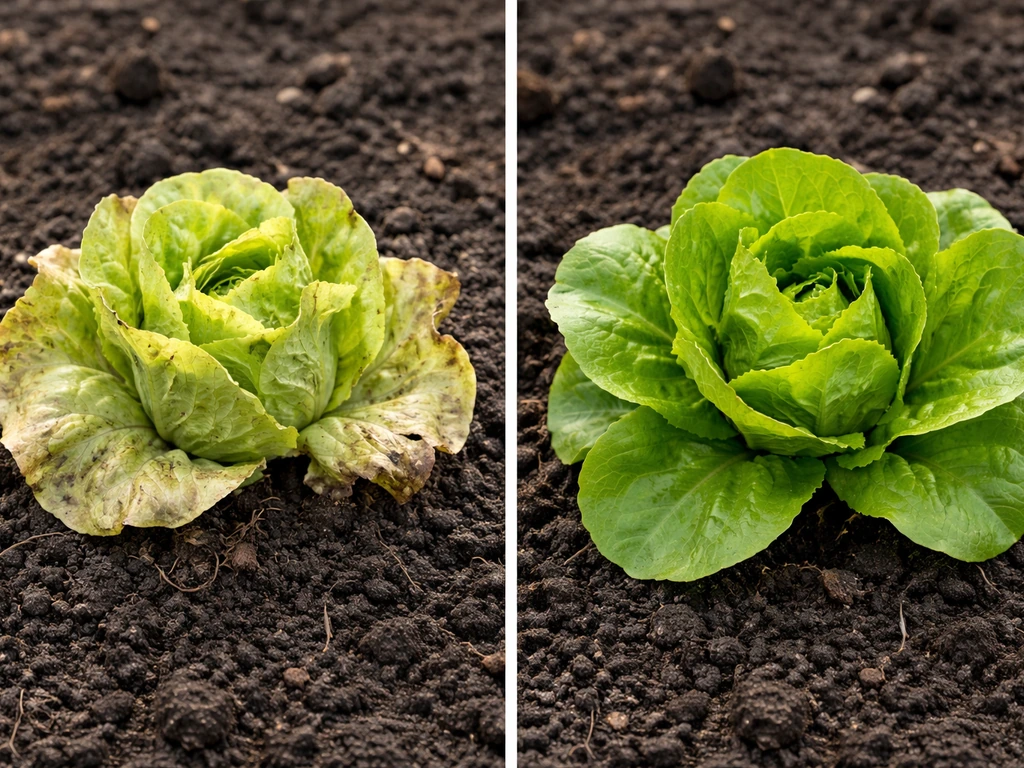
Most nutrient problems in lettuce come down to a handful of recurring situations. Here's the rundown with what to do.
- Old leaves turning pale yellow, slow growth: Almost certainly nitrogen deficiency. In soil, side-dress with a nitrogen fertilizer and water it in. In containers, apply a water-soluble nitrogen-rich fertilizer at the recommended rate. In hydro, check EC first (raise if low), then check pH.
- Dark green leaves then purple-red tints on older leaf margins: Likely phosphorus deficiency, especially if weather has been cool. In soil, check pH and ensure it's between 6.0 and 7.0 for best P availability. In containers, switch to a balanced fertilizer with adequate P. In early spring beds, warm soil is often the fix more than adding fertilizer.
- Yellowing and scorch on outer leaf edges, starting on oldest leaves: Potassium deficiency. Add a potassium-containing fertilizer (most balanced fertilizers will cover this). In containers, ensure you're fertilizing regularly since K leaches out fast.
- Interveinal yellowing on youngest, newest leaves: Iron or manganese deficiency, almost always caused by pH being too high. In soil or containers, check and lower pH toward 6.0 to 6.5. In hydro, bring pH down to 5.8 to 6.2 before adding any chelated iron supplement. Adding more iron at high pH will not help.
- Corky, raised bumps on veins on the underside of young leaves: Boron deficiency. This is uncommon in garden soil with decent organic matter but can show up in hydro systems with incomplete formulas or in very dry soils where boron becomes less mobile.
- Tipburn (brown edges on inner young leaves): Not a fertilizer problem to solve by adding calcium. Improve airflow around plants, avoid heat stress, and keep moisture consistent. In hydro, check that calcium is present in your nutrient formula and that EC isn't too high.
- Thick, very dark green cupped leaves, tip browning: Too much nitrogen. Cut back fertilizer immediately. In containers, flush the medium with plain water. In hydro, lower EC by diluting with fresh water.
- Sudden wilting or crispy brown tips after fertilizing: Fertilizer burn from salt stress. Water thoroughly to flush excess salts. In containers, water until it drains freely from the bottom. Move granular fertilizer away from direct root contact in future applications.
Putting It All Together
Growing good lettuce nutrient-wise really comes down to a few priorities: keep nitrogen consistently available through the active growth phase, don't let pH wander too far from the 6.0 to 6.5 range in soil or containers (5. If you also want to plan your space, you can estimate how much lettuce to grow per person based on your expected harvest per plant and cutting style feed more gently and frequently. 8 to 6.2 in hydro), start with quality compost or a complete fertilizer formula, and feed more gently and frequently rather than heavily and infrequently. The same goes whether you're growing in a raised bed outdoors, a pot on a windowsill, or a hydroponic reservoir. How much sun and water your lettuce gets matters just as much as nutrient supply, since even a perfectly fed plant can't move calcium to fast-growing leaf tissue if it's stressed by heat or drought. In winter, you also need to adjust how much you feed and how you manage temperature and light so nutrient uptake stays steady winter density lettuce how to grow. If you're trying to get that balance right, knowing how much water lettuce needs based on heat, container size, and growth stage is just as important. How much sun lettuce gets also affects heat stress and overall growth, so it’s worth dialing in your light level alongside feeding How much sun and water your lettuce gets. Get the basics right and lettuce is honestly not a fussy crop to feed.
FAQ
My lettuce looks yellow on new leaves, do I need more iron?
If you can only make one measurement before adding anything, start with pH. In containers and hydroponics, many “missing nutrient” symptoms are actually lockout from pH drifting (iron, manganese, and sometimes calcium availability). If you can, confirm with a quick soil or solution test, then adjust pH before changing fertilizer type or rate.
Does adding more calcium always fix tipburn?
Yes, but do it carefully: calcium is mainly a transport problem, not a guaranteed “more in the soil” problem. Focus on steady moisture, avoid letting beds dry out then swing back to heavy watering, and improve airflow so transpiration can move calcium into expanding tissue. If you add calcium, pair it with stable watering rather than relying on the amendment alone.
How do I know if I overfed nitrogen, not that lettuce is just “healthy and growing fast”?
For lettuce, overfertilizing nitrogen often shows up as very dark green, thick or cupped leaves, then browning or tip yellowing at the edges. If that pattern appears, pause extra feeding and flush the root zone (water through) to reduce salt concentration, especially in containers. Also check whether temperatures are high, because fast growth in heat increases calcium demand.
My EC is high and lettuce shows tip burn, what should I do first?
In hydroponics, start low on EC and increase gradually, then reduce if you see tip burn or wilting while EC is already near the high end. Another practical step is to verify that you are topping off with plain water, not nutrient solution, because missed top-offs cause EC to creep up even when you are “not adding fertilizer.”
What if my soil test says nutrients are fine, but my lettuce still has deficiency symptoms?
In soil or pots, nutrient symptoms are often misleading because drought and heat reduce nutrient delivery even when the soil has nutrients. Check watering consistency and shade or airflow first, since calcium and potassium deficiencies can look worse under stress. A soil test helps, but correcting water stress usually improves symptoms faster than adding nutrients.
How can I use “old leaves vs new leaves first” to diagnose which nutrient is missing?
If symptoms show on older leaves first, that points toward mobile nutrients (N, P, K, and often magnesium) and the fix usually involves correcting the feeding balance or uptake conditions. If symptoms show on the newest leaves first, suspect immobile nutrients (calcium, iron, manganese, boron, sulfur) and check pH and watering delivery rather than just raising overall fertilizer.
Can I use the same fertilizer for hydroponics that I use in my garden?
Do not rely on garden fertilizers in hydroponics because they frequently lack the full micronutrient package in plant-available forms, especially chelated iron and manganese. Use a complete hydroponic nutrient made for leafy greens, or at minimum ensure your formula includes all required micros, not just N-P-K.
Is it better to fertilize lettuce often or in large doses?
For most setups, it helps to apply smaller, more frequent nitrogen rather than a single heavy dose. In warm weather or fast growth stages, nutrients are taken up quickly, so “infrequent big feedings” can cause spikes and salt stress. If you are using organics, expect slower and more variable release, so watch growth rate and leaf color rather than assuming it matches a synthetic schedule.
What’s the fastest way to recover if I burned lettuce with fertilizer?
If you suspect fertilizer burn, stop fertilizing immediately and leach the pot or bed by watering thoroughly to flush excess salts. Then wait for recovery and restart feeding at a lower concentration or less frequent schedule. Also ensure granular fertilizer is placed away from the plant base, and never broadcast too close to shallow lettuce roots.
How do I tell sulfur deficiency apart from other yellowing problems?
In very sandy, leached media or in hydro, sulfur shortages are more likely than in typical garden soil with compost. Check whether new growth is pale yellow-green while older leaves remain greener, then confirm with a nutrient solution that includes sulfur (or use a complete fertilizer). Avoid guessing with sulfur alone if you have pH-related lockout symptoms.