Lettuce needs 4 to 6 hours of direct sun per day at minimum, and 8 to 10 hours if you want fast, full growth. It tolerates partial shade better than almost any other vegetable, which is why it works so well in imperfect spots outdoors and on windowsills indoors. If you're growing under artificial light, aim for a daily light integral (DLI) of 12 to 17 mol·m⁻²·d⁻¹, which you can hit with a 16-hour light schedule at a moderate intensity. That's the core answer. Everything below helps you apply it to your specific setup. If you also need to plan your yield, use this light-focused guidance alongside how much lettuce to grow per person based on how many people you’re feeding.
How Much Sun Does Lettuce Need to Grow Indoors and Outdoors
Marcus Holloway
28 Apr 2026
The light targets for lettuce, plain and simple
Before getting into outdoor versus indoor specifics, here's the quick reference. These numbers come from university extension research and controlled growing studies, so you can trust them as real working targets rather than guesses.
| Growing Situation | Minimum Light | Better Target | Notes |
|---|---|---|---|
| Outdoor (spring/fall) | 4–6 hours direct sun | 8–10 hours direct sun | Full sun produces faster, denser heads |
| Outdoor (summer) | 4–6 hours, partial shade afternoon | Morning sun + shade after 1pm | Shade prevents heat stress and bolting |
| Indoor (south window) | 4–5 hours bright direct light | Supplement with grow light | Windows alone often fall short |
| Indoor (grow light) | DLI 12 mol·m⁻²·d⁻¹ | DLI 14–17 mol·m⁻²·d⁻¹ | 16h schedule at 150–200 µmol·m⁻²·s⁻¹ works well |
| Hydroponic indoor | DLI 10–12 mol·m⁻²·d⁻¹ | DLI 14–17 mol·m⁻²·d⁻¹ | 16–20h supplemental light at 100–200 µmol·m⁻²·s⁻¹ |
One thing worth knowing upfront: lettuce is a quantitative long-day plant, which means very long days (above 14 to 16 hours of light) can trigger bolting, where the plant sends up a flower stalk and turns bitter. So more light is not always better, especially once days get long in late spring. The sweet spot is generous but not extreme.
Outdoor lettuce: how much sun it actually needs
For garden-grown lettuce, the practical rule is 4 to 6 hours of direct sun as a workable floor, with 8 to 10 hours as the target if you want quicker harvests and fuller leaves. University of Maryland Extension puts it clearly: lettuce tolerates partial shade at around 4 to 6 hours per day, and grows well in full sun during spring and fall. University of Minnesota Extension pushes the recommendation higher, listing 5 to 6 hours of noonday sun as the minimum and 8 to 10 hours as better.
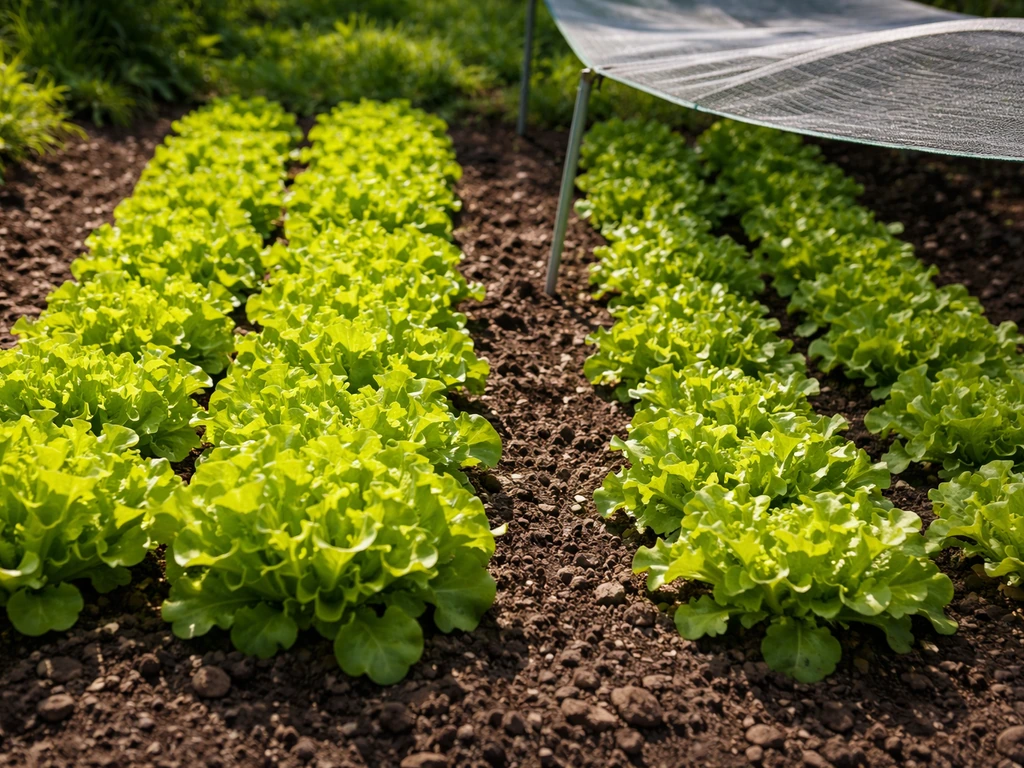
The season matters a lot here. In spring and fall, full sun is your friend. Lettuce loves cool temperatures combined with long bright days, and that combination produces the fastest, crispest growth. In summer, though, full all-day sun becomes a problem rather than an advantage. Hot afternoon sun raises soil and leaf temperature, which stresses the plant and accelerates bolting. University of Georgia Cooperative Extension notes that lettuce performs best in cool conditions and that extremely hot weather causes poor performance. If you're growing lettuce in summer, look for a spot that gets morning sun and is shaded from about 1pm onward. East-facing beds and spots with tall plant or fence shade to the west are ideal.
Oregon State University Extension makes the point directly: too much light, especially combined with heat, causes lettuce to bolt and taste bitter. That bitterness isn't just unpleasant, it's the plant telling you it's stressed and switching into survival mode. Getting partial shade in summer isn't compromising on light, it's smart management.
Partial shade is genuinely fine for lettuce
If your garden is mostly shaded, don't give up on lettuce. OSU Extension notes that leaf lettuce and other salad greens can do well with just 4 to 6 hours of sun per day, or even constant dappled shade. You'll get slower growth and slightly smaller leaves compared to a full-sun spring bed, but you'll still get harvestable lettuce. In a dappled-shade situation, loose-leaf varieties like Red Sails or Black Seeded Simpson tend to perform better than tight head types like iceberg, which need more energy to form a dense head.
Indoor lettuce: windows, grow lights, and what actually works
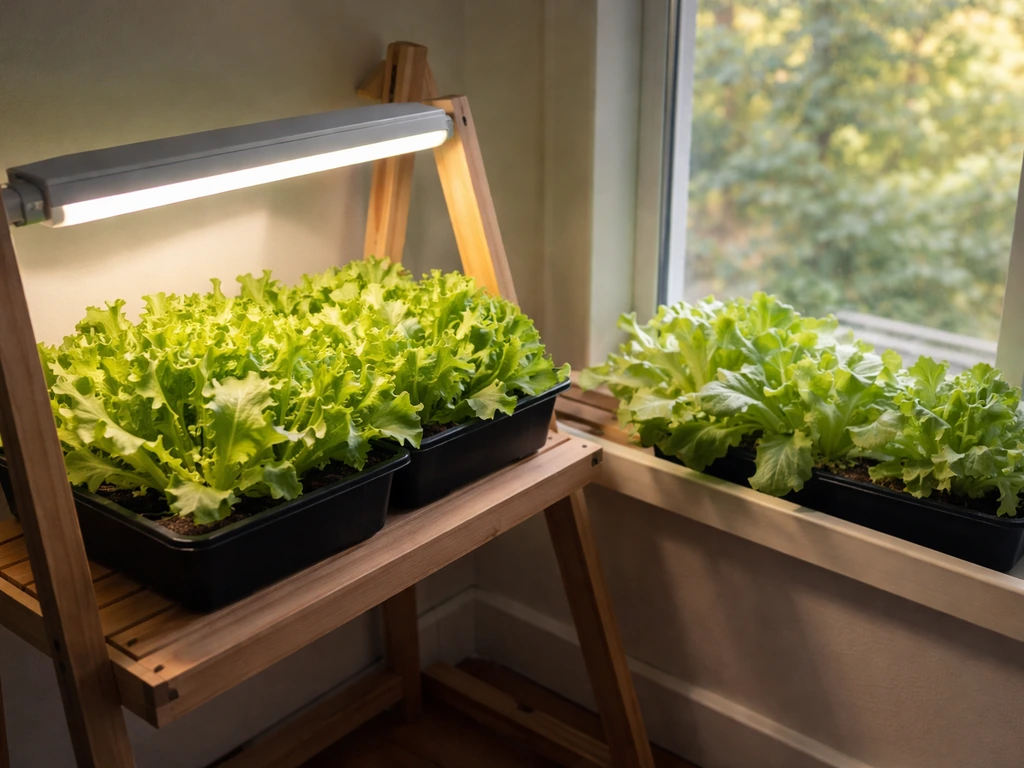
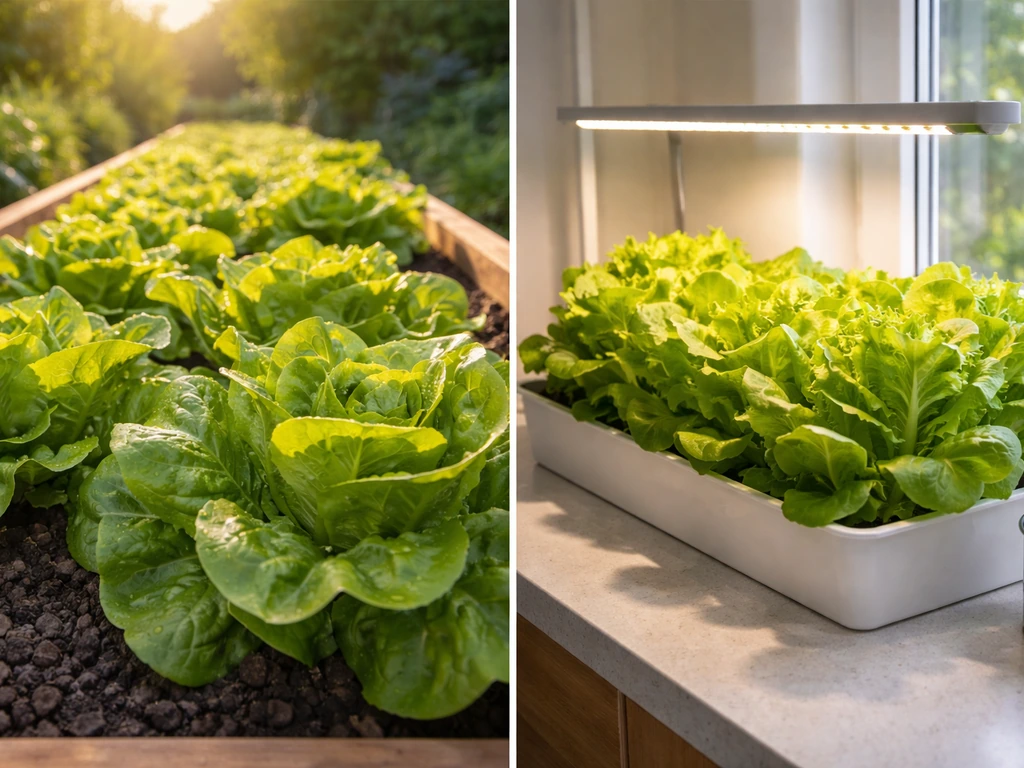
Growing lettuce indoors is a different calculation. Natural window light is almost always weaker and shorter than outdoor sun, even next to a bright south-facing window. On a clear day in spring, a south window might deliver 4 to 5 hours of usable direct light, which is just barely enough for slow lettuce growth. In winter, or with a north or east window, that drops below what lettuce needs to thrive. If you're aiming for winter harvests, you'll also want to dial in winter density and know exactly how to grow lettuce in colder conditions winter density lettuce how to grow. That's why most successful indoor lettuce growers use some form of supplemental lighting.
Window placement guide
- South-facing window: best option for windows alone; gives 4–5 hours of direct light on sunny days, marginal without supplementation in winter
- East-facing window: good morning light, usually 2–3 hours direct sun; lettuce will be slow but survivable with a grow light supplement
- West-facing window: afternoon sun can be too warm and intense in summer; fine in fall and winter as a supplement source
- North-facing window: not enough light for lettuce without a dedicated grow light; skip window reliance entirely
Using grow lights for indoor lettuce
When you use a grow light, you're thinking in two measurements: PPFD (photosynthetic photon flux density, measured in µmol·m⁻²·s⁻¹) and DLI (daily light integral, measured in mol·m⁻²·d⁻¹). OSU Extension explains that horticultural lighting is often measured with PPFD and DLI in LED studies, rather than lux or foot-candles. DLI is basically total light delivered over the day, and it's the most useful number for planning a schedule. For lettuce, the DLI target is 12 to 17 mol·m⁻²·d⁻¹. Research on iceberg lettuce grown under white LEDs found the optimal photoperiod was 16 hours at around 200 µmol·m⁻²·s⁻¹, producing a DLI of about 11.5 mol·m⁻²·d⁻¹. Buttercrunch lettuce targets run a bit higher, around 14 to 17 mol·m⁻²·d⁻¹.
A practical starting setup: run your grow light for 14 to 16 hours per day at an intensity of 150 to 200 µmol·m⁻²·s⁻¹ measured at the leaf surface. Most LED panel grow lights designed for vegetables will hit that PPFD range at a distance of 12 to 18 inches from the plant canopy, but check your light's specs because it varies significantly between models. Use a timer so you're not trying to remember to turn it on and off, and keep the off period consistent so the plant gets a true dark cycle. Running lights for more than 16 to 18 hours a day can start to push lettuce toward bolting, which defeats the purpose of indoor growing.
Grow light distance matters more than most people realize
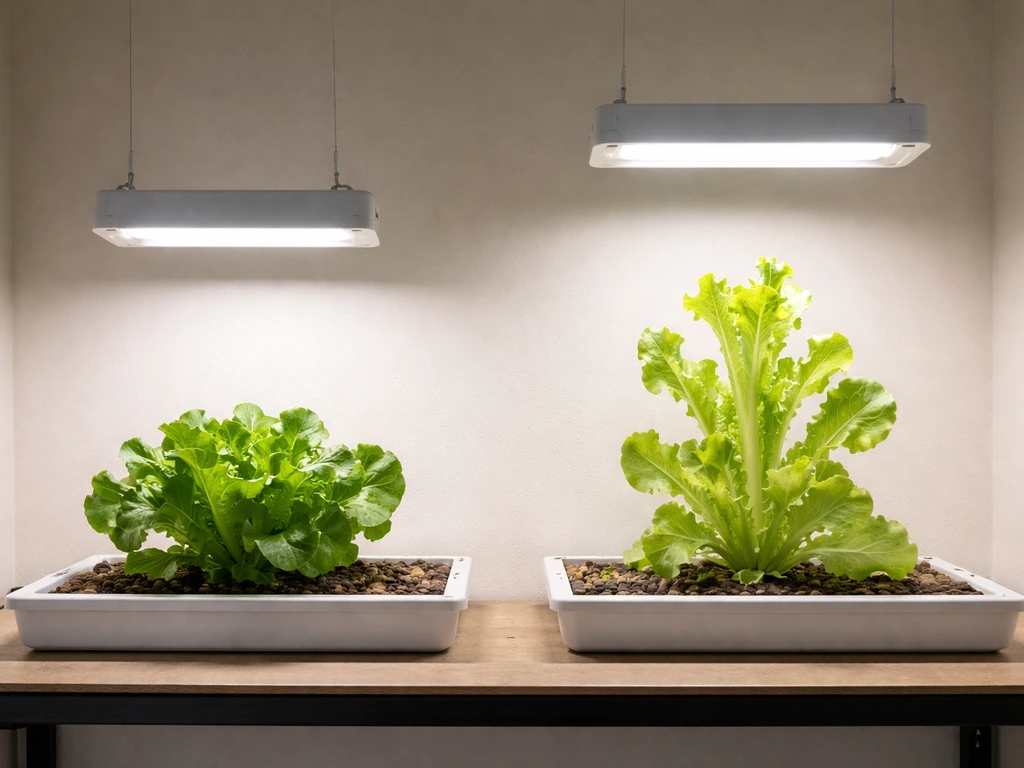
Light intensity drops off sharply as distance increases, so where you hang your light makes a huge difference. If your lettuce looks pale and is stretching toward the light (leggy stems, widely spaced leaves), move the light closer. Start at 12 to 18 inches above the canopy for most LED panels, and adjust based on what you see. If leaves look bleached or you notice any unusual drying at the tips closest to the light, raise it a few inches. Lettuce rarely burns under LED grow lights the way it might under high-intensity discharge lights, but it does respond noticeably to distance changes.
How to measure and adjust light at home
You don't need expensive equipment to get a feel for whether your lettuce is getting enough light. There are a few approaches, from the completely free to the moderately gear-involved.
The shadow test (free, good enough for outdoors)
On a sunny day at noon, hold your hand about a foot above a piece of white paper in the spot where you want to grow lettuce. A sharp, distinct shadow means full sun. A soft but visible shadow means partial shade, which is fine for lettuce. No shadow at all means deep shade, and that spot won't work without a grow light supplement.
Using a smartphone app for indoor light
For indoor setups, the Photone app (available for iOS and Android) can measure PPFD directly using your phone's camera. Iowa State University Extension notes that PPFD is a more accurate measurement than lux for planning indoor supplemental light, because lux measures brightness as humans perceive it rather than the wavelengths plants actually use for photosynthesis. Photone gives you a PPFD reading that you can then compare to the 150 to 200 µmol·m⁻²·s⁻¹ target for lettuce. If you want to convert a lux reading you already have, the Horticulture Lighting Group provides a lux-to-PPFD conversion method online, though it's an approximation because the conversion varies by light source type.
Daily timing: when to run lights and how to track hours
- Set a plug-in or smart outlet timer when you install any grow light. Manual scheduling almost always drifts.
- For indoor lettuce, start with a 14-hour on / 10-hour off cycle and observe growth over two weeks.
- If plants look healthy and compact with good leaf color, the schedule is working. If they're stretching or pale, add an hour or two.
- If you notice bolting signs (a central stalk starting to elongate upward) and it's not heat-related, try reducing the photoperiod to 12 to 14 hours.
- For outdoor timing, count actual daylight hours at your specific location using a weather app or sunrise/sunset tool. Don't estimate based on what time it feels like the sun sets.
Troubleshooting: too little light, too much heat, and bolting
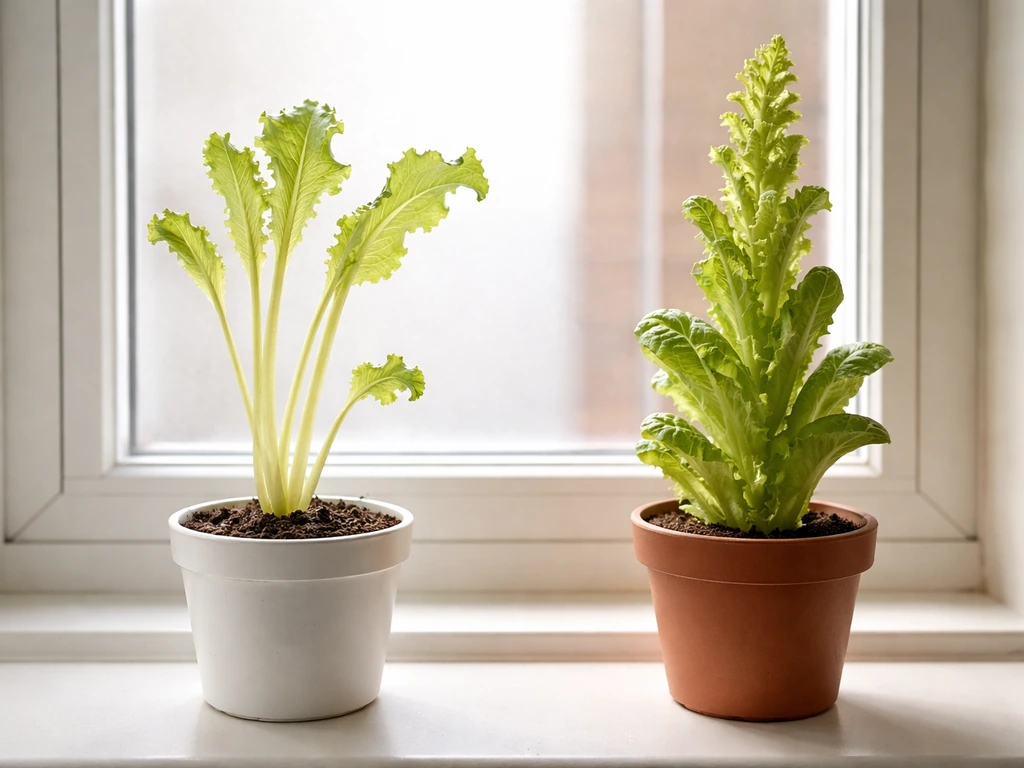
Signs your lettuce isn't getting enough light
- Leggy growth: long stems with widely spaced leaves, plant leaning toward the light source
- Pale or yellowish-green leaves instead of deep green or the variety's expected color
- Very slow growth: lettuce that hasn't sized up noticeably in two to three weeks
- Thin, floppy leaves that lack structure
If you're seeing any of those, the fix for indoor plants is to move the grow light closer or increase the photoperiod by two hours. For outdoor plants, find a less shaded spot or prune overhanging vegetation. Lettuce responds relatively quickly once light improves, usually showing visibly better growth within a week.
Signs your lettuce is getting too much harsh light or heat
- Bolting: a central stem shooting upward, plant going tall and vertical instead of leafy and spreading
- Bitter taste, even in young leaves
- Leaf edges turning brown or crispy (sunscald/sunburn)
- Leaves cupping upward or wilting despite adequate watering
Heat and excess light often work together to cause these problems. Purdue Master Gardener Extension notes that bolting is triggered by hot weather and long days acting together. If you're outdoors in summer and seeing bolt signs, add shade cloth (30 to 40% shade cloth works well for lettuce) or move containers to a spot with afternoon shade. Harvest whatever leaves you can immediately because the bitterness will intensify quickly once bolting starts. If you're indoors and seeing bolting, first check whether your space is too warm (above 70 to 75°F is a risk) and whether your light schedule is running longer than 16 to 18 hours.
One thing worth emphasizing: if lettuce is both heat-stressed and in low light at the same time, heat usually wins as the more urgent problem. Shade can reduce heat stress even if it also reduces light, and that trade-off is often worth making in summer. A shaded, cooler lettuce plant will outperform a sun-baked one every time in warm conditions.
Container and hydroponic growing: does the setup change the light rules?
The light targets themselves don't change based on whether you're growing in a container, a raised bed, or a hydroponic system. Lettuce wants the same DLI and PPFD regardless of how its roots are fed. What changes is how easy it is to control the light environment.
Containers are flexible: you can move them to follow the sun in spring and pull them into shade in summer heat, something you obviously can't do with an in-ground bed. If you're growing in containers on a balcony or patio, use that mobility deliberately. Park them in full morning sun in April and May, then shift them to a shadier spot in June and July. This one adjustment can extend your lettuce season by several weeks.
Hydroponic lettuce, whether you're using a simple Kratky jar or a full nutrient film technique system, is almost always grown indoors, which means you're fully controlling the light with grow lights. Commercial greenhouse growers target a DLI of 10 to 16 mol·m⁻²·d⁻¹ for hydroponic leafy greens, using 16 to 20 hours of supplemental light at 100 to 200 µmol·m⁻²·s⁻¹. For a home hydroponic setup, a 14 to 16 hour schedule at 150 to 200 µmol·m⁻²·s⁻¹ hits that range comfortably and keeps you below the bolting-risk threshold. Light isn't the only factor in hydroponic success, of course. Nutrients and water management matter just as much, but getting the light right first gives you a solid foundation to build on.
If you're also thinking about spacing in your container or hydroponic setup, how much room you give each plant affects how well each one can actually use the light it receives. To make sure your lettuce gets everything it needs beyond light, also review what nutrients lettuce needs for healthy growth what nutrients lettuce need to grow. If you want to fine-tune spacing for your setup, check how much space each lettuce plant needs to grow properly how much space do lettuce need to grow. If you're also trying to dial in daily care, you'll likely want to pair your light plan with a watering routine, since watering needs depend on heat, container size, and growth stage how much space each lettuce plant needs to grow properly. Crowded plants shade each other even under a strong grow light, so getting spacing right works hand-in-hand with getting light right.
Your next steps based on your setup
Here's how to put all of this into action depending on where you are right now.
| Your Situation | Immediate Action | What to Watch For |
|---|---|---|
| Outdoor garden, spring or fall | Pick a spot with 6–10 hours of direct sun; partial shade is fine if that's what you have | Slow growth = needs more light; fast bolting = too warm, add shade |
| Outdoor garden, summer | Find a spot with morning sun and afternoon shade, or use 30–40% shade cloth | Bitter leaves or central stalk forming = act fast, harvest what you can |
| Indoor, south window only | Place pots within 12 inches of the glass; add a basic LED grow light for 4–6 extra hours | Leggy stems = not enough light, move light closer or extend schedule |
| Indoor, grow light only | Run light 14–16 hours/day at 12–18 inches above canopy; use a timer | Pale or stretching plants = raise intensity or duration; bolting = reduce hours or check temp |
| Hydroponic indoor | Target DLI 14–17; set 16h schedule at 150–200 µmol at canopy level | Use Photone app to verify PPFD at the canopy; adjust distance as plants grow taller |
Lettuce is forgiving enough that even an imperfect light setup will usually produce something harvestable. But once you dial in the right hours and intensity for your specific situation, you'll notice the difference quickly in leaf size, color, and flavor. Start with the numbers above, watch how your plants respond in the first two weeks, and adjust from there. That feedback loop is how you get from "it's growing" to "it's thriving."
FAQ
If my lettuce gets 6 hours of sun but it is very hot afternoon sun, is it still enough light?
You may have enough total light hours, but heat can push lettuce to bolt and taste bitter. In summer, prioritize morning sun plus afternoon shade (often by moving containers or using shade cloth) even if that reduces direct hours, because the temperature stress tends to matter more than squeezing extra sun.
How can I tell the difference between too little light and too much light on lettuce?
Too little light usually shows as slow growth, pale color, and stretching (leggy stems, leaves spaced farther apart). Too much light often shows as stress signs that can include edge browning or bleaching near the brightest side, and in warm weather it is commonly followed by bolting.
Does lettuce need a dark period every day if I’m using grow lights?
Yes. Keep a consistent dark cycle, and avoid running the light continuously. For most home setups, aim for about 14 to 16 hours on with an off period that stays similar day to day, since very long photoperiods can increase bolting risk.
Will adding more light indoors always improve lettuce quality and speed?
Not necessarily. If you already hit the lettuce DLI target, extra light can raise stress, and longer days can trigger bolting. The better approach is to match both intensity (PPFD) and total daily light (DLI) to the targets, then adjust by small steps.
What if I can’t reach the DLI target with my grow light, is lettuce still worth growing indoors?
Yes, you can still get harvestable lettuce, but growth will be slower and heads or large leaf mass may be smaller. If you are consistently below the DLI range, the most effective fixes are moving the light closer to raise PPFD, lengthening the photoperiod by about an hour, and improving air circulation to prevent heat buildup near the canopy.
Can I use partial shade outdoors and still avoid bolting?
Partial shade can help, especially in summer. The key is reducing afternoon heat while maintaining as much bright light as possible earlier in the day. If bolting starts, remove the most stressed plants quickly and harvest remaining leaves sooner, since bitterness intensifies as the plant transitions.
Does lettuce need the same sun hours for head lettuce versus leaf lettuce?
Leaf varieties generally tolerate lower light a bit better than tight head types. If your location is borderline, start with loose-leaf lettuce because it tends to perform better in 4 to 6 hours of sun or dappled shade, while dense heads usually need closer to the higher end of the light targets.
How do I handle changing seasons if my window light shifts week to week?
Re-check light by using your setup’s performance indicators, then adjust. Indoors, window strength can drop sharply in winter, so you may need supplemental lighting. Outdoors, shift container locations (more morning sun in spring and less direct afternoon sun in summer) to keep temperature stress down.
Is 4 to 6 hours of direct sun always required, or can lettuce grow with mostly indirect light?
It can grow with less than direct sun, but indirect or dappled shade often results in slower growth and smaller leaves. If you see persistent pale leaves, slow development, or very stretched plants, that is a signal to add supplemental light or increase exposure to brighter conditions.
When should I move my grow light up or down?
Adjust based on your observations. Move it closer if lettuce is stretching and staying pale, and raise it if you notice bleaching or unusual dryness near the top leaves. Distance changes can significantly alter PPFD, so make one adjustment at a time and reassess over a few days.