You can absolutely grow cos lettuce in pots, and it is one of the most rewarding container crops you can try.
How to Grow Cos Lettuce in Pots: Beginner Guide
Marcus Holloway
4 Jul 2026
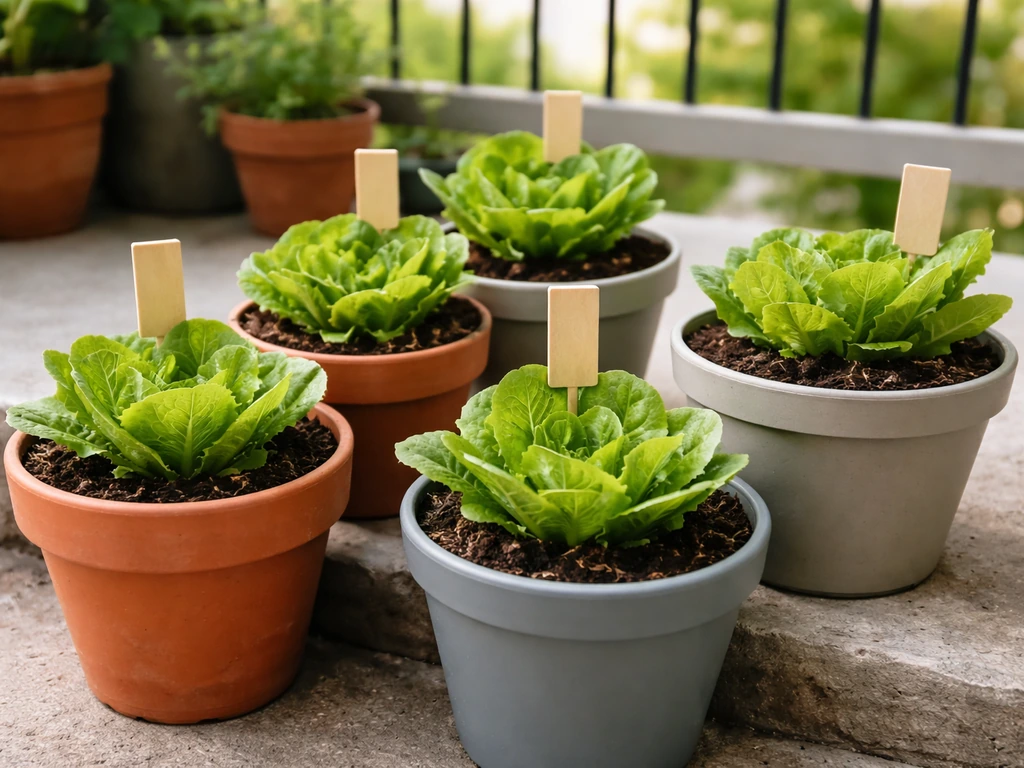
Use a pot at least 8 inches deep and 12 inches wide, fill it with a loose, moisture-retentive potting mix, sow seeds or plant starts 8 inches apart, keep it in a spot that gets 6 hours of light, water consistently, and you will be harvesting outer leaves in about 30 days and full heads in 65 to 70 days.
Cos lettuce from seed usually takes about 30 days to start harvesting outer leaves, and around 65 to 70 days to reach full heads in a good pot setup grow cos lettuce from seed. The single biggest mistake people make in containers is letting the soil dry out or letting the plant overheat, both of which cause bolting and bitter leaves. Get those two things right and the rest is easy.
Choosing the right cos lettuce variety for pots
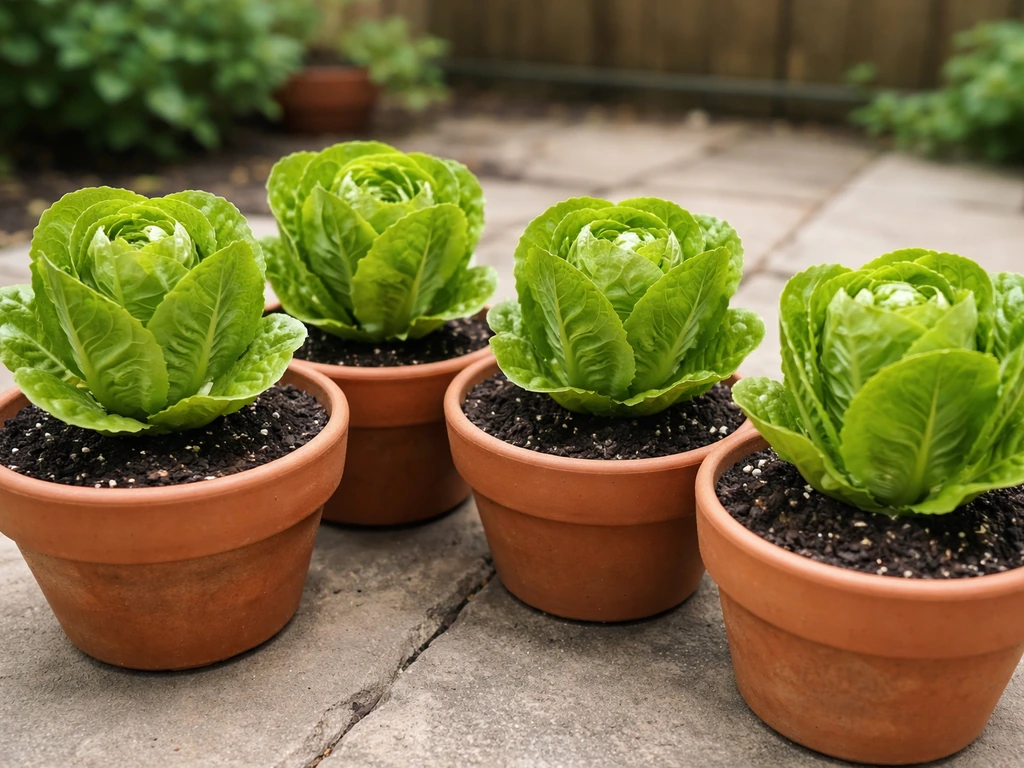
Not every cos or romaine variety is equally suited to container life. Compact and semi-compact varieties perform best because they do not demand as much root space and they mature faster, which means less time managing heat and water in a small pot. Here are the varieties I keep coming back to for container growing:
- Little Gem: The single best choice for pots. Heads stay compact (about 6 inches tall), mature in roughly 55 to 65 days, and tolerate container conditions better than full-sized romaines. You can fit three plants in a 12-inch pot.
- Parris Island Cos: A reliable classic with 65 days to maturity. It grows taller (up to 12 inches) so it needs a slightly deeper pot, but it is heat-tolerant relative to other romaines and the flavor is excellent.
- Fordhook: A shorter, sturdy romaine that works well in containers and handles brief warm spells reasonably well.
- Rouge d'Hiver: A beautiful red-tinged variety with decent bolt resistance. Slightly slower to mature but worth it if you want color on your patio or windowsill.
- Freckles (Flashy Trout's Back): Striking speckled leaves, compact enough for pots, and one of the more heat-tolerant options for summer growing.
If you are growing indoors under grow lights or in a climate with warm summers, lean toward Little Gem or Freckles. If you are in a cooler climate or growing in spring and autumn, Parris Island Cos gives you a big, satisfying head with minimal fuss. If you are wondering how to grow Parris Island Cos lettuce in a container, focus on pot depth, steady moisture, and timing to avoid bolting. Parris Island Cos is also great if you want to grow a specific named variety and track its progress, which is worth exploring in more detail as part of understanding how different cos types perform across conditions.
Pot size, container setup, and soil or growing medium
How big does the pot actually need to be?
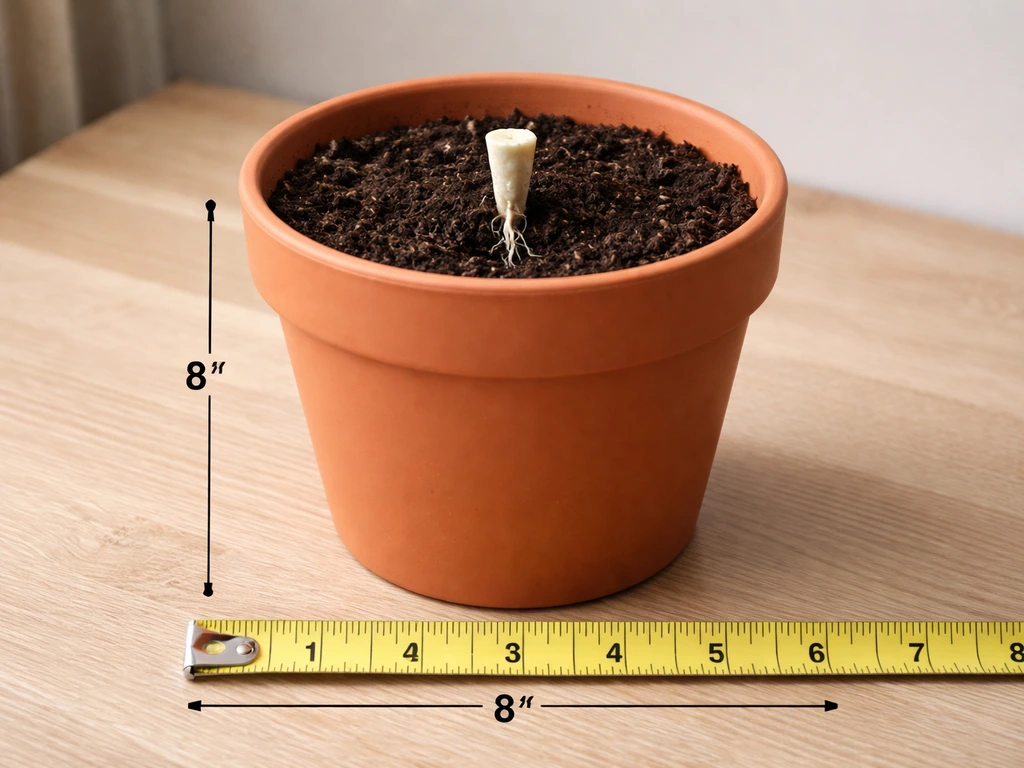
Cos lettuce has a moderately deep taproot, so depth matters more than width. For a single plant, use a pot that is at least 8 inches deep and 8 inches wide. For multiple plants in one container, aim for 12 inches deep and at least 12 inches wide. A window box at least 8 inches deep lets you grow a full row, which is ideal for patios and balconies. I have had great results using fabric grow bags in the 3 to 5 gallon range because they drain well and prevent overwatering.
Material matters too. Terracotta pots breathe well but dry out fast, so you will be watering more often. Plastic and glazed ceramic retain moisture longer, which is actually helpful for lettuce in warmer weather. Whatever you choose, drainage holes are non-negotiable. Lettuce roots sitting in waterlogged soil will rot within days.
The right soil mix for container cos lettuce
Do not use garden soil in pots. It compacts, drains poorly, and will stunt your lettuce. Instead, use a high-quality peat-free potting mix (or a peat-based mix if that is what you have access to) and improve it slightly before planting. My go-to mix is two parts quality potting compost, one part perlite for drainage and aeration, and a small amount of slow-release granular fertilizer worked into the top few inches.
This gives the roots room to breathe, retains enough moisture to avoid constant watering, and provides a nutrient base so you are not chasing deficiencies from day one. If you want to go soilless, cos lettuce grows extremely well in a coco coir and perlite blend with regular liquid feeding.
Starting seeds vs transplanting, and spacing or thinning
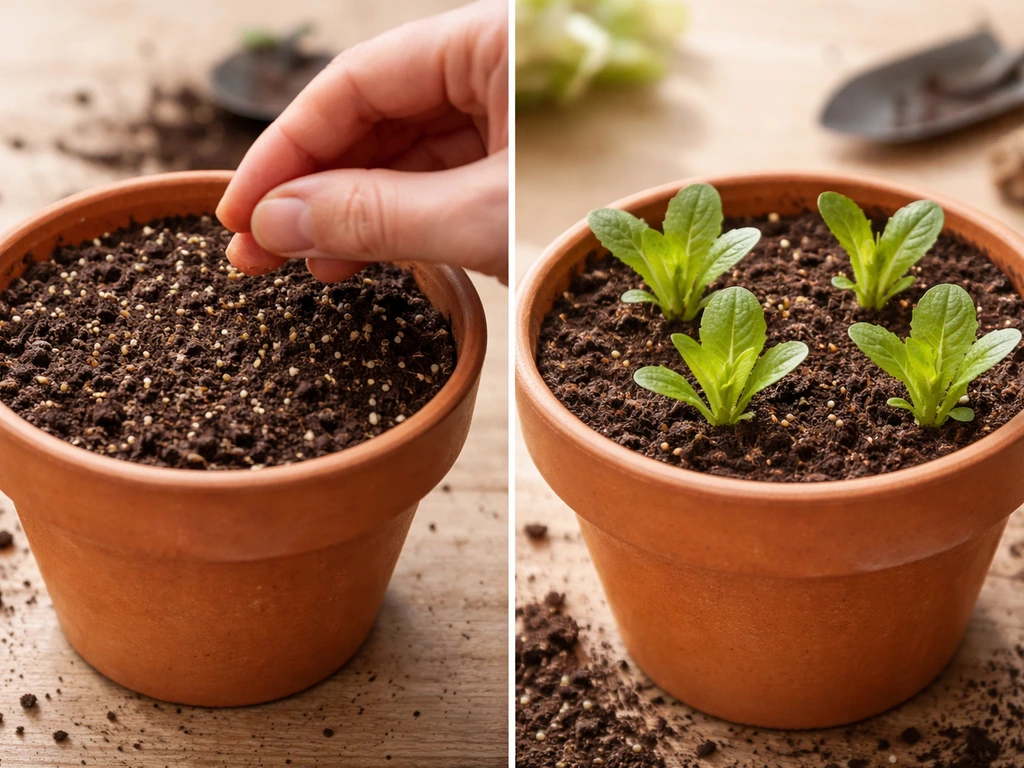
Seeds or transplants: which is better for pots?
Both work, but they have different advantages. Starting from seed is cheaper, gives you more variety options, and is genuinely easy with lettuce. Transplants (seedling punnets from the garden centre) save 3 to 4 weeks and are a good choice if you have missed the ideal sowing window. If you are growing outdoors and it is already warming up, buy transplants and get them in now. If you have time on your side, seeds are more satisfying and cost a fraction of the price.
For germination, lettuce seeds need a soil temperature of around 60 to 70°F (15 to 21°C) to germinate reliably. Parris Island Cos germinates well at 70 to 85°F soil temperature. If your potting mix is too cold (below 40°F / 5°C), seeds will sit dormant. If it is too warm (above 85°F / 29°C), germination rates drop sharply. Indoors, a warm windowsill or a heat mat set to 65°F works well. Outdoors in summer, pre-soak seeds for 30 minutes and sow in the evening so they get a cool overnight period to kick off germination.
Sowing depth, spacing, and thinning
Sow seeds about 1/8 to 1/4 inch deep. Lettuce seeds need some light to germinate, so do not bury them. I usually press them lightly into the surface and cover with just a thin dusting of compost or vermiculite. Sprinkle a few seeds per spot and thin to the strongest seedling once they are 1 to 2 inches tall.
For spacing in containers, aim for 8 inches between plants if you want full heads. You can go as close as 6 inches if you plan to harvest as baby leaves and cut-and-come-again style. In a standard 12-inch round pot, one or two plants is ideal for full heads. In a 24-inch window box, you can fit three to four plants at the 6 to 8 inch spacing. Overcrowding is one of the most common container mistakes. Crowded plants compete for nutrients and moisture, airflow drops, and you end up with leggy, disease-prone plants.
Light and temperature: preventing bolting in containers
How much light does cos lettuce need?
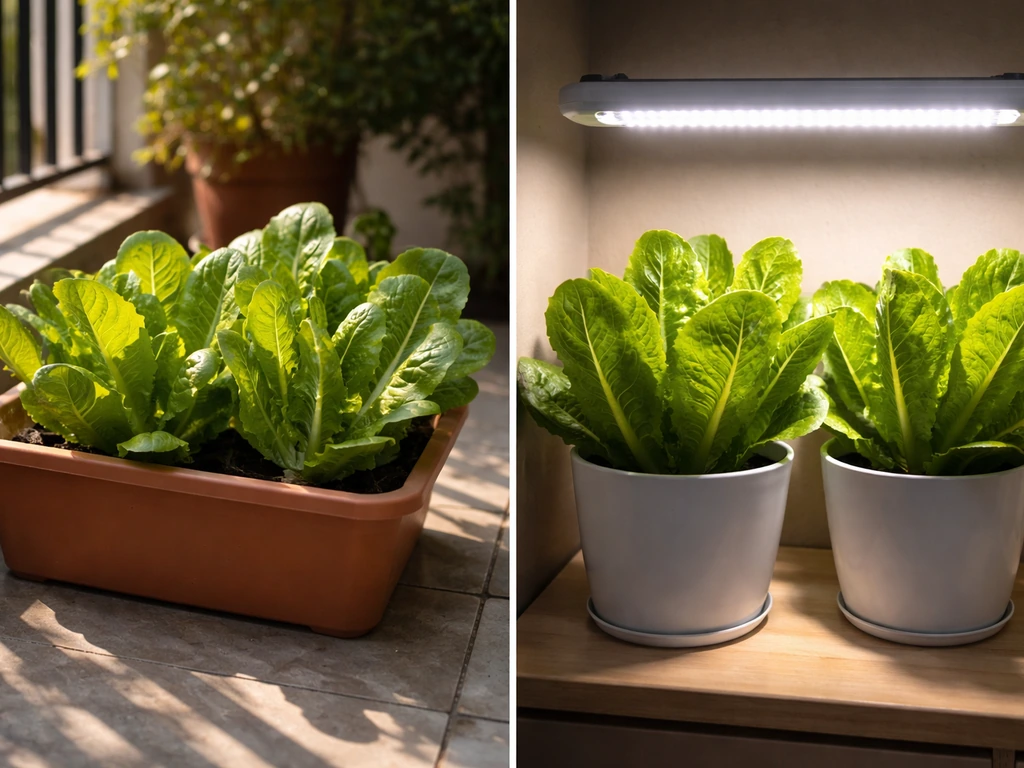
Outdoors, cos lettuce wants 6 hours of direct sunlight per day. In hot climates or during summer, some afternoon shade (especially from around 1 to 4 pm) is genuinely helpful and will slow bolting. A spot that gets morning sun and dappled afternoon shade is close to ideal for summer growing. In cooler spring and autumn conditions, full sun all day is fine and will accelerate growth.
Indoors, you need a grow light if your windows do not deliver consistent bright light. A south-facing window in summer may be enough, but in most home setups, dedicated grow lights are the difference between thriving plants and pale, leggy disappointments. Use a full-spectrum LED grow light positioned 6 to 12 inches above the plants and run it for 14 to 16 hours per day. Cos lettuce is not as demanding as fruiting crops, so even a modest 20 to 30 watt LED panel will support two or three pots of lettuce well.
Temperature and bolting: the most important thing to understand
Cos lettuce grows best between 60 and 70°F (15 to 21°C). It can handle brief daytime highs of 80 to 85°F if the soil stays consistently moist and nighttime temperatures drop back down to the 60s. Many modern lettuce cultivars can tolerate brief daytime temperatures in the 80, 85°F range if soil moisture stays adequate and nighttime temperatures remain cool brief daytime temperatures in the 80–85°F range. The moment nights stay warm and days push past 85°F consistently, bolting (going to seed) becomes almost inevitable. Romaine is more heat-tolerant than head lettuce varieties, but it is still a cool-season crop at heart.
The biggest advantage of growing in pots is that you can move them. On a hot July day, moving your pot into shade or indoors for the afternoon can literally buy you another two to three weeks before bolting. Use this. If you are growing indoors, keep the room temperature below 75°F during the day and avoid placing pots near heat sources or in direct sun through glass during summer, which can cook the roots fast.
Timing is your best tool for avoiding bolting. In most temperate climates, the best sowing windows for outdoor pot-grown cos lettuce are early spring (6 to 8 weeks before the last frost date) and late summer into autumn (8 to 10 weeks before first frost). If you are in a mild climate, winter growing in pots is very achievable. If you want a year-round supply indoors, grow lights and a cool room make it possible in any season.
Watering and feeding schedule for romaine in pots
Watering: consistent moisture without waterlogging
Cos lettuce in pots dries out faster than in-ground plants. The rule I follow is to check the top inch of soil every day. If it is dry, water thoroughly until water runs from the drainage holes. If it still feels damp, leave it another day. In warm weather, small pots may need watering once or even twice a day. In cool weather or indoors, every two to three days is more typical. Inconsistent watering, especially swinging between bone dry and waterlogged, is the number one cause of tip burn, bitter leaves, and stress-induced bolting in containers.
Water at the base of the plant rather than overhead where possible. Wet foliage sitting overnight promotes fungal disease, especially in humid climates. If you are using self-watering containers, they work very well for lettuce as long as you are not in a cold climate where the water reservoir can get too cold and slow growth.
Feeding: what, when, and how much
If you started with a quality potting mix that included slow-release fertilizer, you will not need to feed for the first four to six weeks. After that, a diluted liquid fertilizer every two weeks keeps growth strong. For leafy greens, you want a fertilizer with a higher nitrogen ratio since nitrogen drives leaf production. Something like a balanced 10-10-10 liquid feed works, but a dedicated leafy green formula (often labeled as high-N) is even better.
Avoid overfeeding. Too much nitrogen in a container can push lush, soft leaf growth that is more susceptible to aphids and fungal problems. If leaves are large, dark green, and growing steadily, your feeding is on track. If leaves look pale and growth is slow, increase feeding frequency slightly. If tips are browning or the plant looks stressed despite adequate water, ease off feeding and check that drainage is not blocked.
Growth timeline and when or how to harvest
Here is a realistic timeline for pot-grown cos lettuce from seed under good conditions:
| Stage | Days from Sowing | What to Expect |
|---|---|---|
| Germination | 3–7 days | Tiny seed leaves (cotyledons) emerge at the surface |
| Seedling stage | 7–14 days | First true leaves appear; thin to final spacing |
| Baby leaf harvest possible | 25–35 days | Outer leaves reach 3–4 inches; cut-and-come-again begins |
| Half-grown plant | 35–50 days | Clear romaine shape forming; leaves sweetening |
| Full head harvest | 55–70 days | Inner leaves are tightly packed; harvest before bolting signs |
These timelines apply to most compact and standard cos varieties. Parris Island Cos sits at 65 days to maturity from transplant, so add another week or two if you are counting from seed. Little Gem often comes in at 55 to 60 days. How long cos lettuce takes to grow is one of the questions I get most often, and the honest answer is that container conditions, temperature, and light quality can push that range by 10 to 14 days in either direction.
How to harvest: cut-and-come-again vs full heads
You have two main options and you can actually use both on the same plant. Cut-and-come-again means snipping outer leaves at about 1 inch above the base from around 30 days onwards. The plant keeps producing new growth from the center for several more weeks. This is the most productive approach for containers since you get a continuous supply rather than one big harvest. For a full head, wait until the inner leaves are packed and the head feels firm, then cut the whole plant at the base with a sharp knife. Some people leave the root stub in the pot and it will often resprout a second, smaller flush of leaves.
Harvest in the morning when leaves are at their most hydrated and crisp. Do not wait until you see the plant starting to bolt (the central stem begins to elongate rapidly and the flavour goes bitter fast). If you spot early bolting signs, harvest the whole head immediately and enjoy it while you can.
Troubleshooting common pot-grown lettuce problems
Bolting (plant going to seed early)
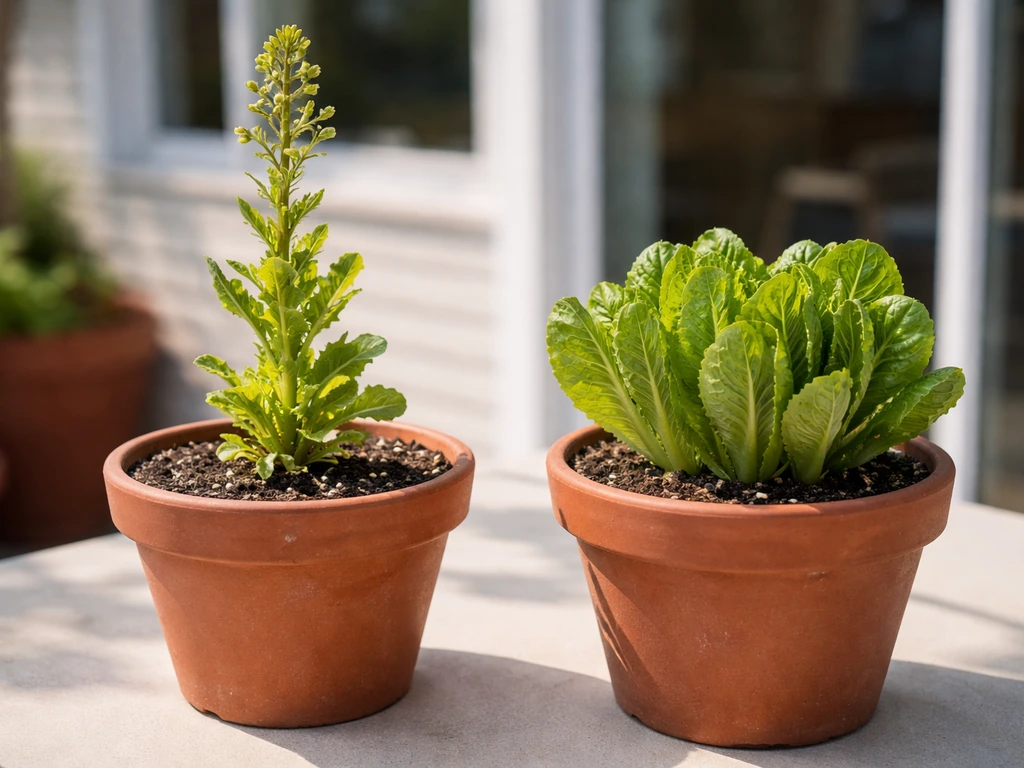
If your plant suddenly sends up a tall central stem with small leaves, it is bolting. The main triggers in containers are heat, irregular watering, and long days. Once bolting starts you cannot reverse it, but you can harvest immediately and still eat the leaves. Prevention is the fix: choose bolt-resistant varieties, keep soil consistently moist, move the pot to shade during the hottest part of the day, and time your sowing for cooler seasons.
Bitter leaves
Bitterness usually comes from heat stress, inconsistent watering, or a plant that is starting to bolt. If bitterness shows up before any bolting signs, check your watering first. Consistent moisture produces sweeter, milder leaves. Outer leaves are naturally more bitter than inner ones, so if your outer leaves taste sharp but the inner ones are mild, that is completely normal.
Slow or stunted growth
If your plants are barely growing, the most likely culprits are: not enough light (especially indoors), soil temperature below 50°F, nitrogen deficiency, or roots that are pot-bound. Check each in order. Move to a brighter spot or add grow light hours, check that your potting mix has not been depleted of nutrients (feed with a liquid high-N fertilizer), and if the plant looks like it has been in the same pot for 8 weeks or more, upsize to the next pot and refresh with fresh potting mix.
Aphids
Aphids love soft lettuce leaves and can colonise a pot plant fast, especially indoors where there are no natural predators. Check the undersides of leaves regularly. If you spot them early, a strong blast of water from a hose or spray bottle knocks most off. For persistent infestations, spray with a diluted neem oil solution or insecticidal soap, coating the undersides of leaves. Repeat every 3 to 4 days for two weeks. Indoors, introducing ladybird larvae (if available) is effective but not always practical.
Slugs and snails
Outdoor pots are very vulnerable to slugs and snails, especially at night. Elevating pots on pot feet or a bench helps. Copper tape around the rim of the pot is reasonably effective. Checking plants in the evening with a torch and removing slugs by hand is tedious but works. Avoid slug pellets in containers if you are growing food you will eat.
Powdery mildew and downy mildew
Mildew usually shows up when airflow is poor, humidity is high, or plants are overcrowded. In containers, the fix is spacing plants correctly (back to that 6 to 8 inch spacing), watering at the base rather than overhead, and making sure pots are not crammed together with no air movement between them. Remove affected leaves immediately and improve ventilation. If you are growing indoors, a small fan running intermittently helps a lot.
Tip burn (brown leaf edges)
Tip burn is a calcium deficiency caused not by lack of calcium in the soil but by inconsistent watering preventing the plant from moving calcium into leaf tips. It is very common in container lettuce during warm weather. The fix is consistent, regular watering so there is no boom-and-bust moisture cycle. Tip burn does not make the plant unsafe to eat; just trim the affected edges.
Your next steps based on your situation
Where you are and what setup you have determines the best move right now. Here is a quick guide:
| Your Situation | Best Action Right Now |
|---|---|
| Outdoors, cool spring or autumn climate | Sow Parris Island Cos or Little Gem seeds directly into a prepared 12-inch pot today. Expect germination in 4–7 days. |
| Outdoors, hot summer (above 80°F regularly) | Buy transplants of a bolt-resistant variety (Little Gem or Freckles). Place in morning sun only. Water daily and move to shade by 1 pm. |
| Indoors with a sunny south-facing window | Sow seeds in a 12-inch pot, place on the sill, and monitor light. Supplement with a grow light if growth slows or leaves pale. |
| Indoors without reliable natural light | Set up a full-spectrum LED grow light, 14–16 hours per day, 6–12 inches above the pot. Sow Little Gem for the fastest results. |
| Balcony or patio in a warm climate | Use a fabric grow bag (3–5 gallon), choose Little Gem, water twice daily in heat, and move the bag to shade in the afternoon. |
Growing cos lettuce from seed is worth exploring in more depth if you want to understand how to time your sowing precisely and get the best germination rates. And if you are in a specific climate like Australia where seasons are flipped and summers run differently, the approach to pot growing shifts meaningfully for year-round success. If you are growing cos lettuce in Australia, focus on timing your sowing to your local seasons to avoid heat stress and bolting. But whatever your setup, get a pot filled and seeds sown today. Cos lettuce is one of those crops that rewards just getting started.
FAQ
Can I harvest cos lettuce multiple times from one pot (cut-and-come-again)?
Yes, but do it early and lightly. If you want multiple harvests, start cut-and-come-again once the plant has established outer leaves (around the one-month mark), remove only the outer ring first, and avoid stripping the center. If the plant is stressed (wilted, bitter, or showing heat stress), delay harvesting because cutting can trigger faster bolting.
How often should I fertilize cos lettuce in pots, and when do I need to refresh the soil?
Best results come from refreshing the pot when growth slows. If you used a slow-release fertilizer, you can usually go 4 to 6 weeks without extra feeding, then switch to diluted liquid every two weeks. If leaves pale early, growth stalls, or the pot has been in place for about 8 weeks or more, refresh by topping up with new potting mix and consider upsizing.
What is the best way to transplant cos lettuce in a container without shocking it?
Avoid doing the transplanting when it is hot. Plan transplanting for cool morning or evening, keep the root ball intact, and water in thoroughly. After transplant, keep the mix consistently moist for the first week, then return to your normal check-the-top-inch watering routine.
My cos lettuce looks wilty or diseased, how can I tell if it is overwatering or underwatering?
If the soil stays wet and leaves are dark or mushy, reduce watering immediately and check drainage. Ensure the pot has clear drainage holes, and let the top inch dry slightly between waterings in mild weather. Rot and persistent wilting are often overwatering problems rather than underwatering.
Are self-watering planters or self-watering pots good for cos lettuce?
Yes, and it can help in warm weather, but choose the right system. A self-watering container works if you keep the reservoir from getting cold indoors (cold water slows lettuce growth). Also watch the soil surface, if it stays soggy or smells, reduce the fill level or switch to a mix with more perlite.
What is the simplest watering routine so I do not get bitter leaves or tip burn?
Aim for slightly dry edges, not completely dry soil. A practical rule is to water thoroughly until water drains, then wait until the top inch is dry before watering again. Mulching the surface with a thin layer of compost can reduce evaporation, but do not bury the plant crown.
How do I fix leggy, pale cos lettuce growing indoors?
Start by checking light before anything else. If you see tall, floppy growth with pale leaves, you likely need more brightness or longer grow-light hours. A good target is 14 to 16 hours under LEDs placed about 6 to 12 inches above, and keep the light running on a consistent schedule.
I sowed too many seeds, should I thin them in the pot, and how far apart should seedlings end up?
Thin by either cutting or transplanting the extras while seedlings are small. For full heads in small pots, space is critical because crowded plants reduce airflow and increase disease risk. If you already have overcrowding, remove the weakest seedlings immediately to restore spacing.
Do larger pots prevent bolting better than smaller pots?
A big pot does not eliminate the heat problem, but it slows it down. In summer, you still need to protect roots from overheating, move pots to morning sun or add afternoon shade, and avoid black plastic or dark containers in direct sun when possible.
If my lettuce tastes bitter, can I save it, or should I harvest immediately?
Yes. When leaves taste sharply bitter but you are not seeing bolting yet, you can harvest the mildest inner leaves first and use them soon. If bolting signs start, harvest the whole head promptly, but once a plant is actively bolting, tenderness drops quickly, so prioritize prompt use.
What are the earliest bolting signs in containers, and what should I do when I spot them?
Keep an eye on the center, bolting usually shows as rapid central stem elongation, smaller leaves, and a more upright growth habit. Once it starts, you cannot reverse it, but you can still harvest leaves immediately. Best prevention is steady moisture plus heat management through pot movement and timing.
Can I grow cos lettuce in pots during cold weather, and should I adjust watering?
Yes, but use caution. Lettuce generally tolerates light frost, yet growth can slow and the soil can stay wet longer. If nights are very cold, bring pots under cover or place them against a wall, and reduce watering slightly until the top inch dries.
What is the most effective way to get rid of aphids on potted cos lettuce?
When you see aphids, act early. A first step is a strong spray to knock them off, then monitor daily for a week. If they return, use insecticidal soap or neem oil and repeat every few days for about two weeks, coating leaf undersides thoroughly.
How can I prevent slugs and snails from destroying cos lettuce in outdoor pots?
Do not use slug pellets for edible crops. Instead, use physical barriers like copper tape on the rim, place pots on pot feet or a bench, and check with a torch in the evening. Hand removal is simple but requires consistency during slug-heavy periods.