You can grow excellent lettuce on a patio in containers, and it is genuinely one of the easier vegetables to pull off in a small outdoor space. Sow seeds or transplant seedlings into a pot at least 6–8 inches deep, give them 4–6 hours of morning sun (with shade from afternoon heat), keep the soil consistently moist, and you will be cutting leaves in as little as 25–30 days. The main things that kill patio lettuce are heat-triggered bolting, irregular watering, and choosing the wrong variety for your season. Get those three right and you will have fresh greens on a rolling basis all spring and fall. If you want a step-by-step plan tailored to your patio setup, follow the guidance on container size, spacing, light, watering, and harvesting how to grow lettuce in a small space.
How to Grow Lettuce on a Patio in Containers
Best lettuce varieties for a patio
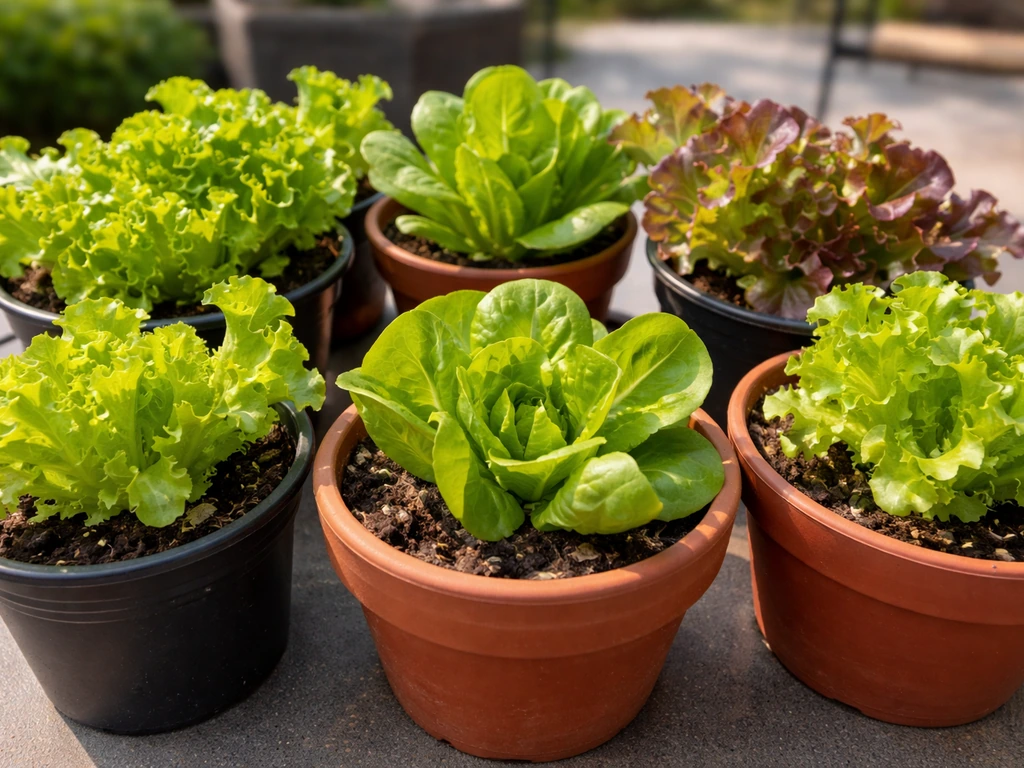
Not all lettuce behaves the same way in a pot. Crisphead types like iceberg need a long, cool season and form tight heads that are difficult to harvest repeatedly, so they are honestly the worst fit for a patio container. The types you want are loose-leaf, butterhead (also called bibb or Boston), and romaine. Loose-leaf varieties are the fastest and most forgiving: they do not need to form a head, they regrow after cutting, and many mature in 40–50 days from seed. Butterhead types take about 55–65 days but are incredibly productive and bolt-resistant compared to crisphead. Compact romaine varieties work well too, typically maturing in 60–70 days.
For a patio specifically, prioritize bolt-resistant and quick-maturing varieties. These are the ones I reach for most often:
- Black Seeded Simpson (loose-leaf, ~45 days, heat-tolerant, a classic for containers)
- Oak Leaf (loose-leaf, ~45–50 days, deeply lobed leaves, good cut-and-come-again performer)
- Buttercrunch (butterhead, ~55 days, slow to bolt, excellent flavor, compact enough for a 12-inch pot)
- Little Gem (compact romaine, ~55–60 days, perfect for smaller containers)
- Tom Thumb (miniature butterhead, ~55 days, designed for small spaces and pots)
- Red Sails (loose-leaf, ~45 days, red-tinged, handles mild heat better than most)
If you are growing in late spring or early fall when temperatures are climbing or uncertain, lean toward the loose-leaf varieties and anything labeled 'slow bolt' or 'heat tolerant' on the seed packet. Those two words do real work when your patio gets afternoon sun in June.
Choosing containers, soil, and spacing
Container size and type
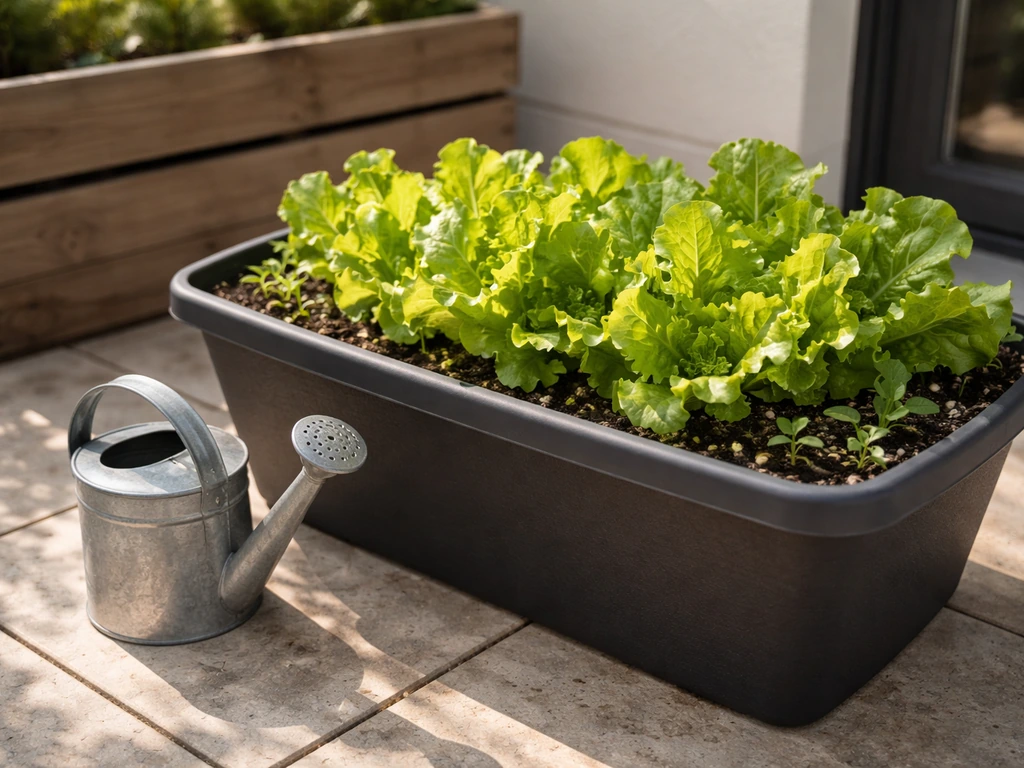
Lettuce has a shallow root system, which actually makes it one of the better container crops. You need at least 6–8 inches of depth for loose-leaf types and blank" rel="noopener noreferrer">8–12 inches for butterhead and romaine. A 3-gallon container is a practical minimum for two to three plants. Wide, shallow planters, window boxes, and half-barrel planters all work well. Yes, you can grow lettuce in a window box, as long as you choose the right varieties and give them enough depth, light, and drainage. What does not work is anything without drainage holes. If your decorative pot has no drainage, either drill holes in the bottom or use it as a sleeve around a plastic nursery pot that does have drainage.
Material matters more on a patio than in a garden bed. Dark-colored plastic pots absorb heat and can cook roots when your patio gets direct afternoon sun. Light-colored containers, fabric grow bags, or glazed ceramic pots stay cooler and are much better choices for lettuce, which prefers soil temperatures between 55°F and 70°F.
Soil mix
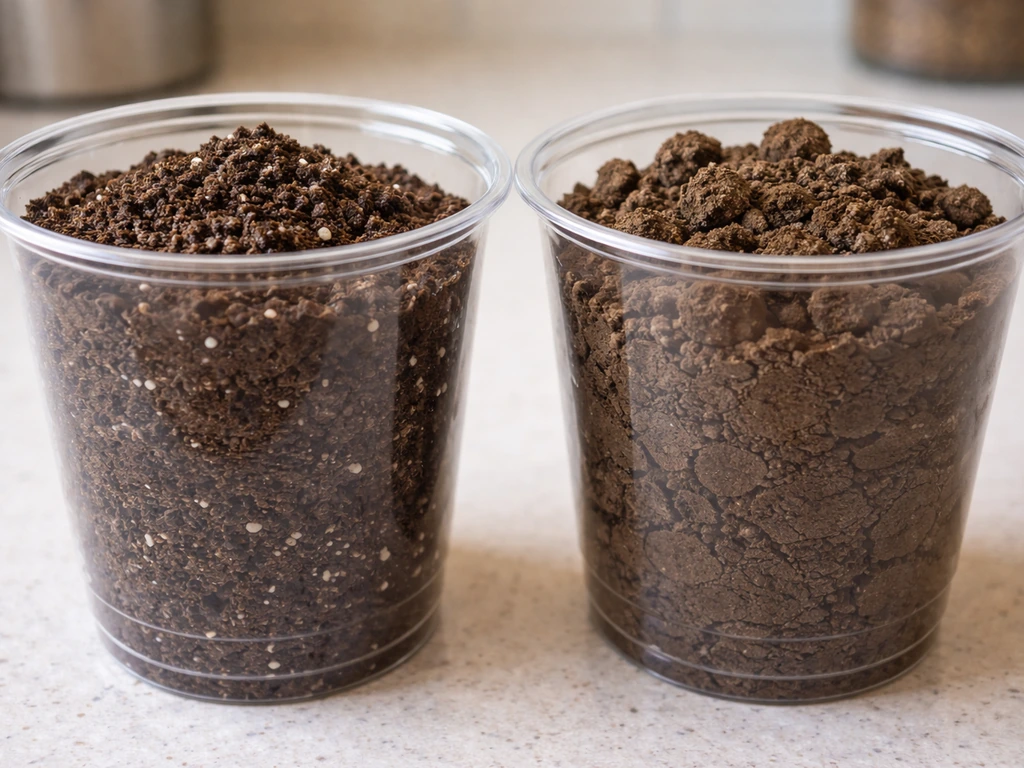
Use a quality potting mix, not garden soil or topsoil. Garden soil compacts in pots, drains poorly, and invites disease. A potting mix designed for vegetables or containers keeps things loose, drains well, and holds just enough moisture. I like to mix in about 20–25% compost by volume for extra nutrients and moisture retention. If your mix feels very light and almost fluffy, that is usually a good sign.
Spacing
Spacing depends on what you want to harvest. For cut-and-come-again baby leaves, you can sow seeds densely at about 1 inch apart and thin to 2–3 inches once seedlings emerge. For full heads, final spacing should be 8–12 inches between plants. In a rectangular planter or window box, rows can be 6–8 inches apart for leaf types. Crowding plants leads to poor air circulation, which invites fungal disease, and it reduces the size and quality of each plant. Err on the side of more space rather than less.
Sowing, thinning, and your timeline from seed to harvest
How to sow
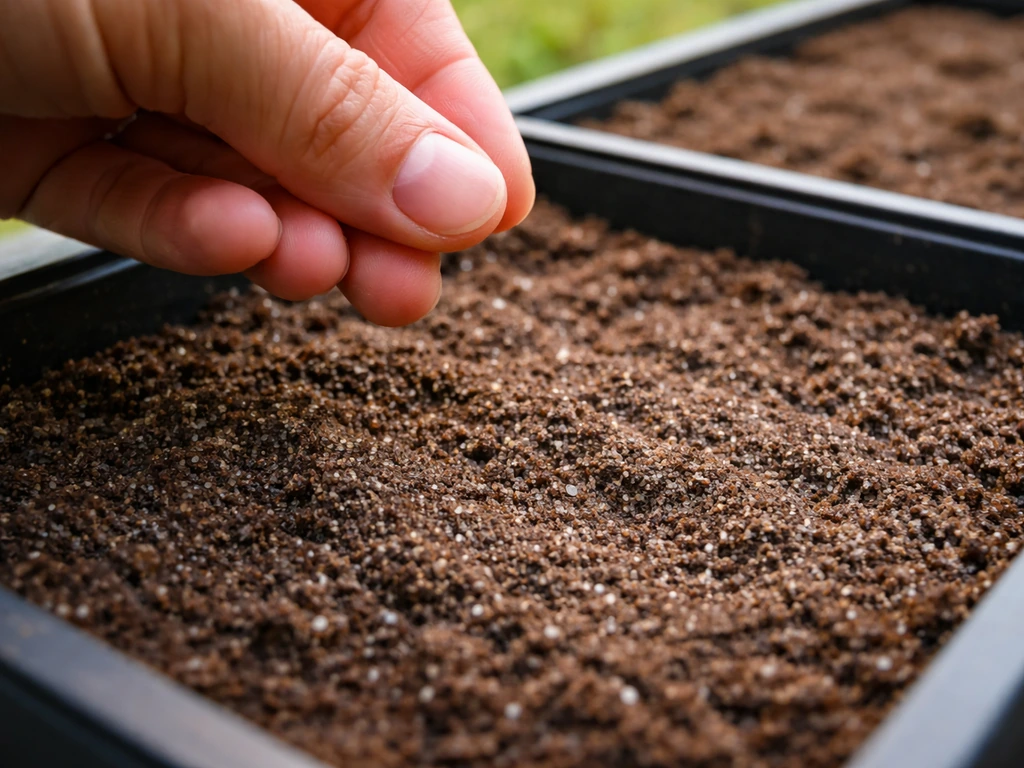
Lettuce seeds are tiny and need light to germinate, so do not bury them deep. Press them into the surface of moist potting mix and cover with just 1/8 inch of soil or a light dusting of vermiculite. Water gently with a misting setting so you do not wash the seeds around. Keep the soil moist but not soaking during germination. Seeds germinate best between 55°F and 70°F, so if your patio is hitting 80°F+ during the day already, start seeds in the morning when things are cooler or bring the container inside until germination happens.
Thinning
Once seedlings are about 1–2 inches tall, thin them to your target spacing. Thin by snipping at soil level with scissors rather than pulling, which disturbs neighboring roots. The thinnings are edible microgreens, so do not throw them out. Thinning is one of the steps beginners skip because it feels wasteful, but overcrowded seedlings produce weaker plants with worse flavor and more disease problems.
Realistic timeline
| Stage | Timeframe from Sowing |
|---|---|
| Germination | 3–7 days (at 55–70°F) |
| Baby leaf harvest (cut-and-come-again) | 25–30 days |
| Mature loose-leaf harvest | 40–50 days |
| Butterhead/bibb head harvest | 55–65 days |
| Compact romaine harvest | 60–70 days |
| Full crisphead (not recommended for pots) | 70–80+ days |
If you buy transplants from a nursery instead of starting from seed, subtract about 3–4 weeks from those timelines. Transplants are a great shortcut if you are getting started now and want a quick win.
Managing light and temperature on your patio
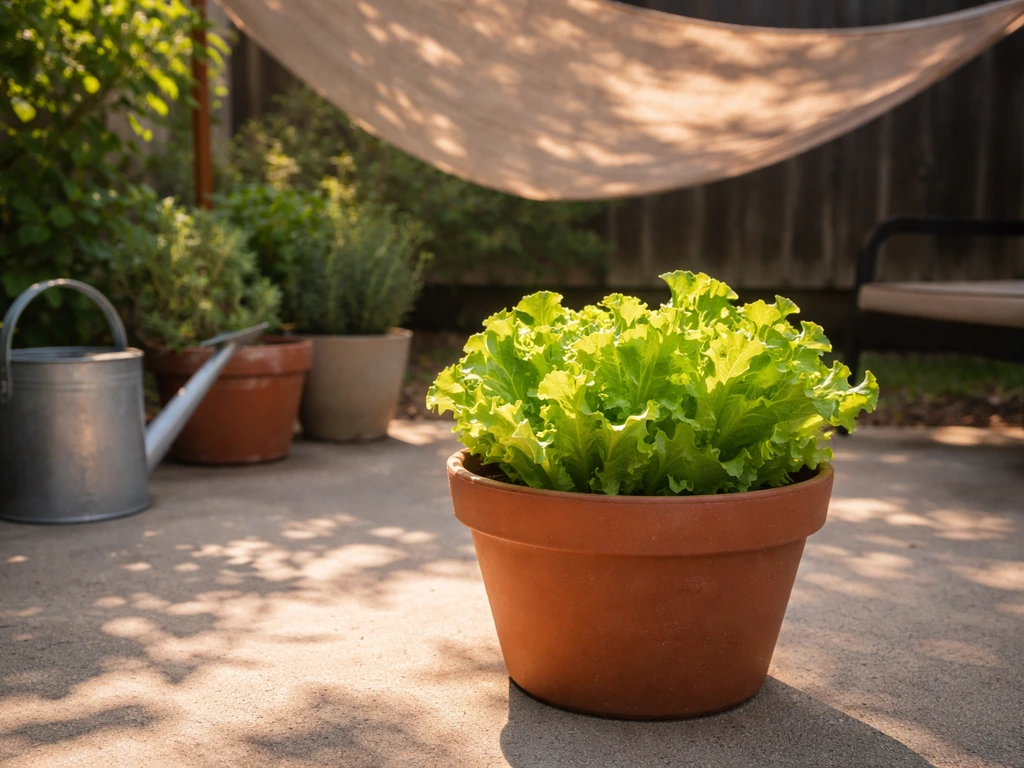
Lettuce is a cool-season crop. It does fine with partial sun (4–6 hours), which actually makes it one of the better options for patios that do not get full sun all day. Morning sun with afternoon shade is the ideal setup, especially once temperatures climb above 70°F during the day. Afternoon shade actively delays bolting and keeps leaves from turning bitter.
The biggest advantage of container growing is portability: you can move pots to follow shade as the season warms up. In early spring or fall, maximize sun. Once daytime highs regularly hit 75–80°F, shift containers to a spot that gets shade from noon onward. A north-facing wall or the shadow cast by a fence can extend your harvest by two to three weeks.
Bolting is triggered by two things working together: increasing day length and high temperatures. You cannot change the calendar, but you can control heat stress. If moving the pot is not an option, a 30–40% shade cloth draped over the plants during the hottest part of the day works well. It cuts leaf temperature noticeably without blocking enough light to stunt growth. Lettuce needs at least 4 hours of light daily to grow productively, so do not over-shade.
On the cold end, lettuce tolerates light frost (down to about 28–30°F) but hard freezes will damage or kill plants. If a late spring frost is forecast, move containers inside for the night or cover with a frost cloth. That is another reason containers beat in-ground growing for patio gardeners: you have options.
Watering and fertilizing in pots
How often and how much to water
Container soil dries out faster than garden beds, especially on a sunny, breezy patio. In warm weather, you may need to water every day. In cooler, cloudy conditions, every 2–3 days might be enough. The rule I follow: stick your finger about an inch into the soil. If it feels dry at that depth, water thoroughly. If it is still moist, wait. Do not water on a fixed schedule regardless of what the soil tells you.
When you do water, water deeply until water flows freely from the drainage holes. This encourages roots to grow down rather than staying near the surface. Shallow, frequent sips of water are worse than deep, thorough drinks every couple of days. Inconsistent moisture, where the soil swings between bone dry and waterlogged, is one of the main causes of tipburn (brown, necrotic leaf edges), tough or bitter leaves, and slow growth.
Make sure your container actually drains. If water sits in the bottom of a saucer for more than an hour after watering, dump it out. Roots sitting in standing water will rot. Good drainage is non-negotiable for patio containers.
Fertilizing basics for leafy greens in containers
Lettuce is a leafy crop, which means it primarily needs nitrogen to grow well. If your potting mix came pre-loaded with fertilizer (most commercial mixes do), you probably do not need to add anything for the first 2–4 weeks. After that, the nutrients in the mix are largely depleted by watering, and you need to supplement.
A balanced liquid fertilizer (something like 10-10-10 or a fish emulsion) applied every 2 weeks works well for containers. You can also use a slow-release granular fertilizer mixed into the top inch of soil at planting. If growth seems slow and leaves are pale yellow-green rather than deep green, that is usually a nitrogen deficiency and a signal to feed. For a simple approach, a quarter-strength liquid fertilizer once a week keeps things simple and consistent, which is exactly what container lettuce needs.
How to harvest and keep the crop going
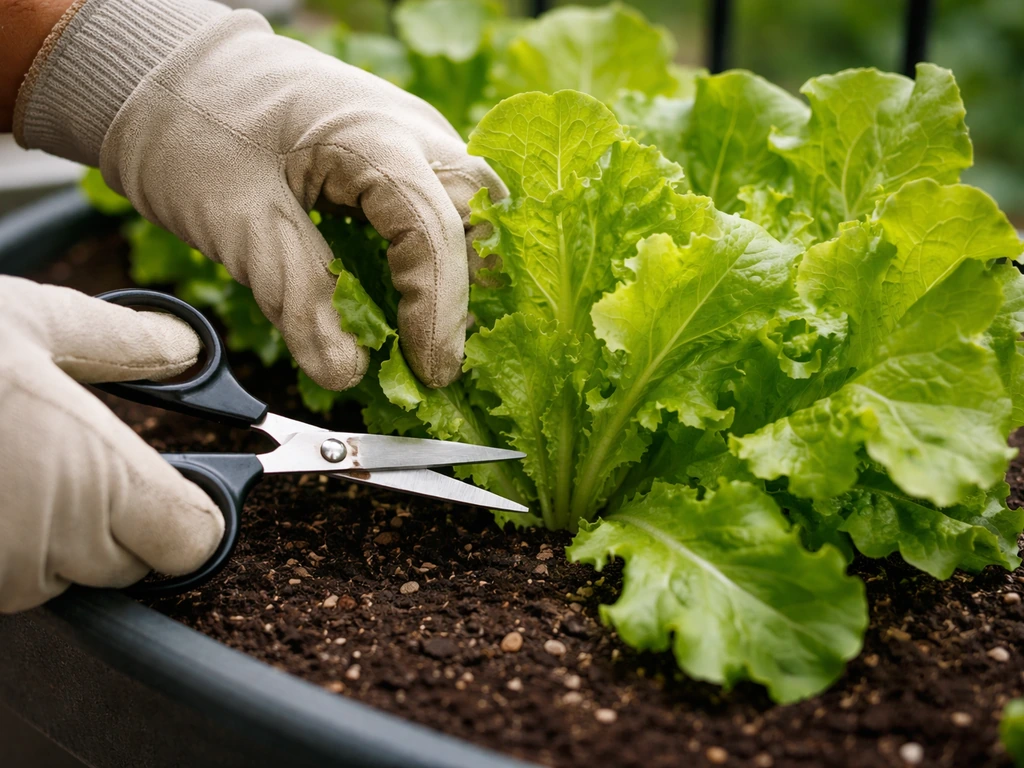
Cut-and-come-again vs. whole-head harvest
For loose-leaf varieties, cut-and-come-again is the way to go on a patio. Use clean scissors to cut outer leaves 1–2 inches above the soil, leaving the central crown intact. The plant will regrow from the center, giving you another harvest in about 10–14 days. You can repeat this process one to three times per plant before quality declines and the plant bolts or turns bitter. Keeping the crown undamaged is the key: cut too low and you kill the growing point.
For butterhead and romaine types, you can either harvest outer leaves the same way or wait for the full head and cut the whole thing at the base, leaving a 1-inch stub above the soil. In some cases (especially with butterhead/bibb types), that stub will produce a second, smaller head. Do not count on it, but it is a nice bonus when it happens.
Succession planting for a continuous supply
One container of lettuce will not feed you indefinitely. The cut-and-come-again method extends a single planting, but plants eventually bolt, especially as summer approaches. The solution is succession planting: sow a new container every 3–4 weeks throughout the growing season. That way, when one planting bolts or finishes, another is right behind it at peak production.
In practical terms, if you are in June right now and temperatures are warming, this is a good time to sow your next batch in a fresh container and position it in your shadiest patio spot. Then plan another sowing in late July or early August for a fall harvest when cooler temperatures return. Spring and fall are always the best seasons for patio lettuce. Summer is survivable with good shade management but requires more vigilance.
You can also plant several varieties with different days-to-maturity at the same time, which staggers your harvest naturally without requiring multiple sow dates.
Troubleshooting common patio lettuce problems
Most problems with patio lettuce come down to heat, inconsistent water, or pests. Once you manage those basics, you can also reduce bug pressure with simple prevention and regular checks so your lettuce stays healthy heat, inconsistent water, or pests. Here is what to look for and what to do about it.
| Problem | What It Looks Like | Fix |
|---|---|---|
| Bolting | Plant sends up a tall central stalk, leaves become narrow and pointed | Move to shade immediately, harvest everything you can, start a new container |
| Bitter leaves | Leaves taste sharp or unpleasantly bitter | Usually follows heat stress or bolting; improve shade, harvest earlier in the morning |
| Tipburn | Brown or tan crispy edges on inner leaves | Caused by inconsistent watering or calcium uptake issues; water more evenly and deeply |
| Leggy, pale seedlings | Seedlings stretch thin and fall over, light yellow-green color | Not enough light; move container to a brighter spot, at least 4–6 hours of sun |
| Slow or uneven germination | Patchy germination, some spots empty | Soil too warm (above 75°F) or seeds buried too deep; resow at surface in cooler spot |
| Slugs | Irregular holes in leaves, shiny slime trails visible | Remove by hand at night, use iron phosphate bait around containers, elevate pots |
| Downy mildew | Yellow-green patches on upper leaf surface, grayish fuzzy patches underneath | Improve air circulation, reduce overhead watering, remove affected leaves |
| Leaf spot / fungal disease | Brown or tan spots with defined edges on leaves | Remove affected leaves, avoid wetting foliage, space plants for better airflow |
| Wilting despite wet soil | Leaves droop even though soil is moist | Root rot from poor drainage; check drainage holes, reduce watering frequency |
Quick troubleshooting checklist
- Is the container getting at least 4 hours of sun but shaded from intense afternoon heat?
- Are drainage holes clear and functional?
- Is the soil consistently moist 1 inch below the surface, not dry or waterlogged?
- Have you fertilized in the last 2–3 weeks?
- Are plants spaced at least 6 inches apart for good airflow?
- Are daytime temperatures regularly above 75–80°F? If yes, move to more shade or consider starting a fall batch.
- Have you checked under leaves and near the soil surface for slugs or insects?
Your next steps today
If it is mid-June and you are starting now, focus on heat-tolerant, fast-maturing loose-leaf varieties like Black Seeded Simpson or Oak Leaf. Get a container with good drainage (at least 8 inches deep), fill it with quality potting mix, and sow seeds at the surface. Find the shadiest morning-sun spot on your patio. Water well, thin to 3 inches apart once seedlings emerge, and start fertilizing with a liquid feed around the two-week mark. Plan your first harvest at 25–30 days for baby leaves, and immediately sow your next container so it is ready when the first one bolts. If you want to keep going into fall, plan a fresh sowing in late July or August when temperatures start to drop again.
Patio lettuce is genuinely one of the most rewarding things you can grow in a container. It is fast, compact, and you see results in weeks rather than months. The biggest difference from growing lettuce in a garden bed is the need to manage heat more actively and water more frequently. Get those two things right and the rest takes care of itself. If you are working with a very small footprint, the same principles apply whether you are on a patio, a balcony, or even a window box, though each setting has its own micro-climate quirks worth paying attention to.
FAQ
My patio gets strong afternoon sun, should I move the pots or use shade cloth?
If your patio gets direct sun after 1 p.m., seed directly in the morning-sun spot and use a temporary move or shade cloth as temperatures climb. Shade cloth (about 30 to 40% coverage) works best between late morning and late afternoon, and you still need at least 4 hours of total light daily so growth does not stall.
Can I grow lettuce on a patio in a window box or shallow planter?
Yes, but only as long as the planter drains well and you match depth to variety. Window boxes often dry out faster than pots, so check moisture daily in warm weather. If water runs through immediately and the mix dries within a day, increase potting mix depth or consider a larger width planter so roots have more stable moisture.
What’s the best way to water lettuce right after sowing or transplanting?
For seeds, keep the soil surface lightly covered (about 1/8 inch) and mist gently so seeds are not displaced. For seedlings, water in thoroughly after planting, then transition to checking moisture by finger test, the key is consistent moisture without soggy conditions.
How much shade is too much for patio lettuce?
Over-shading can reduce growth because lettuce still needs enough daily light. If bolting heat is your concern, prioritize reducing heat stress (move to afternoon shade or use shade cloth) rather than placing the container in near-darkness.
Can I water lettuce on a fixed schedule, like every day?
Use the finger test, about 1 inch down, and water thoroughly only when that layer is dry. If you water when the surface looks dry but the deeper mix still holds moisture, you risk waterlogged roots and tipburn related to inconsistent moisture.
My lettuce has brown leaf edges (tipburn), what am I likely doing wrong?
Tipburn is often linked to moisture swings rather than just “not enough fertilizer.” To reduce it, water deeply when the 1-inch layer dries, avoid letting the mix alternate between bone-dry and saturated, and do not overdo nitrogen, keep feeding at the recommended container rate.
Should I reuse the same potting mix and what do I do with cut leaves and thinnings?
You can compost the thinnings and harvested leaves, but do not mix diseased material back into future potting mixes. Also, do not reuse the same potting mix for multiple lettuce cycles in the same container, top-dress or refresh the mix to reduce disease buildup.
If my lettuce starts bolting, can I save it or should I start over?
Bolting usually starts when both day length and heat stress rise. The fastest rescue is to switch to loose-leaf or “slow bolt” types, move to earlier-day sun, and plan your next succession container so it is growing when the first one begins to bolt.
Which lettuce types tolerate repeated leaf cutting best in containers?
Cut-and-come-again works best with loose-leaf varieties. For romaine and butterhead, cutting too aggressively can reduce quality because they are more likely to respond by shifting growth, if you want repeated harvests, either cut outer leaves carefully or wait for the full harvest method depending on the variety.
Germination is slow during hot weeks, what should I change?
When temperatures are warm and germination struggles, start seeds indoors or bring the container inside at night until seedlings emerge. Then move them back in the morning so they develop strong growth in cooler parts of the day.