You can absolutely grow great lettuce on a balcony. Use containers at least 8 inches deep, fill them with a quality potting mix, pick a loose-leaf or compact romaine variety, give plants 6 hours of light per day, keep temperatures in the 60–70°F range, water consistently, and harvest outer leaves regularly. That setup will produce fresh salad greens through spring and fall, and with a little succession planting you can keep it going for months.
How to Grow Lettuce on a Balcony: Step-by-Step Guide
Marcus Holloway
7 Jun 2026
Balcony growing has a few quirks compared to garden beds: containers dry out faster, heat builds up near walls and railings, and wind can stress young plants. Once you understand those factors, lettuce is actually one of the easiest crops you can grow in a container. Here is everything you need to set it up and keep it producing.
Best lettuce varieties for balcony growing
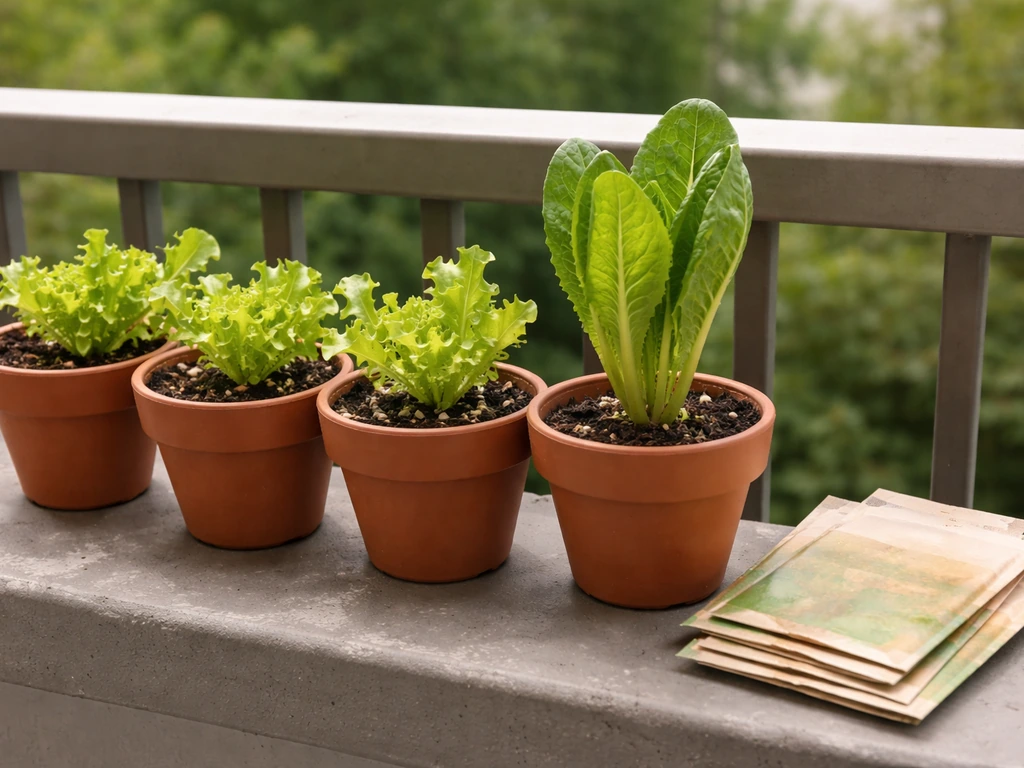
Loose-leaf varieties are your best starting point for balcony containers. They mature faster than head types, tolerate being harvested a few leaves at a time, and handle the temperature swings that balconies get. Black-Seeded Simpson, Oak Leaf, and Red Sails are classic choices that perform reliably in pots. Butterhead types like Buttercrunch work well too, forming loose, soft heads in 60–70 days without needing as much room as a crisphead.
If you want a romaine on your balcony, go with Cimarron. It heads up in roughly 60–70 days and is described as virtually impervious to bolting, which matters a lot when balcony temperatures creep up in late spring. That bolt resistance gives you a longer harvest window before the plant goes bitter and sends up a flower stalk.
Head lettuce types like crisphead (iceberg-style) take 70–80 days and need more consistent cool temperatures, which can be hard to guarantee on a balcony through a full season. I'd save those for late fall when temperatures naturally stay cool. For most balcony setups, the practical hierarchy is: loose-leaf first, butterhead second, bolt-resistant romaine third, crisphead only if you have ideal conditions.
| Type | Example Varieties | Days to Harvest | Bolt Resistance | Best for Balcony? |
|---|---|---|---|---|
| Loose-leaf | Black-Seeded Simpson, Red Sails, Oak Leaf | 45–55 days | Moderate | Yes, best choice |
| Butterhead | Buttercrunch, Boston | 60–70 days | Moderate | Yes, great option |
| Romaine | Cimarron, Parris Island | 60–70 days | High (Cimarron) | Yes, especially Cimarron |
| Crisphead | Iceberg types | 70–80 days | Low | Only in cool seasons |
Choosing containers, soil, and drainage
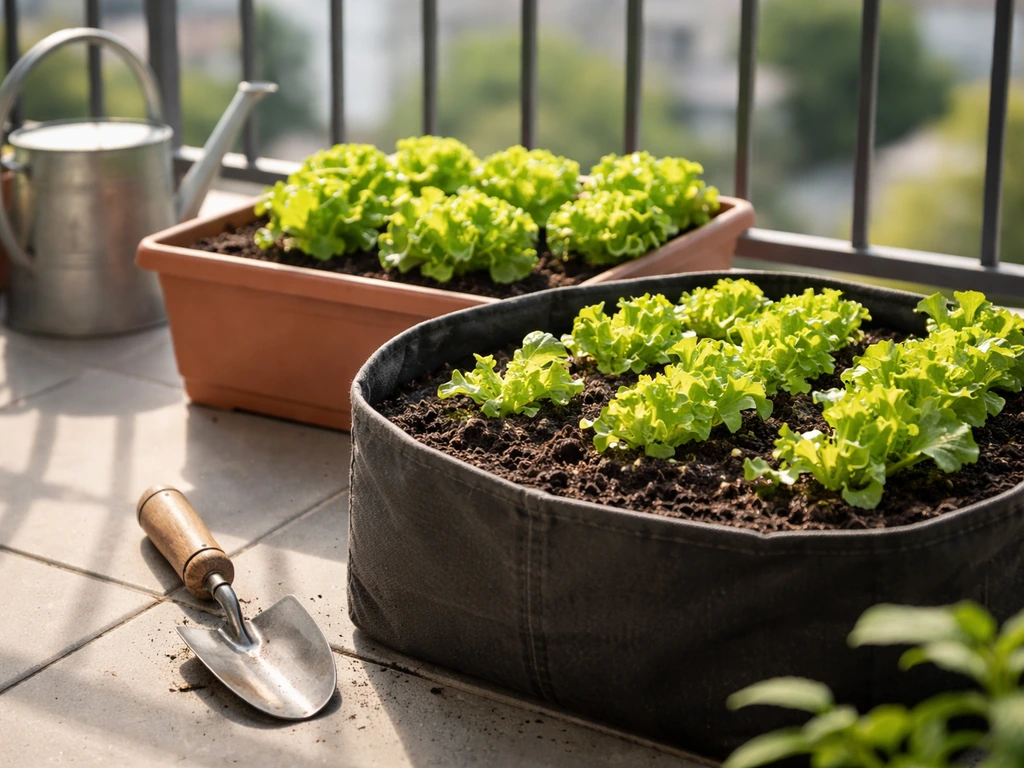
For containers, the minimum you want for lettuce is 8 inches deep. That gives roots enough room to establish without drying out every few hours. Width matters more than depth for most leaf lettuces, so a wide, shallow window box or a rectangular planter works really well and fits neatly on a balcony railing or ledge. For head types like romaine or butterhead, aim for 10–12 inches deep so plants can anchor properly.
Fabric grow bags are worth considering for balconies specifically. They are lightweight, air-prune roots naturally, and pack flat when not in use. A 5-gallon fabric bag holds three to four loose-leaf plants comfortably. Plastic pots work fine too, but avoid dark-colored ones in sunny spots because they absorb heat and can cook roots on hot afternoons.
Never use garden soil or topsoil in containers. It compacts, drains poorly, and can carry disease. Use a quality potting mix, and if you want to improve moisture retention slightly, you can blend in 10–15% perlite. Lettuce prefers a pH of around 6.0–7.0, which most commercial potting mixes already fall within. You do not need to test your mix unless plants are showing persistent yellowing or stunted growth.
Drainage is non-negotiable. Every container needs holes at the bottom, and if your pot sits in a saucer, empty that saucer after every watering. Standing water in a saucer is the fastest way to cause root rot, and it also creates a mosquito-breeding spot, which your neighbors will not appreciate. If you have a decorative outer pot with no drainage, either drill holes in it or lift the inner pot out after watering so water does not pool at the bottom. The goal every time you water is to moisten the entire root zone and let excess water drip freely out the bottom.
Balcony light and temperature: how to position your setup
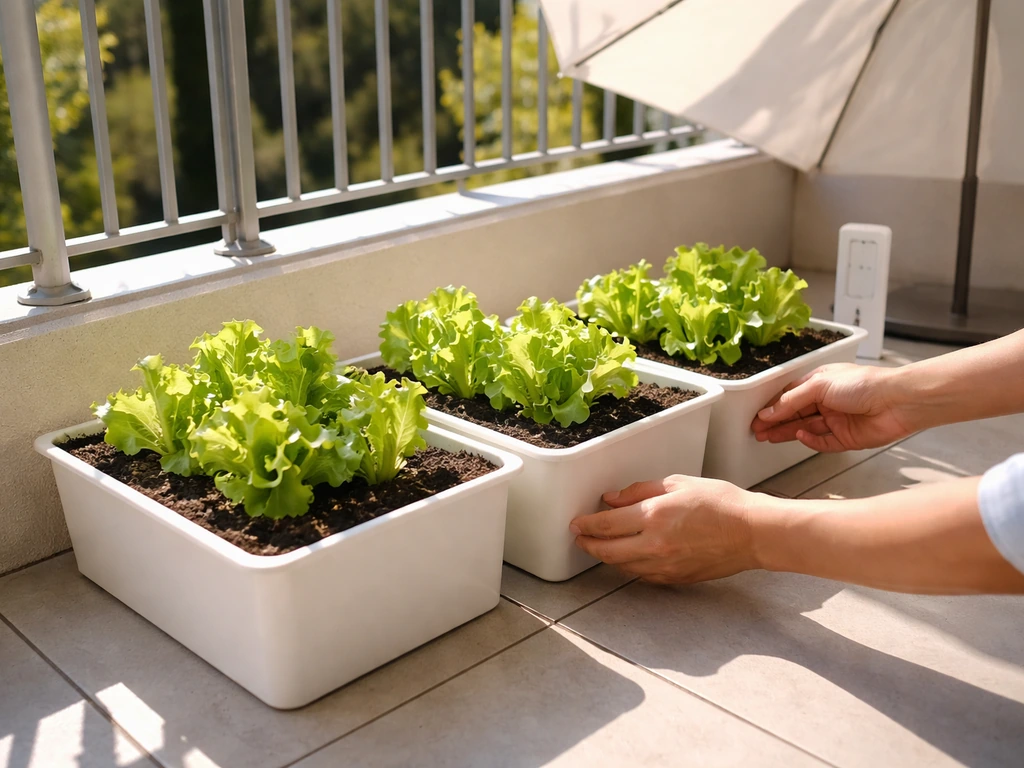
Lettuce needs at least 6 hours of direct sunlight per day for solid growth. South and west-facing balconies usually deliver that easily. East-facing balconies get morning sun and are actually ideal because the light is gentler in the afternoon, which helps prevent heat stress. North-facing balconies are the toughest situation: if you get fewer than 4 hours of direct sun, expect slower growth and leggier plants. You can still grow lettuce there, but you may need to supplement with a small grow light.
Temperature is where balcony growing gets tricky. Lettuce's sweet spot is 60–70°F during the day. Once temperatures push consistently above 75–80°F, plants get stressed, growth slows, leaves turn bitter, and bolting becomes likely. Balconies can trap heat from building walls and reflected sunlight, so the actual temperature your plants experience may be 5–10°F warmer than the outdoor air temperature on a hot, sunny afternoon.
To manage this, position containers away from heat-radiating walls where possible. In late spring and early summer, you can use a sheer shade cloth (30–40% shade rating) draped over containers during peak afternoon hours to knock down temperatures. Moving containers to shadier spots during a heat wave is one of the biggest advantages of balcony growing over in-ground beds. Use it.
Wind is another balcony-specific issue. Constant wind dries containers out fast and can physically damage young seedlings. A low windbreak made from a small trellis, a row of taller plants, or even a piece of shade cloth secured to the railing can make a big difference. Once lettuce is established (3–4 weeks old), moderate wind is much less of a problem.
Planting timeline, spacing, and thinning
Lettuce is a cool-season crop, so the two ideal windows for balcony growing are early spring (as soon as nighttime lows stay above about 35°F) and late summer into fall (when temperatures drop back below 75°F consistently). In most of the US, that means planting in March–April for a spring crop and again in late August–September for a fall crop. If you live somewhere with mild summers, you may be able to grow through summer by using shade cloth and heat-tolerant varieties.
You can direct-sow seeds or transplant seedlings. For balconies, I prefer starting with transplants or small seedlings from a nursery because you get a faster start and do not have to manage the delicate germination phase outdoors where wind and temperature fluctuate. If you do sow seeds directly, scatter them thinly across the container surface, press lightly into the soil, and keep the soil evenly moist until germination (usually 7–10 days).
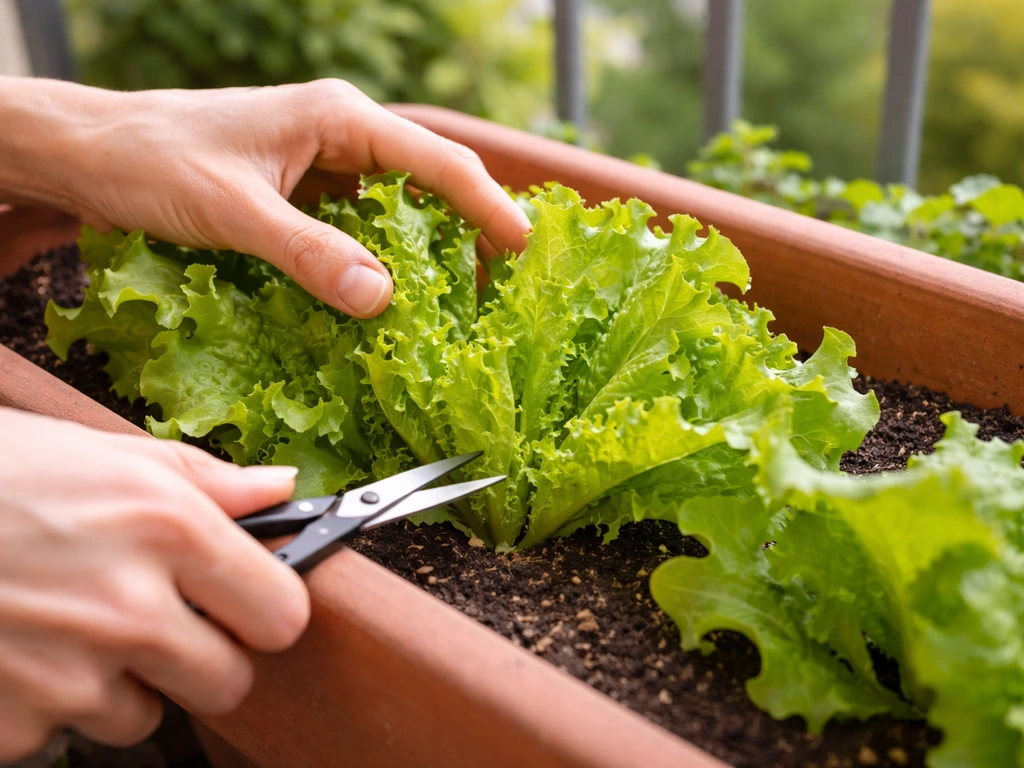
Spacing matters more than most beginners expect. For head types like romaine or butterhead, space plants 8–12 inches apart. For loose-leaf varieties, 6–8 inches apart is workable. If you sow seeds and they come up thicker than that, thin them by snipping extras at soil level with scissors rather than pulling, which disturbs roots. Crowded lettuce bolts faster, grows smaller leaves, and is more susceptible to fungal problems because airflow between plants is reduced.
To keep fresh lettuce coming all season, practice succession planting: start a new container or new section of a container every 2–3 weeks. This staggers your harvests so you are not drowning in lettuce one week and then waiting another month. Three small plantings two weeks apart will give you a much steadier supply than one big planting.
Watering and fertilizing for steady leaf growth
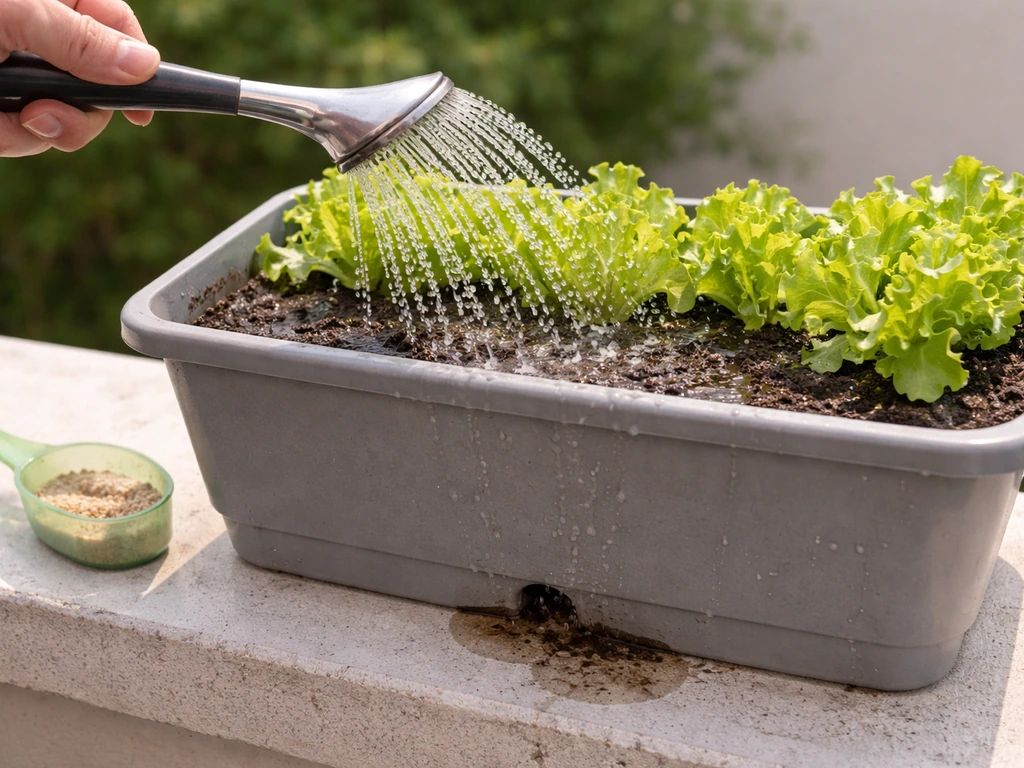
Lettuce draws most of its water from the top 12 inches of soil, and in a container that zone dries out fast, especially on a sunny, breezy balcony. Check soil moisture daily during warm weather by pressing a finger about an inch into the soil. If it feels dry, water thoroughly. In hot periods you may need to water every day, sometimes twice. In cooler weather every 2–3 days is usually enough.
Every time you water, saturate the entire container until water runs freely from the drainage holes. Shallow, frequent sips that only wet the top inch of soil are one of the most common balcony watering mistakes. They train roots to stay near the surface where they are most vulnerable to heat and drying. A deep watering once a day beats a shallow splash twice a day.
For fertilizing, lettuce is a light feeder but it does need nitrogen for leaf production. Once plants are 3–4 weeks old and established, start feeding with a diluted liquid fertilizer once a week. A good rule of thumb: 1 ounce of a balanced 20-20-20 soluble fertilizer per 4 gallons of water, or 1–2 tablespoons of fish emulsion per gallon. If you prefer a simpler approach, start feeding when plants are 4–6 inches tall using half-strength liquid fertilizer, then continue every two weeks. Avoid heavy nitrogen doses late in the season because excess nitrogen can accelerate bolting and also contributes to tipburn (brown leaf edges).
Harvesting methods for ongoing yields
The cut-and-come-again method is the best approach for balcony lettuce, especially loose-leaf types. Instead of pulling the whole plant, snip outer leaves about an inch above the base, leaving the central growing point (the crown) intact. The plant continues producing new leaves from the center, giving you multiple harvests from the same plant over 4–6 weeks before it eventually bolts or declines.
For butterhead and romaine, you can do the same thing with outer leaves, or harvest the whole head when it feels firm and full. If you take the whole head, leave the root in the container and water it: many plants will reshoot baby leaves from the base, giving you a smaller bonus harvest before you replant.
Harvest in the morning when leaves are cool and crisp. Lettuce harvested in the heat of the afternoon wilts faster and stores less well. Rinse, dry, and refrigerate in a sealed bag or container and it will keep well for up to a week. Regular harvesting actually helps prevent bolting by reducing the plant's energy load, so the more you pick, the longer your plants stay productive.
Troubleshooting common balcony lettuce problems
Bolting (going to seed)
Bolting is the most common frustration with balcony lettuce. Plants send up a tall flower stalk, leaves turn small and bitter, and the harvest is essentially over. It is triggered by hot temperatures, long daylight hours, or prolonged cold at the wrong stage. Once a plant has bolted, you cannot reverse it. Pull it, compost it, and replant. To prevent it: time your plantings for cool seasons, choose bolt-resistant varieties (Cimarron is the standout), use shade cloth during heat waves, keep plants well-watered (water stress accelerates bolting), and avoid overcrowding. If you see a plant starting to elongate and stretch upward in the center, harvest everything you can right away before the leaves turn bitter.
Aphids and other pests
Aphids are the most common balcony lettuce pest. They cluster on the undersides of leaves and in the folds of the crown. If you are trying to grow lettuce without bugs, use a gentle water spray, check leaves often, and treat infestations early with insecticidal soap. A strong spray of water knocks most of them off.
For persistent infestations, insecticidal soap spray applied every 3–4 days for two weeks usually clears them. Check the undersides of leaves every time you harvest. Slugs can also be an issue on lower balconies with nearby planters or ground access. Copper strips around container rims repel them, and iron phosphate bait placed near containers is safe to use around food plants.
Growing lettuce on a balcony does put it a bit out of reach of some ground-dwelling pests compared to a garden bed, which is one real advantage of the setup.
Leggy, stretched plants
If your lettuce is growing tall and thin with widely spaced leaves rather than a compact, leafy rosette, it is reaching for more light. This happens on shaded balconies or when containers are placed too far from the light source. Move containers to the sunniest spot you can manage. If you genuinely cannot get 4+ hours of direct sun, a small LED grow light used for 12–14 hours per day will fix the problem. Leggy seedlings can be planted slightly deeper to compensate, but the real fix is always more light.
Tipburn and leaf discoloration
Brown or tan edges on inner leaves (tipburn) usually signal inconsistent watering, heat stress, or too much nitrogen. It is a physiological problem, not a disease, and the browned tissue will not recover. If you see it, increase your watering frequency to keep the soil more consistently moist, cut back on fertilizer if you have been feeding heavily, and move the container to a cooler spot if temperatures have been high. Yellowing of older outer leaves often means nitrogen deficiency: increase your feeding frequency slightly. Pale overall color across all leaves can mean insufficient light.
Powdery mildew and other fungal problems
Powdery mildew shows up as white, powdery patches on leaves. It thrives when there is warm air, high humidity around the plant canopy, and poor airflow. On a balcony this often happens when containers are packed too closely together. Increase spacing, remove and dispose of infected leaves (do not compost them), and improve airflow around plants. If you need to spray, neem oil or potassium bicarbonate-based sprays work, but avoid applying oil sprays when air temperatures are above 80°F or you risk burning the leaves. Overwatering and water sitting in saucers creates conditions for root rot and damping off in seedlings, which is why drainage management is so important from day one.
Balcony lettuce growing shares a lot of DNA with other small-space approaches. To learn more about patio setup and care, including light, temperature, and harvesting, review this guide on how to grow lettuce on patio small-space approaches. If you are also interested in growing lettuce in window boxes or in a tight patio setup, the spacing and variety principles here translate directly to those situations. The main adjustment you will ever make is container size and positioning based on your specific light and wind conditions.
Your quick-start checklist
- Choose a container at least 8 inches deep with drainage holes
- Fill with quality potting mix (pH 6.0–7.0, not garden soil)
- Pick a loose-leaf or bolt-resistant romaine variety to start
- Position in the sunniest spot available, ideally 6+ hours of light
- Plant in early spring or late summer to avoid peak heat
- Space loose-leaf types 6–8 inches apart, head types 8–12 inches
- Water thoroughly until it drains from the bottom, check soil daily
- Empty saucers after every watering
- Start feeding with diluted liquid fertilizer 3–4 weeks after planting, weekly
- Harvest outer leaves with scissors starting at 4–6 inches tall
- Start a new container every 2–3 weeks for a continuous supply
- Watch for bolting, aphids, and leggy growth as your early warning signs
FAQ
How many lettuce plants can I fit in one balcony container?
Use the container’s planting area to guide you. For loose-leaf types, plan on 6–8 inches between plants, which typically means about 3–4 plants in a 5-gallon fabric bag. If you’re growing romaine or butterhead, give them more space (8–12 inches apart) and expect fewer plants per container. If you crowd them, you’ll get smaller leaves and a higher chance of bolting and mildew.
Should I use self-watering planters or do they cause issues for lettuce?
They can work well if the system truly drains and the root zone does not stay waterlogged. If the planter keeps a constant reservoir with poor airflow, lettuce is more prone to root rot and damping off. A safer approach is still to ensure every pot has drainage holes and that any saucer is emptied after watering, even if you’re using a modified watering setup.
What’s the best way to water balcony lettuce during hot windy days?
Water deeply until it drains, then re-check moisture the next day (or the same day if it’s very hot and breezy). A good decision aid is a finger check 1 inch down, but in peak heat you may need daily watering, sometimes twice. If the surface dries quickly but the soil still feels moist below, wait a bit, shallow frequent watering is a common cause of bitterness and weak root establishment.
Can I grow lettuce if my balcony only gets morning sun?
Usually yes, morning sun is often ideal because afternoon heat is lower. Aim for at least 4 hours of direct sun, then rely on tight spacing, consistent watering, and harvesting promptly. If your balcony consistently provides less than 4 hours, a small LED grow light used for 12–14 hours per day can replace the missing direct sun.
Why is my lettuce bitter even though I’m watering?
Bitter leaves typically come from heat stress, uneven moisture, or timing. Balcony microclimates can be 5–10°F warmer near walls and railings, so move containers away from heat-trapping spots. Also avoid fertilizer spikes, high nitrogen near warm weather can worsen bitterness. Harvesting outer leaves early, when the plant is still compact, helps keep flavor from turning.
Do I need to thin seedlings, and how do I do it without harming roots?
Yes, thinning prevents crowding, which increases bolting speed and fungal risk. If you direct-sow and seedlings are too dense, thin by snipping extras at soil level with scissors rather than pulling, because pulling disturbs the remaining seedlings’ roots. Thin once seedlings are large enough to identify, then keep moisture steady until they rebound.
Is it better to harvest whole heads or use cut-and-come-again for romaine and butterhead?
Cut-and-come-again can extend your harvest window because it leaves the crown intact. For romaine and butterhead, you can remove outer leaves like you would with loose-leaf, rather than taking the entire head at once. If you do harvest the whole head, leaving the root in the container and watering may produce a small second flush before it declines, but expect a smaller yield than the original cycle.
How do I prevent bolting when temperatures swing between day and night?
Bolting risk rises with prolonged warm days, long daylight, or cold exposure at the wrong stage. The practical prevention checklist is: time planting for cool-season windows, use bolt-resistant varieties, keep soil consistently moist, and provide shade cloth during peak afternoon warmth. If you see the center elongating, harvest immediately and remove the stressed plant once it’s clearly bolted, then replant with a new succession batch.
What should I do if I see powdery mildew starting on just a few leaves?
Act early by removing and disposing of infected leaves so it does not spread through the canopy. Improve airflow by spacing containers or thinning plants, and avoid overhead misting that keeps foliage wet. If you need a spray, choose a product suited to food crops and avoid oil-based sprays when temperatures exceed about 80°F, because leaf burn can occur.
How can I keep aphids off lettuce without harming pollinators or slowing growth?
Start with monitoring during harvest, check undersides of leaves and the crown folds. For light infestations, a gentle water spray often knocks aphids off without adding chemicals. If they persist, insecticidal soap applied repeatedly at 3–4 day intervals for about two weeks is typically more effective than one-off treatments, and it reduces residue risk compared with stronger insecticides.
What are the most common balcony container mistakes that ruin lettuce?
The big three are inadequate drainage, shallow watering, and using the wrong soil. Always use containers with bottom holes and empty any saucer after watering to prevent root rot and mosquitoes. Avoid frequent “top-only” watering, lettuce needs moisture throughout the root zone, deep watering once is usually better. Also do not use garden soil, it compacts and drains poorly in pots, and it increases disease risk.
How long can I keep a single lettuce plant producing before I should replant?
With cut-and-come-again harvesting, many loose-leaf plants keep producing for about 4–6 weeks before they decline or bolt. Once you see persistent slow growth, flowering behavior, or the crown weakening, replant with a fresh batch rather than waiting. Succession planting every 2–3 weeks helps you avoid the gap when one container naturally finishes.