Yes, you can absolutely grow lettuce in a window box, and it's one of the best container crops you can pick for exactly that setup. Lettuce has shallow roots, tolerates less light than fruiting vegetables, and grows fast enough that you can be harvesting fresh leaves within 30 to 45 days of planting. The main things that trip people up are getting the light conditions right, using the correct potting mix, and keeping up with watering (containers dry out faster than garden beds). Nail those three things and a window box of lettuce will reward you with consistent salads through spring and fall.
Can You Grow Lettuce in a Window Box? Yes Here’s How
Marcus Holloway
7 Jun 2026
Why window boxes actually work well for lettuce
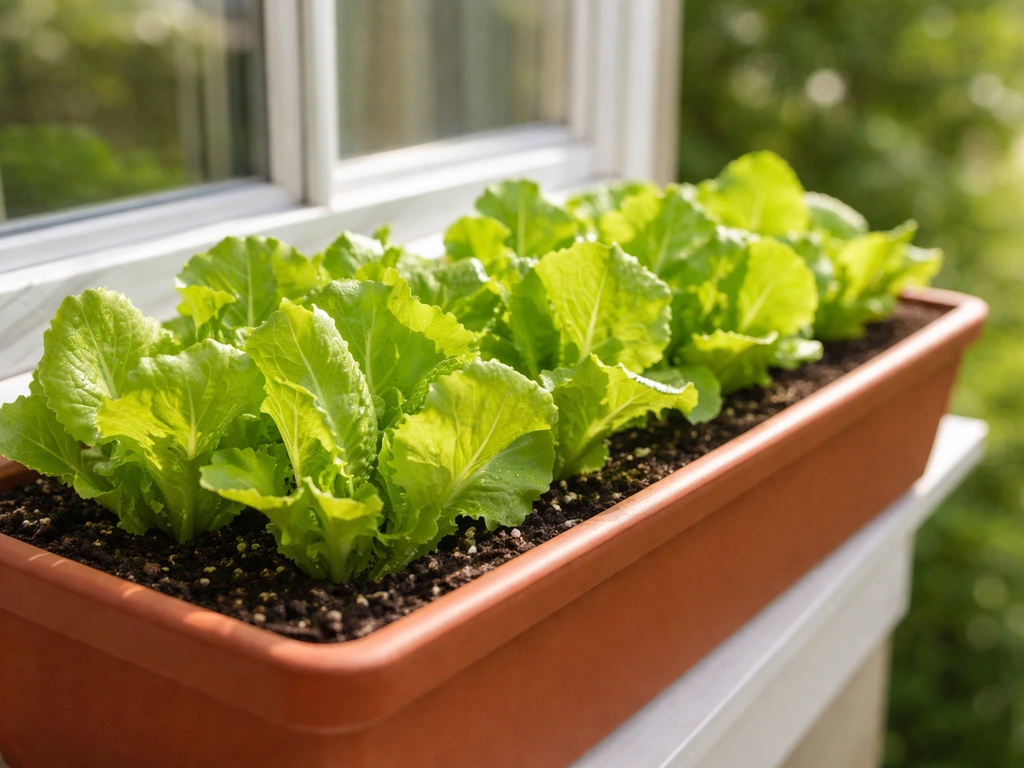
Lettuce is one of those crops that was practically made for small container growing. Its root system is compact and shallow, so it doesn't need a massive, deep container to thrive. Unlike tomatoes or peppers, lettuce doesn't need full sun all day to produce; it's classified as a leafy crop that can tolerate lower light levels than fruiting vegetables. It's also a cool-season plant, which makes it well-suited to growing in spring and fall when window temperatures are more forgiving.
That said, window boxes do come with some real limitations you need to plan around. Container media dries out much faster than in-ground soil because the entire root zone is above ground and exposed to air on all sides. Temperatures inside the container can swing more dramatically too, especially if your box sits in direct afternoon sun during summer. And if you're working with an indoor window setup, light can become the limiting factor pretty quickly depending on which direction your window faces. None of these are dealbreakers, but they do mean you need to be a bit more attentive than you would with an outdoor garden bed.
Best lettuce varieties for a window box
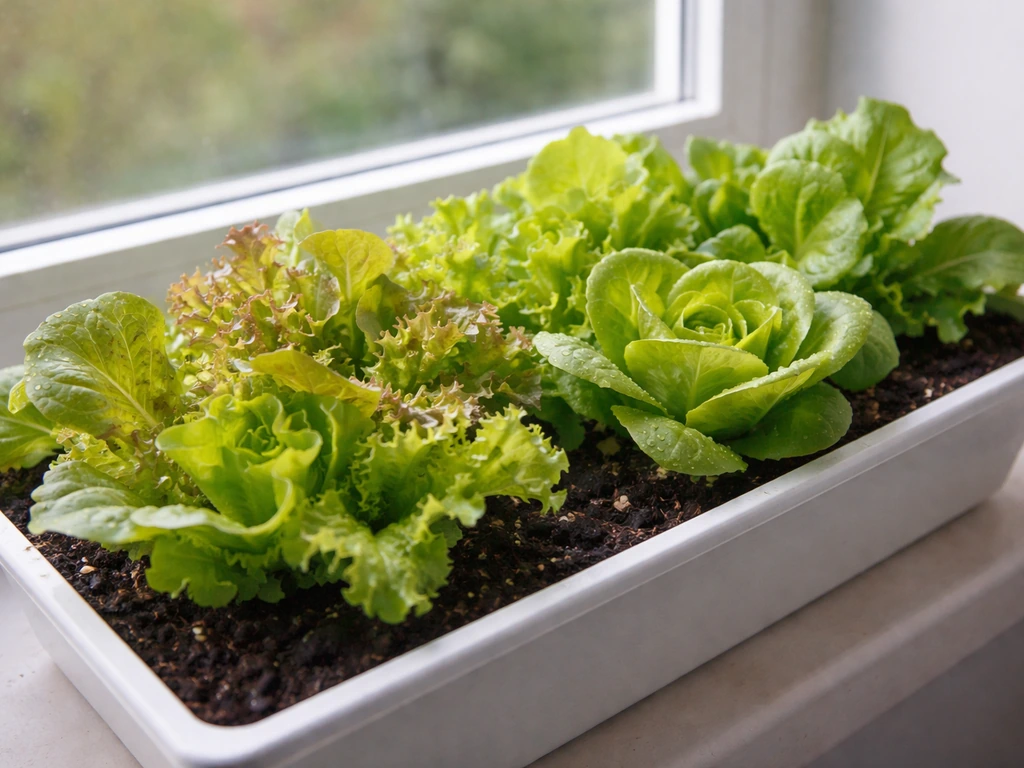
Loose-leaf and butterhead types are your best bets for window boxes. They mature faster than romaine or crisphead, handle heat stress better, and you can harvest them leaf by leaf rather than waiting for a full head. That cut-and-come-again style works perfectly for a small container where you want continuous production rather than one big harvest.
For heat tolerance and slow bolting (which matters a lot if your window gets warm in late spring or summer), look for varieties specifically bred to resist going to seed early. Some standouts: Slobolt (green leaf), New Red Fire (red leaf), Ermosa (butterhead), and Green Forest (romaine). Oak-leaf varieties as a group are also known for being more heat-tolerant and extending your production window into warmer weather. Romaine generally handles more heat than crisphead types, but butterhead and loose-leaf are still the most forgiving for container growing overall.
| Lettuce Type | Days to Harvest | Heat Tolerance | Best for Window Boxes |
|---|---|---|---|
| Loose-leaf (e.g., Slobolt, New Red Fire) | 30–45 days (cut-and-come-again) | High | Yes, top choice |
| Butterhead/Bibb (e.g., Ermosa) | 55–75 days | Medium-High | Yes, excellent |
| Romaine/Cos (e.g., Green Forest) | 75–85 days | Medium | Good, needs more space |
| Crisphead/Iceberg | 70–80 days | Low | Not ideal, slow and space-hungry |
Getting your window conditions right
Light and window orientation
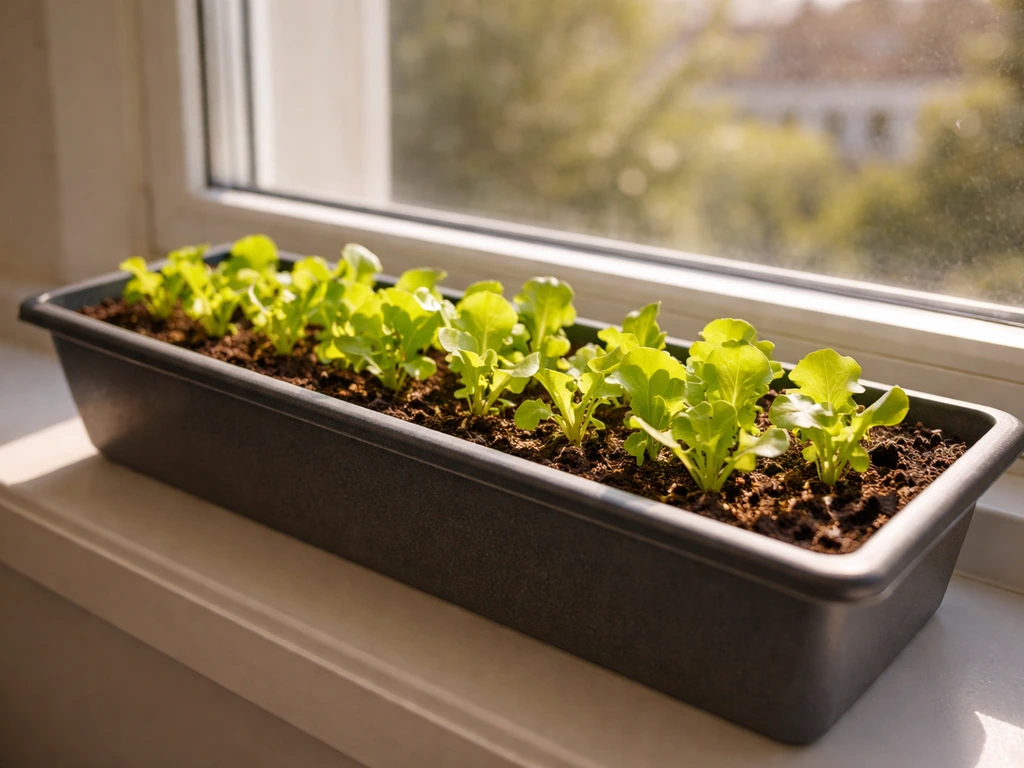
Lettuce needs at least 6 hours of direct sunlight per day for best results. A south-facing window or an outdoor south or west-facing window box is your strongest option. East-facing windows can work and are often considered medium-light, which is enough for leaf lettuce to grow reasonably well, though growth will be a bit slower. North-facing windows are generally too dim for consistent lettuce production without supplemental lighting. If you notice your lettuce growing tall and spindly with long gaps between leaves, that's classic leggy growth from insufficient light, and you'll need to either move the box, rotate it into better light, or add a grow light.
One underrated advantage of window growing: in hot summer months, baby leaf lettuce can actually be grown in indirect light, which helps protect it from the heat stress that would otherwise trigger bolting. So if your window gets bright indirect light in summer, that can actually be a feature, not a bug.
Temperature: the make-or-break factor
Lettuce grows best between 60°F and 65°F. Once temperatures consistently push above that range, growth slows, leaves get tough and bitter, and the plant starts thinking about bolting (sending up a flower stalk and ending leaf production). At soil temperatures above 80°F, lettuce seed won't even germinate properly. This is critical information if you're sowing directly in a window box that sits in warm, sunny weather. For spring and fall growing, most window setups are fine. Summer is where you need to plan carefully, whether that means choosing a shaded or east-facing spot, picking slow-bolt varieties, or simply taking a break from lettuce until temperatures cool.
Setting up your window box for success
Container size and depth
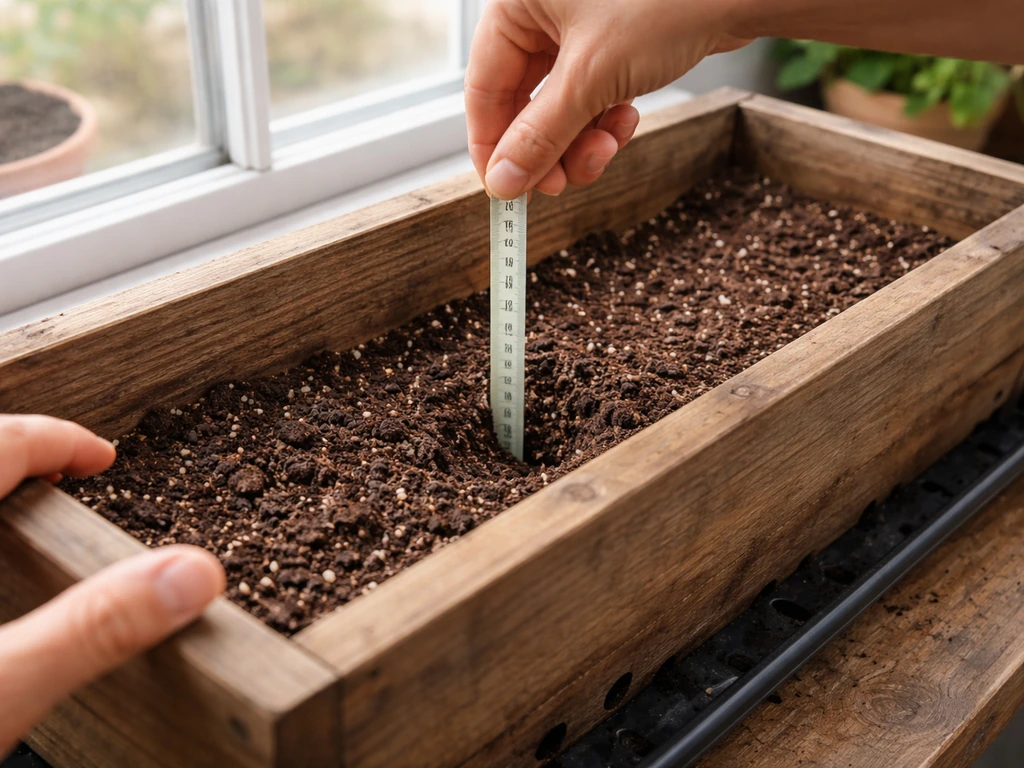
Lettuce needs a minimum of 6 to 8 inches of potting mix depth. Most standard window boxes run 6 to 8 inches deep, so they're right at the lower end of that range. That's workable, but go deeper if you have the option, especially for romaine types that have somewhat longer roots. Width and length matter more for how many plants you can fit, rather than for root depth. A 24-inch window box gives you room for a nice succession of plants without feeling cramped.
Drainage: don't skip this step
Drainage is non-negotiable. Drill multiple holes in the bottom of your container if it doesn't already have them. Poor drainage leads to waterlogged soil, which cuts off oxygen to the roots and quickly leads to root rot. Good drainage also encourages healthy air circulation in the root zone, which is something lettuce genuinely needs. If your window box is sitting on a sill indoors, put a saucer underneath but empty it after every watering so roots aren't sitting in standing water.
Potting mix: not garden soil
Always use a quality potting mix, not garden soil. For lettuce in containers, Grow-It-Organically recommends using a good potting mix (not garden soil) and emphasizes frequent watering as key to container success good potting mix (not garden soil) and frequent watering. Garden soil compacts in containers, which reduces oxygen in the root zone and creates the exact conditions that cause root rot. A good potting mix stays loose and well-aerated even after repeated watering. Some growers mix in a small amount of perlite or coarse sand to improve drainage further, which is worth doing if your potting mix feels dense. You can also incorporate a slow-release fertilizer into the mix when you fill the container; that gives your plants a baseline of nutrients from day one without any extra effort.
Spacing your plants
For loose-leaf varieties grown as cut-and-come-again, you can plant fairly densely, about 4 inches apart. For butterhead or romaine types that you plan to harvest as whole heads, give them 6 to 8 inches between plants. Overcrowding cuts airflow and increases disease risk, so resist the urge to squeeze in extra plants. If you're direct sowing, scatter seeds thinly and then thin to proper spacing once seedlings reach an inch or two tall.
When and how to plant, plus a succession plan
Timing your first planting
For outdoor window boxes, aim to start your first sowing 4 to 6 weeks before your last expected frost in spring, or 6 to 8 weeks before your first fall frost. Lettuce seed germinates best when soil temps are in the 60s, so if the soil in your window box feels warm to the touch in summer, wait until it cools down before sowing. For indoor window setups, you have more flexibility, but you're still working around the temperature constraints of your window and the light available through the season.
Direct sow seeds at a depth of roughly twice the seed size (lettuce seeds are tiny, so this means barely covering them with a thin layer of fine potting mix). OSU Extension’s lettuce/greens growing guidance includes window or container planting and states lettuce seeds should be planted at a depth of about 2 times the seed size depth of roughly twice the seed size. Keep the surface consistently moist until germination, which usually happens within 7 to 14 days in ideal conditions. Alternatively, start seedlings indoors and transplant them into the window box once they have a few true leaves.
Succession planting for continuous harvests
Succession planting is the real secret to keeping a window box productive. Instead of sowing everything at once and having a glut followed by nothing, stagger your sowings every 2 to 3 weeks. A 2-week interval works well for most window box setups; you're essentially always having one patch ready to harvest, one growing steadily, and one just germinated. With loose-leaf varieties taking 30 to 45 days from seed to first harvest, you can maintain almost continuous production through a full spring or fall season with just two or three staggered sowings.
- Week 1: Sow your first batch of loose-leaf seeds in one section of the box.
- Week 2 or 3: Sow a second batch in another section.
- Week 4 or 5: Sow a third batch if space allows.
- Week 5 to 6: Begin harvesting outer leaves from your first batch.
- Repeat: As you finish harvesting one section, refresh the soil lightly and resow for the next round.
Harvest loose-leaf types by cutting the outer leaves and leaving the inner rosette to keep producing. For butterhead, either harvest the whole head or take outer leaves. For romaine, you can cut the whole plant an inch above the soil and it will often regrow for a second cut. Water your lettuce well in the few days before you plan to harvest; this genuinely improves crispness and flavor.
Watering and feeding your window box lettuce
How and when to water
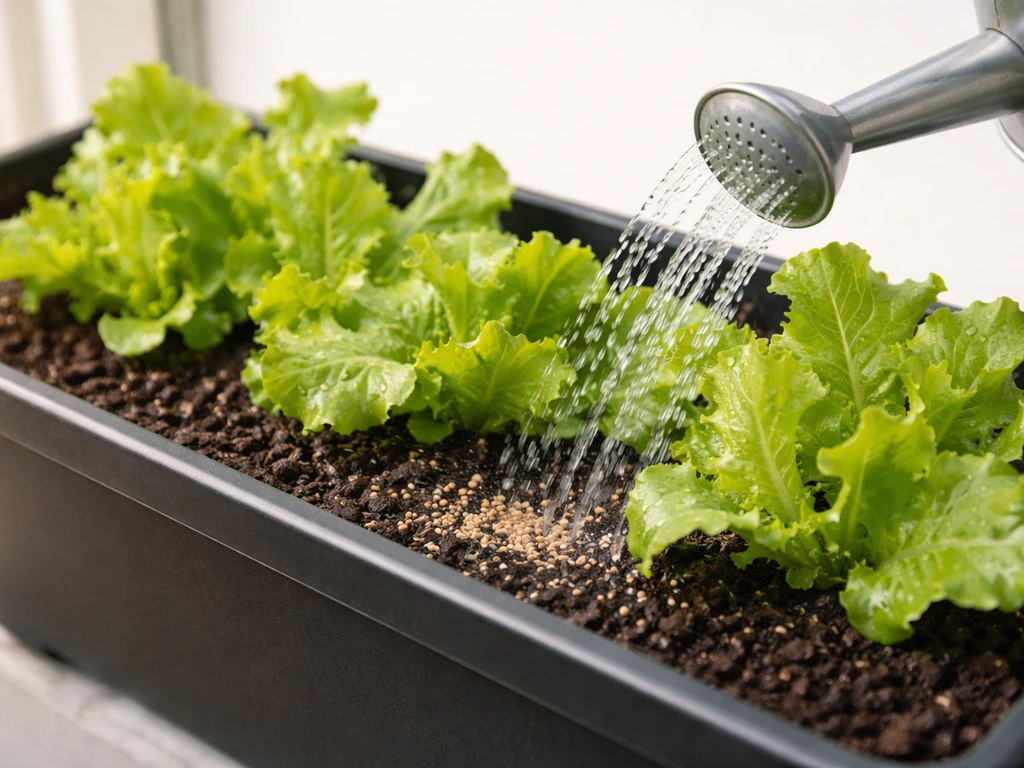
Container lettuce needs consistent moisture more than anything else. Because the entire root system is above ground, the soil dries out much faster than in-ground growing, especially on warm or sunny days. Check your window box daily during warm weather. The rule of thumb: water thoroughly when the top quarter inch of the potting mix feels dry. When you water, water fully until it drains from the bottom holes, then let it drain completely. Shallow, frequent sips are worse than deep, thorough watering because they train roots to stay near the surface. Inconsistent moisture leads to tough, bitter leaves and can trigger bolting, so staying on top of watering is one of the highest-impact things you can do.
Feeding: light and consistent wins
Lettuce is a fast-growing leafy crop, so it benefits from steady, light feeding rather than occasional heavy doses. If you didn't mix slow-release fertilizer into your potting medium at planting, start liquid feeding about 2 to 6 weeks after planting, depending on how quickly your plants are growing. A half-strength balanced liquid fertilizer applied with every watering works well and keeps nutrient levels stable without the risk of burning the roots. If you did use slow-release granules at planting, one application may be enough for a short spring or fall crop. Go easy on high-nitrogen feeds later in the season if you're growing into warmer temperatures, as excessive nitrogen can push soft, heat-sensitive growth that bolts faster.
Troubleshooting common window-box lettuce problems
Leggy, spindly plants
If your seedlings are tall and stretched with long spaces between leaves, they're not getting enough light. This is the most common failure mode for indoor window growing. Move the box to a brighter window, rotate it so all sides get exposure, or add a simple LED grow light positioned close to the plants. Don't try to compensate for low light with more fertilizer; it won't work and will just push more weak, pale growth.
Bolting (plants going to seed too early)
Bolting is triggered by heat and sometimes long day length. If your plants suddenly send up a tall central stalk and the leaves get small and bitter, they've bolted. You can harvest whatever is left immediately, but the crop is essentially done. To prevent this: choose slow-bolt varieties, keep the window box out of direct afternoon sun in summer, water consistently (heat stress accelerates bolting), and plan your plantings so lettuce matures during cooler months rather than peak summer. For outdoor window boxes, moving the box to a shadier or east-facing exposure in late spring buys you a few extra weeks.
Yellow leaves
Yellowing leaves usually point to one of three things: overwatering and root rot (check drainage and let the soil dry slightly between waterings), nitrogen deficiency (start or increase feeding), or the plant simply aging out as it approaches maturity or heat stress. If the lower, older leaves are yellowing but new growth looks healthy and green, that's normal aging and not cause for concern. If yellowing spreads to new leaves, investigate the roots and your feeding schedule.
Pests: aphids, slugs, and more
Aphids are the most common pest on window-box lettuce. Check the undersides of leaves regularly. A big part of growing lettuce without bugs is keeping pests from settling in, using quick inspections and simple controls like rinsing off aphids early how to grow lettuce without bugs. For small infestations, knock them off with a strong stream of water or pick them off by hand. Slugs and snails are more of a problem for outdoor window boxes, especially in wet weather. Removing them by hand in the evening works well at small scale. Powdery mildew can appear in warm, dry conditions on mature plants; improve airflow around the box and avoid overhead watering if you see the white, powdery coating on leaves. Keeping moisture levels consistent and avoiding overly wet soil also helps prevent the damp conditions that favor most pest and disease issues.
Damping off in seedlings
Damping off is a fungal problem where seedlings rot at the soil line and collapse, usually shortly after germination. It's most common when the soil stays too wet, air circulation is poor, or you've used non-sterile media (like garden soil or reused seed trays with old soil). Always use fresh, sterile potting mix, don't overwater seedlings, and give them good airflow. If one seedling damps off, remove it immediately to prevent the fungus from spreading to its neighbors.
Container drying out too fast
This is especially common in summer or if your window box is exposed to wind. If you're watering every day and the soil still feels dry by evening, consider moving the box to a slightly less exposed position, adding a layer of fine mulch or coco coir on the surface to slow evaporation, or upgrading to a larger or deeper container that holds more moisture. A self-watering window box with a built-in reservoir is worth the investment if consistent watering is a challenge in your setup.
A few final thoughts
Window box lettuce is one of the most satisfying small-space growing projects you can take on, whether you're on an apartment windowsill, a balcony, or a sunny patio. If you have a patio instead of a window box, you can use the same cool-season timing and container care, just place the pots where they get the right light grow lettuce on patio. For a complete, step-by-step plan, follow our guide on how to grow lettuce in a small space. If you specifically want to grow lettuce on a balcony, use the same container tips but plan for stronger sun and faster drying. The setup is simple, the payoff is fast, and once you've got your succession planting rhythm down, you'll have fresh salad greens within arm's reach for months. If you're also thinking about expanding into other small-space setups, the same principles here, variety selection, cool temperatures, consistent water, and good potting mix, carry directly over to growing on a balcony, patio, or in other compact indoor and outdoor spaces. Start with one window box, one good loose-leaf variety, and your sunniest available window. You'll have leaves to harvest before you know it.
FAQ
Can you grow lettuce in a window box all year, or only certain seasons?
You can grow it most reliably in spring and fall. Lettuce prefers cool conditions, so in summer you will usually need shade, more consistent moisture, or a slow-bolt variety to keep it from bolting. In winter, daylight and cold drafts from the window can slow growth or damage plants, so consider supplemental lighting or a protected spot if temperatures swing low.
What direction of window is best for a window box of lettuce if I don’t know the light hours?
Aim for a spot where you can confirm roughly 6 hours of bright light daily. If you can’t measure it easily, look at leaf response over 10 to 14 days, leggy growth and long gaps between leaves usually mean not enough light. Rotating the box every few days helps if the window only gives strong light from one side.
How do I prevent lettuce from bolting if my window box gets warm in late spring?
Choose slow-bolt varieties and avoid direct afternoon sun during the warmest part of the day. Keep watering consistent, because heat plus drought stress is a common bolting trigger. If your window gets very hot, move the box to an east-facing or shaded location and consider growing baby leaf lettuce, which tolerates warmer conditions better than full-size heads.
My window box is only 6 inches deep, is that enough for romaine or butterhead?
It can work at the shallow end, but performance may be better with deeper containers. If you’re stuck at 6 inches, prioritize loose-leaf or butterhead over romaine, and keep an especially close eye on moisture because the root zone dries faster. If you can choose, deeper is more forgiving and usually leads to steadier growth.
How often should I water lettuce in a window box?
Check daily in warm weather. A practical method is to water thoroughly when the top quarter inch of the potting mix feels dry to the touch. After watering, let it drain fully, because constant dampness in the saucer can cause root problems.
Is it better to fertilize frequently or rely only on slow-release fertilizer?
For most window setups, steady light feeding beats occasional heavy doses. If you used slow-release fertilizer, you may only need minimal additional feeding for a short crop. If growth slows or leaves pale after 2 to 6 weeks, switch to a half-strength balanced liquid feed at regular intervals rather than increasing nitrogen aggressively.
Can I grow lettuce indoors on a window, or do I need a grow light?
You can, but many indoor windows do not provide enough usable light consistently, especially in winter. If plants stretch upward and leaves are spaced far apart, that’s a light issue, not a fertilizer problem. A simple LED grow light positioned close to the plants often makes indoor lettuce far more predictable.
What spacing should I use in a window box if I want cut-and-come-again leaves?
For loose-leaf types grown as leaf harvest, spacing around 4 inches apart is a good target to maintain airflow. Still, resist overcrowding, because crowded containers dry unevenly and increase disease risk.
Why are my lettuce leaves bitter or tough?
The most common cause is irregular moisture, even a few dry-out cycles can make leaves tough and bitter. Heat stress and bolting tendency also affect flavor, so if bitterness appears along with smaller leaves or a central stalk, you may be heading toward bolting. Fixing the watering routine and, if needed, moving to cooler or less direct sun usually helps fastest.
How can I tell early if my lettuce is getting too much water?
Yellowing plus limp or soft growth can point to overwatering, especially if the soil stays wet longer than expected or drainage is poor. The sure check is drainage performance, the container should drain freely and the saucer should not remain full indoors. If you suspect root issues, let the mix dry a bit more between waterings before resuming a consistent schedule.
What should I do about aphids in a window box lettuce crop?
Catch aphids early by checking leaf undersides. For small clusters, rinsing with a strong stream of water often knocks them off without harming the plant. If they come back quickly, physically remove heavily infested leaves and inspect again after a few days, because aphids can multiply fast in sheltered container conditions.
How do I prevent damping off when starting lettuce seeds?
Use fresh, sterile potting mix, keep moisture consistent, and provide airflow around seedlings. Avoid letting the soil sit constantly saturated, damping off is most likely when the mix stays too wet and stays damp at the surface. If a seedling collapses at the soil line, remove it promptly to reduce spread.
Can I sow seeds directly into the window box in warm weather?
Direct sowing works best when soil temperatures are in the 60s. If your window box heats up in summer, germination can fail even if the air feels cool. If the soil is warm to the touch, wait for cooler conditions or start seedlings indoors under controlled conditions and transplant when temperatures drop.
How do I harvest so my lettuce keeps producing the longest?
For loose-leaf types, pick the outer leaves and leave the inner rosette intact, harvesting in small batches every few days. For romaine, you can often harvest the plant by cutting higher on the stem, but regrowth depends on how cool and healthy the plant is. Water the day or two before harvest to improve crispness, and avoid harvesting during heat spikes when flavor often suffers.
Do window boxes need mulch or top-dressing to reduce drying?
It can help, especially outdoors or on sunny balconies. A thin layer of fine mulch or coco coir on the surface slows evaporation and makes moisture more consistent without interfering with drainage. Just keep it light so airflow around the leaves remains good.