
Gutters make surprisingly good lettuce planters. They are shallow, long, cheap, and easy to mount on a fence, wall, or balcony railing. Fill them with a lightweight growing mix, sow loose-leaf lettuce seeds about 0.5cm deep and 15–20cm apart, keep them consistently moist and in a spot with 6 hours of light, and you can be harvesting in as little as 4–6 weeks. The trickiest parts are drainage and heat management, but both are easy to solve once you know what to watch for.
How to Grow Lettuce in Gutters: Step-by-Step Guide

Marcus Holloway
6 Jun 2026
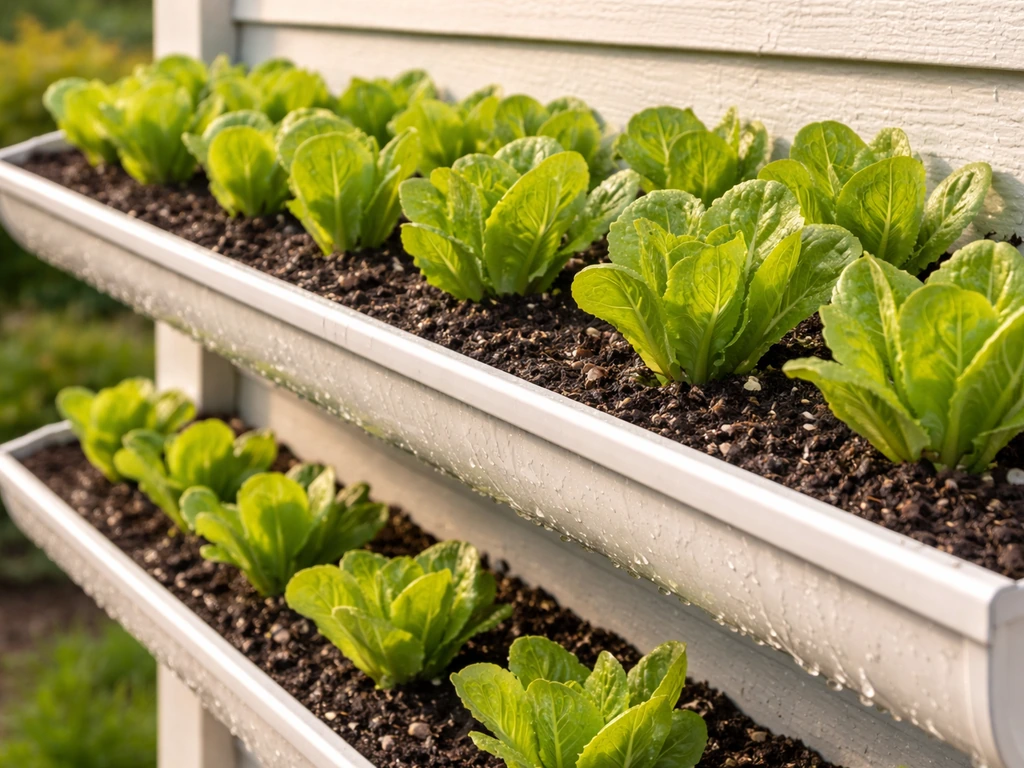
Why gutters work for lettuce (and what to watch for)
Lettuce is naturally suited to shallow planters. Its roots rarely go deeper than 6–8 inches, so the 4–5 inch depth of a standard vinyl or aluminium gutter is enough. What you get in return is a long, narrow growing channel that maximises space along walls, fences, and railings. That makes gutters especially useful for apartment balconies, small patios, and anywhere horizontal growing space is limited. You can stack multiple gutters at different heights, run them along a south-facing fence, or hang them under a window to catch the light.
That said, there are two real risks with gutters that you need to plan for from the start. First, shallow containers dry out fast, especially in warm weather and on exposed balconies. If you are not checking and watering regularly, lettuce can go from fine to wilted in a day. Second, gutters are long and you need to make sure water can drain from the whole length, not just pool at one end. Both of these are solved by the setup, which I will cover in the next section.
Choose the right gutter setup: drainage, depth, and medium
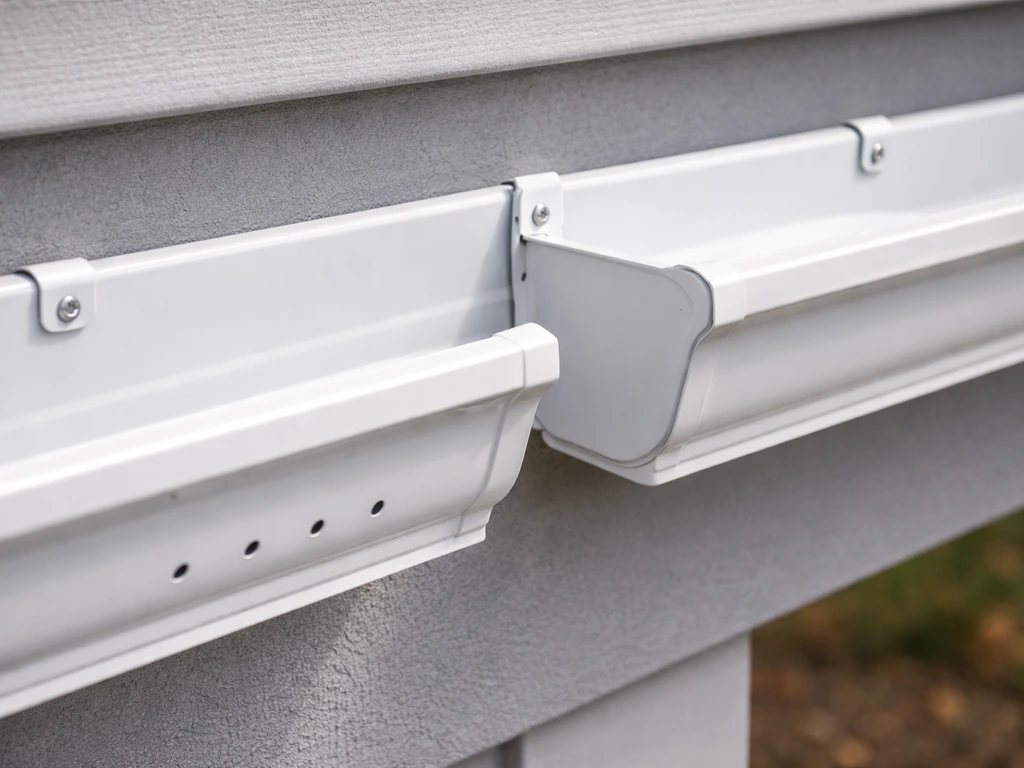
Picking the right gutter
Standard vinyl downspout gutters (the K-style or half-round type, typically 4–5 inches wide) are the go-to choice. They are cheap, lightweight, easy to cut to length, and widely available at hardware stores. Aim for gutters that give you at least 4–5 inches of depth. Anything shallower will dry out too fast and restrict root development. Aluminium gutters also work and tend to last longer outdoors, but they heat up more in direct sun, which can stress lettuce roots in summer. Avoid galvanised metal gutters if you are growing food, as older or cheaper galvanised coatings can leach zinc into moist growing media over time.
Drainage: the step most people skip
This is where gutter growing goes wrong most often. A sealed gutter with no drainage holes will drown your lettuce within a week or two. You need to drill holes roughly every 15–20cm along the bottom of the gutter before you add any growing medium. Use a 6–8mm drill bit. If you are mounting the gutter on a slope (even a slight one), you can cluster a few holes toward the lower end, but spacing them evenly along the whole length is safer. Line the inside of the gutter with a piece of horticultural fleece or a strip of weed-barrier fabric before filling it. This stops the growing medium from washing out through the holes while still letting water drain freely.
Clean before you plant
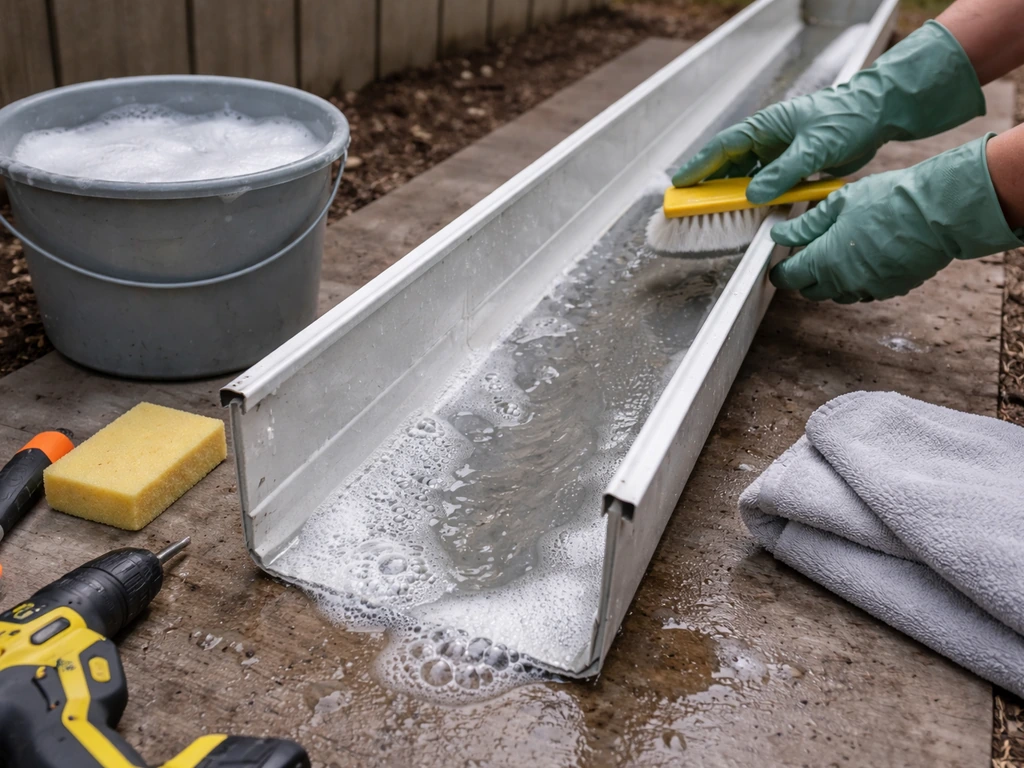
If you are using secondhand gutters from a house, clean them properly before planting food in them. Wash the inside with warm soapy water, rinse thoroughly, and let them dry. Old gutters can carry algae, debris, and residues from whatever was on the roof. This takes ten minutes and is worth doing.
The best growing medium for gutters
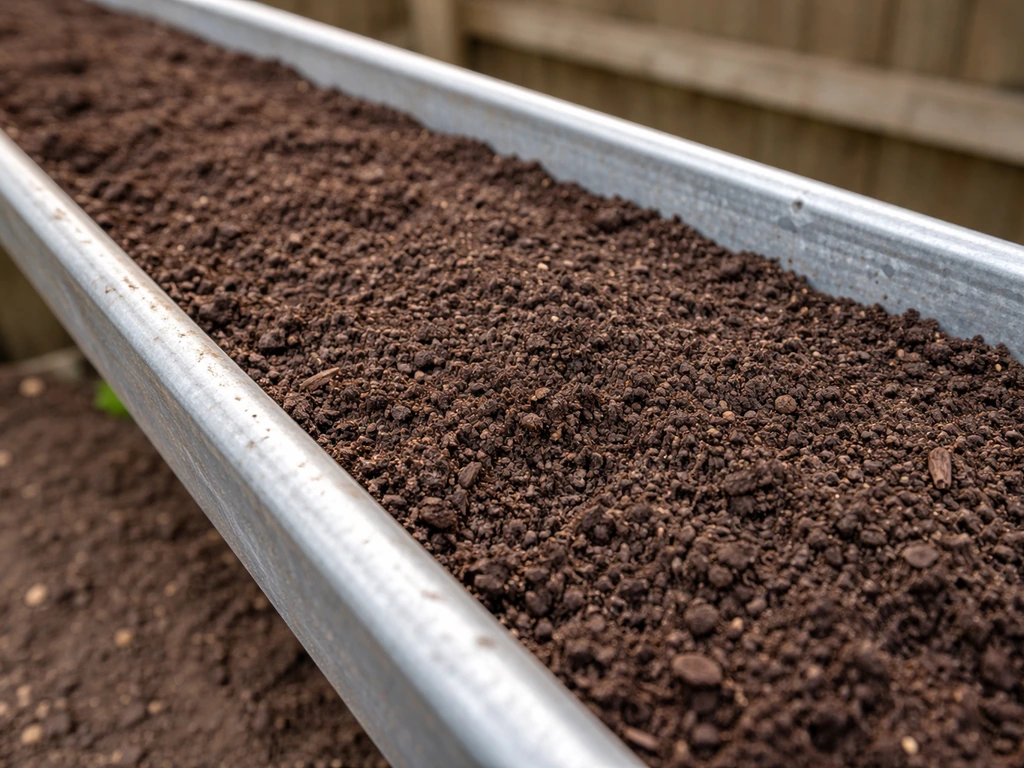
Do not fill gutters with garden soil. It compacts, drains poorly, and is too heavy if you are mounting the gutters on a fence or wall. Instead, use a peat-free multipurpose compost mixed with around 20–30% perlite. The perlite keeps the mix light and open so water moves through easily and roots get good aeration. Fill the gutter to just below the rim, leaving about 1cm of space so water does not wash the compost straight out when you water. For a soilless approach, a coir-based mix with perlite works well too, and this is a good option if you want to keep things even lighter. If you are interested in fully soil-free growing, that overlaps with how lettuce is grown hydroponically, which takes the gutter concept in a different direction. This is one reason many people use hydroponic methods to grow lettuce without soil.
Pick lettuce varieties and plan planting and succession
Best varieties for gutter growing
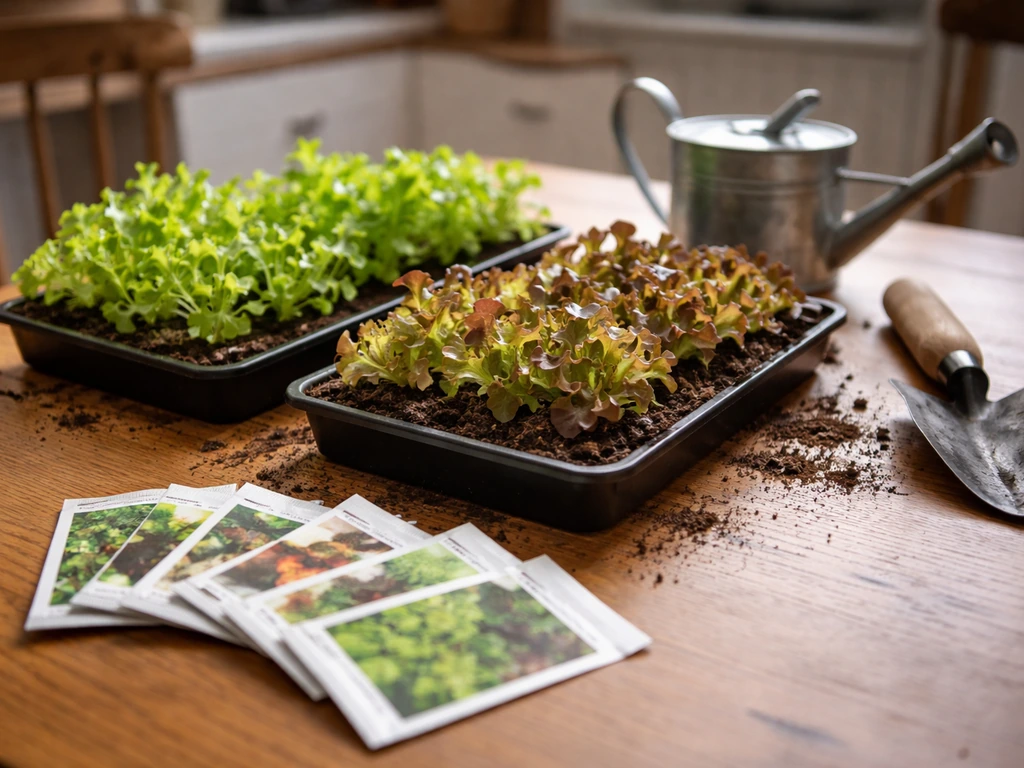
Loose-leaf and cut-and-come-again varieties are the best fit for gutters. They stay compact, produce over weeks rather than a single harvest, and their shallower root systems cope better with limited depth. Hearting types like butterhead and cos can work but they need more root room and take 10–14 weeks to mature, making the most of a gutter system less efficient.
- Salad Bowl and Oak Leaf types: quick growing, loose-leaf, great for cut-and-come-again
- Little Gem: compact cos, works well in gutters and is ready in around 60–70 days
- Lollo Rossa and Lollo Bionda: frilly, decorative, consistently productive in shallow containers
- Butterhead (e.g. All Year Round): slower but manageable, best in spring or autumn when heat is lower
- Baby leaf mixes: sow thickly, harvest very young, perfect for a 30-day quick crop
Succession planting to keep harvests coming
One of the best things about gutters is that the length makes succession planting almost automatic. Instead of sowing the whole gutter at once, sow one third of it every two to three weeks. That way you have young plants coming on as older ones are being harvested. In a 2-metre gutter, that gives you a nearly continuous supply from late spring through autumn. In summer, stick to heat-tolerant varieties in each succession and skip sowing during the hottest weeks of July if your gutters are in a hot, exposed spot.
Planting instructions: seeds vs transplants and spacing

Starting from seed
Direct sowing in the gutter is the simplest approach. If you want the UK-specific timetable and conditions, see our guide on how to grow lettuce from seed UK for the best results. Make a shallow furrow about 0.5–1cm deep along the centre of the gutter and sow seeds thinly. Do not bury them deep; lettuce seed needs light to germinate well, so 0.5–1cm is enough. Water gently using a fine rose or a spray bottle so you do not displace the seeds. Germination usually happens in 7–14 days at temperatures between 10–20°C. Above 25°C, germination rates drop and you may get poor or patchy results.
Using transplants
If you start seeds indoors in module trays first (which I prefer in early spring or late summer when outdoor temperatures are marginal), transplant seedlings into the gutter when they have 3–4 true leaves. Ease them out carefully, keeping the rootball intact, and plant them at the same depth they were growing in the module. This gives you more control over timing and spacing.
Spacing and thinning
For cut-and-come-again loose-leaf varieties, thin seedlings to around 10–15cm apart. For hearting types or larger plants like Little Gem, give each plant 20–25cm of space. Thinning feels wasteful but it matters: crowded plants compete for moisture and airflow, which increases disease risk. You can eat the thinnings in a salad, so nothing goes to waste. If you are doing a baby leaf sowing, you can sow much more densely (around 1–2cm apart) and harvest the whole lot as microgreens or baby leaves at 3–4 weeks.
Watering, fertilizing, and light and temperature targets
Watering
Gutters dry out quickly and lettuce needs consistently moist (not waterlogged) growing medium. In warm weather, you may need to water daily. In cooler, overcast conditions, every two to three days may be enough. The test is simple: push your finger 2cm into the compost. If it feels dry, water. If it is still damp, leave it. Always water at the base of plants rather than overhead to reduce the risk of fungal issues like grey mould (Botrytis), which spreads fast in damp, humid conditions. If you are growing several gutters, a drip line system along each gutter dramatically reduces the time spent watering and keeps moisture much more even.
Fertilizing
Fresh multipurpose compost has enough nutrients to carry lettuce through its first 4–6 weeks. After that, especially for longer-growing varieties or successive plantings in the same gutter, feed every 7–10 days with a balanced liquid fertiliser (roughly equal nitrogen, phosphorus, potassium). A high-nitrogen feed like a diluted seaweed or general purpose liquid fertiliser encourages the leafy growth you want. Watch for pale yellow-green leaves, which usually signal nitrogen deficiency, and brown necrotic edges on inner leaves, which is tipburn caused by localised calcium deficiency, often linked to inconsistent watering or poor airflow.
Light and temperature
Lettuce grows best at 10–20°C and prefers 6 hours of direct or bright indirect light per day. In spring and autumn, a south or west-facing position is ideal. In midsummer, partial afternoon shade actually helps because it reduces heat stress and slows bolting. If you are growing indoors on a windowsill or with grow lights, aim for the same 6-hour minimum. If you want the same type of container gardening, you can apply these windowsill lettuce principles to a small pot or tray near a bright window. Grow lights set 15–20cm above the plants on a 14-hour cycle work well for indoor gutter setups. For apartment balcony growing, positioning gutters so they catch morning sun but get shade from midday onwards is the sweet spot in summer. If you want a quick checklist for how to grow lettuce in an apartment, focus on light, watering, and heat control first.
Prevent bolting and troubleshoot common lettuce problems
Stopping lettuce from bolting
Bolting (running to seed) is triggered by heat, water stress, and long day lengths. Lettuce sown in May and June in an exposed, south-facing gutter is the most vulnerable. To reduce bolting: choose bolt-resistant varieties, keep moisture consistent, move gutters to partial shade during hot spells, and harvest regularly to keep plants producing. Once a plant starts bolting, the leaves turn bitter quickly and the plant is essentially done. Remove it, refresh that section of compost, and resow. There is no fixing a bolted plant.
Common problems and what to do about them
| Problem | Likely cause | What to do |
|---|---|---|
| Poor or patchy germination | Temperature too high (above 25°C), seeds too deep, or dry compost | Water immediately and gently; sow shallower (0.5cm); move to a cooler spot or germinate indoors and transplant |
| Brown, crispy leaf edges (tipburn) | Localised calcium deficiency from inconsistent watering or poor airflow | Water more evenly; improve airflow around gutters; consider dilute calcium supplement |
| Yellow leaves overall | Nitrogen deficiency, especially in older compost | Feed with a balanced or high-nitrogen liquid fertiliser every 7–10 days |
| Slimy or soft stems, white fluffy growth | Grey mould (Botrytis) or Sclerotinia rot from damp conditions | Remove affected plants immediately; improve drainage and airflow; avoid overhead watering |
| Yellow patches and white fuzz on leaf undersides | Downy mildew from cool, damp conditions | Remove affected leaves; increase airflow; avoid wetting foliage |
| Sticky residue, distorted leaves | Aphids clustering on young growth | Blast off with water; introduce ladybirds or lacewings; use insecticidal soap if severe |
| Irregular holes in leaves, slime trails | Slugs and snails, especially in damp weather | Use copper tape around gutter ends; pick off by hand at night; use slug pellets sparingly if needed |
| Uneven growth along the gutter | Uneven light, especially if the gutter runs east-west | Rotate the gutter or reposition; trim nearby plants blocking light; supplement with a grow light for indoor setups |
Harvesting, extending the crop, and end-of-season care
When and how to harvest

For cut-and-come-again varieties, start harvesting when the outer leaves are around 8–10cm long, usually 4–6 weeks after sowing. Pick only the outer leaves from each plant, leaving the central growing point and younger inner leaves intact. This is the key to getting multiple harvests from the same plant over several weeks. Do not cut the whole plant down to a stump; snip individual leaves at the base with scissors or pinch them off cleanly. The plant will keep producing new leaves from the centre for another 2–4 rounds of picking before it starts to decline or bolt.
For hearting types like Little Gem, harvest the whole head by cutting at the base when it feels firm and the head is well-formed. These usually take 60–70+ days depending on the season.
How long can one gutter keep producing?
With a cut-and-come-again approach and succession sowings, a single gutter system can produce fresh lettuce for 4–6 months of the growing season. In a sheltered spot or indoors with grow lights, you can extend that year-round. The key is refreshing the compost between growing cycles. After 2–3 rounds of lettuce in the same gutter, the nutrient levels will be depleted. Top up the compost or replace it entirely before the next succession. This also helps prevent disease buildup in the growing medium.
End-of-season care for your gutters
At the end of the growing season, empty the gutters completely. Remove all plant material, including roots, which can harbour pests and disease spores over winter. Wash the gutters with warm soapy water, rinse well, and let them dry before storing or leaving in place. Clean tools and any containers used alongside the gutters at the same time. Starting next season with clean equipment makes a real difference, especially with diseases like grey mould and downy mildew that can persist in debris. If you are growing indoors or on a heated balcony and want to keep going through winter, simply refresh the compost, re-sow a cold-tolerant variety, and adjust your light source. Gutters are one of the more forgiving setups for year-round growing when you have control over the environment.
Outdoor vs balcony vs indoor gutters: quick comparison
| Setting | Best season | Main challenge | Key tip |
|---|---|---|---|
| Outdoor fence or wall | Spring to autumn | Bolting in midsummer heat | Move to partial shade in June–August; use bolt-resistant varieties |
| Balcony or railing | Spring to early autumn | Wind and rapid drying | Water daily in warm weather; add a windbreak if very exposed |
| Indoor windowsill | Year-round | Insufficient light in winter | Supplement with a grow light set 15–20cm above plants on a 14-hour cycle |
| Indoor with grow lights | Year-round | Heat from lights, cost of electricity | Use LED grow lights to reduce heat; keep lights on a timer |
FAQ
What’s the best way to prevent dry-out in gutters during hot balcony weather?
If you only have one gutter end that drains well, water tends to sit and create soggy spots that root rot lettuce. To test, fill the empty gutter with water and watch for slow-draining sections. If you see pooling, add a few more bottom holes, or slightly re-level the gutter so the slope runs the full length, then ensure the drainage water can run away from the wall or fence.
Can I use an automatic drip line instead of watering by hand?
Yes, but avoid waterlogged soil. Use a timer and low flow drip that keeps the compost evenly moist, then stop watering once the top 2 cm has moisture but before it stays saturated. A simple rule is to check the finger test daily in heat, then adjust the drip duration based on how quickly the mix dries.
Why do my lettuce seeds fail to germinate in a gutter?
Treat the gutter like a shallow seed tray, so don’t bury seed deeper than about 1 cm, and avoid covering with heavy compost. If your germination is patchy, the usual causes are seed placed too deep, compost drying out during the 7 to 14 day germination window, or temperatures staying above 25 C. For fixes, sow a little thinner, mist or water gently, and pause sowing during the hottest week or two.
How do I know when to start fertilising, and what signs mean I’m overdoing it?
Lettuce in gutters often needs more frequent feeding than in beds because the container has limited nutrient buffering. After the first 4 to 6 weeks, feed every 7 to 10 days with a balanced liquid fertiliser, and if leaves look pale, increase slightly within label directions. If you see tipburn-like browning at leaf edges, don’t keep raising nitrogen, instead focus on steady moisture and good airflow around the plants.
How can I reduce mould and other diseases in a gutter lettuce setup?
Fungal issues usually start when leaves stay wet or when airflow is poor in a long, crowded row. Water at the base, thin on time so plants have the recommended spacing, and remove any yellowing leaves that touch the growing medium surface. If grey mould appears, remove affected leaves immediately, then pause overhead wetting and improve ventilation around the gutter.
Are secondhand gutters safe to use for growing lettuce, and how should I clean them?
Secondhand gutters can be a food-safety issue if they were previously treated. If you notice flaking, heavy rust, or unknown residue, don’t use them for edible crops. If the gutter just has normal roof grime, washing with warm soapy water and thorough rinsing helps, and letting it dry fully before filling reduces algae carryover.
What should I do if my lettuce starts bolting in the gutter?
Bolting usually cannot be reversed, but you can prevent most of the damage by acting early. Move the gutter into partial shade during hot spells, keep the compost consistently moist, and harvest more often from the outside leaves to extend quality. Once the plant is clearly running to seed and leaves turn bitter, remove it and resow that section to avoid wasting space.
What are the most common pests in gutters, and how do I handle them without harming lettuce?
For pests like slugs, the gutter’s narrow channel can still be vulnerable, especially at night. Add a physical barrier where possible, keep weeds and debris away from the gutter, and inspect after damp evenings. For aphids, a strong spray at the base and leaves can dislodge them, but avoid soaking the crown repeatedly.
How do I harvest cut-and-come-again lettuce from a gutter without stopping new growth?
You can harvest leaves gradually, but timing depends on variety and your spacing. For cut-and-come-again loose-leaf types, outer leaves are usually ready around 8 to 10 cm, and you avoid cutting the centre growing point. If you accidentally cut too close to the crown, regrowth can slow, so aim to snip or pinch leaves from the base with scissors for cleaner regrowth.
How close can I plant lettuce in a gutter, and how do I know when thinning is too late?
A gutter is narrow, so airflow and even moisture matter more than with pots. Start with the correct 15 to 20 cm spacing for loose-leaf and 20 to 25 cm for larger types, and thin micro-dense baby leaf sowings only if you’re seeing crowding or elongated, weak plants. If plants start stretching, it usually means they’re too close or not getting enough light intensity, not just fertilizer issues.