Sow lettuce seeds indoors from February, in a greenhouse from March, or directly outdoors from late March through to August. Seeds germinate in 7 to 14 days at around 10 to 20°C, and loose-leaf types are ready to harvest in as little as 4 to 6 weeks from sowing. That's the short version. Everything below tells you exactly how to do it well, including what goes wrong and how to avoid it.
How to Grow Lettuce From Seed in the UK: Timing, Steps
Marcus Holloway
23 May 2026
Best UK sowing times for lettuce
UK timing matters more with lettuce than almost any other salad crop. Get it wrong and you end up with seedlings that stall in cold soil, or mature plants that bolt in a summer heatwave before you've had a chance to eat them. Here's how to think about the three main growing situations.
| Growing situation | Sowing window | Notes |
|---|---|---|
| Indoors (windowsill/propagator) | February to April, then again September to October | Earliest February start gives March plantouts under cloches. Low light in Feb may need a grow light. |
| Greenhouse or cold frame | March to September | Unheated greenhouse extends both ends of the season. Great for over-wintering varieties in autumn. |
| Direct outdoor sowing | Late March to August | Soil needs to be workable and above about 7°C. Avoid sowing in peak midsummer heat without shade. |
The RHS suggests that if you want a really early crop, you can sow indoors in early February and plant out in early March under cloches. That's a rewarding experiment but it does demand you keep seedlings well lit and warm. For most people, a March indoor start is more forgiving. From late March onwards, you can sow directly outside once frosts aren't forecast and the soil has warmed a little. Thompson & Morgan's outdoor sowing guidance runs March to August, and that window also captures the full run of summer and autumn harvests. Thompson & Morgan provides a similar outdoor sowing window of March to August into fertile, moist soil in sun or semi-shade.
Choosing lettuce varieties for UK weather and your setup
UK weather is unpredictable enough that variety choice genuinely matters. A lettuce that bolts at the first sign of heat is going to frustrate you in a dry June. Pick varieties matched to your setup and the season you're growing in.
Main types and what they're good for
- Loose-leaf (cut-and-come-again): The most beginner-friendly choice. Varieties like 'Salad Bowl', 'Lollo Rossa', and 'Oak Leaf' are fast (4 to 6 weeks), don't need perfect heads, and you can harvest them multiple times. Great for containers, windowsills, and gutters.
- Butterhead: Soft, round heads. Varieties like 'Tom Thumb' are compact and well suited to containers. Hardy butterhead types work well for autumn and early spring sowings when conditions are cooler.
- Cos/Romaine: Tall, upright heads with crisp ribs. Slightly longer to mature but excellent flavour. Varieties like 'Little Gem' handle UK conditions well and are reliable performers.
- Crisphead/Iceberg: Needs consistent moisture and cooler conditions to heart up properly. More demanding, but achievable in a good UK spring or early autumn.
- Winter/hardy varieties: Types like 'Winter Density' or 'Arctic King' are bred specifically for UK autumn and winter growing under cover. Use these for October to February sowings in a greenhouse or cold frame.
If you're not sure where to start, a mixed loose-leaf packet is genuinely the best investment. You get variety, fast results, and it suits almost any growing setup from an outdoor bed to a windowsill pot. For bolt resistance in midsummer, look specifically for varieties labelled 'slow to bolt' on the packet.
Step-by-step: sowing lettuce seed and initial care
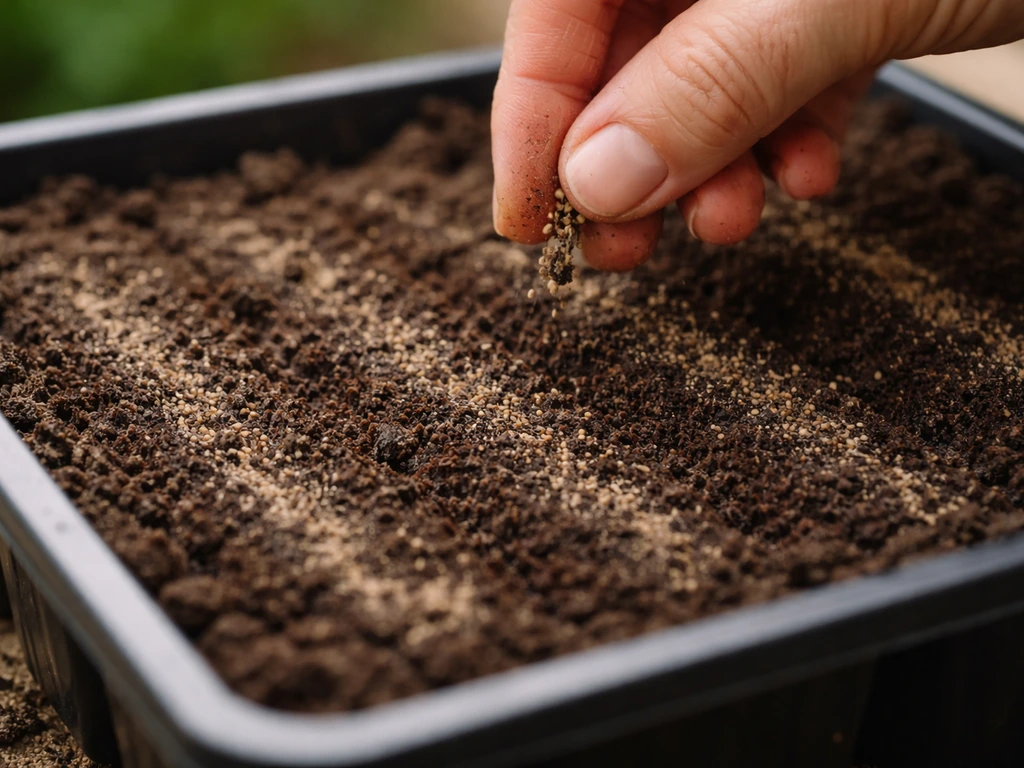
Lettuce seeds are tiny and need light to germinate, so sowing depth and aftercare in those first two weeks make a real difference. Follow these steps and you'll avoid the most common early failures.
Sowing indoors or under cover
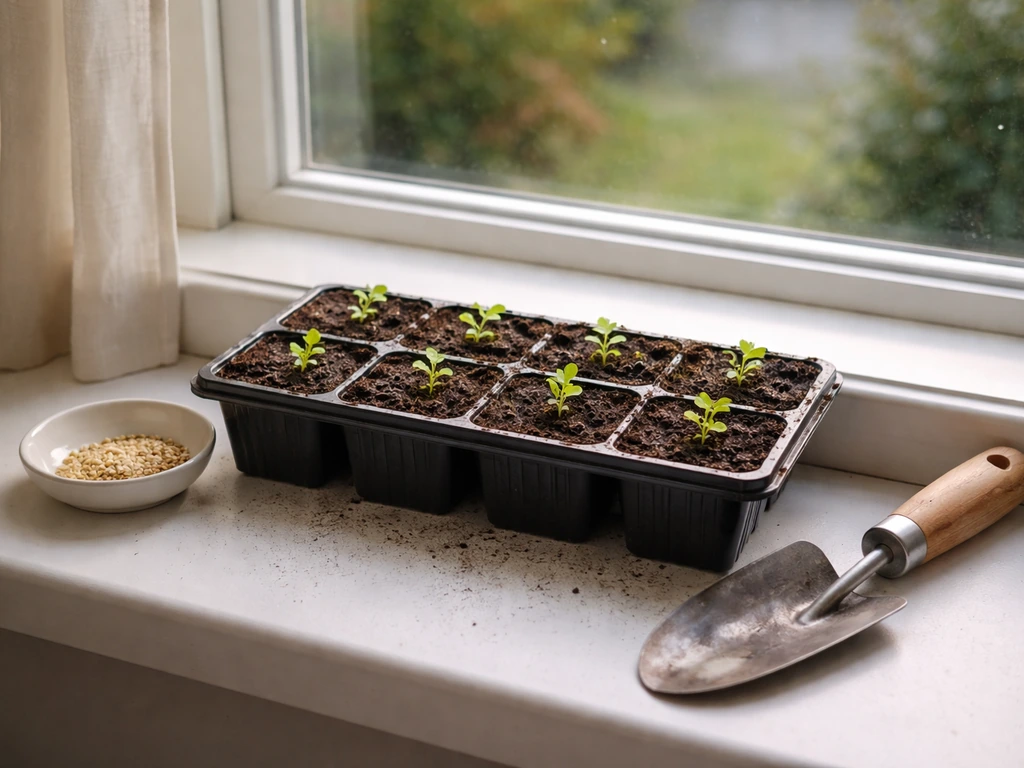
- Fill a seed tray or small pot with good-quality seed compost. Firm it gently but don't compact it.
- Water the compost before sowing, not after, so you don't wash the seeds around.
- Scatter seeds thinly across the surface (or sow 2 to 3 seeds per module if using module trays). Thin sowing saves you work later.
- Cover with a very thin layer of vermiculite or sieved compost, about 5mm deep. Lettuce needs light to germinate, so don't bury them.
- Label the tray with the variety and sowing date. You'll be glad you did when you have multiple trays on the go.
- Place somewhere warm (15 to 18°C is ideal) and bright. A propagator helps but isn't essential.
- Water gently using a can with a fine rose. Keep the compost moist but never waterlogged.
- Germination typically takes 7 to 14 days. Once seedlings emerge, move them to your brightest location and ensure good airflow to prevent damping off.
Direct outdoor sowing

- Prepare the soil by raking to a fine tilth and removing stones and large clumps.
- Make a shallow drill about 1cm deep using a cane or the edge of a trowel.
- Sow seeds thinly along the drill, aiming for roughly one seed every 2 to 3cm.
- Rake soil lightly back over the drill, then firm gently.
- Water carefully with a rose attachment.
- Thin seedlings when they're about 2.5cm tall (more on exact spacing below).
Light, temperature, and watering in UK conditions
Lettuce is a cool-season crop and it behaves accordingly. It grows best between 10°C and 20°C, and it starts to struggle above 25°C. Getting light, temperature, and water right is probably 80% of the battle.
Light
Outdoors from April to September, a position in full sun or semi-shade works well. During midsummer, semi-shade actively helps prevent bolting: full sun in June and July can push a mature plant to run to seed within days. Indoors, a south-facing windowsill gives around 4 to 6 hours of direct light in summer, which is marginal but workable for loose-leaf types. From November to February, a south-facing windowsill isn't enough on its own. A small LED grow light on a 14-hour timer costs roughly £2 to £3 per month to run and makes the difference between seedlings that grow and ones that just sit there looking pale. For seedlings specifically, aim for 12 to 16 hours of light per day in low-light months.
Temperature
For germination, 15 to 18°C is ideal. Below 7°C and germination slows dramatically or stalls. Above 25°C, seeds can go into thermal dormancy and won't germinate at all, which catches people out when they try to sow in a hot greenhouse in July. If that's your situation, start seeds indoors in a cooler room and move them out once germinated.
Watering
Lettuce roots are shallow, so the top layer of soil dries out quickly in warm weather. Keep the soil or compost consistently moist, because drought stress is one of the main triggers for bolting. That said, waterlogged compost is equally damaging, especially for young seedlings where it causes damping off (a fungal collapse at the base of the stem). The rule of thumb: water little and often outdoors in warm spells, check container-grown plants daily in summer, and always let the surface dry slightly between waterings rather than keeping it permanently saturated.
Transplanting, spacing, and thinning
Lettuce doesn't like having its roots disturbed, so transplant carefully and at the right time. Seedlings started indoors are ready to move on when they have 2 to 3 true leaves, usually 3 to 4 weeks after germination.
Hardening off
Before planting out, harden off indoor-raised seedlings over 7 to 10 days. Put them outside in a sheltered spot for a few hours each day, gradually increasing exposure. Skipping this step leads to transplant shock and setback growth.
Spacing guide

| Lettuce type | Final spacing | Notes |
|---|---|---|
| Loose-leaf (cut-and-come-again) | 15–20cm apart | Can be tighter (10cm) if harvesting young. Thin gradually and eat the thinnings. |
| Butterhead (small, e.g. Tom Thumb) | 20–25cm apart | Works well in containers at this spacing. |
| Cos/Romaine | 25–30cm apart | Needs room to develop its upright head properly. |
| Crisphead/Iceberg | 30–35cm apart | Needs the most space to heart up correctly. |
For direct-sown rows, thin in stages. When seedlings are 2 to 3cm tall, thin to about 5cm apart. Once they're 8 to 10cm tall, thin to final spacing. Eat the thinnings in a salad because they're perfectly good leaves at that stage. Crowded plants compete for light and moisture, mature unevenly, and are more prone to disease.
Container growing, windowsill options, and a note on hydroponics
The good news for anyone without a garden is that lettuce is one of the most container-friendly crops you can grow. It has shallow roots (20 to 30cm depth is plenty), grows fast, and doesn't need a lot of space per plant. A window box, a deep trough, even a repurposed colander with compost works fine. If you want to use gutters, the same container-friendly approach applies, just make sure the gutter has drainage and gets enough light.
Containers and windowsills
Use a good multipurpose or peat-free compost rather than garden soil in containers, as garden soil compacts and drains poorly in pots. Keep containers on a south- or west-facing windowsill or balcony from spring to autumn. Containers dry out faster than beds, so check them daily in warm weather and water more frequently. Loose-leaf and small butterhead varieties like 'Tom Thumb' are best suited here because they're compact and quick. For a dedicated windowsill setup with grow lights in winter, loose-leaf cut-and-come-again types are your best option since they're the most forgiving of variable light. If you're interested in growing in smaller, confined spaces, windowsill-specific approaches are worth exploring in more detail.
Hydroponic and soil-free growing
Lettuce is one of the most popular crops for hydroponic setups, and it's not hard to see why: fast growth, shallow roots, and responsiveness to controlled nutrient solutions make it ideal. A basic kratky (passive hydroponic) system, NFT (nutrient film technique) channel, or even a simple water culture container can produce lettuce year-round indoors. The key requirements are a balanced liquid nutrient solution, pH between 6.0 and 7.0, and sufficient light (usually LED grow lights). Growth is noticeably faster in hydroponic systems compared to soil because roots have constant access to water and nutrients. If you're keen on soil-free growing, there's a lot more to explore in that direction.
Common problems and how to fix them
Bolting (running to seed)
Bolting is the biggest frustration with lettuce. The plant sends up a tall central stem, the leaves turn bitter, and the crop is effectively over. It's triggered by long days, heat, drought stress, and cold spells followed by sudden warmth. Prevention is far easier than cure: choose slow-to-bolt varieties for summer sowings, provide shade in midsummer, keep the soil consistently moist, and harvest promptly at maturity. Once a plant has bolted, there's nothing to save. Pull it, compost it, and sow a new batch.
Slugs and snails
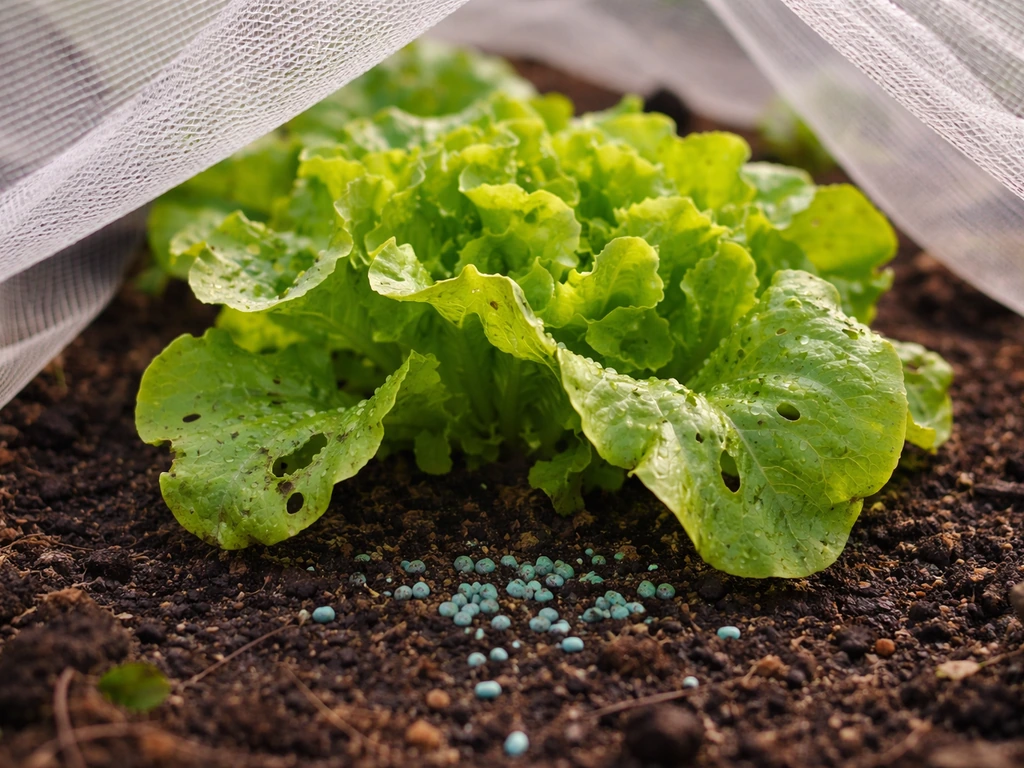
These are the number one lettuce pest in the UK, especially on young transplants. Ferric phosphate pellets (approved for organic growing) are effective and less harmful to wildlife than older metaldehyde-based products. Copper tape around container rims provides some deterrence. Going out with a torch after dark and removing slugs by hand is unpleasant but highly effective. Raising seedlings indoors until they're bigger before planting out also helps because larger plants are more resilient to slug damage.
Aphids
Greenfly and blackfly attack lettuce leaves and growing tips. Check the undersides of leaves regularly and squash colonies early. A strong jet of water knocks most off. Lettuce root aphid is a more serious problem: it attacks underground and is harder to spot until the plant wilts for no obvious reason. Some older cultivars like 'Avoncrisp' and 'Avondefiance' had strong resistance to root aphid, and many modern varieties are also bred with resistance. If root aphid is a problem in your garden, choosing a resistant variety is the most practical long-term solution.
Grey mould (Botrytis)
This fungal disease shows as fluffy grey patches on leaves and stems, usually in damp, poorly ventilated conditions. It's common in greenhouses in autumn and winter. Improve airflow, remove affected leaves promptly, and avoid overhead watering in the evenings.
Slow or stunted growth
If seedlings are growing slowly indoors, the most likely culprits are low light, too-cold temperatures, or overwatering. Move to a brighter spot, check the temperature isn't dropping below 10°C at night, and let the surface of the compost dry slightly between waterings. Outdoors, slow growth in spring usually means the soil is still too cold. Covering the bed with a cloche or fleece for a week before sowing warms it up faster.
Damping off
This is a seedling disease where stems collapse at soil level. It's caused by water moulds and spreads quickly in wet, poorly ventilated conditions. Use fresh compost (not reused from old pots), water from below when possible, don't let trays sit in standing water, and ensure good airflow around seedlings.
Harvesting and keeping the supply going with successive sowing
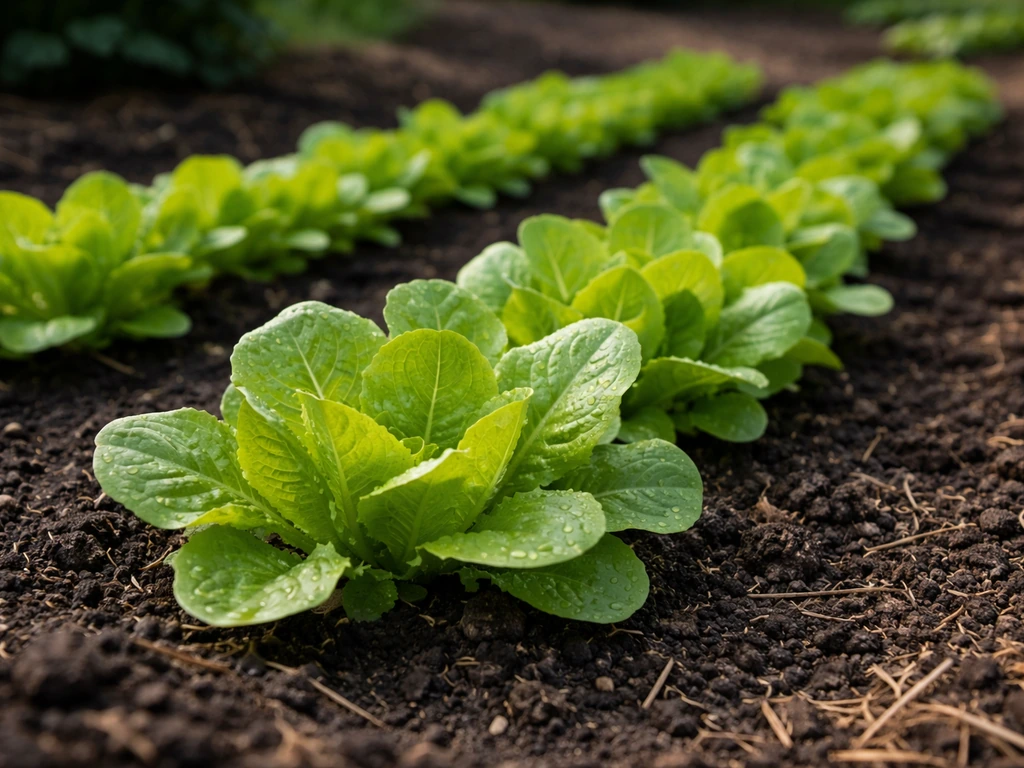
Loose-leaf lettuce is ready to pick from around 4 to 6 weeks after sowing. Hearting types (butterhead, cos, crisphead) take longer, typically 8 to 12 weeks. Don't wait too long: once a lettuce is fully mature, bolting risk increases daily, especially in warm weather.
Cut-and-come-again harvesting
For loose-leaf types, you have two options. Either snip a few outer leaves from each plant as you need them, leaving the centre to keep growing. Or cut all the top growth off at once about 2 to 3cm above the compost surface and let it re-sprout. The re-sprouting method works well in cooler conditions but the plant recovers less reliably in hot or dry weather, so keep it well watered after cutting.
Successive sowing: your most useful habit
The single best thing you can do for a continuous lettuce supply is sow a small batch every two to three weeks rather than sowing a large amount all at once. A row of 10 to 15 plants maturing at the same time is more than most households can eat before it bolts. Stagger your sowings from March through to August outdoors, and you'll have fresh lettuce right through summer and into autumn. For winter supply, make a final outdoor sowing in August or September and bring it under cover, or sow hardy varieties in a greenhouse or cold frame from September onwards. The UK seed sowing season effectively runs from January (under cover) to October (final winter hardy types), and lettuce fits almost the entire window if you match variety to season.
If you want to go beyond outdoor beds, the same successive sowing principle applies on a windowsill or in a container setup indoors. Sow a small pot every few weeks, use cut-and-come-again varieties, and you can maintain a near-constant supply of fresh leaves. For apartment growers or anyone without outdoor space, this approach is exactly as productive as a garden bed, just at a smaller scale.
FAQ
Which lettuce varieties should I choose in the UK to stop bolting in hot weather?
If your goal is “no bolting,” avoid full summer heat. Aim for loose-leaf and salad leaf types, use semi-shade outdoors from June onwards, keep the compost evenly moist, and choose varieties marked slow to bolt. Also harvest at the first sign of leaf size you can use, because once a plant is fully mature the bolting risk climbs quickly.
Can I sow lettuce seed in a hot greenhouse in the UK, or will it fail?
Yes, but don’t keep seeds too warm and don’t bury them. In the UK heat of a July greenhouse, seeds may go into thermal dormancy above about 25°C. Start them indoors in a cooler spot until they germinate, then move them out once seedlings have emerged and temperatures are more reasonable.
How deep should I sow lettuce seeds, and why do mine come up patchy?
Lettuce seeds are tiny and need light to germinate, so sowing depth matters. Press seeds lightly into the surface or barely cover with a very thin dusting of compost, then keep the surface consistently moist. If you cover too deeply, you can get patchy or no germination even when temperatures are right.
When is the right time to move indoor seedlings outside in the UK?
If nights are cool, don’t transplant at random. A reliable approach is to wait until seedlings have 2 to 3 true leaves and the weather is stable, then harden them off over 7 to 10 days in a sheltered spot. If cold snaps are still likely, delay planting out or use fleece and cloches until conditions settle.
My lettuce seedlings look pale and leggy indoors, what should I change first?
For thin growth indoors, the usual fix is to increase light and adjust watering. Move seedlings to the brightest available spot, add an LED grow light if you are outside the main daylight months, aim for roughly 12 to 16 hours of light daily in low-light periods, and water so the surface dries slightly between waterings.
What can I do to prevent damping off in lettuce seedlings?
Fresh compost is important, especially for damping off. Use clean trays and fresh or new compost in seedling modules, avoid reusing old potting mix, water from below when you can, and improve airflow. Standing water and poor ventilation raise fungal risk fast.
My lettuce is stalling, how do I tell whether it is cold soil, low light, or watering problems?
It depends on what you see. If leaves are small and growth is slow outdoors in spring, soil temperature may still be too low, so use cloches or fleece to warm the bed for a week before sowing. If growth is slow indoors, the more common causes are low light, too-cold temperatures, or overwatering.
What is the correct thinning schedule for direct-sown lettuce?
Pick the right spacing for the crop type and thin in stages. When seedlings are about 2 to 3 cm tall, thin to around 5 cm apart, then thin again to final spacing when they reach roughly 8 to 10 cm tall. Crowding reduces airflow and increases disease pressure, and it also makes plants mature unevenly.
Can I cut lettuce back and get more leaves, or should I harvest and re-sow?
You can keep harvesting, but re-sprouting is more reliable in milder conditions. For loose-leaf types you can snip outer leaves, leaving the centre to continue. If you cut the whole top off 2 to 3 cm above the compost, it may re-sprout, but performance drops if it is hot or dry, so keep watering steady after cutting.
What is different about growing lettuce from seed in containers in the UK?
Use compost that drains well, keep shallow-rooted plants consistently moist, and make sure containers are in sufficient light. Garden soil compacts in pots, so choose a good multipurpose or peat-free compost, and check containers daily in warm weather because pots dry out faster than beds.
If I grow lettuce from seed indoors hydroponically, what’s the biggest factor besides nutrients?
Hydroponics can work well for year-round lettuce, but it is not just “add water.” You need a balanced liquid nutrient solution and the right pH range (around 6.0 to 7.0), plus enough light, usually via LEDs. Without sufficient light, you can get stunted growth even if nutrients are correct.