Yes, you can absolutely grow lettuce on a windowsill, and you can have harvestable leaves in about 30 to 45 days if you start with seedlings, or closer to 50 to 60 days from seed. The key is choosing the right variety, getting enough light (which is the trickiest part indoors), keeping temperatures cool, and not overwatering. If you can check those four boxes, windowsill lettuce is one of the most beginner-friendly crops you can grow.
How to Grow Lettuce on a Windowsill: Beginner Guide
Marcus Holloway
21 May 2026
Is windowsill lettuce actually doable
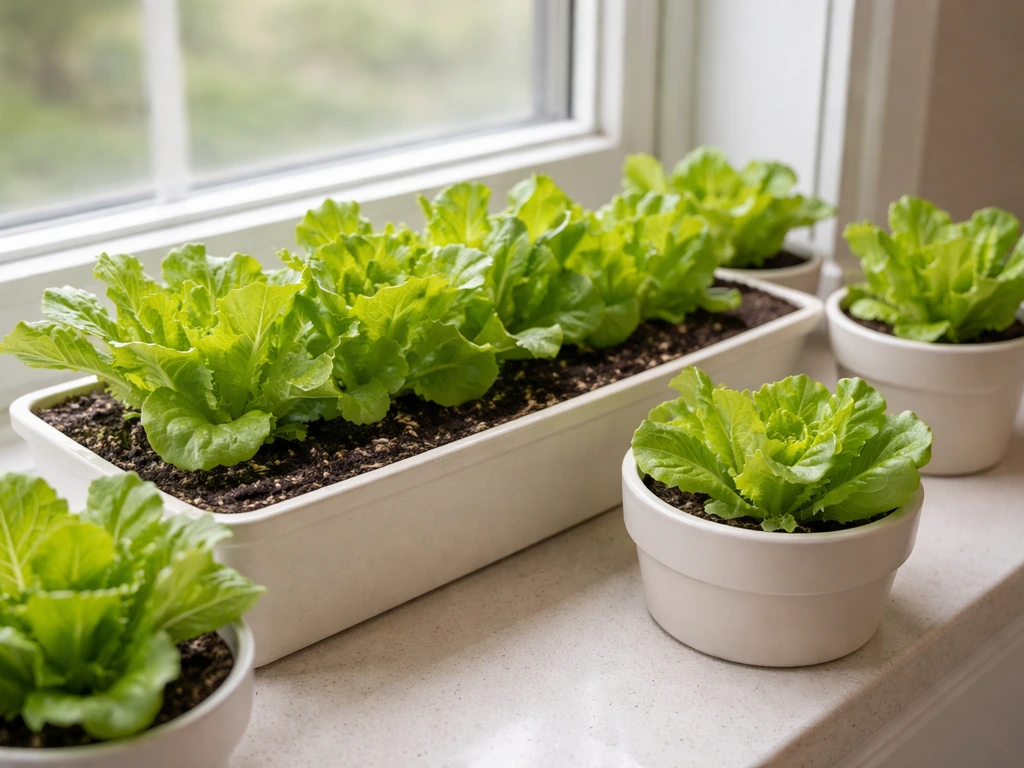
The honest answer is: yes, but with one big caveat about light. A south-facing windowsill in spring or summer gives you a real chance at growing decent lettuce without any extra equipment. In autumn and winter, especially from November through February, a window alone usually isn't enough. Light levels drop too low and day length gets too short for productive growth. That's when you need to supplement with a grow light, and even a modest 20-watt LED on a 14-hour timer makes a huge difference.
Outside of winter, though, a bright windowsill works surprisingly well. Lettuce doesn't need as much light as fruiting crops like tomatoes or peppers, which makes it ideal for indoor growing. It's also compact, grows quickly, and tolerates containers well. People growing lettuce in apartments without outdoor space have been doing this successfully for years, and the techniques are well established. If you're willing to pay a little attention to light and temperature, you'll get results.
Pick the best lettuce varieties for indoor and low-space growing
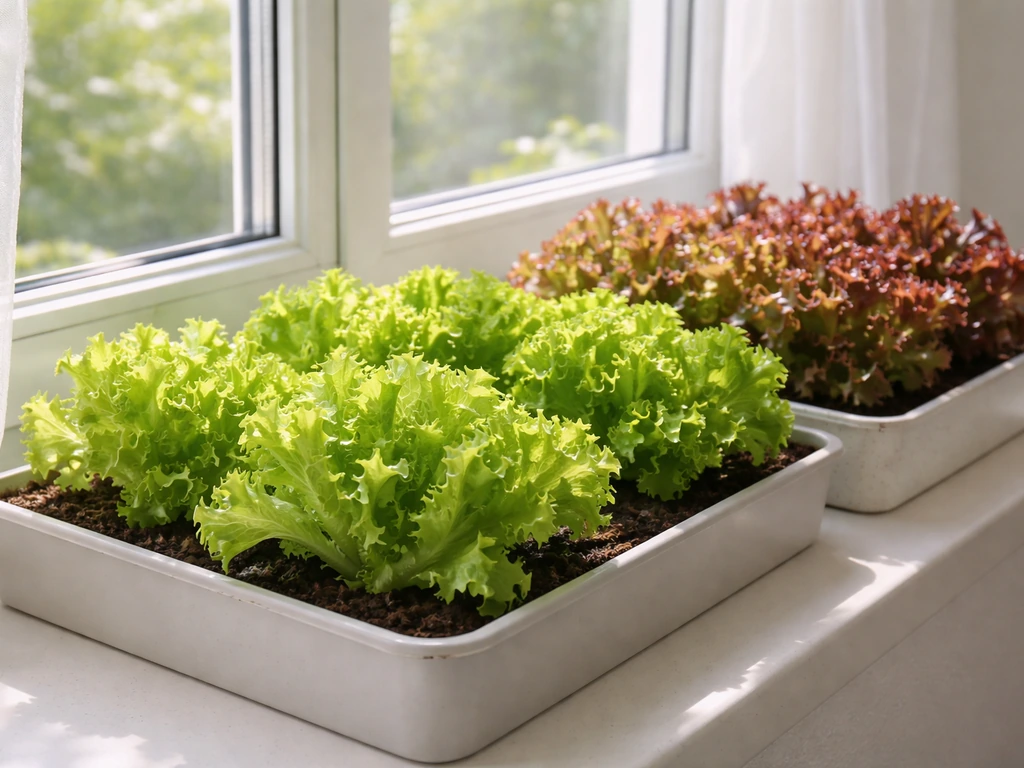
Not all lettuce types suit windowsill growing equally. Loose-leaf varieties are your best starting point because they're faster, more compact, and you can harvest them using a cut-and-come-again method that keeps producing from a single container for weeks. Head types like iceberg (crisphead) take 70 to 80 days from seed and need more space and light to develop a proper heart, which makes them frustrating for indoor growers. Stick to loose-leaf and butterhead types to start.
- Loose-leaf types (e.g., 'Salad Bowl', 'Lollo Rossa', 'Oak Leaf'): fastest to harvest, great for cut-and-come-again, most forgiving indoors
- Butterhead types (e.g., 'Tom Thumb', 'Little Gem'): compact heads that suit containers well, slightly slower but still practical
- Baby leaf mixes: sow densely and harvest young, perfect if you want results in the shortest possible time
- Avoid crisphead/iceberg types indoors: they take too long, need more light, and don't recover well from cut-and-come-again harvesting
If you're growing during warmer months or your windowsill runs warm (above 18°C consistently), look for varieties described as 'slow to bolt' or 'heat tolerant' on the seed packet. Lettuce is a cool-season crop and bolts (runs to seed) quickly in heat, so variety choice matters more in summer than in winter.
Set up containers, soil, and planting
What container to use
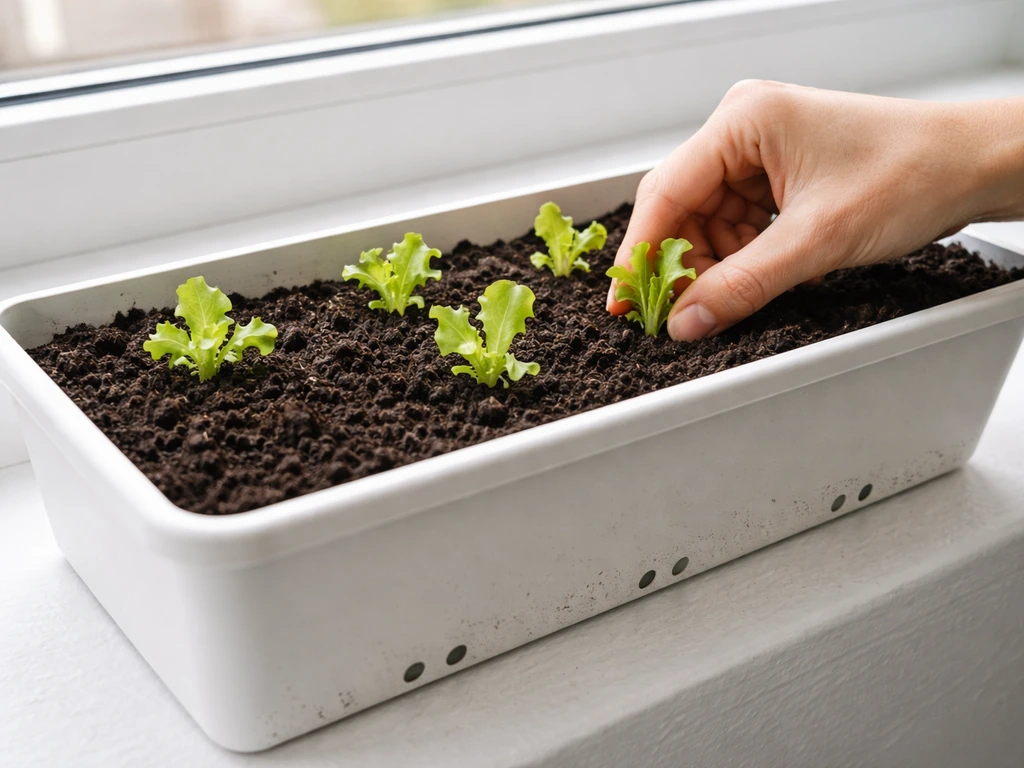
Lettuce roots are shallow, so you don't need deep containers. A pot or trough that's at least 15 cm (6 inches) deep is enough for most loose-leaf varieties. Width matters more than depth here: the more surface area you have, the more plants you can grow. Window boxes, long plastic troughs, or even repurposed food containers work well as long as they have drainage holes at the bottom. You can use the same container and light principles to grow lettuce in gutters outdoors, too Window boxes, long plastic troughs. No drainage holes means waterlogged roots, and that kills lettuce fast.
Soil and drainage setup
Use a good-quality multipurpose or peat-free compost. Avoid garden soil in containers because it compacts, drains poorly, and can introduce pests and disease. You can mix in a small amount of perlite (about 20% by volume) to improve drainage and reduce the risk of waterlogging. Place a saucer under your container but empty it after watering so water doesn't sit for hours.
Sowing seeds vs starting with seedlings
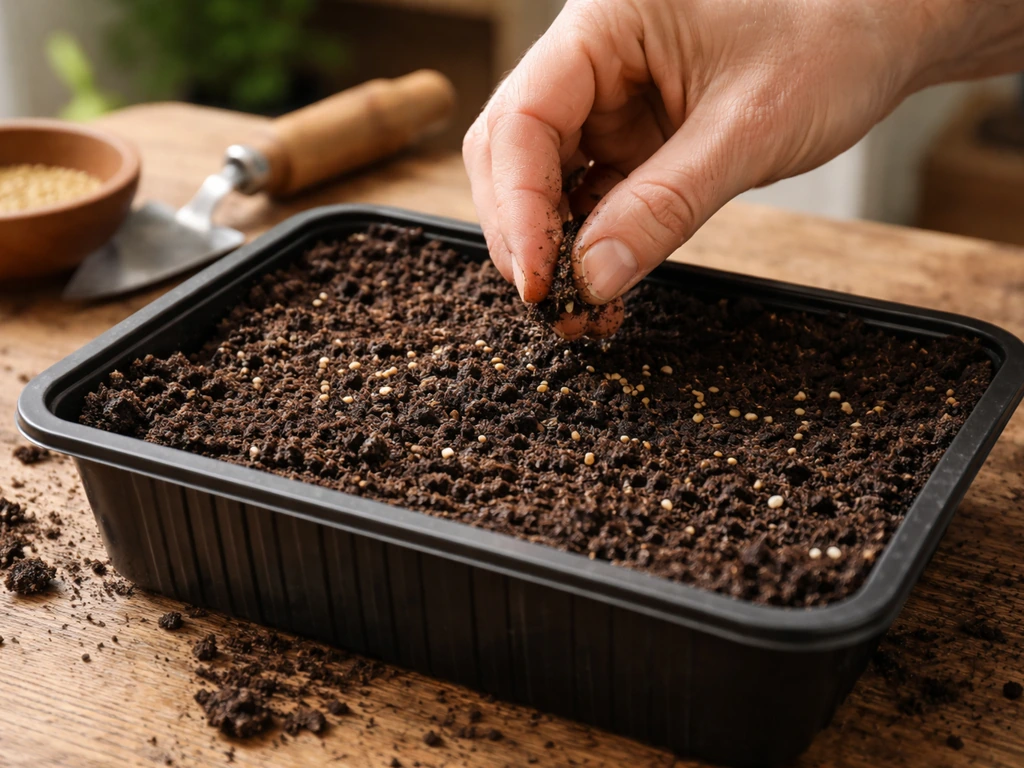
Starting from seed is cheaper and satisfying, but adds time. Lettuce seeds germinate in roughly 7 to 14 days under good conditions, sometimes as fast as 3 to 10 days if it's warm enough. how to grow lettuce from seed uk. From there, loose-leaf types are ready to harvest about 45 to 60 days after sowing. If you want leaves faster, buy small seedling plugs from a garden centre and transplant those into your windowsill container. From transplant, you're looking at harvestable leaves in 30 to 45 days.
To sow from seed, fill your container with damp compost to within 2 cm of the top. Scatter seeds thinly across the surface (aim for roughly one seed per 2 to 3 cm), then cover with about 1 cm of compost and gently firm it down. Water lightly and place on your windowsill. Once seedlings appear and are large enough to handle, thin them out so each plant has about 15 to 20 cm of space for loose-leaf types, or 20 to 30 cm for butterhead varieties.
Light placement and managing day length for leafy growth
Light is the single biggest limiting factor for windowsill lettuce. Lettuce grows best at a PPFD (photosynthetic photon flux density) of around 200 to 300 µmol/m²/s, which translates to roughly 1000 to 1500 lux. A bright south-facing or west-facing windowsill in spring and summer can come close to this. A north-facing window in winter almost certainly won't.
Place your container as close to the glass as possible without touching it. Rotate the pot a quarter turn every couple of days so all sides of the plant get equal light exposure, which helps prevent leaning and uneven growth. If you notice your plants stretching upward and looking thin and pale, that's a reliable sign they need more light.
For winter growing or any windowsill that doesn't get strong direct light, a grow light is genuinely worth the investment. A basic LED grow light positioned 15 to 30 cm above the plants and set on a timer for 14 to 16 hours per day gives lettuce what it needs to grow well year-round. This is the same approach used to extend the growing season through the darker months from November to February, turning an otherwise impossible situation into a productive one.
Watering and temperature control to prevent wilting or bolting
How and when to water
Lettuce needs consistent moisture but hates sitting in wet soil. The goal is to keep the compost evenly damp, not soggy. Check the top centimetre of soil with your finger every day or two. If it feels dry, water. If it still feels damp, leave it. Overwatering is one of the most common mistakes with windowsill containers because indoor pots dry out more slowly than outdoor ones.
One useful technique is bottom watering: place the container in a tray of water for 20 to 30 minutes and let the compost draw moisture up from below, then remove the tray and let any excess drain. This keeps the surface of the soil drier, which discourages fungus gnats and reduces the risk of damping-off disease in seedlings. Both are real problems in indoor containers.
Temperature: the sweet spot and what to avoid
Lettuce grows best at 10 to 18°C. This is actually great news for windowsill growers because most indoor spaces in that range are perfectly comfortable for lettuce, even if they feel a bit cool to you. The problems start when temperatures climb above 18 to 20°C consistently. Warm conditions, especially warm nights, trigger bolting: the plant switches from producing leaves to producing a flower stem, and once that happens the leaves become bitter and the plant is essentially done. In summer, a window that's in direct afternoon sun can push temperatures too high, so afternoon shade or positioning away from direct midday sun can actually help.
Harvesting, regrowth, and keeping a steady supply
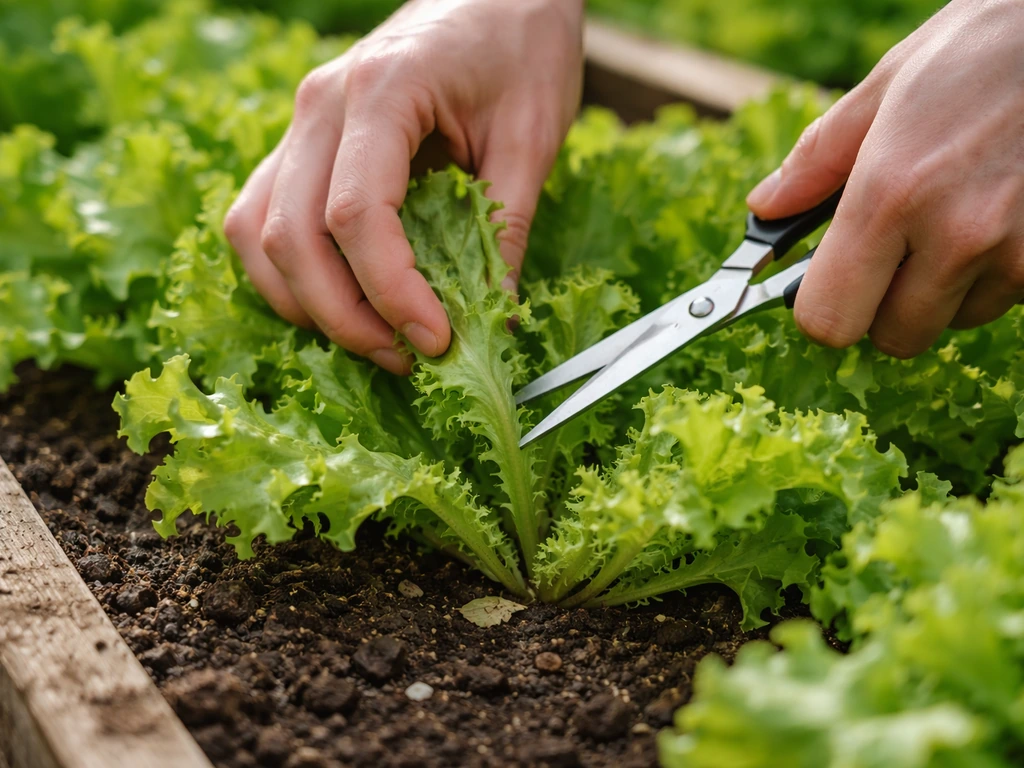
The beauty of loose-leaf lettuce is the cut-and-come-again approach. Instead of pulling the whole plant, use clean scissors to snip outer leaves off at the base, leaving the central growing point untouched. The plant regrows from the centre and you can harvest again in 1 to 2 weeks. This approach makes efficient use of limited container space and keeps you in leaves for weeks rather than giving you one harvest and starting over.
For butterhead or semi-heading types, the RHS advice is clear: don't delay harvesting once the plant has formed a good heart. Leaving it too long increases the risk of bolting, especially in warmer conditions. Harvest the whole head when it feels firm and full.
To keep a continuous supply going, stagger your sowings. Start a new small pot or tray every 2 to 3 weeks alongside your existing containers. By the time your first batch is slowing down, the next is ready to start producing. This succession sowing approach is the most practical way to always have fresh leaves on hand without any single large harvest going to waste.
| Lettuce type | Days to germination | Days to harvest (from seed) | Cut-and-come-again? |
|---|---|---|---|
| Loose-leaf | 7 to 14 days | 45 to 60 days | Yes, ideal for this method |
| Baby leaf mix | 5 to 10 days | 25 to 35 days | Yes, harvest young and often |
| Butterhead | 7 to 14 days | 55 to 70 days | Limited, better as whole head |
| Crisphead/iceberg | 7 to 14 days | 70 to 80 days | No, not recommended indoors |
Troubleshooting common windowsill problems
Leggy, pale, or floppy plants
If your lettuce is growing tall and spindly with widely spaced leaves, it's reaching for light. This is the most common windowsill problem and the fix is straightforward: move the pot closer to the window, switch to a brighter window, or add a grow light positioned 15 to 30 cm above the plants. Leggy seedlings don't recover fully, but improving the light now will stop the problem getting worse and new growth will be stronger. Rotating the container regularly also helps prevent plants leaning hard to one side.
Slow growth
Slow growth is almost always caused by one of three things: not enough light, temperatures too cold (below 10°C near a cold window in winter), or compacted/waterlogged soil. Check all three. If the compost smells sour or the roots look brown and mushy, the pot has been too wet for too long. Let it dry out more between waterings and make sure the drainage holes aren't blocked. If growth is consistently slow despite good light and temperature, a diluted liquid feed (a balanced fertiliser at half strength, once every two weeks) can help.
Bolting
If your lettuce suddenly shoots up a tall stem in the centre with small leaves developing along it, it's bolting. This is triggered by heat, long days, or stress, and once it starts you can't reverse it. The leaves will become increasingly bitter. If you catch it early, harvest everything usable immediately and compost the plant. Going forward, choose bolt-resistant varieties, keep temperatures below 18°C where possible, and don't delay harvest once plants look mature. In summer, moving the container away from a very sunny window in the afternoon can reduce heat stress.
Damping-off (seedlings collapsing at the base)
If your seedlings are falling over at soil level with a mushy or pinched stem, that's damping-off. It's caused by water-mold pathogens like Pythium that thrive in persistently wet, poorly ventilated conditions. There's no cure once it takes hold: affected seedlings are lost. Prevention is everything here. Use fresh, sterile compost, water from below where possible, avoid overwatering, and make sure your container has working drainage. Good air circulation around the container helps too, so don't keep it in a closed, still corner.
Fungus gnats and other pests
Fungus gnats are tiny flies that hover around indoor plants and lay eggs in moist compost. The larvae feed on roots and can damage seedlings. The best deterrent is keeping the soil surface drier, which bottom watering helps with. If you already have an infestation, yellow sticky traps placed at canopy level will catch the adults and help you monitor numbers. Position the bottom of each trap level with the top of your plants for best effect. Aphids can also appear on indoor lettuce: check the undersides of leaves regularly and knock them off with a damp cloth or a gentle spray of water.
Uneven or patchy growth across the container
If some plants are growing well and others in the same container are struggling, the most likely cause is uneven light distribution. The plants closest to the window or light source get more than those at the back or sides. Rotate the container a quarter turn every few days to even things out. If the problem persists, consider thinning out the stronger plants to give the weaker ones more space and airflow.
Your windowsill lettuce checklist
Before you start, make sure you have everything you need. This setup works for one or two containers to get you going today.
- A container at least 15 cm deep with drainage holes (window box, trough, or pot)
- Good-quality multipurpose or peat-free compost
- Perlite to mix in for drainage (optional but helpful)
- Loose-leaf lettuce seeds or seedling plugs
- A bright south- or west-facing windowsill, or a grow light (20-watt LED minimum) set to 14 to 16 hours per day
- A saucer or tray under the container for watering
- Yellow sticky traps (optional, for pest monitoring)
- A small watering can or spray bottle for gentle watering
If you're also interested in soil-free options, growing lettuce without soil using water-based methods is a viable alternative that completely removes the overwatering and gnat problems. And if you're working with a larger indoor space or more containers, the principles for growing lettuce in an apartment setting follow the same logic but give you more flexibility to stagger crops and experiment with different varieties at the same time.
FAQ
What size windowsill container should I choose if I want multiple lettuce plants at once?
If you want more than a few plants, prioritize width for surface area. For loose-leaf, plan about 15 to 20 cm between plants, so a longer window box can hold several rows, while a very narrow pot will quickly become cramped. Keep drainage holes unobstructed, and aim for roughly 15 cm depth (more depth is fine as long as it drains well).
Can I grow lettuce on a north-facing window in winter without buying a grow light?
Usually not. North-facing light and short winter days tend to leave lettuce under-lit, which leads to thin, pale, leggy growth and slow harvests. If you try without a grow light, expect reduced growth and consider using the brightest available spot, right against the glass, and rotating frequently to reduce uneven stretching.
How close should the grow light be, and what height gives the best results?
Position a basic LED grow light about 15 to 30 cm above the plants. Too high can be ineffective, too low can heat the leaves and encourage stress, especially on warm windowsills. Start in the middle of that range and adjust if you see stretching (move closer) or wilting from heat (move farther).
How often should I water windowsill lettuce, and how do I avoid overwatering indoors?
Check the top 1 cm of compost every day or two and water only when it feels dry at that depth. Indoor pots dry more slowly, so watering on a fixed schedule often causes soggy compost. If you’re unsure, bottom watering (20 to 30 minutes in a tray, then remove and drain) helps keep the surface drier.
Should I fertilize my lettuce while it is growing on the windowsill?
It’s usually optional for the first harvest window if you start with a good compost. If growth is consistently slow despite correct light and temperature, use a diluted balanced feed at half strength every two weeks. Avoid heavy feeding, because it can make plants softer and more prone to problems indoors.
Why are my lettuce plants growing tall and sparse, even though the window is bright?
That pattern usually means insufficient light reaching the leaves, not just the overall room brightness. Move the container closer to the glass, rotate the pot more consistently, and if you still see stretching, add a grow light. Leggy seedlings rarely become compact again without improving light for new growth.
What temperature range is safe, and can I grow lettuce if my room gets warmer than 18°C?
Lettuce performs best around 10 to 18°C. If your space runs above 18 to 20°C consistently, bolting becomes much more likely, especially in summer with strong sun and warm nights. If you must grow in warmer conditions, choose bolt-resistant, heat-tolerant varieties and reduce direct afternoon sun or move the pot to the coolest spot you have.
How do I prevent bolting when days get longer or the windowsill is hot?
Bolting is triggered by heat, long days, and stress. Practical steps are to keep the container away from the hottest part of the window (often direct afternoon sun), harvest promptly once leaves are mature, and start with “slow to bolt” varieties. If you see a central flower stem starting, harvesting won’t reverse it.
Can I regrow lettuce using cut-and-come-again, and how long does it keep producing?
Yes, for loose-leaf you can cut outer leaves using clean scissors and leave the central growing point intact. The plant typically regrows for another harvest in about 1 to 2 weeks, and with good light and moisture you can keep it going for weeks. If growth slows, check for light deficiency, overcrowding, and warm temperatures.
Why do seedlings collapse at the soil line, and what can I do to stop it?
Falling over with a pinched or mushy stem is classic damping-off. There is no reliable cure once it starts, so focus on prevention: use fresh sterile compost, ensure drainage works, avoid overwatering, and consider bottom watering for seedlings. Also improve airflow around the container, since still, wet conditions make it worse.
My container has fungus gnats. Will sticky traps alone fix the problem?
Sticky traps help reduce adult gnats, but they don’t solve the larvae in the compost. The key lever is keeping the surface of the compost drier, bottom watering, and not leaving excess water in saucers. If the problem is ongoing, reduce the time compost stays wet and check that your drainage holes are not blocked.
Do I need to thin my lettuce seedlings, and what happens if I don’t?
Thinning is important because overcrowding reduces airflow and competition, leading to smaller leaves, more stretching, and higher risk of pest and disease issues indoors. For loose-leaf, leave about 15 to 20 cm between plants; for butterhead, about 20 to 30 cm. Remove the weakest seedlings after they’re large enough to handle.
If some lettuce plants look healthy and others don’t, what should I troubleshoot first?
First check light uniformity. In a single container, plants closest to the window often get more light than those on the far side, which causes uneven growth. Rotate the container a quarter turn every couple of days, and if needed, thin stronger plants so weaker ones have space and airflow.
Can I grow iceberg or other head lettuce on a windowsill anyway?
You can, but it is usually more frustrating indoors. Head types take longer and need stronger light and more space to form a proper heart, so they often underperform compared with loose-leaf or butterhead. If you attempt it, expect a longer timeline and be prepared to add a grow light and provide a larger container.