You can absolutely grow lettuce in an apartment, and it's one of the most beginner-friendly crops to start with. The basic setup is simple: grab a container at least 6–8 inches deep, fill it with quality potting mix, pick a leaf lettuce variety suited to indoor conditions, put it where it gets the most light you can manage, and keep the soil consistently moist. If temperatures stay high, use the windowsill setup and light planning in this guide to keep your lettuce growing strong indoors. You'll be harvesting leaves in as little as 30–45 days. The tricky parts are managing heat (lettuce hates it), getting enough light without a south-facing balcony, and keeping up with harvesting so plants don't go bitter or bolt. This guide walks through every step so you can start today and keep harvesting all year.
How to Grow Lettuce in an Apartment: Step-by-Step
Choosing the right lettuce variety for apartments
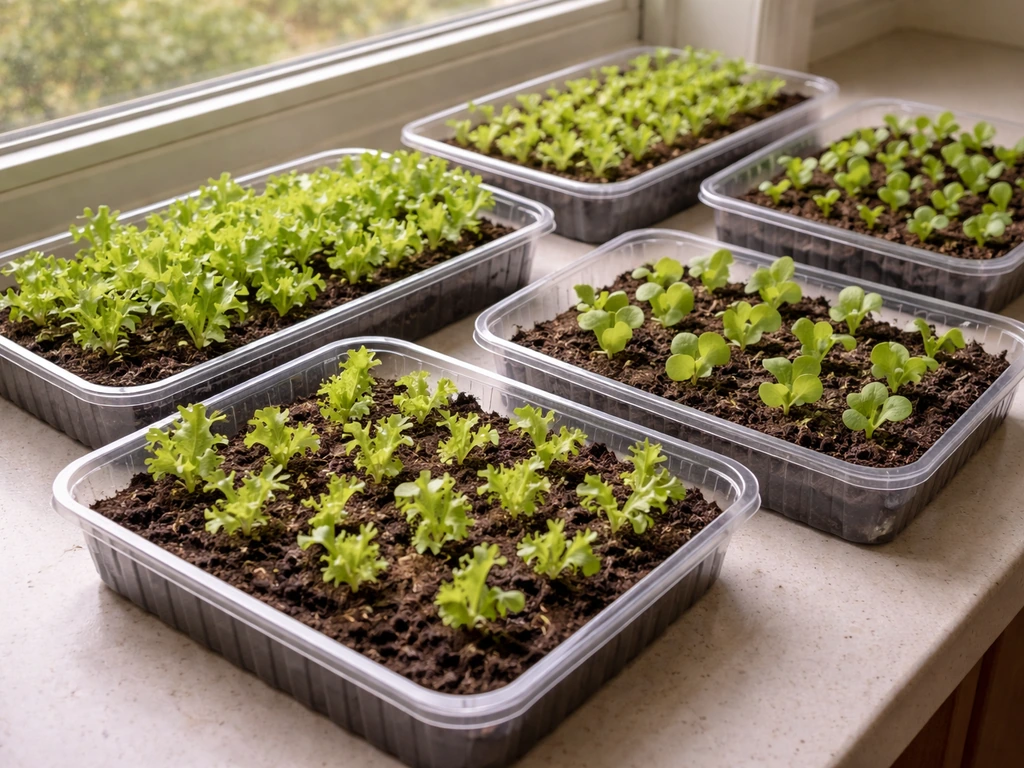
Variety selection makes or breaks indoor lettuce. The goal is to choose types that mature quickly, tolerate lower light, and resist bolting when your apartment warms up. Loose-leaf varieties are your best bet for apartment growing because they're faster, more forgiving, and support cut-and-come-again harvesting so you get more from a single pot.
Avoid full head lettuce (like large crispheads) as a starting point. They take longer, need more space, and are far more sensitive to heat. Butterhead varieties like Tom Thumb sit in the middle: they form a soft loose head around 75 days and handle containers well, but they're not the fastest option. blank" rel="noopener noreferrer">Romaine types generally run 65–80 days, with Little Gem being a great compact exception at just 50–55 days and a natural fit for smaller pots.
For cut-and-come-again growing, which is honestly the most practical approach for most apartment growers, focus on leaf types. Red Sails is a standout because it's slow to bolt compared to many red varieties, and Black-Seeded Simpson is another reliable choice with a long harvest window whether you pick baby leaves or wait for full size. Salad Bowl (both green and red) is listed by UF/IFAS specifically as a container-friendly non-heading type, and it earns that reputation.
| Variety | Type | Days to Maturity | Best For Apartments |
|---|---|---|---|
| Red Sails | Leaf | 45–55 days | Slow to bolt, great cut-and-come-again |
| Black-Seeded Simpson | Leaf | 45–50 days (baby), 55–65 (full) | Long harvest window, very reliable |
| Salad Bowl | Leaf (non-heading) | 50–60 days | Container-proven, ongoing harvest |
| Tom Thumb | Butterhead (mini) | ~60–65 days | Small pots, compact heads |
| Little Gem | Romaine (mini) | 50–55 days | Compact, faster than standard romaine |
| Buttercrunch | Butterhead | ~75 days | Tolerates some heat, good flavor |
When shopping for seeds in summer or if your apartment runs warm, prioritize anything labeled 'slow to bolt' or 'heat tolerant' on the packet. No variety is immune to bolting if temperatures stay above 80°F (27°C) for days on end, but some will give you a noticeably longer window before they give up on you.
Setting up containers and your planting approach
Container size, depth, and drainage
Lettuce has shallow roots but still needs room to grow. Aim for containers that hold at least 6–8 inches of potting mix depth. UF/IFAS recommends roughly 2 gallons of pot volume per plant, which translates to about a 6–8 inch diameter pot per plant. Window boxes, rectangular planters, and large bowls all work well and let you grow several plants at once. Whatever container you use, it must have drainage holes.
Don't put gravel or rocks at the bottom of your container. I know it sounds like it should help drainage, but it actually wastes root space and can create a perched water table that keeps roots wetter than they should be. Just use a good-quality potting mix all the way through and make sure your drainage holes are actually open and working.
If you're using a decorative cachepot without drainage holes as an outer sleeve, that's fine, but you need to pull the inner pot out and dump any standing water after each watering. Water sitting in a saucer or cachepot beneath your plant is a direct path to root rot. Empty saucers every time.
Soil mix and sowing seeds
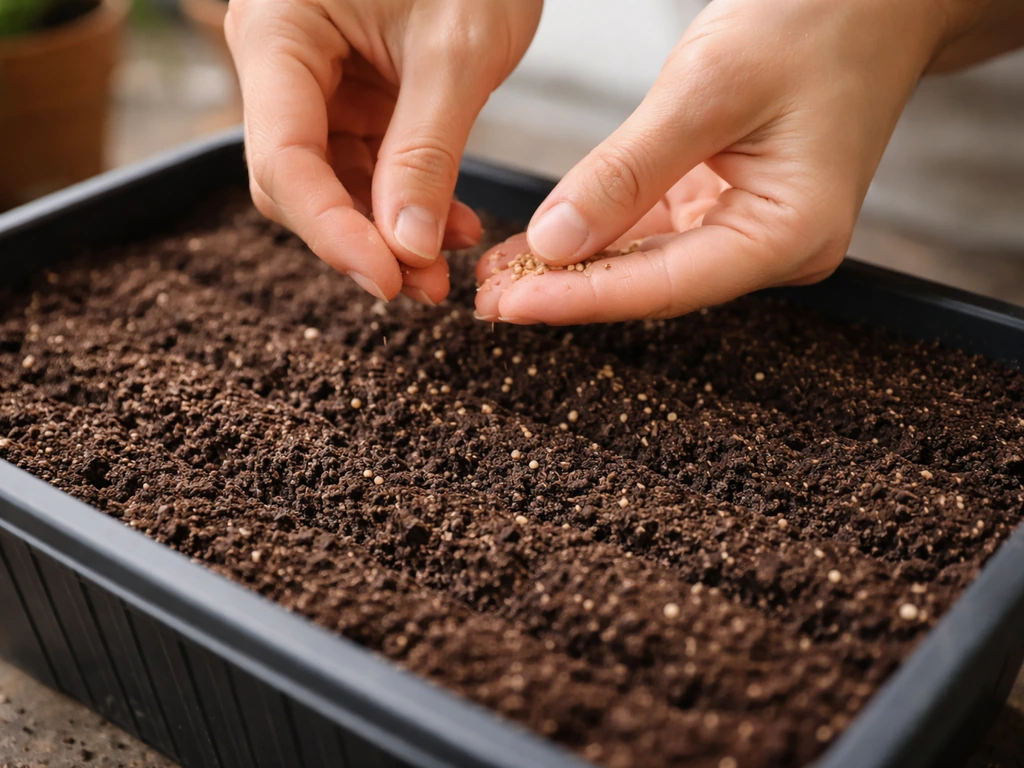
Use a quality all-purpose potting mix, not garden soil, which compacts badly in containers. Moisten the mix before filling your container so it's damp but not soggy. Lettuce seeds are tiny, so sow them shallowly: about 1/8 inch deep, barely covered. Sprinkle a few seeds in each spot you want a plant. They germinate best around 60–65°F and can struggle above 75°F, so if your apartment is warm, try starting seeds in a cooler spot (near an air conditioner vent or on a tiled floor) and move them into your light setup once they sprout. If you’re in the UK, follow these seed-starting steps and keep temperatures cool so your lettuce germinates reliably how to grow lettuce from seed uk.
If you're starting from transplants rather than seeds, loosen the root ball gently before planting if it's at all pot-bound. Tight, circling roots left uncorrected will slow growth noticeably, especially in a small container. Plant at the same depth the transplant was growing before.
Going hydroponic in your apartment
Hydroponics is genuinely worth considering for apartment lettuce, and it doesn't have to be complicated. The Kratky method (a passive, no-pump system) is the most beginner-friendly option: you fill a reservoir with nutrient solution, suspend your seedling so roots touch the water, and the plant drinks it down as it grows, creating an air gap for oxygen. Lettuce in a Kratky setup typically reaches harvest in 30–45 days with very little maintenance, making it one of the fastest routes to fresh greens with minimal equipment.
For any hydroponic setup, target a pH of 5.8–6.2 and an EC (electrical conductivity) of around 0.8–1.2 mS/cm for lettuce (roughly 560–840 ppm). Go lower on EC for young seedlings and move up slightly as plants mature. NFT and DWC systems also work well for lettuce, with butterhead varieties particularly well-suited to Kratky and NFT. If you want to explore soil-free growing more, there's a lot of overlap with the approach covered for growing lettuce without soil. If you want to learn more specifically how to grow lettuce without soil using nutrient solutions, the hydroponic section is the best place to start.
Light and temperature: the two things that matter most indoors
How much light lettuce actually needs
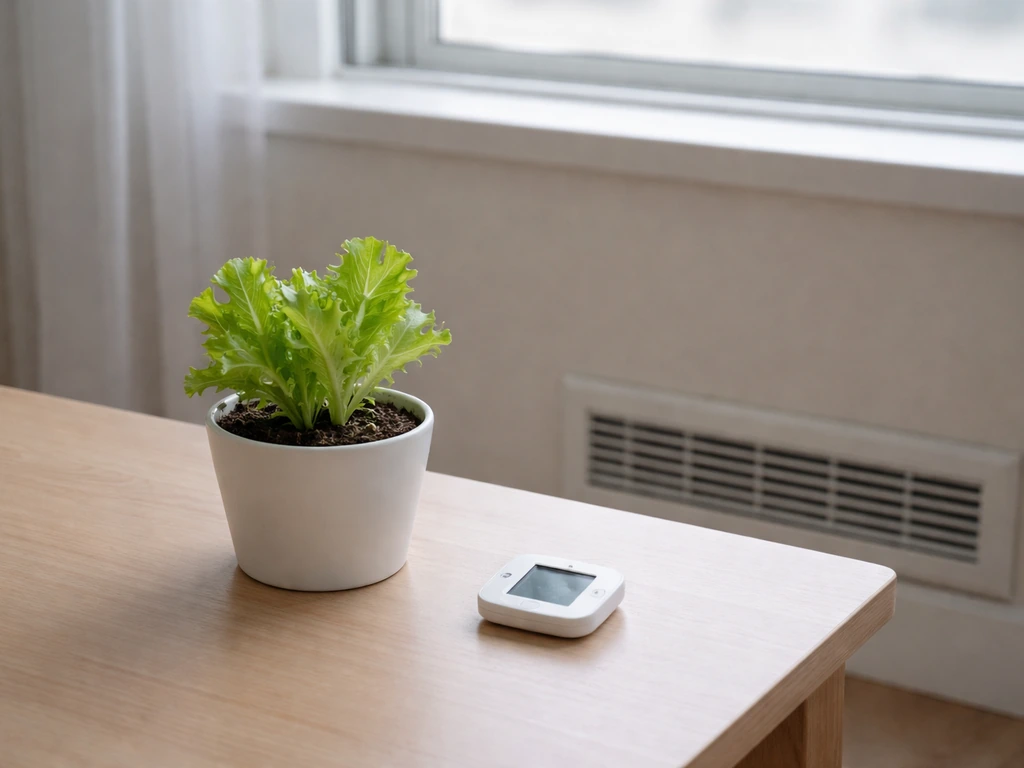
Lettuce is one of the more light-tolerant crops for indoor growing, which is part of why it works in apartments. It can get by with around 12–16 hours of moderate light indoors. In terms of intensity, a PPFD of 150–250 (micromoles per meter squared per second) is sufficient, meaning lettuce won't demand a powerful grow light setup the way fruiting crops like tomatoes would.
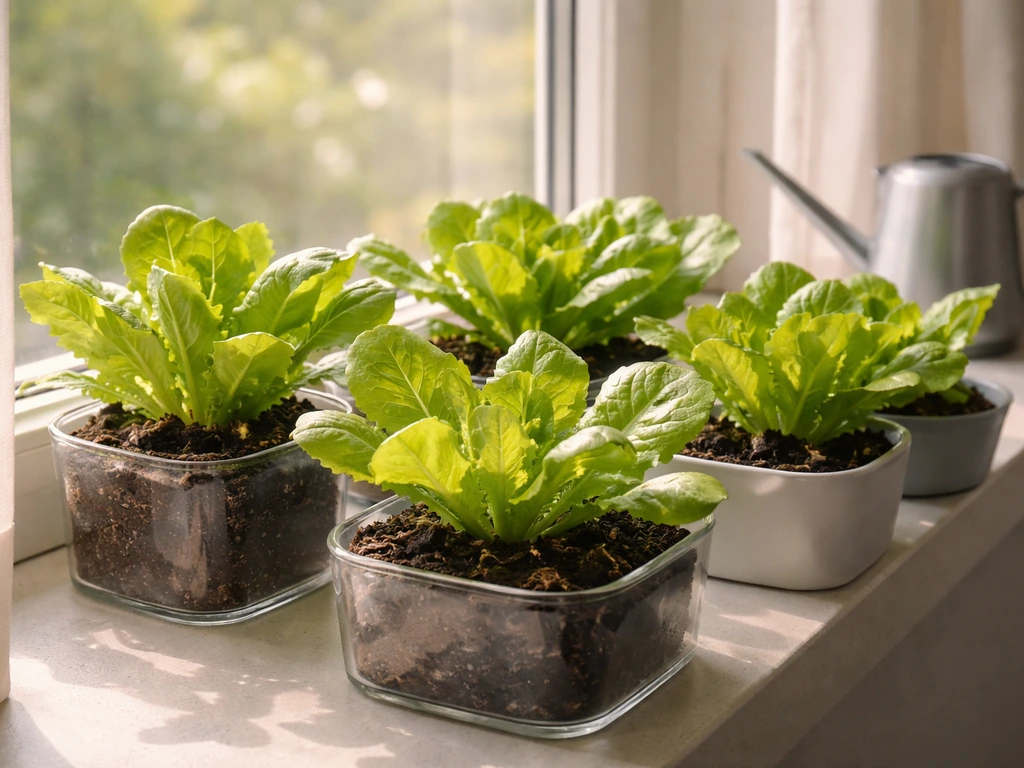
A south or west-facing window is your best bet without supplemental lighting. If you only have a north or east-facing window, lettuce will grow there but more slowly and with slightly looser, paler leaves. A south-facing windowsill is honestly one of the most functional setups for apartment lettuce growing, and it's worth treating that space as prime real estate. In winter, you may want to add a simple LED grow light on a timer to supplement natural light, especially if your days are short.
If you're using grow lights only (no natural light), a basic full-spectrum LED panel or T5 fluorescent set 6–12 inches above the plant tops on a 14–16 hour timer will do the job. This is the approach that makes year-round indoor growing truly viable regardless of your window situation, and it's a bigger part of the balcony-less apartment strategy than most guides admit.
Temperature management and bolting prevention
Lettuce's ideal growing temperature is around 60–65°F. Growth slows when temperatures drop below 45°F and bolting risk climbs sharply once temperatures stay consistently above 75–80°F. In most apartments, this means the challenge isn't cold: it's heat, especially in summer near south-facing glass or under grow lights that generate warmth.
A few practical things that help: keep containers away from heating vents and out of direct sunlight through glass on hot days (glass magnifies heat noticeably). If you have a balcony, moving plants outside in the morning and bringing them in before afternoon heat peaks can extend your growing season significantly. On the hottest summer days, expect that even bolt-resistant varieties will struggle: that's when growing lettuce on a windowsill or with a grow light in an air-conditioned room becomes the better strategy compared to a hot balcony.
Balcony growing
A balcony opens up more options but also more variability. In spring and fall, a partly shaded balcony with 4–6 hours of light is close to ideal. In summer, a south-facing balcony can get too hot for lettuce even if the light is great: prioritize morning sun and afternoon shade. If you want a different space-saving option than a balcony, you can also learn how to grow lettuce in gutters and use the same heat and light lessons to keep it productive south-facing balcony. In winter (unless you're in a mild climate), balcony lettuce usually needs protection or a move back inside. The flexibility of containers is your best tool here: you can shift pots as seasons change rather than committing to a fixed spot.
Watering, drainage, and fertilizing
Keeping moisture consistent without overwatering
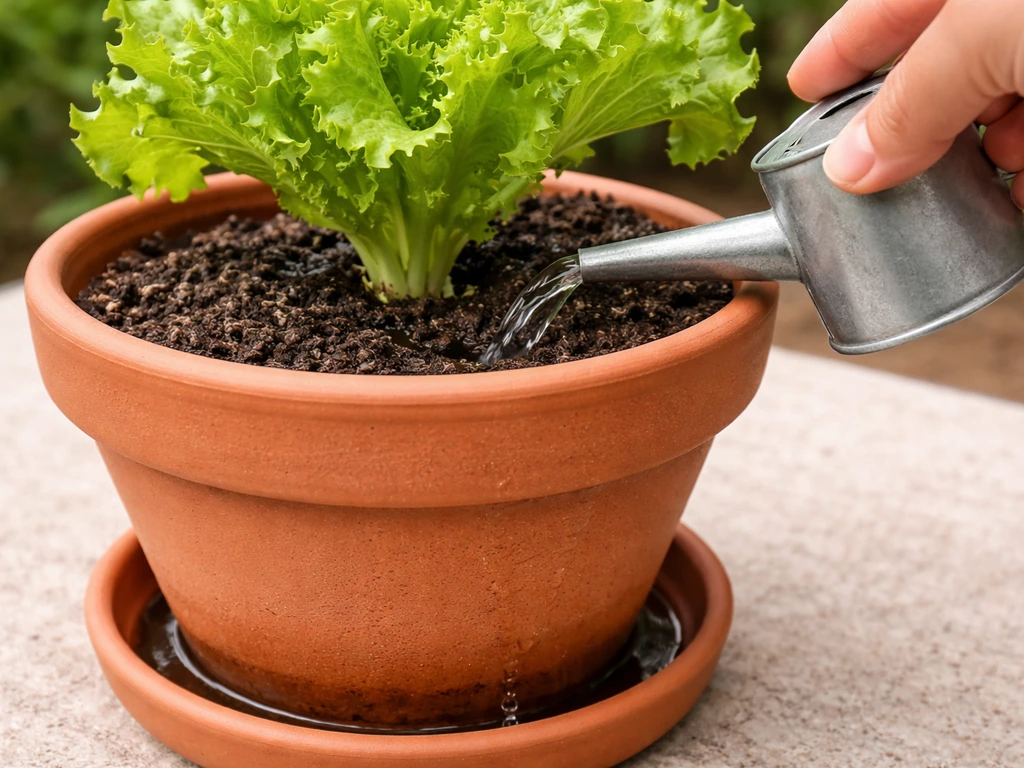
Lettuce needs consistently moist soil, not wet and not dry. In practical terms, check the top inch of soil every day or two. If it feels dry, water. If it still feels damp, wait. The goal is to keep the soil evenly moist, more like a wrung-out sponge than either a wet rag or dry dirt. Both underwatering and overwatering stress the plant and invite problems: overwatering leads to root rot and fungus gnats, while underwatering stresses the plant into bolting faster and can contribute to tipburn.
Water slowly until water drains freely from the bottom drainage holes, then stop. Don't water again until the top inch is dry. Small 6–8 inch containers in a warm apartment may need watering every 1–2 days in summer. Larger containers in cooler spots may only need watering every 3–4 days. Just check rather than assuming.
Fertilizing container lettuce
Potting mix usually comes with some starter nutrients, but in a small container those get used up or flushed out within a few weeks. Once your lettuce is established (about 2–3 weeks after planting), start fertilizing. A good approach for containers is to use a balanced liquid fertilizer (something like a 5-5-5 or 10-10-10 formula) at half the label strength every time you water, or at full strength every 1–2 weeks. Half-strength with every watering is gentle and reduces the risk of salt buildup in the potting mix, which can actually harm roots over time.
Lettuce is a leafy green, so it responds well to nitrogen. If leaves are pale or growth is slow, a slightly nitrogen-forward fertilizer can help. If you're going hydroponic, use a hydroponic-specific nutrient formula that includes calcium, which helps prevent tipburn in fast-growing leaf tissue.
Thinning, harvesting, and keeping the harvest going
Thinning seedlings
Once seedlings are about 2 inches tall, thin them to about 4–6 inches apart. I know it feels wasteful to pull out perfectly good seedlings, but overcrowding is one of the most common reasons apartment lettuce underperforms. Crowded plants compete for water and nutrients, airflow drops, and disease risk goes up. Eat the thinnings as microgreens: they taste great and nothing goes to waste.
How to harvest for continuous production
For leaf lettuce, use the cut-and-come-again method. Remove outer leaves when they're 3–4 inches long, leaving the center growth point intact. The plant will keep pushing out new leaves from the center, and in cooler conditions you can expect new leaves ready to harvest again in about 7–10 days. This single technique is what makes apartment lettuce genuinely worthwhile: one pot can feed you fresh leaves for weeks rather than giving you one harvest and that's it.
If you want to harvest the whole plant at once (for butterhead or Little Gem), cut the stem about 1–1.5 inches above the soil. There's a reasonable chance the stub will resprout and give you a second flush of leaves, though it won't be as full as the original plant. When you harvest for re-growth, you can cut the outer leaves or the head clumps and leave a small stub to help the plant resprout, with a practical stub size of about 1 to 1.5 inches for full-plant harvest There’s a reasonable chance the stub will resprout and give you a second flush of leaves. For the most reliable continuous harvest, leaf varieties harvested outer-leaf-by-outer-leaf outperform the cut-and-regrow approach every time.
Succession planting so you never run out
The easiest way to have lettuce available continuously is to start a new container every 2–3 weeks. By the time your second batch is ready to harvest, your first is still producing. By the third planting, you have three pots at different stages, and harvesting becomes a daily habit rather than a single event. UNH Extension recommends new plantings every 3–4 weeks for fast-growing greens like lettuce, and 2 weeks is even better if you want a steady daily supply. This is especially easy in apartments because you're already working in containers: just start another pot.
In summer, skip sowing heat-sensitive varieties and lean into bolt-resistant types or grow exclusively under grow lights with air conditioning. In the shoulder seasons (spring and fall), production is naturally faster and more abundant. Winter growing indoors under lights can be surprisingly productive once you dial in the setup.
Fixing the problems you'll actually run into
Bolting (plants going to seed too early)
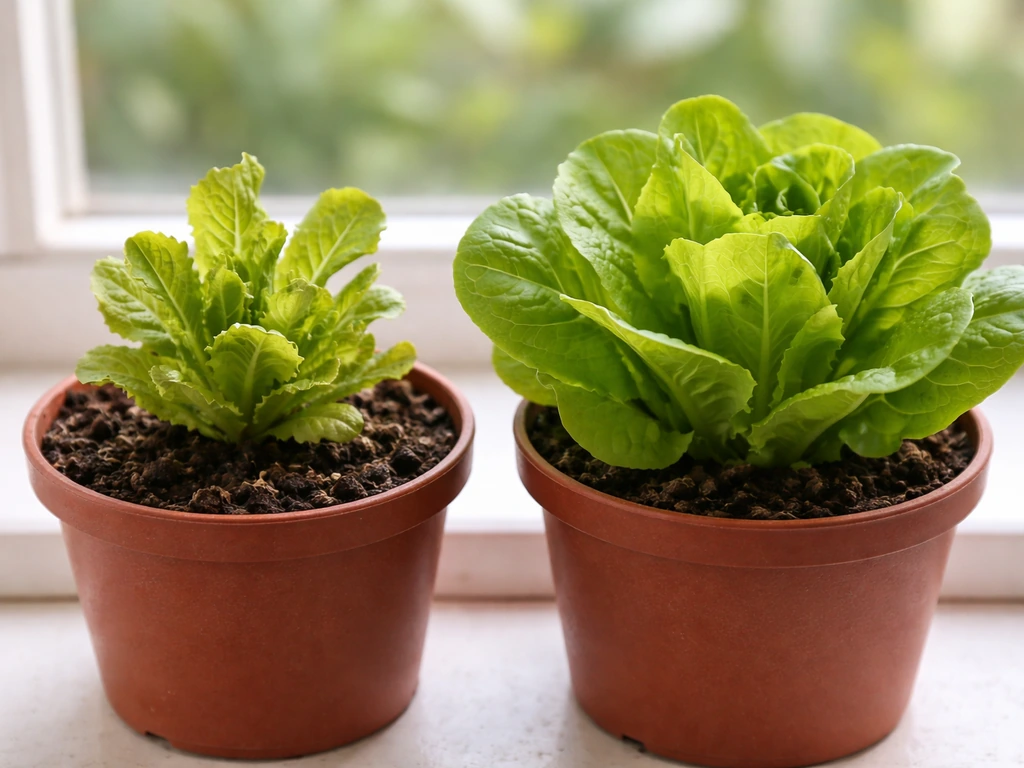
Bolting is when lettuce sends up a flower stalk and shifts energy away from leaf production. Leaves become bitter and the plant is essentially done as a food crop. The trigger is heat: if temperatures stay above 80°F for several days, most varieties will bolt. The fix is prevention, not reaction. If you see a center stalk starting to elongate and reach upward rather than producing new compact leaves, harvest everything immediately (the leaves are still edible, just more bitter). Then start fresh with your next succession planting.
Prevention: keep plants in the coolest spot available, use bolt-resistant varieties in warm months, and use grow lights in an air-conditioned room rather than a hot balcony or sunny window in summer. Long light hours (more than 16 per day) can also contribute to bolting, so if you're using a grow light, put it on a timer set to 14 hours maximum.
Bitter or small leaves
Bitterness usually means heat stress, water stress, or the plant is starting to bolt. Leaves that are small and pale usually mean insufficient light or nitrogen. If leaves are small but otherwise healthy looking, check your light situation first and then your fertilizing schedule. If leaves are pale yellow-green, add a nitrogen-forward liquid fertilizer. If leaves taste bitter, the plant is stressed: check temperature, water consistency, and whether it's approaching bolting.
Tipburn (brown leaf edges)
Tipburn shows up as brown, papery edges on inner leaves, especially on butterhead and romaine types. It's linked to inconsistent watering and impaired calcium delivery to fast-growing leaf tissue. It isn't a disease and can't be sprayed away: calcium foliar sprays don't reach inner head tissue in time to help. The best prevention is keeping soil moisture consistent (never letting it dry out fully) and ensuring good airflow around plants so transpiration stays steady. If you're growing hydroponically, use a formula with calcium and keep your EC in the right range.
Pests: aphids, fungus gnats, and slugs
Aphids are the most likely pest on indoor lettuce. They cluster on the undersides of leaves and leave sticky honeydew residue behind. Catch them early by checking leaf undersides when you water. Treat by rinsing plants with water in your sink, or use an insecticidal soap spray. For balcony lettuce, slugs can be a problem, especially if you're near ground level or in a humid climate: use copper tape around pot rims or diatomaceous earth on the soil surface.
Fungus gnats are almost always a sign of overwatering. The adults are harmless but the larvae damage roots. Fix the watering habit (let the top inch dry between waterings), and consider a layer of sand on the soil surface to discourage egg-laying. For container lettuce, this is usually enough to solve the problem without any chemical treatment.
Disease: rot, mildew, and damping off
Downy mildew (pale patches on top of leaves, grey fuzz underneath) needs free moisture on leaves to spread. If you're watering overhead, switch to watering at the soil line instead. Increase airflow: even just running a small fan nearby on low helps a lot. Remove affected leaves immediately and don't compost them.
Root rot and stem rot both trace back to overwatering or poor drainage. If a plant looks wilted despite wet soil, pull it out and check the roots: healthy roots are white and firm, rotted roots are brown and mushy. Improve drainage, reduce watering frequency, and start a fresh container. Damping off (seedlings collapsing at the stem) is a related issue in overwatered seed-starting trays. It's almost always prevented by not overwatering seedlings and using fresh, sterile potting mix rather than reusing old mix from a previous diseased crop.
Most of the problems apartment lettuce growers face come down to heat, inconsistent watering, and not enough light. Get those three things right and you'll solve the majority of issues before they start. Everything else is a detail you can adjust as you go.
FAQ
Can I start lettuce seeds indoors year-round in an apartment?
Yes, but pick the right time and variety. Lettuce can be started indoors any time, but if your apartment stays warm above about 75°F (24°C), choose slow-to-bolt or heat-tolerant types and keep seedlings in the coolest spot you have while they germinate. Once sprouts have true leaves, move them to your brightest location (or under lights).
How do I harvest lettuce without stopping regrowth in a single container?
For cut-and-come-again harvest, the safest approach is to remove only the outer leaves you need while leaving the center growing point intact. If leaves reach your “enough” size (about 3–4 inches long), take the outer ones first and avoid cutting into the crown. Harvesting too aggressively can delay regrowth.
What’s the best way to water lettuce if my decorative planter has no drainage holes?
If you don’t have a perfectly draining pot, you can still use a cachepot, but the inner container must drain freely. Water thoroughly, then empty any standing water from the cachepot or saucer right away, and again after each watering if water keeps pooling. Persistent pooling is a common cause of root rot.
Is it okay to grow lettuce in a smaller pot than the guide recommends?
Start with a smaller container if you only want baby leaves, then scale up later if you want larger harvests. As a rule, aim for roughly 2 gallons of pot volume per plant (about 6–8 inches pot diameter) if you want a reliable season of leaf production. Underpotting increases temperature swings and can make bolting and tipburn more likely.
Can I grow lettuce on a south-facing windowsill during hot summer days?
Yes, but only if you can keep the environment cool and bright. Use air-conditioning or a much cooler room, and avoid placing the pot directly on hot windowsill glass in summer. If you notice rapid bolting, move the container indoors, shorten light hours to about 14 hours on a timer, and harvest immediately.
My lettuce is growing but the leaves are pale and tall. What should I adjust?
If your leaves look “stretched” or pale and the plant is not forming dense leaf growth, it usually means light is insufficient or too far away. In that case, raise the light intensity (move grow lights closer within safe distances) or extend to about 14–16 hours but no more. Also check that the timer is actually turning the lights on at the full schedule.
What can cause bitter lettuce leaves, and how do I fix it fast?
Lettuce often tastes bitter from heat stress, inconsistent moisture, or the plant beginning to bolt. First check temperature trends and water frequency, then look for a center stalk starting to elongate. Harvesting leaves sooner and starting a new succession pot usually gives better flavor than waiting.
How can I get rid of fungus gnats without harming my lettuce?
If fungus gnats appear, treat the cause, not just the adults. Let the top inch dry between waterings, remove any consistently wet surface, and consider a thin sand layer on top of the mix to reduce egg laying. Also avoid over-saturating when watering.
Why does my lettuce get brown, papery edges (tipburn) even when I water regularly?
Tipburn is more likely when growth is fast and calcium delivery can’t keep up. Keep moisture steady (don’t let it swing dry then wet), ensure airflow, and if you’re fertilizing, use an appropriate nitrogen level without overfeeding. For hydroponics, stay within the lettuce EC and use a nutrient mix that includes calcium.
How do I keep lettuce producing continuously when apartment temperatures swing seasonally?
With indoor lettuce, you can handle variety changes by running a simple succession plan: start a new pot every 2 to 3 weeks and keep them staggered. In warm months, shift the newer plantings to cooler conditions or under grow lights, and stop relying on one pot if your apartment heat spikes.
If one plant bolts in my container, should I remove the whole pot?
Yes. If you have a few plants, you can pull the earliest bolting plant, harvest any usable leaves first, then immediately start a replacement pot so your supply doesn’t drop. For the best results, don’t wait for the entire pot to fail, use cut-and-come-again until you see bolting signals in the center.
Should I use mulch or a top layer to help keep lettuce soil moist indoors?
You can, but lettuce roots are shallow so the main benefit is preventing small surface problems, not “saving” a constantly wet pot. For best results, mulch lightly on top of potting mix to reduce evaporation, and still water only until excess drains and you can verify the top inch behavior.