Yes, you can absolutely grow lettuce in seed trays, and honestly it's one of the best ways to get a head start on your crop. If you’re wondering what you can grow lettuce in, seed trays, containers, and hydroponic systems all work, depending on your space and light grow lettuce in seed trays. Lettuce seeds are tiny, germinate fast (often within 2 to 7 days at the right temperature), and transplant well when handled carefully. Starting in trays gives you control over conditions that are hard to manage in open soil, temperature, moisture, and light, which means better germination rates and stronger seedlings before anything hits the ground.
Can You Grow Lettuce in Seed Trays? A Step-by-Step Guide
Marcus Holloway
16 Jun 2026
When tray-starting lettuce is worth it (and when you can skip it)
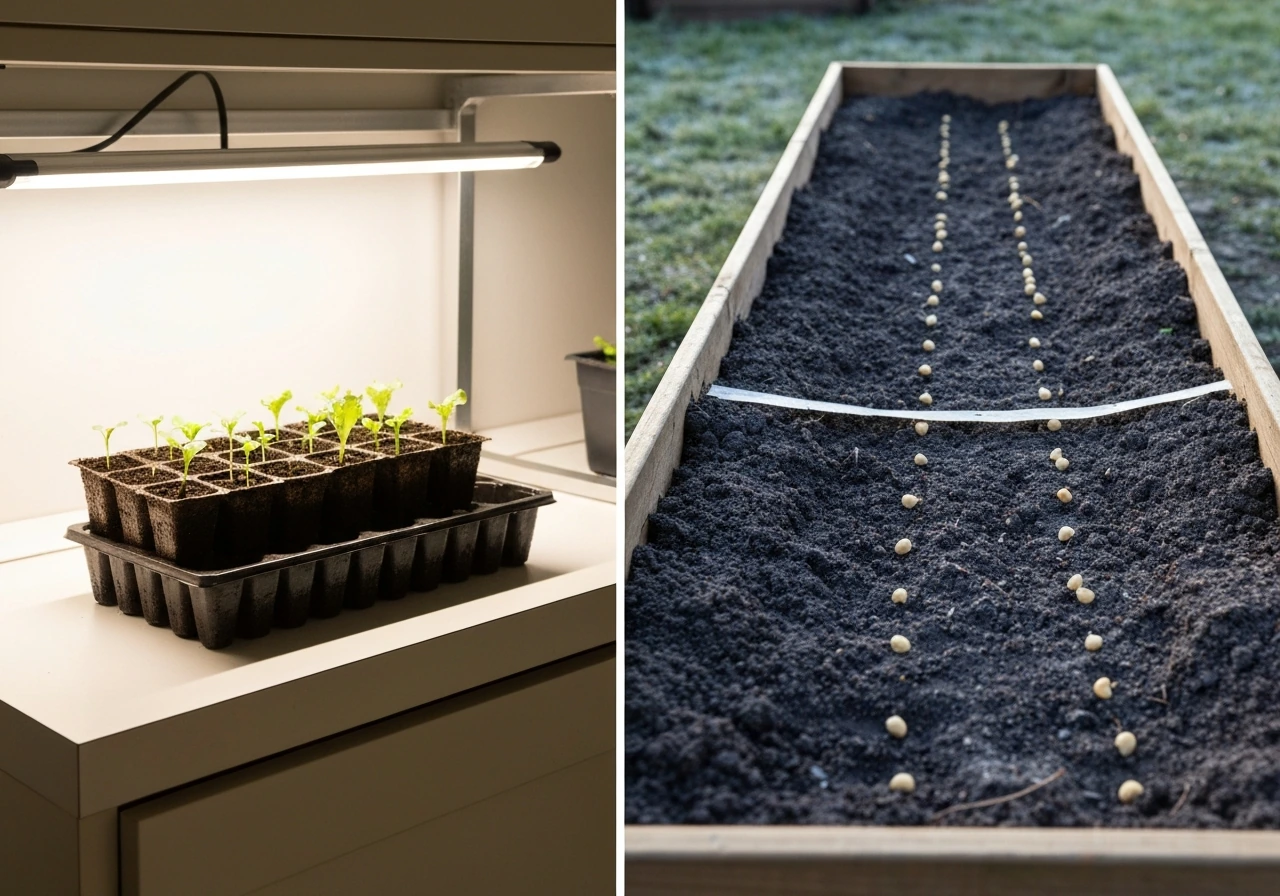
Seed trays make the most sense when you're starting lettuce indoors before the last frost, when outdoor soil is too cold or too warm for reliable germination, or when you want to stagger plantings without committing whole beds at once. If you're growing indoors year-round or moving seedlings into a hydroponic setup, trays are almost always the right starting point.
On the other hand, if you're direct-sowing into a prepared bed with ideal conditions, soil temperature between 60 and 75°F and steady moisture, you can skip trays entirely. Lettuce doesn't need to be transplanted if conditions are already good outside. But for most home gardeners, especially those in apartments, those dealing with unpredictable spring weather, or anyone setting up a container or hydroponic system, trays give you a reliable, controllable starting environment.
If you're aiming to can you grow lettuce in a vertical garden indoors or on a smaller footprint, trays also help you start with predictable seedlings before they go into that setup container or hydroponic system.
Picking the right lettuce varieties for tray starting
Most lettuce types start well in trays, but a few do better than others depending on what you're planning to do after germination. Loose-leaf varieties like Grand Rapids types are fast, easy, and handle transplanting with minimal stress. Butterhead types like 'Optima' are worth choosing if you expect any warmth during the growing window, Optima is specifically bred for bolting and tip-burn resistance and has been tested at sustained temperatures near 90°F. If you're growing romaine, look for heat-tolerant, slow-to-bolt varieties like 'Plato II', which gives you a useful buffer if seedlings take longer than expected to go out.
The key thing to match to your situation is bolt resistance. Lettuce bolts (sends up a flower stalk and turns bitter) in response to heat and day length, and tray-grown seedlings that sit too long under warm conditions can be stressed into early bolting before you even transplant them. Choosing a bolt-resistant variety isn't a workaround for poor timing, but it does give you more flexibility, especially if your schedule slips.
| Variety Type | Best For | Bolt Resistance | Notes |
|---|---|---|---|
| Loose-leaf (e.g., Grand Rapids) | Quick cuts, containers, beginners | Good to excellent | Fastest from seed to harvest; very forgiving |
| Butterhead (e.g., Optima) | Containers, outdoor beds, warmer conditions | Excellent | Tested through sustained heat; good for spring or early summer |
| Romaine (e.g., Plato II) | Beds, containers, longer growing cycles | Good—slow to bolt | Takes longer to mature; worth the wait for flavor |
| Crisphead/Iceberg | Outdoor beds with longer season | Lower | Not ideal for trays unless you have a cool, stable setup |
How to start lettuce seeds in trays: the exact steps
Timing
Start lettuce seeds indoors about 2 to 3 weeks before your last expected frost date if you're planning to transplant outdoors. That gives seedlings enough time to develop without sitting in trays so long that they become leggy or stunted. For indoor or hydroponic growing, timing is flexible, you can start trays any time of year as long as you can manage light and temperature.
Choosing your tray and starting mix
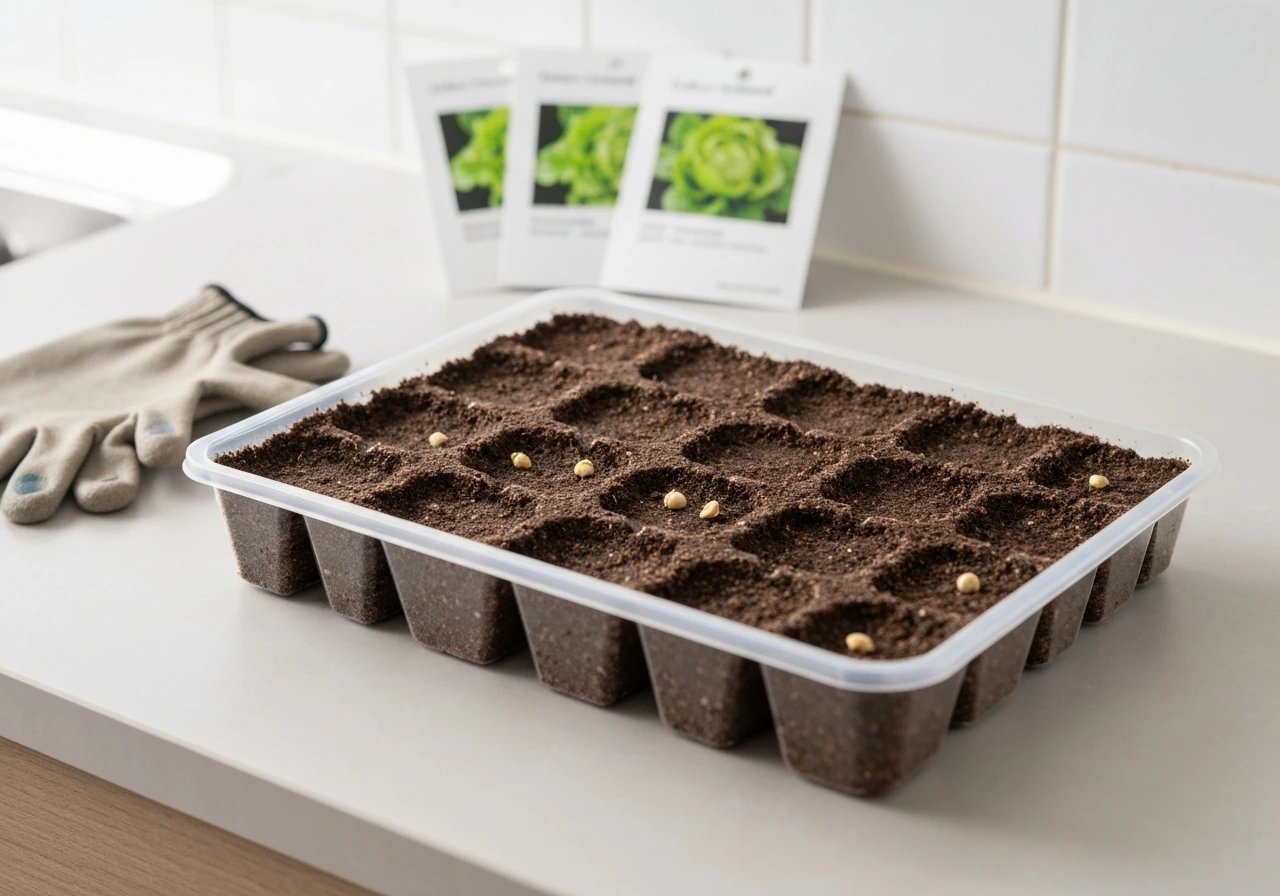
Use new or sterilized seed trays whenever possible. Old trays that haven't been cleaned can carry the pathogens responsible for damping off, which is one of the fastest ways to lose a whole tray of seedlings. A standard 72-cell or 128-cell plug tray works well for lettuce. Fill cells with a quality seed-starting mix, not garden soil. Garden soil in trays is a real problem: it compacts, drains poorly, and can introduce damping-off pathogens into the warm, wet environment that seed trays create. A commercial seed-starting mix or a blend of fine peat moss, perlite, and vermiculite drains well and stays light enough for tiny roots.
Sowing depth and seed placement
Here's something a lot of beginners miss: lettuce seeds need light to germinate. Don't bury them. Sow seeds at about 1/8 to 1/4 inch deep at most, just barely pressed into the surface of your mix. If you need to cover them, use only a very light dusting of fine vermiculite or fine peat moss. Drop 2 to 3 seeds per cell if you want to thin to the strongest seedling later, or sow one seed per cell if you're confident in your seed quality (a good lettuce seed batch should germinate at 80% or better, with premium seed often hitting 95%+).
Moisture at sowing
Pre-moisten your seed-starting mix before filling the trays, it's easier than trying to water from the top after sowing, which can displace tiny seeds. After sowing, cover the tray with a clear humidity dome or plastic wrap to hold moisture until germination starts. Bottom watering (setting the tray in a shallow dish of water and letting the mix absorb from below) is the gentlest method and reduces the risk of washing seeds around or promoting surface mold.
Light, temperature, and watering for healthy seedlings
Temperature during germination
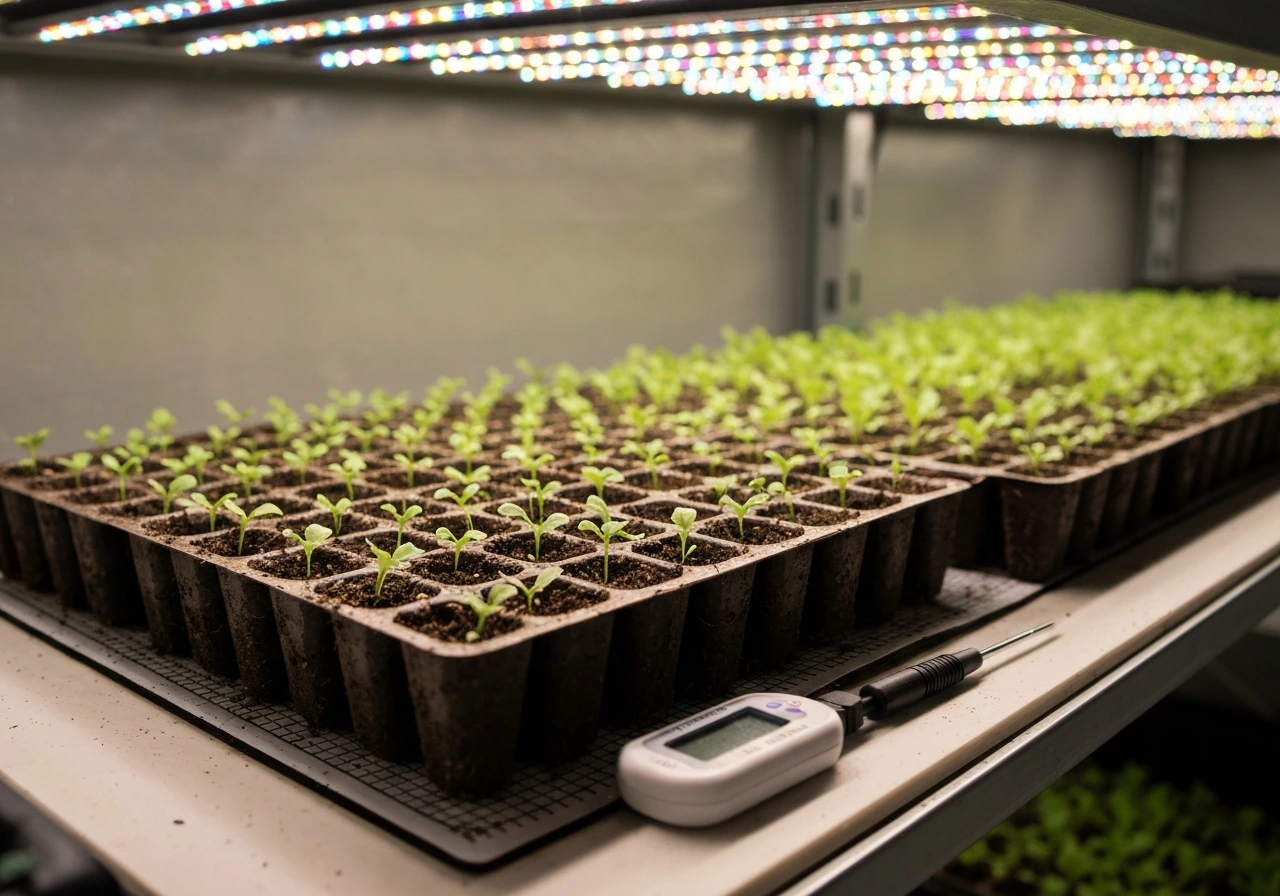
The sweet spot for lettuce seed germination is a soil temperature of around 60 to 75°F, with 75°F being close to optimal. Germination slows dramatically above 85°F and can fail entirely, so avoid placing trays on heat mats set too high or in warm spots like the top of a refrigerator in a heated kitchen. A warm room around 65 to 70°F ambient temperature is usually enough without any bottom heat. If you use a heat mat, remove it (or turn it off) once you see around 50% of seeds sprouting, seedlings don't benefit from bottom heat the way germinating seeds do.
Light after germination
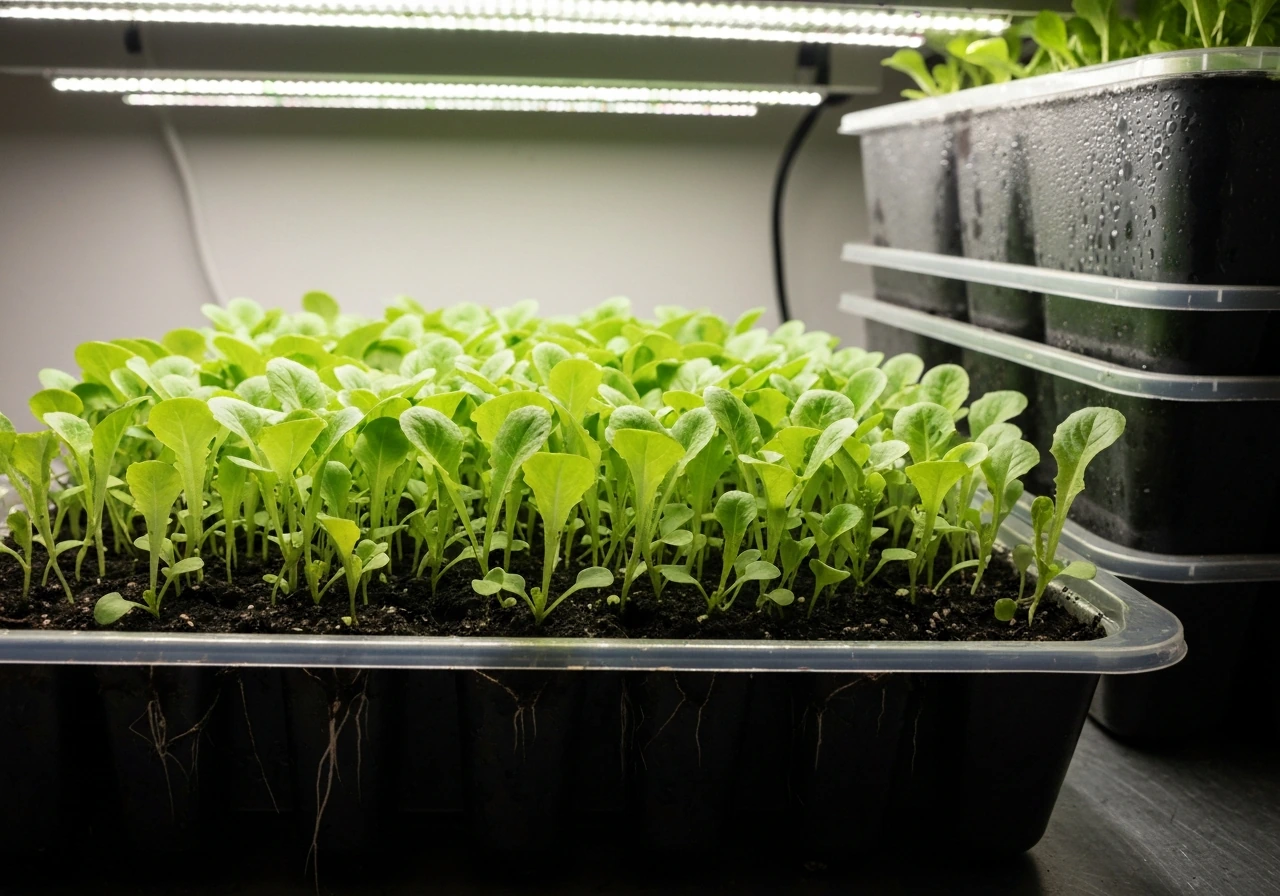
Once seedlings emerge, light becomes the most important factor. Lettuce seedlings on a windowsill almost always get leggy because window light, even a south-facing one, rarely delivers enough intensity or duration in early spring. Aim for 12 to 16 hours of light per day under grow lights. If you're using fluorescent or LED grow lights, keep them 6 to 8 inches above the tops of the seedlings, any higher and the seedlings stretch toward the light and go spindly fast.
For hydroponic setups, 12 to 14 hours per day is the standard recommendation and works well for both seedling stage and ongoing growth. For hydroponic setups, UMN Extension notes that 12, 14 hours per day is the standard photoperiod recommendation for hydroponic lettuce and herbs 12 to 14 hours per day is the standard recommendation.
Watering after germination
Keep the mix consistently moist but never soggy. The goal is evenly damp, if you squeeze a handful of mix and water drips out, it's too wet. Remove the humidity dome once the first true leaves appear and switch from covering to regular bottom watering or gentle top watering with a spray bottle. Letting the surface dry slightly between waterings reduces the risk of damping off, which thrives in constantly wet conditions.
Transplanting seedlings into beds, containers, or hydroponics
When to transplant
Lettuce seedlings are ready to transplant when they have 2 to 4 true leaves, which usually takes 3 to 4 weeks from sowing. Don't let them sit in the tray much past that point, overcrowded or overgrown seedlings in small cells get stunted or leggy, and transplanting very large seedlings is harder on the plant. If you're moving to a hydroponic system and using rockwool or coconut coir cubes, you can transplant seedlings once roots start pushing through the bottom of the cube. If you're using an Aerogarden or another countertop hydroponic setup, you can transplant lettuce alongside tomatoes once your lettuce has true leaves and your roots are ready hydroponic system.
Hardening off before going outdoors
If your seedlings are heading outside, don't skip hardening off. Indoor seedlings grown under lights haven't experienced real sun, wind, or temperature swings, and putting them straight into those conditions will set them back hard. Spend 7 to 14 days gradually transitioning them: start with an hour or two of outdoor shade, then extend the time and exposure to direct sun over about a week. By the last day or two, seedlings can spend a full 24 hours outside before you plant them out for good.
Transplant depth and spacing
Plant seedlings at the same depth they were growing in the tray, don't bury the crown or leaves. For loose-leaf varieties in containers or beds, space plants 6 to 8 inches apart. Head lettuce (like romaine and butterhead) benefits from 10 to 12 inches between plants. In containers, you can push spacing a bit tighter if you're harvesting as baby leaf. For hydroponic net pots, drop rooted cubes directly into the net pot and let the system do the work from there.
Fixing the most common seed-tray problems
Leggy seedlings
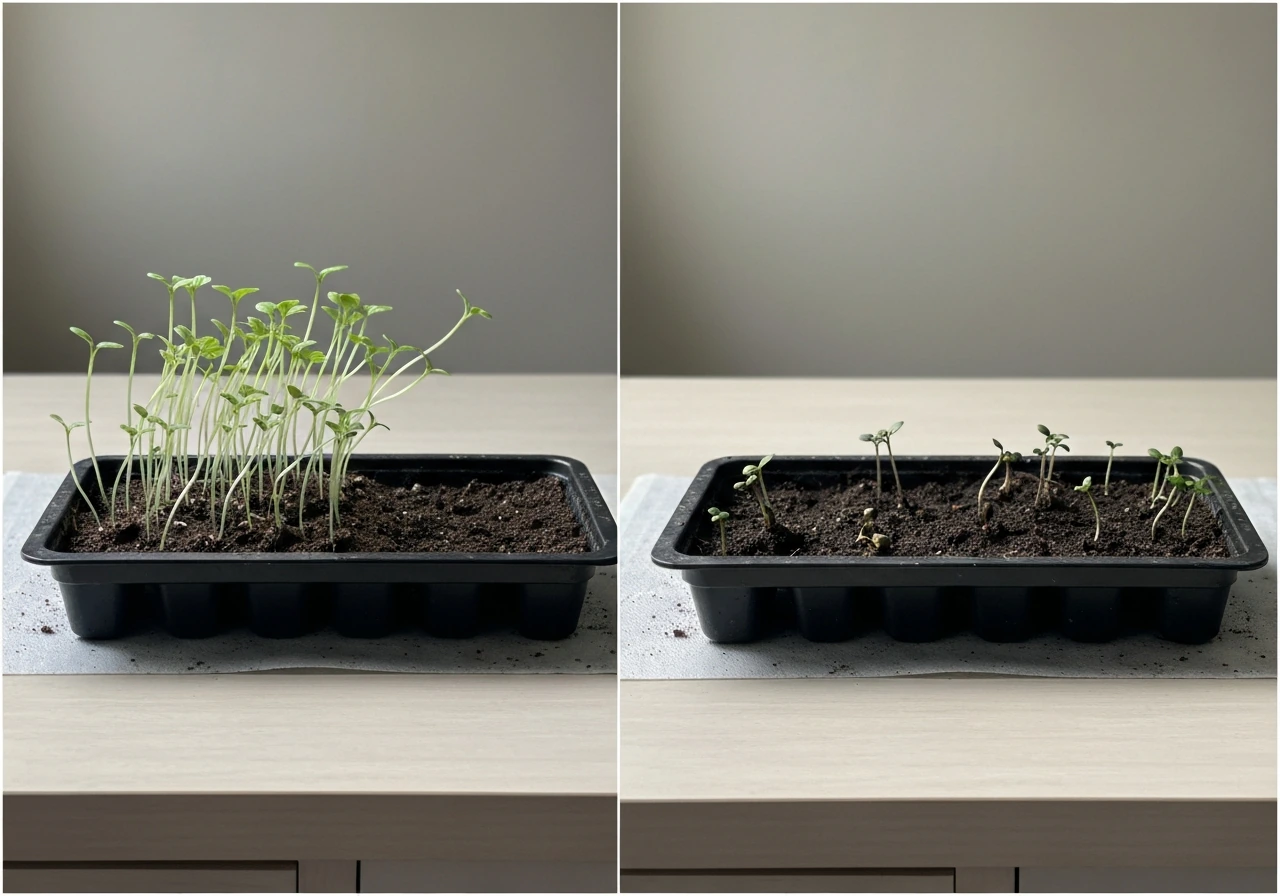
If your seedlings are tall, thin, and flopping over, they're not getting enough light. Move your grow lights closer, within 6 to 8 inches of the seedling tops, and extend the daily light period to at least 14 hours. A windowsill alone almost never cuts it for lettuce in spring. Once seedlings go leggy, you can't fully reverse it, but improving light conditions stops the problem from getting worse and future seedlings will come in much stronger.
Damping off
Damping off looks like seedlings suddenly collapsing at the soil line, or entire cells failing to germinate at all (the seedlings rot before emerging). It spreads fast, once you see it in one cell, neighboring cells are often already infected. The best approach is prevention: use new or sterilized trays, never use garden soil in your mix, avoid overwatering, and give seedlings good air circulation. If damping off shows up, remove affected cells immediately and cut back on watering. There's no reliable cure once it takes hold, so focus on protecting the unaffected seedlings.
Slow or uneven germination
If germination is patchy, temperature is usually the culprit. Check your soil temperature with a thermometer, lettuce germinates poorly below 40°F or above 85°F. Also check seed age: lettuce seed viability drops over time, and seeds more than 2 to 3 years old may have poor germination rates no matter what conditions you provide. If you're working with fresh seed from a reputable supplier and germination is still slow, give it a couple more days, some lettuce varieties take up to 7 days even under good conditions.
Early bolting stress
Lettuce that's been stressed in the tray, by heat, inconsistent watering, or sitting too long before transplanting, can bolt earlier than it should after going into the ground. If you're seeing signs of early bolting (elongated central stem, leaves becoming more pointed and bitter), the trigger is usually heat or photoperiod stress. For future batches, start seeds in cooler conditions, transplant on time, and choose bolt-resistant varieties. If you're growing in a warmer indoor environment or under lights with long day lengths, bolt-resistant varieties like Optima or Plato II give you meaningful extra time before the plant shifts into reproduction mode.
Seed trays are a genuinely useful tool for lettuce, and once you've run through the process once, the whole thing becomes fast and second nature. To use these same principles for space-saving setup, you can also learn how to grow lettuce vertically using stacked containers or a wall-mounted system seed trays are a genuinely useful tool for lettuce. The core rules are simple: use clean trays and proper mix, keep seeds near the surface, hit the right temperature for germination, give seedlings plenty of light as soon as they emerge, and don't wait too long to transplant. Whether you're moving plants to an outdoor bed, a container on a balcony, or a hydroponic setup, the tray-to-transplant path is the same, and the result is a much more controlled, predictable crop than scattering seeds and hoping for the best.
FAQ
Can you grow lettuce in seed trays year-round, or do they only work in spring?
You can use seed trays any time, but you must manage temperature and light. In hot seasons, start trays in the coolest part of your home and plan for faster transplanting, since seedlings can get heat-stressed quickly. In winter, use grow lights because windows alone usually do not prevent leggy growth.
How do I prevent mold on top of the seed-starting mix in a humidity dome?
After sowing, misting is fine, but avoid soaking the surface. Keep the dome ventilated briefly each day once seeds start to sprout, and remove the dome as soon as the first true leaves appear. Also, use bottom watering so the top layer stays less saturated.
Should I thin lettuce seedlings in each cell, and when?
Yes. If you sow 2 to 3 seeds per cell, thin to one healthy seedling once you can tell which one is strongest, usually when they have a couple of true leaves. Leaving multiple seedlings can reduce airflow and increase competition, leading to weaker plants and more damping off risk.
What’s the best way to water lettuce seedlings in trays without disturbing the seeds?
Use pre-moistened mix before sowing, then switch to bottom watering for the germination period. After emergence, you can use gentle top watering with a spray bottle aimed at the soil, not the seedlings, to avoid washing soil onto stems.
How long can lettuce stay in seed trays before I risk stunting or bolting?
Aim to transplant when seedlings have 2 to 4 true leaves, typically about 3 to 4 weeks after sowing. If they sit longer, overcrowding and light limits can cause stress, and stressed seedlings are more likely to bolt earlier once moved outdoors.
Do I need to use a grow light even if I have a bright window?
In most homes, yes. Lettuce seedlings commonly get leggy on windowsills because the light intensity and duration are inconsistent. If you see stretching or pale, weak growth, lower the lights toward the seedlings and increase daily light time.
Can I reuse seed trays for lettuce the next time?
Reuse is possible only if you sterilize thoroughly and let them dry completely before refilling. Damping off pathogens can persist in reused, uncleaned trays, so when in doubt, use new or sterilized trays and fresh seed-starting mix.
Why did my lettuce germinate poorly even though the seeds were new?
Most failures come from temperature that’s too cold or too hot, seeds sown too deep, or mix that stays too wet. Check germination conditions with a thermometer, confirm seed depth is no more than about 1/4 inch, and avoid burying them when they need light.
Can I transplant lettuce directly into a container or hydroponic system from the trays?
Yes, but timing matters. For hydroponics with cubes, transplant when roots are pushing through the bottom. For containers, transplant at the same depth they were growing, and keep the roots intact to reduce transplant shock.
What should I do if my seedlings are already leggy by the time I notice the problem?
You cannot reliably reverse severe stretching, but you can stop further damage by moving grow lights closer and extending light duration. Also, handle leggy seedlings carefully during transplant, keeping the crown at the tray depth so you do not bury the stem excessively.
How do I harden off lettuce started in trays without losing seedlings to cold nights?
Start with outdoor shade and gradually increase sun exposure over 7 to 14 days. On the first few days, bring them in if nights are very cold, then extend outdoor time once temperatures are consistently mild. Sudden cold exposure can set back growth even if the seedlings look healthy.