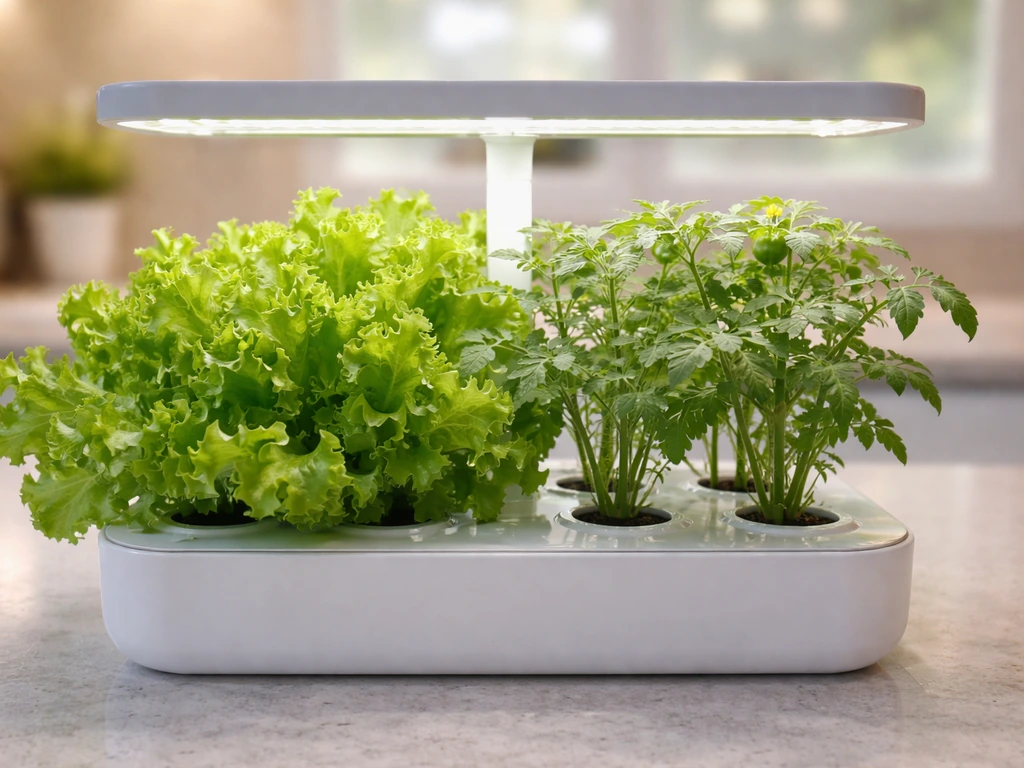
Yes, you can grow lettuce and tomatoes together in an Aerogarden, but it works best when you treat them as temporary roommates rather than permanent co-tenants. Lettuce goes in first, gets harvested young, and makes way for the tomatoes as they take over the canopy. For a similar idea of stacking crops in a small space, you can also grow lettuce in a vertical garden by choosing compact varieties and giving them enough light can you grow lettuce in a vertical garden. If you try to run both crops at full maturity simultaneously in a small unit like the Harvest 2.0, the tomatoes will shade out your lettuce within a few weeks and you'll end up with leggy, bitter greens and frustrated plans. The strategy that actually works is a staggered setup with intentional spacing and a clear exit plan for the lettuce.
Can You Grow Lettuce and Tomatoes Together in an Aerogarden?
Are tomatoes and lettuce actually compatible in an Aerogarden?
From a basic plant biology standpoint, yes. Both crops can survive in the same nutrient solution and similar pH ranges. The real tension isn't chemical, it's physical. Tomatoes are aggressive, upward-growing plants that will eventually dominate the light panel and shade everything beneath them. Lettuce is low-growing, cool-preferring, and bolts quickly when light intensity drops or temperatures creep up. In a small, enclosed countertop system, those differences create friction fast.
The good news is that Aerogarden systems are actually well-suited for a short-window overlap between the two crops. During the first four to six weeks after planting tomatoes, the canopy is still open enough that lettuce sitting in outer pods gets reasonable light. Use that window deliberately, and the combination works. Push past it, and you're fighting the system.
Space, containers, and root-zone planning
Pod count is your first constraint. Aerogarden's own guidance recommends using roughly one fruiting plant for every three pod holes in a unit. For the Harvest 2.0, which has six pods, that means a maximum of two tomato plants if you're following official spacing guidance. That leaves you with two to four pods for lettuce, depending on how aggressive your tomato variety is.
Place your tomato pods toward the back or center of the unit, away from the outer edges. This gives you better access for pruning and keeps the tomato canopy from immediately blocking the pods closest to the light panel's perimeter. Fill the remaining pods with lettuce, positioning them toward the front and edges where they'll receive the most unobstructed light early on. Leave any unused pod positions capped, as open holes don't help either crop.
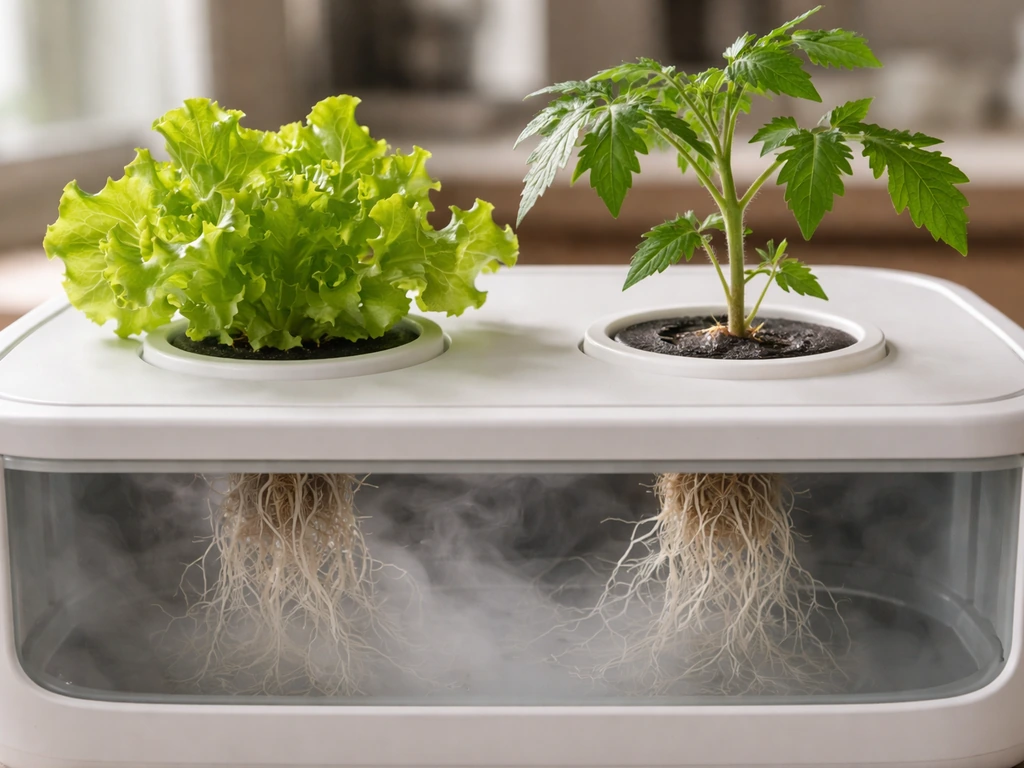
Root competition is less of a concern in aeroponics than it would be in soil, since roots hang in a shared reservoir rather than competing for physical space. That said, tomato root systems in Aerogarden units can get impressively large and dense. By week eight or ten, the roots may crowd the pump area. Trim any dead or brown root sections if you notice them, and make sure the pump intake stays clear. Healthy roots should be white and slightly fuzzy.
Light and temperature: where the two crops actually fight
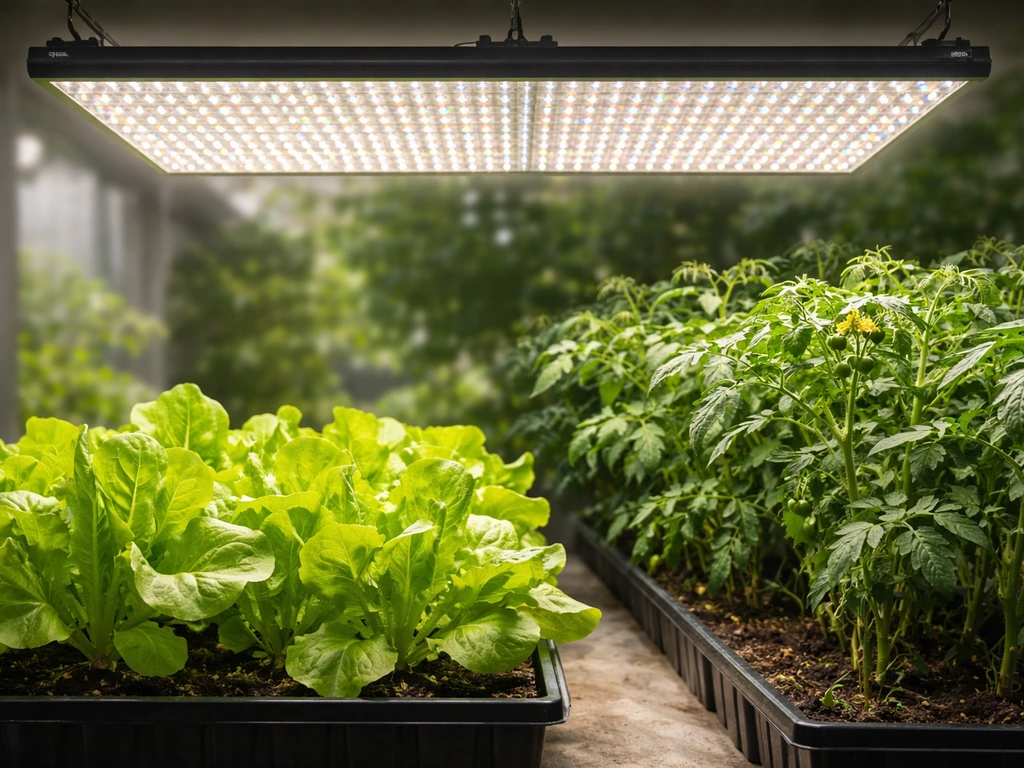
This is the main compatibility challenge. Lettuce wants 14 to 16 hours of moderate light at around 200 to 400 micromoles per square meter per second (µmol/m²/s). Tomatoes want full intensity for 16 to 18 hours and thrive under the Aerogarden's highest light setting. Running the light at full blast for long photoperiods is great for tomatoes but can actually stress lettuce and accelerate bolting, especially in compact units where the light panel sits close to the plants.
The Harvest 2.0 light panel at its lowest setting is about 11. The Harvest 2.0 product page says the system can grow up to 6 plants and provides the physical clearance and light distance needed to plan that grow height Harvest 2.0 light distance. 25 inches from the pod surface. Lettuce typically wants to stay within 2 to 4 inches of the panel for compact growth. Tomatoes push that distance as they grow taller, and the light arm on Harvest-series units has limited height adjustment. Once your tomato plants start brushing the light panel, your lettuce is getting filtered, indirect light at best.
Temperature is the other piece. Tomatoes prefer 65 to 80°F and tolerate warmer conditions well. Lettuce starts to suffer above 75°F and bolts aggressively above 80°F. The heat generated by the LED panel and the pump motor can raise the internal microclimate around your Aerogarden by a few degrees, especially in smaller rooms with limited airflow. If your kitchen runs warm, your lettuce window is shorter than you think. A small fan positioned nearby helps a lot.
Watering, nutrients, and pH in a shared system
Aerogarden units manage watering automatically through their pump cycles, so the watering cadence itself isn't something you adjust independently for each crop. What you do control is the nutrient concentration and pH of the shared reservoir, and this is where getting the balance right matters.
Lettuce does best at an electrical conductivity (EC) of around 0.8 to 1.6 mS/cm and a pH between 6.0 and 7.0, with 6.2 to 6.8 being the sweet spot. Tomatoes are heavier feeders and prefer an EC of 2.0 to 3.5 mS/cm and a pH between 5.5 and 6.5. When you're co-growing, you're making a compromise. Aim for a shared pH of 6.0 to 6.5 and a nutrient concentration toward the lower end of what tomatoes want. This keeps the solution from being too strong for the lettuce while still giving tomatoes what they need during their early and mid-growth phases.
Use Aerogarden's liquid nutrient solution and follow their recommended dosing for fruiting plants when tomatoes are in the mix, since tomatoes are the heavier feeders. Check pH every few days with a basic pH pen and adjust using pH up or down solution as needed. The reservoir's pH tends to drift up over time as plants absorb nutrients, so you'll be adding pH down more often than pH up. Top off the water level every two to three days and do a full reservoir flush every two weeks to prevent nutrient salt buildup.
| Parameter | Lettuce Preference | Tomato Preference | Shared Target |
|---|---|---|---|
| pH | 6.2 to 6.8 | 5.5 to 6.5 | 6.0 to 6.5 |
| EC (mS/cm) | 0.8 to 1.6 | 2.0 to 3.5 | 1.6 to 2.0 |
| Water temperature | 65 to 72°F | 65 to 75°F | 68 to 72°F |
| Light hours per day | 14 to 16 | 16 to 18 | 16 |
| Ideal air temperature | 60 to 70°F | 65 to 80°F | 68 to 74°F |
How to actually set this up: planting order and harvest timing
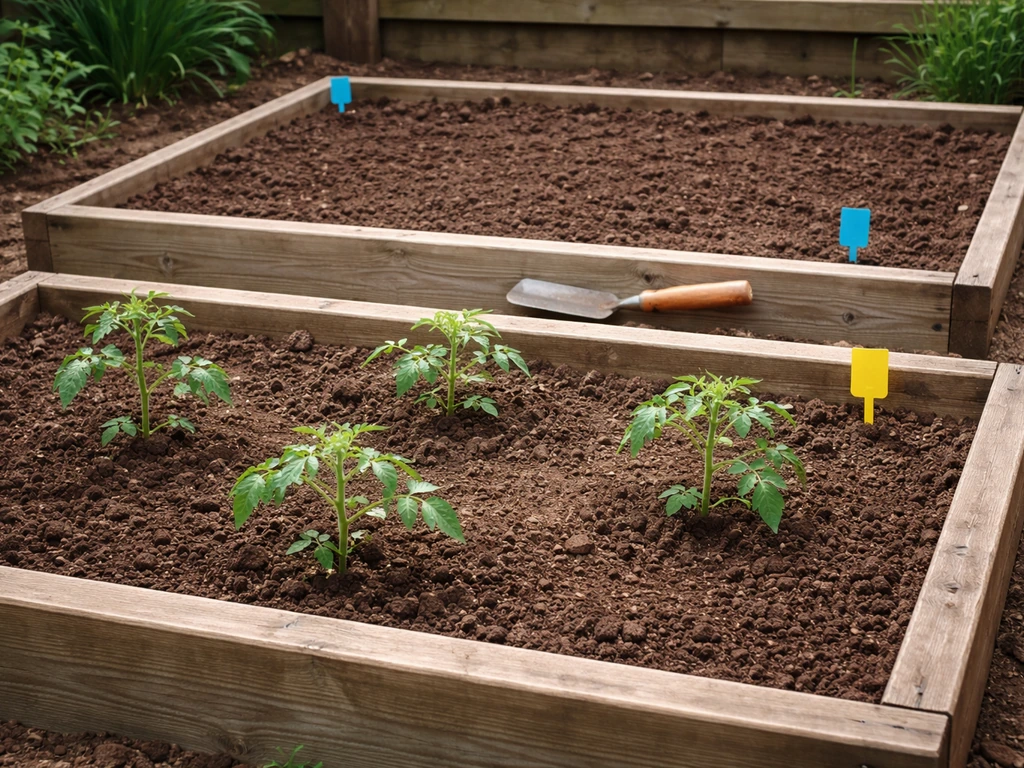
The staggered approach is what makes this work. Here's the sequence I'd follow:
- Week 1: Plant your tomato pods first. Give them their own nutrient setting and let them establish without competition.
- Week 2 to 3: Once tomato seedlings are 2 to 3 inches tall and clearly established, add your lettuce pods to the remaining positions.
- Week 4 to 6: Harvest outer lettuce leaves continuously using the cut-and-come-again method. Don't let lettuce plants fully mature and take up space; keep cutting to extend their productive life.
- Week 6 to 8: Start pruning tomato plants aggressively to manage canopy spread. Remove suckers weekly and train stems upward using soft ties or clips attached to the grow arm.
- Week 8 to 10: Harvest the remaining lettuce heads and remove those pods entirely. By this point, your tomatoes need the full light and nutrient load anyway.
- Week 10 onward: Run the system as a dedicated tomato unit. This is when you can increase nutrient concentration toward the higher end of the tomato range.
The key mindset shift here is that the lettuce is a bonus crop during the tomato plant's startup phase, not an equal partner for the long term. If you go in with that expectation, you'll harvest four to six weeks of fresh greens essentially for free before the tomatoes start producing.
Troubleshooting what goes wrong in mixed aeroponic plantings
Leggy, pale, or bitter lettuce
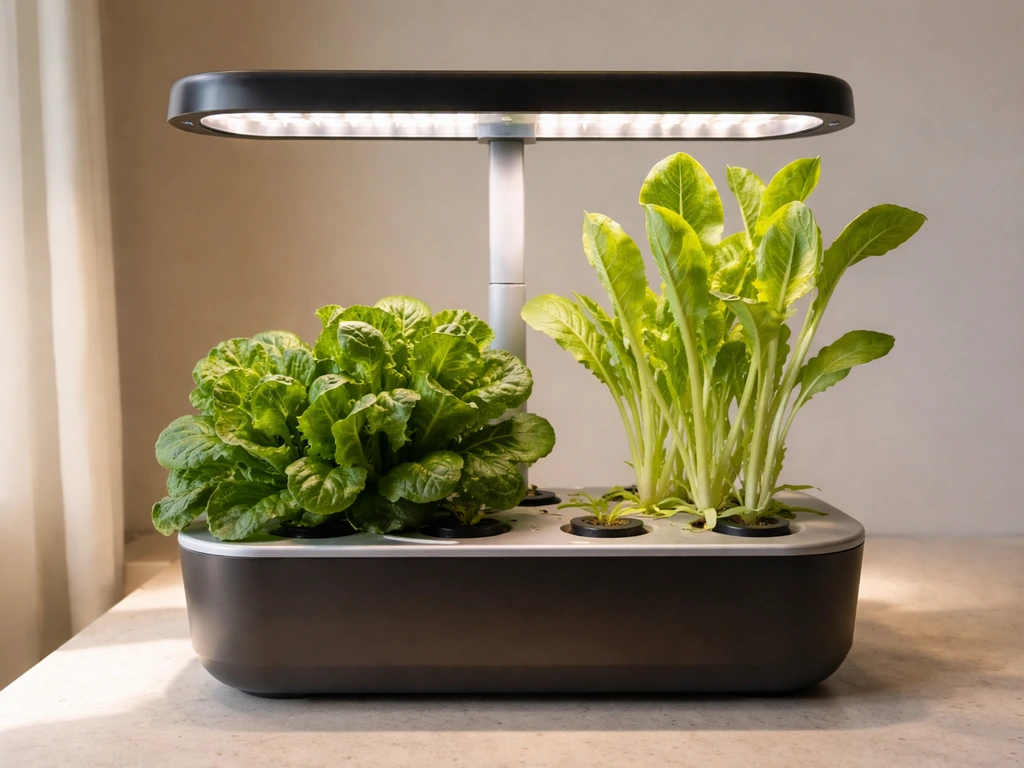
If your lettuce is stretching upward, developing pale leaves, or tasting sharp and bitter, it's almost always a light problem. Either the tomato canopy has started blocking the light panel, or the lettuce pods are positioned too far from the light source. Fix: move the lettuce pods to the outermost positions closest to the panel, and if the tomatoes are already shading them, it's time to harvest the lettuce now rather than waiting. Don't fight the canopy, harvest early and enjoy what you have.
Slow or stunted growth on either crop
Slow growth usually points to a nutrient or pH issue. If pH drifts above 7.0, iron and manganese become unavailable and you'll see yellowing between leaf veins (interveinal chlorosis) on both crops. Check pH first, adjust down to the 6.0 to 6.5 range, and within a few days you should see improvement. If pH is fine but growth is still sluggish, check that the pump is running correctly and that roots aren't blocking the spray nozzles.
Nutrient imbalance between crops
Tomatoes will eventually out-compete lettuce for nutrients in a shared solution, especially as they enter flowering and fruiting phases when their demand spikes. If your lettuce starts looking deficient (pale, slow, limp) while your tomatoes look healthy, it's a sign the solution concentration is getting calibrated toward tomatoes. At that point, just harvest the lettuce. Running a shared system past week eight in favor of lettuce isn't worth it.
Disease and humidity problems
Powdery mildew and root rot are the two most common disease issues in indoor aeroponic systems growing mixed crops. Powdery mildew shows up as white, powdery patches on leaves, usually when airflow is poor and humidity is high. Keep a small fan running near the unit and avoid misting the leaves when watering. Root rot appears as brown, slimy roots and a foul smell from the reservoir. It's usually caused by light leaking into the reservoir (which promotes algae) or water temperatures above 75°F. Cover any light-exposed reservoir areas with opaque tape or covers, and keep the room cool.
Best lettuce and tomato varieties for this setup
Variety choice makes a big difference in how well this combination works. You want compact, fast-maturing lettuce and small-fruited, determinate or dwarf tomatoes. Here's what performs best in Aerogarden-sized systems.
Lettuce varieties that work well with tomatoes in an Aerogarden
- Black Seeded Simpson: Fast-maturing (45 days), loose-leaf type, tolerates slightly warmer temperatures and lower light better than head lettuces. Great for cut-and-come-again harvesting.
- Tom Thumb: A miniature butterhead that stays compact and matures in about 50 days. Its small footprint makes it ideal in a mixed pod setup.
- Salanova or mini romaine types: Compact, upright growth habit, harvest-ready in 50 to 55 days. Holds up reasonably well under slightly elevated temperatures.
- Red Sails: Heat-tolerant loose-leaf variety that bolts slower than most, giving you a longer harvest window before the tomatoes dominate.
- Oak Leaf: Tender, fast-growing, and slow to bolt. Works well as an early-harvest crop alongside establishing tomatoes.
Tomato varieties that are easier to manage in small indoor systems
- Tiny Tim: A true dwarf cherry tomato that tops out at 12 to 18 inches. It's the most manageable tomato for Aerogarden use and won't overwhelm neighboring pods.
- Red Robin: Another dwarf variety, compact and bred for container growing. Produces sweet cherry tomatoes and stays tidy with minimal pruning.
- Tumbling Tom: Slightly trailing growth habit that works well in the Aerogarden Harvest arm setup. Cherry-sized fruit, matures in about 70 days.
- Yellow Pear: Small-fruited and moderately compact. More vigorous than true dwarfs but still manageable with weekly pruning.
- Bush Early Girl: A determinate variety that's more compact than standard tomatoes and produces earlier, which shortens the time your lettuce is competing for resources.
Avoid any indeterminate heirloom tomatoes, beefsteak types, or standard-sized slicing tomatoes in a mixed Aerogarden setup. They grow too vigorously, require constant aggressive pruning, and will shade out any lettuce within four to five weeks regardless of what you do. Aerogarden also notes that (for fruiting vegetables) regular pruning helps keep the plants within the grow space and encourages production regular pruning to keep fruiting vegetables within the grow space and encourage production.
What to do next
If you're ready to try this, start with a dwarf tomato variety and a fast-maturing loose-leaf lettuce in a 6-pod unit. Plant the tomatoes first, wait two weeks, then add the lettuce pods. Set your light cycle to 16 hours, target a pH of 6.0 to 6.5, and plan to harvest all your lettuce by week eight. Use that first run to get a feel for how quickly each crop develops in your specific environment, because kitchen temperature, ambient light, and water quality all affect the timeline in ways no article can fully predict. The second run is always better than the first.
If you find that the mixed approach feels like too much management at once, there's nothing wrong with running dedicated lettuce cycles in your Aerogarden between tomato grows. If you want to learn the basics for a vertical setup, follow a dedicated guide on how to grow lettuce vertically. Lettuce is one of the fastest and most forgiving crops you can grow in any hydroponic or aeroponic system, and a full 6-pod lettuce run will give you continuous greens in about three to four weeks with almost no effort. If you want a similar head start for fresh greens, you can grow lettuce in seed trays before moving seedlings into your Aerogarden. If you’re wondering what can i grow lettuce in, an Aerogarden can work well as long as you plan for its light and temperature limits. Many growers actually prefer alternating between a lettuce cycle and a tomato cycle rather than trying to overlap them, and that's a completely valid approach if simplicity is the goal.
FAQ
Can I start lettuce at the same time as tomatoes, or do I need to wait?
Yes, but only as an experiment and usually for the first harvest window. If you plant lettuce at the same time as the tomatoes, expect most lettuce to bolt earlier because it immediately experiences the tomato canopy and higher light intensity. A safer tactic is to wait about 1 to 2 weeks after tomato setup, then fill remaining pods with lettuce so it can establish in open light.
What pod placement tip makes the biggest difference for lettuce quality?
For the lettuce pods, place them on the outer perimeter pods nearest the light panel and keep them as low as possible by not letting them outgrow their pod position. Once a lettuce plant starts stretching upward, harvest it soon, because continued growth usually means the lettuce is losing light and quality, not just slowing down.
Should I harvest lettuce all at once or in steps?
Use successive harvesting, rather than waiting for “full size.” Pick outer leaves or trim tops when lettuce is still tender, then leave remaining plants in place. This reduces the number of lettuce plants competing with each other while the tomatoes are taking over the canopy.
How often should I test pH, and what if my pH adjustments don’t seem to help?
If the pH drift is pushing above your target, adjust frequency instead of making big swings. Small corrections every few days are more stable for lettuce. Also confirm your pen is calibrated (two-point calibration is ideal), because a miscalibrated pH pen can make you chase the wrong problem.
Can I run the light longer to boost tomato yield without ruining lettuce?
It can be too strong. If you notice lettuce pale leaves, rapid bolting, or a sharp bitter taste while tomatoes look fine, reduce lettuce stress by moving lettuce to the closest pods to the panel (front and edges) and harvesting early. Avoid extending the photoperiod beyond the tomato-friendly schedule, because that tends to accelerate lettuce bolting.
What’s the best way to prevent mildew and bolting in a warm kitchen?
Track “airflow, not just temperature.” A small fan helps prevent leaf wetness and reduces humidity pockets that encourage powdery mildew. If your kitchen is warm, consider lowering the room temperature or relocating the unit so the LED and pump heat don’t push lettuce past its bolting threshold.
How much should I prune the tomatoes to protect lettuce?
Yes, but do it strategically. Prune tomatoes lightly to delay canopy closure, focusing on removing the most obstructing growth near the light panel. Avoid heavy pruning that shocks the plant, since stressed tomatoes often reduce uptake and can worsen pH and nutrient instability that lettuce will feel immediately.
What should I do if the lettuce looks fine but roots start browning?
If you see brown slimy roots or a foul smell, treat it as a root rot risk first, not a nutrient problem. Clean up affected roots if possible, keep the pump intake unobstructed, and address two common drivers: reservoir temperature above about 75°F and light leaking into the reservoir promoting algae.
How can I tell early that my tomato variety will shade out the lettuce too fast?
Tomatoes that are too vigorous is the most common reason lettuce fails before week eight. For a low-management run, choose determinate or dwarf varieties, and avoid types that require constant tying and aggressive pruning. If your tomato variety starts crowding the light panel early, harvest lettuce immediately rather than trying to “save” it.
When is the right time to stop the overlap and harvest the rest of the lettuce?
A simple way is to plan a hard stop. If lettuce quality declines while tomatoes are flowering or fruiting, harvest remaining lettuce and reset for a lettuce cycle. Past about week eight, the overlap is usually not worth it because the shared solution increasingly favors tomato demand and lettuce flavor quality falls.
Is it better to fill every pod with a plant, or leave some pods empty?
If your Aerogarden has a way to cap or leave pods unused, do that. Unused holes can make managing pod placement and airflow harder, and they don’t improve either crop’s light access. Keep pod layout intentional: tomatoes centered or back, lettuce at outer positions.