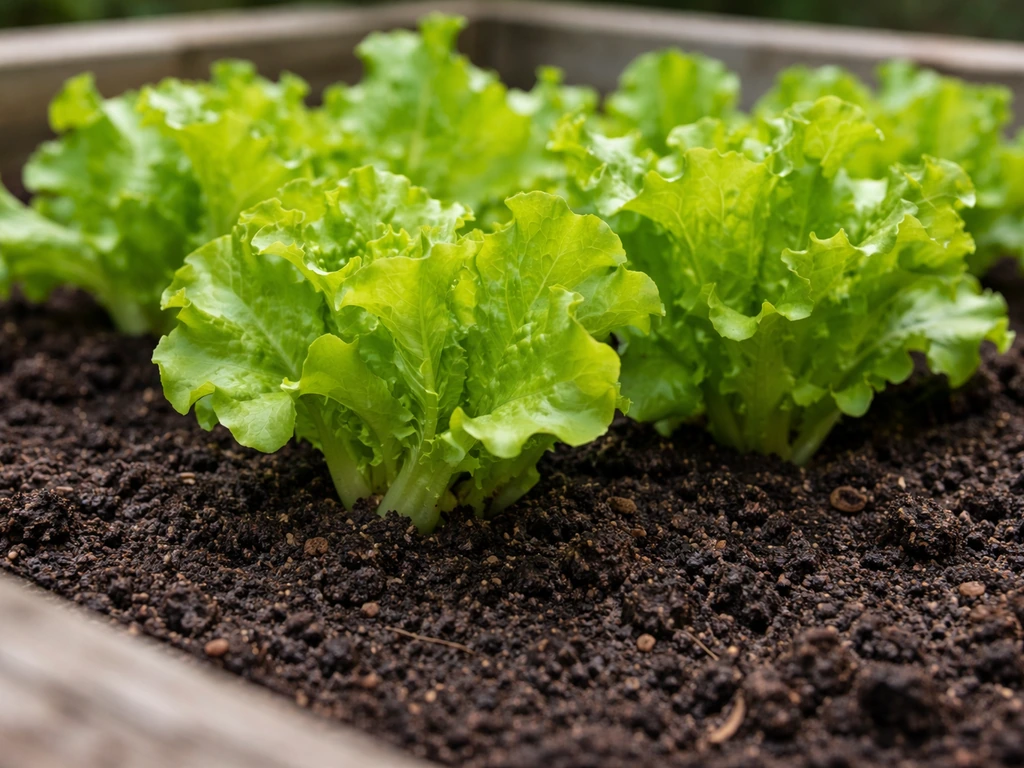
Yes, you can grow lettuce in compost, but with one important caveat: compost works best as a major component of a mixed growing medium, not as a standalone substitute for soil. Pure compost drains poorly, can overheat roots in summer, and often delivers too much nitrogen too fast, which pushes leafy growth that bolts quickly. Mix finished compost with topsoil or another base medium at roughly a 1:1 or 1:2 ratio and you get some of the best lettuce you'll ever grow: loose, moisture-retentive, and nutrient-rich without the harshness of synthetic fertilizers.
Can You Grow Lettuce in Compost? Step-by-Step Guide
Marcus Holloway
6 Jun 2026
Is it actually safe to grow lettuce in compost?
Safety is the right first question to ask, especially because lettuce is a raw-eating crop. Finished, plant-based compost is generally safe to use around food crops. The risks come from two specific scenarios: using compost that contains manure that hasn't been fully processed, or using compost that never reached adequate internal temperatures during decomposition.
If your compost pile didn't heat up properly or wasn't turned regularly, it may still harbor weed seeds, plant disease pathogens, or in the case of manure-heavy piles, human pathogens. UConn's Soil Nutrient Analysis Lab specifically recommends favoring plant-based compost over incompletely stabilized amendments when growing edible crops, and minimizing direct contact between compost and the edible portions of the plant near harvest time. UConn’s Soil Nutrient Analysis Laboratory adds that managing contact with edible parts near harvest and choosing plant-based compost when compost is not fully stabilized can reduce human pathogen risk. Colorado State University Extension makes the same point about heat and turning: a compost pile that didn't get hot enough is more likely to pass along disease organisms or weed seeds.
The practical takeaway: if you're buying bagged compost, check that it's labeled as fully finished or mature. If you're using homemade compost, give it a sniff and a look. It should smell earthy, not sour or ammonia-like, and you shouldn't be able to identify the original materials anymore. When in doubt, let it cure another few weeks before using it around lettuce.
Choosing the right compost: finished vs. fresh, and how to tell the difference
Not all compost is equal, and this matters more for lettuce than for, say, tomatoes. Lettuce has shallow roots, grows fast, and sits close to the soil surface, so it's directly exposed to whatever is in your growing medium. Here's how to evaluate what you have before you use it.
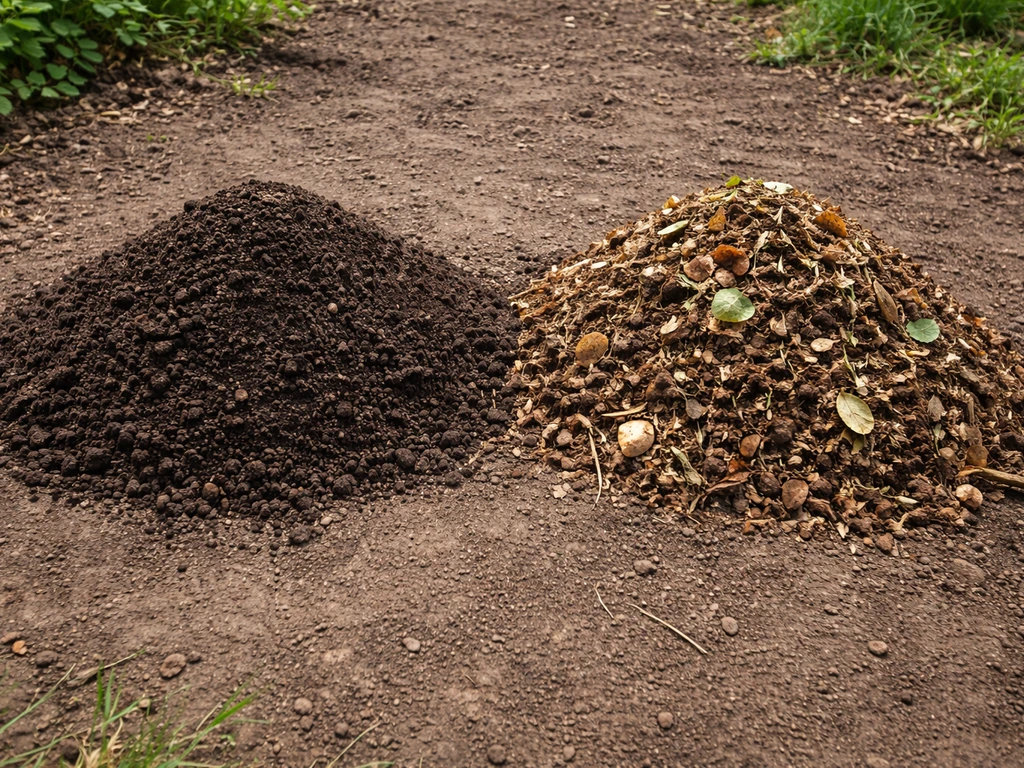
Signs of finished (safe to use) compost
- Dark brown to black color, uniform throughout the pile
- Earthy, forest-floor smell with no ammonia, sulfur, or sour odor
- No recognizable original materials like vegetable chunks, paper, or straw
- Crumbly texture that holds together loosely when squeezed
- Cool temperature throughout, even in the center of the pile
Signs of unfinished (not ready) compost
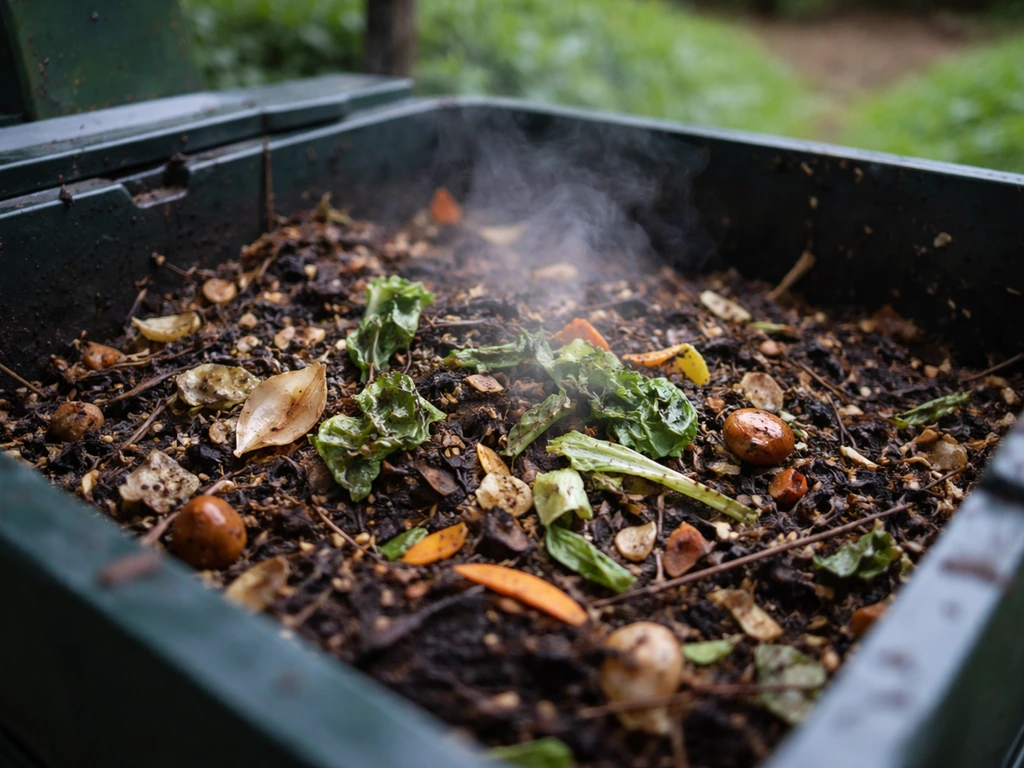
- Still warm or hot in the center, meaning decomposition is active
- Visible food scraps, leaves, or woody material that haven't broken down
- Strong ammonia smell (too much nitrogen still being released)
- Slimy or matted texture in spots
- Weed seeds you can still identify visually
If you're buying bagged compost, look for products that specifically say 'fully composted' or 'mature compost.' Garden center compost labeled simply as 'soil amendment' can vary widely in quality. For raised beds and containers, a good-quality bagged compost or well-aged homemade compost is the safest starting point.
| Compost Type | Ready to Use? | Best Application | Risk for Lettuce |
|---|---|---|---|
| Finished plant-based compost | Yes | Mixing into beds and containers | Low |
| Finished manure compost (fully aged) | Yes, with caution | Mixing into beds, not containers | Low to moderate |
| Partially finished compost | Not yet | Let cure 4 to 8 more weeks | High (nitrogen burn, pathogens) |
| Fresh manure or uncomposted scraps | No | Never directly with food crops | Very high |
How to prepare and mix compost for containers and beds
The single biggest mistake people make is filling a pot or raised bed with 100% compost and then wondering why their lettuce wilts, gets root rot, or bolts within two weeks. Pure compost, even good compost, tends to compact over time, holds too much moisture without enough aeration, and can create a nitrogen surge that pushes plants too hard early on. Blending it with another medium fixes all of this.
For raised beds
University of Minnesota Extension's raised-bed guidance recommends a mix of roughly 50 to 67 percent topsoil combined with 33 to 50 percent plant-based compost. In practice, I've found that a 2:1 ratio of topsoil to compost gives excellent results for lettuce: good drainage, a loose texture that shallow lettuce roots love, and enough organic matter to hold moisture between waterings without staying waterlogged. Oregon State University Extension suggests applying compost as a 1/4 to 1 inch surface layer each year on existing garden beds, which is a good maintenance approach once your bed is established.
For containers and pots
For containers (including 5-gallon buckets, grow bags, and standard pots), you want even better drainage than a raised bed because containers can't drain laterally. A good mix is 1 part finished compost, 1 part perlite or coarse sand, and 1 part quality potting mix. This keeps things light, prevents compaction as the season goes on, and gives you a growing medium that won't turn into a soggy brick after a week of rain. If you want to grow lettuce in a pot specifically, focus on using finished compost blended into a well-draining container mix and keep the soil consistently moist. Avoid using garden topsoil alone in containers because it compacts badly in pots.
For existing garden beds
If you're amending an existing in-ground bed, work 2 to 4 inches of finished compost into the top 6 to 8 inches of soil before planting. This improves soil structure and feeds the soil biology without overwhelming your lettuce with nutrients. If you're doing this in June, note that the timing is important for warm-weather varieties, as we'll cover shortly.
Planting steps: variety choice, spacing, and timing
Getting the variety and timing right matters as much as the growing medium. Even perfect compost-amended soil won't save you if you're planting a heat-sensitive butterhead variety during a June heat wave.
Choosing the right variety for right now
It's early June 2026, which means most northern hemisphere gardeners are heading into warmer temperatures and longer days. This is prime bolting season for lettuce. For summer planting in compost-amended beds, choose bolt-resistant varieties explicitly: 'Jericho' (a romaine), 'Nevada' (looseleaf), 'Muir' (crisphead), or 'Slobolt' are all solid choices. Loose-leaf types generally tolerate heat better than heading types. If you're growing indoors or in a climate-controlled space, you have more flexibility with variety choice.
Spacing in compost-amended beds and containers
Compost-rich soil supports denser planting than poor soil because it provides better nutrition per square inch. For looseleaf varieties, space plants 4 to 6 inches apart. For romaine or butterhead types, go 8 to 10 inches. In containers, you can get away with two to four plants per 12-inch pot if you're harvesting outer leaves rather than waiting for full heads. In a 5-gallon bucket, one heading variety or two to three looseleaf plants is plenty.
Timing your planting
For outdoor beds in June: if you're in a region where temperatures are already hitting 75°F or higher consistently, you're better off starting seeds indoors or finding a shaded spot outside and using bolt-resistant varieties. Lettuce germinates best between 60 and 70°F and starts struggling above 80°F. For succession planting, sow small amounts every 2 to 3 weeks rather than all at once. For fall harvest, count backward: most varieties mature in 45 to 60 days from transplant, so plan your planting date accordingly.
Light and temperature: how to stop your lettuce from bolting
Bolting (when lettuce sends up a flower stalk and turns bitter) is triggered by a combination of high temperatures and long day length. In June, both of these are working against you simultaneously if you're in most of the northern hemisphere. Good compost won't prevent bolting if the conditions aren't right, so understanding the environmental side of this is essential.
Lettuce grows best in full sun when temperatures are cool (50 to 70°F) and tolerates up to about 75°F before stress becomes a real issue. Above 80°F, bolting accelerates fast. For outdoor compost-amended beds in June, consider these strategies to extend the season:
- Use shade cloth (30 to 40 percent shade) to reduce leaf temperature by 5 to 10 degrees
- Plant on the east side of a structure so lettuce gets morning sun and afternoon shade
- Mulch the compost surface with straw or wood chips to keep root-zone temperatures down
- Water in the morning so foliage dries before the heat of the day
- Consider growing looseleaf varieties you can harvest quickly (30 to 40 days) before heat becomes severe
For indoor growers, aim for 10 to 14 hours of light per day from a grow light positioned 6 to 12 inches above the plants. LED grow lights in the 4000K to 6500K color temperature range work well for lettuce. Keep the room temperature between 60 and 70°F if possible. Growing lettuce indoors in a compost-mixed container is actually one of the best setups for year-round harvests because you control both temperature and day length. If you want to know whether you can grow lettuce inside, the biggest factors are providing consistent light and temperature, plus using a well-draining compost mix Growing lettuce indoors. If you're already growing lettuce indoors, the same compost-mix principles apply, though good drainage becomes even more critical in a closed container environment.
Watering and nutrient management for compost-grown lettuce
Compost changes how you need to water compared to straight soil or potting mix. It holds more moisture, which is great for hot days but becomes a problem if you overwater. The goal is consistently moist, never soggy. Lettuce is about 95 percent water, so drought stress shows up fast as wilting, then bitterness, then bolting, but waterlogged roots cause root rot just as quickly.
How to water compost-amended beds
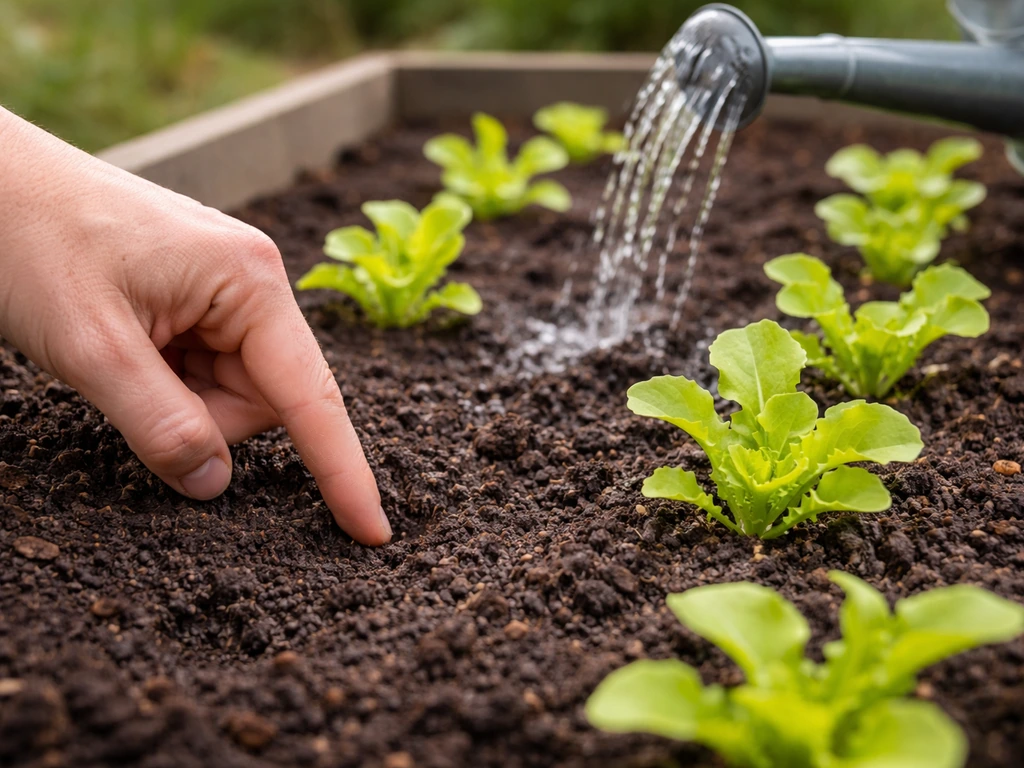
Check moisture by pushing your finger an inch into the growing medium. If it feels dry at that depth, water thoroughly until it drains from the bottom. In warm weather, this might mean watering every 1 to 2 days for containers and every 2 to 3 days for raised beds. In cooler weather, every 3 to 4 days is often enough. Drip irrigation or a soaker hose works well for raised beds because it keeps foliage dry, reducing disease pressure.
Feeding lettuce grown in compost
Oregon State University Extension notes that compost has relatively low fertilizer value compared to synthetic fertilizers, meaning the nutrients are there but released slowly as soil biology processes them. This is actually ideal for lettuce: slow-release nutrition without the risk of burning. For most lettuce grown in a properly mixed compost medium, you won't need to add extra fertilizer for the first 6 to 8 weeks. After that, if you're doing cut-and-come-again harvesting and the plants look pale or growth slows, a liquid kelp or diluted fish emulsion feed every 2 weeks gives them a gentle boost without nitrogen overload.
One thing to watch for in pure or high-compost mixes: excessive nitrogen from immature compost can cause overly lush, dark green growth that flops over, attracts aphids, and bolts faster. If your plants look almost too green and the leaves are very large and soft, lay off any supplemental feeding and make sure you're using finished compost next time.
Troubleshooting common problems with compost-grown lettuce
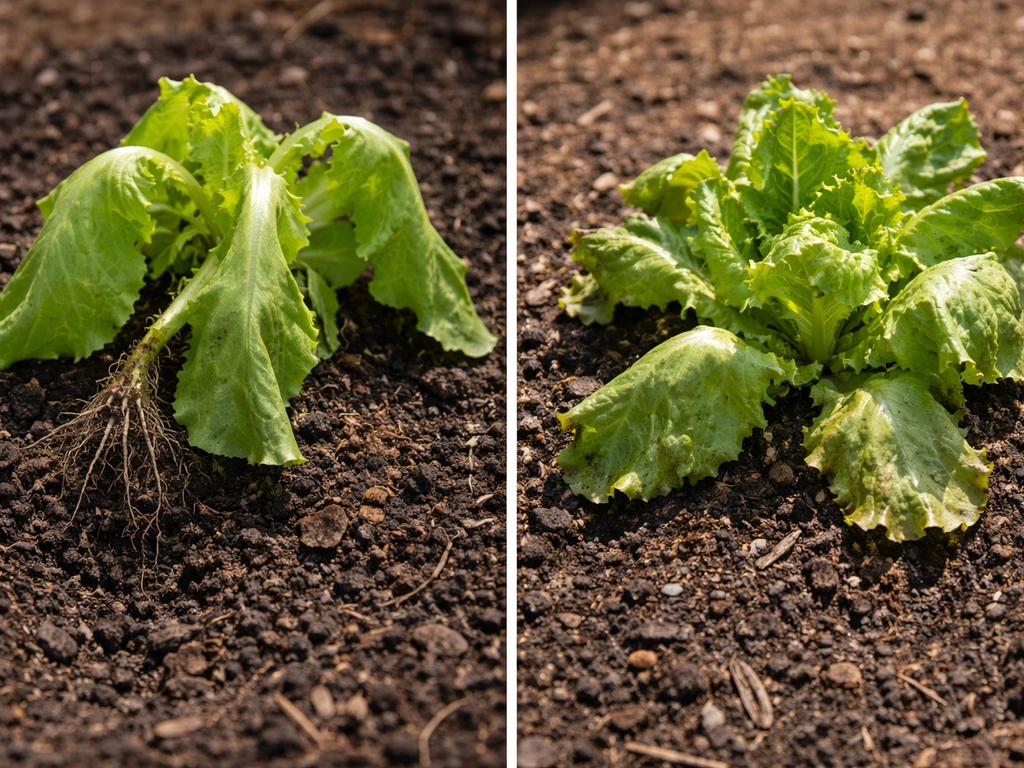
Even with great compost and a good setup, things go wrong. Here's how to diagnose and fix the most common problems.
Wilting despite watering
If your lettuce wilts even when the medium feels moist, the problem is usually one of two things: root rot from poor drainage, or heat stress from afternoon sun. Check the roots by gently pulling a plant and looking for brown, mushy roots (root rot) versus white, firm roots (heat stress). For root rot, improve drainage by mixing in more perlite and watering less. For heat stress, add shade cloth and water in the morning. If pure compost was used without any amendment, repot into a proper mixed medium immediately.
Bolting and bitter leaves
If your lettuce sends up a central stalk and leaves taste bitter, it has bolted. You can't reverse this, but you can still harvest outer leaves before they get too bitter. Going forward: choose bolt-resistant varieties, add afternoon shade, keep temperatures below 75°F if possible, and harvest frequently. Cut-and-come-again harvesting (taking outer leaves regularly) actually delays bolting slightly by keeping the plant in a vegetative state longer.
Aphids and slugs
Compost-rich soil tends to produce lush, soft growth that aphids love. If you spot clusters of small green, black, or white insects on the undersides of leaves, knock them off with a strong water spray first. For persistent infestations, insecticidal soap spray applied in the evening works well. For slugs (which love moist, organic-rich soil), go out at night with a flashlight and hand-pick them, or place a shallow dish of beer near your plants as a trap. Avoid slug baits that contain metaldehyde near edible crops.
Yellowing leaves (nutrient deficiency)
If older, lower leaves turn yellow while newer growth looks fine, it's usually nitrogen deficiency, which can happen if your compost was too mature and has already released most of its nutrients, or if you're growing in a container where nutrients leach out with each watering. Apply a diluted liquid feed (fish emulsion at half the recommended rate) once a week until color returns. If newer leaves are yellowing between the veins while the veins stay green, that's iron or manganese deficiency, usually caused by pH being too high. Test your medium's pH and aim for 6.0 to 7.0 for lettuce.
Damping off and fungal disease
Seedlings collapsing at the base (damping off) or gray mold on leaves usually means too much moisture and not enough airflow. If you used unfinished compost, pathogens from the pile can also contribute. Improve airflow around plants, water less frequently, and avoid wetting leaves when possible. For containers, make sure drainage holes aren't blocked. If you're seeing widespread disease in a bed, hold off on planting lettuce in that spot for a season and revisit your compost quality.
Weed seeds in compost
If your compost pile didn't heat up adequately, weed seeds survive the process and sprout in your beds. This is mostly a nuisance, but weeds competing with young lettuce seedlings can seriously stunt their growth. Hand-weed early and often, and use finished compost next time to avoid the problem. A layer of fine mulch over the compost surface also suppresses weed germination effectively.
Your compost-grown lettuce success checklist
Pull this checklist together before you plant and you'll avoid the most common failures right from the start.
- Use only fully finished, earthy-smelling compost with no visible original materials
- Mix compost at a 1: 1 or 1:2 ratio with topsoil or potting mix, never use it 100% alone
- For containers, add perlite (about 20 to 25 percent of the total volume) for drainage
- Choose bolt-resistant varieties if planting in late spring or summer
- Space looseleaf varieties 4 to 6 inches apart and heading types 8 to 10 inches apart
- Plant where lettuce gets 6 hours of sun in cool weather, or provide afternoon shade in warm weather
- Keep root-zone temperature below 75°F using shade cloth or mulching
- Water when the top inch of growing medium feels dry, not on a fixed schedule
- Skip extra fertilizer for the first 6 to 8 weeks, then feed lightly with liquid kelp if needed
- Check for aphids and slugs weekly, especially in warm, humid weather
- Harvest outer leaves regularly to delay bolting and keep plants productive longer
Growing lettuce in compost-amended beds or containers is genuinely one of the most rewarding things you can do as a home gardener, especially if you're working with containers, grow bags, or raised beds where you control the growing medium completely. Get the compost quality right, mix it properly, and match your variety to the season, and you'll get harvests faster and with less fuss than almost any other approach.
FAQ
Can you grow lettuce in straight compost if you keep it from staying wet?
Even if you manage watering carefully, straight compost often compacts and can create low-oxygen conditions at the roots. For lettuce, that increases root-rot risk. If you want to use more compost than usual, blend it and still keep at least a 1:1 component of topsoil, potting mix, or another aerating base.
How do I tell if my compost is finished enough for lettuce?
Use multiple checks: it should be dark and crumbly with no recognizable plant pieces, it should smell earthy rather than sour, ammonia-like, or fermented, and it should be stable when you re-mix it (not hot). If you are seeing heat, strong odor, or identifiable inputs, cure it longer before planting edible greens.
Is compost safe to use with organic or hydroponic lettuce systems?
Traditional hydroponics uses inert media and water-based nutrients, compost is not part of that system. If you are using an aeroponic or deep-water setup, compost can clog systems and can introduce pathogens. Compost can be used in soil-based containers or beds, where you control mixing and drainage.
What pH should my compost mixture be for lettuce?
Aim for a slightly acidic to neutral range, about 6.0 to 7.0. Compost can drift alkaline depending on inputs, and high pH can cause iron or manganese deficiency symptoms. If you notice pale growth with green veins, test pH before adding more fertilizer.
Does compost replace fertilizer entirely for lettuce?
Usually it covers early needs for the first several weeks when mixed correctly, but not always. If you harvest leaves continuously or see paleness and slow growth after about 6 to 8 weeks, use a gentle liquid feed rather than increasing compost depth, since extra nitrogen can also speed bolting.
How much compost should I add to an existing raised bed over time?
A practical approach is to apply compost as a surface dressing each year, then avoid repeatedly digging in new layers that can create uneven moisture and compaction. Mix deeper only during bed build or renovation, and keep the layer light unless soil structure clearly needs it.
Can I germinate lettuce seeds directly in compost?
It is not ideal for most people because compost-heavy mixes can crust or stay too wet at the seed zone. For best germination, start in a lighter seed-starting mix, then transplant into your compost-amended medium once seedlings are established and roots fill the starter cells.
Why does my lettuce bolt faster when I use compost?
Compost can speed early, lush growth if it delivers nitrogen quickly or if the mix stays warm and wet at the root zone. Also, bolting is strongly triggered by day length and heat. If you see very dark, overly large leaves, reduce or pause supplemental feeding and ensure plants get afternoon protection in warm weather.
How should I water lettuce grown in compost differently than plain soil?
Check moisture by feel at about 1 inch down. Compost blends hold water well, so watering too often causes soggy roots and rot. Water thoroughly when the mix has dried slightly at that depth, then let it drain so containers are not sitting in runoff.
What if lettuce wilts but my compost mix feels moist?
That pattern points to root problems or heat stress rather than simple drought. Look at roots: brown and mushy suggests root rot, white and firm suggests heat or root-zone oxygen stress. Adjust by improving drainage and reducing wetness for rot, or add afternoon shade and water in the morning for heat stress.
Are there specific signs that my compost is too nitrogen-rich for lettuce?
Look for an almost overly lush, dark green canopy with very soft, large leaves that can flop, plus earlier bolting and higher aphid attraction. If that happens, stop extra feeding, confirm the compost is fully finished next time, and keep the mix balanced with topsoil or a lighter base medium.
How do I prevent weeds if my compost might contain weed seeds?
If your pile was not hot enough or not fully stabilized, weed seeds can survive. To reduce the risk, use cured compost, and before planting, remove visible sprouts. A thin mulch layer over the compost surface can block light for tiny weed seedlings without burying lettuce.