Here is the short version of what you need: a container with good drainage, a quality potting mix, temperatures in the 60 to 70°F range, consistent moisture, and either a bright south-facing window or a simple grow light. That is really the whole list. Everything else in this guide is just making sure each of those pieces is working correctly.
Pick the right lettuce variety and indoor growing gets a lot easier
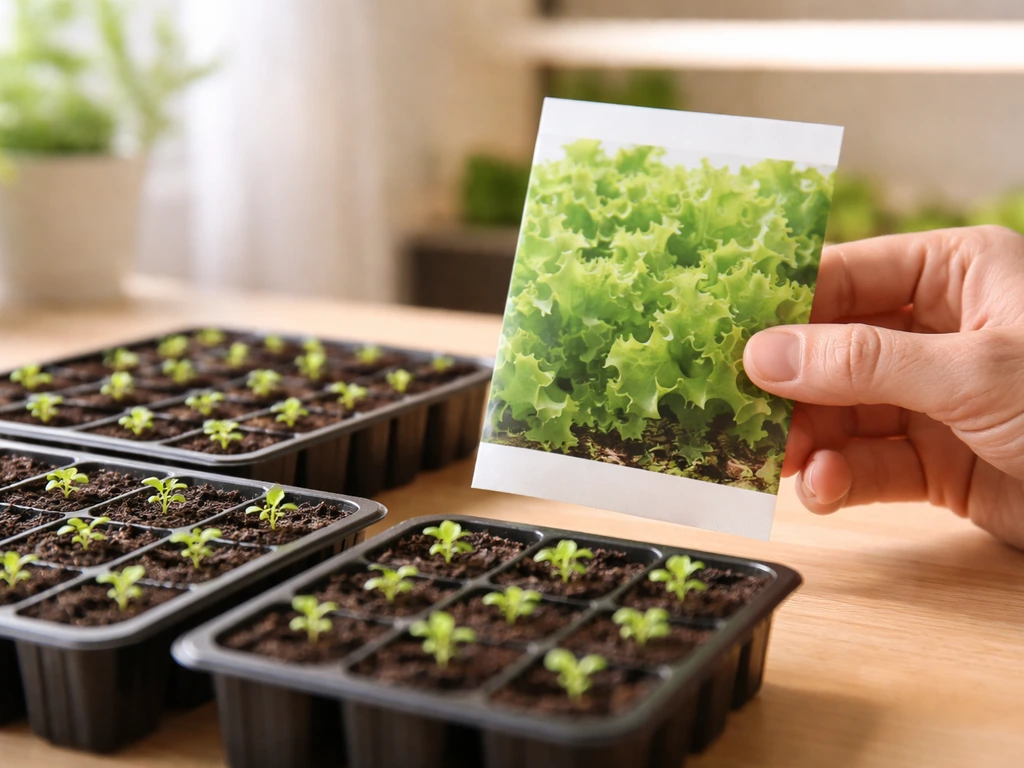
Not every lettuce type performs equally well indoors. Loose-leaf varieties are your best bet for a beginner indoor setup. They mature faster (often 40 to 50 days from seed), you can harvest outer leaves continuously without pulling the whole plant, and they handle the slightly lower light conditions of an indoor environment better than head-forming types. Butterhead types like Buttercrunch also work well indoors and produce a softer, sweeter leaf. Romaine and iceberg (crisphead) are the hardest to grow inside, they need more light and a longer season to form a proper head, and indoors that often means they bolt before you get there.
For specific variety choices, look for anything labeled 'cut-and-come-again,' 'baby leaf,' or 'salad mix.' Red Sails, Black Seeded Simpson, Oak Leaf, and Buttercrunch are all reliable performers indoors. If you want a colorful mix for a windowsill planter, a pre-blended mesclun or salad blend seed pack is an easy starting point. Days to maturity on leaf lettuce typically run about 40 to 80 days depending on type, so check the seed packet and plan accordingly.
Setting up your indoor growing space
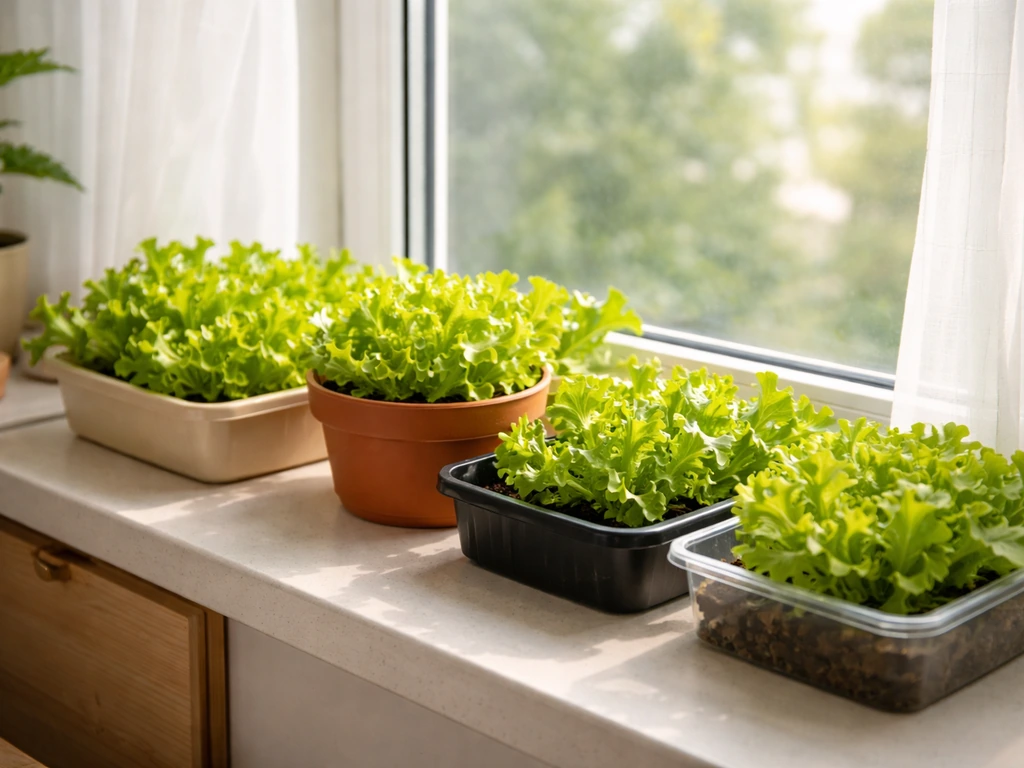
The good news is you do not need a complicated setup to grow lettuce indoors. A windowsill, a countertop, or a small shelf near a window all work. The key decisions are your container choice and where you place it.
Container options
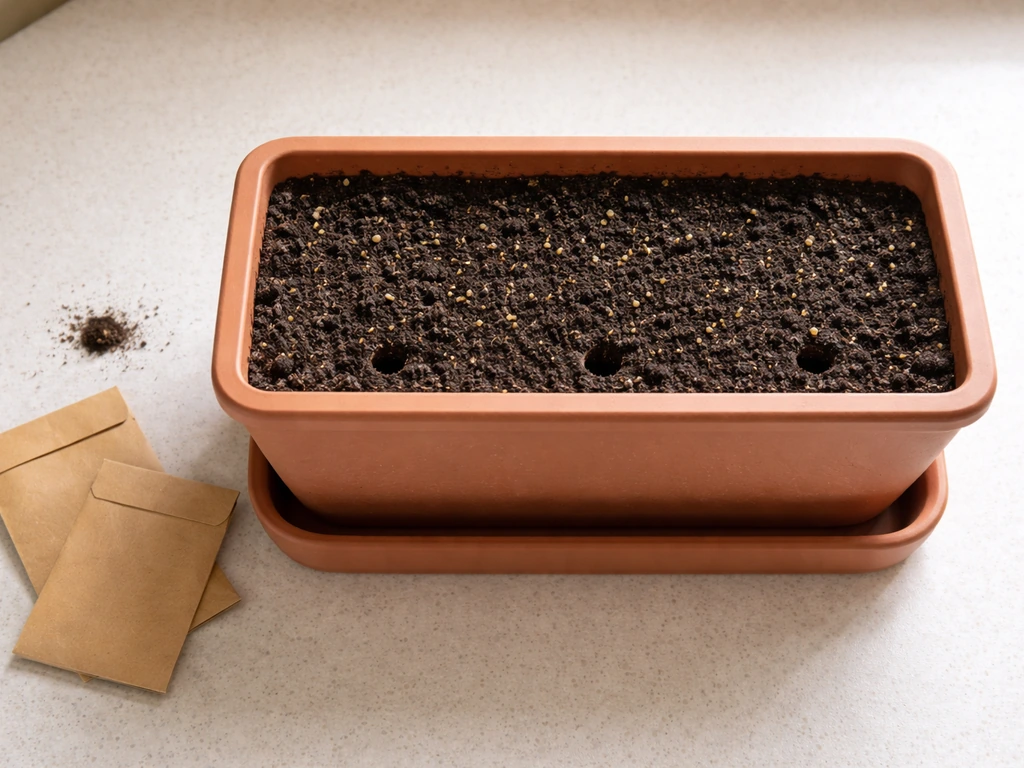
Lettuce has a relatively shallow root system, so you do not need deep containers. A pot or planter that is 6 to 8 inches deep is sufficient for most loose-leaf varieties. Width matters more than depth, the more surface area, the more plants you can grow. Window boxes, rectangular planters, and wide shallow bowls all work well. If you are interested in growing in pots specifically, or even a 5-gallon bucket, those are solid options too and give you flexibility for moving plants toward or away from your light source. Grow bags are another option and have the advantage of excellent drainage and airflow to the root zone.
Whatever container you choose, drainage is non-negotiable. Lettuce sitting in waterlogged soil will rot at the roots quickly. Make sure your container has multiple drainage holes, not just one, and place a saucer underneath to catch runoff, just empty that saucer after watering so the pot is not sitting in standing water.
Potting mix
Skip garden soil entirely for indoor containers. It compacts, drains poorly, and can carry pests and disease. Use a quality peat-based potting mix with perlite or vermiculite mixed in for drainage and aeration. Many commercial potting mixes already contain these amendments plus a starter fertilizer charge, which will feed your seedlings for the first few weeks. If your mix does not contain fertilizer, plan on starting a light liquid feeding program around weeks 3 to 4.
Light: the make-or-break factor for indoor lettuce
Light is where most indoor lettuce attempts fall apart. Lettuce needs a minimum daily light integral (DLI) of roughly 6.5 to 9.7 mol·m⁻²·d⁻¹, which is the research-backed threshold for growing red-leaf lettuce to marketable quality indoors. That number might sound abstract, but it translates to a practical rule: if your window provides less than 4 to 6 hours of good direct or indirect light per day, your lettuce will stretch, yellow, and underperform.
Growing lettuce indoors without a grow light
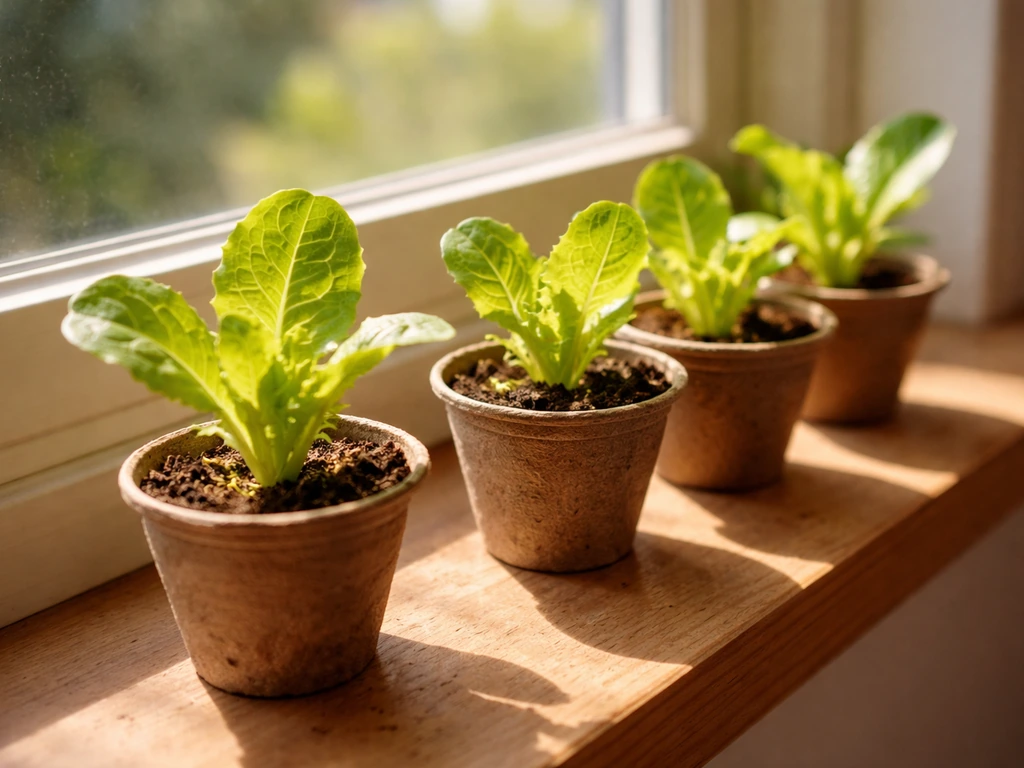
It is possible to grow lettuce without a grow light, but only if you have a genuinely bright window, ideally a south-facing or west-facing window that gets 4 to 6 hours of direct sun per day. A partial-shade tolerance of about 4 to 6 hours is confirmed in extension research, but understand that 'partial shade' is outdoor partial shade, which is still much brighter than most indoor window situations. In practice, a south-facing window in winter or early spring (when the sun angle is low) may not deliver enough light to keep plants from getting leggy. If your lettuce is stretching dramatically toward the light and the stems look thin and pale, your window is not bright enough on its own.
Using a grow light
A basic LED grow light takes the guesswork out of indoor lettuce entirely. You do not need an expensive setup, a simple full-spectrum LED panel or even a T5 fluorescent strip light hung 6 to 12 inches above the plants is enough. Run the light for 14 to 16 hours per day and give plants 8 hours of darkness. A timer makes this effortless and prevents the common mistake of accidentally giving plants too many hours of light (yes, that can trigger bolting). Research from NDSU supports using a 16 to 18 hour photoperiod for indoor lettuce under artificial light to hit adequate light quantity, while still allowing plants a rest period overnight.
Watering, temperature, airflow, and feeding
Watering
Lettuce likes to stay consistently moist but not soggy. The practical rule: check the top half-inch to 1 inch of soil. When the top quarter-inch has dried out, it is time to water. When you do water, water thoroughly, wet the entire root zone until water drips freely from the drainage holes, then stop. Do not let the pot sit in a puddle. Lettuce is more sensitive to drying out than drought-tolerant herbs, so it needs more consistent attention than, say, a pot of rosemary on the same windowsill.
Temperature
Lettuce is a cool-season crop and actually prefers temperatures most people find slightly chilly. The sweet spot is 60 to 70°F during the day and somewhere around 45 to 55°F at night. Most homes run warmer than this, especially in summer, which is the primary reason indoor lettuce bolts faster than expected when the heat kicks on or the seasons shift. If your home stays above 75°F consistently, expect shorter harvests and faster bolting. Placing your container near a cooler window or an air-conditioned room can extend your growing window significantly. Seeds germinate best around 55 to 65°F and typically emerge within 7 to 10 days.
Airflow
Stagnant air indoors encourages fungal problems and can stress plants. You do not need a dedicated fan, but occasionally opening a window or placing a small fan on low nearby for a few hours a day makes a real difference, especially if you are growing in a humid bathroom or basement. Good airflow also strengthens stems, which helps if your plants are getting a little leggy from lower light.
Feeding
If you are using a potting mix with starter fertilizer, you probably will not need to add nutrients for the first three to four weeks. After that, a half-strength liquid fertilizer every two weeks keeps growth steady. Lettuce does not need heavy feeding, too much nitrogen can actually push soft, disease-prone growth. A balanced liquid fertilizer or one slightly higher in nitrogen works well for leafy greens.
Planting timeline, spacing, and harvesting
Planting depth and spacing
Sow seeds about 1/8 to 1/4 inch deep, barely covered with soil is the right depth. Lettuce seeds are tiny and need light to germinate well, so planting too deep is a common beginner mistake. Space plants 6 to 8 inches apart for full-sized loose-leaf heads, or sow more densely (about 1 inch apart) if you plan to harvest as baby greens. Thin seedlings when they reach 3 to 4 true leaves, cutting extras at soil level rather than pulling so you do not disturb neighboring roots.
Timeline from seed to harvest
Here is a realistic timeline for indoor lettuce grown from seed. Germination takes 7 to 10 days. Baby leaf size (small but harvestable) is typically reached around 3 to 4 weeks. Full loose-leaf size is around 45 to 60 days for most varieties. If you start with 3 to 4 week-old transplants instead of seeds, you can shave a month off that timeline and get to harvest much faster. For continuous harvests, sow a new small batch every 2 to 3 weeks.
How to harvest
The best approach for indoor lettuce is the cut-and-come-again method. Use clean scissors or a knife and cut outer leaves about an inch above the soil line, leaving the center growing point intact. The plant will regrow and you can harvest again in another week or two. You can keep a single plant producing for 8 to 12 weeks this way before it bolts. Once you see a central stalk emerging and the leaves getting smaller and more pointed, the plant is bolting and the leaves will turn bitter, harvest everything remaining at that point and start fresh.
When things go wrong: common indoor lettuce problems
Leggy, stretched plants
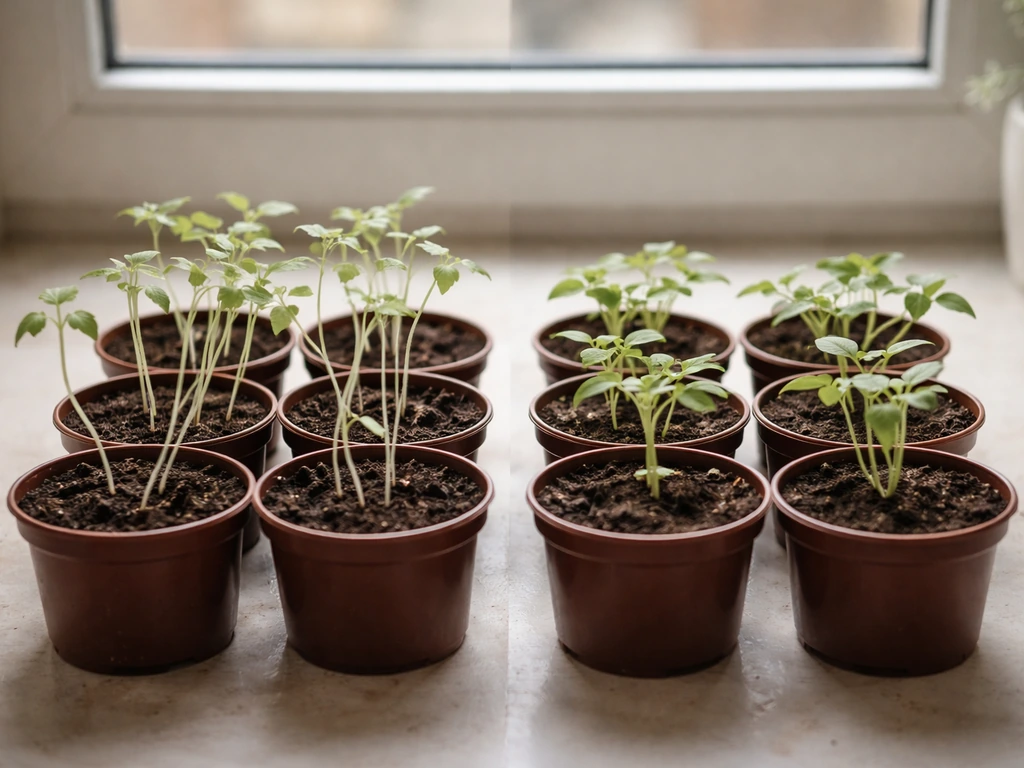
If your seedlings are tall, thin, and flopping over, they are not getting enough light. Move them closer to your light source or increase your grow light's daily run time. If you are relying on a window, consider adding a reflective surface (even white cardboard) on the opposite side to bounce light back toward the plants. This is the most common indoor lettuce problem and the fix is almost always more light.
Bolting (plant goes to seed too fast)
Bolting is triggered by heat and long days. If your home is warm (above 70 to 75°F) or your grow light is running too many hours, the plant will shoot up a flower stalk quickly. Lower the temperature if possible, reduce light hours to 14 to 16 per day, and choose bolt-resistant varieties labeled as 'slow-bolt' for future plantings. Once a plant has bolted, the leaves are too bitter to enjoy, harvest what you can and replant.
Yellow leaves
Yellowing can mean a few different things. If lower, older leaves are yellowing while new growth looks fine, that is usually normal leaf senescence or a minor nitrogen deficiency, start light liquid feeding. If the whole plant looks pale and yellow, it is almost certainly a light problem combined with possible overwatering. Check that your drainage is working, let the soil dry slightly between waterings, and increase your light exposure. Yellow leaves with green veins can indicate a micronutrient issue, usually iron, often caused by soil pH being too high, a peat-based mix typically keeps pH in the right range for lettuce.
Pests indoors
Indoor lettuce is much less pest-prone than outdoor lettuce, but fungus gnats are the most common nuisance. They breed in moist soil and while the adults are harmless, the larvae can damage roots in large numbers. Let the top inch of soil dry out between waterings to break their life cycle, this alone solves most fungus gnat problems. Aphids occasionally hitch a ride on new plants or fresh herbs brought in from outside. A strong spray of water to knock them off, followed by a diluted neem oil spray, handles most infestations without chemicals that could affect leaves you are about to eat.
Damping off and rot
If seedlings suddenly collapse at the soil line, that is damping off, a fungal issue caused by overly wet, poorly ventilated conditions. It moves fast and there is no saving affected seedlings, so prevention is everything. Use fresh sterile potting mix (never reuse old mix for seeds), do not overwater early-stage seedlings, and keep air moving. If you have had damping off problems, running a small fan low for a few hours a day near your seedling tray makes a significant difference.
A quick comparison: indoor growing methods at a glance
| Method | Best for | Light needed | Effort level | Harvest speed |
|---|
| Window box / windowsill pot | Apartments, small spaces | Bright south/west window (4-6 hrs direct) | Low | 45-60 days from seed |
| Container with grow light | Any space, most reliable results | LED or T5 grow light, 14-16 hrs/day | Low-medium | 40-55 days from seed |
| Grow bag indoors | Renters, flexible setups | Grow light recommended | Low | 40-55 days from seed |
| 5-gallon bucket indoors | Single variety deep harvest | Grow light or very bright window | Low | 45-60 days from seed |
| Hydroponic indoor system | Fastest growth, year-round | Grow light essential | Medium-high | 30-40 days from seed |
For most beginners, a simple container or window box with a basic LED grow light is the sweet spot, low cost, low effort, and reliable results. If you are committed to a window-only setup, make it your sunniest south-facing window and choose fast-maturing, shade-tolerant loose-leaf varieties to give yourself the best possible odds.
Your next steps to get started today
- Pick a loose-leaf or butterhead variety — look for 'slow-bolt' or 'baby leaf' on the seed packet for the best indoor performance.
- Choose a container at least 6 inches deep with multiple drainage holes. A window box or wide rectangular planter gives you the most growing surface.
- Fill it with a quality peat-based potting mix that includes perlite or vermiculite. Do not use garden soil.
- Set up your light. If you have a strong south-facing window, test it for a week. If seedlings start stretching toward the light, get a basic LED grow light and run it 14 to 16 hours per day on a timer.
- Sow seeds 1/8 to 1/4 inch deep and keep the soil consistently moist but not soggy. Expect germination in 7 to 10 days at 60 to 65°F.
- Thin to 6 to 8 inches apart once seedlings have 3 to 4 true leaves, and start harvesting outer leaves at 4 to 6 weeks.
- Sow a fresh batch every 2 to 3 weeks to keep a continuous supply of young, productive plants on your counter.