Bitter lettuce almost always comes down to one of four things: too much heat, inconsistent watering, not enough nitrogen, or harvesting too late. Fix those four things and you'll get sweet, tender leaves almost every time. The good news is that every single one of these problems is preventable, and most of them are fixable even mid-grow if you catch them early enough.
How to Grow Lettuce That Is Not Bitter: Fixes and Tips
Marcus Holloway
23 Jun 2026
Why lettuce turns bitter in the first place
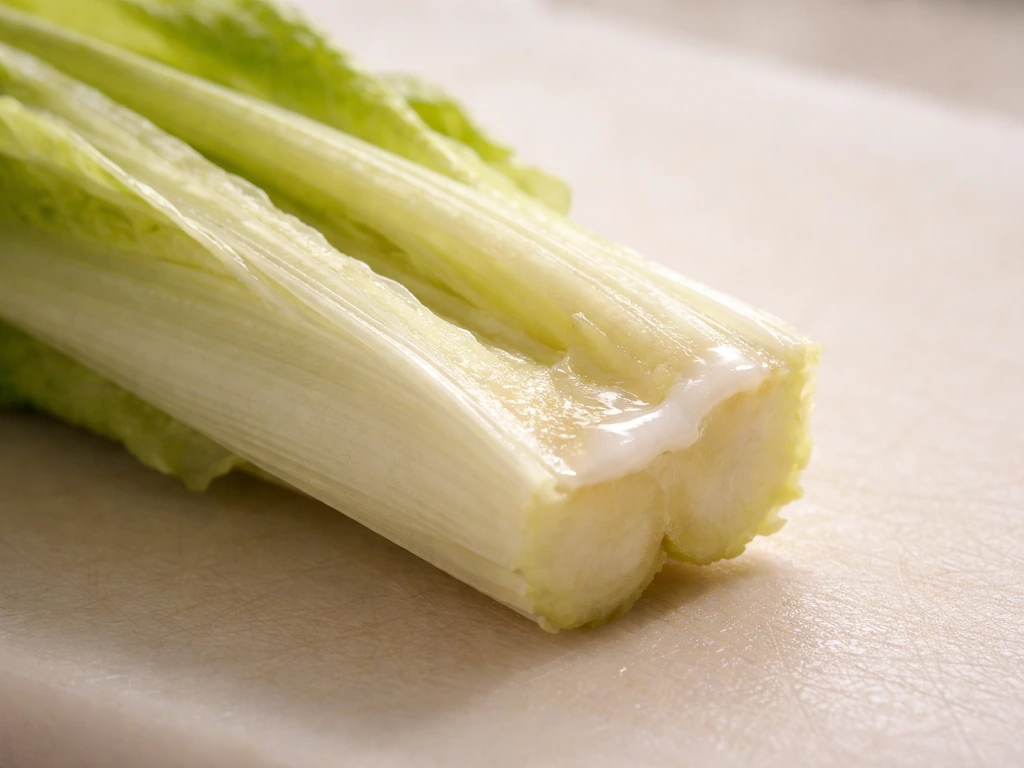
Lettuce bitterness is caused by sesquiterpene lactones, the main one being a compound called lactucin. Lactucarium is made up of bitter compounds associated with lettuce latex, including sesquiterpene lactones such as lactucin and lactucopicrin. You can actually see it in action: cut or snap a lettuce stem and you'll notice a white milky sap. That's the latex, and it's loaded with these bitter compounds. Under normal, cool growing conditions the plant produces very little of it. Under stress, production ramps up fast.
Heat is the biggest trigger by far. Once daytime temperatures push consistently above 75-80°F, the plant starts shifting its energy toward flowering and seed production (called bolting). University of Minnesota Extension is pretty direct about this: once a lettuce plant flowers, the foliage becomes bitter and the head is essentially done. The plant isn't trying to be edible anymore. It's trying to reproduce.
Water stress runs a close second. Too little water concentrates the bitter compounds in the leaves. But interestingly, wildly inconsistent watering (dry then soaked then dry again) causes almost as much stress as drought alone. The plant reads that inconsistency as a threat and responds accordingly.
Nutrient imbalance is the third cause, and it's the one most beginners miss. Lettuce is a leafy crop, which means it needs a steady supply of nitrogen to keep pushing out new green growth. When nitrogen runs low, growth slows, older leaves toughen up, and bitterness increases. In hydroponics specifically, the problem can also run in the opposite direction: too much dissolved salts in the nutrient solution (from over-feeding or insufficient reservoir changes) also makes leaves taste bitter, even when the plants look healthy.
Finally, harvesting too late is a major culprit that's easy to overlook. Outer leaves left on the plant past their peak get progressively more bitter over time, especially in warm weather. Most gardeners wait too long because the head looks like it could keep going. It usually can't, and those outer leaves are already past their best.
Choose the right varieties and time your sowing well
Variety selection matters more than most people realize. Some types of lettuce are genetically more heat-tolerant and slower to bolt than others. Loose-leaf types like 'Black Seeded Simpson', 'Oak Leaf', and 'Salad Bowl' are generally more forgiving in warm conditions than heading types like iceberg. Butterhead varieties like 'Buttercrunch' and 'Tom Thumb' sit in the middle. Romaines tend to be moderately heat-tolerant and hold their flavor well. If you want dedicated sweet flavor with minimal bitterness risk, look specifically for varieties marketed as heat-tolerant or slow-bolt, such as 'Nevada', 'Concept', or 'Muir'. Salanova-type lettuces are also bred with consistent flavor and slow bolting in mind.
Timing is the other half of this equation. In most climates, the best lettuce is grown in the cool shoulder seasons: spring (sow 4-6 weeks before your last frost date) and fall (sow 6-8 weeks before your first frost). In summer, the goal shifts from avoiding heat to managing it. For summer growing, look at heat-tolerant varieties and plan to use shade cloth or grow indoors where you can control temperature. For indoor and hydroponic growers, timing matters less because you're controlling the environment, but you still want to keep ambient temps in the ideal range.
Succession sowing is one of the most effective things you can do if bitterness is a recurring problem. Instead of planting a big batch at once and then scrambling to use it before it bolts, sow small amounts every 2-3 weeks. That way you're always harvesting young, sweet leaves rather than racing to keep up with a huge crop that's all bolting at the same time.
Get the growing conditions right: temperature, light, and airflow
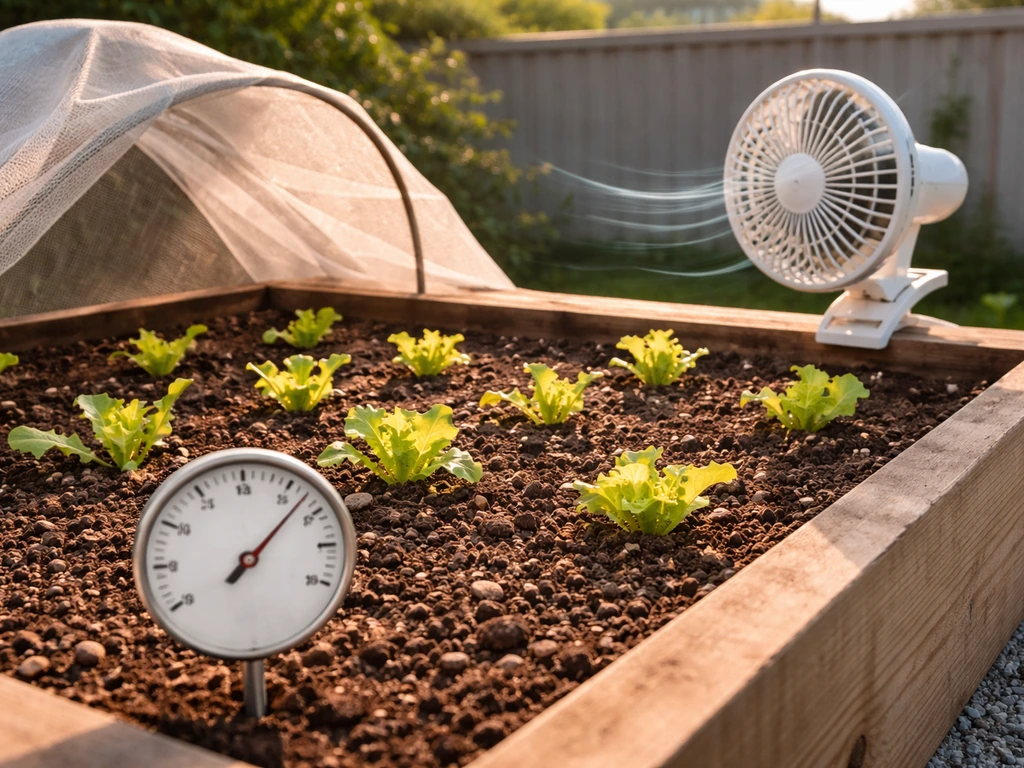
UC IPM puts the ideal lettuce temperature at around 73°F during the day and 45°F at night. That's a wide swing, and it reflects how much lettuce genuinely loves cool nights. In practice, most home growers are aiming to keep daytime temperatures below 75°F whenever possible. Above that range, bolting risk climbs quickly. Above 80°F consistently, you're fighting an uphill battle with most standard varieties.
Outdoor and balcony growing
For outdoor beds and balcony containers, the most practical tools are shade cloth and strategic placement. A 30-40% shade cloth stretched over your lettuce bed during the hottest part of the day (usually 11am-3pm) can drop the leaf surface temperature by 10°F or more. East-facing spots that get morning sun but afternoon shade are ideal in summer. If you're on a balcony with a south or west-facing exposure, containers can be moved or shielded. Row covers (lightweight floating row cover, not the frost-protection kind) also help in shoulder seasons by buffering temperature swings overnight.
Don't crowd your plants. Proper spacing (about 8-10 inches apart for loose-leaf types, 10-12 inches for butterheads, up to 14 inches for romaines) allows airflow that helps keep the canopy cooler and reduces humidity that can lead to disease. Crowded lettuce traps heat and stress compounds faster.
Indoor containers and hydroponics
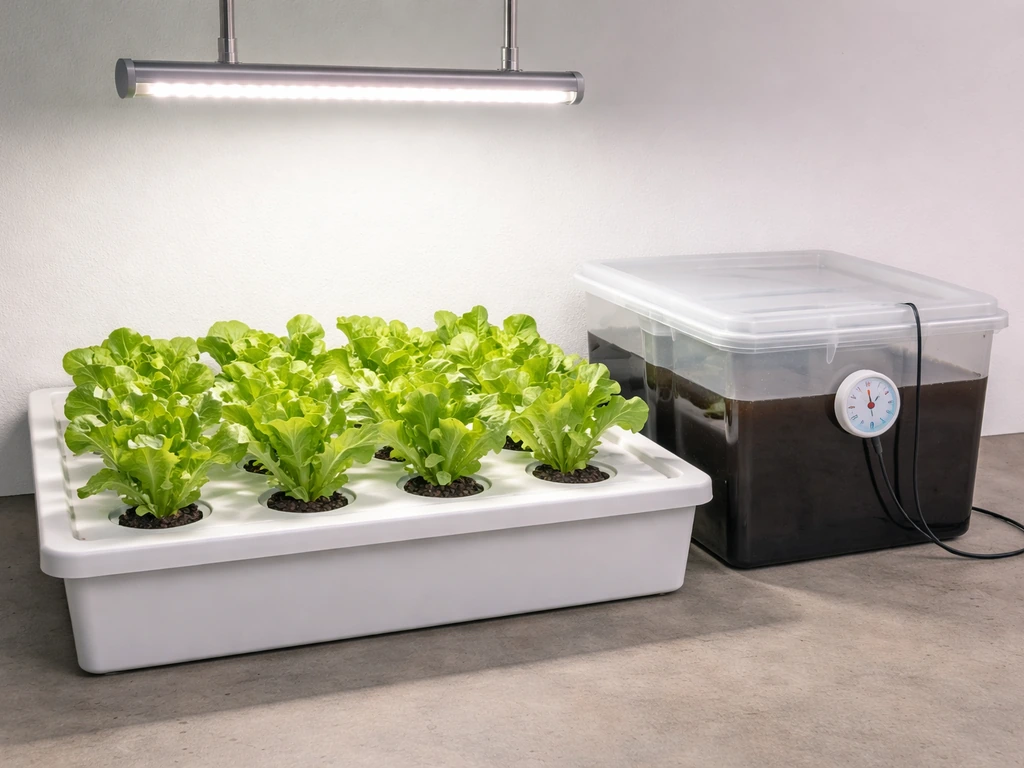
Growing indoors gives you much more control, but light management becomes the main variable. For grow lights, lettuce needs around 12-16 hours of light per day at moderate intensity (roughly 200-400 µmol/m²/s PAR is plenty). Running lights too long or too intensely, especially combined with warm room temperatures, can trigger the same stress response as outdoor heat. Keep your grow space below 70°F if possible. If your LEDs are generating heat, raise them higher above the canopy or add a small fan to improve airflow. That fan also strengthens stems and prevents the stagnant air that speeds up bolting.
Hydroponic growers: pay close attention to your nutrient solution temperature as well. Reservoir water above 68-70°F encourages root stress, oxygen depletion, and root rot, all of which translate quickly into bitter, off-flavored leaves. Keep your reservoir cool, ideally between 60-68°F, and consider a reservoir chiller or insulating the tank if your space runs warm.
Watering and feeding for sweet, tender leaves
Consistent moisture is non-negotiable for sweet lettuce. The goal is to keep the root zone evenly moist but never waterlogged. In a container or raised bed, that usually means watering every 1-2 days in warm weather, or whenever the top inch of soil feels dry. Mulching around your plants with straw or shredded leaves helps retain soil moisture and keeps root zone temperatures lower, both of which directly reduce bitterness risk.
For in-ground or raised bed growers, drip irrigation or soaker hoses are worth considering if you find yourself forgetting to water or dealing with uneven moisture. Inconsistency is the enemy. Even one or two days of significant drought stress during hot weather can push a plant toward bolting.
Getting the nutrition right
Nitrogen is the key nutrient for leafy greens. Lettuce needs a steady but not excessive supply throughout its growth. For soil growers, work a balanced fertilizer (something like a 10-10-10 or a vegetable-specific blend) into the soil before planting, then side-dress with a nitrogen-focused fertilizer every 3-4 weeks. Liquid fish emulsion or a water-soluble vegetable fertilizer diluted to half-strength is gentler and less likely to cause issues than heavy granular applications.
For hydroponic growers, use a nutrient solution formulated for leafy greens and keep your EC (electrical conductivity) in the right range for lettuce, typically 0.8-1.6 mS/cm for most varieties. Going too high concentrates salts in the leaves and creates that sharp, unpleasant bitterness even when plants look fine. Change your reservoir every 7-10 days and top off with plain water (not more nutrient solution) between changes to avoid salt buildup. Reddit's hydroponic community flags this frequently: the bitter taste that shows up without obvious bolting is often a salt accumulation problem.
Harvest timing and technique make a big difference
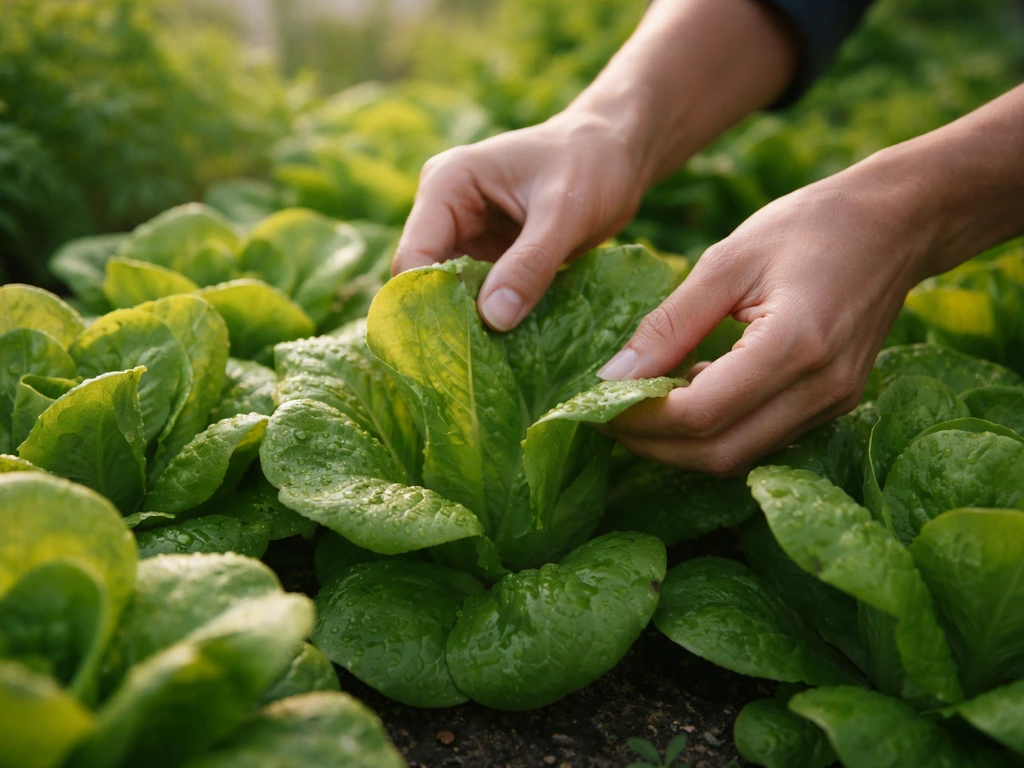
The single best harvesting strategy for sweet lettuce is the cut-and-come-again method. Instead of waiting to harvest the whole head, pick individual outer leaves once they're 3-4 inches long, leaving the growing center (the crown) intact. Salanova lettuce also benefits from the same approach: keep conditions cool, water consistently, and harvest the outer leaves before they get stressed. This keeps the plant in active vegetative growth mode, which delays bolting and ensures you're always eating the youngest, sweetest leaves. For loose-leaf varieties especially, you can do this every week or so and keep a plant productive for weeks.
Harvest in the morning when leaves are coolest and most hydrated. Leaves picked in the heat of the afternoon are already slightly stressed and will taste more bitter and wilt faster after cutting. Morning-harvested lettuce also stores better in the refrigerator.
If you're growing heading types (butterhead, romaine, round lettuce), harvest the whole head as soon as it feels firm and full, before the center starts to push upward and elongate. For tips on getting the smoothest, sweetest heads, see our guide on how to grow round lettuce. That upward elongation is the first visible sign of bolting, and it happens fast once it starts. Once you see it, harvest immediately, even if the head seems small. Bitter leaves at 80% size beat inedible leaves at 100%.
After harvest, rinse leaves in cold water and spin or pat dry, then refrigerate immediately. Keeping harvested lettuce cold slows the oxidation that intensifies bitterness in cut leaves. Properly stored at 35-40°F, fresh lettuce stays sweet and crisp for 5-7 days.
Quick fixes if your lettuce is bitter right now
If you're dealing with bitter lettuce already in the ground or in your containers, here's how to diagnose what's actually happening and what to do about it today. Follow these same steps for lollo rosso lettuce, too, since it needs cool conditions and consistent moisture to stay sweet how to grow lollo rosso lettuce.
| Problem | Most likely cause | What to do right now |
|---|---|---|
| Leaves taste uniformly bitter, plant bolting (center elongating) | Heat stress / bolting triggered | Harvest immediately, even if small. Add shade cloth. For next planting, choose a heat-tolerant variety and sow earlier or later in the season. |
| Leaves taste peppery or sharp but plant looks normal | Salt buildup (hydroponics) or nitrogen deficiency (soil) | Hydro: drain and replace reservoir with fresh solution at correct EC. Soil: water deeply to flush, then apply diluted nitrogen fertilizer. |
| Outer leaves bitter but inner leaves okay | Outer leaves overmature or heat-stressed | Strip and compost the outer leaves. Harvest inner leaves immediately using cut-and-come-again. Improve shading. |
| Slow growth, pale leaves, bitter taste | Nitrogen deficiency | Apply liquid nitrogen fertilizer (fish emulsion or water-soluble vegetable fertilizer) at half-strength. Check soil moisture consistency. |
| Leaf edges browning, leaves taste bitter | Tip burn from calcium deficiency or heat/airflow issues | Improve airflow with a fan (indoors) or spacing. Ensure consistent watering. Tip burn in hydroponics often signals poor solution circulation near roots. |
| Bitter taste despite cool temperatures and good watering | Harvesting too late or variety is naturally more bitter | Switch to cut-and-come-again harvesting. Try naturally sweeter varieties like butterhead types for your next planting. |
Things to check and change today
- Check your daytime temperature. If it's consistently above 75°F where your lettuce is growing, add shade cloth or move containers to a cooler spot.
- Look at the center of your lettuce plants. If the center is elongating or pushing upward, that plant is bolting. Harvest it now.
- Feel the soil. If it's dry an inch below the surface, water immediately and add mulch to retain moisture going forward.
- If you're growing hydroponically, check your EC meter. Above 1.8 mS/cm is too high for most lettuce. Dilute your solution or do a full reservoir change.
- Pull the oldest outer leaves off any plant that's been in the ground more than 6 weeks. Taste one. If it's bitter, harvest the whole plant rather than waiting.
- Look at your spacing. If plants are closer than 8 inches apart, thin them out to improve airflow and reduce heat buildup.
Most bitter lettuce problems are fixable before they ruin a whole crop, but timing matters. The earlier you catch a bolting plant or a stressed container, the more you can salvage. And for your next sowing, the combination of a slow-bolt variety, consistent watering, good airflow, and harvesting young leaves early will get you sweet lettuce almost every time.
FAQ
My lettuce gets bitter even though I water regularly, what else could be causing it?
Check for hidden stress like high nighttime temperatures (bolting risk rises when nights do not cool), crowded plants that trap heat, and nitrogen timing (too little or delayed side-dressing). Also taste one leaf from the center and one from an outer edge, if both are bitter it often points to temperature stress or nutrient imbalance, not just old outer leaves.
Can I save lettuce that is already starting to bolt or flower?
Yes, partially. If you see early signs like center elongation, harvest immediately (even if the head is small) and switch to cut-and-come-again outer leaf picking only if it is not fully flowering. Once it is actually flowering, the flavor usually keeps degrading quickly, so focus on salvaging what is still tender rather than trying to “wait it out.”
How can I tell if bitterness is from old leaves versus a nutrient or salt problem?
If only the oldest outer leaves taste bitter while inner leaves remain sweet, it is usually age and late harvest. If the whole plant tastes sharp or harsh soon after new growth appears, suspect nutrient issues, especially in hydroponics (salt buildup from high EC or infrequent reservoir changes), or overly warm growing conditions.
What watering schedule prevents inconsistency without overwatering?
Use the “top inch” rule for soil and aim for evenly moist soil, not saturated. In warm weather, that often means watering more frequently, but if runoff is frequent you may be overdoing volume. For containers, check moisture daily, because container soils swing faster than in-ground beds.
Should I remove bitter leaves or leave them on the plant?
For loose-leaf types, remove the bitter outer leaves and keep harvesting the youngest leaves. For heading types, leaving bitter outer layers can discourage fresh, tender growth and it will not improve flavor. Remove them and focus on rapid harvest before additional bolting signs appear.
Do coffee grounds, compost tea, or homemade fertilizers help with bitterness?
They can, but they are unreliable for the key requirement, steady nitrogen. Compost and organic amendments can also vary batch to batch, which may recreate the imbalance that increases bitterness. If you want to use organics, apply a predictable, measured nitrogen-rich fertilizer and avoid “extra” feedings right as temperatures rise.
I’m growing in a heat wave, what’s the quickest intervention when lettuce starts tasting bitter?
Act immediately on microclimate: add shade cloth during peak sun, water the root zone evenly (do not do sudden dry-then-soak), and improve airflow to cool the canopy. If indoor or under cover, lowering daytime temperature below about 75°F makes the biggest difference quickly.
How do I avoid bitterness from grow light heat indoors?
If your room is warm, shorten the light cycle or raise the lights so leaf surface temperature drops. A small fan helps, but do not rely on airflow alone if the canopy is actually getting hot. Consider measuring air and leaf-adjacent temperatures, since LED heat can raise the immediate zone even when the thermostat looks okay.
What EC or fertilizer strength is safest for lettuce if I keep getting sharp flavors?
If bitterness appears without bolting, start by reducing EC and feeding strength rather than increasing fertilizer. For hydroponics, keep the nutrient within the lettuce range mentioned in the article and shorten cycles by refreshing the reservoir more consistently. If you use top-offs, remember they still raise salt concentration, so plain water top-offs and scheduled full changes matter.
Is lettuce bitterness related to how I store it after harvest?
Yes. Warm storage and delayed refrigeration accelerate flavor changes because cut leaves oxidize faster. Harvest in the morning, cool quickly, rinse and dry well, then store at fridge temperatures around 35-40°F so bitterness does not intensify after cutting.
Does saltiness from tap water ever make lettuce bitter?
It can, especially in hydroponics and with frequent top-offs. If your water has high dissolved solids, it can gradually raise EC. Use an EC meter, and if bitterness trends with time, flush or refresh sooner, and consider adjusting water source or treatment to keep the root zone chemistry stable.
What spacing should I use if my lettuce tastes bitter in summer but looks okay?
Use the spacing guidance in the article as a starting point, and when heat is the issue, do not crowd. If leaves seem to overlap, you can lose airflow and the canopy warms, which ramps up stress compounds. Slightly wider spacing often improves flavor before you notice major wilting or bolting.