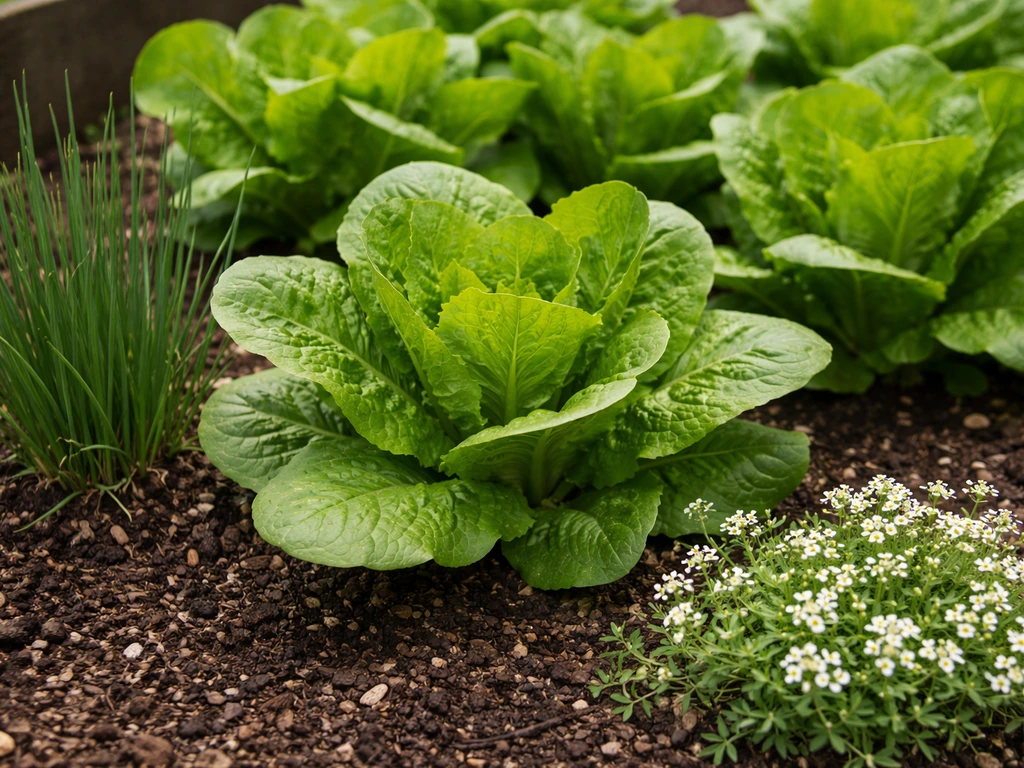
The best plants to grow with romaine lettuce are low-growing herbs like chives, cilantro, and dill; cool-season flowers like nasturtiums and marigolds; and compact greens like spinach and arugula. These companions stay short enough to avoid shading romaine, share similar watering needs (about 1–2 inches per week), and thrive in the same cool 60–70°F temperature window romaine prefers. Tall, heavy-feeding crops like corn, tomatoes, or brassicas are the ones to keep away.
What to Grow With Romaine Lettuce: Best Companion Plants
Marcus Holloway
28 May 2026
Why romaine is a tricky companion crop
Romaine looks like a tough, upright lettuce, and in some ways it is. But it has a narrow comfort zone that makes pairing it with the wrong neighbors a real problem. The ideal daytime temperature is 60–70°F, and once it pushes past 75°F, romaine starts thinking about bolting. Holmes Seed Company also notes that head lettuce, including romaine hearts, does best around 60, 70°F in the day and 45, 55°F at night, and that bolting risk rises when temperatures go above about 75°F ideal daytime temperature is 60–70°F. That rules out warm-season companions entirely unless you're planting them for succession after your romaine is done.
Romaine also has a shallow root system, which means it competes easily with anything planted too close that's tugging at the same top few inches of soil. It needs consistent moisture, about 1–2 inches of water per week, and that water needs to stay available near the surface. UMN Extension notes that lettuce has shallow root systems, so frequent watering helps support crisp growth and helps with salad crops' water management. Deep-rooted plants aren't the problem here so much as wide-spreading shallow feeders.
And then there's light. Romaine heads grow upright, which actually makes them slightly more tolerant of partial shade than loose-leaf types, but they still need good direct or bright indirect light for most of the day. A companion that overtops and shades the bed from the south side will stunt your romaine, slow its growth, and increase disease pressure from poor airflow. The most common mistake I see is planting a 'small' companion that ends up twice the height of romaine by week four.
Best companion plants for romaine
Stick to cool-season plants that stay short, don't hog nutrients, and bring something useful to the bed. These are the pairings that consistently work well.
Herbs that earn their space
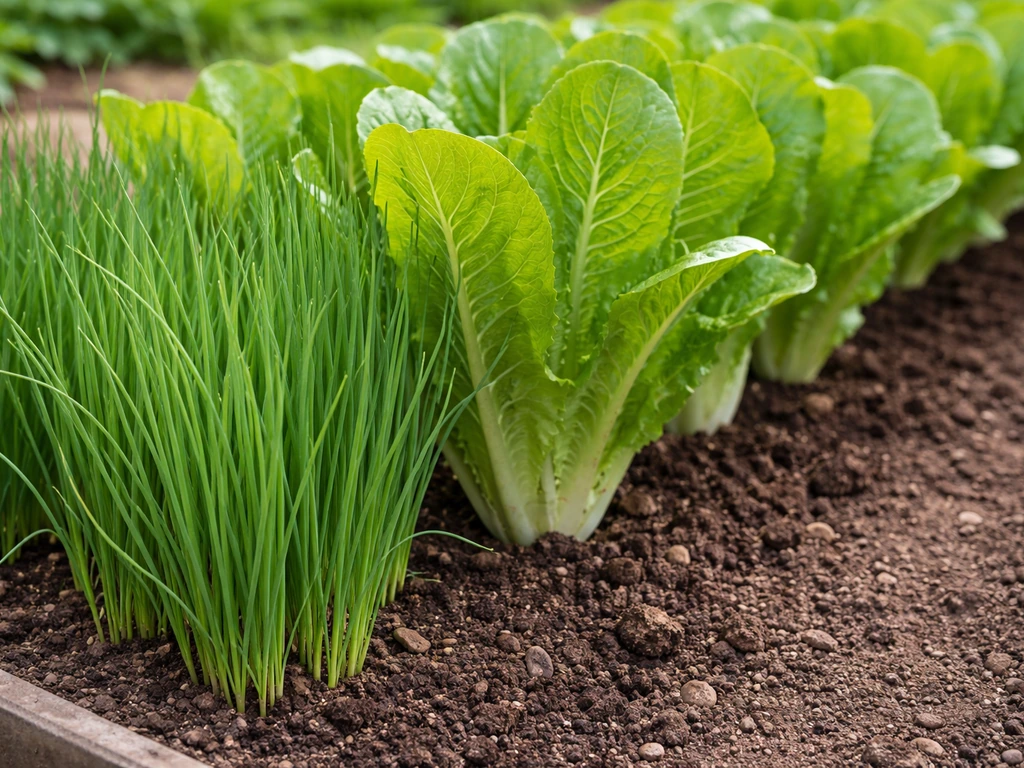
- Chives: Stay under 12 inches, repel aphids, and love cool weather. Plant them at the row edges so they don't crowd romaine crowns.
- Cilantro: Bolts quickly in heat (like romaine), so their seasons align well. Attracts beneficial wasps when it flowers. Let a few bolt on purpose.
- Dill (young): Young dill under 18 inches is fine. Don't let it get tall and feathery near your romaine, or it will cast shade and compete.
- Mint: Repels aphids and slugs, but plant it in a container sunk into the bed or it will take over everything within two seasons.
Greens and cool-season vegetables
- Spinach: Similar water needs, shallow roots, and cool-season timing. Works well in alternating rows.
- Arugula: Fast-growing and low. Provides a slightly different harvest window so you're not picking everything at once.
- Radishes: Ready in 3–4 weeks, loosens soil for romaine roots, and deters leaf miners. Pull them before they compete.
- Green onions/scallions: Narrow, shallow, and don't shade anything. One of the best bed companions romaine has.
Flowers worth adding
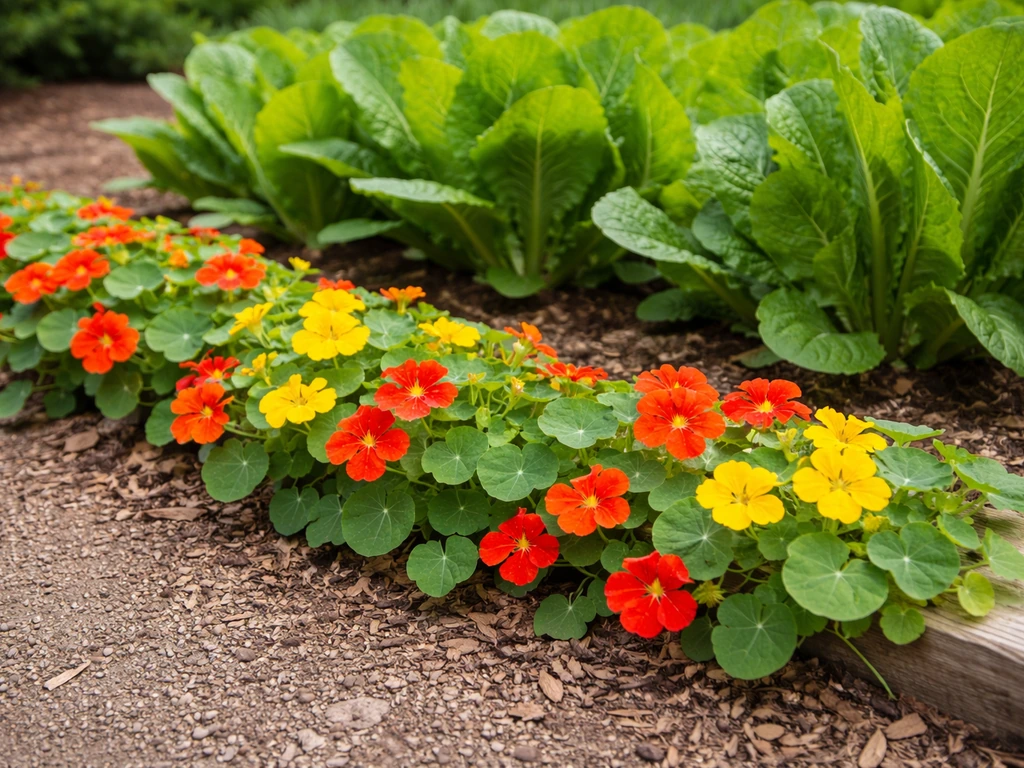
- Nasturtiums: Low trailing types stay compact. They attract aphids away from romaine (acting as a trap crop) and bring in predatory insects. Plant them at bed edges.
- Marigolds: Deter whiteflies and some soil pests. French dwarf varieties stay under 12 inches and won't shade romaine.
- Alyssum: Very low-growing, attracts hoverflies whose larvae eat aphids. Plant as a border or between rows.
Plants to keep away from romaine
Some plants will actively hurt your romaine crop, either by outcompeting it for water and nutrients, casting it into shade, or growing in a completely different temperature window.
| Plant to avoid | Why it's a problem | Better timing |
|---|---|---|
| Tomatoes | Tall, heavy feeders, warm-season only, will shade romaine completely | Plant after romaine is finished in summer |
| Corn | Extremely tall, heavy nitrogen feeder, wrong season entirely | Separate bed, warm season only |
| Broccoli/Cauliflower | Same cool season but large leaves cast heavy shade, compete strongly for nitrogen | Separate bed or plant romaine at the edge with care |
| Fennel | Allelopathic to most vegetables including lettuce, inhibits germination and growth | Keep fennel isolated from all lettuce |
| Squash/Zucchini | Massive leaves shade everything nearby, wrong season | Warm-season bed only |
| Sunflowers | Too tall, allelopathic root chemicals can affect lettuce | Separate area, plant after lettuce season |
Brassicas like broccoli and cabbage deserve a specific note. They're technically cool-season crops like romaine, so gardeners often try to pair them. The issue is that mature brassicas get large and leafy, compete hard for nitrogen, and their canopy can block light from romaine. If you grow them together, keep brassicas to the north side of the bed (in the northern hemisphere) so their shadow falls away from your romaine rows.
How to plant them together
Spacing that works
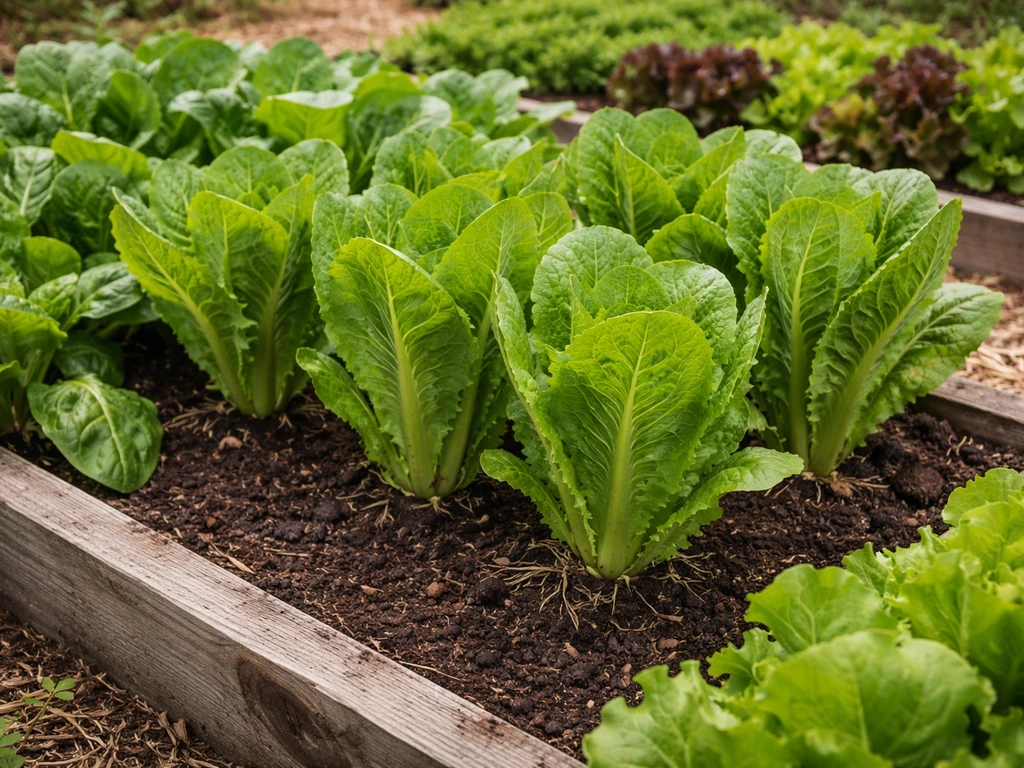
Romaine heads need 8–12 inches between plants in the row, with rows 12–18 inches apart. That's not a lot of extra room. When I'm placing companions in the same bed, I follow one rule: no companion plant gets within 6 inches of a romaine crown. That buffer matters for airflow and root space.
The most practical layout is to run romaine in a center row with companion plants (chives, alyssum, green onions) planted in the rows on either side. Edging flowers like nasturtiums and marigolds go at the perimeter of the bed entirely, not tucked between romaine plants.
Layering by height
- Ground level (under 6 inches): Alyssum, low thyme, young radish seedlings. These can go between romaine plants without shading.
- Low-growing (6–14 inches): Chives, green onions, spinach, dwarf marigolds. Keep these to the sides of romaine rows.
- Mid-height (14–24 inches): Young dill, cilantro in flower, nasturtium mounds. Position to the north side of the bed only.
- Taller than romaine: Avoid in the same bed. If you must include them, they go on the north or east side and you watch carefully for shading.
Succession timing for spring and fall
In spring, start romaine as early as the soil can be worked (around 40°F soil temperature), and plant cool companions at the same time. Radishes and spinach are your fastest options. As temperatures climb toward 75°F and bolting risk rises, pull the romaine and transition the bed. This is actually when warm-season crops can go in, so knowing what to grow after lettuce is worth thinking through before that moment arrives. When you transition out of romaine, choose cool-season crops or quick successions that match the same temperature window what to grow after lettuce.
In fall, time your romaine start so heads mature before frost. Count backward from your first expected frost date, usually planting 10–12 weeks out for full-size heads. Fall is often the better season for romaine companion planting because temperatures are more stable and pest pressure from aphids and leaf miners tends to drop as the season cools.
Pest and beneficial-insect pairings
Romaine's main pest problems are aphids, slugs, and leaf miners. Good companion planting directly targets all three.
| Pest or benefit | Companion to use | How it works |
|---|---|---|
| Aphids (repel) | Chives, garlic chives | Sulfur compounds deter aphids from landing on nearby leaves |
| Aphids (trap) | Nasturtiums | Aphids prefer nasturtiums, pulling them away from romaine. Inspect and squish colonies on nasturtiums regularly. |
| Aphids (predators) | Alyssum, cilantro in flower | Attracts hoverflies and parasitic wasps that eat or parasitize aphids |
| Slugs | Chives border, radishes | Slugs dislike allium plants; radishes create a physical barrier at soil level |
| Leaf miners | Radishes, nasturtiums | Radishes act as a decoy crop; nasturtiums attract parasitic wasps |
| Beneficial pollinators | Marigolds, alyssum, dill | Draws in generalist beneficials that help control multiple pest species |
The most important practical step here is letting some companions flower. A cilantro plant that bolts produces tiny flowers packed with nectar that draw predatory insects within days. I leave two or three cilantro plants per 4x8 bed specifically for this purpose, positioned so they don't shade the romaine below them.
What to do if companions start outcompeting or shading romaine
Even good pairings can go wrong if you let things run too long or plant too densely. Here's how to diagnose and fix the most common problems quickly.
- Romaine leaves are pale or yellowish and elongated: This usually means shade stress. Identify which companion has grown above the romaine canopy and either cut it back to below romaine height or remove it entirely.
- Romaine is wilting faster than normal between waterings: A companion with vigorous shallow roots is pulling moisture away. Check within 6 inches of the wilting plant, and if you find dense competitor roots, dig up the companion and replant it further away.
- Tip burn on romaine leaves: Often a calcium/airflow issue made worse by crowding. Thin companions to improve air circulation and make sure water reaches the romaine root zone, not just the companion's foliage.
- Slugs increasing around romaine: Remove any dense ground-cover companion plants that are creating hiding spots. Switch to border-only companions and apply diatomaceous earth around the romaine perimeter.
- Aphid colony found on romaine despite companion planting: Don't wait. Knock them off with a strong water spray first, then check whether your nasturtium trap crop is working. If aphids are on both, remove the heavily infested nasturtium stems immediately and introduce more alyssum for beneficial insect attraction.
The general rule with companion troubleshooting is: your romaine takes priority. If a companion is causing any of the above symptoms, remove or cut it back without hesitation. Companions are supposed to help, and if they're hurting, they go.
Container, indoor, and hydroponic companion options
Growing romaine in containers or indoors changes the companion planting game significantly. Space is limited, pests are usually less severe, and the benefit of companions shifts from pest management toward space efficiency and harvest variety.
Containers outdoors
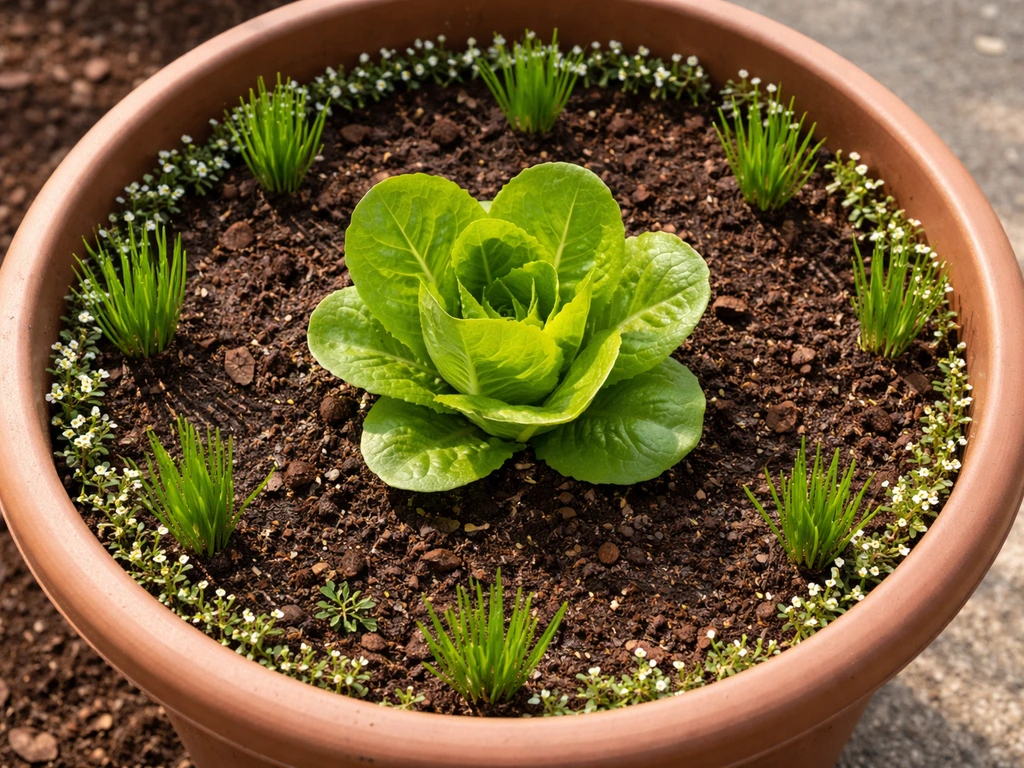
In a standard 12-inch or larger pot, you can grow one romaine plant with two or three chive clumps or a ring of alyssum around the edge. That's about all the space you have. Green onions work well in a separate adjacent pot placed right next to the romaine container, close enough that they share pollinator and pest deterrent benefits without competing for root space. Avoid cramming herbs into the same pot as romaine if the pot is under 12 inches in diameter.
Indoor growing
Indoors, pest pressure is low enough that the pest-repelling benefit of companions matters less. Focus instead on space-efficient companions that give you more to harvest. Chives and green onions in adjacent pots on the same windowsill or under the same grow light work well. Make sure your grow light covers both plants adequately: romaine needs at least 12–14 hours of light per day indoors, and companions should not be positioned to block that light source.
Hydroponic systems
In a hydroponic setup, romaine is genuinely one of the easiest crops to grow, and companion planting in the traditional sense works differently. In a multi-channel or raft system, you can grow chives, spinach, arugula, and green onions alongside romaine in adjacent channels or net cups. They share similar nutrient solution requirements (a balanced EC of around 1.2–2.0 is generally appropriate for leafy greens) and the same cool temperature preferences. Avoid placing basil in the same reservoir as romaine in hydro: basil prefers warmer temperatures and a slightly different pH range, which creates a conflict you can't easily resolve.
The biggest advantage of companion planting in hydroponics is variety: you get multiple types of greens from the same system and same harvest session without any of the root competition or shading issues you'd deal with in a soil bed. Just keep height in mind. If any companion plant in your system starts shading romaine under your grow lights, move it to the end of the channel or a different rack.
A simple layout you can use today
If you're starting from scratch and want a practical companion bed layout for romaine, here's what I'd plant in a 4x8 foot raised bed this spring or fall.
- Two center rows of romaine, spaced 10 inches apart in the row, rows 14 inches apart.
- One row of green onions or chives on each outside edge of the bed (keeping them 6 inches from the nearest romaine).
- Radishes interplanted between romaine plants in the rows at the start of the season, pulled by week 4 before they compete.
- Nasturtiums (low trailing variety) at all four corners of the bed exterior.
- Alyssum along the two short ends of the bed as a living edge.
- One or two cilantro plants at the north end of the bed, allowed to grow to flower height.
That layout gives you pest management, beneficial insect attraction, ground-level coverage to suppress weeds, and a multi-variety harvest without anything overtopping or crowding your romaine. It works whether you're growing a crisp romaine variety or trying one of the more delicate head types. And if you're curious about which romaine or head lettuce variety to start with, exploring the best head lettuce options for your climate is a useful next step alongside planning your companion planting setup. You can also find out whether butter lettuce is easy to grow before you decide what to plant next is butter lettuce easy to grow. If you want to make it even easier, start with the best lettuce to grow in the UK for your season and growing setup best head lettuce options for your climate.
FAQ
How many companion plants should I use with romaine in a 4x8 raised bed?
Use fewer than you think, because romaine spacing is tight (8–12 inches in-row, 12–18 inches between rows). A practical target is to dedicate the side rows to short companions (chives, green onions, alyssum) and keep flowering plants on the perimeter only, so you maintain at least a 6-inch buffer from each romaine crown and preserve airflow.
What is the safest way to add extra companions without increasing shade or root competition?
Add low-growing plants only, and treat height like a hard constraint. Place them in the side rows or along the bed edges, never tucked between romaine plants. If you cannot keep companions at least 6 inches away from the crown, omit them or move them to a separate strip bed.
Can I grow romaine with dill, even though dill can get tall?
Yes, but only if you control size. Pinch or harvest dill early and avoid letting it reach romaine height by week four. If dill naturally grows upright in your conditions, switch to lower herbs like chives or cilantro and use dill mainly in a perimeter row.
Do I need to remove cilantro when it bolts, or will it still help?
Keep some bolting cilantro on purpose. The tiny nectar-rich flowers attract beneficial insects that help with aphids and other pests, but you should ensure it does not shade the romaine heads. If the plant is overtopping, cut it back or relocate it to the bed edge.
What should I do if romaine starts bolting while my companions are still growing?
Priority goes to romaine. Remove or thin companions that are still growing large and reduce competition for water and nutrients. Then address heat quickly by shifting to succession planting with cool-season crops or replacing romaine before temperatures stay above 75°F.
Are brassicas like kale and broccoli ever okay near romaine?
They can be risky because mature brassicas get leafy and nitrogen-demanding, and their canopy can block light. If you try them, keep them on the north side (for the northern hemisphere) and far enough away that their shadow and roots do not reach the romaine row. In many gardens, it is simpler to keep brassicas in a separate bed.
How close can I plant companions to the romaine crown if they are shallow-rooted too?
Keep a minimum 6-inch gap from each romaine crown. Even low-growing plants compete in the top few inches, so closer spacing increases dry-out and nutrient competition, especially during warm spells when romaine moisture needs stay high.
Should I water companions and romaine the same way, or adjust for different plants?
Match irrigation to romaine, which needs consistent surface-available moisture (about 1–2 inches per week). If a companion dries out faster, you may be tempted to water more, but that can stress romaine. Instead, choose companions that tolerate the same cool-season schedule and avoid adding thirsty plants.
What is the best companion choice if my garden runs slightly hotter than 70°F?
Choose the most heat-tolerant cool-season helpers that also stay short, like chives, alyssum, and green onions, and skip anything that can overtop. If you regularly exceed 75°F, lean harder on succession timing so romaine matures before bolting risk rises.
Can I companion plant with romaine in containers, and how much space do I need?
Yes, but treat containers like a space budget. In a pot 12 inches or larger, grow one romaine plant with two to three chive clumps or a ring of alyssum at the edge. Put green onions in a separate adjacent pot, and avoid cramming multiple herbs into the same pot if the diameter is under 12 inches.
Do companion plants help indoors if pests are less of an issue?
They help less for pest control, so focus on space efficiency and harvest variety. Use chives or green onions in adjacent pots and ensure the grow light covers both plants. Also prevent companions from blocking the light path, because romaine typically needs 12–14 hours of light indoors.
In hydroponics, which companions are most compatible with romaine?
Romaine pairs well with other cool-season leafy greens like chives, spinach, arugula, and green onions in adjacent channels or net cups. Keep an eye on shading under the grow lights, and avoid basil in the same reservoir because its temperature and pH preferences tend to conflict with romaine.
If my romaine is stunted, how do I decide whether it is a companion problem or a spacing problem?
First check height and shading, especially on the south side (or in the direction of strongest sun). Next verify crown spacing and the 6-inch buffer from companions. If light and spacing look correct but growth is still slow, thin or remove the largest companion plant since root and nutrient competition in shallow soil can lag behind visible shading.