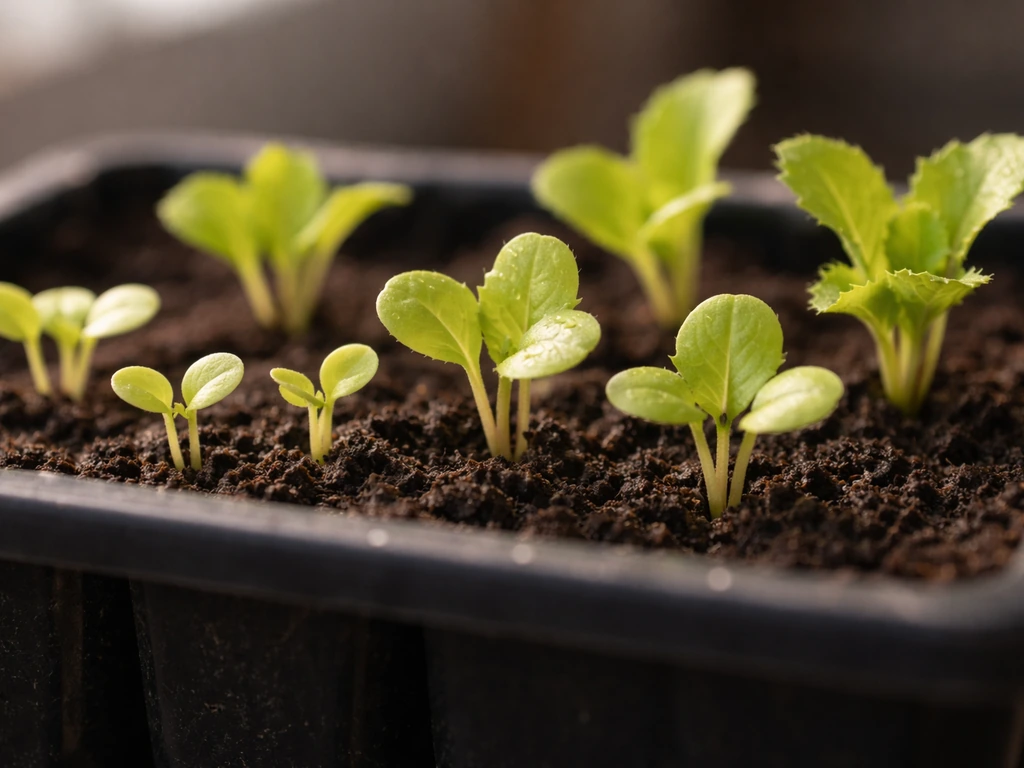
When lettuce first sprouts, you'll see a tiny stem pushing up with two small, oval, pale green leaves sitting symmetrically on top. Those are cotyledons, the seed leaves packed inside every lettuce seed. They're smooth, simple, and nothing like the ruffled or romaine leaves you're expecting. This is completely normal. Within one to three weeks after those cotyledons fully open, a second set of leaves emerges from the center, and that's when you can start to tell what kind of lettuce you're actually growing.
What Lettuce Looks Like When It Starts to Grow
Marcus Holloway
20 May 2026
What lettuce seedlings look like right after germination
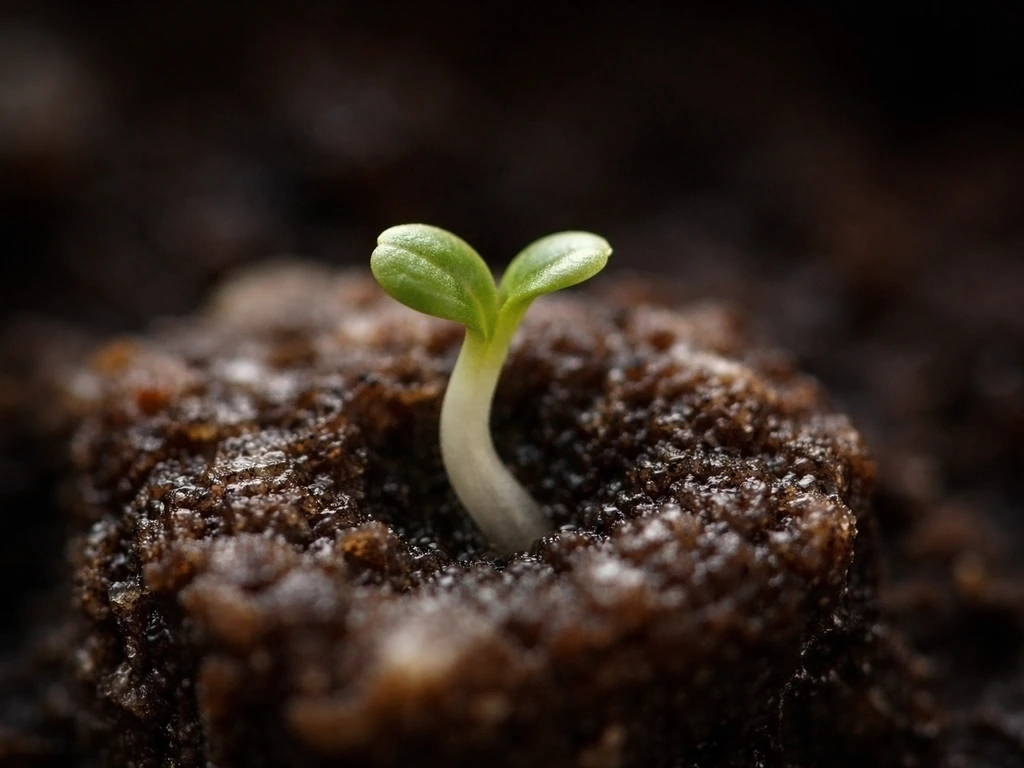
Germination itself happens underground, so the first visible sign is a tiny curved stem (the hypocotyl) pushing through the soil surface. It looks like a pale green or whitish hook. Within a day or two of breaking the surface, that hook straightens and the two cotyledons spread open. At this point the whole seedling is usually only about half an inch to an inch tall.
The cotyledons are the giveaway that something has sprouted, but they look almost identical across most vegetable seedlings, which is why beginners often can't tell lettuce from weeds at this stage. Lettuce cotyledons are specifically: oval to slightly oblong, smooth-edged, light green, and paired symmetrically. The stem beneath them is very thin and delicate. You may also notice the empty seed coat (the hull) clinging to one of the cotyledon tips for the first day or two before it drops off.
Expect germination to take anywhere from 3 to 15 days depending on your soil temperature. At the sweet spot of 65 to 70°F (18 to 21°C), most lettuce varieties push up cotyledons in about 5 to 7 days. If your soil is cooler, closer to 55°F (13°C), give it up to two weeks before worrying. At temperatures above 75 to 80°F, germination slows dramatically and can fail altogether because lettuce has a built-in heat dormancy mechanism.
First true leaves: the stage you can actually identify lettuce
The cotyledons sustain the seedling until photosynthesis gets going. After they fully expand, the growing tip in the center of the plant starts pushing out the first true leaves, typically one to three weeks after germination. If you want a full picture of how do lettuce grow from seed to harvest, keep an eye on true-leaf stage, light, and consistent moisture. This is the stage where lettuce starts looking like lettuce.
True leaves come in from the center of the seedling and are clearly different from the cotyledons. They're slightly lobed or wavy at the edges, and depending on the variety, they may already show a hint of the adult leaf texture. The plant will still be small, maybe 1 to 2 inches tall with the true leaves just emerging, but the overall shape becomes more recognizable. The color deepens to a richer, more saturated green (or in red-tinted varieties, you may start to see the first blush of red or bronze at the leaf tips).
Once you have two true leaves fully formed, the seedling is robust enough to thin, transplant, or begin feeding with a dilute nutrient solution if you're growing hydroponically. Once you have two true leaves, you can follow the growing journey lettuce takes from seedlings toward harvest. Before that point, the seedling is fragile and you're mostly just keeping conditions stable.
How early growth looks different by lettuce type
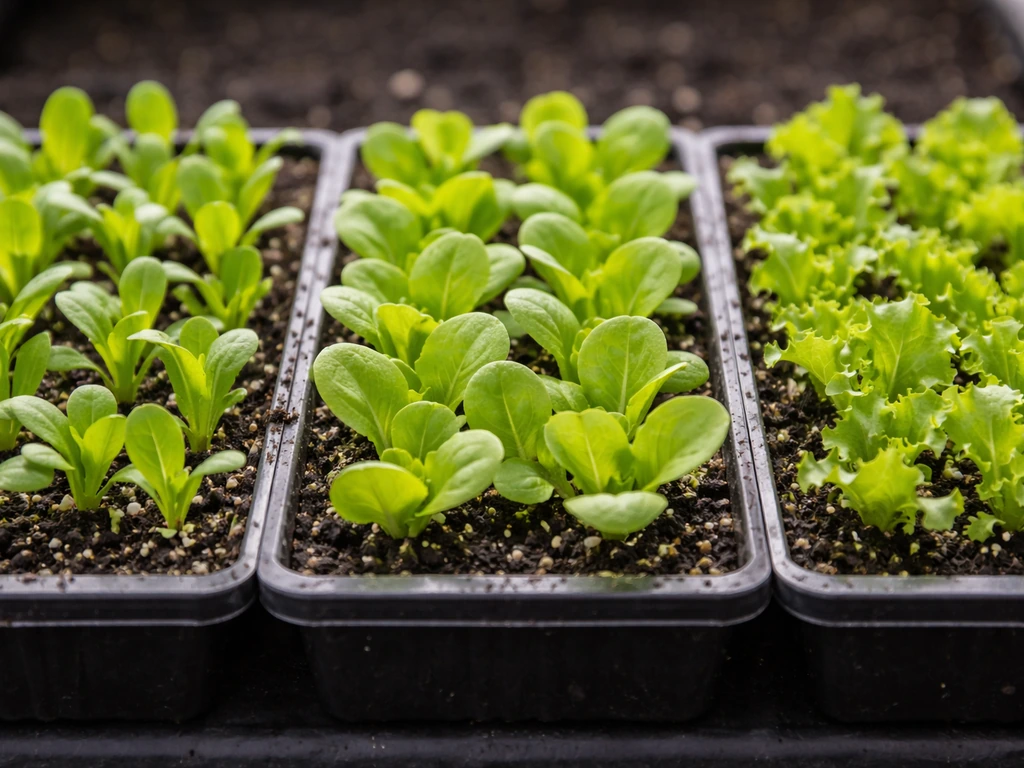
All lettuce types go through the same cotyledon stage and look nearly identical right after sprouting. The differences start showing once true leaves emerge, and they become more obvious as the plant grows. Here's what to watch for by type.
| Lettuce Type | Cotyledon Stage | First True Leaves | Early Growth Habit |
|---|---|---|---|
| Leaf (looseleaf) | Identical small oval pair, light green | Slightly ruffled or lobed edges, often with early color variation in red varieties | Spreads outward quickly, low and open rosette shape |
| Romaine (Cos) | Identical small oval pair, light green | Notably longer and more upright than other types, strap-like shape | Grows more vertically from the start, leaves elongate noticeably |
| Butterhead | Identical small oval pair, light green | Soft, rounded, slightly cupped leaf edges, tender texture visible early | Compact, low rosette with a cupped or folded appearance |
| Crisphead (Iceberg) | Identical small oval pair, light green | Broader, more rounded, thicker-feeling leaves than leaf types | Slow to develop, stays compact longest, no heading visible until much later |
Leaf lettuce is the fastest to show distinguishing features and the easiest for beginners to identify early. Romaine stands out because its true leaves grow upright and longer rather than spreading outward. Butterhead has a noticeably softer, more cupped look to its first true leaves. Crisphead is the trickiest because it's the slowest developer and its early true leaves look the most generic. If you're growing head lettuce like iceberg, be patient. It's not doing anything wrong, it just takes longer to show its personality.
If you want to go deeper on how leaf lettuce and head lettuce grow differently across their full lifecycle, those are worth understanding separately since their care diverges meaningfully after the seedling stage.
What changes depending on where you're growing: soil, containers, and hydroponics
Outdoor soil beds
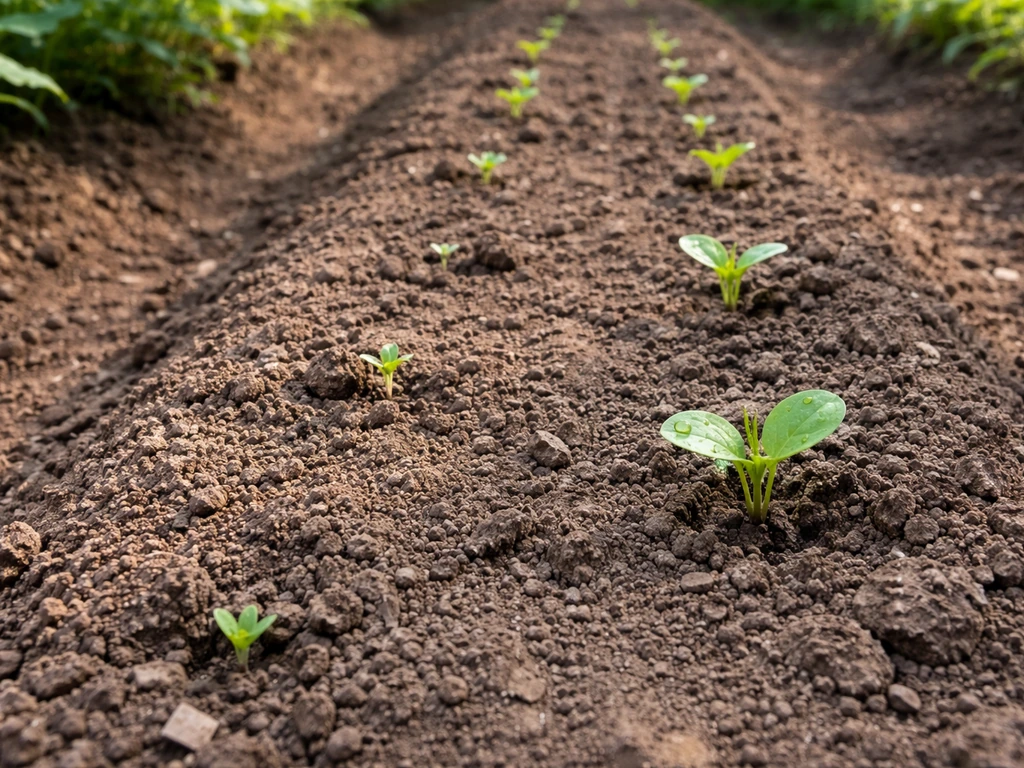
In outdoor soil, germination is more variable because temperature and moisture fluctuate. Seedlings tend to emerge unevenly across the same row, so don't assume the whole batch has failed if some spots are slow. The cotyledons and early true leaves will look sturdy and a deep, healthy green if the soil is consistently moist but not waterlogged and daytime temperatures are below 70°F. Direct sun can stress very young seedlings, so a bit of light shade in the hottest part of the day is fine during the first week after emergence.
Indoor containers
Indoors, you control conditions but you also introduce new risks, mainly insufficient light. Seedlings in containers near a window often look healthy for the first few days (cotyledons don't need as much light) but then start stretching visibly as the true leaves begin to emerge. If your seedlings are leaning hard toward a window, or the stem between the cotyledons and the soil is getting long and floppy, light is the problem. You'll also notice that indoor container seedlings often grow more slowly than the same variety outdoors in spring, purely because indoor light intensity is lower.
Hydroponics
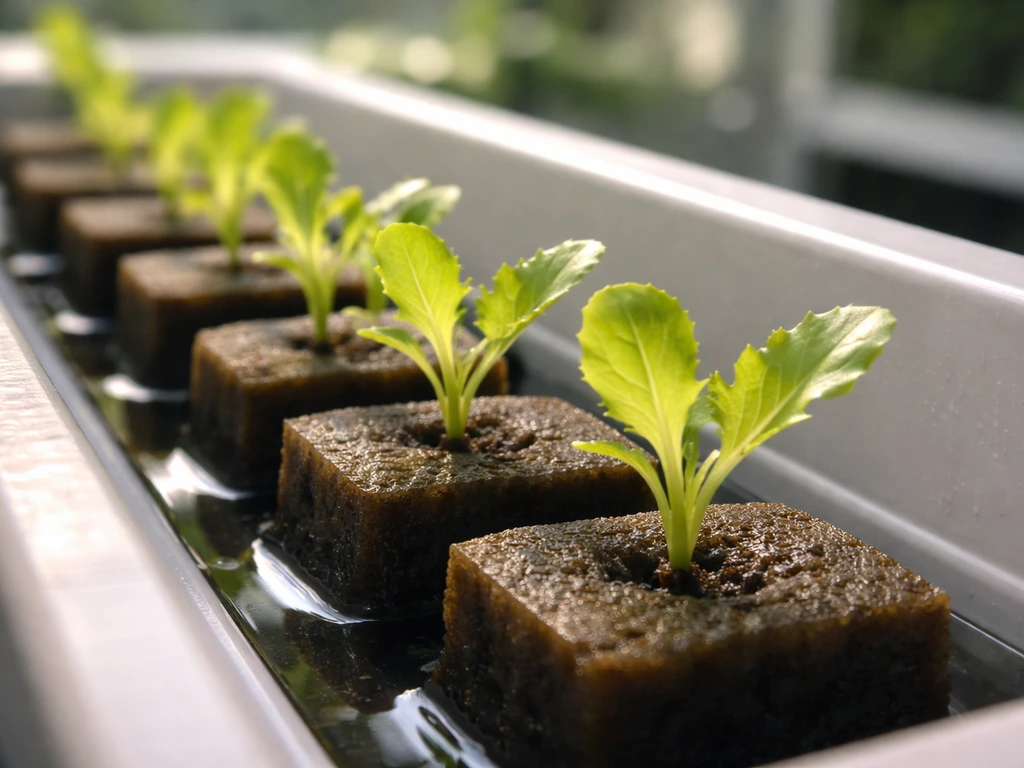
In a hydroponic system (like a DWC floating raft or NFT channel), lettuce seeds are usually started in rockwool cubes, rapid rooter plugs, or foam inserts. The cotyledons look the same as in soil, but you'll notice roots emerging from the bottom of the plug within days of germination. This is a good sign. At the seedling stage, keep your nutrient solution at a lower EC, around 0. My Greens Hydroponics lists lettuce EC guidance that varies with growth stage and notes pH around 5.5 to 6.5 keep your nutrient solution at a lower EC, around 0. 5 to 0.7 mS/cm, rather than jumping to the full adult range of 1.2 to 1.8 mS/cm. The pH should sit between 5.5 and 6.5, with 5.8 to 6.0 being a reliable starting target. Young seedlings don't need full-strength nutrients and can show tip burn or stunting if the EC is pushed too high too soon.
One thing that surprises people growing hydroponically for the first time: the seedlings may look slightly paler and more delicate than soil-grown seedlings during the first week. This is normal. Once the roots hit the nutrient solution and the plant transitions from seed energy to photosynthesis, color and vigor pick up quickly.
When something looks wrong: common problems and what to do
Leggy, stretched seedlings
Leggy seedlings have a long, thin, floppy stem between the soil and the cotyledons. The plant looks like it's straining upward. This is etiolation, a stress response to insufficient light. The seedling stretches trying to reach better light. The fix is simple but needs to happen fast because a leggy seedling becomes harder to recover the longer it goes on. Move the seedling to a brighter location, or if you're using a grow light, move it closer to the canopy. For indoor grow lights, a target of 14 to 16 hours of light per day is a good starting point for lettuce seedlings. Still air and high heat can worsen stretching, so a gentle fan improves both airflow and stem strength.
Pale or yellowing seedlings
If the cotyledons or early true leaves look washed out, yellow, or almost white, check these in order: light intensity first, then overwatering, then nutrients. Seedlings that are too wet often can't take up nutrients even if nutrients are present, so pale color can be a watering problem disguised as a nutrient problem. Let the growing medium dry slightly between waterings. In hydroponics, check your EC and pH: if the pH is outside the 5.5 to 6.5 range, nutrients lock out and leaves pale regardless of what's in the reservoir.
Slow or uneven germination
If nothing has sprouted after 10 days, check soil temperature first. If it's below 55°F or above 80°F, germination stalls. Older seeds also germinate more slowly and unevenly. Lettuce seed viability drops noticeably after 2 to 3 years even with good storage. If you're past the two-week mark with no action, replant with fresh seed rather than waiting indefinitely.
Damping-off
Damping-off is one of the most disheartening things to see because the seedlings look fine one day and are collapsed the next. The classic symptom is a seedling that falls over at the base of the stem. Look closely and you'll see the stem at or just below the soil line has turned dark brown, blackish-brown, or has a water-soaked, mushy texture. Sometimes you'll notice a whitish fungal growth on the soil surface nearby. The cotyledons may still look green while the stem has already rotted through.
Damping-off is caused by soil fungi (including Rhizoctonia and Pythium species) that thrive in wet, poorly ventilated conditions. Once a seedling has damped off, it won't recover. Remove it immediately to stop spread. Prevention is the only real solution: don't overwater, don't leave humidity domes on too long after germination, use a sterile seed-starting mix, and try bottom-watering your trays instead of watering from above. Bottom-watering keeps the soil surface and stem base drier, which dramatically cuts damping-off risk.
Is it actually lettuce?
At the cotyledon stage, lettuce seedlings look like a lot of other vegetable seedlings. If you've had weeds come up in your bed before, or if you're not sure you planted in the right spot, wait for true leaves before getting attached to a seedling. Lettuce true leaves have a distinctive soft texture and that characteristic slightly wavy or lobed edge depending on type. If the true leaves look spiky, round and very smooth, or have a strong smell when you rub them, it's probably not lettuce.
Daily checklist to confirm your lettuce is on track
Once your seeds are in the ground or in a system, here's what to check each day in the first two to three weeks. It takes about two minutes and catches almost every problem early enough to fix it.
- Check soil or growing medium moisture: it should feel damp but not soggy. If water pools on the surface or the medium feels heavy and wet, hold off watering. If it's dry more than an inch down (in soil), water gently.
- Look at stem length from soil to cotyledons: if it's more than about an inch and looks floppy, you need more light immediately.
- Check cotyledon color: they should be a consistent mid to bright green. Yellowing, white patches, or brown edges signal a problem. Act on it the same day.
- Look at the base of each stem: it should be firm, green or slightly purple-tinged, and upright. A dark, water-soaked, or collapsed base is damping-off. Remove that seedling and improve airflow.
- In hydroponics: check pH and EC with a meter every 2 to 3 days. Target pH 5.8 to 6.0 and EC 0.5 to 0.7 for seedlings. Adjust before the numbers drift far out of range.
- Once you see true leaves forming (days 7 to 21): confirm they match the lettuce type you planted using the shape and growth habit described above. If anything looks wrong or unfamiliar, take a photo and compare to a reference image of that specific variety as a seedling.
- At the two-true-leaf stage: thin seedlings to the right spacing (generally 6 to 12 inches apart depending on variety) or transplant to their final container or system position. Don't skip thinning. Crowded seedlings stay weak.
Getting through the first three weeks of lettuce growth is mostly about keeping conditions steady, catching problems fast, and not overcomplicating it. The seedlings themselves are telling you everything you need to know if you look at them every day. Once you're past the two-true-leaf stage with healthy, compact, richly colored seedlings, you're past the hardest part and well on your way to a real harvest.
FAQ
What should I do if my lettuce cotyledons open, but the seedlings stop growing after that?
If cotyledons have expanded but true leaves do not appear, first check soil temperature (roughly 55 to 80°F range is workable, below 55°F growth stalls, above about 75 to 80°F germination and early growth slow or fail). Next, confirm the medium is moist but not saturated, since waterlogged trays can limit oxygen at the seedling base. If you’re indoors or under lights, also check light hours and distance, stretching that starts early can eventually stall growth.
How can I tell whether a leggy seedling is lettuce or just a weak sprout in general?
Legginess is defined by a long, thin, floppy stem between the soil and the cotyledons, while lettuce cotyledons should still look oval to slightly oblong, smooth-edged, and paired symmetrically. Even if the stem is stretched, if the cotyledons match that shape and color, it is likely lettuce. If cotyledons are very spiky, round-and-slick, or have an unusual smell when rubbed, remove the plant and recheck for contamination or misidentification.
What do lettuce seedlings look like if the seed coat (hull) won’t come off?
It’s normal for the empty seed coat to cling to a cotyledon tip for a day or two, then drop. If it stays on longer and the cotyledons look stuck or distorted, increase humidity slightly around the seedlings (for example, mist the air rather than soaking the medium) and ensure good airflow. Avoid pulling the hull off by force, since that can damage the tender cotyledons.
Do lettuce seedlings always have two cotyledons, or can it look different?
Most lettuce seeds produce two cotyledons. If you see one cotyledon, very uneven opening, or oddly shaped cotyledons, it can be from seed coat interference, uneven moisture at the surface, or seed quality. In that case, watch whether true leaves emerge from the center. If the growing point never develops, plan to thin or replant rather than waiting indefinitely.
How pale is too pale for lettuce cotyledons?
Mild paleness for the first week can be normal, especially in hydroponic starts, but washed-out, almost white cotyledons or continuing paling after true leaves begin usually points to insufficient light first. If color is pale plus the medium is wet, treat overwatering as the likely cause. In hydroponics, also check pH within about 5.5 to 6.5, since outside that range can cause nutrient lockout even when nutrients are present.
My outdoor seedlings came up unevenly. Does that mean the crop failed?
Uneven emergence is common outdoors because soil temperature and surface moisture change across a row. If the slow spots eventually form cotyledons with healthy green color, it’s usually just variability in germination time. If none appear after about 10 days, then reassess temperature and consider whether re-sowing is needed, especially if the soil is below roughly 55°F or above about 80°F.
When should I start thinning, transplanting, or adding nutrients?
In general, do these only after you have two true leaves fully formed. Before that point, seedlings are fragile and environmental stability matters more than feeding. For hydroponics specifically, start with a lower nutrient EC (around 0.5 to 0.7 mS/cm) rather than adult-strength, since pushing EC too high too soon can cause stunting or tip burn.
What are the earliest visual signs of damping-off besides a collapsed seedling?
A classic early pattern is a darkened stem at or just below the soil line, which can look brown to blackish-brown or water-soaked and mushy. You may also see whitish fungal growth near the base or on nearby soil surface. If cotyledons look green but the stem is rotting, remove the affected seedlings immediately to reduce spread.
Can lettuce be mistaken for weeds at the cotyledon stage, and what’s the quickest confirmation?
Yes, cotyledons look very similar across many seedlings, so lettuce can be mistaken for weeds right after sprouting. The fastest confirmation is to wait for true leaves, which typically emerge from the center and show slightly wavy or lobed edges and a softer texture compared with many common weeds. If true leaves look spiky, very round, extremely smooth, or smell strongly when rubbed, it’s likely not lettuce.
If I’m growing iceberg or another slow head type, how long should I expect before it looks like lettuce?
Head-forming types can be slow to develop early distinguishing features, so it can take longer than leaf lettuce to look obviously “like lettuce.” At minimum, you should still see true leaves emerge within the general window (often one to three weeks after germination). If you see cotyledons and then no true leaves after the expected timeframe, re-check temperature and light rather than assuming the variety alone explains the delay.