You can grow lettuce in a planter box in just about any outdoor space, balcony, or sunny windowsill. Fill a box that's at least 6 inches deep and 12 inches wide with a quality potting mix, sow seeds about 1/8 inch deep, keep the soil consistently moist, and you'll be harvesting fresh leaves in as little as 30 days. The whole process is genuinely beginner-friendly, and a single planter box can keep you in salads for months if you use cut-and-come-again harvesting and stagger your sowings.
How to Grow Lettuce in a Planter Box: Step-by-Step Guide
Marcus Holloway
20 May 2026
Choosing the right planter box and setup
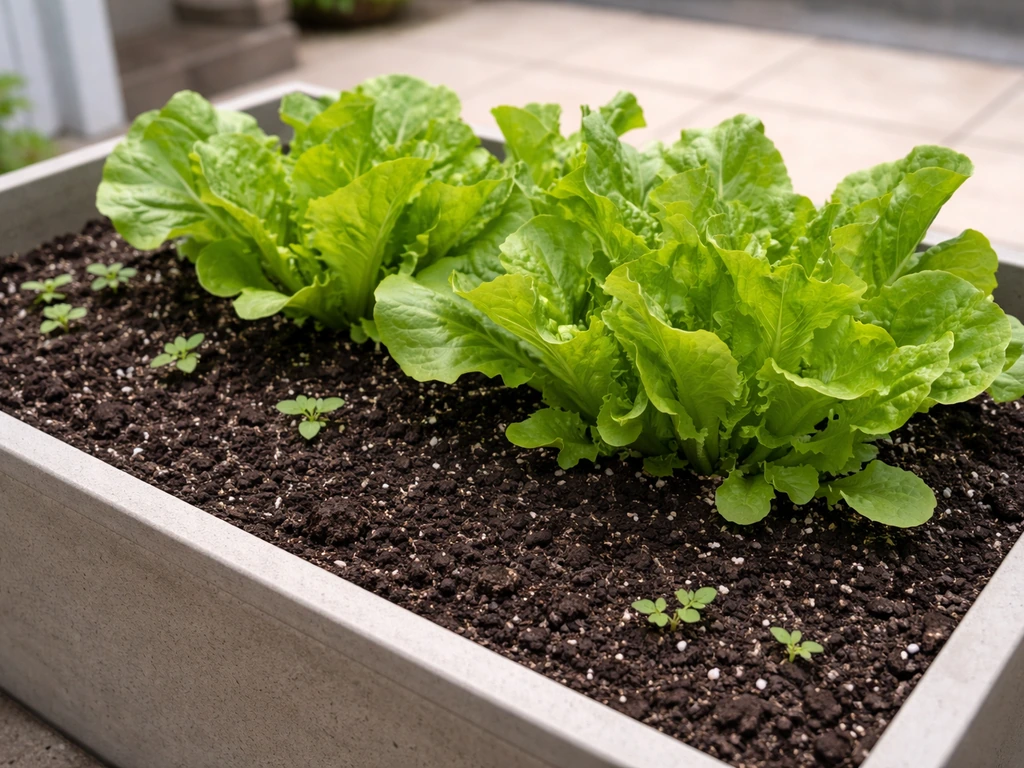
Size matters more than material. For leaf lettuce, you need a container with at least 2 gallons of volume and a minimum of 4 to 6 inches of soil depth. That's the practical floor. In reality, I prefer planter boxes that are 8 to 10 inches deep because the extra depth helps buffer against drying out, which is one of the fastest ways to lose a lettuce crop in a container. A box that's 24 inches long by 8 inches wide and 8 inches deep gives you room to grow three to four rows and is easy to move if needed.
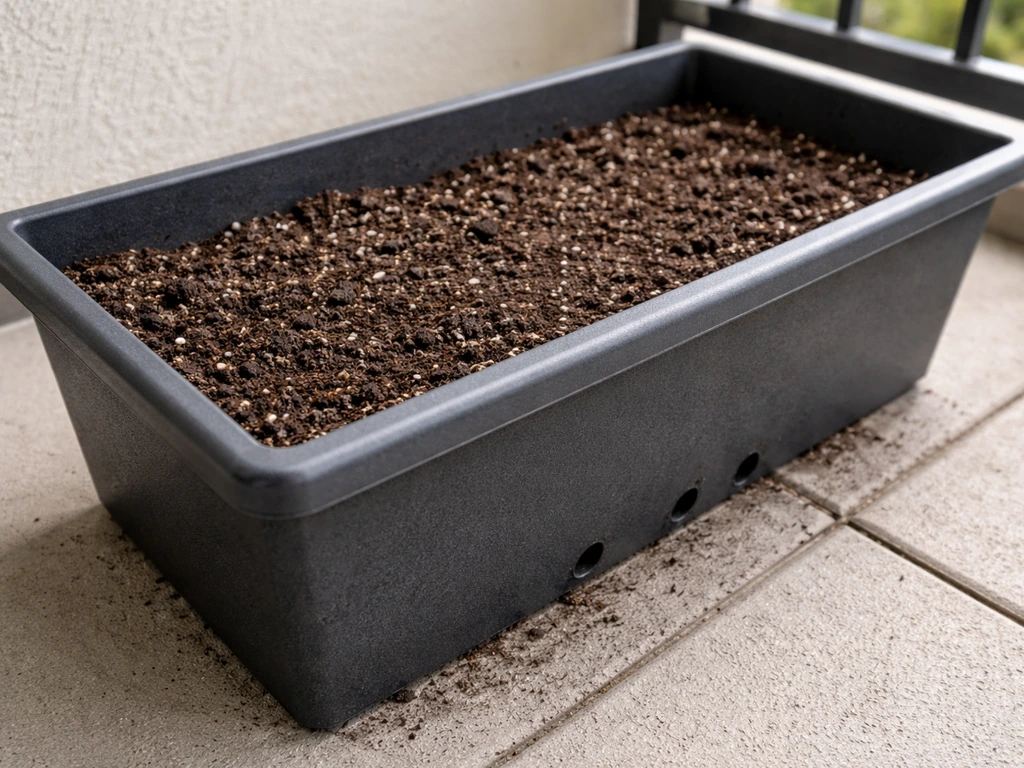
Drainage holes are non-negotiable. Without them, water pools at the bottom and the roots rot within days. If your box doesn't have holes, drill at least three evenly spaced holes in the bottom before you do anything else. For materials, wood, plastic, and fabric all work. Wood boxes look great but dry out quickly, so you'll water more often. Plastic retains moisture longer and is lighter. Fabric grow bags allow excellent airflow around the roots, which lettuce actually appreciates. If you're growing on a balcony or indoors near a window, a lightweight plastic or fabric planter is the most practical option.
One setup detail people overlook is airflow. Don't push your planter box flush against a wall or fence. Lettuce benefits from some air movement around the foliage, and good airflow significantly reduces your risk of fungal problems like gray mold (Botrytis) and downy mildew. Leave a few inches of space on each side if you can.
Soil vs potting mix for planter box lettuce
Never use garden soil in a planter box. It compacts, drains poorly, and brings in pests and diseases. You want a commercial potting mix, ideally one labeled for vegetables or containers. A quality potting mix is lightweight, holds moisture without becoming waterlogged, and provides the loose texture lettuce roots need to spread easily.
If you want to stretch your mix further, blend it with about 20 to 30 percent perlite. This improves drainage and prevents the soil from compacting down as you water over time. Some gardeners also add a small amount of compost to give the mix an initial nutrient boost, which is a great idea for lettuce since it's a hungry feeder. Fill your planter to within about an inch of the top so water doesn't wash the soil out when you irrigate.
If you're interested in taking a more hydroponic approach, the same container principles still apply. You'd swap the potting mix for an inert growing medium like perlite or hydroton and deliver nutrients directly through your water. That setup is excellent for indoor growing where you're managing everything artificially. But for most people reading this, a good potting mix gets you 95 percent of the way there with far less complexity.
Light, temperature, and watering
Light
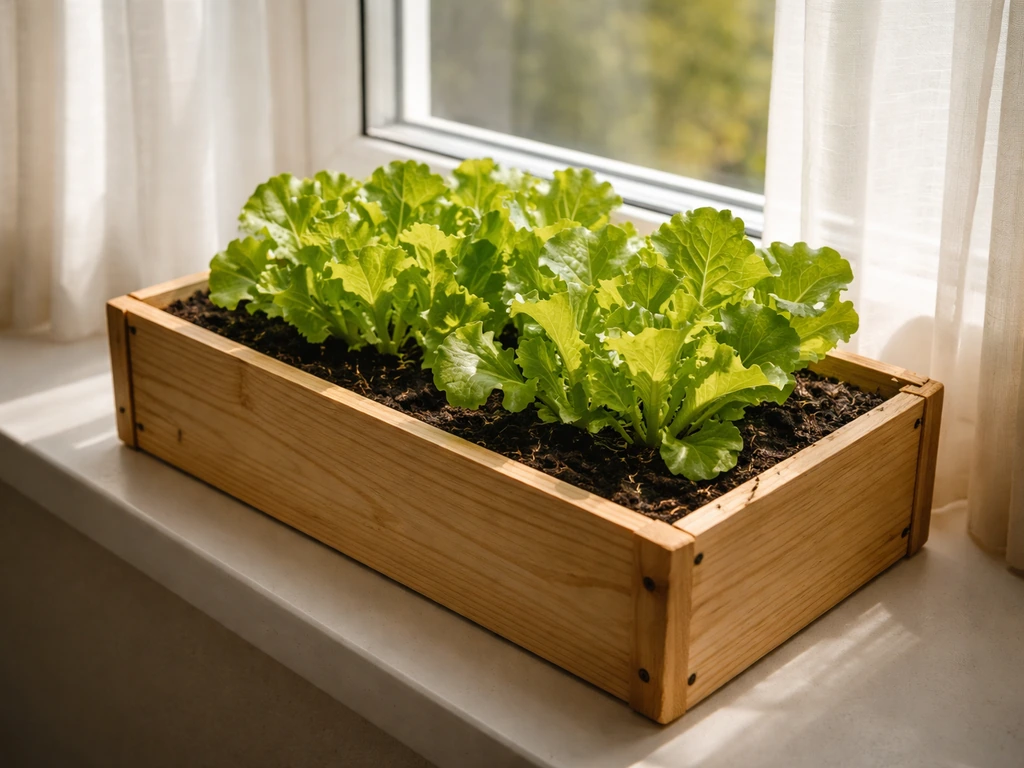
Lettuce needs about 6 hours of direct or bright indirect light per day. It tolerates partial shade better than most vegetables, which is actually one of its biggest advantages for apartment growers. If you're growing outdoors, morning sun with afternoon shade is ideal, especially in warmer months. If you're growing indoors, a south-facing window works well. If your only window faces north, you'll need a grow light. Leggy, pale seedlings that stretch toward the light are a clear sign you need more lumens.
Temperature
Lettuce is a cool-season crop, full stop. The sweet spot is daytime temperatures of 60 to 70°F and nights around 45 to 55°F. When temps consistently push above 75 to 80°F, lettuce bolts: it sends up a flower stalk, the leaves turn bitter, and the plant is essentially done. This is the single most common reason container lettuce fails in summer. If you're growing in warm weather, position your planter in partial shade during the hottest part of the day, and choose bolt-resistant varieties like 'Jericho', 'Nevada', or 'Muir'. Loose-leaf types generally handle heat better than romaine or head lettuce. In spring and fall, outdoor temperatures are naturally in the ideal range.
Watering
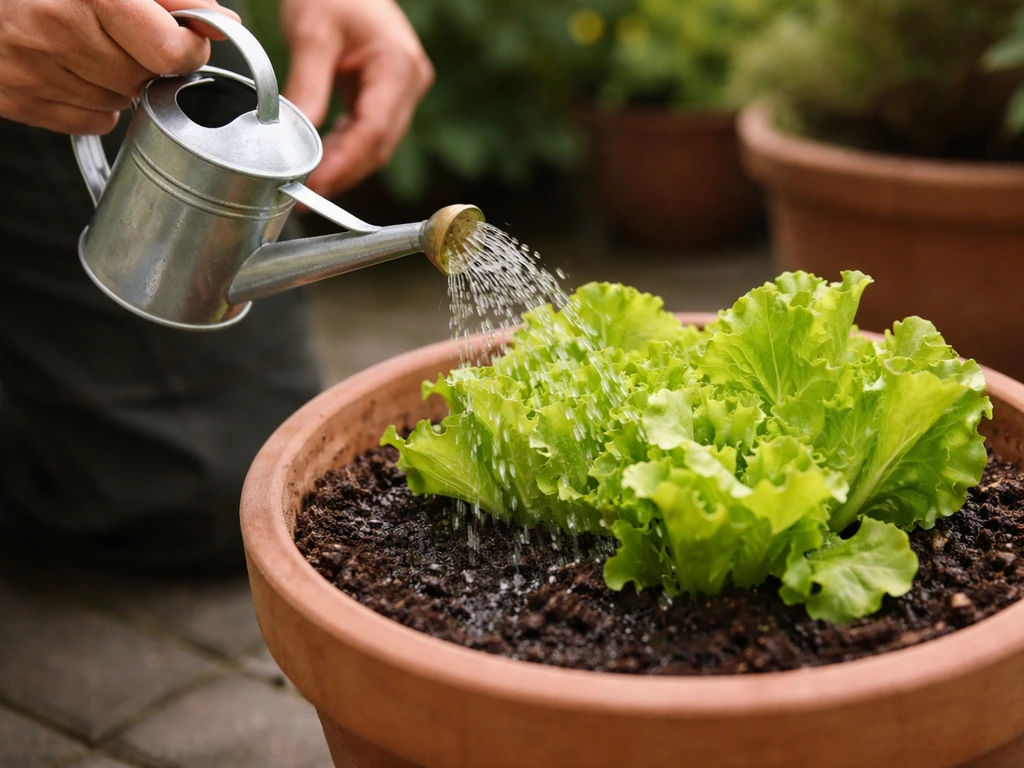
Container lettuce dries out much faster than in-ground lettuce, and it's genuinely unforgiving about irregular moisture. The goal is consistently moist soil, not wet, not bone dry. In moderate weather, that usually means watering every one to two days. In summer heat, you may need to water daily. The best way to check is to push your finger about an inch into the soil. If it feels dry at that depth, water thoroughly until it drains from the bottom. If it still feels damp, wait. Avoid overhead watering when you can. Wet foliage invites downy mildew and gray mold. Watering at the base of the plants or using drip irrigation keeps leaves dry and dramatically reduces disease pressure.
Planting and spacing: seeds vs transplants
Starting from seed
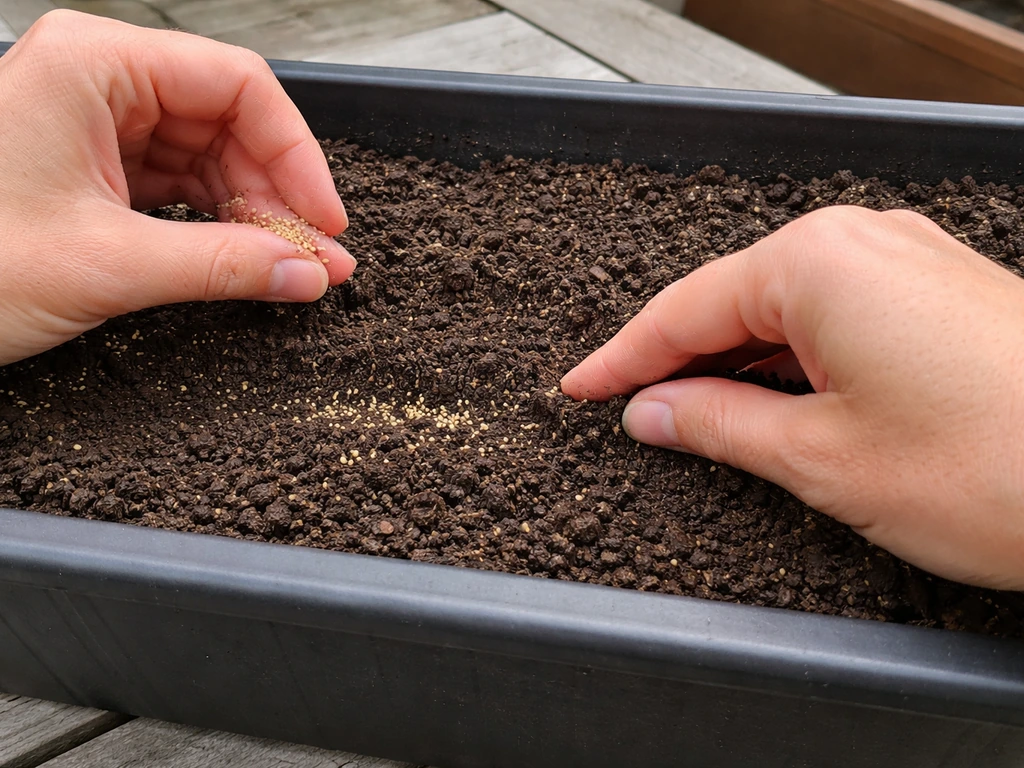
Lettuce seed is tiny and needs to be planted shallow. Aim for about 1/8 to 3/8 inch deep, which in practice means barely covering the seed with a thin scrape of potting mix. Press the soil gently after sowing to ensure good seed-to-soil contact. Germination is fast: you'll typically see sprouts in 4 to 10 days in good conditions. Sow seeds a bit more densely than you think you need, then thin them out. I usually scatter seeds roughly 1 inch apart in a row, then thin to 2 to 3 inches for loose-leaf types once they're an inch or two tall.
Transplanting seedlings
If you're buying transplants from a nursery or starting them indoors first, set them in the planter box at the same spacing: 6 to 8 inches apart for loose-leaf varieties, and up to 10 to 12 inches for romaine or butterhead types. Transplants give you a 3 to 4 week head start over direct seeding, which is really useful in spring when you're racing against rising temperatures.
Thinning
Don't skip thinning. Overcrowded lettuce plants compete for water and nutrients, stay small, and are more prone to disease from poor airflow. Thin first when seedlings are about 1 inch tall, then thin again when plants are half their mature size by pulling every other plant. Those pulled seedlings are perfectly edible micro-greens. There's no waste.
| Lettuce Type | Final Spacing | Days to Harvest | Best for Cut-and-Come-Again |
|---|---|---|---|
| Loose-leaf | 6–8 inches | 30–45 days | Yes, excellent |
| Butterhead | 8–10 inches | 55–70 days | Yes, moderate |
| Romaine | 10–12 inches | 60–80 days | Partial (outer leaves) |
| Crisphead/Iceberg | 12 inches | 70–100 days | No, harvest whole head |
Fertilizing for steady, leafy growth
A good potting mix gives you a few weeks of nutrients before you need to supplement. Start feeding your lettuce about 3 to 4 weeks after planting. A liquid or water-soluble fertilizer works best in containers because nutrients are available quickly and you can control the dose. University of New Hampshire Extension recommends something like 1 ounce of 20-20-20 dissolved per 4 gallons of water, or 1 to 2 tablespoons of fish emulsion per gallon, applied about once a week. That's a good baseline.
Lettuce is a leafy green, so it needs nitrogen more than anything else. Nitrogen drives leaf production. If your lettuce looks pale yellow-green or growth slows down noticeably, nitrogen deficiency is usually the culprit. Bump up your feeding frequency slightly or switch to a fertilizer with a higher first number (like a 5-1-1 fish emulsion or a 10-5-5 balanced liquid). One caution: don't overdo it. Excess nitrogen can make leaves soft, watery, and more attractive to aphids. Once a week at the recommended dilution rate is plenty. USU (Utah State University Extension) also recommends a nitrogen starter for lettuce by applying 1/4 cup of a nitrogen-based fertilizer (21-0-0) per 10 feet of row 4 weeks after transplanting or at thinning apply 1/4 cup of a nitrogen-based fertilizer (21-0-0) per 10 feet of row 4 weeks after transplanting or at thinning.
If you're doing cut-and-come-again harvesting, give the plants a light feed after each major cutting to support regrowth. A dose of diluted liquid fertilizer right after you harvest is one of the best things you can do to keep production going.
Managing pests, diseases, and common problems
Aphids
Aphids are the most common pest on container lettuce. They cluster on the undersides of leaves and the tender growing tips, sucking plant sap and leaving behind sticky honeydew. If you spot tiny ants marching up and down your planter box, look for aphids because ants farm them for that honeydew. A strong spray of water knocks most of them off. For stubborn infestations, insecticidal soap spray is safe and effective. Check under leaves every few days because aphid populations can explode fast.
Downy mildew
Downy mildew (caused by Bremia lactucae) shows up as yellow patches on the upper leaf surface with a white-gray fuzzy growth on the underside. It thrives when leaves stay wet and humidity is high. The best prevention is to water at the base, not overhead, and to make sure your box has good airflow. If you catch it early, remove affected leaves immediately and improve ventilation. Avoid overcrowding, which creates the humid microclimate downy mildew loves.
Gray mold (Botrytis)
Gray mold looks like fuzzy gray growth on older or damaged leaves and usually starts at the base of the plant. It's essentially a wet-conditions disease. If you see it, remove the affected plant material, reduce watering frequency, and improve airflow around the planter. Letting your soil surface dry slightly between waterings goes a long way toward preventing it.
Bolting and bitterness
If your lettuce sends up a tall central stalk and the leaves taste intensely bitter, it has bolted. Heat is the main trigger. There's no reversing it once it starts: pull those plants, compost them, and replant with a bolt-resistant variety. To delay bolting, provide afternoon shade during warm spells, keep the soil consistently moist (drought stress accelerates bolting), and harvest regularly.
Leggy, pale growth
If seedlings are tall and spindly and the leaves look washed out, they're not getting enough light. Move the planter to a brighter spot or add a grow light positioned 4 to 6 inches above the foliage. This is the most common problem for indoor growers and it's an easy fix once you recognize it.
Soggy soil and root rot
If plants are wilting despite wet soil, or the lower stems look brown and mushy, root rot is the likely culprit. This almost always comes down to poor drainage or overwatering. Make sure your drainage holes aren't blocked, and let the soil dry out slightly between waterings. In serious cases you may need to repot into fresh mix.
Harvesting, cut-and-come-again, and succession planting
When to harvest
Loose-leaf lettuce is ready to harvest when outer leaves are 3 to 4 inches long, which usually happens 30 to 45 days from seeding. You don't need to wait until the plant looks huge. Harvesting early and often is exactly the right strategy. The more you pick, the more the plant produces, up until it bolts.
Cut-and-come-again method
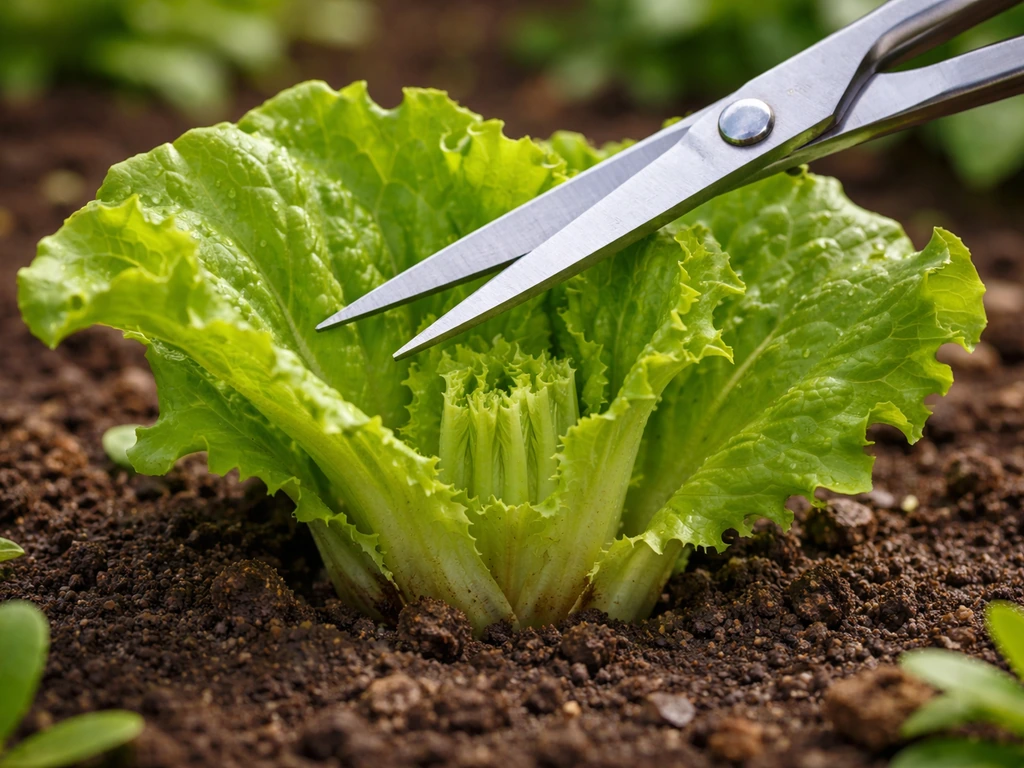
For cut-and-come-again harvesting, use clean scissors to snip outer leaves about 1 inch above the crown. Leave the central growing point and the inner leaves completely intact. The plant will push out new leaves from the center and be ready to harvest again in about 1 to 2 weeks. You can repeat this process 3 to 5 times from a single planting before the plant's quality declines or it bolts. Alternatively, you can shear the whole top of the plant to 1 to 2 inches above the soil line for a bigger single harvest, then let it regrow. Both approaches work well. After each cut, give the plant a light liquid fertilizer feeding to support regrowth.
Succession planting for non-stop greens
A single planting of lettuce has a productive window of maybe 6 to 8 weeks before it bolts or loses quality. The way to keep a continuous supply going is succession planting: sow a new batch of seeds every 2 weeks. By the time your first batch is winding down, the second is ready to harvest. WVU Extension specifically recommends two-week intervals for quick-maturing crops like lettuce. If you have two or three planter boxes, stagger your plantings between them. If you only have one box, dedicate a section of it to a new sowing every two weeks.
In spring and fall you can keep this cycle going almost indefinitely. In summer, focus on heat-tolerant varieties and consider giving your planter a rest in the peak of July and August unless you can provide consistent shade and cool conditions.
Start today: your quick action plan
- Find or buy a planter box at least 6 inches deep with drainage holes, or drill holes in one you already have.
- Fill it with a quality vegetable potting mix, optionally blended with 20 to 30 percent perlite for better drainage.
- Sow loose-leaf lettuce seeds about 1/8 inch deep, spacing them roughly 1 inch apart, then cover lightly and water gently.
- Position the box where it will get at least 6 hours of light per day, or set up a grow light 4 to 6 inches above the planting.
- Water when the top inch of soil feels dry, aiming to keep moisture consistent rather than swinging between wet and bone dry.
- Start liquid fertilizer 3 to 4 weeks after planting, once a week at the recommended dilution rate.
- Begin harvesting outer leaves at 3 to 4 inches long (usually 30 to 45 days), cutting 1 inch above the crown.
- Sow a second batch of seeds 2 weeks after the first to keep the harvest cycle rolling.
Planter box lettuce is one of the most rewarding things you can grow as a beginner. If you're wondering about the best container to grow lettuce, start by prioritizing enough depth, reliable drainage, and consistent moisture planter box lettuce. The timeline from seed to first harvest is short enough to stay motivating, and once you get the cut-and-come-again rhythm going, a well-managed box can feel almost like having a salad subscription on your windowsill or balcony. If you want to explore more container options, the same principles covered here translate directly to pots, window boxes, and other container setups. A container can be a great way to grow lettuce at home as long as it has enough depth, drainage, and consistent moisture grow lettuce in a container. Potting up lettuce in containers is the same core idea as growing it in planter boxes, so you can apply these tips directly to how to grow lettuce in pots. The key variables are always the same: enough depth, good drainage, consistent moisture, adequate light, and a steady but light hand with fertilizer.
FAQ
Can I grow romaine or butterhead in a planter box that is only 6 inches deep?
You can, but expect slower growth and earlier wilting. For romaine or butterhead, prioritize at least 8 inches of soil depth if you can, and give plants the wider spacing (about 10 to 12 inches). If your box is shallow, keep moisture extra consistent and use a slightly richer potting mix (potting mix plus a small compost blend) to reduce nutrient stress.
How do I keep lettuce from getting bitter besides choosing bolt-resistant varieties?
Bitter flavor is often a sign of heat stress, irregular watering, or letting plants get too large before harvesting. In containers, water based on soil dryness at about 1 inch, then harvest outer leaves early (3 to 4 inches long) and do cut-and-come-again instead of waiting. Afternoon shade during warm days helps, especially for summer plantings.
What’s the best way to water container lettuce if I don’t have drip irrigation?
Water at the base and use a slow, steady pour until you see runoff from the drainage holes, then stop. Avoid frequent splashes that wet leaves. If you are prone to forgetting, set a simple routine: check soil every day in hot weather, every 1 to 2 days otherwise, and adjust based on finger-testing at 1 inch deep.
How can I tell whether my lettuce problem is not enough water or too much water?
Underwatering usually shows drooping with soil dry at the 1-inch depth, while overwatering often comes with persistently damp soil and symptoms like lower stems browning or mushiness. If the soil stays wet for days or your box has a musty smell, assume excess moisture, improve airflow, confirm drainage holes are clear, and let the mix dry slightly before watering again.
Should I soak lettuce seeds before planting in a planter box?
Usually no. Lettuce seeds are tiny and germinate quickly in consistently moist potting mix. Instead of soaking, focus on shallow sowing (barely covered) and keeping the top layer evenly moist until sprouts appear (about 4 to 10 days). If the mix crusts, gently mist the surface rather than disturbing the seeds.
How do I avoid overfeeding lettuce in containers?
Follow a schedule and watch plant color and texture. If leaves become soft and overly lush (and pests increase, especially aphids), back off and use a more balanced fertilizer. A practical approach is to start feeding after about 3 to 4 weeks, then reduce frequency if growth is already vigorous or if soil stays wet longer than expected.
Do I need to thin seedlings, and what happens if I skip it?
Yes, thinning matters even for loose-leaf lettuce. Without thinning, plants stay crowded, compete for nitrogen and water, and airflow drops, which raises disease risk. If you skip thinning, you may still harvest small leaves, but regrowth after cutting is weaker and bolting can happen sooner because of stress and microclimate humidity.
Can I grow lettuce in a planter box indoors without direct sun?
You can, but you will likely need a grow light. Lettuce generally needs around 6 hours of direct or bright indirect light, and in winter or north-facing windows you may not get enough. If seedlings become tall and pale, move the planter closer to the light or raise the light schedule, keeping the light about 4 to 6 inches above foliage.
What’s the safest way to control aphids on container lettuce?
Start with mechanical removal, a strong spray of water to knock them off leaves and growing tips. For repeat infestations, use insecticidal soap, spraying both sides of leaves. Check under leaves every few days because aphids can rebound quickly, and avoid soaking the entire plant canopy overhead.
If downy mildew appears, should I toss the whole container?
Not always. If you catch it early, remove affected leaves promptly and improve airflow, and water at the base only. If you see extensive spread, multiple plants affected, or rapidly worsening symptoms, it is safer to remove the infected plants to protect remaining growth and reduce lingering inoculum in the container environment.
How do I prevent gray mold without watering more carefully only?
Watering technique helps, but also manage leaf contact and time wet foliage. Remove damaged or older leaves that touch damp soil or stay coated from splashing, and don’t overcrowd plants. Let the top layer dry slightly between waterings, and ensure the planter is spaced away from walls to keep air circulating around the foliage.
How often should I succession plant if I only have one planter box?
If you only have one box, dedicate a section of it for each new sowing. Sow on a roughly 2-week cycle, then harvest and thin as the next section becomes productive. This spreads the workload and reduces the chance that the entire box hits heat-triggered bolting at the same time.