You can absolutely grow lettuce in a hanging basket, and it works better than most people expect. The trick is picking the right loose-leaf varieties, using a well-draining potting mix in a basket that's at least 12 inches wide, hanging it where it gets 4 to 6 hours of direct sun, and watering more often than you think you need to. Get those four things right, and you'll be snipping fresh greens within 30 to 45 days of planting. You can use many of the same loose-leaf tips from a hanging basket when growing lettuce in a mason jar, including light, moisture control, and harvest timing grow lettuce in a mason jar.
How to Grow Lettuce in a Hanging Basket: Step-by-Step Guide
Marcus Holloway
18 Jun 2026
Choosing the right lettuce varieties for hanging baskets
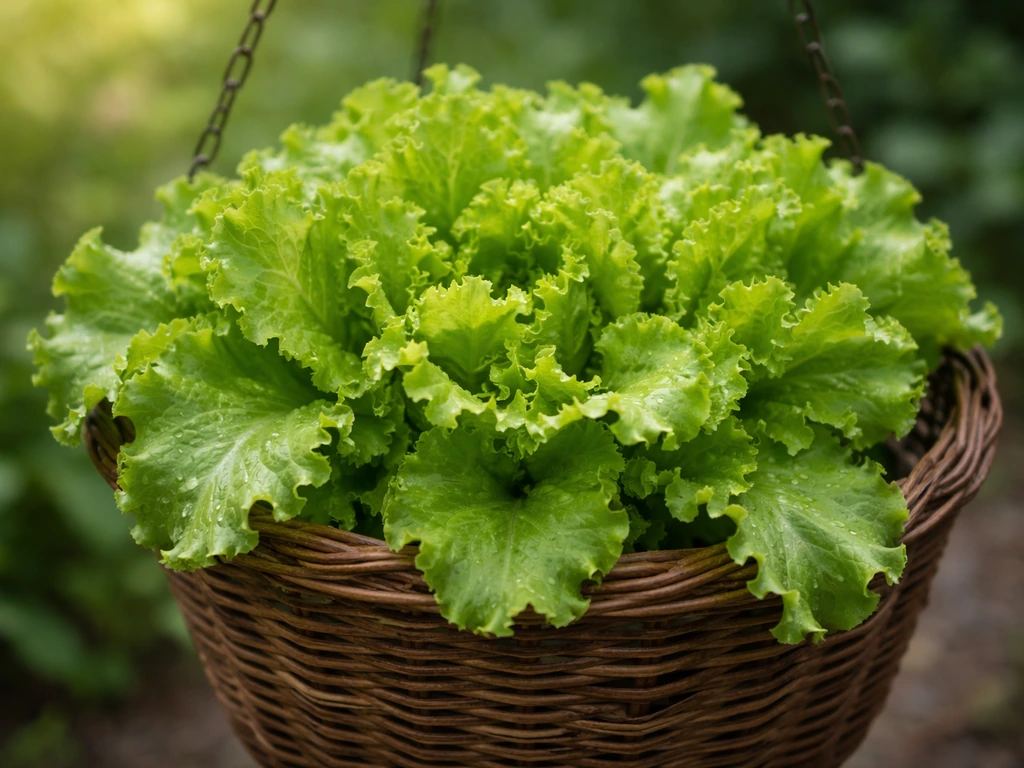
Loose-leaf varieties are the clear winner for hanging baskets. They're compact, they support cut-and-come-again harvesting, and they don't need the depth or root space that head-forming types require. Great choices include 'Black Seeded Simpson', 'Oak Leaf', 'Salad Bowl', 'Lollo Rossa', and 'Tom Thumb'. These varieties stay manageable in size, tolerate the warm microclimates that hanging baskets create, and bounce back quickly after you harvest.
Butterhead and Cos (romaine) types can work, but they need more space (6 to 8 inches between plants) and take longer to mature. In a standard 12-inch basket you'd fit maybe two plants comfortably, which limits your harvest volume. If you want to try them, go for miniature butterhead varieties like 'Tom Thumb' or 'Little Gem'. Save full-size romaine for bigger containers or a bed.
One more reason to stick with loose-leaf types: frequent harvesting slows bolting and actually reduces the risk of powdery mildew, since the disease tends to target mature foliage. The more you cut, the more you reset the plant's growth clock. That's a real advantage when your basket is hanging in a warm, breezy spot.
Picking a hanging basket setup: size, drainage, and potting mix
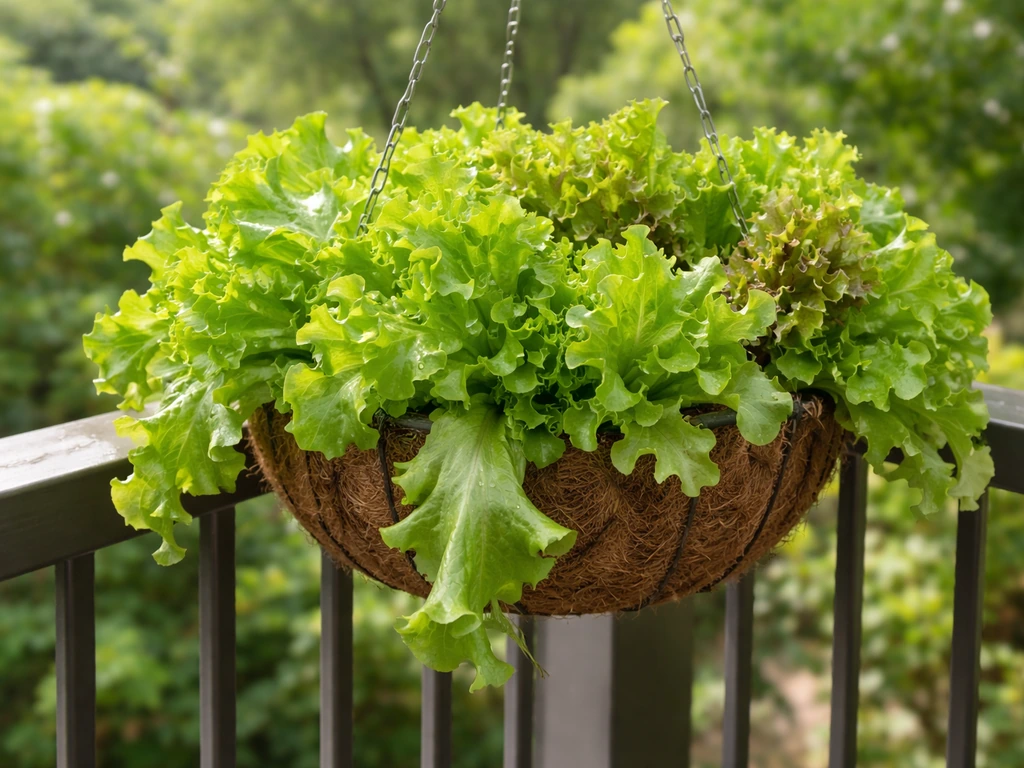
Go with at least a 12-inch diameter basket, and a 14-inch or 16-inch basket is even better. Larger baskets hold more soil volume, which means they dry out more slowly and give you room for more plants. Wire baskets lined with coco liner are popular because they allow airflow around the root zone and drain well, but solid plastic hanging pots with drainage holes work fine too. If you want a simpler alternative, you can use PVC pipe planters to grow lettuce vertically and save space grow lettuce in PVC pipes. If you're using a solid basket, make absolutely sure it has multiple drainage holes at the bottom. Roots sitting in wet soil is the fastest way to kill your lettuce.
Fill the basket with a high-quality, well-drained potting mix, not garden soil. Garden soil compacts badly in containers and drains poorly. A potting mix designed for containers stays loose, holds just enough moisture, and gives roots room to breathe. You can add about 20 to 25 percent perlite to any standard potting mix if you want to improve drainage further, which is especially smart for wire-lined baskets that tend to dry out fast.
Leave about an inch of space between the top of the potting mix and the rim of the basket so water doesn't just run off before it can soak in. When you're positioning transplants, make sure there's at least 3 inches of potting mix under each root ball so the roots have something to establish into right away.
Light and placement: where to hang it for best growth
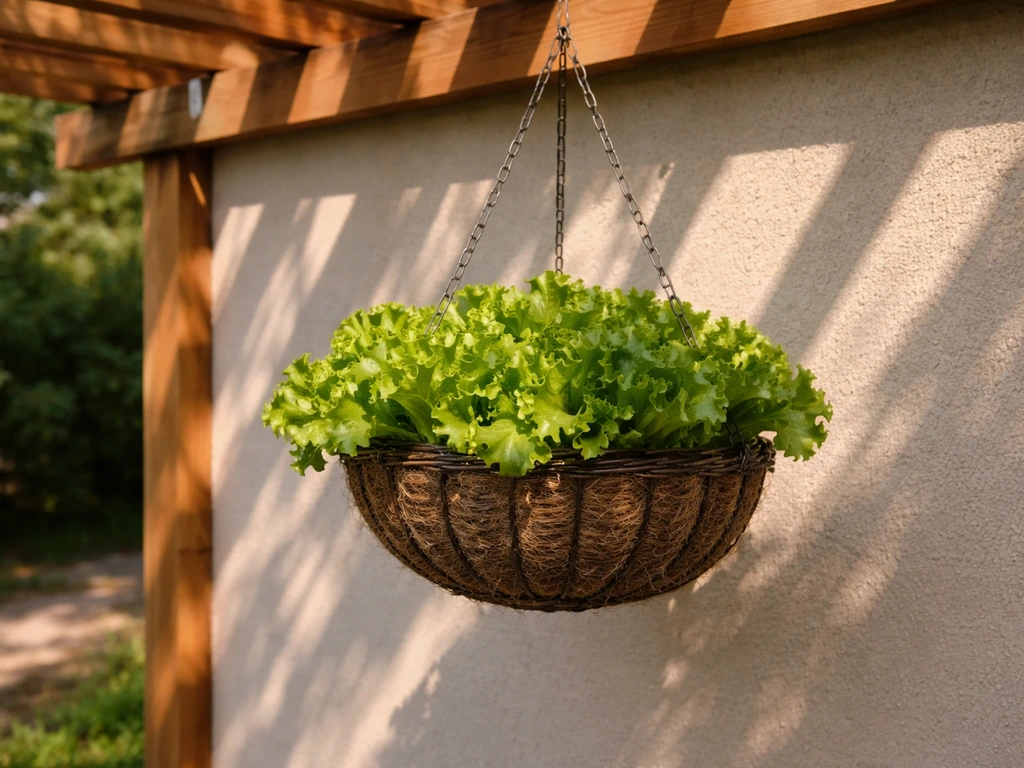
Lettuce needs 4 to 6 hours of direct sun per day. That's the sweet spot. Less than 4 hours and your plants get leggy and pale, reaching toward the light. More than 6 hours in hot weather, especially in summer, and heat stress kicks in fast, triggering bolting. A spot that gets morning sun and afternoon shade is genuinely ideal, especially from late spring through early fall.
East-facing walls or pergolas work beautifully. South-facing spots are fine in spring and fall when the sun angle is lower and temps are cool, but be ready to move the basket or provide shade cloth (30 to 40 percent shade) once daytime temps push above 75 to 80°F consistently. Hanging baskets have the big advantage here: you can simply rehang them in a more sheltered spot when the season shifts.
If you're growing indoors near a window, a south or west-facing window is your best bet. If natural light is limited, a grow light placed 6 to 12 inches above the basket for 14 to 16 hours a day will compensate. Leggy, pale growth almost always means not enough light, so that's the first thing to fix if your plants look stretched.
Planting steps and spacing (seed vs. starter plants)
Starting from seed
Lettuce seeds germinate well between 40 and 80°F. Above 80°F the seeds can go dormant and refuse to sprout, so if you're starting in summer, start seeds indoors in a cool spot. Sprinkle seeds thinly across the surface of your moistened potting mix (lettuce seeds need light to germinate, so don't bury them), then mist gently. You'll see sprouts in 7 to 14 days under good conditions. Once seedlings are about an inch tall, thin them progressively.
For leaf lettuce, thin to about 4 inches apart. For butterhead or Cos types, give 6 to 8 inches between plants. In a 12-inch basket, that means 4 to 6 leaf lettuce plants arranged around the basket. Don't pull thinned seedlings out; cut or pinch them at soil level instead. Pulling disturbs the roots of the plants you want to keep.
Using transplants or starter plants
Transplants give you a 3 to 4 week head start. When planting, set each transplant at the same depth it was growing in its original cell or pot, and make sure there's at least 3 inches of potting mix underneath the root ball. Space them the same way you would if thinning from seed: 4 inches apart for loose-leaf, 6 to 8 inches for larger types. Water thoroughly right after planting to settle the mix around the roots.
If you want a continuous supply, stagger your plantings every 2 to 3 weeks. Start a new basket (or a cup, bottle, or another small container) while the current one is still producing. This is the simplest way to keep fresh greens coming without any gap.
Watering and feeding schedule to prevent wilting or sogginess
Watering is the biggest challenge with hanging baskets. The limited soil volume dries out much faster than an in-ground bed, especially on windy days or in full sun. As a starting point, aim to supply the equivalent of 1 to 2 inches of water per week, but adjust based on conditions. NC State Extension’s container handbook notes that watering needs vary with factors like wind, light, temperature, humidity, container size and type, and how much growing media there is relative to the roots, which helps prevent both wilting and waterlogging watering needs vary with wind, light, temperature, humidity, container size/type, and media amount relative to roots. In hot, dry, or windy weather you may need to water every day. In cool, overcast, humid conditions, every 2 to 3 days might be plenty.
The best way to check: push your finger an inch into the potting mix. If it feels dry at that depth, water. If it's still moist, wait. Water slowly and thoroughly until it drains from the bottom of the basket. Never let the basket sit dry long enough for the leaves to visibly wilt, because stress from drought heat cycles is one of the main triggers for bolting.
For feeding, lettuce is a light feeder and you don't need to overdo it. Too much nitrogen actually increases the risk of failure to form heads and can push leafy growth that's too soft and prone to burning. A balanced liquid fertilizer (such as a 10-10-10 or fish emulsion) diluted to half strength, applied every 2 to 3 weeks, is plenty. If you prefer granular, a small application of a nitrogen-based fertilizer about 4 weeks after transplanting works well. USU Extension also recommends applying 1/4 cup of nitrogen-based fertilizer (21-0-0) per 10 ft of row about 4 weeks after transplanting or at thinning to encourage rapid growth a nitrogen-based fertilizer about 4 weeks after transplanting works well. When in doubt, feed less: a slow, steady plant is better than a fast, floppy one.
Temperature and bolting prevention across seasons
Lettuce is a cool-season crop. It grows best between 45 and 75°F, and it starts to bolt (send up a flower stalk, turning bitter) when temps consistently exceed 75 to 80°F. This is where hanging baskets have both an advantage and a challenge. The advantage is mobility: you can move the basket to a shadier, cooler location when a heat wave hits. The challenge is that hanging baskets heat up faster than ground-level pots because air circulates all around them.
The best growing windows are spring (March through May) and fall (September through November) in most climates. In summer, you can still grow lettuce if you hang the basket in a spot with afternoon shade, water consistently to cool the root zone, and choose heat-tolerant varieties like 'Jericho' or 'Nevada'. In winter, move the basket indoors near a bright window or under grow lights.
If your lettuce starts to bolt (you'll notice the center of the plant elongating and the leaves becoming smaller and more pointed), harvest everything immediately. Once bolting starts, the bitterness spreads quickly. Then either replant with fresh seedlings or start a new basket. Planning for two main growing seasons per year with a fresh start each time is more reliable than trying to keep one basket going through summer heat.
Harvesting and continuous cropping
For loose-leaf varieties, start harvesting the outer leaves as soon as the plant is about 4 to 6 inches tall, usually 30 to 45 days after transplanting or 45 to 60 days from seed. Always cut leaves from the outside of the plant, leaving the inner growing point intact. This is the cut-and-come-again method, and it keeps the plant producing for weeks or even months if temperatures stay favorable.
Aim to harvest a little at a time rather than stripping the plant. Taking no more than a third of the plant's leaves at once gives it enough energy to regrow quickly. If you let leaves get old and large before harvesting, you both lose flavor quality and increase the window for powdery mildew to take hold on mature foliage.
For a continuous supply, start a second basket 2 to 3 weeks after your first, and a third basket 2 to 3 weeks after that. By the time the first basket starts to slow down or bolt, the others are at peak harvest. This relay approach works especially well in spring and fall. If you're also growing lettuce in cups or bottles, those smaller containers fit neatly into the same rotation. If you’re using plastic bottles, the same loose-leaf, light, spacing, and watering principles apply, but you’ll want to be extra careful about drainage and moisture control cups or bottles.
Troubleshooting common hanging-basket lettuce problems
| Problem | Likely Cause | What to Do |
|---|---|---|
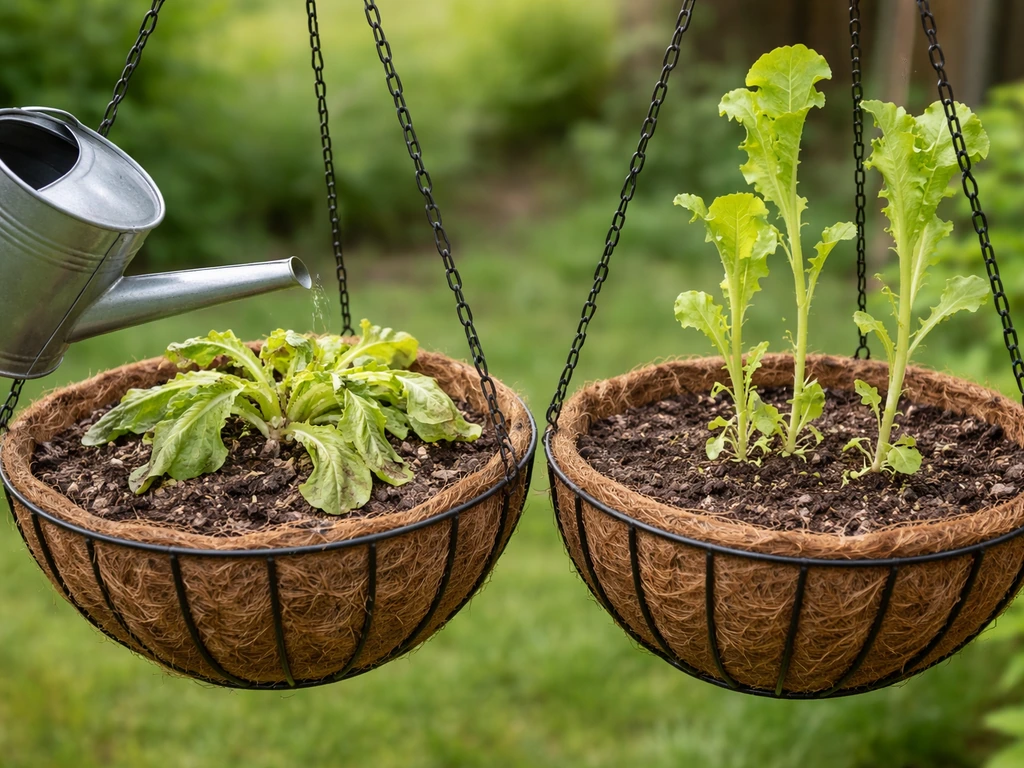
| Wilting despite watering | Uneven moisture: soil dried too fast or water ran off surface | Water more slowly and thoroughly; add perlite to improve absorption; check that drainage holes aren't blocked |
| Leggy, pale, stretched growth | Not enough light (fewer than 4 hours of direct sun) | Move basket to a sunnier spot or add a grow light 6–12 inches above the plants |
| Bolting (center stalk forming) | Heat stress, temps above 75–80°F; drought stress | Harvest everything immediately; move basket to shade; replant with fresh seedlings in cooler weather |
| Yellowing lower leaves | Overwatering or nitrogen deficiency | Check drainage holes; reduce watering frequency; apply a diluted balanced fertilizer |
| Powdery mildew (gray-white coating on leaves) | Warm, dry conditions on mature foliage | Harvest affected leaves; improve airflow; apply horticultural oil; switch to mildew-resistant varieties |
| Aphid clusters on leaves | Stressed plants attract aphids; common in warm weather | Knock off with a firm spray of water; if numbers exceed about 20 per plant, consider insecticidal soap |
| Poor germination from seed | Soil too warm (above 80°F); seeds buried too deep | Start seeds indoors in cool conditions; press seeds onto surface, don't cover deeply |
| Roots drying out fast | Wire basket with coco liner loses moisture quickly | Water daily in heat; consider a solid basket; mulch top of potting mix lightly with compost |
Most hanging-basket lettuce problems trace back to one of three things: not enough water, not enough light, or too much heat. When something looks off, check those three first before assuming a pest or disease issue. Healthy, well-watered lettuce in the right light is surprisingly resilient, and most problems correct quickly once the root cause is fixed. If one basket fails, don't give up: replant it and adjust one variable. That's genuinely the fastest way to get better at this.
FAQ
How do I prevent lettuce from drying out too fast in a hanging basket?
Use the finger test at 1 inch deep daily in hot or windy weather, then water slowly until you see drainage from the bottom. If the basket still dries quickly, increase soil volume by upgrading to a 14 or 16 inch basket, and consider a thicker coco-liner or adding a light mulch layer on top of the soil to slow surface evaporation.
Can I grow multiple lettuce types in the same hanging basket?
Yes, but keep them at compatible spacing and maturity. For example, mixing loose-leaf plants together is fine, while mixing loose-leaf with butterhead or Cos usually creates crowding because the larger types need more room and longer growth time.
Why did my lettuce seeds not sprout, even though I watered them?
The most common causes are temperature and seed coverage. Lettuce seeds can go dormant above 80°F, so start them in a cooler spot in summer, and do not bury them, they need light to germinate. If the surface dries between mistings, germination also stalls, so keep the top layer consistently moist until sprouts emerge.
What’s the best way to handle watering when I’m away for a day or two?
Before you leave, water thoroughly until it drains, then move the basket to a slightly shadier location if possible. For longer absences, use a self-watering reservoir tray or wick system designed for hanging planters, since standard “water once before leaving” usually leads to bolting from heat stress.
Should I fertilize more if my lettuce looks pale or slow?
Not automatically. Pale growth can be a light problem, and the article’s main fix is increasing sun or adding a grow light. If light is adequate, use half-strength balanced fertilizer every 2 to 3 weeks, avoid heavy nitrogen, and watch for floppy leaves that can indicate overfeeding.
How do I know if bolting is caused by heat or by letting plants get too dry?
Heat and drought both trigger it, but drought often shows up first as leaf wilting or stress followed by rapid tightening of the center. Check soil moisture regularly, and if temperatures are rising, rehang to morning sun with afternoon shade and water more frequently to cool the root zone.
Can I harvest continuously without killing the plant?
Yes, use the cut-and-come-again approach by removing mostly outer leaves and never taking more than about one-third of the foliage at a time. Leave the inner growing point untouched so it can regrow, and if leaves become very old before harvesting, you’ll reduce flavor and increase mildew risk.
What’s the difference between thinning and pulling lettuce seedlings in a basket?
For cut-and-come-again lettuce, it’s safer to cut or pinch thinned seedlings at soil level rather than pulling. Pulling can disturb the roots of nearby plants you plan to keep, which can set back growth and delay your next harvest.
How long can I keep a hanging basket producing lettuce?
Expect best results for about one growing cycle in your local spring or fall window. Once temperatures consistently push above the mid- to high-70s or bolting begins, the quality drops quickly. The most reliable plan is to start fresh seedlings or a new basket rather than trying to nurse the same plants through summer.
Do lettuce plants in hanging baskets get pests like aphids or mildew, and what should I do first?
They can, but start by troubleshooting the basics first: light, heat, and soil moisture. If conditions are right, inspect the underside of leaves for aphids and improve airflow by avoiding overcrowding. For powdery mildew risk, harvest regularly so foliage does not become overly mature and dense.